Men on Chapel Street.

Even though I live quite close to Chapel Street in Melbourne, I try to avoid going there as it is not my scene at all.

The other night I ventured as far down as I’ve been in years, to Lucky Coq, on High Street, for drinks with a friend.

The outing reminded me of the last time I’d been that far down, which was back in 2008 for a uni project. Odd, I know, but stay with me.

One of my final units was a media subject entitled Men & Masculinities. I was hesitant to take on the course, but it was my final year and I’d already done all the good ones. Aside from my inept teacher, the unit was really fun, and some of the topics I studied have influenced me to this day.

The reason my study group and I trekked to Chapel Street was to examine the different types of masculinities we observed there. With the National Institute of Circus Arts and the multitude of gyms and boutiques located there, I was expecting to see a lot of buff, fashionable men concerned with their appearance. In short, I expected to see the “metrosexual” in his natural habitat.

After a bit of rummaging through my hard drive, and a quick Google search, I managed to find the articlean interview with Professor of English, Sociology & Women’s Studies at the University of California, Toby Miller, by Jenny Burton and Jinna Tayby which I used to establish some theories about men on Chapel Street.

Keep in mind that these observations were collected two years ago, and I have tried to keep my notes as close to the originals as possible (present day annotations in italics). A lot of the subject matter discussed then has entered our current vernacular; or at least, the vernacular of this here blog, and the ones I frequently read.

Metrosexuality.

“… The phenomenon of the new man, which tends to annex beauty to the wider theoretical works of fashion, with grooming making fleeting, untheorised appearances.”

That’s not so true anymore, as fashion and grooming are becoming as equally important to men who want to look good and take pride in their appearance. Even something as simple as shaving is classed as grooming, and most men we observed on Chapel Street were clean shaven, or at least were doing something different with their facial hair (such as “designer stubble” and goatees instead of a full beard). [Had it been November when the study was done, perhaps I would have seen some mo’s out there?]

“Is the metrosexual a middle- rather than working-class phenomenon?”

I think typically the metrosexual is viewed as upper- to middle-class, and we certainly did see men of these demographics whom you could call metrosexual. However, the working class (tradies, construction workers) could also be seen as metrosexual, because even though they were engaged in manual labour and had “hard” bodies [muscly; evidence of working out], they were still well-groomed and took pride in their appearance.

“Taking pleasure in one’s body, nurturing it, caring for it, protecting it from the elements and so on kind of loosens those old bonds of conventional masculinity, which forbade these behaviours for men and made them taboo.”

The theory here is that men taking pleasure in their bodies and wanting to look physically attractive, for example by going to the gym, is taboo. Do the men we see going to the gym look ashamed of, thereby succumbing to the taboo, or proud of, their hard or soft bodies? (Hard bodies at the gym; soft bodies in certain subcultures like emo, punk, grunge etc.) I wasn’t expecting to see men ashamed of their bodies, especially in a trendy, affluent place like Chapel Street. However, older, out of shape men were a bit more self-conscious than their younger, better-looking counterparts because they tended to look at the ground when they were walking and didn’t make eye contact as much as the more confident men.

“Given all the effort women make to look okay, it seems only fair that men should have to go through something approximating to that level.”

As we expected, there weren’t really any significantly out of shape, badly-groomed or badly-dressed people on Chapel Street. The women took great pride in their appearance, both in their body shapes as well as how they dressed and groomed themselves. This was echoed in the male population, who all were well-dressed, mostly in shape, and well-groomed. In that respect, it could be seen that men are taking a leaf out of the females species’ book.

“… I think it’s [metro sexuality] pretty peculiar to Australia.”

The typical Australian man is seen as a “blokey bloke” in footy shorts and a bluey, doing manual labour and playing sport recreationally. The younger generation of Australian men are challenging this stereotype by being well-dressed, well-groomed and having more unconventional jobs (according to the stereotype) like consulting, fashion, etc. There wasn’t a typical “blokey bloke” that I saw on Chapel Street; even the construction workers, who have the most “Australian” occupation, weren’t physically reflective of the stereotype. In terms of metrosexuality being unique to Australia, it’s true in that a lot of younger men are taking care of themselves, but false in the way that Australia isn’t the only country that has metrosexuals: the US does with Queer Eye for the Straight Guy and the abundance of men in the media who take pride in their appearance and endorse beauty and fashion products, like George Clooney endorsing watches, and Matthew Fox from Lost is the face of a new L’Oreal beauty range for men. I’m not so sure about the UK, because on one hand you’ve got really metrosexual men like Hugh Grant and Jude Law, but on the other there are quite scruffy men like Rhys Ifans, who was engaged to Sienna Miller, and the downright disgusting, like Pete Doherty.

Queer Eye for the Straight Guy.

“… One way to analyse Queer Eye [for the Straight Guy] is as a professionalisation of queerness; a form of management consultancy for conventional masculinity.”

This can be seen in some of the shops on Chapel Street (and Church Street). We saw gyms and health food stores selling protein shakes, etc. in clusters, as well as a beauty salon specifically for men on Church Street.

“… Queer Eye for the Straight Guy is actually about re-asserting, re-solidifying very conventional masculinity.”

Because it separates the “queer” guys, who are fashionable, neat, well groomed, from the “straight” guys, who are messy, unkempt, in need of “styling” by the “queer” guys. Men on Chapel Street challenged this idea. You could speculate about which men were straight and which men were gay, but the stereotypically “straight” ones weren’t messy or “blokey”. There were a lot of business men who needed to look tidy and well-groomed for their jobs, but there were also construction workers whom you would think were typically very masculine and therefore untidy, but even they were taking pride in their appearance, both in terms of their physically hard bodies as well as their grooming.

Sport.

“… While it’s still about toughness, sport is equally about beauty, with the NFL now marketing its players as sex symbols.”

While there weren’t really any “sports” men on Chapel Street (apart from the circus/dance performers), the masculinities we observed were as much about being physically attractive to attract a mate as they were about looking tough and hard-bodied.

Eating Disorders.

“… Clearly there are big problems with eating disorders and performance enhancing drugs amongst men… These are partly narcissistic, psychological worries to do with an image to the outside world in general… Male beauty consciousness is primarily a marketing creation… Do men use toiletries and cosmetics because advertising tells them to?”

There were a lot of advertisements on Chapel Street that would support this notion, specifically the ad in the window of a gym/health food store that promotes an unachievable body type for most men. There weren’t as many hard bodies as we expected to see, however the ones that we did see in no way reflected the extreme ideal that that specific advertisement promoted. The men who worked in fashion stores on Chapel Street succumbed to the ideal that that specific store promoted.

“… Eating disorders, insecurity about looks and image, men now being oppressed by the ‘beauty trap’ and so on, but for me this doesn’t allow for the possibility that this may also be a good thing for individual men and conventional masculinity, allowing men to indulge in some self nurture.”

The men on Chapel Street who were well-groomed obviously took pride in their appearance, and weren’t ashamed of the fact that they looked after themselves. The majority of men looked healthy, which therefore supports the claim that male grooming and “metrosexuality” (men taking care of themselves) is a good thing.

Related: The Underlying Message in Glee’s “The Rocky Horror Glee Show” Episode.

Elsewhere: [Media Culture] Metrosexuality: What’s Happening to Masculinity?
[MamaMia] Male Models: Inside Their Straaaange World.

Event: The Witching Hour—Halloween/My Birthday at Witches in Britches Cabaret.

As has been well documented on this here blog, it was my birthday yesterday, and I carried on my three-year tradition of throwing a Halloween party for the event, this time at Witches in Britches Cabaret in West Melbourne.

I was (un)lucky enough to be hovering around the entrance with my party and was accosted as a “sacrificial virgin” to help open the doors for the night, with some help from Little Nicky, who also made appearances throughout the night as Frodo Baggins, Harry Potter and Britney Spears in Witches in Britches’ latest stage show, “The Ghosts of Witches Past”, which was a rip-roarin’ riot, full of audience participation, but thankfully I had fulfilled my quota for the night. (For more information about the venue/show, visit the website.)

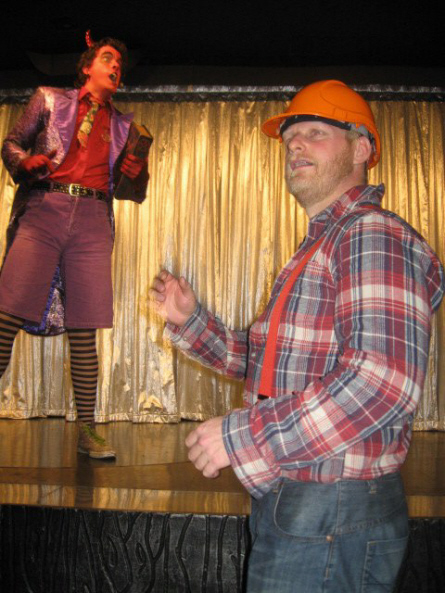
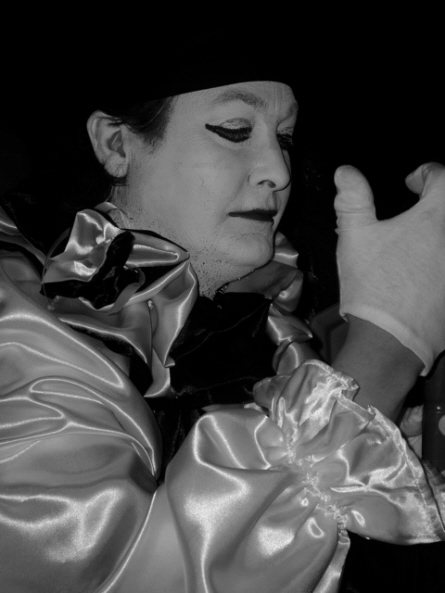
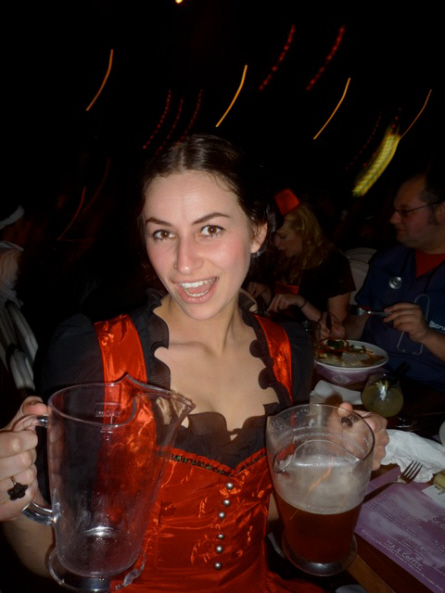
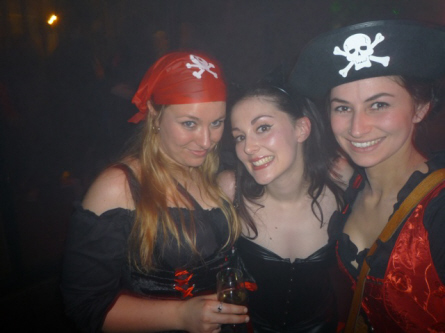
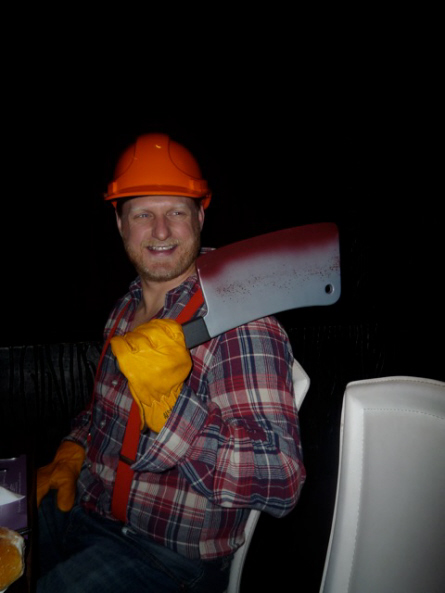
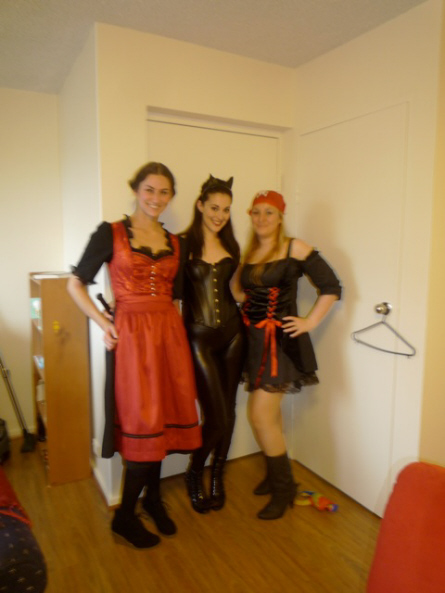
Friends who came to help me celebrate the night dressed in everything from a beer wench to a poirot clown to an Angus Young-esque bogan to Wimbledon tennis players. Special mention goes to fellow 2nd November baby, Jason, whose party it also was and who came dressed as a lumberjack, replete with a try-hard axe in the form of a last-minute meat cleaver!

Following the cabaret, we danced the night away to some top 40 hits and about half an hour worth of Michael Jackson mash-ups on the spacious Dungeon Disco’s dance floor, which was a nice change from the crowded clubs I usually go to.

All in all, it was a great night and I would certainly go and see the show again (could do without the mediocre menu, though). I thank all those who attended. Your presence helped make it thoroughly unforgettable.

Drug of Choice: The Disney Heroine.

Last weekend’s The Age supplement, A2, was jammed packed full of goodness , including a feature on the recent spate of fairytale-inspired exhibitions.

One of the exhibitions talked about in the article is the Bendigo Art Gallery’s “Looking for Faeries: The Victorian Tradition”, which I saw yesterday, and ACMI’s “Dreams Come True: The Art of Disney’s Classic Fairy Tales”, about the fairytales adapted for the screen by Walt Disney, with the groundbreaking (for the time) Snow White & the Seven Dwarves being a key component.

As you know, I can’t get enough of my Disney princesses, especially the constant discourse surrounding their affect on young girls, so this passage from the article took my fancy:

“In the past, and particularly in the 1950s, Disney fairytale heroes and, above all, heroines, were insubstantial figures, despite their predicaments, and energy and comedy were provided by the sidekicksthe dwarves in Snow White, for example. You can see a change in 1991’s witty, thoroughly engaging Beauty & the Beast: Belle was a more dynamic heroine than Snow White, and there was a character in the film who thought he was a handsome prince, but definitely wasn’tthe vain and vicious Gaston.

“[Tangled producer Roy] Conli credits John Lasseter, producer, director and chief creative officer at Disney/Pixar, for an insistence that central characters have to be the emotional and the comic core of a film. So, Rapunzel, the girl with 20 metres of blonde hairwho has been shut up in a tower her whole life, or, “like, grounded, like, forever”isn’t simply set free, end of story. In Tangled, she has a male counterpart, a foil, he says, a worldly, dashing thief called Flynn Rider whose adventure of discovery takes place alongside hers.

“… Whatever we make of these new fairytale dynamics, whether we regard them as retrograde or progressive, misguided or inventive… fairytales are often more appealing to adults than children.”

Perhaps that’s why I still can’t get enough of Belle… and it’s nice to see a modern-day Rapunzel adopting, like, a modern-day vernacular.

Related: Women in Fiction: Are Our Favourite Fictional Females Actually Strong, or Stereotypes?

Elsewhere: [Bendigo Art Gallery] Looking for Faeries: The Victorian Tradition.

[Australian Centre for the Moving Image] Dreams Come True: The Art of Disney’s Classic Fairy Tales.

Has Feminism Failed?

Last Wednesday evening, I went to a debate about the state of feminism and whether it’s failed at the Melbourne Town Hall on Swanston Street.

Entitled “Feminism Has Failed”, I went into the debate with my own preconceived notions about feminism’s success and came out of it with similar feelings, as I think most of the attendees did, if the vote before and after the debate was anything to go by.

I felt that for someone like me, a young, white, middle-ish class Australian female, feminism hasn’t failed, but for most other women around the world who don’t have access to such things I’m afforded (education, employment, food, water, shelter, the ability to do/be almost anything I want), feminism has certainly failed.

And that was the basis of the first speaker for the affirmative team, Virginia Haussegger’s speech.

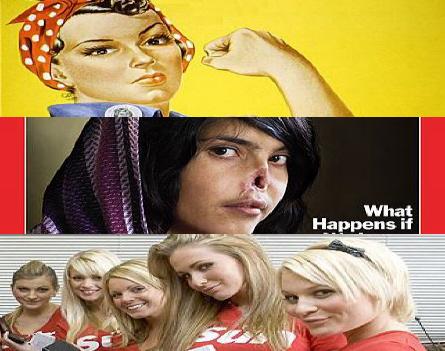
Instead of feminism working for women all over the globe, the rest of the world has waged a “global war against women”, or a “gendercide”, if you will. An example of this is the recent Time magazine cover in which an Afghani woman, or girl rather, was depicted with her nose and ears cut off by her husband, after trying to flee his abusive household.

To rebut this argument was Jennifer Byrne, who said she was taking a “working girl’s view” of feminism, and mentioning a phrase we’ve heard a lot of in third-wave feminism“wonder woman”. (Funnily enough, Haussegger has published a book of the same name.) She noted that we have so much choice now that we “scarcely notice feminism” now.

Stephen Mayne, the only male on either debate team, took a business point of view, and harped on about the dismal number of women on ASX publicly traded company boards. He mentioned that his fellow team member, Gaye Alcorn, who spoke last, editor of The Sunday Age, is only given one day a week, as opposed to the six other days of the week in which a man edits the newspaper. Mayne said that feminism surely HAS failed if a phenomenon such as Britain’s Page 3 girls exist, and if “this country came this close to electing Tony Abbott.” All in all, Mayne was the best speaker of the night and really brought it home for his team, in my opinion.

Next up was Monica Dux, whom Haussegger verbally attacked during her speech as “the snooty head girl [of feminism] with the key”, who wouldn’t let her become part of the club because she has views that aren’t necessarily Dux’s own.

Dux addressed the negative connotations feminism sometimes has, asserting that feminism doesn’t have a Bible, as it’s “constantly evolving and changing”, and is “not a cult” with Germaine Greer at the helm.

Gaye Alcorn confuted Byrne’s former assertion that “we hardly notice feminism anymore” with “sexism has become so embedded in our culture that we no longer notice it”, making reference to the David Jones sexual harassment suit that Mayne also spoke about.

Alcorn also mentioned Naomi Wolf’s The Beauty Myth and the great porn debate (more on that to come this week), and that in some ways it’s harder for womenbody image-wisebecause the culture that young people grow up in has changed.

Controversially, Alcorn referenced the Body Image Advisory Board and it’s chairwomen, the “gorgeous” Mia Freedman, Sarah Murdoch and Kate Ellis, saying that of course they had beautiful women to front the campaign, because it wouldn’t have gotten any publicity with Plain Janes. Out of everything the affirmative team said, this was the only thing I took issue with. “Like, sorry those women happen to be genetically blessed, but they have as much right to talk about body image and beauty as a less fortunate-looking woman does. You can’t help the way you’re born,” I said to my friend, who satirically replied, “Well, it’s about beauty, hello?!” Gold.

Finally, Wendy McCarthy spoke, saying that “feminism is the most significant social movement” of the last fifty years. She mentioned that feminism has “created space for men to be better fathers” which, to me, signals that perhaps feminism has failed if that’s the main point she can come up with; that it benefits men.

The debate ended with the final vote, in which the results stayed pretty much the same. While the affirmative team definitely won the debate, in the minds of the audience members, at least, feminism has not failed, and is still alive and well in our culture.

But as the affirmative team mentioned, Western feminists need to stand up for women in less fortunate countries, and by the same token, “feminists can’t be accountable for all feminist issues at all times.”

On the (Rest of the) Net: Jumbo Edition.

After last weeks flat effort, On the (Rest of the) Net is back in fine form, with a bumper edition.

“Reading About ‘It’ Girls Makes Me Feel Like a Shit Girl”: The title alone is worth the read, but Rachel Hills raises some interesting points, as always.

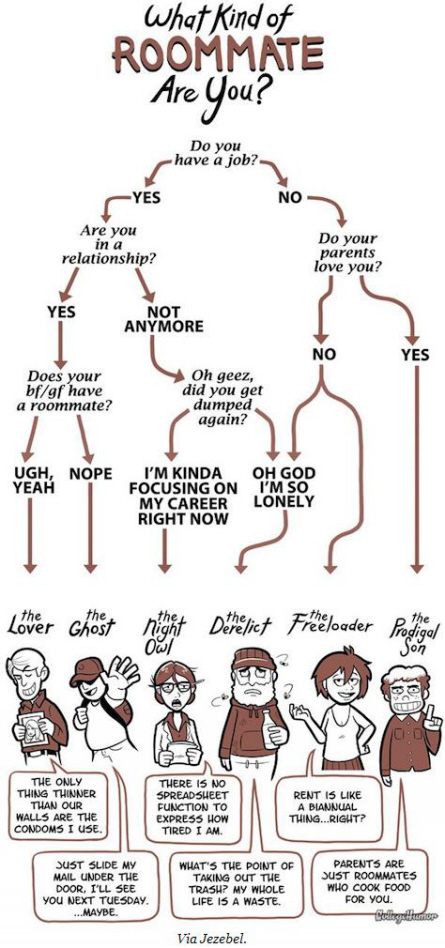
You can choose your friends, but you can’t choose your family. Luckily, my housemate is both a friend and relative and, while it’s still early days, thank God our relationship is a tad more functional than those expressed in this flow chart.

Frequent trips to the video store when I was younger means I’m privy to some of the best so-bad-they’re-good flicks of the late ’80s and early ’90s that not many others my age were. Teen Witch, Girls Just Want to Have Fun and Don’t Tell Mom the Babysitter’s Dead spring to mind, the latter of which has a “surprisingly serious” message behind it.

The Sunday Times Magazine ran with a story on “Lady Gaga & the Death of Sex”. Unfortunately, you have to pay to read the whole thing, but here’s a snippet. Hopefully an Australian mag picks up the story…

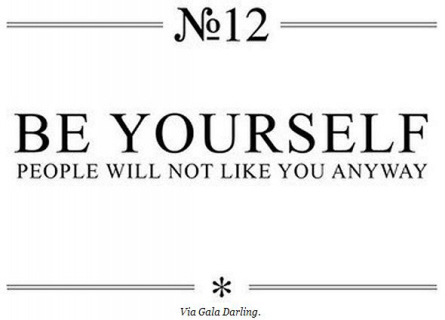
More Gala Darling wisdom. (Speaking of wisdom, I’m getting my wisdom teeth pulled today, so wish me luck!)

Jezebel asks (borrowing a direct headline from an Indian newspaper), “Should a Woman Marry Her Rapist?”

All the hullabaloo surrounding Christina Hendricks’ bangin’ body means she’s “gone from poster child for the supposed comeback of curves to practically a stock photo for any story about bodies.” Sure, “we can all agree that Hendricks is pretty fucking hot from head to toe,” but “Hendricks still fits the Hollywood ideal of beauty in most ways.”

I loved seeing all of Jenna Templeton’s pics from her recent trip to Melbourne on My Life as a Magazine. Love, love, love the store Harem on Brunswick Street, and so does she!

God help us! I didn’t think you could get any worse than Sarah Palin when it comes to female Republicans, but apparently you can. Jezebel runs a piece on “the new Republican candidate for Senate in Delaware”, Christine O’Donnell. A bit of background: “She is a devout Catholic, chaste, anti-masturbation, pro-abstinence-only sex ed, anti-condoms and anti-porn.” But what I find most conflicting about her stance is that “There’s only truth and not truth… You’re either very good or evil.” We’re all going to hell, then!

Tavi Gevinson gives her take on “Kinderwhore Britney” on the cover of Japanese magazine Pop: “These covers shock us because, even though this is how we’ve been used to seeing Britney Spears throughout her entire career, she’s finally the one to comment on our culture’s disturbing obsession with her.”

In a similar vein, Julian Abagond at Sociological Images wants to know “Why Do the Japanese Draw Themselves as White?” Well, “as it turns out, that is an American opinion, not a Japanese one. The Japanese see anime characters as being Japanese. It is Americans who think they are white. Why? Because to them white is the Default Human Being.”

Newspaper Clipping of LAST Week.

So I’ve been a bit behind the eight ball this week, what with moving to my new digs in Richmond and all. But I thought the time had come to stop staring out the window at my fabulous view of the city and catch up on some work.

This last week’s newspaper clipping comes from Sarah Wilson’s Sunday Life column. In it, she discusses the perils of sitting down with a good book and actually reading it, as opposed to skimming, which the internet has taught us, what with emails, blogs and the infinite amount of useless information out in cyberspace.

In the vein of “slow cooking”, “slow reading” doesn’t involve “reading words at a snail’s pace with a ruler”, but “reading fully… and allowing time for dissecting arguments and reflective response”.

This is something I sometimes struggle with, as I feel there is just so much knowledge to be absorbed, and I’m never going to take it all in. Recently, I had so much on my mind (read: moving house) I managed to read the whole of One Flew Over the Cuckoo’s Nest without actually comprehending any of it. Dismal review pending.

In other clippings news, I loved The Age’s resident “Bookmarks”compiler Jason Steger’s take on Bret Easton Ellis’ talk in Melbourne recently. Instead of asking about the “inspiration” behind is disturbed characters, which he famously prefers not to divulge, audience members asked such off-beat questions as, “Who… would win in a tag team wrestling match between Christian Bale and Patrick… Bateman [of American Psycho] and Ellis and James van der Beek, the actor who played Patrick’s brother in the film of Ellis’ novel, The Rules of Attraction.”

No wonder tickets sold out in seven minutes!

Book Review: American Psycho by Bret Easton Ellis.


When I heard Bret Easton Ellis was coming to Melbourne for the Writers Festival, I was intrigued to hear him speak in person, to say the least.

My first, and only, exposure to Easton Ellis prior to reading American Psycho was his 1998 release, Glamorama. I had high expectations for that book, and I was sorely disappointed. I found it too fast paced and celebrity-obsessed which, granted, was the point of the story. However, the graphic depictions of violence (a plane crash with flying pieces of sheet metal decapitating whole rows of passengers, anyone? Or how about a massive miscarriage followed by internal haemorrhaging and subsequent death of the main character’s, Victor Ward, girlfriend?) and sex were far too much.

So needless to say, I was very apprehensive about entering into a literary relationship with American Psycho, but I wanted to at least have read Easton Ellis’ most famous work before seeing him live. (Alas, this is not meant to be, as tickets to his talk sold out within minutes of going on sale! As he, and Buffy creator Joss Whedon, whose talk also sold out, are the only writers I’m interested in seeing at this years surprisingly uninspiring Melbourne Writers Festival, I guess I’ll be giving it a miss this year.)

This time around, however, I was pleasantly surprised.

Again, American Psycho is hard to get into initially, as it jumps straight into a boys night out with protagonist Patrick Bateman and his equally materialistic and über-boring posse of yuppie acquaintances (Bateman is too narcissistic to have actual “friends”). But after persevering up to the first kill, I liked what I read.

Even squirming along Struggle Street during the gory descriptions of the murderson public transport, no less!was still a fairly enjoyable literary journey. To give you a taste of just how well Easton Ellis does horrific homicide in print, here’s a description of Bateman’s first kill:

“… I reach out and touch his [the bum’s] face gently once more with compassion and whisper, “Do you know what a fucking loser you are?” He starts nodding helplessly and I pull out a long, thin knife with a serrated edge and , being very careful not to kill him, push maybe half an inch of the blade into his right eye, flicking the handle up, instantly popping the retina.

“The bum is too surprised to say anything. He only opens his mouth in shock and moves a grubby, mittened hand slowly up to his face. I yank his pants down and in the passing headlights of a taxi can make out his flabby black thighs, rashed because of his constantly urinating in the pantsuit. The stench of shit rises quickly into my face and breathing through my mouth, down on my haunches, I start stabbing him in the stomach, lightly, above the dense matted patch of pubic hair. This sobers him up somewhat and instinctively he tries to cover himself with his hands and the dog starts yipping, really furiously, but it doesn’t attack, and I keep stabbing at the bum now between his fingers, stabbing the backs of his hands. His eye, burst open, hangs out of its socket and runs down his face and he keeps blinking which causes what’s left of it inside the wound to pour out like red, veiny egg yolk. I grab his head with one hand and push it back and then with my thumb and forefinger hold the other eye open and bring the knife up and push the tip of it into the socket, first breaking its protective film so the socket fills with blood, then slitting the eyeball open sideways, and he finally starts screaming once I slit his nose in two, lightly spraying me and the dog with blood, Gizmo blinking to get the blood out of his eyes. I quickly wipe the blade clean across the bum’s face, breaking open the muscle above his cheek. Still kneeling, I throw a quarter in his face, which is slick and shiny with blood, both sockets hollowed out and filled with gore, what’s left of his eye literally oozing over his screaming lips in thick, webby strands. Calmly, I whisper, “There’s a quarter. Go buy some gum, you crazy fucking nigger.” Then I turn to the barking dog and when I get up, stomp on its front legs while it’s crouched down ready to jump at me, its fangs bared, immediately shattering the bones in both its legs, and it falls on its side squealing in pain, front paws sticking up in the air at an obscene, satisfying angle. I can’t help but start laughing and I linger at the scene, amused by this tableau. When I spot an approaching taxi, I slowly walk away.”

Now if that didn’t make you wince and writhe vicariously, there’s also the attacks of several other dogs, the tortures of countless prostitutes, the dissolving of several friends’ bodies in lime, cannibalism, the murder of a child, the capture of a sewer rat to use in later tortures, and in a comical scene that illustrates just how sad and detached Bateman has become in his life of depravity, he feeds his girlfriend (just one of many he has on the go at any given time) a frozen urinal cake coated in chocolate and served in a decadent Godiva chocolate box.

If the reader needs more proof of Bateman’s derangement and obsessive compulsive consumerism, they need only to look at the chapters interspersed throughout the narrative on business cards, sound systems and musical artists of the time (1991), like Genesis, Whitney Houston and Huey Lewis & the News.

Here is another example:

“Another choir, on Lexington, sings ‘Hark the Herald Angels’ and I tap-dance, moaning, in front of them before I move like a zombie to Bloomingdale’s, where I rush over to the first tie rack I see and murmur to the young faggot working behind the counter, “Too, too fabulous,” while fondling a silk ascot. He flirts and asks if I’m a model. “I’ll see you in hell,” I tell him, and move on.

“… vases and felt fedoras with feather headbands and alligator toiletry cases with gilt-silver bottles and brushes and shoehorns that cost two hundred dollars and candlesticks and pillow covers and gloves and slippers and powder puffs and hand-knitted cotton snowflake sweaters and leather skates and Porsche-design ski goggles and antique apothecary bottles and diamond earrings and silk ties and boots and perfume bottles and diamond earrings and boots and vodka glasses and card cases and cameras and mahogany servers and scarves and aftershaves and photo albums and salt and pepper shakers and ceramic-toaster cookie jars and two-hundred-dollar shoehorns and backpacks and aluminium lunch pails and pillow covers…

“Some kind of existential chasm opens up before me while I’m browsing in Bloomingdale’s and causes me to first locate a phone and check my messages, then, near tears, after taking three Halcion (since my body has mutated and adapted to the drug it no longer causes sleepit just seems to ward off total madness), I head toward the Clinique counter where with my platinum American Express card I buy six tubes of shaving cream…”

This kind of stream-of-consciousness and disjointed conflict between the Patrick Bateman that is presented to the outside worldthe one that manages to convince a cop investigating the murder of one of Bateman’s lime victims that he has nothing to do with the disappearanceand the inner workings of his own mind, and even again with the superhuman he becomes when killing, continues and only becomes more frequent as the tale continues.

While there is no finite conclusion to the storyone might guess that Bateman was caught during the murder of a taxi driver, when the tone switches from first person to third person, however it is later revealed that he escaped, but is recognised by another cab driverthat only makes it all the more disturbing.

Easton Ellis is a very cleverthough slightly disturbed; you would have to be to write as graphically and as convincingly as he doesauthor, and I would have loved to hear him speak about his most prolific work.

However, while I rate this one highly, I probably won’t return to, nor enjoy, his other novels.

Event: The Way We Wear Vintage Market.

This weekend I went to The Way We Wear Autumn Vintage Fashion Fair at the Williamstown Town Hall, and let me tell you, it was fab-u-lous!

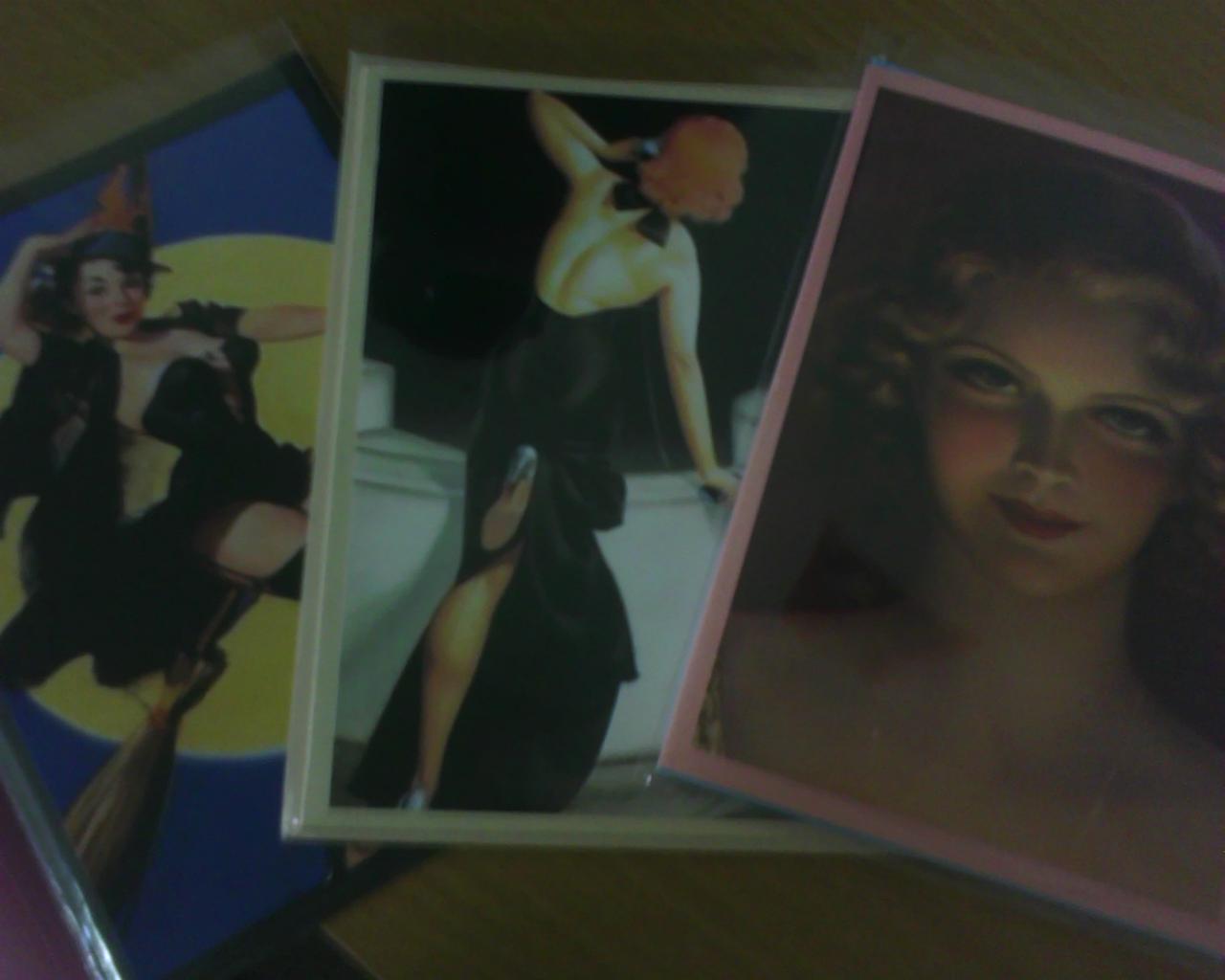
I picked up some jewellery, vintage-inspired cards and a stunning mustard yellow, one-shouldered dress with black sash and shoulder detail that I can’t wait to wear.


I spent about $100 on my few items, but the calibre of clothes and accessories on display went up to the high hundreds and into the thousands of dollars. For example, Online Antiques had vintage Louis Vuitton, Tiffany and kimonos for purchase that, as Rachel Zoe would certainly have said if she’d been there, “I died” over.

There were also some gorgeous reworked ’50s dresses and beaded frocks dating back to the ’20s from the likes of one of Australia’s largest vintage sellers, Seams Old.

And the accompanying And the Bride Wore… exhibition featured a wedding gown from 1870!

Looking back on the day, I wish I’d had more time and money to spend… but there’s always the Vanity Fair Vintage Fashion Market in two weeks time to tide me over til November when the next The Way We Wear Fair rolls into (Williams)town!

Event: Get Him to Rod Laver.

Who, out today, features a double-page spread on comedic bad-boy and star of upcoming Get Him to the Greek, Russell Brand, whom I was lucky enough to see live at the Rod Laver Arena, Melbourne, on Wednesday night.

As my hairdresser said, she’ll “wait for the DVD” to come out to get specifics on his hilariously inappropriate show, which I think is wise for all you Rusty fans, as I could never do his jokes justice.

However, here’s a taste: his 2008 and 2009 MTV VMAs hosting gigs, the rivalry between Melbourne and Sydney, and Twilight and it’s relationship to “that time of the month” were all taboo topics on the cards.

Brand also used his fiancée, Katy Perry, as comedic fodder, which the Who article centres on.

Of how the pair met, Brand says, “She was so rude… I was showing off in front of some people and she threw a bottle at me! I didn’t understand. Who was this girl taking the piss out of me in front of all my friends? It was hypnotic.”

“His romance with Perry ‘has brought out the protective side in me… I had no idea I had it in me’.”

Brand continues, “as long as she’s happy, I will be happy… It’s part of my agenda to make this woman extraordinarily happy. Most things that I really want, I’m pretty diligent about getting.”

As for the woman who pointed her daughter out to him as he made his way through the crowd, Brand asked, after this extremely graphic closing skit centred around anal sex, “aren’t you glad you pointed her out to me now?!”

Events: Dachshund U.N.

Tomorrow’s your last chance to check out Dachshund UN as part of the Next Wave Festival.

It’s run the past two Saturday’s between 2 and 3pm, in the forecourt of Melbourne Museum and the Royal Exhibition Building in Carlton Gardens.

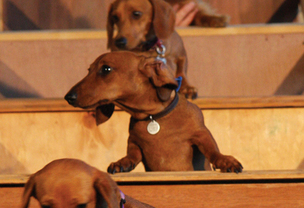
An art installation that “examines the role of the United Nations as a risk management organisation,” Dachshund UN is a “joyful and chaotic experiment” that is worth seeing for its political statements, or at the very least, as a display of 47 sausage dogs that will appeal to animal lovers.

Last weekend, the Philippines decided to have a nap on its sign, while two other countries started making out. Apparently they live together…