On the (Rest of the) Net.

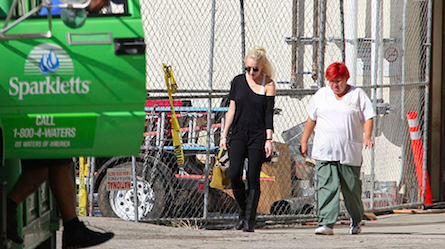
How to make friends and not alienate people whilst working at the morgue, Lindsay Lohan-style. [Gawker]

Mitt Romney’s history with abortion. [New York Times, via Jezebel]

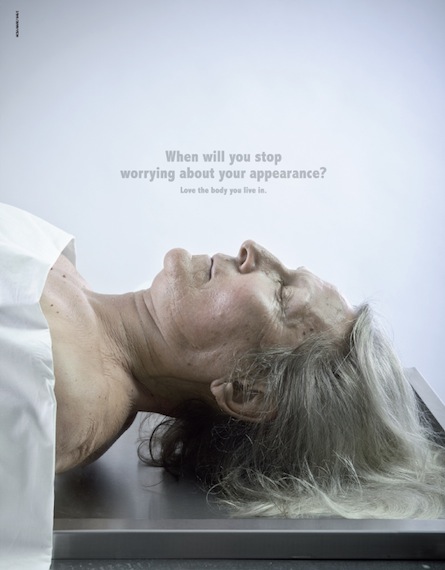
South African Marie Claire attempts to draw attention to body image with their most recent campaign, to lukewarm effect. My pick for the most hard hitting design is the one above. What’s yours? [MamaMia]

How does the word “fat” affect others’ body image? [Jezebel]

Gala Darling, her husband and their Halloween costumes.

E-book VS. real book. [MamaMia]

It’s all about me, I mean you, I mean me. [Already Pretty]

“Accidental rape” and enthusiastic consent:

“While the legal standard of rape is increasingly well-defined… common sense suggests that at its most basic, rape is nonconsensual sex. Too many of us, men and women alike, define consent as the absence of a clear ‘no,’ rather than the presence of a clear, unmistakable, eager ‘yes.’ The opposite of rape, in other words, is mutual enthusiasm.

“The root of consent is the Latin consentire, which means ‘with feeling.’ Consent is not just about words ‘no’ or ‘yes’—it’s about the unambiguous presence of desire.”

[The Good Men Project, via MamaMia]

The case for vaccination Barbie! [Washington Post]

A history of slutty Halloween costumes. [Jezebel]

Still with Halloween: costumes and racism:

“Halloween was the day where women could bring out their inner sluts… Halloween is also the day where people can bring out their inner… racism…” [Eternal Sunshine of the Spotless Mind]

“Who Cares About Amber Cole?” the black teenage girl who was caught on camera by two male friends giving her boyfriend a blowjob, which subsequently got circulated around the internet, thus distributing child porn. [Jezebel]

Images via Gawker, MamaMia, Gala Darling, High Snobiety, Toys R Us, Clutch Magazine.

Movie Review: The Help*.


Up until I heard about The Help’s release as a movie a month or two ago, I’d managed to miss all the brouhaha surrounding the release of Kathryn Stockett’s 2009 novel of the same name, and therefore didn’t even know it was previously released in book form.

I promptly jumped online to devour the racial criticisms on blogs of the book, and so was expecting a similarly clichéd film.

Much to my delight, the film manages to steer clear of most of these stereotypes, though in some parts, such as Minny miraculously deciding to take her five or six kids and leave her abusive husband, and the standing ovation the local black church gives to Aibileen and Minnie, who defied the social norms of the time and told their stories as undervalued and blatantly discriminated against “help” to Emma Stone’s Skeeter, are pretty unrealistic.

But Jessica Chastain’s Celia Foote, the naïve, Marilyn Monroe-esque housewife outcast from the social scene in Jackson by fellow stay-at-home wife Hilly Holbrook, played wonderfully by Bryce Dallas Howard, stole the show. She showed that not all white people felt disdain towards the black “underclass”, making them use a specially-installed outside bathroom and take separate taxis, which is one of the main driving plotlines of the story.

I can’t talk this film up enough. While it’s not the best movie ever made, it’s one you should see regardless. Also, look out for cameos by Private Practice’s Dell and True Blood’s Lafayette and Sarah Newlin. And make sure to bring the tissue box!

*It has come to my attention that I give away too much in my movie reviews, so the asterisk will now serve as a blanket *spoiler alert* from now on.

Image via YouTube.

The More Things Change, The More They Stay the Same.

From “The Last Refuge of the Un-Australian” by Tony Birch:

“Recently, when a Pakistani migrant who had been granted permanent Australian residency in 1996 set himself on fire outside the federal parliament, as a result of his unsuccessful application to the Immigration Department to have his wife and child join him here, the Immigration Minister, Phillip Ruddock stated ‘it’s [self-immolation] not something we are used to or experienced with… sadly he sought to do so.’

“This man had done something that was very ‘un-Australian’. He had publicly expressed his grief and anguish at his treatment at the hands of Australian government officials. He had raised an issue that might tap away at all of those clichés of national foundation and celebration. It is not only ‘un-Australian’ to be, through experience, a whistle-blower against nation-building mythology. Simply ‘to be’ one of those who have been abused by the Australian nation is to be ‘un-Australian’.

“It is also ‘un-Australian’ to intern people without trial for up to four years, to subject people to months of isolation in solitary confinement. It is ‘un-Australian’ to remove those people to remote parts of the country where they cannot be visited by family or friends, to where the activities of the multi-national company that profits from their incarceration cannot be scrutinised by the media or the imprisoned’s legal representatives. It would be ‘un-Australian’ in the extreme to use water cannon, tear gas and truncheons against people imprisoned without trial, who are rightfully protesting about the abuse of their human rights.

“I cannot, as a trained historian, state this with empirical certainty, but it is a mathematical probability that it is ‘un-Australian’ to disparage and devalue the worth and lives of refugees by claiming, without evidence, that many of them ‘may be’ associated with ‘terrorists’. Likewise, the propagandist need to focus more closely on the supposed threat that the approximately 8,000 ‘illegal’ arrivals in the last ten years post to ‘our way of life’ rather than overturn a policy that contributed to more than 350 people drowning trying to get here in just one year (1999), is somewhat ‘un-Australian’ I would think.

“But of course the representatives of the Australian people, the federal government, engage in such behaviour on a daily basis. To ensure that such practices are not perceived as ‘un-Australian’ we not only transfer refugees to remote areas of the country, we un-people those who arrive here by reconfiguring them as ‘the ungrateful’, ‘the terrorist’, ‘the queue-jumper’ and legally as ‘the non-person’. ‘We’ can then protect Australia and ‘our way of life’ against the alien invader as ‘we’ did against ‘the Aborigines’ in the past, because they failed to adhere to the doctrine of terra nullius by unpatriotically refusing to reclassify themselves as ‘non-people’, in claiming their rights and identity as indigenous people.

“The Department of Immigration lists 37 countries that it regards as a threat to Australia, in that visitors who arrive from these countries, by boat or otherwise, are regarded as the most ‘at risk for overstaying their visa’. The countries listed include Bangladesh, Chile, India, Poland, Samoa and Vietnam. Most are non-white and none are Anglo or English speaking (as a first language). And yet approximately 20 per cent of arrivals to Australia who overstay their visas are British. There is no mention of Britain in the blacklisted countries. Nor do we see the fair skin of the backpacker behind the barbed-wire of the detention camps…

“We have a situation in Australia today where we are witnessing the human rights abuses of many people. Aboriginal people continue to be abused as a result of the crimes committed by white Australia both in the past and contemporary society. The abusive treatment of refugees is similar to the treatment of Aboriginal people in the country in that they pose a threat which, more than being based on any material manifestation, either real or imagined, is a threat to a way of life erected on xenophobia, selfishness and a fear of difference.

“We must transform the culture of Australian life by screaming to our politicians that such an idea is genuinely un-Australian and that we will not tolerate it. And we must do this beyond the act of the political gesture. Activism can be a loaded word, but still, to be active in some way, to speak, to write, to march, to protest, to be angry and to put that anger into expression and action is a suitably un-Australian idea at this time.”

This was written… wait for it… in April 2001. More than ten years ago and, indeed, before the September 11 attacks, and nothing has changed. Being young and naïve, I didn’t realise there was as strong an anti-Muslim culture as there is today, just over ten years on. And it’s appalling to have it made aware that Birch’s words are just as poignant today as they were a decade ago.

Related: Melbourne Writers’ Festival: Beyond White Guilt.

My Response: Go Back to Where You Came From.

September 11, 10 Years On.

Cowboys VS. Aliens & Indians… Does it Really Matter? They’re All the Same Anyway, According to the New Movie.

Elsewhere: [New York Magazine] 9/11 Encyclopedia: Xenophobia.

September 11, 10 Years On.


It’s hard to believe it’s been 10 YEARS since two planes crashed into the World Trade Centre, the enduring image of the Twin Towers collapsing burned into our memories. Not to forget the additional two planes which crashed into the Pentagon and a field in Pennsylvania.

I was 13 at the time of the attacks. I’ve grown up in the “age of terror”, where conspiracy theories, airport security, racism and top-television-moments countdowns are influenced by the event.

At the time, I couldn’t really care less. I was a teenager, consumed with adolescent angst and lost interest about five minutes after I first saw the shocking footage on TV. A testament to the desensitivity and limited attention span of my generation, I suppose.

We weren’t allowed morning television in our house at the time, so I’m pretty sure my parents were none the wiser as to the attacks the following day. My mum was telling me something about some environmental issue in California (a Google search for news results around that time produced little enlightenment).

I got on the school bus and someone said, “Did you hear what happened in America?” I was like, “yeah, totes, something environmental in California”, or something to that effect (and yes, I know “totes” wasn’t a word then. Some would say it isn’t even a word now.). I was received by puzzled looks.

That’s really all I remember from that time. Oh, that and the thing that consumed my life at that time, World Wrestling Entertainment (then World Wrestling Federation), was the first live televised event after the attacks. WWE SmackDown! was originally scheduled to be taped the night of September 11, however was postponed til the 13th, and was seen as somewhat of a patriotic (ST)FU to the terrorists. Below is a tear jerking clip from the opening scene of the show.

The following year, however, I was fully immersed in my love for the USA, and considered donning full Uncle Sam garb to school that day! Since September 11, I’d been known to bust out an American flag item of clothing here and there, and even had one made for my birthday that year.

Again, it’s just so hard to believe it’s been 10 years since then. In some ways, we’ve come so far, but in others (the fact that 20% of Americans believe, wrongfully, that Barack Obama is a Muslim, the violent disapproval of a mosque being built near the Ground Zero monument, the niggling feeling we get when we see Muslims at airports)… not so much.

Where were you on September 11, 2001, and what do you think has changed since then?

Below, some links published in tribute to the almost 3,000 people who died on that fateful day 10 years ago.

Elsewhere: [Washington Post] Poll Shows More Americans Think Obama is a Muslim.

[New York Magazine] The Encyclopedia of 9/11.

[New York Magazine] Day’s End.

[Time Magazine] Timeline.

[The New Yorkers] Video: The Skyline Redrawn.

Image via Yahoo News.

On the (Rest of the) Net.


Attack of the cupcakes!:

“… Badassery and toughness aren’t mutually exclusive with cupcakes. A woman can go home from her power-suit-wearing corporate job and unwind in front of Cute Overload. A ‘supermom’ can enjoy a vintage cocktail—and even wear a vintage apron, if she wants to—without becoming squishy and ineffective…” [Feministe, HuffPo]

Gloria Steinem’s not the feminist hero we think she is, according to Suzanne Venker. [National Review Online]

The Catholic Church respects women more than feminism? Laughable. [National Catholic Register]

Erica Bartle writes on the perils of being a Christian in a sometimes-misunderstanding world. I don’t think what she’s experiencing is a uniquely “Christian” thing. (More on that next week.) I abhor organised religion, but I still feel “hyper-sensitive”, as she puts it, to the small-minded bigots around me. I think it comes down to what kind of person you are, regardless of religion and faith, which aren’t mutually exclusive.

I think you can still keep your “awesomeness”, “pride” and “talents” and fight like Mike Tyson (minus the ear-biting and sexual assault). Those are the things that make us good people, in my opinion. [Girl with a Satchel]

Gala Darling on how “to be the person in the photo, instead of the person looking at it.”

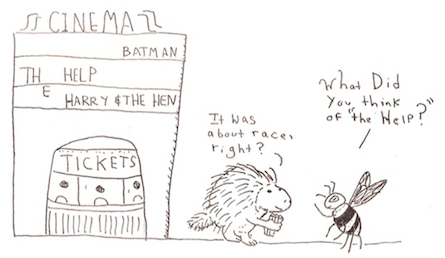
The Help from a porcupine and bumblebee’s point of view. You’ll get it from mine next week. [Jezebel]

In the wake of recent assertions that Hillary Clinton might have made a better president than Barack Obama, I came across this 2008 article pitting the “Madonna” against the “whore”; “the hard-ass” against “the lightweight”; “the battle-ax” against “the bubblehead”; “the serious, pursed-lipped shrew” against “the silly, ineffectual girl”; “the bitch” against  “the ditz”, and why the Clinton/Sarah Palin debate was a futile one. [New York Magazine, The New York Times]

It’s all about the discontent of young Asian women, and how they want to look more Western. [Gender Across Borders, Sydney Morning Herald, SBS Insight]

To the inconsiderate douches who use the word “rape” as a joke. Brilliant. [Lipstick Feminists]

“The Deficient Single Woman.” [Zero at the Bone]

Discrepancies in the way college men and women dress are lauded as anti-feminist by Lisa Belkin, while Amanda Marcotte contends the sight of a woman dancing in her underwear on Halloween doesn’t mean she’s a) not a feminist, b) going to insight yearnings of violent assault in all men who lay eyes on her, and c) dumb:

“Men are perfectly capable of being turned on by a woman dancing in her underwear while never forgetting that said woman has a family that loves her, a mind of her own, and ambitions that are equal to his.  We don’t allow men’s sexuality to dehumanise them in our eyes.  If a young man spends his weekends partying and flirting with women, and spends his time in the classroom pulling down As, we don’t see that as a contradiction. The belief that female sexual expression is uniquely dehumanising is a double standard, no matter how much you dress it up in feminist language.” [The New York Times, Slate]

Somewhat in response to Caitlin Moran’s How to Be a Woman (I’m eagerly awaiting my copy in the mail), Jason Sperber tells us “How to Be a Man”. [The Good Men Project]

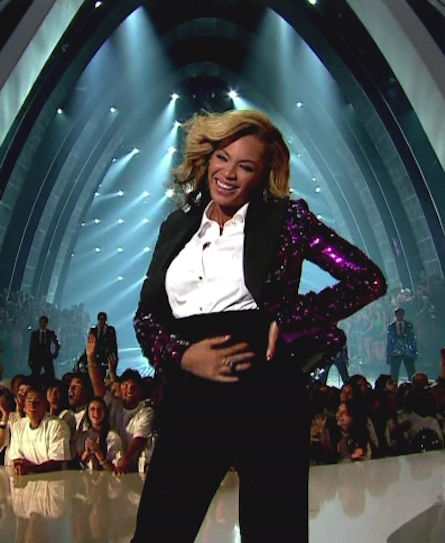
Baby Beyonce is inciting debate about motherhood, race, and “doing it the right way”. [Jezebel]

Gay marriage is a human rights violation of children to be brought up by a female mother and a male father. Hmm… [The Australian]

“Professor Feminism” and the “Chronicles of Mansplaining”:

“I’m pretty confident that Professor Feminism is not Professor Understands Sarcasm, either, so I’ll spell it out: The point of listening to women and feminists is to listen to women and feminists. Because if you listen to them, you might start to understand certain basic points, such as: Women do not automatically have to accept you as an expert, particularly not when the subject under discussion (sexism!) is something you’ve never experienced first-hand. Women do not have to make you ‘comfortable’ and ‘welcome’ in every single conversation. Women do not automatically have to grant you a space in their discussions, on their blogs, or in their lives. Women do not have to permit you to enter their political movements, their self-created spaces, their personal space, their bodies, or anything else that belongs to them; you, as a man, are not entitled to women’s attention, praise, affection, respect, or company, just because you want it. And when a woman says ‘no,’ you respect that this particular woman said ‘no,’ and you stop. You don’t make excuses, you don’t explain why you should be able to get what you want, you don’t throw a tantrum, you don’t call that woman names: You just stop what you are doing. Because she said ‘no.’” [Tiger Beatdown]

See here for another example.

What Adele… and Lil Wayne… can teach us about love. [This Single Life]

“I Thought Success Meant Wearing a Suit.” So did I. I used to fantasise about working on Southbank, wearing suits (I had a penchant for an imaginary hot pink one!) and carrying my files in a suitcase-on-wheels. My how the tables have turned. In my day job, I wear a uniform that I try to spice up every now and then with biker boots and studded flats, and for my unpaid blogging duties, it’s usually trackies or pyjamas. This morning it’s raining, so I’ve invested in some extra insulation with my dressing gown. What do you were that indicates “success”. (In no way am I equating my mundane daily grind with success. I loath my paid job. Just doing it to pay the bills.) [MamaMia]

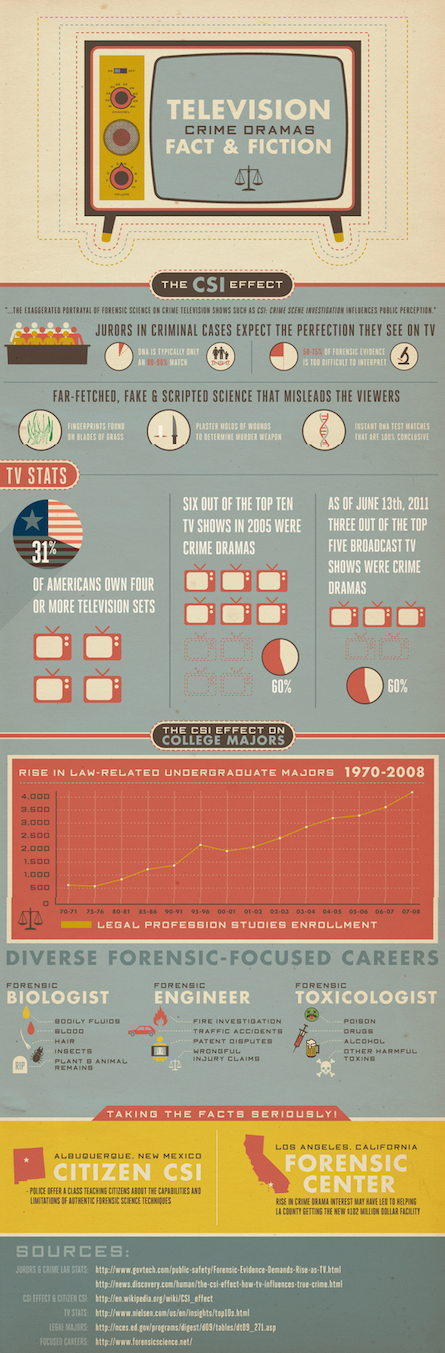
The facts and fictions of television’s crime dramas. [Jezebel]

Apparently, “Confronting Men About Sexism Makes Them Nicer,” and from my experience, I believe it. [Jezebel]

Sarah Wilson contemplates stopping for optimism. What am I optimistic about when I have to stop? The last two bouts of gastro I had I used to lie in bed and catch up on box sets between running to the bathroom. I don’t have an excuse for doing this every other day!

Images via YouTube, Jezebel, BuzzFeed. Bump Shack.

Movie Review: Horrible Bosses*.


Horrible Bosses, despite being a “sophomoric”, Judd Apatovian-esque, “toilet-humour”-filled outing, was much better than I thought it would be.

However, putting aside how hilarious it was much I enjoyed it, there were some race and sex issues I wanted to discuss.

  • “Take us to the most dangerous bar in the city.” Which just happened to be full of black people. Racist much?
  • Men being sexually harassed by their hot female boss isn’t an issue. While Jason Bateman’s Nick and Kurt, played by Jason Sudeikis, have douchebag-asshole-psycho male bosses who are making their lives hell, Charlie Day’s Dave is being sexually harassed and manipulated by his “maneater” boss, Julia, played by Jennifer Aniston. She accosts him in her office wearing nothing by suspenders and a lab coat, she sprays him with a dental irrigation hose in the crotch to “make out the shape of his penis” and blackmails him with photos she took of them together while he was passed out in the dentists chair and she was half-naked. While the movie made it plain as day that what Dave was experiencing was pretty distressing, his buddies brushed it off, saying that in comparison to their bosses, his doesn’t sound so bad.
  • Crazy, manipulative bitches can have “the crazy fucked out of them”. This is an age old trope whereby uptight, bitchy, mentally ill and a myriad of other negative personality traits in women can have them gone, so long as they get a good fuck. Apparently, this isn’t the case, as Julie’s just as crazy as she was before Kurt slipped and fell into her during his reconnaissance mission.
  • Male rape doesn’t exist. Much like how True Blood dealt with it, when Dave cries rape after Julie shows him the aforementioned photos, his friends brush it off with a guffaw, saying there’s no such thing and if only they were “raped” by a boss as hot as his. Fail.
  • There’s such a thing as being “more rapable” than someone else. When their plot looks all but foiled by a comedy of errors, someone (probably Nick, the most level headed one) mentions the possibility of going to jail. Kurt says he can’t go to jail because he’d get raped like there’s no tomorrow. Nick says he would too, and Kurt asserts that he’s more rapable than Nick. They bring Dave in as tiebreaker, and he sides with Nick being more rapabale, as prison rapists go for “weakness” and “vulnerability”. Regular rapists do, too, if Dave’s dental chair experience is anything to go by!

*It has come to my attention that I give away too much in my movie reviews, so the asterisk will now serve as a blanket *spoiler alert* from now on.

Related: Bridesmaids Review.

Rachel Berry as Feminist.

Male Rape on True Blood.

Elsewhere: [Persephone Magazine] Gorgeous, Sexy, “Crazy”: The Fetishisation of On-Screen Mental Illness.

Image via IMDb.

Why Young Feminists Still Have “A Long, Long Way To Go” in the Eyes of Second-Wave Feminists.

Last week I wrote about the Melbourne Writers’ Festival event, entitled A Long, Long Way to Go: Why We Still Need Feminism, presented by Sophie Cunningham and Monica Dux.

On the whole, Cunningham’s presentation was thought-provoking, if a little small-minded, but my main point of contention is as follows.

Cunningham brought up third/fourth wave feminism (the feminism we’re experiencing now, by most accounts), saying that while she applauds the grassroots feminist movements such as SlutWalk, she wasn’t sure 25-year-old women could fully understand the concept of feminism because they still have men fawning all over them at that age.

Now that’s just a whole lot of wrong.

First of all, I am soon-to-be-24 and I don’t have men falling at my feet (well, except when it’s unwanted), and nor do my similarly-aged friends.

Secondly, who’s to say that even if we did, we wouldn’t recognise that, unless they had had some kind of interaction with us other than staring at our boobs, they were interested in us purely for our looks, and that’s anti-feminist. (Then again, I know girls who do have men fawning all over them purely for their looks and couldn’t care less.)

And thirdly, this kind of feminism in fighting is exactly what has been undoing the feminist movement in recent years. As I wrote:

“… Cunningham saw a sort of ‘bottleneck’ in modern feminism, where white, privileged feminists like myself don’t understand the problems facing feminists of colour, feminists with sexual orientation other than straight, feminists with gender other than cis, and feminists with disabilities…”

This is not to mention conflict between the ages, or waves, of feminism.

In Susan Faludi’s attempted takedown of young feminists in her article, “American Electra: Feminism’s Ritual Matricide”, last year, she writes:

“… Despite its [feminism’s] many victories, it seems to falter along a ‘mother–daughter’ divide. A generational breakdown underlies so many of the pathologies that have long disturbed American [or, rather, Western] feminism—… its bitter divisions over sex… [and] alongside the battle of the sexes rages the battle of the ages.”

I can’t think of a better example than, oddly enough, an episode of Gossip Girl from its most recent season, in which it addresses the clash between young and old feminists after Serena van der Woodsen is accused of having an STD. Her dean at Columbia University tells her:

“Women of my generation had to fight for every opportunity. And to be taken seriously, and your attitude, Miss van der Woodsen, makes a mockery of that.”

I wrote in response at the time, in reference to Faludi’s article:

“Now if that isn’t the second wave looking down upon the third wave for our apparent flippancy about ‘activism’, our ‘obsession with technology’ (Gossip Girl’s blasts are a prime example of this), our ‘unwilling[ness] to challenge sexual exploitation for fear of pissing off men’ (hello, Serena), and our infatuation with Lady Gaga (well, Gossip Girl did feature the Lady herself in an episode…), I don’t know what is.

“… It would be interesting to see Serena fight back and declare herself ‘sick to death of hearing about the glory days of Seventies feminism’, whilst older women, like Dean Reuther, ‘declaring themselves sick to death of being swept into the dustbin of history.’

“Faludi spends a lot of time criticising (via her second wave subjects) the technology third wavers use, specifically blogging: ‘All they want to do is sit at their computers and blog.’ Ouch.

“I’m sure Gossip Girl would have something to say about that.”

Exhibit A: SlutWalk as an anti-testament to Faludi’s assertion.

Could it be jealousy these second-wavers are suffering from? I’d like to think feminism is above that, but it is one of the seven deadly sins and can get the better of us. Contrary to what Cunningham said, I don’t think it’s because of the way we look. Everyone knows age is not a precursor to looking hot. I think second-wavers might long for their glory days of making things happen, being invigorated and excited by feminism, instead of seeing their options shrivel up and die the older they get. Again, please see exhibit A. While I don’t know the ages of those who were critical of the SlutWalk, but if they were older it might be easy to see why they were a bit miffed by the anti-slut-shaming and -victim-blaming movement that they felt left them behind.

There needs to be something done to rectify this. Not only the gap between the ages, but the gap between the races, the abilities, the genders and the sexual orientations.

I don’t pretend to know how we’re going to do this, but it will have to start with listening and understanding, empathy, perhaps some mentoring and—what feminism is all about, not just between the sexes, but between all those I mention above—equality.

Related: Melbourne Writers’ Festival: A Long, Long Way to Go—Why We Still Need Feminism.

Ain’t Nothin’ Gonna Break My Slutty Stride.

The Taboos of Sexual Harassment.

Will Boys Be Boys When it Comes to Objectifying Women?

Surfing the Third Wave: Second-Wave VS. Third-Wave Feminism on Gossip Girl.

Elsewhere: [Harper’s Magazine] American Electra: Feminism’s Ritual Matricide.

Event: Melbourne Writers’ Festival—Beyond White Guilt.

The final day of the Melbourne Writers’ Festival brought Beyond White Guilt, taken from the name of author Sarah Maddison’s Beyond White Guilt: The Real Challenge for Black-White Relations in Australia and hosted by Tony Birch.

Maddison and Birch spoke about the crux of Maddison’s book, published in June—guilt and shame—and how they can both be “deeply personal experiences” in the way we look at race relations in Australia.

The absence or a certain “whitewashing” of black history in Australia can induce guilt, a feeling of “sick” and “anxiety”, and can “immobilise” us in striving for a more equal Australia.

On this, Birch spoke about being honoured by the Victorian East Timorese community* for doing not a whole lot other than sitting in front of the TV and thinking, “how awful”.

I think a lot of Australians feel this way, whether it be watching World Vision ads on TV, seeing homeless people begging in the street, or watching boats crash and people perish as they try to seek asylum in Australia (although, from the barrage of “fuck off, we’re full” jibes in response to that tragedy, perhaps it is the minority of Australians).

Maddison spoke of Australia’s roots as “a land of people who dig stuff up and chop stuff down”; an “Aussie battler” sentimentality, if you will. And I think that mentality lends itself to the bigotry we express towards the “other”, ie. people trying to get a “free ride” as asylum seekers, the poor and Indigenous on welfare, the homeless, the disabled, etc.

Unfortunately, when this kind of attitude rears its ugly head, such as in the Redfern and Cronulla riots, and the inaugural Indigenous protesting of Australia Day in 1988, as Maddison mentioned, it usually pits “true blue Aussies” against un-Australians. (Birch wrote a 2001 article entitled “The Last Refuge of the Un-Australian”, which is available for download from the University of Melbourne’s website.)

Whichever way you put it, none of us are truly happy with our country. Lefties abhor the way our environmental and human rights sensibilities are heading, whilst conservatives want to stop the boats, abortions, taxing the rich etc. One thing I think we all can agree on, as Maddison noted, is that our current government sucks.

Birch asked, “How are we going to love our country wholly?” An Aboriginal elder in the audience suggested Maddison’s book become compulsory reading for all Australians as a solution. One thing’s for sure: like feminism, we’ve got a long, long way to go, baby.

*Updated 09/09/11: The original version of this post cited Birch as being honoured by a Papua New Guinean community. In actual fact, it was the East Timorese community of Victoria.

Related: Cowboys VS. Aliens & Indians… Does It Really Matter? They’re All the Same Anyway, According to the New Movie.

My Response: Go Back to Where You Came From.

It’s Not Easy Being Green: The Latest Trend in Discrimination.

Melbourne Writers’ Festival: A Long, Long Way to Go—Why We Still Need Feminism.


Movie Review: Rise of the Planet of the Apes*.


Proposition me with a trip to the movies to see Rise of the Planet of the Apes and, ordinarily, I wouldn’t be interested. Sci-fi, James Franco… not a fan of either.

But show me the trailer, with a heavy focus on the humanity of apes and how they’re  “just like us!” and hella yeah, I’m down to see it.

The film begins with James Franco as a scientist, who has been working on an anti-Alzheimer’s drug by injecting it into apes to see if their brains can repair themselves. Not only does the drug A-1-12 do this, it also creates new pathways in the brain, which means the recipient knows and can do things they couldn’t before.

Bright Eyes, the ape who produced such results, goes ape-shit, so to speak, and is put down. What was thought to be the drug’s fault is attributed to Bright Eyes’ unknown pregnancy and birth, and “she was just being protective” of the baby ape hidden in her enclosure.

The experiment is shut down and Franco’s character, Will Rodman, sees no option but to take the baby ape home to the San Francisco house he shares with his Alzheimer’s-inflicted father, Charles, played by John Lithgow.

Fast forward three years and Caesar, whom they’ve named the now-super ape, has had the A-1-12 transferred to him at birth, it is discovered. He has his own play area in the attic, and he gazes down at the human world below him, aching to experience life outside the confines of the Rodman home.

During this time, Will steals some vials of the A-1-12 drug and secretly gives them to the ailing Charles. The results are overnight and miraculous. With the introduction of Freida Pinto’s veterinarian Caroline, who barely has five lines in the movie and is literally the only female character, bar Bright Eyes who is killed off in the first five minutes to further the story for the male characters, it’s all one big happy family.

Five years later, Will is struggling to care for his dad, whose body has developed immunity to A-1-12, and to wrangle the increasingly smart, inquisitive, lonely and strong Caesar, who attacks a neighbour for roughing up Charles when he tries to drive away in his luxury car in a dementia-induced stupor.

Will is forced to send Caesar away, to a primate enclosure in the city. Unbeknownst to Will, Caesar and the other apes are treated like crap by the attendants, who are the first victims when the apes stage a revolution.

Each time Will and Caroline come to visit Caesar, he gradually wants nothing to do with them. He begrudges Will for abandoning him and allowing him to be treated “like an animal”.

This notion is really at the crux of the film. We treat animals like beings less than ourselves, even though we know more than ever about their thinking and feeling capacities, and we will live to suffer the consequences.

There are consequences when we treat them too much like humans, too. (Paging Paris Hilton.) We can see that when Caesar leads the motley crew of apes freed from “sanctuaries”, like the one Caesar and the other apes escape from, laboratories and the zoo, and when he tells (yes, apes can speak now. The miracle of A-1-12.) Will he’s “home” with his own species.

This is after the climactic Golden Gate Bridge fight scene, where man versus ape in an overwhelming victory for the latter. This scene perfectly illustrates the “pack mentality” we accuse sports stars of, and is illustrated by the London riots and the gang-rape of Lara Logan.

Other subtle and not-so-subtle metaphors in the film include the dichotomy of war, racism, prison, how we treat refugees, how we treat those we don’t understand, testing on animals (which, in this film, is null and void: Franklin, a lab technician who dies towards the end of the film after being exposed to the virus strain of A-1-12, A-1-13, proving it may work on apes, but it certainly doesn’t on humans) and, of course, the aforementioned way we treat animals.

I’m a sucker for an animal movie, and cried pretty much through the whole thing! And these “animals” weren’t even real! But, in retrospect, the flawless special effects and underlying meaning weren’t enough to save the dismal character development and non-ape related storyline. Pretty much all the characters were interchangeable.

I’m not a big fan of James Franco, and in this movie he didn’t annoy me with his James Franco-ness but, having said that, I would rather that than a repeat of his Oscars coast-through, which his performance in Rise of the Planet of the Apes was a mirror image of.

In terms of Pinto being the only woman in the movie, perhaps her no-character Caroline could have been spared in favour of one other female character with a bit of substance, a backstory, and a driving force in the storyline: mother Charlotte instead of father Charles.

But really, this reasoning is clutching at straws, as Rise of the Planet of the Apes is really all about the… erm… apes. Humans are merely transposable caricatures.

*It has come to my attention that I give away too much in my movie reviews, so the asterisk will now serve as a blanket *spoiler alert* from now on.

Related: Time’s “What Animals Think” August 16, 2010 Review.

Asylum Seekers: Have a Little Compassion.

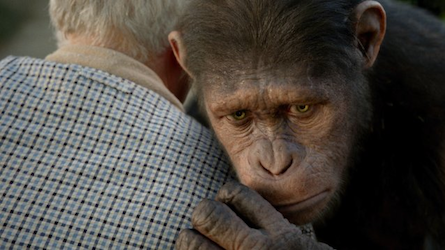
Image via IMDb.
 

TV: Rachel Berry as Feminist.


Last week I wrote in defence of Rachel Berry.

This week, I wanted to explore the character as a feminist one.

While Glee isn’t exactly known for its positive portrayals of women, people of colour, the disabled, or the gays, Rachel has managed to grow in spite of all this, and become somewhat of a feminist icon.

I wrote that audiences have come to know and love Rachel not because her obnoxious know-it-all persona has changed, but because “We’ve been given time to understand Rachel’s initially painful personality and to identify both her strengths and weaknesses. Her ambitions and drive haven’t shifted, but the context for understanding them has,” as Dr. Karen Brooks reiterates.

Other bloggers have come to similar conclusions.

Leah Berkenwald at Jewesses With Attitude writes:

“I… have trouble with the vilification of Rachel Berry on a feminist level. How often do we dismiss women as ‘bossy,’ ‘know-it-all[s],’ or ‘control-freaks’ when their behavior would be interpreted as leadership, assertiveness, or courage if they were men?

“… In the right context, Rachel Berry’s personality would not seem ‘intolerable’ or ‘annoying’ so much as bad-ass, renegade, and hardcore.”

And Lady T, who used Rachel as her “Female Character of the Week” on The Funny Feminist, said:

“… The show wanted us to root for a girl who was ambitious, daring, and driven.”

It might be because I have been known to be seen as bossy, a know-it-all, a control-freak (just ask my new housemate!) and ambitious that I’m standing up for her, but just think of another feminist heroine in modern pop culture who could also be described using these words: Hermione Granger. The only difference is, she isn’t vilified for these attributes.

I have also been called ugly and a slut, not because I am ugly and a slut, but because these qualities are removed from the “‘good’ [female] character… [who] soars to impossible heights, not on the back of hard-work and self-belief, but usually [because of] a love interest and wishing hard.”

If you look back to the beginning of Glee, especially, Rachel was often deemed ugly. Now, anyone who’s seen Lea Michele knows she’s not exactly unconventionally attractive, but Rachel is charactertised as this because she’s annoying. And she’s annoying because she stands up for herself, knows what she wants and how to get it. (From a racial point of view, she could also be seen as being “ugly” because of her Jewishness.)

Despite these inherently “unattractive” qualities, Rachel manages to snag her man, Finn, in what can be seen as typical Glee sexism and discrimination:

“‘I love her even though she’s shorter than Quinn and has small boobs and won’t put out and is loud and annoying.’ 

“The show wanted to make me believe that Finn was doing Rachel some grand favor by simply being with her at all.”

On the other hand, it can be seen as a poignant take on teenage life that the underdog is always being compared to the most popular girl in school: Quinn Fabray.

If Rachel is Glee’s feminist heroine, Quinn is her polar opposite. She has had next to no character development, which leads to her motivations changing week to week.

In “Original Song” she tore Rachel down, telling her to get over her “schoolgirl fantasy happy ending” with Finn, who would never leave Lima, taking over Burt Hummel’s mechanics business, with Quinn, a real estate agent.

But in “Born This Way”, she was “broken down” by her fat past coming back to haunt her, to come across as more “relatable”.

Sure, Rachel’s had her fair share of being “broken down” (being dumped and subsequently egged by Jesse St. James, being publicly broken up with by Finn, getting slushied… I sense a food theme here.), but in the grand Glee scheme of things, she’s actually doing pretty well for a female character.

Now, if only we can get Mercedes a boyfriend

Related: In Defence of Rachel Berry.

The Problem with Glee.

The Underlying Message in Glee’s “Original Song” Episode.

Brown Eyed Girl.

The Underlying Message in Glee’s “The Rocky Horror Glee Show” Episode.

The Underlying Message in Glee’s “Duets” Episode.

The Underlying Message in Glee’s “Born This Way” Episode.

Sookie as Feminist? Hear Her Roar.

Do “Strong Female Characters” Remind You of You?

SlutWalk.

Slut-Shaming as Defence Mechanism.

Elsewhere: [Bitch] The Transcontinental Disability Choir: Glee-ful Appropriation.

[Jewesses with Attitude] Why Rachel Berry Deserves Our Compassion.

[Huffington Post] Hermione Granger: The Heroine Women Have Been Waiting For.

[Feministing] Pretty Ugly: Can We Please Stop Pretending That Beautiful Women Aren’t Beautiful?

[The Funny Feminist] Female Character of the Week: Rachel Berry.

[Jezebel] Why Won’t Glee Give Mercedes a Boyfriend?

Image via Wet Paint.