Presidential Barbie Stands on Her Own Two (Weighted) Feet.


Last week she went bald, this week she’s running for president (again). Is there anything Barbie can’t do?

Jezebel notes that Barbie has been running for office on and off since 1992, when she wore an evening gown. Now she wears a sensible pink suit and weighted shoes so that she can stand up on her own two feet for the first time ever. Now there’s a campaign slogan to rival Obama’s “Yes we can”.

In the spirit of inclusion, and perhaps harkening back to Obama’s historic win, the I Can Be… President Barbie, released in conjunction with The White House Project which aims to get more women running for office, comes in white, Hispanic, Asian and African American ethnicities.

Related: Bald Barbie: Actually, Barbie Won’t Be Bald At All. Instead, It’ll Be Her Best Friend.

Elsewhere: [Jezebel] Barbie is Running for President (Again)!

[New York Daily News] Her Dream Job! Barbie Running for President?

Image via Styleite.

TV: New Girl—Sexual Harassment is a Myth. You Just Need to Give People a Chance to Show You How Good They Are.


This is according to New Girl, the purveyor of upholding gender stereotypes.

When Jess invites the landlord to dinner as a thanks for fixing some things around the loft, Nick is certain he’s trying to hit on her because people are generally jerks. I tend to stick with Nick on this one, but Jess isn’t so sure.

Nick is 100% right when it turns out the landlord wants to have a threesome with Jess and Nick. While there’s nothing wrong with this if all parties are consenting, Jess agrees to go along with it in the hopes that it will all work out for the best (ie. no threesome occurs) and Nick refuses to back out until Jess does.

To me, this whole scenario not only reeks of perpetrator-sympathising* (Maybe he slipped and fell. Maybe he was going through a bad breakup. Maybe he was stressed at work.**), but that the way a woman acts determines how she will be treated by the opposite sex.

Granted, in my experience and the experiences of those close to me, the female is deemed “too friendly” and that’s why she was harassed, whereas here, Jess thinks being nicer to people will lead to less bad things happening (like Nick getting a gun pulled on him in the parking lot). I believe there was also a reference in there about the way Jess looks (ie. über-feminine) influencing how she’s treated by the opposite sex. Like I haven’t heard that one before…

*To be sure, Remy the landlord is not committing sexual assault or harassment here, but I think he serves as a good metaphor.

**This refers to strictly male-on-female harassment and assault, ignoring the fact that women can be perpetrators, too.

Related: Manic Pixie Dream Girly Girls & Not-So-Girly Girls.

New Girl Should Attend a SlutWalk Sometime…

Body Acceptance on the New Girl.

Who’s That Girl? It’s the New Girl.

The Harassed and the Harassed-Nots.

The Taboos of Sexual Harassment.

I Ain’t No Hollaback Girl: Street Harassment in CLEO.

Image via VidXDen.

On the (Rest of the) Net.


Ashley Judd slaps down body- (and face-) shamers. [Daily Beast]

A fictional tale (though a very realistic one) of what it’s like to promise your purity to your dad. [Jezebel]

So Tony Abbott’s sister is gay. Now what? [MamaMia]

Kim Kardashian, Paris Hilton et al: don’t hate the player, hate the game. [Daily Life]

Republicans aren’t the only ones making jokes at the ladies’ expense. Obama does it too :( [Jezebel]

The Hunger Games killed it at the box office because Katniss Everdeen was portrayed as a subject as opposed to a “Fighting Fuck Toy”. [Ms. Magazine]

Following on from last week’s Rachel Hills asexuality article, Rachel Rabbit White on “graysexuality”:

“… ‘But sex itself is just a set of physical activities, it’s easy to imagine someone who’s not into them once you take all the symbolism away.’

“Sex positivity works to broaden our understanding of what sex is (e.g., not just penis in vagina, but body part + body part = pleasure). But what if we also set out to broaden our understanding of intimacy—intimacy is not just sex, but also…—perhaps a new picture would unfold. One where people realize they don’t need to have sex when what they want is intimacy. One where, maybe, there would be a little more gray in our sex-drives.” [Jezebel]

An interesting take on all the Snow White reboots. [io9]

What it’s like to be a guy who reads (or read) Judy Blume. [Jezebel]

Women don’t hate other women for being beautiful. They hate them for having delusions of grandeur, like Samantha Brick. [MamaMia]

Mia Freedman interviews Dr. Michael Carr-Gregg about Matthew Newton. Carr-Gregg seems to think we need to reexamine our views around mental illness and give Newton a fair go. Um, the kid’s been charged three times in the past year and beats up people on a regular basis. I’d say he’s been more than given a fair go. What do you think? [MamaMia]

Image via MSNBC.

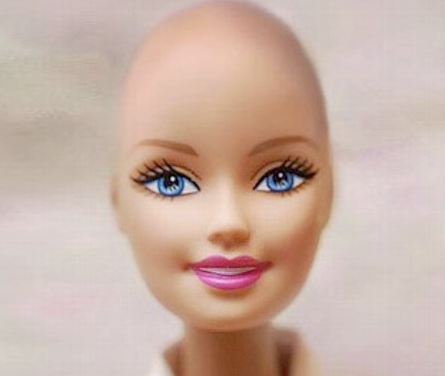
Bald Barbie—Actually, Barbie Won’t Be Bald At All. Instead, It’ll Be Her Best Friend.


On the one hand, we need to applaud Mattel for accepting an “outside idea” for Bald & Beautiful Barbie, which aims to lessen the stigma of hair loss due to cancer treatment for young girls and their mothers who have the disease.

On the other, it’s not going to actually be Barbie who’s bald, but her bestie. Let’s just hope that this time she’ll be able to get into the Barbie Dream House, unlike the last doll they tried to make in honour of people who don’t fit the able-bodied norm: Share-a-Smile Becky, whose wheelchair didn’t fit inside the Dream House doors. Whoops!

So with this new doll, Mattel might be saying that bald is beautiful, just as long as it’s not Barbie who loses her hair. Baldness is beneath Barbie, don’t you know?

One step forward, two steps back…

Elsewhere: [Jezebel] Barbie’s Friend Will Soon be Bald & Beautiful.

Image via Jezebel.

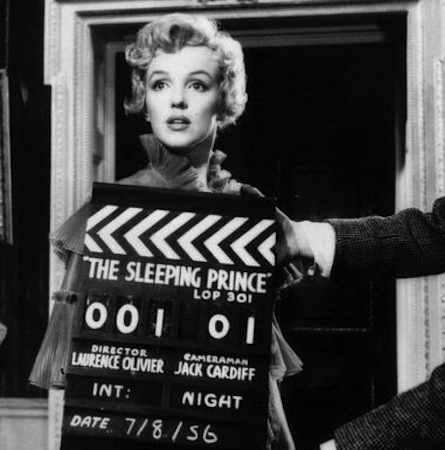
Books: Was This What Marilyn Monroe Was Really Thinking When She Was Filming The Prince & the Showgirl?

From Fragments: Poems, Intimate Notes, Letters by Marilyn Monroe edited by Stanley Buchthal & Bernard Comment:

“Fear of giving me the lines new

maybe won’t be able to learn them

maybe I’ll make mistakes

people will either think I’m no good or

laugh or belittle me or think I can’t act.

Women looked stern and critical—

unfriendly and cold in general

afraid director won’t think I’m any good.

remembering when I couldn’t do a god

damn thing.

then trying to build myself up with the

fact that I have done things right that

were even good and have had moments

that were excellent but the bad is heavier

to carry around and feel have no confidence

depressed mad”

According to archival information, this was actually written in 1951 while The Prince & the Showgirl was released in 1957. So perhaps these weren’t Marilyn’s exact thoughts during the filming of the movie that was the basis for this year’s My Week with Marilyn, but it just goes to show she was plagued by insecurities from the beginning.

Related: My Week with Marilyn Review.

Fragments of Marilyn Monroe’s Literary Life.

All Eyes on Marilyn.

Image via The Passionate Movie Goer.

Movie Review: The Hunger Games*.


Now, The Hunger Games is a lesson in how to do young adult with a female in the lead, Stephenie Meyer.

***

I was a bit apprehensive about buying into The Hunger Games hype but, as a blogger, I thought it imperative that I read the book and the see the movie to understand what all the hype was about and, at the very least, to get a blog post out of it. (That’s my reasoning for going to see American Pie: The Reunion next week, anyway!)

I’d read all the blog posts and cultural analyses of the film and book before I went to see it last Monday and finished it over this past weekend, respectively, so I had a pretty good idea of the storyline and the social commentary I’d be looking for. I don’t normally like to see the film version before I finish the original one (although my track record, with Twilight and, most recently, Water for Elephants and My Week with Marilyn, doesn’t bode well), but I actually found myself more immersed in The Hunger Games, as opposed to analysing each and every moment, when the film continued after where I’d reached in the book. (The pre-Hunger Games interviews, FYI.)

While the book is allegedly a commentary on the hell high school can be (like a post apocalyptic Buffy), I interpreted it more to be not only about capitalist life (the riches of the Capitol juxtaposed against the poverty and poor quality of life for the rest of Panem), but about advertising culture and the media.

The argument that seems to surround media today is that we should ban this, and censor that. Then we wouldn’t have eating disorders, negative stereotypes of women and minorities, obesity, gambling, domestic violence, blatant consumerism and pretty much anything else you can think of. Common sense would have us stop consuming the things we don’t feel align with our personal ethics. Don’t like the way animals are slaughtered in factory farms for our precious meat? Don’t eat it. Don’t like racism? Don’t be a racist. Don’t like leggings as pants? Don’t wear them. Don’t like children being chosen at random to fight to the death for the pleasure of the elite and the opportunity to make life a little more bearable for the underclass? Don’t watch it. If everyone adopted this attitude and no one watched, there wouldn’t be a product. As author Suzanne Collins notes her inspiration for the series as flicking television stations between war and reality TV, it’s not hard to come to this conclusion.

Despite the fact that no one really seems to be talking about the senseless mass murder of children by children (won’t somebody think of them?!), there is a point to “career tributes” like Cato and Glimmer, who are trained for the Hunger Games since birth.  As Laura Miller wrote in The New Yorker, “[W]hy isn’t it the poorer, hungrier districts that pool their resources to train Career Tributes, instead of the wealthier ones?”

I wasn’t as huge a fan as some others who’ve devoured the series in several sittings (I prefer to wait until the next filmic instalment is on the horizon to delve into the second book, as with Tomorrow, When the War Began, for example), but I did like it and look forward to seeing what the next two chapters bring; both book and film versions.

*Blanket spoiler alert.

Related: My Week with Marilyn Review.

Event: Should Meat Be Off the Menu?

Tomorrow, When the War Began by John Marsden Book/Movie Review.

Elsewhere: [The New Yorker] Fresh Hell.

Image via IMDb.
TV: Gossip Girl—Dair: It’s On!


When sparks began to fly between Dan and Blair last season, I wasn’t too keen on the prospect of them getting together.

But, as Dan became her confidante during her pregnancy loss and aftermath of the wedding from hell, I warmed to the idea. I thought I’d forever be a Chair (Chuck & Blair) girl, but suddenly, I’m batting for Team Dair (Dan & Blair).

I’m not sure what turned me, exactly, but I think it might have had something to do with Blair finally succumbing to her feelings for Dan, and addressing him by his first name, as opposed to the disdainful “Humphrey”. Also, Dan insisting she keep saying his name as they kiss in his doorway didn’t hurt!

Related: Gossip Girl: Blair Channels the Tragic Life of Princess Di & Gossip Culture is to Blame.

Gossip Girl Takes Inspiration from Yet More Royals. This Time It’s the Grimaldis.

Image via Fan Pop.

On the (Rest of the) Net Comes a Day Early—Easter Edition.


Happy Easter to all Scarlett Woman readers. See you on the flipside (that’s Tuesday!).

On Megan Fox’s old nose. [Jezebel]

Gala Darling is going without TV for a month. Could you do it?

Kate Spencer responds to an insulting op-ed in the New York Post about women who move to New York City only being interested in an image-based, money-obsessed Sex & the City lifestyle. But it’s the Post, what do we expect? [The Frisky]

Still with SATC, five things Carrie Bradshaw failed to mention about NYC. [Bailey Powell]

Is the blowjob dead? [Jezebel]

Sharing your miscarriage on Facebook: do or don’t? [Jezebel]

The racist reactions to The Hunger Games. [Jezebel]

How to be a woman girl. [Jezebel]

Rachel Hills on asexuality. [The Atlantic]

Queensland’s new Premier, Campbell Newman, vetoes the state’s Literary Awards, in the Year of Reading and in a time when 1 in 5 Indigenous children are illiterate. This is why you don’t vote Liberal. [Courier Mail]

How an article about how hard it is to be a beautiful-looking woman written by an average-looking woman entices readers to hate troll. [Jezebel]

Fat-shaming Jessica Simpson for gaining weight during pregnancy. [Jezebel]

Clementine Ford unpacks the widespread need for other people to tell women what they should and shouldn’t be wearing. [Daily Life]

Image via Ask Men.

Event: Grace Kelly—Style Icon Exhibition at the Bendigo Art Gallery.


Yesterday I attending the much-hyped (both in the media and in my mind) Grace Kelly: Style Icon exhibition at the Bendigo Art Gallery.

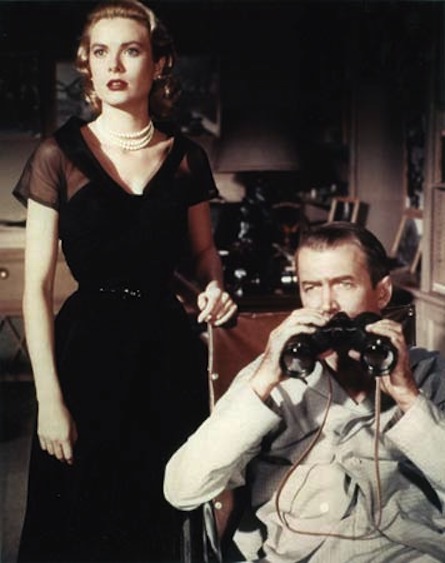
I’ve been a fan of Kelly since I first saw her in Rear Window three Christmas’ ago, and when my mum showed me the gallery’s brochure on upcoming events this time last year, I was wetting my pants with excitement to see an exhibition based around one of the most beautiful and talented actresses of the golden age of Hollywood.

In preparation, I watched High Society and To Catch a Thief (still have to check off Dial M for Murder on my list of Grace must-sees), but Rear Window will forever remain in my heart as my favourite Kelly film (and one of my favourite films, period).

While the exhibition disappointingly didn’t feature Kelly’s signature Rear Window dress, the black and white cocktail length ballgown from her opening scene in the movie, it did have on display the black mid-length dress from the film, which is so classic and timeless it could be seen on the street today.

The dearth of clothes from her first ten films were made up for in the several pieces from High Society, her last film and one from which she was allowed to keep her wardrobe. These were followed up with the dress she met Prince Rainier in, the famous Hermès Kelly bag, her bridal trousseau and, of course, a replica of her wedding gown (the original’s fabric is too delicate to travel).

The rest of the exhibition consisted of a myriad of Grace’s own clothes after she became a princess: a powder blue gown to conceal her baby bump and some elegantly embellished suits were my favourites. Despite references to the Princess’ reluctance to embrace the sky high hemlines of the sixties, there was an Yves Saint Laurent Mondrian dress, a staple of the times, and some flowing seventies-style gowns.

From the fairytale exhibition I had dreamed up in my head, I had much higher expectations than what was presented at the gallery. This is not to say that Grace Kelly: Style Icon isn’t an exhibition worth seeing, if fashion and movies and Kelly are your thing. But, compared with some of the other exhibitions Bendigo Art Gallery has hosted, it might be their most hyped one but certainly not their best.

Related: Bendigo Art Gallery: Giving the Metro Museums a Run for Their Money.

Loving… Grace Kelly as Lisa Fremont in Rear Window.

Images via Grace Kelly Bendigo, Clothes on Film, Costumerism, YouTube.

Naomi Wolf on Katy Perry’s “Part of Me” Video—Shameful, Glorifies Violence.

In the wake of Katy Perry’s breakup anthem, “Part of Me”, Naomi Wolf had this to say on her Facebook page:

“Have you all seen the Katy Perry Marines video? It is a total piece of propaganda for the Marines… I really want to find out if she was paid by them for making it… It is truly shameful. I would suggest a boycott of this singer whom I really liked—if you are as offended at this glorification of violence as I am.”

Firstly, where was Wolf when “California Gurls” came out?

Secondly, while I think calling Perry’s video “shameful” is a bit unnecessary, and there are plenty of other issues Wolf could use her feminist voice to speak out against, she’s not entirely wrong when she says it looks like Perry’s been paid by the Marines to endorse them.

I somewhat enjoyed the film clip and can appreciate its tokenistic message of girl power, but at the beginning when Perry’s in the service station and sees the bumper sticker on the noticeboard for the Marines, I have to agree with Wolf that it does look like a four minute musical advertorial for the armed services. There’s nothing necessarily wrong with this, but if the aim is to glorify war then that’s another story.

What do you think?

Related: Whipped Cream Feminism: The Underlying Message in Katy Perry’s “California Gurls” Video.

Elsewhere: [Facebook] Naomi Wolf.