On the (Rest of the) Net.

“Benevolent” teen sexism versus “hostile” teen sexism at Psychology Today via Jezebel.

Also from Jezebel, “Facebook Tells You When You Will Break Up” via a handy little graph. I wonder how the graph would change to reflect Australian dating norms andmost interestinglyseasons.

The always hilarious Mia Freedman muses on “First World Problems”.

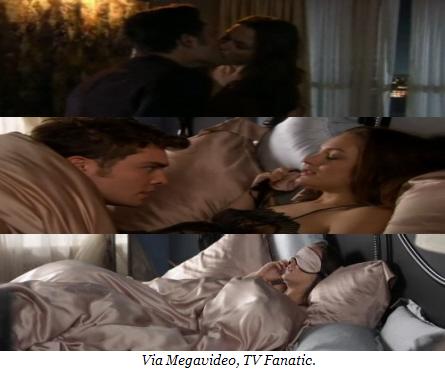
Gawker’s take on Gossip Girl’s “Juliet Doesn’t Live Here Anymore”, or more importantly, Chuck and Blair’s sex life:

“So, Blair and Chuck are totally mashing genitals against each other for pleasure, and everyone is throwing up all over the place because of it. Because it’s so gross. ‘Hey Blair, let me put my penis inside you behind those bushes.’ THROWUP. ‘Hey Chuck, why don’t you stimulate my vagina with your mouth some more.’ RETCH. ‘Oh my gosh, let’s pant and wheeze and sweat here in this limo because we just rubbed our genitalia together to the point of climax.’… IT’S GROSS, is what I’m saying… But they’re doing it anyway and that was a plot point. Absolutely nothing changed or developed in their fucking…”

Since when did Gossip Girl need a plot point, anyway? It’s a guilty pleasure and that’s the beauty of it.

This 2009 New Yorker article is suspiciously similar to a Law & Order: SVU episode from season 11. But it is a brilliantly haunting read about fire investigation, wrongful incarceration, execution and justice.

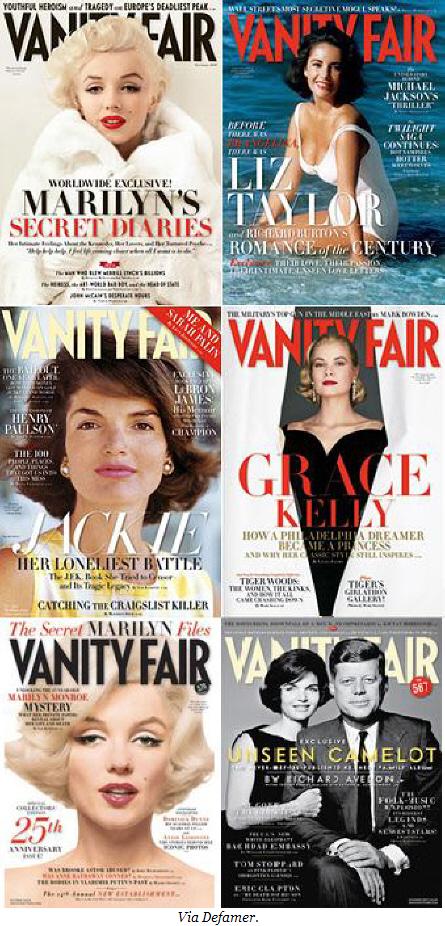
Defamer addresses Vanity Fair’s penchant for posthumous covers.

Ideologically Impure responds to Stephen Fry’s assertion that women don’t like/want/have sex as much as gay men:

“Because, Mr. Fry, do you know what happens to women who openly state they enjoy sex, who act in an overtly sexual manner, who admit to casual sex?

If they get raped, their rapist walks free.

“Because a woman saying she enjoys sex is obviously always up for it. And a woman who’s had casual sex in the past must not be fussy about who she fucks. And a woman who flirts is just ‘sending the wrong signals’ and completely gives up her right to say ‘no’.”

The allure of the Kindle, by Maggie Alderson.

The original “In Defence of Slut-O-Ween” and, in the same vein, The Stranger wishes us a (belated) “Happy Heteroween”.

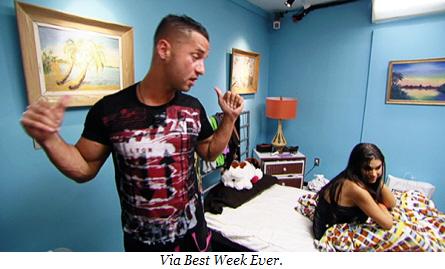
Annabelle DeSisto, the girl who shut down the Situation on Jersey Shore, tells her side of the story on Best Week Ever:

“… He kept asking me if I wanted to change clothes, like to get into something more comfortable like pyjamas. And I was like ‘No’, and he was like ‘But you seem really uncomfortable in that dress, let’s just get you into pyjamas.’ I’m like, ‘Does everything you own have a rhinestone bulldog or dragon or Ed Hardy logo on it?’ And he’s like, ’Yeah, of course!’ And I was like, ‘Then I’m not changing clothes.’”

Sounds like a quintessential douchebag to me!

In defence of Kanye West:

“Part of Kanye’s curse is that after everyone chills out a little, we all realise he was just saying what everyone was thinking, and we were unfair to leap all over him…”

“What is Vampire Sex?” Effing hot, that’s what!

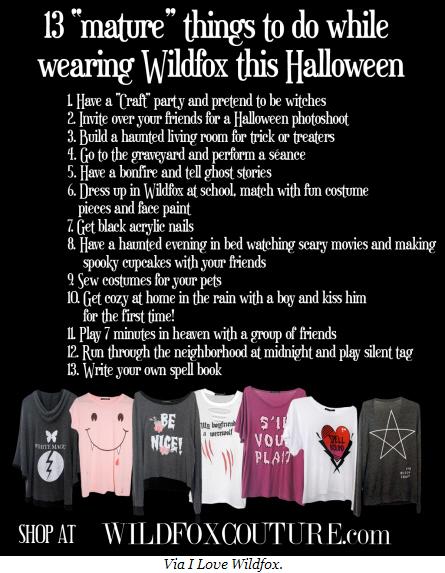
Shameless Wildfox plug: “13 ‘Mature’ Things to Do While Wearing Wildfox This Halloween”. I did just one of these things this Halloween. Can you guess which?

If you missed Zoe Foster’s “All Women Really Want is a Cup Of Fu*king Tea” relationship advice in Cosmo a few months ago, here it is again on her blog, via MamaMia.

Mick Foley pens his thoughts on Linda McMahon:

“… The concerns expressed in regard to WWE are valid onessubstance abuse problems, content issues, the troubling trend of pro-wrestlers dying way too young. But if Linda McMahon is going to be held personally accountable for every negative aspect of her family business, shouldn’t she be given personal credit for every positive aspect as well? Like the 5,000 wishes to children facing life threatening conditions WWE has granted over the last twenty five years, through ‘Make-a-Wish’ and other wish granting organisations? Or the ‘Tribute to the Troops’ tour that WWE has embarked on every year since 2003; spreading holiday cheer to service-members far from home, in remote bases in Afghanistan, Iraq and Kuwait.”

When things are looking glum, take a look at this mantra from Gala Darling. Things aren’t that bad.

TV/Books: Sexual Healing—Gossip Girl Takes a Page Out of John Irving’s Book.


What’s the best way to get over a lover? Go cold turkey, or develop an aversion by bonking each others’ brains out?

Last week on Gossip Girl, Blair favoured the former, while Chuck liked the latter when it came time to put an end to their on-again/off-again affair.

Their predicament shares shades of John and Franny Berry’s dilemma in John Irving’s The Hotel New Hampshire, minus the incest.

Related: The Hotel New Hampshire by John Irving Review.

Good-Time Girls.


From “Party & Punishment”, published in The New York Times Magazine, 22nd October, by Virginia Heffernan.

“Right after 9/11, Muslim regimes were depicted as tyrannical in part because they demonised Western fun-loving culture in the name of a misogynistic ideology. Slowly but surely we’ve been doing the same thing with our most visible good-time girls, making villains of women who are dangerous almost exclusively to themselves. We point cameras into their darkened cars and literally up their skirts to find cellulite or evidence of immodesty that wouldn’t exist without the cameras. When they start drinking and doing drugs, just as many celebrities before them have done, we become incensed, agitating for them to go to jail.”

Heffernan’s contention rings true when it comes to Lindsay Lohan, who has been to jail four times (two in quick succession in recent months), rehab on five (or is that six?) occasions, and demonised in the media countless more. But do we demand the same of drug-addled famous men who are a danger to others, ie Charlie Sheen? For what he’s done to the women in his life, not to mention himself, perhaps it is time for Sheen to see the inside of a prison cell. Or at the very least, be taken off the show on which he earns the highest salary on television until he gets his shit together.

Related: Poor Little Rich Girl: Lindsay Lohan in Who.

Why Are Famous Men Forgiven for Their Wrongdoings, While Women Are Vilified for Much Less?

Bad Boys, Whatcha Gonna Do? Host a Seven Family Show.

Lindsay Lohan: Marilyn, Eat Your Heart Out.

Ex-Factor: Matthew Newton.

Elsewhere: [The New York Times Magazine] Party & Punishment.

The Anatomy of a Douchebag.

The other day, I was talking to my friend about a mutual acquaintance of ours, and how he is somewhat of a “douchebag”. He’s not malicious in any way (which might make him an “asshole”, “prick” or, depending on the severity of said maliciousness, something more severe, beginning with an “f” orGod forbid!a “c”), but some of the things he says and does can only be described as “douchey”.

Urban Dictionary ensures that douchebag (“Someone who has surpassed the levels of jerk and asshole, however has not yet reached fucker or motherfucker”) is “not to be confused with a ‘douche’”, “… an individual who has shown themself [sic] to be very brainless in one way or another.” So perhaps just plain old “douche” is the word I’m searching for here, but I still maintain that a douchebag is just a misguided knob who does things seemingly to look “cool” and gain others’ approval.

But you’ve seen the douchebag in popular culture; you know what I’m talking about.

He’s not the equivalent of Jesse James, who cheated on Sandra Bullock with tattooed fetish model Michelle “Bombshell” McGee, is an alleged Nazi sympathiser and ran dog fights out of his West Coast Choppers studio. He’s not in the same ball park as Charlie Sheen, who is a raging drug addict and wife beater. And he’s certainly nothing like Joel Monaghan, the disturbed and idiotic Canberra Raiders player who was in the news last week for engaging in a sex act with await for itdog! Tiger Woods, who is a massive dickhead for cheating on his gorgeous wife with the multitude of women, would probably be the closest thing to a douchebag out of the men I’ve listed above, for the simple fact that his acts hurt no one but himself. Sure, there was some very public pain and suffering from his wife, Elin Nordegren, and some of his floozies who thought they meant more to him than they actually did, but there was no drug use, animal cruelty, bigotry and/or violence against women.

But from my research (FYI, who would’ve thought there were so many websites dedicated to the phenomenon?!), I’ve found that the douchebag is most comfortable in their natural habitat; reality television.

I’ve always maintained that Spencer Pratt and Jon Gosselin are the douchebags du jour, pulling publicity stunts with on-again/off-again wife Heidi Montag and ordering Starbucks in Ed Hardy garb, respectively. More recently, the cast of Jersey Shore have been known to exemplify the douchebag attitude, with the women of the show inspiring me to coin my own personal term for the female equivalent of a douchbag: a douchebaggette.

Speaking of Ed Hardy; the fashion label favoured by Gosselin and the Shore cast (Pratt seems to have moved away from the brand and towards a more derelict, hippie look, in keeping with he and Heidi’s crystal-healing-meets-bankruptcy lifestyle. But Pratt surpasses the physical attributes of the douchebag; he is inherently and eternally a douchebag. Heidi, however, still gets her douchbaggette on in the label.) is a key ingredient in the anatomy of a douchebag. Other external ingredients might include, but are not limited to; men who think their ridiculous hair, which they’ve spent more time on than I spend on my own locks, looks good (Pauly D, I’m looking at you), with a special mention to rats tails; men who wear copious amounts of jewellery or blinged-out clothing; men who wear headbands; and men who insist on getting the perfect pose for their Facebook profile pic. Feel free to submit your own physical douchebag attributes in the comments!

In essence, though, I think the douchebag is an insecure bloke (bogans are not exempt from douchebaggy-ness; in fact, in Australia, I’d say bogans make up a significant portion of the douchebag population), who strives for the acceptance of others in the way he projects himself and the things he says and does. Again, the douchebag poses minimal threat to non-douchebaggy majorities (or is that minorities? The douchebag seems to be sweeping the nation in record numbers)… except when they blind you by flicking their rats tail in your eye and/or from the glare of their rhinestone covered Ed Hardy tee whilst photobombing you!

Related: Why Are Famous Men Forgiven For Their Wrongdoings While Women Are Vilified for Much Less?

Beauty & the Bestiality.

Poor Little Rich Girl: Who Cover Girl Heidi Montag.

(Sex) Ed Hardy.

Extreme Makeover: Jersey Girls.

Things Bogans Like.

The Kim Kardashian Backlash.

I sense a backlash coming on. Specifically, a Kim Kardashian backlash.

Personally, I love the girl. I think she’s sweet, with good intentions and a savvy business sense. But seriously, I am over seeing her on every magazine cover every week. She’s like the new Jennifer Aniston.

We don’t care about how she’s 30 and single and desperate, Who. So is half the population (and this is based on actual statistics that I pulled from out of my ass). I’ve got my own problems; I’m 23 and single and desperate, but you don’t see me on the cover of a weekly moaning about it. (No, but I do moan about it on this here blog!)

Only a few short months ago, Kim was the apple of Famous’s eye, guest editing an issue in May. Now she’s on its cover again, which is espousing the alleged demise of their TV show (although, which TV show Famous is referencing is unclear. Could it be Keeping Up with the Kardashians, Kourtney & Khloe Take Miami or Kourtney & Kim Take New York? Oh, the possibilities!) in the wake of the release of their new book, Kardashian Konfidential.

On a side note, are the Kardashian’s really in the position to be releasing a self-help book of sorts? Khloe isn’t exactly the poster girl for responsibility; she was jailed for drink driving and married Lamar Odom after a month of dating (well, they are still together over a year later, so maybe irresponsibility is the key?). While Kourtney has been blessed with baby Mason, she will be forever cursed by baby daddy, Scott Disick, one of the forefathers of douchebaggery. (More on that to come tomorrow.) And Kim is 30 AND SINGLE! Who is she to be giving advice?

The Kardashian’s are famous for being famous. I think Kim’s biggest claim to fame before turning herself into an über-celebrity was her sex tape and being Paris Hilton’s BFF, who then later likened Kim’s ass to a garbage bad full of cottage cheese, which isn’t very BFF-like. And we all know what happened to Paris: she went to jail and while she was released just weeks later, her pop cultural relevance rotted there.

If you’re not careful, Kim K, you might suffer the same fate. And nobody likes cottage cheese that’s been left out too long.

TV: The (Belated) Underlying Message in Glee’s “Never Been Kissed” Episode.


I was unable to catch up on Glee when it aired last week, so I decided not to write about the latest episode’s “underlying meaning”. However, after watching it over the weekend, I think there is an important message that needs to be talked about; just like every other episode this season!

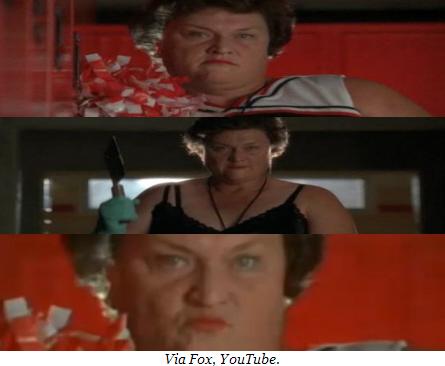
While Glee can sometimes turn into an after-school special, “Never Been Kissed” was more of an “hour long ‘It Gets Better’ video”, as Jezebel puts it, focussed around Kurt’s struggles with being the target of homophobia and Coach Beiste’s sexual inexperience and objectification as an anti-sex symbol.

It will be interesting to see if the usually lacklustre writers will continue the storyline in which Kurt’s bully and member of the football team, Dave Karofsky, is tormenting Kurt because in actual fact, Dave is confused about his own sexual orientation. But what I found most interesting about the episode was Beiste’s storyline.

When Sam asks Finn how to “cool down” when making out with “chaste” Quinn, Finn relays his story of running down a postman with his car. Sam decides to use a mental image of Beiste in lingerie, and passes this on to the other guys. Somehow, Tina gets hold of this information and also uses a mental image of Beiste when making out with Mike. When Sam and Tina accidentally let slip Beiste’s name during make-out sessions with their significant others, it somehow gets back to Mr. Schuester, who “says [that] Beiste can never find out, though he winds up telling her himself in the very next scene”!

I can’t imagine how hurtful that must have been for Coach Beiste (yes, I am aware Glee is fictional and the characters DON’T ACTUALLY HAVE FEELINGS), especially when it is revealed that she’s “never been kissed”, hence the title of the episode, and never made to feel beautiful.

But the glee clubbers make good by dedicating their mash-up of “Stop! In the Name of Love” and “Free Your Mind” to Beiste, which ends in an inappropriate group hug, not to mention Will attempting to kiss Beiste’s insecurities away. It’s not that easy, Mr. Inappropriate Glee Teacher!

Related: The Underlying Message in Glee’s “The Rocky Horror Glee Show” Episode.

The Underlying Message in Glee’s “Duets” Episode.

The Underlying Message in Glee’s “Grilled Cheesus” Episode.

The Underlying Message in Glee’s “Britney/Brittany” Episode.

Elsewhere: Kurt Gets Kissed in Hour-Long “It Gets Better” Video.

On the (Rest of the) Net.

Millennials Magazine profiles the beauty of the to-do list, Daniel D’Addario gets nostalgic for Daria Morgendorffer, while Katie Baker wishes she was an orphan:

“Orphans are adored by their peers, but tormented by evil guardians, stay cool under pressure and abuse, and rarely fail to win true familial love and affection in the end.”

Also at Millennials Mag, the awesomeness of The O.C. was that “it was just fucking dramatic”:

“Kirsten’s an alcoholic. Marissa almost dies in an alley in Tijuana. Luke’s dad turns out to be gay. Luke and Julie Cooper hook up, grossly. Seth, who’s supposed to be this huge nerd, nabs the most popular girl in school. Summer gets into Brown, which is actually kind of realistic considering her money, but that’s another story. Obviously some lesbian stuff happens. Marissa shoots Trey. Marissa dies. Ryan and Taylor go into a parallel universe while in a coma. And yet everyone keeps on being rich and impossibly well dressed and extremely easy on the eyes.”

“The 9 Most Racist Disney Characters.”

Continuing with the “Why Don’t You Love Me?” theme, Tiger Beatdown discusses the cultural relevance of Beyonce’s anthem, in relation to buying access to a stripper’s body via a $10 lap dance:

“I was able to buy access to this woman’s body and (very convincing) pretend affections for less than I would spend picking up a couple of last-minute things at the grocery store. It was worth almost nothing. Less than an oil change. Less than someone cutting my hair. Less than getting a decent tailor to hem a pair of pants. Less than a bouquet of roses.

“And that’s the day that I realized we were all the victims of a sick joke. A despicable charade where so much is demanded of women, so much compliance and poking and prodding, so much effort to make ourselves beautiful and radiant and perfect, so much forcing of square pegs into round holes, just so we could meet it all, do it all, get close to the apex of perfection and still be worth nothing. We would be left with alienation from our own bodies, our bodies that we squeezed into stilettos and shaved and waxed and whittled into tiny silhouettes at the gym, always striving for more perfect, thinner, prettier, more alluring. Working so hard to satisfy the cultural imperative toward female perfection—how could we have time for our own desires except to be desired?

“Latoya Peterson writes about the video that ‘Once again, Beyoncé’s lyrics define her positive attributes in the context of why she should be desirable to some fool that doesn’t appreciate her. The video, however, is a lot more interesting since, with Beyoncé playing the role of “B.B. Homemaker”, it is openly mocking a lot of the ideals and tenets of womanhood’. I’d go much further than that. I’d say that the song and the video together form a radical critique of femininity, full stop. Because this is what femininity is about: making yourself appealing to men by adhering as closely possible to cultural ideals of perfect womanhood. Her lyric is not ‘when I am so damn easy to love’, but ‘when I make me so damn easy to love’. It’s effort, it’s a construct, it is something she does and not something that she is. It is performative.”

“Man up” seems to be a fairly frequently used phrase in my vernacular, and The New York Times ponders its true meaning:

“But man up isn’t just being used to package machismo as a commodity. Its spectrum of meanings runs from ‘Don’t be a sissy; toughen up’ all the way to ‘Do the right thing; be a mensch,’ to use the Yiddishism for an honourable or upright person. The Man Up Campaign, for instance, is a new global initiative that engages youth to stop gender-based violence: ‘Our call to action challenges each of us to “man up” and declare that violence against women and girls must end,’ its mission statement reads.”

Now that is something we can all certainly man up stand up for.

The top ten reasons why anyone follows anyone who’s anyone on Twitter.

Uplift Magazine on those Crystal Renn food photos.

In defence of books:

“Many books are screwy, a great many are dull, some are irredeemable, and there are way too many of them, probably, in the world. I hate all the fetishistic twaddle about books promoted by the chain stores and the book clubs, which make books seem as cozy and unthreatening as teacups, instead of the often disputatious and sometimes frightening things they are. I recognize that we now have many ways to convey, store, and reproduce the sorts of matter that formerly were monopolized by books. I like to think that I’m no bookworm, egghead, four-eyed paleface library rat. I often engage in activities that have no reference to the printed words. I realize that books are not the entire world, even if they sometimes seem to contain it. But I need the stupid things.”

The perils of HalloSlut-o-Ween, at Rabbit White.

Meet Me at Mike’s Pip Lincolne writes about what makes a successful blog.

More on the Glee/GQ photo shoot scandal, this time from NPR and the girls at Go Fug Yourself.

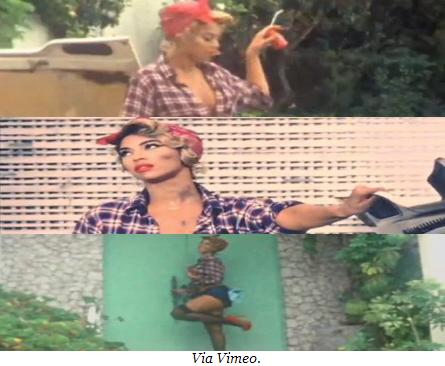
Did Rosie the Riveter Wear Hotpants?


From Tiger Beatdown:

“… It is true: Beyonce does in fact dress as the iconic proto-feminist industrial worker when she has a particularly tough mechanical project to attend to. And she is, in fact, wearing hot pants! However… for those who take issue with the accuracy of her costume, remember: We only ever saw Rosie the Riveter from the waist up. We don’t know what kind of pants she was wearing. Rosie the Riveter may not have worn pants at all.

If this is true, I’m totes going as her for Halloween next year. And no, it’s not too early to start planning my outfit! We can do it!

Related: The Witching Hour: Halloween/My Birthday at Witches in Britches Cabaret.

Elsewhere: [Tiger Beatdown] Why Don’t You Love Beyonce? An Inquiry.

[Jezebel] The Many Incarnations of Rosie the Riveter.

“With a Gun Between Her Legs”—Why “Strong” (AKA “Sexy” Whilst Being “Strong”) Female Characters Are Bad For Women.


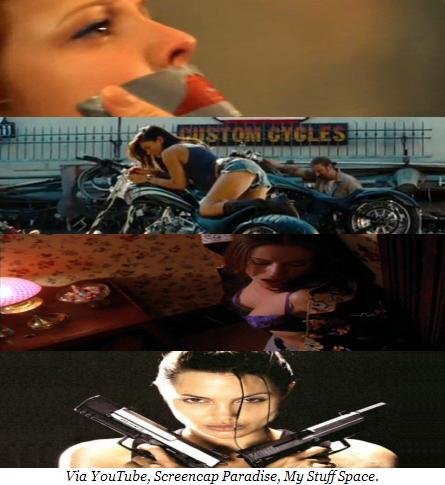
There has been a bit of talk throughout the blogosphere recently (and not so recently) about how “strong” (ie. butt-kicking but looking hot whilst doing it) female characters are detrimental to women.

From Overthinking It:

“… The trouble is, although these characters were marginally better than the original Damsels in Distress, they still ended up having to be saved in the final act by the male hero. There would usually be a scene (or three) where the ‘Strong Female Character’ would be trapped by the villain and put into sexy clothing.”

Here are a few examples: Drew Barrymore in Charlie’s Angels (in a satirical hyper-sexualised way), Rose McGowan and Alyssa Milano in Charmed, and Megan Fox in Transformers, which Overthinking It explicitly references.

Furthermore:

“And even when she was being strong, she was always doing it in the sexiest way possible. She’d never, say, get a black eye or a broken nose in a fight. Her ability to fix cars (a powerful, masculine trait) would basically allow her to get sexy grease all over her slippery body. Her ability to shoot a gun was so the film’s advertisers could put her on a poster wearing a skimpy outfit with a big gun between her legs. All in all, the ‘strength’ of her character was just to make her a better prize for the hero at the endand for the horny male audience throughout.”

Again, Fox in Transformers with the grease, but also Angelina Jolie in Lara Croft: Tomb Raider and even Strong Female Character Buffy, who always looks good kicking vampire butt.

Related: Are Our Favourite Fictional Females Actually Strong, Or Stereotypes?

Elsewhere: [Overthinking It] Why Strong Female Characters Are Bad for Women.

[Overthinking It] The Female Character Flowchart.

[Overthinking It] “Her Ability to Shoot a Gun Was So the Film’s Advertisers Could Put Her On a Poster Wearing a Skimpy Outfit With a Big Gun Between Her Legs.”

The Representation of Trees in the World of Walt Disney.

This is an edited version of a research article I wrote in 2008; one of the most inspiring and fun essays to write for uni, which was reflected in my mark. It’s a left of centre topic, and maybe a bit left of centre for this blog, but it’s just something I’m trying out. Go with it.

When we think of the wonderful world of Disney, trees aren’t usually the first thing that comes to mindunless you’re a horticulturalist!

You might think of the magic of such classics that bring back childhood memories, like Peter Pan or Dumbo; the crown jewel of Disney that is Snow White and the Seven Dwarfs: or the somewhat negative public perception of Disneyland, Disney World and the subsequent “Disneyfication” of the Western world. The one thing we definitely don’t immediately associate with Disney is trees.

But the tree is a very important aspect of not only Disney films, but the whole universe that Walt Disney created. Did you know that there are over 5,000 different types of trees at Anaheim, California’s Disneyland theme park, including Australia’s own eucalyptus tree?

And in almost every movie the action, at some point, takes place in a forest or woodland area, abundant with lush growth. In Snow White, the title character is stalked by the huntsman and seeks solace in the Seven Dwarves’ cottage in the woods. Sleeping Beauty’s Aurora ponders her future love in the forest amongst her animal friends. Beauty and the Beast’s heroine Belle and her noble steed are attacked by wolves in the snow-covered wilderness surrounding the Beast’s castle.

So where did the mastermind Walt Disney gain his inspiration for the use of trees? Some of his first fairytales he adapted into feature films came from the Brothers Grimm, who wrote Snow White and Cinderella, undoubtedly two of the most popular and well loved fairytales and, thereby, characters.

The Brothers Grimm, writing about the lush green countryside of the European settings for these stories, inspired Disney through their gift of writing. Walt Disney also had a fascination with animals (from crickets in Pinocchio to lobsters in The Little Mermaid ), so much so that he produced a series of documentaries on the animal kingdom and nature, called True Life Adventures. Titles in this series included “Seals Island”, “In Beaver Valley”, and “The Living Desert”. An article on Walt Disney in a 1963 edition of Modern Mechanix magazine said that, “Walt’s early edict for… all the True Life Adventure pictures was to get the complete natural history of the animals with no sign of humans: no fences, car tracks, buildings, or telephone poles.”

Disney wasn’t only interested in portraying animals on film, but also conserving species and their environments for future generations. This is evident in the construction of the Tree of Life at Orlando, Florida’s Disney World Animal Kingdom sub-park. While the tree is fake (it consists of about 100,000 silk leaves sewn onto over 8,000 branches), it has carvings of numerous animals on it, allowing children to experience an African Safari with illustrated depictions of animals that may not be around for much longer.

The “Tree of Life” was drawn directly from the incredibly successful 1994 movie, The Lion King. In the movie, the tree is shown only a few times, where the mandrill Rafiki draws symbols of Simba when his life seems to be in danger.

Gail Krause says that, “… Rafiki is the wise ‘shaman’ of the animal community; he writes the image of the lost and then found king, Simba, on a central tree, making real for himself the ‘death’ and ‘resurrection’ of the true leaderan interesting parallel to the Jesus myth. The Disney company then created the park Animal Kingdom with a majestic Tree of Life…”.

The Tree of Life in The Lion King also serves as a marker for where Simba left his old life as heir to the King of the Jungle and his new life in exile with the feisty meerkat, Timon, and Pumbaa the rotund warthog. The fact that the Tree is in the middle of the desert where scarcely any animal roams signifies the neutrality of the Tree: the halfway point between the corrupt leadership of Scar and the carefree new life that Simba leads.

But the Tree of Life isn’t the only perennial woody plant in The Lion King. The other tree that acts as a signpost for where the action picks up is the almost half-dead, lone branch in the gorge. This tree is the framing point for the stampede that Simba gets caught up in; the stampede in which his father, Mufasa, is killed. It’s not a full, live tree, but its skeleton-like appearance is parallel to the dark, cold soul of Scar and his hyena followers, and the subsequent reign of darkness the animal kingdom is ruled by.

The Tree of Life shows that trees are not only markers for where certain actions will take place or where the central protagonist should turn, but they are somewhat characters in their own right. Trees are key characters/motifs in the Disney films Pocahontas, Peter Pan and Alice in Wonderland, as they provide turning points or revelations in the story.

Mark I. Pinsky, author of The Gospel According to Disney: Faith, Trust and Pixie Dust, says, “Providence will show up in the form of a fairy, wizard [or] talking willow tree,” if ever you should lose your way. Or rather, in Alice’s case, stumbling down the rabbit hole underneath the tree she falls asleep in is how she begins her wayward journey.

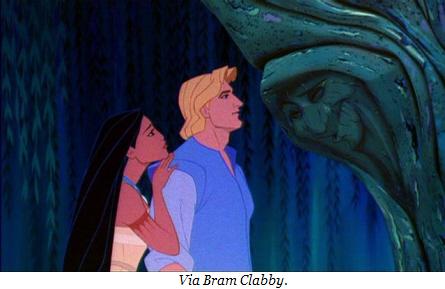
Pocahontas, the story of a Native American girl who promotes acceptance between white settlers and her own people, is the obvious example of a Disney film with a tree as an actual, personified character in Grandmother Willow. According to the Living Arts Originals website, “Willow tree symbolism includes magic, healing, inner vision and dreams… Forests are the abode for the nature spirits”. A lot of research probably went into the character of Grandmother Willow, as these classic Native American qualities of the tree are evident in her. She acts as Pocahontas’s “fairy godmother”. Although Grandmother Willow could be personified as any nationality, she is fittingly a Native American like Pocahontas and her people, because that’s who Pocahontas identifies with (as evident in the conflict between Pocahontas’s tribe and John Smith’s men). When Pocahontas brings John Smith to Grandmother Willow, she shows him her magic and opens up the Native American culture to him, and thereby the settlers, as Pocahontas did in reality many centuries ago. Grandmother Willow, using her virtues of inner vision and dreaming, encourages Pocahontas to follow her path, shown to her by the spinning arrow of John Smith’s compass, thus orchestrating great change in conflict between the “savages” and the whites.
Alice in Wonderland, the most eccentric of all Disney’s films, uses trees in a number of ways. Firstly, the tree in which Alice is studying in at the beginning of the story is the tree under which the white rabbit escapes, and she follows. A magic mushroom (perhaps a reflection of the author Lewis Carroll’s drug use?), makes Alice grow to the height of a tree, where a nosey pigeon refuses to believe she’s “just a little girl!”.

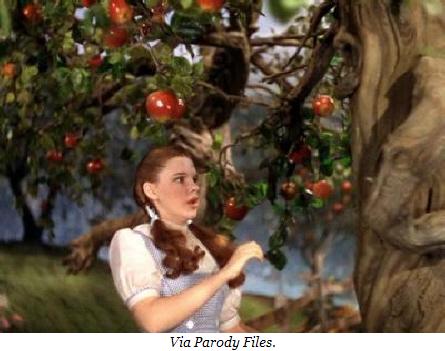
One image of the tree, or woods/forest, that rampant not only in Disney films, but many other contemporary movies, is the personification of the treetaking on human characteristics, such as eyes and arms, to give off a menacing vibe. In Alice in Wonderland, the Tulgey Woods’ trees observe Alice as eyes appear , which then turn out to be a gathering of characters with eyesducks with horns, flamingos with umbrella bodies, and glasses that seem to resemble the fake-nose-and-moustache disguise that children are fond of. Treebeard, in J. R. R. Tolkien’s Lord of the Rings trilogy, both text and film is another, non-Disney example. The forest in The Wizard of Oz comes to life and the trees throw their apples at Dorothy, Scarecrow and little Toto. If I listed the numerous other movies that show trees in this way, we’d be here all day.

But, they’re all derived from one Disney flick in particular: Snow White and the Seven Dwarfs. The first ever feature length animated film was also one of the first to depict a forest coming to life in such a way, where the trees grow arms and eyes, and bark floating in the river turns into crocodiles! No doubt other Hollywood productions have used Snow White and Disney as inspiration, especially The Wizard of Oz, with it’s out-of-this-world plot and unmistakably Disney-esque characters.

Even before Snow White, though, was the Disney short animated film Flowers and Trees, shown in 1932, which won the first ever Academy Award for an animated short. This undoubtedly would have been the starting point for trees as more than just “trees”, not only in Disney, but in film in general.

If ever there was a documentary explaining all about the depiction of trees in Disney films, it’s Four Artists Paint One Tree, a special feature that can be accessed via the 2003 special edition DVD release of Sleeping Beauty. In the doco, Walt Disney narrates as four animators go out into the field to demonstrate how they would paint an old oak tree. The first artist, Walt Peregoy, views the tree as an architectural monument, and his finished painting is evidence of the animation of the backdrop of Sleeping Beauty. Josh Meador, an effects artist for Sleeping Beauty, references the Druids, who believed trees had personalities. Maybe he was a key artist in personifying trees and bringing them to life? The next painter, Eyvind Earle, is primarily interested in the trunk, and uses watercolours to fill in the fine detail. Finally, Marc Davis represents the tree as an explosion out of the earth, with branches spraying out from the body of the trunk. After watching this documentary, you can see which aspects of each artists tree, or their style of painting scenery, that has gone into creating Sleeping Beauty. Walt ends the documentary by paraphrasing the artist Robert Henri: “The great painter has something to say. He does not paint men, landscapes or furniture, but an idea.” This seems to be the consensus amongst not just Disney’s approach to filmmaking, but the studio’s approach to letting audiences believe what they want to believe (some would beg to differ on this point).

M. Lynne Bird backs this theory up in her article titled “Ecological Ambivalence in Neverland from The Little White Bird to Hook in the tome Wild Things: Children’s Culture and Ecocriticism. She discusses the idea that trees are just treesnature is just naturein Disney films, but it’s the children’s imaginations, and in turn, Walt Disney’s child-at-heart imagination that makes a tree something more, such as in the films mentioned above. She writes, “‘The Neverland is always more or less an island, with astonishing splashes of colour here and there’… This mix drops nature and privileges both imagination and society. The island can only become real as children look for it.”
Though not a “tree” specifically, the Smoke Tree Ranch, Walt Disney’s holiday home in Palm Springs, California, was used as collateral in the funding of Disneyland. While it was hard for him to part with the ranch, it turns out Disney made the right choice: sacrificing a symbolic and sentimental place in his personal life to create a symbolic and sentimental place for millions of others.

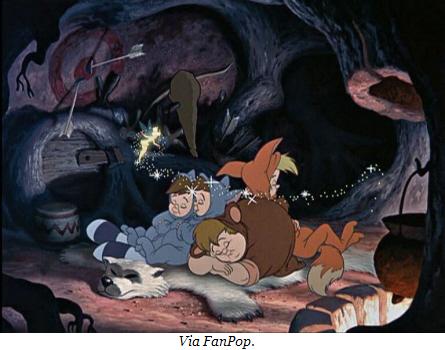
Walt Disney was obviously a kid at heart, as can be seen in the tales he chose to adapt and bring to a worldwide audience. Tarzan’s Treehouse, from the movie Tarzan (and was also adapted from the tree house in Disney’s Swiss Family Robinson) and located in the Disneyland theme park as an attraction, and the creation of the Hangman’s Tree, the home of Peter Pan and the Lost Boys, are more blatant examples of trees in the world of Walt Disney. Hangman’s Tree exemplifies everything a child could want in a tree house.

While, once again, trees are definitely not the first thing Disney-enthusiasts think of when sitting down to watch their favourite film, but the next time you do, keep an eye out for the trees: after all, that’s what a horticulturalist would do!

Elsewhere: [Modern Mechanix] The Magic Worlds of Walt Disney Part 1.

[MSMC] The Cipher: The Mythological Tree in Various Cultures.

[Living Arts Originals] Find Your Tree: The Deep-Rooted Symbolism of Trees.

[Google Books] Ecological Ambivalence in Neverland from The Little White Bird to Hook.