Book Review: Never, Ever, Again… Why Australian Abortion Law Needs Reform by Caroline de Costa.


Abortion activist Caroline de Costa gets the name for her book from the Queensland trial of young couple Tegan Leach and Sergie Brennan, who were charged with procuring an illegal abortion by using the “controversial abortion drug”, RU486, which is a situation that should happen “never, ever, again” (p. 24).

This unique case garnered so much media attention because it was the first time since 1959 that a woman was charged, under section 225 of the Queensland Criminal Code, with procuring her own abortion. This section of the criminal code hasn’t been changed since it was written… in 1899.

The couple were declared innocent after the trail came to a close on the 14th October last year, but it brought to a head the debate surrounding the aforementioned “controversial abortion drug” RU486.

de Costa has also written another book on RU486, and a lot of that material is rehashed in this publication. Before this case, I only ever thought there were surgical abortions, performed in a hospital using suction. I supported them nonetheless. Now that I’m aware there is an “abortion drug”, which not only assists in the safe termination of pregnancy, but “could help treat, among many other things, certain inoperable brain tumours, breast cancers, burns and, ironically enough, the fertility-inhibiting condition of endometriosis” (p. 151), I’m even more in favour of allowing access to abortion to women who don’t want to be pregnant.

de Costa continues:

“Mifepristone/misoprostol [RU486] is also an effective way of starting labour in women when it is found that the fetus has died in the uterus at any time up to mid-pregnancy, and this is now recommended practice in many countries overseas.

“Mifepristone has also been shown in trials to be useful for Emergency Contraception (EC)” (p. 152).

de Costa is quick to point out that RU486 is not the same as EC, as one assists in abortion while the other prevents an egg being fertilised in the aftermath of unprotected sex.

The drug has also been seen to be effective in small doses as a contraceptive pill, assist in the treatment of Cushing’s syndrome (the “over-production of glucocorticoids”), depression, dementia and Alzheimer’s, arthritis, “certain types of hypertension”, glaucoma, and even HIV and AIDS (p. 152, 154).

But RU486 is only available from a few medical practitioners in a few locations in Australia, hence why Leach and Brennan decided to purchase theirs from overseas. It is also a fairly recent development.

Before medical abortion was available, women tried all sorts of treatments and home remedies to abort their foetuses, a cacophony of which are detailed in Never, Ever, Again. Most of these cases resulted in the desired death of the unborn child, but also in the death of the mother.

Whilst Victoria, New South Wales, Western Australia and the Territories have abolished abortion as a crime, Queensland still considers it an illegal and punishable offence. So do, to a lesser extent, Tasmania and South Australia. Seriously, people: when some third world countries have no problem with mifepristone, why should a progressive country such as Australia?

The book talks about the majority of Australians who think abortion should be legal, and how Queensland residents and the media came out in support of Leach and Brennan during their trial. For example, “as journalist Emma Tom wrote in 2009:

“Like many people who believe women should have the right to safe, affordable and legal terminations, I don’t like being described as pro-abortion because it sounds like I think terminations are fabbo things that women should hop into as often as possible. The truth is I’d like to see a whole lot less of them, but via sex education and contraception rather than by robbing women of their right to decide whether they’re up to seeing through a pregnancy” (p. 24).

Now that’s something everyone can agree on, no?

In the final chapter of the book, a recent addition to this second edition, de Costa writes in a much more relatable and personable tone than the rest of the book. Perhaps that’s because the final chapter is an account of the trial of Leach and Brennan, which de Costa attended.

de Costa also repeatedly writes the assertion that abortion should be a matter that exists between a woman, her partner and her doctor, and not the government, the police and the legal system. In the final sentence, de Costa writes:

“It [the second chapter of abortion law reform in Australia] will be written when finally State Premiers and Attorneys-General have the wisdom and courage to remove abortion from the too-hard basket and agree on uniform decriminalization of abortion law across the country. Then, and only then, can abortion truly be a matter for a woman, her partner and her doctor.”

Amen to that!

Related: Melbourne Writers’ Festival: Never, Ever, Again: Why Australian Abortion Law Needs Reform by Caroline de Costa Book Launch.

Feminism Respects Women More Than Anything, Including the Catholic Church!

Image via Fishpond.

Book Review: My Sister, My Love: The Intimate Story of Skyler Rampike by Joyce Carol Oates.


My Sister, My Love: The Intimate Story of Skyler Rampike had me at hello its first two sentences:

“Dysfunctional families are all alike. Ditto ‘survivors.’

“Me, I’m the ‘surviving’ child of an infamous American family…”

My favourite book being a fictional account of the O.J. Simpson murder trial, Another City, Not My Own by Dominick Dunne, I’m a sucker for true crime and conspiracy theories.

My Sister, My Love is the fictionalised account of the JonBenet Ramsey murder of Christmas 1996, a story that has captivated me since it hit the newsstands some fifteen years ago.

It is written by the awesome Joyce Carol Oates, whom I’ve never read in novel form before, but whose articles I have come across online. Since its publication in 2008, I’ve longed to read it, and serendipitously came across it in a secondhand bookstore earlier this year. It has taken me since then to read it!

But coming in at 562 pages, it’s not exactly light reading, both in size and subject matter.

The book focuses on the life of Skyler Rampike, brother to child ice-skating prodigy, Bliss Rampike (nee Edna Louise Rampike), and he and his parents’ struggle to come to terms with her murder.

The book is somewhat longwinded, but thoroughly enjoyable. Some parts before and after the murder could have been spared, but it’s all part of Oates’ effort to build the story and the characters within it.

The story is written from Skyler’s perspective, but switches rapidly from first- to second- to third-person narration, which can be jarring at first but ultimately lends itself to the insight we get into the twisted and troubled mind of Skyler.

Oates also borrows from other high-profile pop cultureisms, like the Simpson murder (Skyler’s boarding school for troubled/famous children girlfriend is most definitely supposed to be Simpson’s daughter), Wicked (“Popular! In America, what else matters?” [p. 152]), and The Catcher in the Rye, with Skyler calling faux snow “phony-looking” (p. 319). In fact, I think Oates’ key inspiration was probably J.D. Salinger’s most famous fictional outing.

It’s hard to separate the fictional Rampike family Oates has so expertly crafted from the real Ramsey family, which has fallen to pieces since JonBenet’s murder. As in real life, mother Betsey died, and father Bix remarried. But what do we know of Burke Ramsey, whom Skyler was based on? Nothing much.

And that’s where Oates saw an opening: to tell one of America’s most fascinating unsolved murders from the perspective of the person who, by a lot of peoples’ accounts, is the prime suspect.

Related: Another City, Not My Own by Dominick Dunne Review.

Book Now, Bendigo.

Stacked.

It’s All About Popular… Lar, Lar, Lar, Lar.

The Ten Books I Wanted to Read This Year But Didn’t.

Book Review: Mia Culpa—Confessions from the Watercooler of Life by Mia Freedman.


Mia Freedman really is a brand unto herself. We all know she revolutionised the magazine world at age 25 as editor of Cosmopolitan. Her blog, MamaMia, really came into its own during last year’s federal election, offering a different take on politics for modern women. And she’s now a three-time published author with her own television show on SkyNews!

Of course she credits her husband, Jason, her kids, friends, family and MamaMia team with supporting her and helping run her media juggernaut, all of whom she writes about—sometimes anonymously, but oftentimes not—in her latest memoir-cum-“long, wonderful dinner-party conversation”, Mia Culpa: Confessions from the Watercooler of Life.

A lot of the material that makes up Mia Culpa I’ve read before, I will admit, in Freedman’s Sunday Life column, her blog, and various other publications she makes appearances in. But I’ve been known to revisit favourite blog posts and articles before, so it was very enjoyable to read Freedman’s musings on everything from sex to SNAGS (p. 64–67) to showering (p. 290) to breastfeeding (p. 175–179) to interior design (p. 129) to social stamina (read: non-existent when you have a young family, p. 131–136) to Christmas (p. 148–152) to how many children you want/have (p. 71–75) to the hypocrisy of being a certain-meat eater (“I’ve never eaten things like duck or rabbit or deer because I relate to those animals in a way I don’t relate to chickens—perhaps because many of them were storybook characters. Bambi, anyone?” [p. 145]. Guilty as charged) to Disney princesses (p. 180) to The Secret (p. 301).

Some of my favourite parts existed in the first chapter and were a nice way to begin the book. In it, Freedman writes about grooming standards in long-term relationships (p. 4–12), choosing between your ass or your face as you grow older (p. 13–16), skinny-shaming VS. fat-shaming (p. 16–23) and the pre-requisite rant on unrealistic portrayal of women VS. men in the media (p. 23–32). But when she puts it like this, it’s hard not to see Freedman’s point:

“Pretend the world was full of pictures of naked men. On billboards and the sides of buses, in magazines and ads for beer, cars and deodorant. Imagine there were penises everywhere you turned and you couldn’t escape seeing them every day.

“And all the images of nude men were fake. Every male model and celebrity had had penile enlargement surgery, and afterwards, his penis had been extensively photoshopped to make it look even bigger. So now, all the penises you saw in the media every day were knee-length and as thick as an arm.

“One day, next to a magazine article about a celebrity with a foot-long penis, you read the headline: ‘This is what a 43-year-old penis looks like’. The caption underneath read: ‘Asked for the secret to his long schlong, former male model Markus Schenkenberg insists he was just born that way. “I wear cotton boxer shorts and I exfoliate in the shower,” he shrugs. “That’s all I do.”’

“After reading a hundred stories like that and being bombarded by 10,000 images of men with surgically altered and digitally enhanced penises, do you think you might look down at your natural, un-photoshopped trouser snake and feel a little… deflated? Inadequate? Insecure? Angry?”

There’s also some of Freedman’s fascinating thoughts on being a “try-sexual” as per Katy Perry’s “I Kissed a Girl” (p. 241–244), which has been written about extensively on sites like MamaMia and Rachel Hills, and tattoos (more on that to come later today).

You don’t have to be a Freedman fan-girl to enjoy this book; I would recommend it to anyone who happens to be of the female gender, and even those who don’t happen to be but are just looking for some enlightenment on the species.

Related: MamaMia: A Memoir of Mistakes, Magazines & Motherhood by Mia Freedman Review.

UPDATED: Skinny-Shaming VS. Fat-Shaming.

“Who the Bloody Hell Are We?”: The Sentimental Bloke at the Wheeler Centre.

Elsewhere: [MamaMia] MamaMia Gets a TV Show.

[MamaMia] Cindy Crawford is Naked in Allure Magazine. And 43.

[MamaMia] I Kissed a Girl. Because I Had Something to Sell.

[MamaMia] Kissing a Woman Does Not a Lesbian Make.

[Rachel Hills] The Rise of the Guy-On-Guy Kiss.

Image via Australian Women Online.

Book Review: True Blood & Philosophy by George A. Dunn & Rebecca Housel.


I bought this book last year around the time season three of True Blood was coming to an end, and the inspiration struck me to write a post on Sookie Stackhouse and feminism. Needless to say, that post has yet to come to fruition (watch this space next week), but I finally got around to reading the book in the past fortnight or so.

The great thing about the Pop Culture and Philosophy series is that you don’t need to be an avid fan of the topic each book deals with; most of the philosophical musings can be applied to everyday life. (I’m making a gross generalisation here, as True Blood & Philosophy is the first Pop Culture volume I’ve read!)

Anyone who’s familiar with the show and Charlaine Harris’ books will know that the way vampires are treated in the somewhat alternate universe of Bon Temps, Louisiana, is a metaphor for how gays and blacks have been treated for centuries.

True Blood and Philosophy delves into this throughout the book, but particularly in the “Eros, Sexuality & Gender” section, where the issue of “orientation” is raised: “Vampires seem to be unlike gays in that we can’t say that vampires are born that way… But there is still a parallel to being born either gay or straight, for once you become a vampire, there’s no returning to a human existence” (p. 98).

One way vampires and gays are different, though, is that “a homosexual predator” cannot “attack or coerce an unwilling person into homosexual acts”, whereas a vampire can take someone against their will (p. 99). You can’t “catch” homosexuality, but you can catch vampirism.

To take it a step further, there was a time when propaganda that the gays will give you AIDS was rife (some might argue that it still is), and were prohibited from participating in sports and other activities where blood could be spilled. This raises the question of the marginalisation of vampires in sports, as well as the use of their blood as medicine. (See “Coming Out of the Coffin & Coming Out of the Closet”, p. 93–108.)

My favourite chapter deals with the attitudes of humans towards vampires and vice versa, and how the way they treat each other amounts to the way non-fiction humans treat animals.

For example, Eddie Gauthier, the vampire whom Jason Stackhouse and Amy Burley take hostage and use as their own personal V vat, is a parallel for “the way millions of animals are treated every day on factory farms… Eddie, like the animals on factory farms, is exploited as a commodity with no regard for his suffering” (p. 36–37).

Furthermore, “… many… vampires actually regard human beings as lower forms of life ripe for exploitation, not much different from the way Aristotle and others regarded non-human species,” in “a classic example of speciesism” (p. 38–39).

Last year, I blogged about an article I read in Time, about how animals that we once thought to not be able to understand language, reasoning, fairness and pain, actually do experience these things. Vampires seem to have a similar attitude towards humans, whom they see only as a food source, and “incapable of feeling pain as we do”, according to the magister when ordering Bill to turn Jessica as punishment for killing one of their own to protect his “human pet”, Sookie (p. 44).

In a similarly intriguing chapter, William C. Curtis asks “can vampires be good citizens”?:

“Should there be a Truth and Reconciliation Commission to require vamps to come clean about their past murders in return for a grant of amnesty? How should vampires be taxed, especially since they don’t need many of the services that government provides, like Social Security, health care, and education? Can they join, or be drafted into, the armed forces?… Will their vulnerability to sunlight be treated as a disability under the Americans with Disabilities Act? Can vampire convicts be sentenced to life in prison, or would eternal incarceration violate the Eighth Amendment prohibition on cruel and unusual punishment?” (p. 65–66).

All these questions have been brought about by the advent of synthetic blood, allowing vampires to “come out of the coffin”, so to speak.

On this, an interesting footnote from the chapter “Un-True Blood: The Politics of Artificiality” by Bruce A. McClelland, refers to a 1927 study by Takeji Furukawa on the correlation between blood types and personality. Being a Japanese study, and the fact that synthetic TruBlood was developed by the Japanese; is there some connection? Or just a coincidence? The clot plot thickens…

A memorable event thus far on True Blood has been the introduction of Maryann the Maenad and her Dionysian debacle. “Let the Bon Temps Roll: Sacrifice, Scapegoats and Good Times” deals with the self-preservation of the Bon Temps residents in “not wanting to know what’s in the sausage”, as Lafayette Reynolds would say (p. 141–142). Or rather, not wanting to know what’s in Maryann’s “hunter’s soufflé”!

This ignorance is further symbolised by the black eyes of Maryann’s followers; they’re literally blind to her wicked ways (p. 142).

Of course this book is more suited to the True Blood fan, however it’s not a prerequisite. (I’m trying to force-feed my friend Laura this book in the hopes that she will cotton on to the sexy-smarts of the show. She’s doing the same to me with Mad Men.) Many of the thoughts discussed go much deeper than just Charlaine Harris’ Southern Vampire Mysteries and vampirism, and it’s quite a thought-provoking—yet still light—book.

Related: Time’s “What Animals Think” Issue: August 16, 2010.

Book Review: Countdown to Lockdown—A Hardcore Journal by Mick Foley.


Midway through Countdown to Lockdown, wrestler Mick Foley’s fourth memoir and ninth published work, the author says that “June 24, 2007, had been a disaster, probably one of the worst days of my year, possibly even my life” (p. 215). And that was before he’d heard the news that colleague Chris Benoit and his family had been murdered.

Of course, it was later revealed that Benoit had committed a double murder-suicide, murdering his wife and son in their home. Foley uses the tragedy as a cautionary tale to others in the business, warning of the affects of not only drugs, but the lonely business professional wrestling can be if you aren’t one of the lucky few to be on top of it.

Aside from the small portion of the book that deals with Benoit, death, drugs and Foley’s unhappiness with his final stint as an announcer in World Wrestling Entertainment in 2008 (which you can find some funny anecdotes about on pages 143–144), the rest is a riot.

Countdown to Lockdown is very much all about family, as are all of Foley’s books in some way or another. Another strong emblem of the memoir is Tori Amos. Odd, I know, but hear him out.

Foley was touched by “Winter” by Tori Amos, and it helped him get through one of his most brutal matches in Japan, in which he lost an ear via barbed wire hanging:

“And then there’s Mick Foley, who took the most beautiful song ever written and turned it into his own twisted ode to suffering and woe…” (p. 72).

Readers of Slate, Jezebel or this here blog from time to time will know that Mick Foley has been named man of the year by the Good Men Project, is a volunteer for Amos’ charity, RAINN and labels himself a feminist, amongst many other good deeds he’s used his wrestling career for.

I can’t recommend this—nor any of Foley’s books—enough. It’s got the perfect combination of violence and morbidity, family and fun, humour and intelligence, and empathy and charity.

Related: The Ten Books I Wanted to Read This Year But Didn’t.

In Appreciation of Mick Foley.

Another City, Not My Own by Dominick Dunne Review.

Elsewhere: [Slate] The Wrestler & the Cornflake Girl.

[Jezebel] Wrestling Star Mick Foley Blows Our Collective Mind.

[The Good Men Project] Top 10 Good Men of 2010: Mick Foley.


Movie/Book Review: Tomorrow, When the War Began by John Marsden.


At the risk of sounding bogan-esque, I recently read the first book in John Marsden’s Tomorrow series, Tomorrow, When the War Began, in anticipation of the movie version.

While a lot of my peers read the books as part of their school curriculum, I never did, but after seeing the trailer during New Moon, I was intrigued to say the least.

For a young adult book, it was really good. I loved the suspense Marsden created, and I felt it was very true to the way Australian teenagers talk and act.

For those of you who haven’t read the book or seen the film, I won’t spoil the ending, but I raced to finish the last couple of chapters last Wednesday before I went to see it that night. I wasn’t planning on reading the whole series because I just don’t have time, but once you get to the end of book one, it’s impossible not continue on to book two.

Reading the book and seeing the movie within hours of each other, it’s hard to reconcile what happened in each, respectively. But I loved that the film stayed almost completely true to the book, with the exception of Flip, Kevin’s dog, staying with the gang as they attempted to take back their country, the exclusion of the Hermit in Hell and, *spoiler alert*, a certain religious member of the team who refused to kill anyone shooting up the soldiers at the very end.

I was pleasantly surprised by the book, and if I can say just one thing about the movie, it’s this cliché little ditty: if you see only one movie this year, make it Tomorrow, When the War Began.

Bragging right: My cousin and housemate went to acting school with Deniz Akdeniz, who plays Homer.

Book Review: One Flew Over the Cuckoo’s Nest By Ken Kesey.


As previously mentioned, I struggled through this book.

Not because it wasn’t well writtenin fact, I loved the narration of protagonist Chief Bromden and the way author Ken Kesey continually used misspelling to take the reader into Bromden’s mindbut because I was so preoccupied with other things, that I didn’t really take notice of what was occurring.

But in a nutshell, the novel deals with patients in a mental hospital, and centres around Bromden, a half-Native American who has been pretending to be deaf and dumb, and fellow resident of the ward Randle McMurphy, the fiery redhead who shakes things up when he is transferred from a prison work farm. Questions arise, specifically from antagonist Nurse Ratched and the doctors, as to whether McMurphy is actually mentally ill, or just uses his pasts crimes to live out the rest of his life in, what he believes is, the cushy Pendleton asylum.

The hospital is anything but, and the antics of its patients conjure up memories of Shawshank Redemption, Prison Break, The Longest Yard and even Toy Story 3! And while none of these films are set in a mental institution per se, they just might have borrowed some inspiration from Cuckoo’s Nest.

McMurphy acts as a sort of vicarious thrill-seeker, and the other patients live their lives through his rebellion. He is also the catalyst for Bromden to reveal he can actually speak and hear, and his fellow patients to stand up for themselves and buck the system.

McMurphy and Nurse Ratched become involved in a power struggle, with McMurphy taking on the role of leader to the patients, and ultimately, he attacks Ratched, strangling her and taking away her most powerful toolher voiceand McMurphy is given a lobotomy.

During the absence of both the nurse and their leader, most of Pendleton’s residents check out, and those who do stay to witness their returnthe nurse unable to speak, and thus control her patients, and McMurphy in a “chronic” vegetative statesoon leave. But not before Bromden suffocates McMurphy in his sleep, so that he can die with some dignity. Bromden then leaves to rejoin his tribe.

Kesey uses the residents to illustrate the injustices of mental patients, having spent time working as an orderly in one, where he took LSD and Peyote as part of Project MKUltra, an illegal CIA human research program to “manipulate individual mental states”.

Nurse Ratched, in particular, is so craftily subtle in how she goes about controlling the men, that most of them aren’t even aware she is doing so. In Foucaultian terms, this type of manipulation can be damaging on a “broad social scale”, as it encourages censorship of one’s actions.

All in all, I quite liked (what bits I did pick up through a distracted reading of) the book, and I’m a bit of a sucker for a story with a message. Unlike A Clockwork Orange or something along those obscure lines, the story was written in a straightforward manner and was (mostly) a pleasure to read.

Related: Newspaper Clipping of LAST Week.

One Flew Over the Cuckoo’s Nest by Anthony Burgess Review.

Elsewhere: [Wikipedia] Project MKUltra.

[Wikipedia] One Flew Over the Cuckoo’s Nest (novel).

Book Review: American Psycho by Bret Easton Ellis.


When I heard Bret Easton Ellis was coming to Melbourne for the Writers Festival, I was intrigued to hear him speak in person, to say the least.

My first, and only, exposure to Easton Ellis prior to reading American Psycho was his 1998 release, Glamorama. I had high expectations for that book, and I was sorely disappointed. I found it too fast paced and celebrity-obsessed which, granted, was the point of the story. However, the graphic depictions of violence (a plane crash with flying pieces of sheet metal decapitating whole rows of passengers, anyone? Or how about a massive miscarriage followed by internal haemorrhaging and subsequent death of the main character’s, Victor Ward, girlfriend?) and sex were far too much.

So needless to say, I was very apprehensive about entering into a literary relationship with American Psycho, but I wanted to at least have read Easton Ellis’ most famous work before seeing him live. (Alas, this is not meant to be, as tickets to his talk sold out within minutes of going on sale! As he, and Buffy creator Joss Whedon, whose talk also sold out, are the only writers I’m interested in seeing at this years surprisingly uninspiring Melbourne Writers Festival, I guess I’ll be giving it a miss this year.)

This time around, however, I was pleasantly surprised.

Again, American Psycho is hard to get into initially, as it jumps straight into a boys night out with protagonist Patrick Bateman and his equally materialistic and über-boring posse of yuppie acquaintances (Bateman is too narcissistic to have actual “friends”). But after persevering up to the first kill, I liked what I read.

Even squirming along Struggle Street during the gory descriptions of the murderson public transport, no less!was still a fairly enjoyable literary journey. To give you a taste of just how well Easton Ellis does horrific homicide in print, here’s a description of Bateman’s first kill:

“… I reach out and touch his [the bum’s] face gently once more with compassion and whisper, “Do you know what a fucking loser you are?” He starts nodding helplessly and I pull out a long, thin knife with a serrated edge and , being very careful not to kill him, push maybe half an inch of the blade into his right eye, flicking the handle up, instantly popping the retina.

“The bum is too surprised to say anything. He only opens his mouth in shock and moves a grubby, mittened hand slowly up to his face. I yank his pants down and in the passing headlights of a taxi can make out his flabby black thighs, rashed because of his constantly urinating in the pantsuit. The stench of shit rises quickly into my face and breathing through my mouth, down on my haunches, I start stabbing him in the stomach, lightly, above the dense matted patch of pubic hair. This sobers him up somewhat and instinctively he tries to cover himself with his hands and the dog starts yipping, really furiously, but it doesn’t attack, and I keep stabbing at the bum now between his fingers, stabbing the backs of his hands. His eye, burst open, hangs out of its socket and runs down his face and he keeps blinking which causes what’s left of it inside the wound to pour out like red, veiny egg yolk. I grab his head with one hand and push it back and then with my thumb and forefinger hold the other eye open and bring the knife up and push the tip of it into the socket, first breaking its protective film so the socket fills with blood, then slitting the eyeball open sideways, and he finally starts screaming once I slit his nose in two, lightly spraying me and the dog with blood, Gizmo blinking to get the blood out of his eyes. I quickly wipe the blade clean across the bum’s face, breaking open the muscle above his cheek. Still kneeling, I throw a quarter in his face, which is slick and shiny with blood, both sockets hollowed out and filled with gore, what’s left of his eye literally oozing over his screaming lips in thick, webby strands. Calmly, I whisper, “There’s a quarter. Go buy some gum, you crazy fucking nigger.” Then I turn to the barking dog and when I get up, stomp on its front legs while it’s crouched down ready to jump at me, its fangs bared, immediately shattering the bones in both its legs, and it falls on its side squealing in pain, front paws sticking up in the air at an obscene, satisfying angle. I can’t help but start laughing and I linger at the scene, amused by this tableau. When I spot an approaching taxi, I slowly walk away.”

Now if that didn’t make you wince and writhe vicariously, there’s also the attacks of several other dogs, the tortures of countless prostitutes, the dissolving of several friends’ bodies in lime, cannibalism, the murder of a child, the capture of a sewer rat to use in later tortures, and in a comical scene that illustrates just how sad and detached Bateman has become in his life of depravity, he feeds his girlfriend (just one of many he has on the go at any given time) a frozen urinal cake coated in chocolate and served in a decadent Godiva chocolate box.

If the reader needs more proof of Bateman’s derangement and obsessive compulsive consumerism, they need only to look at the chapters interspersed throughout the narrative on business cards, sound systems and musical artists of the time (1991), like Genesis, Whitney Houston and Huey Lewis & the News.

Here is another example:

“Another choir, on Lexington, sings ‘Hark the Herald Angels’ and I tap-dance, moaning, in front of them before I move like a zombie to Bloomingdale’s, where I rush over to the first tie rack I see and murmur to the young faggot working behind the counter, “Too, too fabulous,” while fondling a silk ascot. He flirts and asks if I’m a model. “I’ll see you in hell,” I tell him, and move on.

“… vases and felt fedoras with feather headbands and alligator toiletry cases with gilt-silver bottles and brushes and shoehorns that cost two hundred dollars and candlesticks and pillow covers and gloves and slippers and powder puffs and hand-knitted cotton snowflake sweaters and leather skates and Porsche-design ski goggles and antique apothecary bottles and diamond earrings and silk ties and boots and perfume bottles and diamond earrings and boots and vodka glasses and card cases and cameras and mahogany servers and scarves and aftershaves and photo albums and salt and pepper shakers and ceramic-toaster cookie jars and two-hundred-dollar shoehorns and backpacks and aluminium lunch pails and pillow covers…

“Some kind of existential chasm opens up before me while I’m browsing in Bloomingdale’s and causes me to first locate a phone and check my messages, then, near tears, after taking three Halcion (since my body has mutated and adapted to the drug it no longer causes sleepit just seems to ward off total madness), I head toward the Clinique counter where with my platinum American Express card I buy six tubes of shaving cream…”

This kind of stream-of-consciousness and disjointed conflict between the Patrick Bateman that is presented to the outside worldthe one that manages to convince a cop investigating the murder of one of Bateman’s lime victims that he has nothing to do with the disappearanceand the inner workings of his own mind, and even again with the superhuman he becomes when killing, continues and only becomes more frequent as the tale continues.

While there is no finite conclusion to the storyone might guess that Bateman was caught during the murder of a taxi driver, when the tone switches from first person to third person, however it is later revealed that he escaped, but is recognised by another cab driverthat only makes it all the more disturbing.

Easton Ellis is a very cleverthough slightly disturbed; you would have to be to write as graphically and as convincingly as he doesauthor, and I would have loved to hear him speak about his most prolific work.

However, while I rate this one highly, I probably won’t return to, nor enjoy, his other novels.

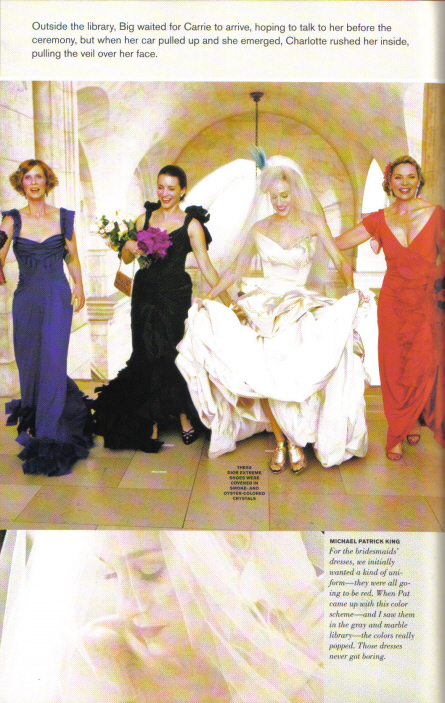
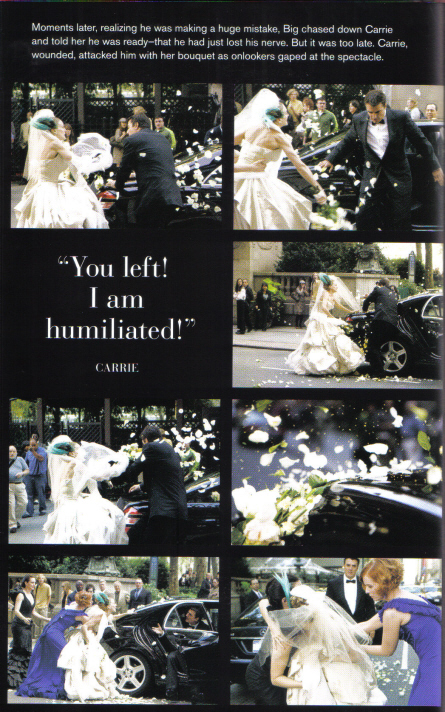
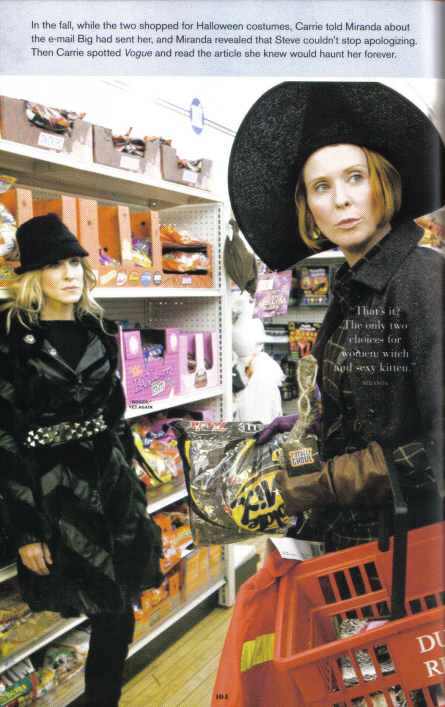
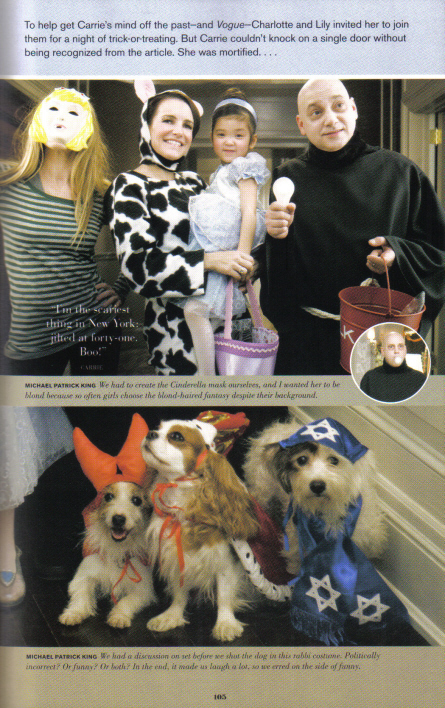
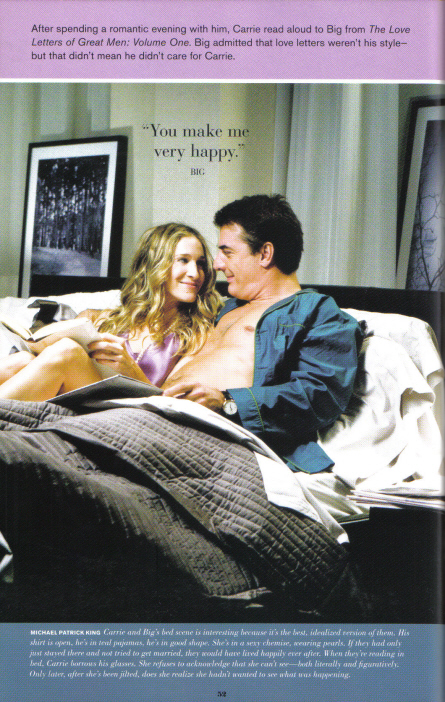
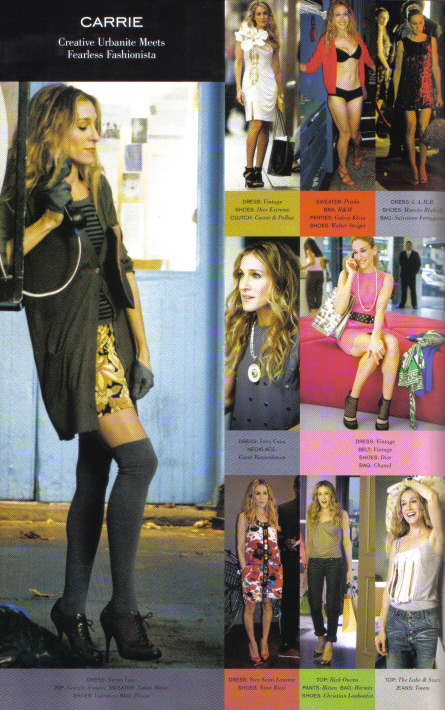
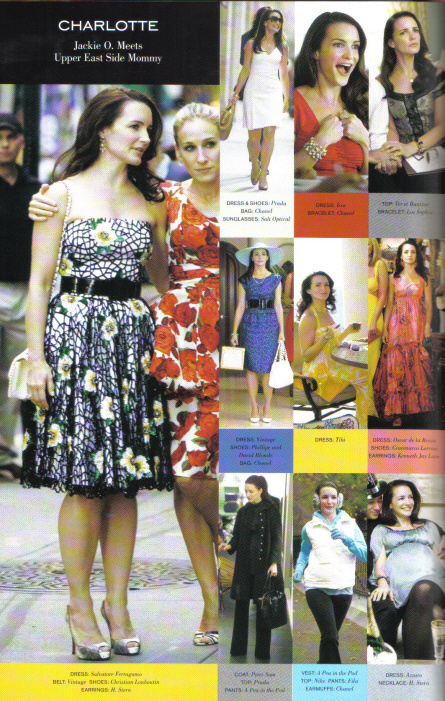
Book Review: Sex & the City: The Movie Coffee Table Book.


A few weeks ago I reviewed the Sex & the City 2 coffee table book in accompaniment to the movie.

There was quite a lot of controversy surrounding the second film, and while I still maintain my stance that it wasn’t that bad, I will state for the record that the first film shits all over the second.

In terms of coffee table books, though, I think I prefer the second book to this one.

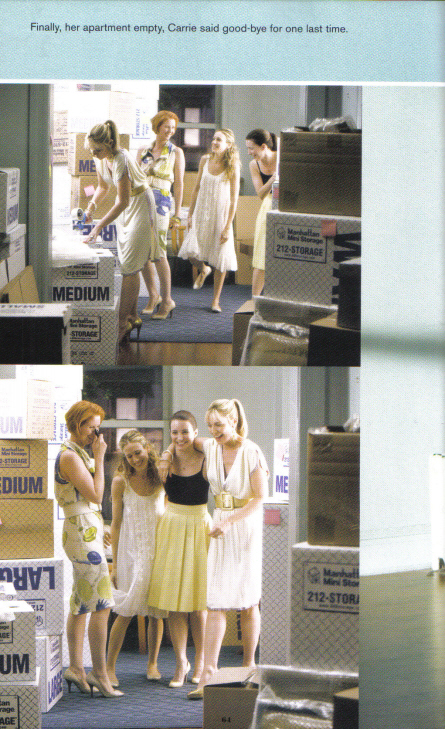
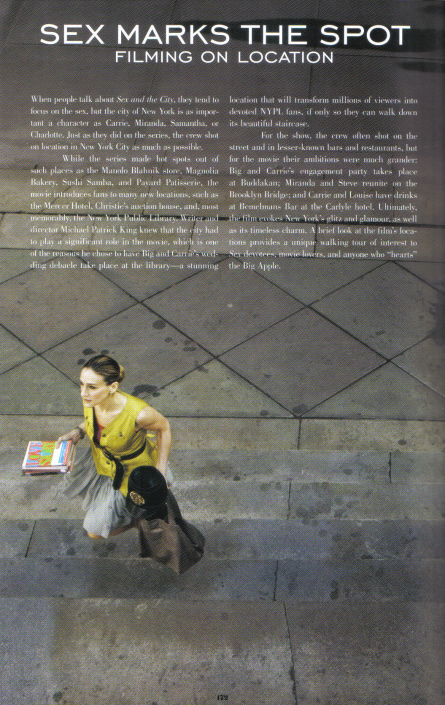
Nonetheless, it is a beautiful exercise in film photography. The fashions, the furnishings, the friends!

I Get By With A Little Help From My Friends.

“How often do you ‘colour’?”

“Charlotte Poughkeepsie’d in her pants!”

Big Man on Campus.

In Vogue.

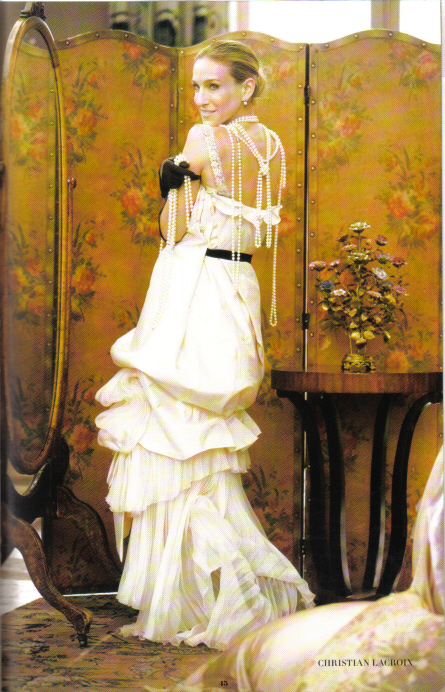
The hero dress.

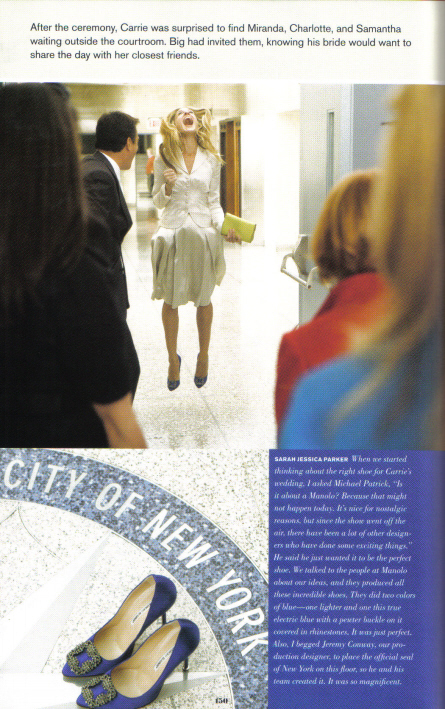
The hero shoe that saved Manolo Blahnik from going out of business.

Apartment Therapy.

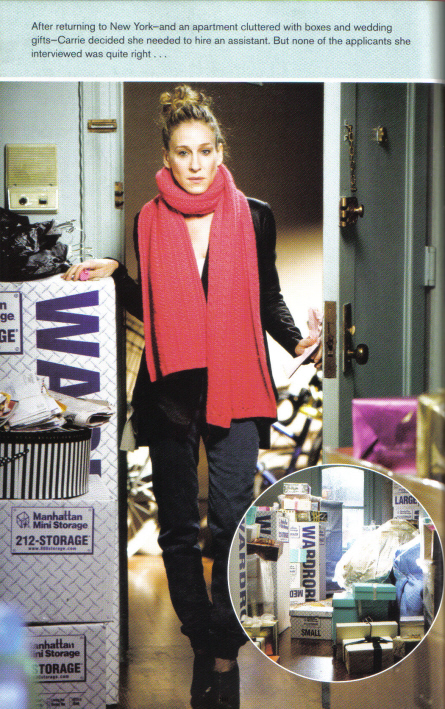
Carrie’s apartment is the quintessential single girl’s digs.

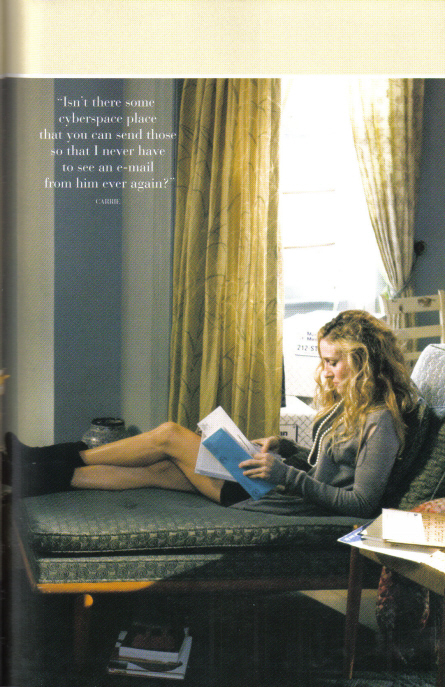
How dreamy… even though Carrie is in the midst of depression!

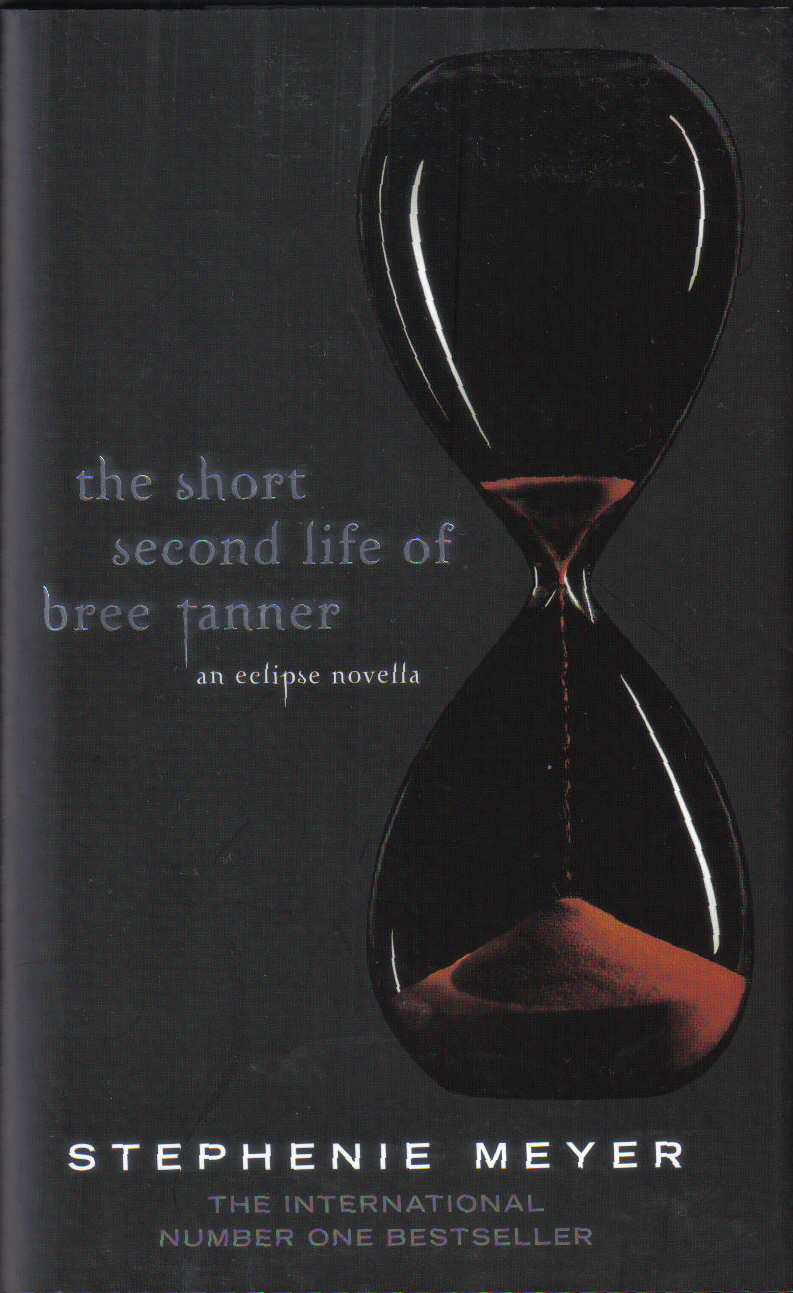
Book Review: The Short Second Life of Bree Tanner by Stephenie Meyer.


I got over all the Twilight hoopla early on, becoming obsessed with the first movie when it came out in late 2008, then devouring the four tomes in quick succession.

While I stand by my contention that the first film was greatindie-esque and unselfconscious, before all the money started rolling in and they tried to top themselves. Bring back Catherine Hardwicke, I say!the books are so bad they could’ve been written by a grade sixer.

And that goes for The Short Second Life of Bree Tanner, too.

But at less than $15 and 178 pages, I flew through it in a few public transport sittings, and it is a must-have for fans, if only to add a hardback edition to the bookshelf’s collection of black and red spines.

The novella follows the “short second life” (duh) of 16-year-old Bree Tanner, who was a newborn vampire introduced in Eclipse, created by Riley and Victoria in their quest to overthrow the Cullens and get to Bella Swan.

In a nutshell, she falls in love with fellow newborn Diego, and they discover together that Riley has been lying to them about what Victoria created them for, amongst other things. One night when they’re hunting, they get sidetracked and stay out too late. Diego shows Bree that the sunlight won’t turn them to ashes, contrary to what Riley asserts. Enter fellow coven member, Fred, who has the ability to repel others with his mind, but chooses to befriend, or rather protect, Bree.

Then comes the action which Twilight fans will be familiar with, when Victoria and Riley lead their coven into battle against the Cullens and the werewolves, who definitely possess the element of surprise, and are devoured by them. Diego dies early on, and Fred diverts his focus to escaping the Volturi, who were liaising with Victoria in her attempt to capture Bella and who arrive after the slaughter to claim Bree’s life, as we all know from Eclipse.

A kind Carlisle Cullen offers to let Bree, the sole survivor, go if she promises not to fight. However, when Jane arrives, Bree realises she has nothing to live for anymore, with Diego dead and Fred gone, and succumbs to the Volturi quietly.

There are no chapters, and the action takes place mostly via dialogue between Bree, Riley, Diego, Fred, and later, Carlisle and his family.

All in all, a pretty tiresome effort by Meyer, but could we reallyexpect much else?