Asylum Seekers: Have a Little Compassion.

Late last month an inquiry was launched into the high rates of self-harm and suicide attempts at detention centres across Australia.

Add to this the rioting and hunger strikes at detention centres in Queensland and Darwin, amongst others, and it’s a sorry state of affairs for asylum seekers in Australia.

Those who see asylum seekers as “illegals” when, in actual fact, anyone has the legal right to flee to another country to seek asylum, are probably reasoning that they brought this on themselves, that they shouldn’t expect to come into our country and be given a free ride, exempt from the laws “legal” citizens abide by.

If anyone saw Go Back to Where You Came From, the softening of Cronulla lifeguard Adam Hartup was immediate after he visited men on their final appeal to gain asylum at Villawood detention centre. He relayed the story of one man who said if he wasn’t granted asylum he would have to kill himself because he couldn’t return to his home country, where he would be killed anyway. What other option do these people have?

When you’re caged like an animal (and I don’t even believe in caging animals. Wait, does the zoo count?) and treated like you’re guilty for exerting your legal right to flee a dangerous country, there’s probably not a light at the end of the tunnel in sight.

While I don’t agree with rioting, we can’t let a few “bad eggs”, so to speak, influence the way we view the majority of detainees in detention centres, who are waiting quietly to have their legal right to seek asylum recognised.

Related: My Response: Go Back to Where You Came From.

Elsewhere: [ABC Lateline] Detention Centre Self-Harming Prompts Inquiry.

[The Age] Police Use Tear Gas to Quell Riot on Christmas Island.

In Defence of Mia Freedman.


Mia Freedman’s copped it pretty hard in the media the last couple of weeks, ever since her comments about Cadel Evans and sports stars being held up as heroes.

It’s no secret that Freedman is my idol, so I will go to bat for her til the cows come home. She’s the reason I became a writer. She’s the reason I did work experience at Cosmo. I share a lot of her views. Whether it’s just a happy coincidence, or I’ve shaped my views around hers (I started reading Cosmo at 15, a very impressionable age, so it’s more than likely the latter), I don’t know.

I’ve written about my love for Freedman, followed closely by former Girlfriend and Cleo editor, and current Sunday Life editor, Sarah Oakes, numerous times, and how the incestuous nature of the magazine world ensures a similar writing and editing style from those who work together. Take Freedman and Zoë Foster, for example. Or Oakes and Girl with a Satchel’s Erica Bartle and Musings of an Inappropriate Woman’s Rachel Hills.

Speaking of Sunday Life, Freedman’s column last weekend solidified why she’s a woman after my own heart.

She wrote about spending time with her family, and how planning big events are always a disaster and it’s the little, “mundane moments” that are memorable.

But back to the issue at hand: sportspeople as heroes.

I agree wholeheartedly that sportsmen and women aren’t heroes. (I threw up in my mouth a little bit when Karl Stefanovic and Lisa Wilkinson stood for the national anthem after Evans won the Tour de France.) Yay, they can “swim fast”, “kick a ball with accuracy”, “run quickly” and “jump over high things”. But how does this make them heroes? It makes them superficial “heroes” or emblems of sporting events in which they did good, but not actual heroes. We can leave that title to soldiers, doctors, activists, social workers, firefighters and others who face death and social injustice to save lives and make the world a better place.

As Freedman reiterates:

“I roll my eyes every time another Australian of the Year is named and it’s a sportsperson. I cringe at the CONSTANT sycophancy and praise heaped on sportspeople and the way they are forever lauded as heroes… How does being highly physically capable make you a hero?”

I read somewhere that it is highly likely Evans will be named 2011’s Australian of the Year, so start warming up those eye sockets, Mia!

I brought this notion up with a coworker last week, who said doctors aren’t heroes just because they’re saving lives. But what about Doctors Without Borders, or doctors and nurses with the armed forces? “Well, that’s different,” he said. Why? Because they’re facing their own death whilst trying to prevent someone else’s? But sportspeople aren’t facing death (okay, sometimes they are), and their payoff is purely selfish.

Said coworker mentioned some AFL “hero” who, back in the ’70s (I think; don’t quote me on this), finished the grand final with a torn ligament and brought the premiership home. Some might call it heroism; others stupidity.

And I think the sportsperson=hero dichotomy is abhorrent, considering the extracurricular allegations levelled at some of them. Is Nick D’Arcy a hero for punching some guy and leaving him with irreparable facial damage? Are the Collingwood FC guys heroes for winning last year’s premiership, with some of them subsequently going on to allegedly sexually assault one or some groupies? How about the world class douchebag Brendan Fevola? Or Tiger Woods? O.J. Simpson? Hardly heroes.

Perhaps we should be looking to sportspeople like Glenn McGrath, who works tirelessly for his late wife’s breast cancer foundation. Or the Essendon FC, who work with schools to improve literacy. While not exactly heroes per se, at least they’re doing something other than hitting and kicking balls.

Freedman writes in a related piece:

“Sporting stars may have great physical skills but that’s all. They’re no smarter or better or nicer or more well intentioned than the average Australian. In fact, I would argue that generally (and of course this is a generalisation), they are less informed, less aware and less street smart than the average bear.

“This is because to become a great athlete, you have to spend many years from the time you are very young, refining your skills. That’s years swimming up and down a pool. Years running around a track. Years kicking a ball or hitting it with a bat.

“Years…

“I’m happy for anyone who CHOOSES to spend years of their life dedicated to their sport. Go for it. But let’s not pretend it’s a selfless or noble pursuit.

“Professional athletes do it for many reasons. Sponsorship dollars. Personal satisfaction. A desire to represent their country or be the best at swimming or kicking or hitting or whatever it is they’re good at.”

Without humiliating anyone, I find the “less informed, less aware and less street smart” contention is particularly true of one of my physically gifted friends.

While he has a Masters and is one of the most book-smart people I know, he admitted to me that until he was in his late teens, he was completely sheltered by his parents. So much so that he didn’t buy his first CD until around this age. Up to that point, he listened to whatever his parents wanted to listen to, because it was pretty much school, practice, competitions, and the only musical exposure he got was in the car on the way to said school, practice, competitions.

Now the kind of sports he plays aren’t exactly your true blue AFL or cricket (in fact, they’re so obscure I won’t mention them here at the risk of giving him away!), so he’s in another boat altogether: his sports would be, and have been, ridiculed by both your Aussie bogan and your highbrow cultured Australian.

Now, from what I’ve read, Cadel Evans is involved in other noble pursuits, like charity. Unfortunately, I think Freedman’s point was sullied by using Evans to bring it up on national television. Perhaps if she were talking about Stephanie Rice or Ben Cousins her contention would have been more well received. But that’s the risk you run when you voice an opinion that’s not of the norm.

And that’s why I love her. Sure, she got crapped on by most of Australia for making a valid point. But she was able to return to voicing her opinion on Today the same time the following week, joking about going into witness protection, but getting a haircut instead. She was able to find the humour in the situation, and see where she might have been wrong.

For the record, I don’t think she was wrong.

Related: Everything They Touch Turns to Gold.

Mama Mia: A Memoir of Mistakes, Magazines & Motherhood By Mia Freedman Review.

Mia Culpa: Confessions from the Watercooler of Life by Mia Freedman Review.

Elsewhere: [MamaMia] Cadel Evans: Is He a Hero?

[MamaMia] Cadel: Here’s What I Learned.

[MamaMia] Is Being Australian Really So Much About Gold Medals?

[MamaMia] Stephanie Rice. Enough With the Hero Worship.

[MamaMia] When Family Time is a Nightmare.

Image via ArtsHub.
Amy Winehouse’s Death: They Tried to Make Her Go to Rehab, But She Said No…


From “For Amy” by Russell Brand on his website:

“Now Amy Winehouse is dead, like many others whose unnecessary deaths have been retrospectively romanticised, at 27 years old. Whether this tragedy was preventable or not is now irrelevant. It is not preventable today. We have lost a beautiful and talented woman to this disease. Not all addicts have Amy’s incredible talent. Or Kurt’s or Jimi’s or Janis’s, some people just get the affliction. All we can do is adapt the way we view this condition, not as a crime or a romantic affectation but a disease that will kill.”

Of course, Brand has a unique insight into Winehouse’s condition, as he used to be an addict himself.

He’s definitely right in saying society should not be romanticising drug addiction and death. And it’s certainly sad that she died so young, but I’m a bit conflicted about the whole situation.

She was ridiculed in the press and the butt of jokes, especially after her most recent attempt at a comeback, in Serbia, where she appeared to be drunk or high, or both, and addressed the audience as Athenians, I believe. And now that she’s dead, everyone wants to remark on what a fine young talent we’ve lost. The same thing happened with Michael Jackson. No one gave a rats ass about these people until it was too late.

But, on the other hand, if an addict can’t get clean, and doesn’t want to get clean, it’s no one’s responsibility but theirs, at the end of the day.

How many chances did Winehouse have to get clean? How many chances has Lindsay Lohan had? Corey Haim? Courtney Love? Pete Doherty? Anna Nicole Smith? The list goes on.

Yes, I understand that addiction is a disease, and we should try to help people afflicted with it like we would those afflicted with diabetes or schizophrenia. After all, addiction is a mental illness of sorts, and the two often go hand in hand.

And Brand writes that making drug addiction a crime is the wrong answer. “It is cheaper to rehabilitate an addict than to send them to prison, so criminalisation doesn’t even make economic sense,” he writes.

But we’ve all read the literature: drugs cause addiction. So why take them in the first place? To be cool? To cope? ’Cause you’re bored?

I can’t pretend to understand, as I have smoked less than five whole cigarettes in my lifetime, I’ve never been drunk, and I’ve never taken drugs (except for an accidental bite of a hash brownie, but that’s another story!). I have people in my life who are recreational drug users (some are very long-term recreational drug users), but I don’t approve and I can’t pretend to understand. Why would you knowingly do something that could—and probably will—kill you?

I’m not really sure where I stand on the issue: my gut reaction is to say that Winehouse has got no one to blame but herself, but my compassion for people with mental illness other than addiction, and those who have slipped through the cracks, makes me feel like this is not just a black and white issue. Can you feel sorry for some people, but not for others?

Maybe those reading this could shed some light on this issue? Have you had experience with addiction or are close to someone who has, and what are your views on the issue?

Elsewhere: [Russell Brand.TV] For Amy.

Image via Amy Winehouse Picz.

It’s Not Easy Being Green: The Latest Trend in Discrimination.

With the announcement of Julia Gillard’s carbon tax, which has lead to an all-time Labour low for preferred Prime Minister, Leader of the Nationals and LNP Senator for Queensland, Barnaby Joyce, has said:

“This is some biodynamic sensitive new age policy written by a bunch of people who probably wear koala suits.”

I don’t know about the koala suit thing, but yes, yes it is. And since when was being biodynamic, sensitive and new age an insult?

Since Gillard’s blunderous (no, that’s not a word, but I think it’s pretty fitting, don’t you?) Prime Ministership, I’ve decided to vote Greens next election. They’re really the only party who reflect my personal values: equal rights for gays, environmental issues, and working towards a better outcome for asylum seekers in this country.

I’ve been called a commie by some of my right-wing friends for this revelation, whilst being applauding by my left-leaning ones around the recycling bin.

I’ve learned you can’t please everyone and not everyone will agree with your beliefs. But in an Australia led by the Greens, at least everyone will have the equal opportunity to have theirs heard, respected and honoured.

What do you think? Has the past year in politics made you change your political leanings like I have? Do you disagree with a more liberal (read: not the Liberal party) political party at the helm?

Related: Man Up.

“Who the Bloody Hell Are We?” The Sentimental Bloke at the Wheeler Centre.

Men on Chapel Street.


Gaga Ooo La La?

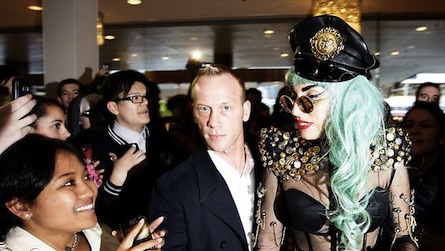
Lady Gaga is awesome; there’s no doubt about that.

She’s fearless in her fashion, her music is guaranteed to get me on the dancefloor, she works tirelessly for gay rights, and recently wowed Sydney (Melbourne next, please!).

But imagine what it’s like to be her for a second.

She’s crafted such an image that it is now impossible for her to make a coffee run, work out, go shopping, or even relax, without portraying her Gaga image. What about Stefani?

While it’d be amazing to meet the people that Gaga does, travel the world like Gaga does, and “use your popularity for a good cause”, as Cher Horowitz puts it in Clueless, like Gaga does, I wouldn’t want to sacrifice who I am underneath it all.

Though, in interviews, Gaga has claimed that her be-sequinned, meat-dress-wearing, friend of Elton John alter ego is who she is underneath it all. That she was “Born this Way”.

But it must be so tiring to always have the Gaga switch on. To be in full makeup, garish costumes, and setting pianos on fire. Evidently it is, if her collapsing on stage is anything to go by.

Personally, if I was a celebrity, I would want to be either a mediocre one who can go about their business getting papped at the supermarket every once in a while, a Cate Blanchette-esque one, who is as good at their craft as Gaga is, but manages to fly under the radar (except for that whole “Carbon Cate” shemozzle), or even one like Kim Kardashian who, like Gaga, probably doesn’t get a whole lot of genuine downtime, where she can spend a day in bed with no makeup on watching cheesy movies without the reality TV cameras and just be the real Kim, but who has crafted a whole career around her personality and her family.

I have to wonder, is there a price to being Lady Gaga? Ten, twenty, thirty years from now, will she still be around like Madonna, Stevie Nicks or Cyndi Lauper? Or will the sheer intensity she operates at now burn her out within five?

I love Lady Gaga, and I genuinely hope she’ll be around for another fifty years, but I certainly don’t envy her.

Related: Vo-Gaga.

The Underlying Message in Glee’s “Born This Way” Episode.

Lady Gaga’s “Telephone” & 21st Century “Noise”.

Katy P. VS. Lady G.

Image via News.com.au.

Does Pop Culture Glamourise Our Carbon Footprint?

Carbon tax. It’s got everyone in a tizzy, and has given Julia Gillard the lowest approval rating of any Prime Minister since Paul Keating. Oh Julia, you had so much potential… but that’s another blog post for another day.

What I want to write about here is the factors that have caused us to need a carbon tax, the front runner being popular culture!

I know, it seems like an odd thing to deduce, but hear me out.

On the nights when I get home from work or being out with friends and my housemate is home before me, oftentimes I’ll walk into the apartment to be greeted by every light in the place blaring, the heater and TV on, and I wonder why my housemate feels the need to make our home look like it belongs in a decor magazine or, at the very least, a television show. But if you’re looking to television and movies to guide your lifestyle, no wonder Australia (not to mention America, the beacon of all things consumerist and anti-environmental) is up shit creek without a paddle.

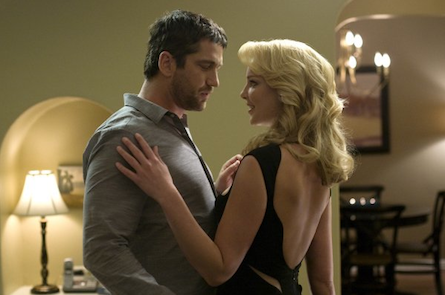
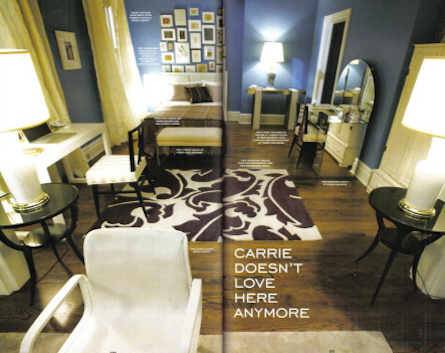
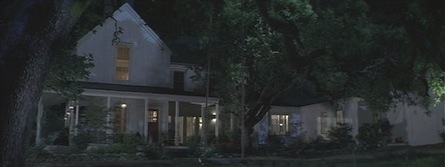
Look at any major mainstream TV show or movie staged in an affluent location: every single light is on, adding to the unrealistic “ambiance” of the place. Below are just a few screenshot examples:

Charmed.

The Ugly Truth.

Sex & the City.

Scream.

Also, inhabitants of houses/apartments/sheds/any building one can reside in onscreen have a penchant for leaving their blinds open. This is a pet hate of mine and one I’ll never understand. Not only does it practically invite psycho killers into your home (okay, I’ve been watching too much Scream), but in winter, it completely undoes all the good work of your trusty little heater. (I see this not only in movies and TV, but in real life, too. My friend Katrina recounted to me how she once saw her neighbour walking around topless in her bedroom without the blinds drawn!)

And hard-yakka Aussies wonder why they’re being asked to fork out for a carbon tax.

Girl with a Satchel Erica Bartle put it well when she wrote that we’re “not so hard up, are we?” when it came to light that “the average Aussie household now has multiple computers, wireless broadband internet, a Nintendo Wii or similar game console and a plasma TV”. Also, how much are the media contributing to our carbon footprint when they’re firing up the chopper to get aerial views of Cate Blanchett’s eco-mansion whilst condemining her for deigning to support the tax. (I read this on The Drum  or The Punch or one of those sites, but can’t seem to find the link, sorry.)

Can you think of any other TV shows and movies that perpetuate this lights on = glamour at the expense of practicality and our carbon footprint?

Elsewhere: [Girl with a Satchel] “Carbon Cate” for T Magazines & the Prius Effect.

Images via YouTube, IMDb, Film in America.

Magazines: Who Speculates About Domestic Violence in the Affleck/Garner Household.


While garnishing the article with a “Rumour Patrol” disclaimer softens the blow a little (both puns intended!), I’m not sure Who’s doing anyone any favours by insinuating that Jennfer Garner may have given Ben Affleck the black eye he’s sporting in this paparazzi pic of the family in the wake of the “Blake Lively” nude photo scandal.

Feel free to speculate, as Who has surely done…

Related: Picture Perfect.

Conservativism Reigns Supreme in The Sunday Age’s Opinion Section.


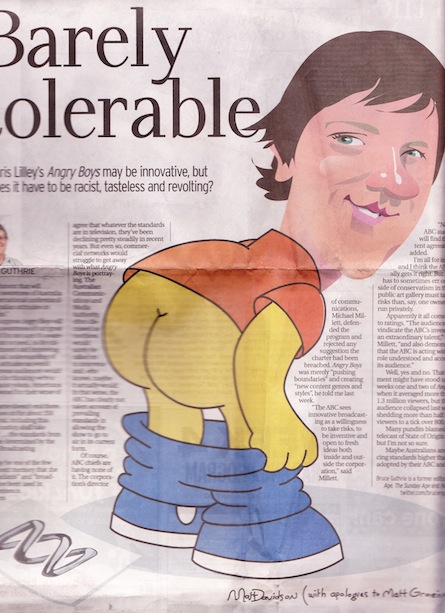
I was pleasantly surprised to see an article on Chris Lilley’s Angry Boys juxtaposed against one on the SlutWalk in The Sunday Age’s Opinion columns this past weekend.

What I wasn’t so pleasantly surprised to find was that they were both championing the censorship of a show “many critics and some intellectuals have applauded… for [its] brave comedy” and of women’s rights to wear what we want when we want where we want without the risk of sexual assault.

On that, Nicole Brady, author of “It Makes Sense to Be Aware of What You Wear” actually sides with the Toronto policeman, Michael Sanguinetti, writing, “The word ‘slut’ was probably overkill, but that policeman was onto something… Boiled down, and stripped of the inflammatory ‘slut’, his argument was ‘be careful about what you wear’. Advice as dull as your mother telling you to wear a coat on a cold morning.”

I don’t want to go into why what the cop said was wrong and why Brady’s likening of “not dressing like a slut” to wearing “a coat on a dull morning” is an archaic way of thinking (for that, you can go here).

In the article to the left of Brady’s, Bruce Guthrie continues in his argument against the ABC/HBO partnership, saying that the ABC’s charter may be in conflict with the success of and American market for the show. “I’m not sure if the cable network has a charter, but if it did it would probably say this: ‘Our goal is to make as much money from our programming as possible’,” he writes. Guthrie specifically takes issue with Lilley’s portrayal of rapper S.Mouse, a role for which the actor and creator appears in blackface. “Why is it okay for Lilley to wear blackface, but the guys from Hey, Hey, It’s Saturday are vilified for it?” I’ve heard it asked.

Unlike Brady’s, I can see Guthrie’s point. I think Angry Boys has a lot of potential, and it is damn funny, but I feel that it has gone a bit downhill from the first episode, which focused heavily on the Sims twins, Daniel and Nathan, and their Gran’s workplace, a juvenile detention centre, to last week’s third, which “explained—and showed, needlessly and graphically—how surfer Blake Oldfield became a eunuch.”

But it does portray Australian “bogan” life to a tee, and I think if the show focused a bit more on the juvenile detention centre, and the classism and racism that surrounds it, Angry Boys would not only be a funny show, it would also be an apt dialogue on Australian society.

Related: Ain’t Nothin’ Gonna Break My Slutty Stride.

ADFA Sex Scandal—Just a Few Bad Eggs?

Here are some particularly poignant quotes from Insight’s look at the sex scandal that rocked the Australian Defence Force Academy, and their treatment of women:

“… We are recruiting from a society that may put great emphasis on masculinity, blokey behaviour, these young men coming into ADFA, their heroes are  footballers who are getting slaps over the wrists for sexual misbehaviour and alcohol. You have to realise that we are bringing those sorts of people in…”

This is very true of Australian “blokey” culture, but is it similar inside the defence force?:

 “The cases that we have been looking at are very sad and certainly not accepted in defence but they are in a minority and it is disappointing that I think the culture is not the negative culture that we are trying to portray in some of these stories. As bad as they are it’s a strong culture based on values and values based leadership. Yes, there are some bad eggs out there and bad incidents. But that’s not the culture of defence. The defence culture is a positive one based on really strong values.”

Is it really about just a few “bad eggs” amongst a lot of standup officers (as the below anecdote will illustrate) that happen to get their stories of “misbehaviour” in the news? Is “defence culture” a reflection of Aussie society that, indeed, slaps footballers on the wrist for major indiscretions and blames the victim? Or are “these attitudes… coming from within defence”, and somehow perpetuating the above cultural perceptions? Really, how can we trust the ADFA to act within the best interests of Australia and to keep us safe when they can’t even act within the best interests of their female cadets; to keep them safe?

“I had a private soldier come to me who said, ‘Sir, I’m really upset. The sergeant has given me some papers and I’m to be discharged and I don’t know anything about this.’ I asked him to sit down and tell me his story. He was being discharged because his fitness had decreased and reason his fitness had decreased was because he was upset because he had just lost his twins, his twin babies. Both his twins had just died. Of course he was beside himself with grief and wasn’t exercising and wasn’t able to pass his fitness assessment.

“So I said to the sergeant, ‘Leave this with me.’ I went off home, the sergeant had gone into my office and taken the papers out, gone back to the private and told him he was being discharged and that this was what defence was doing with him because he couldn’t pass his fitness assessment. I took that sort of complaint to my Commanding Officer and I was referred for psychological assessment. When I complained about that I was charged with insubordination, when I complained about being charged with insubordination for following the redress of grievance system I was threatened with court martial, a full on court martial for writing letters to people complaining about their behaviour.”

Related: Why Are Famous Men Forgiven for Their Wrongdoings, While Women Are Vilified for Much Less?

Elsewhere: [SBS] Under Fire: SBS Insight Transcript.

Images via SBS, The Daily Telegraph.

Osama bin Laden & Racism.


So, yay. Osama bin Laden is dead. If you haven’t been living under a rock for the past week and a half, you would know that.

It’s very cut and dry: they captured bin Laden in a hideaway compound in Pakistan after months of observation, they shot him dead in the head and chest, did a DNA test against his dead sister’s genes, and buried him at sea once it was confirmed it was him.

But the emotions surrounding bin Laden are anything but cut and dry.

The news showed masses celebrating in the streets in the U.S., and his followers mourning him in the East.

But the mistake a lot of people make, I think, is thinking that everyone in the East holds bin Laden in high esteem.

I encountered such racism the day of the martyr’s death, when I sent the equivalent of an office email around my workplace when I heard the news in the mid-afternoon. At this point it wasn’t common knowledge, so I thought most people would like to know that the man who single-handedly changed the world on September 11, 2001, was dead.

A couple of hours later, a colleague approached me and said he thought my message was a bit inappropriate. I asked how, as it is not uncommon for the AFL grand final results or who won the Melbourne Cup to be broadcast around my workplace, as this was a news story just like them.

He said there are Muslims in our workplace and they might have found it offensive.

I told my colleague—and friend, might I add—that I was offended by his small-mindedness, and to get out of my face. In the nicest possible way, of course!

But, legitimately, I was offended by the fact that he thought all Muslims were proud to have bin Laden as their figurehead; the person who represents their religion and culture to the rest of the world. That’s like saying that someone like George W. Bush, Sarah Palin or—God forbid!—Adolf Hitler is adored by the white masses, not taking into account that these people are morons (the former two) who slaughtered millions of people (the latter). This is an abhorrent worldview that, unfortunately, a lot of people hold true.

I followed this altercation up with a friend who happens to be Muslim, just to be sure that I wasn’t overreacting, and he assured me I wasn’t.

There’s always going to be people who have a bigoted attitude to people and cultures they aren’t familiar with, but hopefully bin Laden’s death can be used as a stepping stone in the right direction.

(Note: in reference to a post on the day of the Royal Wedding where I hypothesised that the decade between 2001 and 2011 would be book ended by two of the most important events in our history—September 11 and the Royal Wedding—it looks like I was wrong. The decade has been defined by one horrible man who introduced us to “the age of terror”, and has now escaped it to “rot in hell”, as the headlines have espoused. Not to become a martyr and move on to paradise, or Jannah, as one simple television commentator argued as a reason why they should have captured, not killed, bin Laden. Oh, the ignorance.)

(Note #2: Also check out Mia Freedman’s latest Sunday Life article, in which she demystifies the niqab and addresses bigots.)

Related: The Royal Wedding: The Other Event of the Decade?

Back to the Draw-ing Board: Australia’s Year of Indecision.

Elsewhere: [MamaMia] A Normal Face.

Images via Huffington Post, Zimbio, Sydney Morning Herald.