Movie Review: The Hunger Games*.


Now, The Hunger Games is a lesson in how to do young adult with a female in the lead, Stephenie Meyer.

***

I was a bit apprehensive about buying into The Hunger Games hype but, as a blogger, I thought it imperative that I read the book and the see the movie to understand what all the hype was about and, at the very least, to get a blog post out of it. (That’s my reasoning for going to see American Pie: The Reunion next week, anyway!)

I’d read all the blog posts and cultural analyses of the film and book before I went to see it last Monday and finished it over this past weekend, respectively, so I had a pretty good idea of the storyline and the social commentary I’d be looking for. I don’t normally like to see the film version before I finish the original one (although my track record, with Twilight and, most recently, Water for Elephants and My Week with Marilyn, doesn’t bode well), but I actually found myself more immersed in The Hunger Games, as opposed to analysing each and every moment, when the film continued after where I’d reached in the book. (The pre-Hunger Games interviews, FYI.)

While the book is allegedly a commentary on the hell high school can be (like a post apocalyptic Buffy), I interpreted it more to be not only about capitalist life (the riches of the Capitol juxtaposed against the poverty and poor quality of life for the rest of Panem), but about advertising culture and the media.

The argument that seems to surround media today is that we should ban this, and censor that. Then we wouldn’t have eating disorders, negative stereotypes of women and minorities, obesity, gambling, domestic violence, blatant consumerism and pretty much anything else you can think of. Common sense would have us stop consuming the things we don’t feel align with our personal ethics. Don’t like the way animals are slaughtered in factory farms for our precious meat? Don’t eat it. Don’t like racism? Don’t be a racist. Don’t like leggings as pants? Don’t wear them. Don’t like children being chosen at random to fight to the death for the pleasure of the elite and the opportunity to make life a little more bearable for the underclass? Don’t watch it. If everyone adopted this attitude and no one watched, there wouldn’t be a product. As author Suzanne Collins notes her inspiration for the series as flicking television stations between war and reality TV, it’s not hard to come to this conclusion.

Despite the fact that no one really seems to be talking about the senseless mass murder of children by children (won’t somebody think of them?!), there is a point to “career tributes” like Cato and Glimmer, who are trained for the Hunger Games since birth.  As Laura Miller wrote in The New Yorker, “[W]hy isn’t it the poorer, hungrier districts that pool their resources to train Career Tributes, instead of the wealthier ones?”

I wasn’t as huge a fan as some others who’ve devoured the series in several sittings (I prefer to wait until the next filmic instalment is on the horizon to delve into the second book, as with Tomorrow, When the War Began, for example), but I did like it and look forward to seeing what the next two chapters bring; both book and film versions.

*Blanket spoiler alert.

Related: My Week with Marilyn Review.

Event: Should Meat Be Off the Menu?

Tomorrow, When the War Began by John Marsden Book/Movie Review.

Elsewhere: [The New Yorker] Fresh Hell.

Image via IMDb.

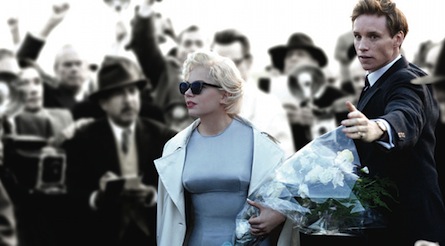
Movie Review: My Week With Marilyn*.


“Thanks for telling me the truth, Colin.”

My Week With Marilyn is concerned with truth. Laurence Olivier tries to get Marilyn to perform a truthful portrayal of showgirl Elsie in The Prince & the Showgirl, while Marilyn expresses trepidation that Olivier’s imagining of Elsie isn’t realistic. Elsie could be seen as a metaphor for Marilyn Monroe’s misunderstood likeness since she changed her name from Norma Jean and became the buxom bombshell we all know and some of us love today.

But I didn’t find that the movie delved any further into the Marilyn mystique than any of the characters she played or any of the men who loved her did when she was alive. It was really only after she died, and in a slew of “lost” letters and photos that have made up such publications as Fragments and The Genius & the Goddess: Arthur Miller & Marilyn Monroe, that we came to discover that she was much more than just a dumb, sexy, childlike blonde who posed with Ulysses to make her look smarter.

It tried to go there, though, when Michelle Williams spoke such lines as “Shall I be her?” when Marilyn and Colin Clark  visit Windsor Castle, and after a fight with her husband, Arthur Miller, she says, “When they realise I’m not Marilyn Monroe they run.” But the film didn’t really show us anything different than the common perception of her.

Don’t get me wrong, though, I really enjoyed the movie and thought Williams did a great job with the script she was given. I just don’t think it was an apt representation of all that Marilyn was. As Dodai Stewart writes,

“… the biggest problem with My Week With Marilyn is that the film treats the woman who loathed being a sex object as a sex object. The story is told by a man who looked at her as a mesmerising other-worldly creature. Though he did have some intimate moments with her, a lot of the film involves Marilyn being gawked at by this slack-jawed fan-turned-friend who calls her a goddess. As a character, she is frustrated because she wishes people would see her as a human being, but she’s shot in the softest, most radiant light, frolicking through the English countryside and ever so gently batting her lashes: Male gaze ad nauseam.”

And while the film is wrapped up in a nice little package with Marilyn coming to say goodbye and thank you to Clark after having kicked him out of her bed and her life, I had the feeling he was still embittered about his unrequited love.

I haven’t read The Prince, the Showgirl & Me, so I couldn’t tell you for sure if this is the case, but even if it wasn’t, Clark was a 23-year-old boy who fell in love with the image of Marilyn Monroe, not the actual Norma Jean.

Related: Fragments of Marilyn Monroe’s Literary Life.

All Eyes on Marilyn.

Elsewhere: [Jezebel] The Problem with My Week With Marilyn.

*Blanket spoiler alert.

Image via Screen Rant.

Sexism in Fantasy.

From “Young Females as Superheroes: Superheroines in the World of Sailor Moon” from FemSpec journal:

“Further illustrating the negotiation of femininity and empowerment, girl power characters are often represented in a fantasy setting. This is a particularly significant factor when interpreting these characters in terms of their fighting abilities. The heroes generally face fantastic villains that are often unmistakably evil and are represented as protectors of innocence and humanity. This reinforces the idea that girl power heroes should have a nurturing, protective nature: both one of the conflicting femininities described by Douglas and an aspect of femininity reclaimed within third wave feminism.

“… Fantasy helps to alleviate the threat of castration because these characters are not meant to represent reality. Thus, the threat itself is marked ‘not real’.”

I think this was what Sady Doyle was trying to get at in her scathing critique of George R.R. Martin’s A Song of Ice & Fire series which, while valid, didn’t win her many fans in the fantasy community.

In a nutshell, I think she was trying to say that women experience sexism, rape, sexual harassment and value based only on their looks in everyday real life; we don’t need to be represented that way in fantasy too, where the author has the opportunity to create an alternate reality for women.

In FemSpec (an article which I originally accessed online but has since been taken down), the author studies Sailor Moon and how the heroines in that were created as a response to third wave feminism, but as a large portion of the show and manga’s audience is male, they’re typically feminised in order to eliminate threat to the status quo.

I’m not a fantasy fan, but I think we can all agree on less sexism in fantasy (nay, all fiction. Or, here’s a radical idea, in real life!) and more accurate portrayals of what it’s like to be a woman that doesn’t centre around sexuality.

Elsewhere: [Tiger Beatdown] Enter Ye Myne Mystic World of Gayng-Raype: What the “R” Stands for in “George R.R. Martin”.

[Tiger Beatdown] Chronicles of Mansplaining: Professor Feminism & the Deleted Comments of Doom.

Movies: Megan Fox Starting to Gain Some Traction in Hollywood.


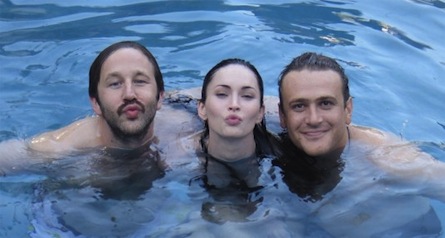
I was glad to hear that whilst filming the upcoming Judd Apatow sequel to Knocked Up, This is Forty, Chris O’Dowd (Kristen Wiig’s cop love interest in Bridesmaids) had this to say about Megan Fox:

“She was a sweetheart on set. I don’t get the whole Michael Bay thing. I hate his fucking films. They are bad. I don’t think she got enough respect.”

No do I, Chris, nor do I.

Related: Megan Fox May Be Trying to Step Away from Marilyn Monroe, But They Might Be More Similar Than She Knows.

Is Robert Pattinson the Male Version of Megan Fox?

Megan Fox Transforms from “Android Ice Queen” to Relatable Person.

Megan Fox Too “Spicy” for Transformers?

“She Just Wants Attention.”

The Beautiful, Bigmouthed Backlash Against Katherine Heigl & Megan Fox.

Image via FilmOFilia.

Movies: Costuming in The Iron Lady*.


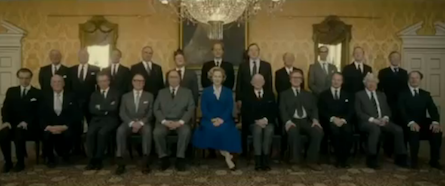
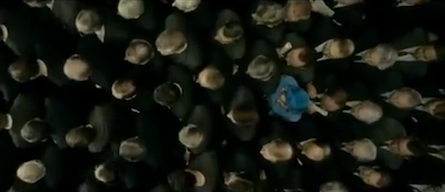
The cavalcade of blue in The Iron Lady was effective, if a bit distracting once you start to notice the sheer abundance of “Tory blue”, as it became to be known during Margaret Thatcher’s reign as prime minister.

Not only was she the only woman in many of the scenes but, as you can see from the images above, she was also the only one dressed in blue in a sea of dull suits.

However, as Margaret begins to rise up the ranks of her party and into the prime ministership, she graduates from pale blue to royal blue, and when she becomes Britain’s most hated leader and is ousted by Michael Heseltine, she’s ravishing in red and black.

The only other times she wasn’t in blue were when she was dealing with the hallucinations of her husband, Dennis. Margaret wears a tweed suit when she turns on all the appliances in the house in an attempt to drown out Dennis’ incessant nattering. When she finally says goodbye to her several-years-dead husband at the end of the film, she’s also in a dirt-coloured hue.

Tellingly, their relationship begins when Margaret tells Dennis he has to be aware that she will not be one of those women whose life begins and ends with washing a cup. As the movie draws to a close and Margaret turns her back on Dennis in said brown outfit, she’s washing up her teacup.

Elsewhere: [Final Fashion] Red Dress Blue Dress.

*Blanket spoiler alert.

Images via YouTube.

Movie Review: Space Jam—It Doesn’t Stand Up Over Time.


It’s amazing how some things we loved as children fail to live up to the hype as adults.

When I saw the ads for Space Jam on Go! last week, I just had to watch it. I haven’t seen it in a good ten or fifteen years, but it’s one of those childhood classics—like Home Alone or Mrs. Doubtfire—that you just have to watch given the opportunity.

And let me tell you, I haven’t seen such a sexist and racist kids movie in a very long time!

Firstly, there’s only one female in the whole movie that isn’t a wife, mother, child or housekeeper, and even those roles are very minor ones, appearing onscreen for less than five minutes in total. You can rest assured that Lola is objectified as the sexy, albeit sporty, “don’t-call-me-Doll” rabbit who wears short shorts and a midriff top, while everyone else wears actual basketball attire. On a side note, Pepé Le Pew makes a cameo in the film, which prompted my housemate to refer to him as the poster boy for sexual harassment. With his love interest, Penelope Pussycat, being one of only a few female Looney Tunes, Pepé is well within his rights to stalk and harass her til his heart’s content for deigning to be an attractive female in a male dominated world.

In the race department, the Looney Tunes aren’t really known for their fair portrayal of those who aren’t white and/or American. Look at Speedy Gonzales, Pepé, and the episodes featuring Ali Baba, blackface and Native Americans. But I found it shocking that the premise of Space Jam, which escaped me at a younger age, is capturing Michael Jordan to be a slave—replete with chains—at Moron Mountain theme park. A cartoon sequence that shows Moron Mountain’s owner, Mr. Swackhammer, fantasising about having Jordan as a side show attraction was a particularly low point of the movie.

Not only is Space Jam sexist and racist, but the plot has major holes in it. In one way I’m glad that I was able to see Space Jam for what it truly is, but on the other, I kind of wish it had stayed in childhood and remembered for its nostalgia.

Image via Download Free MP4 Movies.

Movie Review: Young Adult*.

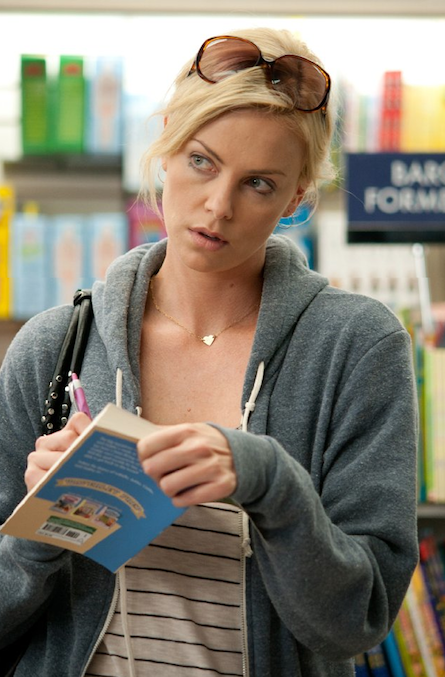
Young Adult is like Black Swan for writers,” my housemate Eddie told me when I expressed interest in the film. And, after seeing it, I have to agree.

Black Swan was rife with metaphors, and so is Young Adult. Take, for example, the fact that emotionally stunted, alcoholic woman-child Mavis Gary says to her newly acquired drinking buddy Matt, who was beaten to a bloody pulp for being gay (he’s actually not, as an awkward, drunken encounter between he and Mavis will attest) when they were in high school together, that she wishes he would stop leaning on his crutch. Matt acquired a disability in the attack, so he kinda has to lean on his crutch, but she means it as a metaphor for his feeling sorry for himself and refusing to live his life. Matt congratulates her on her way with words and asks her if she’s used that line in her Waverly Prep novels.

Mavis is one to talk, though. The movie opens with her chugging Diet Coke, gorging on ice cream, napping during the day in her dingy apartment whilst watching Kendra and the Kardashians, and she continues like this throughout the rest of the movie, after deciding to return to her hometown to win back her high school sweetheart who is now married with a new baby.

I can understand maybe holding on to a lost high school love in your twenties, but Mavis is 37. It really emphasises the life rut the main character is in. Sure, she was a successful ghost writer and is beautiful (c’mon, it’s Charlize Theron!), but she’s an absolutely horrific person on the inside. I think screenwriter Diablo Cody and director Jason Reitman did a wonderful job in making Mavis as horrible as they could (she ignores her dog, tries to split up a happy marriage and makes disability jokes at Matt’s expense) but still realistic as a person. Young Adult is probably one notch above Bridesmaids in terms of portraying real, and not necessarily likeable, characters. It’s the movie Bad Teacher wants to be.

But back to the metaphor thing: you can’t get much more metaphoric than the actual title of the movie. While Mavis may have graduated from high school and reading YA novels like Sweet Valley High (interestingly, Cody is in the process of adapting Sweet Valley High for the big screen. Perhaps there’s a bit of her in Mavis?) twenty years ago, in her mind, she’s as immature as they come.

*Blanket spoiler alert.

Related: Bridesmaids Review.

Bad Teacher Review.

Image via IMDb.

Movies: The Underlying Message in The Muppets Movie*.


Talk about a metatext!

It seems like every two minutes in The Muppets there was a thoroughly enjoyable self-aware reference and celebrity guest appearance. Gary presents Mary with some lacklustre flowers, which were squashed “probably from the dance number I was doing” in one of the opening scenes of the movie. When Mary laments in song Gary’s brother, Walter, joining them on an anniversary trip to Los Angeles, a gardener conveniently sprays water on the window she’s wistfully looking out of. When Statler and Waldorf introduce the “important plot point” involving oil tycoon Tex Richman drilling for oil under the old Muppet Theatre, Walter tries to get the Muppets back together to save it. When this fails to come to fruition midway through, Mary remarks, “This is going to be a really short movie.” And let’s not forget Camilla and the other chickens’ performance of “Forget You”. You can’t get much more meta than that!

As for the cameos, take Jack Black and his School of Rock cast mate Sarah Silverman, for example. Or Dave Grohl on drums for The Muppets cover band, the Moopets, and the later performance by The Muppets Barbershop Quartet of “Smells Like Teen Spirit”. Or Amy Adams as Mary, and her Sunshine Cleaning co-star Emily Blunt in her very Devil Wears Prada-role as Miss Piggy’s secretary. Even Blunt’s real life husband, John Kransinki, makes an appearance. Phew!

But, we’re reminded, celebrities are fair game because they are “not a people”. Makes a poignant comment on our celebrity-saturated society.

That’s the not the only point The Muppets makes. Richman is the personification of the 1% and, like the Moopets, is “a hard, cynical act for a hard, cynical world.”

The film also seeks to promote diversity and acceptance, I thought. Take, for example, the Ebony magazine cover that Kermit fronts, which is traditionally a magazine for African Americans, and how this might represent the Muppets as being beyond racial definition. I also got the feeling that Walter was marketed to be a differently-abled person, which would certainly explain Gary’s reluctance to let Walter go when he is accepted into the Muppet clan and his sheltered existence in Smalltown up til then.

On the first watching of the film, I noticed in particular that Kermit wont tell Miss Piggy he loves her, which is all she asks of him. It reminded me of the Blair and Chuck storyline in Gossip Girl from a few years ago: their back-and-forth love story that depends on Blair needing to hear those words and Chuck never being able to say them. On second watching, I confirmed that, in fact, Kermit never does say “I love you”.

The second time around was more enjoyable. While I originally got to see the film a month before it came out in Australia—and for free!—being in an audience of primarily under 10s wasn’t as good as being in an almost-empty theatre consisting only of Generation X’s who grew up with the Muppets. There was, however, a group of about six teenage fanboys sitting behind me. I was originally annoyed by their chatting in the first ten minutes of the film, but I actually laughed more at them than at the movie when they slid off their seats during the appearances of Neil Patrick Harris and Jim Parsons. But, after watching “Muppet or a Man”, can you really blame them?

*Blanket spoiler alert.

Images via YouTube, Cover Me Songs.

Movies: Top 11 Films of 2011*.

Scream 4. For my money, which I forked out happily, Scream 4 was not only one of the best films of the year (for me, Bridesmaids was number one, followed closely by the fourth installment of the Woodsboro saga), but the best chapter of the franchise.

http://www.youtube.com/watch?v=1UW9Zks5L2A

Bridesmaids. My other favourite movie of the year. While I’m happy that the rest of the world cottoned on to the brilliance of Bridesmaids, my only regret is that it’s not just my little secret.

Black Swan. It was the buzz of the 2011 Oscars for its lesbian scenes, portrayal of mental illness and the controversial partnership between choreographer Benjamin Millipied and star Natalie Portman.

http://www.youtube.com/watch?v=Q0AF0GI06hg

The Lion King 3D. Who could resist the 3D reboot of one of Disney’s best loved animations? It also harkens back to the hand-drawn animation era, being one of the last before computer animated films like Toy Story and Finding Nemo took over.

The Muppets. Probably one of the most anticipated films of the year (in my household, at least!), I was lucky enough to see it in a preview screening early in December. Technically, it’s released in Australia later in January, however it was a Thanksgiving film in the U.S., so I’m sticking by that. A must see for any child at heart.

The Help. The Help really took me by surprise. In August, I saw a preview screening of the film advertised, and it piqued my interest. A few days later, I realised it was based on a book, and before I even had a chance to express interest in reading Kathryn Stockett’s novel, the movie was out in cinemas. I’m glad I didn’t read the book, because the movie was it for me. And for the Academy of Motion Picture Arts & Sciences, apparently!

http://www.youtube.com/watch?v=p1OHXR63a38

Breaking Dawn. Breaking Yawn, more like it. While I was sorely disappointed by the first installment of the big screen adaptation of the final book in the Twilight Saga, it was one of the most highly anticipated and grossing films of the year.

X-Men: First Class. I’m not an X-Men fan, so I’m handing it over to my housemate, Eddie, who is:

“For a northern summer blockbuster, it asks a lot of questions about morality of the viewer: should you change or should society change? Is change through force acceptable? Throw in some incredible acting from Michael Fassbender and one of the greatest cameos of all time from Hugh Jackman and you have yourself a very smart popcorn film.”

http://www.youtube.com/watch?v=k1Y2uXjsKjs

New Years Eve. In the vein of He’s Just Not That Into You and Valentine’s Day, I’m a sucker for a celebrity-packed movie. While there’s not much of a story, and it’s more of an excuse to perve on the alleged chemistry between Lea Michele and Ashton Kutcher, it’s the perfect mind-numbing holiday movie.

http://www.youtube.com/watch?v=tCRQQCKS7go&feature=fvwrel

Super 8. As the latest issue of Time magazine (review to come) notes, Super 8 was one of the more hyped movies of the year. While I quite enjoyed it, sadly, Super 8 didn’t live up to its expectations.

Green Lantern. It was the year of green. Kermit’s return in The Muppets, and Ryan Reynolds’ turn as Hal Jordan. Looking back, the film was a bit of a flop in my eyes, but it did set the scene for one of the most talked about hookups of the year: Reynolds and Blake Lively.

What were your top films of 2011?

*Blanket spoiler alert.

Related: Scream 4 Review.

Bridesmaids Review.

The Help Review.

Breaking Dawn: Sex is Bad, Okay? And You Will Be Punished for Having it with a Life-Sucking Vampire Foetus. Sorry, Life-Sucking Vampire BABY!

Super 8 Review.

Green Lantern Review.

12 Posts of Christmas: I Scream, You Scream, We All Scream for Feminism.

In the spirit Christmas, I’ve decided to revisit some of my favourite posts of the year in the twelve days leading up to December 25th. 

When Scream 4 came out earlier this year, it immediately solidified its spot in my heart as one of my favourite movies and franchises, and not just because of its feminist nature, discussed below, and in the original post.

Scream 4 marked the most recent installment of the horror franchise, which ended in much the same similar way as the past three chapters.

The killer comes back from the dead, gun-wielding Gale Weathers fires a bullet and central scream queen Sidney Prescott gets the last laugh, with fellow original Woodsboro survivor Dewey fumbling around on the sidelines.

Fifteen years after the original, it is still unbelievable as to how Dewey is on the police force, Gale is still a ball-busting rogue sleuth, albeit with a lot more Botox than the last time we saw her, and Sidney has finally wiped that weepy-eyed look off her face and is kicking ass and taking names.

In the first instalment, Sidney is an ineffectual twit who berates horror movie starlets for “running up the stairs when they should be going out the front door” when, only moments later, she does exactly the same thing!

But as I watched each movie, I slowly started to root for Sid. Not only was she dealing with the fallout of her mother’s death and the wrongful allegation against Cotton Weary for the crime in the first film, but she was also dealing with a rat of a boyfriend, Billy, friends, high school and trying not to crumble under the pressure of it all. So I’ll cut her a break.

In the second film, Sidney undergoes remarkable growth due, in part, to going off to college, but the audience can see in the way Sidney carries herself that she believes the murders are over. Oh, how wrong she was! I especially love the final scene in Scream 2, with Sidney outsmarting (one of) the killer(s), Mrs. Loomis, with the help of Cotton. Gale’s there, too, holding on til the bitter end.

The Scream franchise, after all, is about the women. It could be argued that most horror movies are about the women; female victims make for easy targets and garner more of a reaction from the audience. But Scream was one of the first mainstream horrors to advocate for equal-opportunity killing: where the men are as fair game as the girls, and two out of the seven killers have been women. More than that, they’ve been the masterminds of the whole operation; using the clueless and fame-hungry men as pawns in their bloody chess game.

Traditional horror operates on the premise that “she alone looks death in the face”. Not Scream, though.

Ashley Smith in “Final Girl(s) Power: Scream, writes of not only Sidney, but Gale and Dewey, staring death in the face:

“The success of the narrative is predicated now on not an individual woman, extraordinary and significantly boyish, but on the cooperation of two women who together stab, shoot and electrocute the two killers into oblivion. This moment is also notable because it is one of the many instances in Scream that utilises very self-referential language, not only does it rework the figure of the Final Girl, it talks about itself reworking the figure of the Final Girl. This moment is an example of how the film explicitly works on behalf of the female spectator. Sydney/Campbell is speaking for and speaking as one of the girls in the horror audience who want to see active female characters fighting for each other, and significantly not even bound by a sentimentalised friendship.”

Sidney and Gale start out as sworn enemies (as murdered bestie Tatum Riley says after Sidney punches Gale: “‘I’ll send you a copy.’ Bam! Bitch went down! Sid: super bitch! You’re so cool!”), but I suppose bonding over the murders of pretty much everyone you know will solidify your connection, whether or not it’s one of mutual affection for each other, or mutual hatred for the killer(s).

And then there’s Dewey. He’s a funny character and David Arquette plays him to perfection, but the sum of his survival involves him always arriving to the party 10 seconds late and missing all the action. Sure, he’s been stabbed a few times, but he’s more of the token surviving male than a fully well-rounded character. As Smith writes, “the text allows for powerful and active female figures [that] it compensates [for] with weak, ineffective male ones”.

Before Scream, to survive as a “final girl” you had to be a virgin. This works well for high school victims, as a lot of high school students are virgins. And hey, this is the movies, so so what if it doesn’t reflect real life?

The first Scream begins with Sidney as a virgin, but in the height of the killings, she throws caution her virginity to the wind and has sex with Billy. In any other horror film, this would mean she dies. (Casey Becker, Drew Barrymore’s character, and her boyfriend, Steve, die in the opening scene, as does Tatum, girlfriend of Stu, later on in the movie in the doggy-door scene. You might imagine these kids to be non-virgins, as they’re in seemingly committed, loving relationships, but this is never directly addressed.) But Scream, being the “meta-text” that it is, takes a page out of Buffy’s book, and the non-virgin fights to live another day.

But the exemplar of a strong female character in Scream is Gale. She’s not only a ball-busting, high-powered tabloid journalist who fights to see an innocent man go free but, as I mentioned above, she’s always the last one standing, alongside reluctant partner-in-crime Sidney.

In Scream 4, she’s a struggling stay-at-home novelist with writer’s block, so when Sidney—and the subsequent murders—return to Woodsboro, she jumps at the chance to help with the investigations. Dewey, and his lovesick underling Deputy Judy, don’t want her interfering with the case, so Gale goes rogue.

It is Gale who uncovers most of the developments in the case, including who the killer is. And, according to Melissa Lafsky at The Awl, she’s breaking a lot of other ground, too :

“She [Courteney Cox] slashes her way out of the 40-something female stereotype, and takes over this movie with a flick of her scorn-ready… brow. Let’s face it: Few film archetypes are more brutal than the ‘older woman in a horror movie’—either you’re the psycho nutcase… or you’re the pathetic victim… And no matter what, you’re ALWAYS an obsessive mother.

“Cox pulls off a pretty impressive coup, upstaging not only the cute flouncing teens, but also her 15-years-younger self. Her character—now successful, childless(!), and utterly bored with the ‘middle-aged wife’ role—shrugs off all orders to ‘stay out of it’ and leaps back into the murderous fray, husbands, younger blondes and kitchen knives be damned. She takes nothing for granted, and thinks not a second about sneaking into dark corners to catch homicidal fruitcakes (and bitch is 47!!!). While Arquette and Campbell slide into their ’90s cliché groove, Cox reinvents and one-ups, kicking this meta-fest to life and providing the only sexy thing onscreen, gelatinous lips and all. Gale Weathers is shrewd, aggressive, cunning, but never heartless; despite it all, she still loves that stupefied ass clown Dewey. And she does it all while sporting a better ass than the 20-somethings. And… she doesn’t even have to die for it!”

You go, Gale!

Related: I Scream, You Scream, We All Scream for Feminism.

Scream 4 Review.

Elsewhere: [Girl Power: Feminism, Girlculture & The Popular Media] Final Girl(s) Power: Scream.

[Wikipedia] Scream Queen.

[Wikipedia] Final Girl.

[The Awl] Scream 4: The First Mainstream Feminist Horror Film.