12 Trends of 2012.

Girls (Who Run the World).

girls

So misogyny may be running wild in the real world, but on TV, girls are calling the shots. We’ve had a bevvy of shows with “girl/s” both in the title and the storylines this year, with 2 Broke Girls and New Girl carrying their success over from 2011. While a lot of the subject matter is problematic, both shows have women carrying the comedy. Which brings us to just plain Girls, which is the brainchild of actor, writer and director Lena Dunham. Girls is not without its problems, either, but its portrayal of young urban women is almost faultless. Rounding out the representation of leading ladies in 2012 we have Don’t Trust the Bitch in Apartment 23, Homeland, Revenge, The Mindy Project, Are You There, Chelsea?, Smash, GCB (farewell!), Scandal, Nurse JackieVeep, Emily Owens, M.D., Whitney, The Good Wife and Hart of Dixie.

“Call Me Maybe”.

Until “Gangnam Style” came along, the YouTube Zeitgeist was dominated by one runaway success: Carly Rae Jepsen’s “Call Me Maybe”. Justin Bieber’s protégé came out of nowhere with the catchiest song of the year, which was subsequently covered by the guys from Harvard’s baseball team, Barack Obama and the Cookie Monster! Talk about diversity!

2012: Apocalypse Now.

seaside heights rollercoaster

2012 was the year of the apocalypse, with the 21st of December long determined by the Mayans (or Mayan conspiracy theorists) as the day the world ends. You know, until the 7th of December tried to steal its thunder as the apparent recalculated date. Apart from the natural disasters, warfare and massacres, the 21st passed without a nuclear bombing, ice age or attitudinal shift, putting rest to the apocalypse panic. Until the next rapture, anyway…

Shit ___ Say.

It started with a sexist albeit funny YouTube video of a guy in a wig quoting “Shit Girls [Apparently] Say”, which snowballed into “Shit White Girls Say to Black Girls”, “Shit New Yorkers Say”, “Shit Christians Say to Jews” and “Shit Nobody Says”. Cue offence.

Snow White.

snow white kristen stewart

Snow White was everywhere this year: Mirror Mirror, Snow White & the Hunstman, Once Upon a Time… Note: overexposure isn’t necessarily a good thing. In fact, I hated Mirror Mirror and Once Upon a Time, and Snow White & the Huntsman was such a snooze-fest I can barely remember what happened (not including Kristen Stewart’s affair with director Rupert Sanders).

50 Shades of Grey.

fifty-shades-of-grey

On the one hand, E.L. James’ 50 Shades of Grey has singlehandedly revived the flailing publishing industry, so that’s a good thing. But on the other, it has falsely lulled its legions of (mostly female) fans into a state of apparent sexual empowerment: it’s a book about sex targeted towards women, so that means we’re empowered and we don’t need feminism anymore, right?

Oh, how wrong you Anastasia and Christian fans are…

“Gangnam Style”.

The Macarena of the 21st century, Psy’s horse dance took the world by storm, being performed in conjunction with Mel B on The X Factor, with Hugh Jackman in his Wolverine gloves, on Glee and at many a wedding, 21st birthday and Christmas party.

Misogyny.

Misogyny has long been the focus of feminists, but the word and its meaning really reached fever pitch this year.

After Julia Gillard’s scathing Question Time takedown of Tony Abbott and his sexist ways, people everywhere were quick to voice their opinion on her courage and/or hypocrisy. At one end of the spectrum, it could be said that Gillard finally had enough of the insidious sexist bullshit so many women in the workforce face on a daily basis and decided to say something about it, while at the other, many argued that the Labor party were crying sexism in a bid to smooth over the Peter Slipper slip up.

Julia Baird wrote last month in Sunday Life:

“Her electric speech on misogyny in parliament went beyond the sordid political context to firmly press a button on the chest of any woman who has been patronised, sidelined, dismissed or abused. It crackled across oceans, and, astonishingly, her standing went up in the polls, defying political wisdom that no woman would benefit from publicly slamming sexism.”

Whatever the motivation behind the speech, it went viral, with Twitter blowing up, The New Yorker writing that U.S. politicians could take a page out of Gillard’s book when it comes to their legislative hatred of all things female , laypeople bringing “misogyny” into their everyday lexicon, and Macquarie Dictionary using the momentum to broaden the word’s definition.

Kony.

The viral doco that had millions of people rushing to plaster their neighbourhood in “Kony 2012” posters on 20th of April to little effect (the campaign’s goal was to catch Joseph Kony by years end) illustrated our obsession with social media, armchair activism and supporting the “cool” charities, not the thousands of worthy charities out there who could actually use donations to help their cause, not to produce YouTube videos and work the press circuit.

I’m Not a Feminist, But…
623f33dd5b56b295355e315cadf9d8a0

While Tony Abbott is clamouring to call himself a feminist to gain electoral favour despite the abovementioned misogyny saga, it seems famous women can’t declare their anti-feminism fast enough.

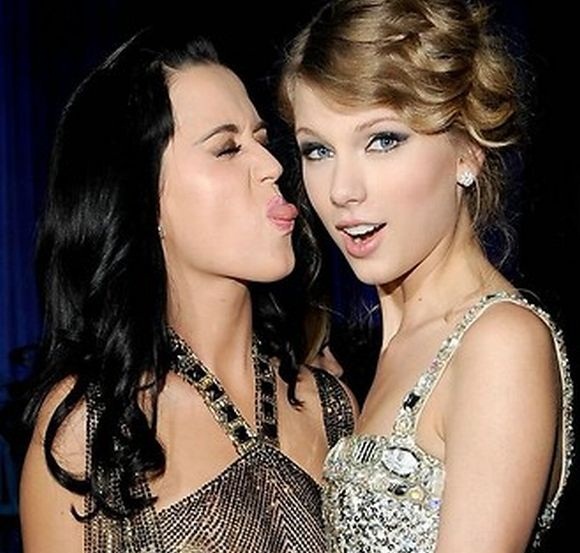
First we had new mother and Yahoo! CEO Marissa Mayer jumping at the chance to shun feminism despite the fact that without it she wouldn’t be where she is today. My favourite anti-feminist campaigner Taylor Swift said she doesn’t think of herself as a feminist because she “was raised by parents who brought me up to think if you work as hard as guys, you can go far in life.” Um, Tay? That’s what feminism is, love.

Then there’s Katy Perry, who won’t let the whipped cream-spurting bra fool you: “I am not a feminist, but I do believe in the strength of women.” Right then.

Garnering less attention, but just as relevantly, was Carla Bruni-Sarkozy asserting that feminism is a thing only past generations need concern themselves with, while in an interview with MamaMia last week, Deborah Hutton also denounced her feminism.

Cronulla.

the-shire

The cronies from Sutherland Shire were all over our boxes, primarily on Channel Ten, this year. There was the widely panned Being Lara Bingle, the even worse Shire, and the quintessential Aussie drama set in the ’70s, Puberty Blues.

While these shows assisted in shedding a different light on the suburb now synonymous with race riots, it’s not necessarily a positive one, with The Shire being cancelled and Being Lara Bingle hanging in the balance.

White Girls in Native American Headdresses.

original

This one really reared its racist head towards the end of the year, right around the festivities of Halloween and Thanksgiving.We had No Doubt “Looking Hot Racist” and Karlie Kloss donning a headdress for the Victoria’s Secret fashion show, in addition to the cultural appropriation of VS’s “Go East” lingerie line, Gala Darling’s headdress furore and Chris Brown dressed as a Middle Eastern terrorist for Halloween.

You’d think we were heading into 1953, not 2013.

Related: Posts Tagged “New Girl”.

2 Broke Girls Aren’t So Broke That They’d Turn to Sex Work.

Posts Tagged “Girls”.

Posts Tagged “Smash”.

Feminism, Barbeque & Good Christian Bitches.

Mirror Mirror Review.

Was Kristen Stewart’s Public Apology Really Necessary?

50 Shades of Grey by E.L. James Review.

Hating Kony is Cool.

Taylor Swift: The Perfect Victim.

Whipped Cream Feminism: The Underlying Message in Katy Perry’s “California Gurls” Video.

The Dire Shire.

Shaming Lara Bingle.

Is Gwen Stefani Racist?

The Puberty Blues Give Way to Feminism.

Elsewhere: [Jezebel] Why We Need to Keep Talking About the White Girls on Girls.

[io9] Why is Everybody Obsessed with Snow White Right Now?

[The Age] What Women Want.

[The New Yorker] Ladylike: Julia Gillard’s Misogyny Speech.

[Jezebel] Does it Matter if Marissa Mayer Doesn’t Think She’s a Feminist?

[Jezebel] Katy Perry, Billboard’s Woman of the Year, is “Not a Feminist”.

[MamaMia] Meet the Women at Our Dinner Table: Deborah Hutton.

[Daily Life] Carla Bruni’s Vogue Interview has Rough Landing.

[Racialicious] Nothing Says Native American Heritage Month Like White Girls in Headdresses.

[Racialicious] Victoria’s Secret Does it Again: When Racism Meets Fashion.

[Jezebel] Karlie Kloss as a Half-Naked “Indian” & Other Absurdities from the Victoria’s Secret Fashion Show.

[xoJane] Fear & Loathing in the Comments Section… And Some Clarity.

[HuffPo] Chris Brown Halloween Costume: Singer Tweets Picture of Himself Dressed Up as Terrorist for Rihanna’s Party.

Images via Collider, Fox News Latino, io9, November Grey, ABC, Now Public, Ten.
Manning Up.

This post originally appeared on The Good Men Project.

“Man up, mate.” “Don’t be a pussy.” “Grow some balls.”

How many times have we heard these phrases—hell, sometimes we’ve been the ones dishing them out—aimed at the men we know and love?

I’ve been guilty of it myself, when a male friend cries to me on the phone about a failed relationship or bemoans a difficult co-worker/friend/family member and won’t just confront them about the problem. I don’t always say, “Just man up and do something about it!” Sometimes I just think it, which still isn’t ideal.

A recent spate of shows in the U.S. are cottoning on to this “masculinity” crisis, where men use “pomegranate body wash” and are at the mercy of the women in their lives:

“Among them are How to be a Gentleman, in which a metrosexual writer hires a trainer to dewussify him; Last Man Standing, with Tim Allen as a sporting-goods-company executive beset by girly men; Man Up, in which a group of male friends worry they’ve lost touch with their inner warriors; and Work It, in which two guys dress in drag to land jobs as pharmaceutical reps.”

This is nothing new, though. Scholars have long been lamenting “The War Against Boys”, which is also the title of Christina Hoff Sommers’ book on the topic.

But when we/society tell men to “stop being such sissies,” we’re sending the message that anything associated with “femaleness… [is] so insulting that men should react with full outrage,” Jill Filipovic writes on Feministe.

So how are these messages affecting actual men, not just those on fictional American TV shows?

When I asked a couple of my guy friends how they feel when told to “man up,” they replied as follows.

Eddie, 25, says because he “still does kiddy stuff like collect comics, people tend to think one of my faults is being a pushover. I also tend to be pretty open with my emotions. I can’t tell you the true meaning of ‘man up’, because everyone carries different reasons as to what makes someone a ‘man’. I, myself, will not ‘man up’ because I don’t think I need to and haven’t for a long time.”

Andrew, also 25, says, “I think there are men and women who, no doubt, find ‘man up’ offensive, because there are plenty of women who embody courage, fortitude and strength more than plenty of men. By the same token I think there are plenty of men who would find being told to ‘man up’ harrowing, because they lack confidence in their masculinity or cannot even define what the term means to them.”

As I wrote on this here blog last year, I have a real problem with the term “as it implies that simply being a man is equivalent to being courageous.” I, like Andrew, know a lot of women with more “balls” than their sack-packing counterparts. But talking about the role-reversal of women who possess “courage, fortitude and strength” as if they are purely masculine traits is damaging, too. We need to get over this gender stereotyping business and accept individuals for who they are, regardless of gender. (This way of thinking applies to the understanding of transgender people, too.)

We also need to get rid of this “disconcerting… focus on dominance and submission” in gender relations. On the other side of the coin, “stop being such a girl” comes to mind.

Hugo Schwyzer recently bemoaned the “real women” trope and how that has now been transferred onto men:

“Men are not immune from the pressure to be ‘real’. It’s been nearly 30 years since the tongue-in-cheek bestseller Real Men Don’t Eat Quiche spoofed an earlier generation’s Guy Code. But today, the ‘real men’ trope is everywhere. ‘Real Men Don’t Buy Girls’ is Ashton and Demi’s campaign to shame pedophiles, replete with the unspoken implication that ‘real men’ never have to pay for sex with women of any age …

“When I ask my students at the beginning of my Men & Masculinity course about ‘real men’, I get responses like, ‘real men aren’t afraid to show affection,’ or ‘real men like to dance,’ or ‘real men can cry in public and not care what anyone else thinks.’ My students want to subvert the traditional ‘sturdy oak’ model of masculinity. They mean well. But all they’re doing is swapping one unattainable ideal for another. Just as ‘real women have curves’ delegitimises countless slim women, ‘real men aren’t afraid to cry’ shames those men who for any number of reasons are awkward about public displays of emotion. The contemporary ‘real man’ ideal presents itself as inclusive, but it’s just another cultural straightjacket.”

So what is a “real man” according to… erm… real men?

Eddie thinks there’s a difference between being a “good man” and a “real man”:

“‘Man up’, for me, means being the best man you can be. Being selfless, being kind, being adult enough to handle responsibility while never taking yourself too seriously.”

While those traits may be what Eddie views as “good man qualities”, for the next guy they could be polar opposites. Being a good man is in the eye of the beholder, it would seem.

For me, respecting people and, especially, your significant other is paramount to “manning up” (or “human[ning] up”, as Irin Carmon puts it): being able to exert your opinion and standing up for what you believe in without the use of violence.

As Filipovic continues: “There is something very, very wrong with a masculinity premised on violence.” Where are men getting these messages that violence and aggression = machismo? (Um, years of socialisation and the media come to mind…)

For the founders of The Man Up Campaign, a “global initiative that engages youth to stop gender-based violence”, this ideal seems to be the consensus. “‘Our call to action challenges each of us to “man up” and declare that violence against women and girls must end,’ its mission statement reads.”

As recent as 50, 20, even ten years ago, being a “man” involved a large portion of physical aggression. And, despite feminism’s and gender equality’s best efforts, a look at many mainstream representations of men in the media, that stereotype still rings true today.

But if we can, through initiatives such as The Man Up Campaign, make it so that being called a “pussy”, like being called “gay,” is nothing to be ashamed of, even just for one person, then I think it’s a job well done.

After all, pussies push small humans out of them so they can’t be all that weak!

Related: Newspaper Clipping of the Week: Man Up.

Elsewhere: [The Good Men Project] Manning Up.

[Jezebel] Why Are Men Feeling So “Manxious” About The Rise of Women?

[Time] High Manxiety.

[Feministe] Masculinity Crisis.

[Jezebel] Stop Telling Men to “Man Up”.

[Jezebel] Real Women Have… Bodies.

[The Man Up Campaign] Homepage.

[New York Times] On Language: The Meaning of “Man Up”.

Okay, So Maybe I Was Wrong… You Give Men a Bad Name Revisited.

The morning after I wrote “You Give Men a Bad Name” I woke to an email in my inbox from the subject of the post.

I took a deep breath and prepared myself for the ripping of a new asshole.

However, I was pleasantly surprised.

He apologised for not returning my email, explained why he didn’t, and acknowledged that he had been a douchebag and that I deserve to be treated better.

Not what I was expecting AT ALL.

As I told him, I never expected him to ever see the post. The blog is publicised on Facebook, but only two of my friends actually read my stuff on the regular. I find it easier to write unselfconsciously when I think no one’s going to read it. Dancing like no one’s watching, or something.

But, while I still think he should have manned humanned up” in the first instance and just called me back to say thanks, but no thanks, I have to commend him for his response to criticism. Not many people can respond to being called out like that and acknowledge that they were wrong.

A couple of close friends who I told about the email responded in a myriad of ways: one cried; one grimaced; one said they didn’t see anything good about the email because he still had to be called out by me; and one called it incredibly sweet.

But all that really matters is what I thought of it, and I thought it was quite noble. His backstory allowed me to understand why he did the things he did (or didn’t do the things he didn’t do). It provided me with closure and has allowed me to move on. And it made me realise that he doesn’t give men a bad name.

Related: You Give Men a Bad Name.

Elsewhere: [The Good Men Project] Manning Up.

You Give Men a Bad Name.

My friend April’s catch cry seems to be, “All men are assholes.” I refuse to believe this, but sometimes certain men can make it mighty hard.

A month or two ago I met this guy. We exchanged flirty eye contact and eventually I got up the courage to add him on Facebook; today’s equivalent of courtship’s first step. Flirty messages followed, and we eventually hooked up just before Christmas.

While I made no secret that I was into him, he was a little harder to read, however when he approached me at a party; kissed me; invited me back to his house that night; I figured it was safe to assume that he was into me, too. He whispered sweet nothings into my ear, told me I was making him crazy with some of the things I’d written to him (I didn’t think I’d written anything out of the ordinary, but each to their own) and led me to a secluded corner of the party for more of the same. Again, safe to assume he was into me.

Then, after a couple of emails the next few days about how we were each feeling (physically, not emotionally) the day after the party, nothing. Zip. Zilch. Nada.

I’d even asked him if, after Christmas, he’d like to catch up for a drink to get to know each other better. A date, I believe the kids call it these days. No reply. Come on, dude, you’re 30: grow up and call a sister back. Even just to tell me that you had fun that night, but that was all it’d amount to. We’re not in high school anymore.

And it wasn’t even like I’d gone back to his house like he’d asked. Maybe then it’d be understandable that all he’d wanted was sex and then decided to drop me like I was hot. But I went home with my friends and he went home with his. One friend suggested maybe all he had wanted was sex, and when he knew he couldn’t get that from me on the first date kiss, he figured I wasn’t worth the effort. (Full disclosure: I am.) But, again, JUST TELL ME! Is it really that hard to send a ten second email saying thanks, but no thanks?

What makes it even more awkward is that I work with him. Not in the same department, but close enough so that I see him several times a week. And he’s nice as pie, smiles, says hello, asks how I am. I smile curtly and respond; we’re adults, after all, even if he hasn’t really been demonstrating this.

Why do men insist on acting this way? And, I’m sure, a lot of men would assert that women act hot and cold, too. I’ve certainly been guilty of it in the past but, as I mature, I prefer to tell people straight if they’ve upset me or if I’m just not that into them.

Even one of the guys I’ve spoken to about my dilemma boiled his actions down to his Y chromosome. I just don’t believe this. I know plenty of men who are the polar opposite of this trope; then again, I know plenty of men who adhere to it. I suppose, despite what pop culture, bogus science and years of socialisation have told us, it’s really all about the individual, no matter whether they come from Venus or Mars. Douches come from both planets.

Elsewhere: [Jezebel] Men & Women Are Sooo Different, According to Sketchy Research.

12 Posts of Christmas: In Defence of Porn.

In the spirit Christmas, I’ve decided to revisit some of my favourite posts of the year in the twelve days leading up to December 25th. 

This article didn’t garner as much controversy as I anticipated, which might just mean that porn is becoming more accepted in mainstream society, for all the right reasons, I would hope. The original post is here.

“Porn Wars” covered The Monthly in September. Melinda Tankard Reist and Abigail Bray just released Big Porn Inc., a compilation of anti-porn essays. Serendipitously, when I decided I would write this article over the weekend, controversial sex writer Bettina Arndt wrote about the porn debacle in The Sunday Age.

She said:

“The suggestion that porn changes men’s attitudes to sex is really questionable. While there’s a body of psychology research suggesting exposure to porn has that effect, Professor Catherine Lumby and colleagues in The Porn Report, published in 2008, found this laboratory-based research to be contradictory and unlikely to reflect real-life situations. ‘The entire tradition of social science research into pornography has started with the assumption that porn is a major cause of negative attitudes towards women and has set out to prove this,’ conclude these Australian academics.”

She goes on to write:

“… Arguably porn has nothing to do with the insensitivity causing men to behave in that way [with negative perceptions of women and sex], which stems from their cultural and social backgrounds.”

When society encourages the viewpoint of women as second-class citizens there for the appropriation of men’s desires and the male gaze, which—granted—porn does replicate in a lot of instances, I just don’t get what the big deal is surrounding it. While Tankard Reist and others go on about the “pornification of society”, shouldn’t we be looking at the society which spawned porn, not the other way around? Shouldn’t we be looking to, as Arndt suggests, porn consumers’ (of both sexes) backgrounds to determine their use and the effects of the medium?

Caitlin Moran says in her memoir, How to Be a Woman (which, keen-eyed readers, has been referenced here a hell of a lot in the past week or so!), that “the idea that pornography is intrinsically exploitative and sexist is bizarre; pornography is just ‘some fucking’, after all. The act of having sex isn’t sexist, so there’s no way pornography can be, in itself, inherently misogynist.”

She raises an interesting, left-of-centre notion that is not often discussed in (extremist?) feminist critique: if consensual sex isn’t sexist, how is consensual sex—that just happens to be filmed—in porn sexist?

I will argue that there are plenty of representations—in fact, most—in porn that are sexist. The lack of female orgasms, or the ejaculation of the male partner(s) into the face of his female partner(s), which seems to be how so many porn videos “finish” these days, come to mind. But, as Fine writes in The Monthly, “is degradation in the eye of the beholder, or is it just in the eye?”

As “facials” are really the only problem I have with heterosexual, seemingly consensual, two-(sometimes-three-)partner porn, I’d have to agree that “degradation is in the eye of the beholder.” In that case, you don’t have to watch it.

Not only that, but porn might be seen to have some positive effects.

Firstly, as have always argued, the existence of fetish porn is an outlet for those with said fetishes, who might otherwise have gone elsewhere to have their sexual desires fulfilled.

“… Some researchers suggest exposure to pornography might make some people less likely to commit sexual crimes,” writes Melinda Wenner Moyer in The Scientific American.

So long as we can educate young people—with an emphasis on young boys—about consent, the fantasy that porn survives and thrives on and expression of your own sexuality, whether it conforms to sexual stereotypes or no, porn is not harmful, in my opinion.

As a recent article on MamaMia opined: “We need better porn.” If we have access to porn in which everybody gets off, which is a major flaw in the current porn industry, what’s the problem?

As is a major focus of Arndt’s article, as well as The Sunny Side of Smut, men prefer to view women engaging in “enthusiastic consent” to sex, as opposed to the oft-mentioned concern that porn “incite[s] violence against women.” According to Wenner Moyer, the opposite is true, in fact:

“Perhaps the most serious accusation against pornography is that it incites sexual aggression. But not only do rape statistics suggest otherwise, some experts believe the consumption of pornography may actually reduce the desire to rape by offering a safe, private outlet for deviant sexual desires.”

In countries such as Japan, China and Denmark, and in certain states in America, which have increased access to online porn, rape statistics have receded significantly.

It’s not just porn that is changing attitudes (or our changing attitudes to porn) to sex, but prostitution, also.

In a Newsweek article a few months ago, Leslie Bennetts, profiled the idea of making soliciting prostitution illegal, instead of charging the women involved in prostitution. In countries that have started to bring in this legislation, such as Sweden, South Korea, Norway, Iceland, Israel and Mexico, sex trafficking has been “dramatically reduced”, whereas in countries where prostitution is legal, such as Australia, trafficking in other kinds of sex trade has increased. Are we cutting off our nose to spite our face?

There has been a lot of debate over the sex trade in Australia. I don’t pretend to know what I’m talking about when it comes to prostitution (for a more comprehensive look at this, see Feminaust), but I do know that it is still very much a grey area. Much greyer than porn, in my opinion. (Voice yours in the comments.)

And, back with porn, I do think it’s about education, in essence. Just as we educate young people about safe sex, we should be educating them about safe porn use, too. That the smorgasbord of sexual entrees (oral sex), main courses (vaginal intercourse) and just desserts (anal sex) on offer in porn can not always be expected of real life sexual relationships, and certainly not on the first date! (In porn, a first date amounts to come breast fondling and perhaps, in “feature” porn, a pizza delivery or plumbing [pardon the pun] fixed.)

Not to lessen the effect that porn can have on some users (again, harkening back to Arndt’s “cultural and social backgrounds” argument), but studies have shown that how a man responds to a woman in a porn clip is not how he’ll respond to her in a real-life sexual encounter. If anything, introducing porn into a sexual relationship can be the spice of life:

“… Variety in sexual experiences contributes to men’s sexual satisfaction—and other works support [Alan] McKee’s suggestion that pornography can help that along. But [Aleksandar] Stulhofer also found that intimacy is at least as, and probably more, important for sexual satisfaction and—contrary to stereotype—as much so for young men as women.” [The Monthly]

As is my understanding, if a porn consumer lets what they see on the computer screen (who uses DVDs these days? Although, I did hear a funny story from a friend about a porn DVD getting stuck in a DVD player. When I suggested throwing out the DVD player, the friend said it was part of the television. And that the DVD was borrowed from their partner’s Dad. A comedy of porn errors.) dictate their perception of sexual relationships, they’re probably not capable of real intimacy anyway.

So, what do you think? Is porn the hotbed of debauchery it’s made out to be? Or, like Moran suggests, is it “just some fucking”?

Related: In Defence of Porn.

How to Be a Woman by Caitlin Moran Review.

Elsewhere: [Melinda Tankard Reist] Big Porn Inc.: Exposing the Harms of the Global Pornography Industry.

[The Monthly] The Porn Ultimatum.

[Sydney Morning Herald] Porn is Not a Dirty Word.

[The Scientific American] The Sunny Side of Smut.

[MamaMia] Why We Need Better Porn.

[Newsweek] The Growing Demand for Prostitution.

When Girl-Hate Turns Into Obsession.

I think a little bit of competition between women is healthy. My default emotion when I meet new people is wariness. I gradually begin to like people as I get to know them.

The same is true of the first impression I make. I’m kinda shy, which comes off as cold and bitchy, and I’m very territorial. No after work drinks with my friendship group til I learn whether you can be trusted. I’m not a likeable person to begin with and, some would argue, at all.

It is those that I’d like to focus on here.

A few weeks ago I had to take one of my co-workers to Human Resources for harassment and bullying. I haven’t gotten along with this person from day one, when she returned from some leave, during which time I’d become employed at our workplace. Never before had my department had such a youthful, outgoing and eclectic bunch of new recruits, so when she returned, I think it was quite a culture shock. She was the alpha female when she left and, not to toot my own horn (but toot toot!), when she came back I was the alpha female.

Within a week she’d been complicit in a major fight between myself and a fellow co-worker/friend, whom I now don’t speak to. Granted, it was no big loss, but I realise now that I should have reported her then and there for bullying.

Two years have passed and it’s been an awkward working environment to say the least, but we’ve both/all (I’m not the only one she’s had a run-in with) managed to deal with it.

After another leave of absence, this person came back to work with what seemed like a vendetta against me. Prior to the few weeks she was away, our working relationship had become somewhat pleasant, surprisingly.

As soon as she saw me, she made some jibe about a co-worker’s party I went to that weekend, followed by some comments to a friend of mine about said co-worker and our (purely platonic, though I do think he’s cute!) relationship.

This was followed by some more bitchy comments to other co-workers about my birthday celebrations, about the way I dress, and about my reputation in the workplace, amongst other things. She even swerved towards me in the carpark!

At this point I took her to H.R., and was told there was nothing they could do because it was all “hearsay”. Correct me if I’m wrong, but I’d say the threat of grievous bodily harm with a vehicle is a little more than hearsay!

She’s backed way off since then, but when one drama ends, another begins.

I’ve been struggling with just about everything lately. Work, love life, money, family, friends. You name it. So the last thing I need is people talking shit about me. But hey, I’m Scarlett, and people love to hate me! More on why I think this is a bit later.

My work Christmas party is coming up in less than a week, and if you were a reader of this blog a year ago, you will know that the event is an absolute extravaganza! The theme is heroes and villains and I’m going as Eve, with the aforementioned object of the rumour mill as Adam. (Yeah, I’m probably asking for it with that one, aren’t I?!) Upon hearing about this on the grapevine (some people are more guilty of tending to the vine than others), a female colleague who now works in a different department called me attention seeking.

I’ll pay that: I will be the first to admit that I am an attention seeker. I’m a writer with a blog; attention seeking goes with the territory. And when it comes to costumes, I’ll go all out in an effort to have the baddest ass costume in the joint.

My problem is with the blatant jealousy in these comments.

If you think I’m attention seeking and you want to realign the spotlight back on you, strive for an even more out there costume than mine.

If you think I dress like a slut, how is that any concern of yours? So what if I do? If you wanna dress like a slut, too, go right ahead. I don’t have the monopoly on sluttiness.

If you think I’m “all over” someone, try to peel me away and you yourself can be all over them if that’s what you really want. If it’s not, then why worry?

Honestly, I actually feel sorry for these women who have nothing better to do than bitch about me. Worry about your own lives and less about mine. You must really not have much going on (one of these women is a mother, for crying out loud! You’d think she would have better things to do.) if I’m all you’ve got to talk about. Get a life!

But I believe the reason people, nay women, have such a problem with me is because, as the divine miss Catherine Deveny puts it, “I don’t lay down in the chalk outline drawn for me.” Sure, she was talking about body image, but I think as a woman who refuses to comply with outdated “socially acceptable” norms, it is particularly fitting.

Perhaps people would like me better if I were more agreeable, demure and didn’t voice my opinions. If I strived less for achievement in the areas that are important to me, and more in the areas others’ think are important. If I was less threatening by being more concerned with what people think of me. But then I wouldn’t be me. Oh, sorry, that’s what they want!

Related: Breaking Up is Hard to Do.

Slut-Shaming as a Defence Mechanism.

Elsewhere: [MamaMia] I Love My Body. Catherine Deveny: I’m 80kg & Still Happy.

What Makes a Good Person?

Recently, Erica Bartle wrote about her Christian angst on Girl with a Satchel.

She said her “newfound sensibility” has made her “hyper-sensitive” to all that is wrong in the world. “Why can’t everything just be nice and Christian?!” she bemoans.

I wrote in response in the comments section that I don’t think what she’s experiencing is an exclusively faith (in the religious sense of the world; I’m an agnostic, yet I still believe in a higher power of some kind and that all things that are meant to be will eventuate. I know atheists who, like George Michael, have faith.) -based problem.

Last week, a former colleague and Facebook friend wrote an anti-refugee status along the lines of “fuck off, we’re full”. Classy. I commented, saying that as the “lucky country”, we should be extending our resources and welcoming asylum seekers with open arms, as they have a legal right to seek asylum in whichever country they can gain access to which is safer than their own. To cut a long story short, a shitstorm ensued, and bigoted bogans far and wide chimed in to berate me and asylum seekers alike.

They claimed “boat people” were making their local kinders stop celebrating Easter and Christmas and that while people like me have to pay for my education, they get it for free. I don’t know where they get this misinformation (middle-right mainstream media, step right up), which is what I wrote, albeit in a more forceful manner, and was attacked personally for it.

There is a fine line between standing up for what you believe in and berating all others who don’t subscribe to the same school of thought. If bigotry means not being able to see the other side and thinking less of those on it, then call me one, because I just can’t see the reasoning behind being so uncaring and un-compassionate. (The downside to free speech.)

So if standing up for what you believe in and the rights of others makes you a “good person” by a lot of peoples’ definitions, which side makes you a “better” person? The side that wants to protect our country’s borders and focus our money and resources on people already in it, or the side that believes we should extend those privileges to those in need, no matter which country they hail from? And why isn’t the latter the more mainstream and accepted view?

Bartle writes that sometimes her hypersensitivity to issues not unlike the one I just mentioned makes her wail, “Why can’t I just be NORMAL?!”

What is normal, anyway?

If normal means having the prejudiced views of the friends of my Facebook friend and, indeed, the two main governmental parties in this country, then normal is something I do not want to be. From the last two and a half years of content Bartle has posted on her blog (not to mention the two years before I discovered GWAS), I doubt it’s something she would really strive for, either.

But, to be a woman of God means to “let go of the idea of your awesomeness, your pride and your talents” and “burning ambitions/dreams/desires”. Forgive me, but the “god” I believe in wants me to be the best I can possibly be at whatever I choose. (“God” is starting to sound an awful lot like “mum”.) I want me to be, too. There’s that pride thing Bartle’s talking about…

So does being a “good person” mean being agreeable, having no passion and being boring? I know some of these people and, to my mind, they mightn’t be bad people, but they’re not much brighter than “normal”, either. To be a good person you need to buck the status quo, and be both passionate and compassionate. These things make you anything but boring and “normal”.

But we see what these things lead to, and it’s anything but compassion.

Take the Mia Freedman/Cadel Evans saga, for example. Freedman has made a career out of giving her opinion on all things media- and woman-centric, which is exactly why the unwashed masses turned on her when she deigned to question the focus we put on sportspeople at the expense of other, perhaps more deserving, people.

Bartle includes an excerpt from Get Her Off the Pitch: How Sport Took Over My Life by Lynne Truss, in which the author writes that sport can sometimes be a waste of time (my thoughts exactly!) which, in turn, got me thinking about pack mentality, both in sport and in religion.

We’ve seen how mobs of sports fans engage in rioting, amongst other pack-like behaviour. Even the very act of cheering and booing your favourite/least favourite team in the stands is inherently mob-like. Not to mention the “group-bonding” sessions of gang rape and group sex amongst teammates. (This is not to say all sport is bad; it’s just not for me, and this is just one of the myriad of reasons why.)

Religion, I believe, also encourages such actions. The use of deities to justify all manner of wars, massacres, executions, terrorism, riots, rapes, murders, stonings, and law reform, amongst many others. (This is not to say all those who are religious subscribe to such extremities, but I do believe that all organised religion is a crock.)

And we, as a society, accept such behaviours because they are hidden under the cloak of Godliness, or Australianess. (More on what is considered Australian and un-Australian tomorrow.)

So, this has gotten a little off-track, but I suppose I’m putting the question out there: “What makes a good person?” Obviously, this is a never-ending debate, but I do know that being one is certainly not dependent on religion or “patriotism”.

I think it’s dependent on being courageous, compassionate, respectful, which in turn generates respect, standing up for what you believe in and having the courage of your convictions, staying true to yourself, standing up for the underdog and yes, being a little bit proud and selfish every now and then. ’Cause no one respects a “yes” (wo)man.

Related: In Defence of Mia Freedman.

Elsewhere: [Girl with a Satchel] I’m a Christian, Get Me Outta Here!

Style VS. Fashion.

If you could be fashionable or stylish, which would you choose?

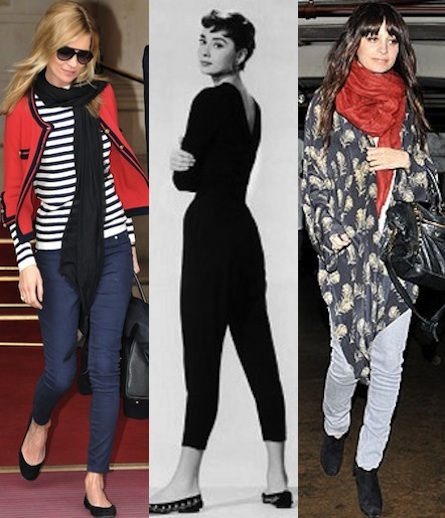
One incorporates fluro, Sass & Bide rats, digital prints and oversized tees; just some of the trends in the past few years that flatter most no one. The other consists of a personal style that transcends the trends. Think Kate Moss, Audrey Hepburn, Nicole Richie and Kate Middleton.

I know which group I would rather belong to, however, when people comment on my clothes, they usually call them trendy. Personally, I can’t think of a bigger insult!

Most of the clothes I buy, or want to buy, are things I’ve been lusting over for years, and are usually vintage or from a myriad of outlets, from “old-lady stores” like Brown Sugar and Blue Illusion, to second-hand markets, to Target, to Sportsgirl. I will admit to buying a plain red cami from Dotti a few weeks ago, but it’s the kind of item I’ll wear for years to come and is quite timeless… well, as timeless as Dotti can be!

One of my friends, whilst rifling through my closet, even commented that I really don’t have that many clothes. I asked why, then, can I not fit them all in. (I have several bags full of clothes hiding at the back of the wardrobe, which I alternate between seasons.) Said friend attempted to recover by saying, “well, you wear the same outfits a lot.” Like the Duchess of Cambridge?! (I wish!)

This is true, though. My favourite pair of shoes are five-year-old electric blue ballet flats that are hanging by a thread. My staple black trench coat for winter is also five years old. Long time Scarlett Woman readers might remember the fantastic mustard yellow dress I picked up at a vintage fair for $30, which is one of my most prized sartorial possessions. I have a marcasite leopard brooch that is permanently affixed to my pleather bomber jacket (about three years old), which I paid a pretty penny for at an antique store… Shall I go on? ;)

Really, the only things I buy frequently in the clothing department are plain white, black and grey tees, jeans, and underwear.

I do like to look good (and my walk to work, where I’m confined to the limits of an unflattering uniform, is always a fashion parade!) but, when it comes down to it, clothes are just clothes, as the sometimes-fashion victim, but usually stylish, Whitney Port said on The Hills.

And you can still have a personal style without subscribing to the skinny jeans, crisp blazer and ballet flat norm of Kate and Nicole.

I have a few co-workers whose style I don’t necessarily like, but who remain true to it. One favours printed tees, badges and Etsy jewellery. Another likes to match her dress to her boots to her tights to her scarf to her hat to her bag. The third is hipster through and through, and has the most amazing collection of bright coats and bags from her grandmother.

These are the items of clothing that quintessentially “belong” to them and their personal style: you can’t find them in Bardot or Myer or Sass & Bide. And even if you could, they ain’t got nothin’ on the original: priceless.

So what I’m trying to say here is that money can’t buy style. Or that fashion fades, style is eternal. Or something. What do you think the difference between “fashion” and “style” is? Can you have both at the same time? Which camp would you rather belong to?

Related: The Way We Wear Vintage Market.

Images via Hills Freak, Saskia 4 Fashion, Franc Trunner, People Style Watch.

Gay Chicken: Latent Homophobia in “Who Would You Go Gay For?”.

What is it with guys refusing to reveal who’d they’d go gay for?

In my experience, girls have no problem admitting who they’d turn for. Personally, I have several: Megan Fox, Christina Aguilera and Lindsay Lohan. Though the last one is probably the Mother Theresa-complex kicking in, I do love a buxom bombshell.

But when I surveyed several of my guy friends, they absolutely, point blank refused to give me a name. With the exception of my friend and soon-to-be housemate Eddie, who couldn’t choose between Hugh Jackman and Ryan Reynolds (fair call!), they all said they’d rather die than go gay.

This is a typically masculine trait, but the underlying homophobia—the fact that a straight man would rather have his life ended than simply choose someone of the same sex they would go for in a hypothetical situation—is worrisome.

Now, Eddie is one of the straightest guys I know, and he’s obviously secure enough in his manhood and accepting of homosexuals to engage in this harmless truth or dare-esque scenario. (Suck up? Me? Never!) Funnily enough, some of my less-secure male friends are the ones who refuse to partake.

What is it they say? There are no winners in gay chicken?

Image via Fanpop.