TV: Paper Giants 2—Modern Day Magazine Wars.

paper giants magazine wars

ABC’s two-part sequel to 2011’s Ita Buttrose biopic, Paper Giants 2: Magazine Wars, culminated last night with the death of Nene King’s husband, Princess Di, and the integrity of gossip magazines.

It’s interesting that the miniseries that charts the rise and rise of Woman’s Day under the leadership of King to overtake New Idea as the premier women’s weekly magazine in Australia aired at the time of all the hullaballoo surrounding the rights to publish pictures from Jennifer Hawkins’ Bali wedding.

For those who haven’t been keeping score, Bauer Media’s Woman’s Day paid upwards of $300,000 to publish exclusive pictures from the former Miss Universe’s wedding to long-time beau Jake Wall, but not before Channel 7, and their associated print platform, Who magazine, put paparazzi pics from a hovering helicopter into the public domain. Sounds like a storyline from the next instalment of Paper Giants

Magazine Wars addresses the pursuit by the paparazzi for the hottest pics during the height of the public’s obsession with the royals, Squidgygate, Camillagate and, of course, Princess Diana’s death, which was arguably caused by the paps. This is juxtaposed with the diving accident death of King’s husband, Pat, whose body has never been found, and King suddenly found herself on the pages of the magazines instead of dictating what was on them. While King and boss Kerry Packer stare at the word “Killer” spray-painted in red on the roller door to ACP’s parking garage and the Woman’s Day office gets threatening phone calls, King laments that she’s only giving the people what they want, before the closing credits roll against a backdrop of Paris Hilton in jail, Anna Nicole Smith’s tragic downfall and Kim Kardashian’s bikini body.

Woman’s Day and its magazine war with New Idea may have been partly responsible for Australia’s growing obsession with celebrity culture, but King’s right: magazine circulation may be dwindling currently, but for a while there gossip rags were modern culture’s guilty pleasure du jour, and that obsession has transferred online to TMZ, Perez Hilton and the like. Princess Di and her ilk may have tried to escape the paparazzi, but in this day and age, they’re an accepted part and parcel of being in the public eye.

Related: Paper Giants: The Birth of Cleo Review.

Elsewhere: [MamaMia] Woman’s Day Paid More Than $300,000 for Jennifer Hawkins’ Wedding Shots. Then This Happened…

On the (Rest of the) Net.

lindsay lohan mug shot xovain

xoVain recreates Lindsay Lohan’s mugshot looks.

Benjamin Law thinks all gay men should be feminists. Nay, all HUMANS should be feminists! [Daily Life]

When your mum has bad body image. This piece hits home because my mum is insecure about the way she looks and has transferred that onto my sister. [Daily Life]

The 12th Doctor Who should be a woman. [Slate]

Unfortunately, all my flights for my U.S. trip coming up at the end of the year are with Virgin, so hopefully their new “Get Lucky at 35,000 Feet” campaign doesn’t mean sexual harassment at 35,000 feet. [Make Me a Sammich]

Dissecting Law & Order: Special Victims Unit:

“The worse the stories get, the stronger [Olivia Benson] becomes; it’s the show’s unspoken dialectic…

“For all SVU’s excesses, we expect it to keep one promise: no matter how bad things get, the story will end.” [The New Yorker]

Daisy Buchanan: the ultimate Manic Pixie Dream Girl?

“Is she at fault for the fact that all of her swooning suitors idealise and project upon her?  Should we pity her, even a little, for not having had the courage or desire to break free of her social caste and love whomever she pleased?” [Women in the World]

Why does Johnny Depp have a bird on his head, speak in pidgin English and bear the Spanish name for dumb in the reboot of The Lone Ranger in 2013? [The Good Men Project]

Discussing street harassment. [Jezebel]

Why the most recent viral Dove ads are bull: lots of people envision themselves as attractive or more attractive than they are. [Jezebel]

Tyler the Creator’s misogyny and homophobia isn’t “just about the music”, and nor is it edgy. It’s disgusting. [Tiger Beatdown]

There’s been a lot of controversy surrounding this piece: it’s natural to lust after randoms passing you in the street, brewing your coffee, or hanging at the bar, but this guy wonders if his perving is more of a compulsion. [Slate]

What murdered teen Trayvon Martin and Justin Bieber have in common. [This Week in Blackness]

Image via xoVain.

TV: Smash Finale—“Big Finish”.

After two tumultuous seasons filled with cast and creative overhauls, dwindling ratings and a move to Saturday nights in the U.S. to really put the final nail in the coffin, Smash bid Australian audiences adieu last night on Soho.

I, for one, am sad to see Smash go as, while it certainly wasn’t the best or most cohesive show on TV, I found it immensely enjoyable to watch, partly because I’m a sucker for Marilyn Monroe and a fan of musical theatre, but also because of the melodrama and the sometimes-fantastic casting.

It’s no secret I’ve had my issues with Smash, though, namely Katharine McPhee as Karen Cartwright, whom the writers tried to shove down the audience’s throat, even more so with her star turn in Hit List in season two. Luckily, this freed the part of Marilyn Monroe up for Ivy, who should have been a shoe in for the part from get, what with her curvy frame, platinum blonde locks and knockout Broadway voice.

While there were a few problems with season one, like Julia’s family life (which was reintroduced in the final, leading me to ask, what was the point in retiring Frank and Michael Swift in the first place?), her obsession with scarves, Karen’s possessive boyfriend Dev, and psycho assistant Ellis, Gossip Girl’s Joshua Safran was brought in to replace series creator (and real life Julia Huston) Theresa Rebeck and revamp the show. He did this by dreaming up a rival musical for Bombshell: Hit List.

*

“The only reason Hit List made it to Broadway was because Kyle Bishop died.”

Harsh, Ivy, but true. Kyle was one of the better new characters of season two, but he and his musical could be seen as an allegory for Smash: it was dead in the water so a second musical was introduced in an attempt to revive it.

Several of the themes and songs in Hit List centre around reinvention—“Rewrite This Story”, for example—though I’m not sure how intentional the correlation with Smash’s failure was.

And for an eventual Broadway musical driven by the meta desire to run on Broadway, Hit List has a strange obsession with MTV, fame and the VMAs, of all things. While this wasn’t revealed on the show, it did come out in a very interesting story on Vulture, which begs the question: how did a show (both Smash and Hit List) about Broadway dreams become so muddied by pop?

Safran’s former show’s influence can also be seen in Jimmy, the bad boy who just wants to make good, and Karen’s just the manic pixie (strike that; she’s far too bland to fall into that problematic category) dream girl to help him. What eventuated with Jimmy’s past harks back to Gossip Girl’s season one cliff-hanger: Serena thinks she killed someone on a drug-fuelled bender, but it all works out for the best.

Ivy also experiences a happy ending (pardon the pun) when she finally tells Derek she’s pregnant and he expresses joy at the news despite the fact that his character has been bewildered by parenthood in the past and—of course!—there’s no other option for Ivy than to go ahead with the pregnancy in the wake of her burgeoning career and Tony win. This is network TV, after all.

As for the Tony’s, which rounded out the series (sorry Safran; you didn’t make it to the VMAs like you’d hoped), Kyle took Best Book, but Best Actress, Best Musical and Best Original Score– Music And/Or Lyrics went to Bombshell, proving the Marilyn musical still reigns supreme in the short-lived world of Smash.

Related: The Problem with Smash.

Elsewhere: [The New Yorker] Farewell, Smash.

[Vulture] The Unspoken Full Plot for Smash’s Hit List Musical is Revealed.

On the (Rest of the) Net.

amanda bynes

What Amanda Bynes’ meltdown says about society: we’re all image-obsessed sexists who love a celebrity train wreck. [The Guardian]

Mia Freedman interviewed Naomi Wolf about her Vagina. [MamaMia]

#FBRape and free speech. [Daily Life]

Abercrombie & Fitch < Attractive & Fat. [The Militant Baker]

In defence of much-maligned TV wives. [Slate]

Image via Twitter.

Book Review: Night Games by Anna Krien.

anna krien night games

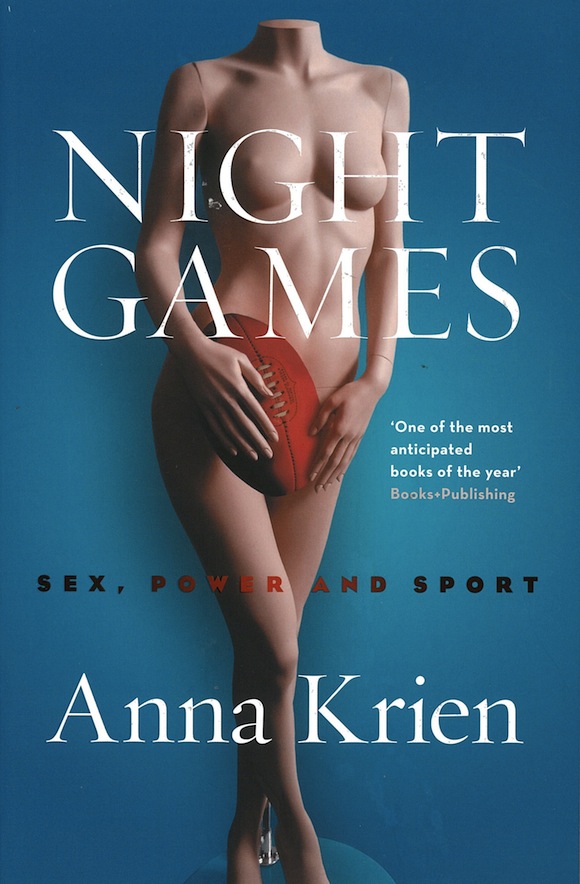
Everywhere you look lately, there seems to be a promo for Anna Krien’s latest investigative tome, Night Games, and rightly so: it’s a fantastic, impeccably researched and hard-hitting look at misogyny and power in football. I might be a little biased having a vested interested in the topic and, as I told Krien when I got my copy signed at the Readings Carlton book launch last week, the rape statistics she rattled off in an excerpt reading at the event, unfortunately they’re nothing I haven’t heard before.

Having said that, though, Night Games is an absorbing read for those well versed in the misogynistic nature of “jock culture” as well as for those new to the topic. Krien makes sure not to alienate sports fans who may be wary of picking up the book:

“This book is not anti-sport. ‘”Jock culture” is a distortion of sports,’ the American author and sports journalist Robert Lipsyte once noted, warning that America was in danger of finding its values in the locker room. It’s not the game, the pleasure of the play, that’s dangerous. It’s the piss stains in the grass, the markings of men who use sport as power and the people—teammates, fans, coaches, clubs, doctors, police, journalists, groupies—who let them do whatever they want.” [p. 266]

However, “football is an abnormal society” [p. 70], and nothing reflects that more than the bulk of the book, which deals with “regrettable sex” [p. 73] or rape accusations, depending on who you ask, against AFL and NRL players; “Camel Nights”, in which players bring two women they don’t care for so “everyone gets a hump” [p. 71]; and that infamous Cronulla Sharks group-sex scandal from 2002 that came to light in a 2009 Four Corners exposé, amongst many other examples.

Speaking of Matthew Johns and Cronulla, Krien quotes an anonymous player who laments the stigma of group sex bonding sessions:

“It’s like saying you can’t be homosexual, or you can’t have such-and-such sexual preferences. How can he tell us what to do in our private lives?… We already have so many rules; we can’t drink on these days, we can’t go to these places, now we can’t have group sex. About the only thing we can do these days is go to club functions and just hang around with other players. That’s just isolating us more from the rest of the world, and it could lead to even more violent acts.” [p. 46]

While it’s easy to scoff at these privileged footballer comments, he does make a valid point. It’s kind of like the argument against restricting dangerous dog breeds: the more you isolate a pit bull, for example, the more likely it is to be aggressive to other dogs and humans when it does come into contact with them.

Oftentimes, the difference between a rape allegation and the aforementioned “regrettable sex” is treating a woman well. You know, like a human being:

“‘It’s not during the act, it’s the way you treat them after it. Most of them could have been avoided if they’d have put them in a cab and said, you know, thanks for that, sort of thing, not just kicked her out, call her a dirty whatever, that sort of thing. It’s how you treat them afterwards that can cover a lot of that sort of stuff up.” [p. 183]

But what Krien makes the reader understand is that groupie sex with a footballer is not about the woman, it’s about them:

“A footballer does not look at another human when he fucks a groupie. He’s looking at his glorified reflection—and when he performs, he’s doing it for ‘the boys’, not her.” [p. 200]

And:

“[Sam Newman] said it [the hazing of sports writer Caroline Wilson on The Footy Show] was a compliment of sorts, a sign that the Footy Show culture ‘accepted’ her. In other words, it wasn’t really about Wilson, it was about them. About a subculture of men trying to find a place—albeit a very lowly place—in their world for a woman. Considering that it’s all about the boys, they prey doesn’t even need to be present.” P. 72.

Going back to the group sex-as-bonding scenario, it makes sense that the woman/women would be used as a vessel to bring the teammates closer together. And further to the absence of a woman, we can see this in the social media shaming of the Steubenville victim, for example. The whole team—and, by extension, the town—we’re brought closer together by reliving the girl’s assault on YouTube and Twitter.

Obviously this is one of the more extreme and brutal examples of sexual assault in sport, but Night Games also talks about the “gulf of uncertainty between consent and rape” [p. 73] and the many sexual experiences that occur therein. Krien also comes across as sympathetic to the “… ongoing education about how to negotiate sexual encounters in a way which ensures informed consent is always obtained” [p. 47] amongst the codes, but there’s still a long way to go, baby. This is exemplified by an educational male-on-male rape video that is shown during a training session. Many of the players are noticeably upset, with one lamenting that “You don’t really ask for trouble if you have too much to drink and get raped by a bloke. You don’t ask for that.” I’ll just let the double standards marinate for a bit after you consider that the video shown prior to this was one of mistaken identity male-on-female rape to which the players were less than sympathetic. [p. 188–189]

The abovementioned “grey zone” that exists between the sexes “to explain what was lost in translation” [p. 259] takes the form of the rape trial of Justin Dyer (name changed), an amateur footballer accused of raping Sarah Wesley (also not her real name) the night Collingwood won the 2010 grand final rematch. Many of the reviews of Night Games seem to focus heavily on this “he said, she said”, but Krien expressed relief when facilitator of the Readings event, Sophie Cunningham, skirted that issue. While the trial beautifully bookends all the points Krien makes about the treatment of women in male team sports, it’s not the be all and end all of Night Games. Similarly, though Sarah declined to be interviewed by Krien, thus leaving “all those little erased bits, I thought, hovering around like question marks” [p. 245], I don’t think it does the book detriment. In fact, I can’t envisage how Night Games could get any better.

Related: In Defence of Mia Freedman.

Elsewhere: [The Vine] All Dogs Go to Seven.

This review has been submitted to The Australian Women Writers Challenge as part of their 2013 Challenge.

Image via Kill Your Darlings.
Magazines: Ms. Carter?

beyonce ms magazine cover

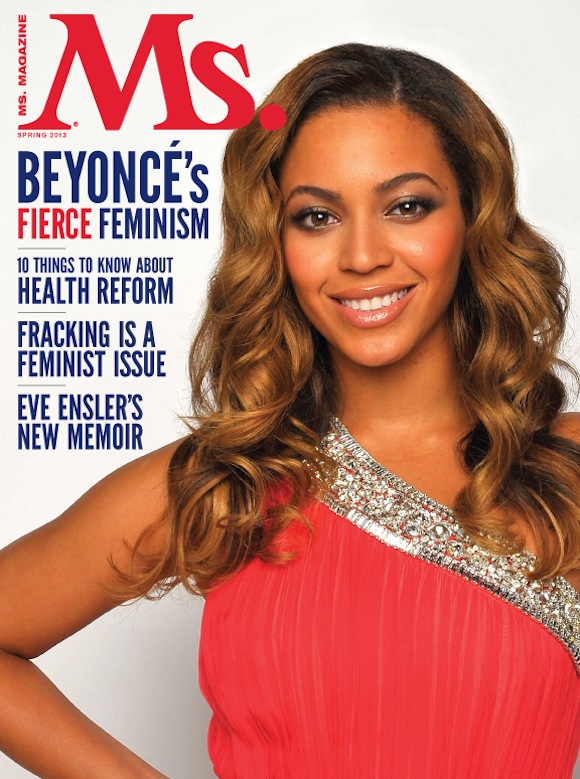
I’m a recent subscriber to Ms. magazine, so I’ll be interested to check out the accompanying article on cover star Beyonce’s “Fierce Feminism” when it lands in my letterbox in the near future.

Considering her latest world tour is entitled “Mrs. Carter”, Beyonce is a questionable choice for the feminist bastion’s cover. While her personal life seems to be one built of respect, equality and solid choices, her public persona is somewhat at odds with this: she sings about men only being good for “putting a ring on it” and “paying bills” and poses with underboob on the cover of a men’s magazine while espousing the detriments of the patriarchy controlling what’s “sexy” and “feminine”.

Fellow feminist stalwart Bitch magazine has a worthwhile article tackling these contradictions so how will Ms. justify their cover choice?

Related: Why is Feminism Still a Dirty Word?

Elsewhere: [Bitch] All Hail the Queen?

Image via Ms.

On the (Rest of the) Net.

the mindy project casey mindy

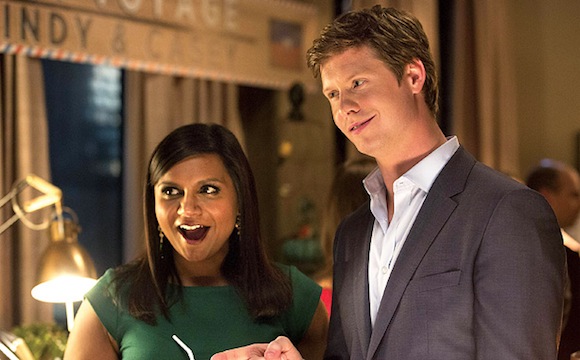
Why does Mindy only date white guys on The Mindy Project? [Jezebel]

The onscreen virginity trend. [Daily Life]

Fuck the friend zone; what about when guys you have a purely platonic interested in put you in the “girlfriend zone”? [Insert Literary Reference]

On masturbation and shame:

“In The Ethical Slut, perhaps the best-known ‘catechism’ of progressive sexual morality, Dossie Easton and Janet Hardy make the case that ‘the fundamental sexual unit is one person; adding more people to that unit may be intimate, fun, and companionable, but it does not complete anybody.’ Masturbation matters, they argue, not merely because it helps you learn what you want sexually from a partner, but because it helps bring ‘your locus of control into yourself.'” [The Atlantic]

Racism isn’t about being impolite. [New Matilda]

James Franco defends Baz Lurhmann’s adaptation of The Great Gatsby. [Vice]

The “skank flank”: what happens when you get a tattoo and are automatically deemed a slut. [Bust]

An ode to Barbara Walters. [The Cut]

Image via Entertainment Weekly.

On the (Rest of the) Net.

I’m writing about reconciling my feminism with a love of professional wrestling for TheVine.

While Beyonce may be the female version of a hustler, Clem Bastow writes that men can certainly be divas, too. It’s just that they’re never called that… [Daily Life]

In praise of The Mindy Project. [Medium]

Rapper Kitty Pryde unpacks the onstage sexual assault by a female fan of her male tour partner, rapper Danny Brown. [Vice]

Check out the latest online edition of ZINm magazine, by my friend Marc Bonnici, and contributions from yours truly and the woman who designed the artwork for this here blog, Zoe Meagher.

What the tabloids were speculating Angelina Jolie was doing while she was actually getting a double mastectomy. Sickening. [The Cut]

Not as gross as the trolls who are “mourning the loss of Angelina’s curves”, though. [Slate]

“An Open Letter to White Male Comedians.” [Jezebel]

Does Australia hate intellectuals? I tend to lean towards the affirmative. [Daily Life]

What the spate of cancellations means for the representation of gay people on television. [Slate]

Test the gender balance (or imbalance) of your retweets. And while you’re at it, follow me! [Twee-Q] 

Searching for an alternative name for “stay-at-home dad”. [The Atlantic] 

In response to the body- and slut-shaming surrounding Teen Mom Farrah Abraham’s porno, Jezebel reiterates that vaginal and anal sex don’t make you “loose” [SFW].

On (Rest of the) Net.

Rachel Hills’ TEDx Talk on the sex myth, the topic of her upcoming book of the same name. [YouTube]

Defending The Onion‘s Chris-Brown-“I-Always-Thought-Rihanna-Was-the-Woman-I’d-Beat-to-Death” joke. [The Frisky]

Stop calling Amanda Bynes crazy. [TheVine]

What did Tony Abbott mean when he said “women of calibre” should be encouraged to have children and should feminists be speaking out in favour of the Coalition’s superior paid parental leave scheme? [Daily Life]

“Panels Full of Women”: on fetishising female news voices. [News Junkee]

Debunking the prevalence of sex-selective abortions in Australia. [Daily Life]

“See a Woman Reading? Leave Her Alone.” The perils of reading and subsequent street harassment. [Gender Focus]

The Great Gatsby doesn’t do the “newly liberated” flapper justice. [Collectors Weekly]

Manic pixie dream guy? [Nerve]

The sexism of Star‘s Most Annoying Celebrities list. [The Times Magazine]

Denmark’s latest televisual offering: women stripping naked in front of a panel of two men who critique their bodies. Obviously, this is a crazy and sexist idea for a TV show, but is it any crazier or more sexist than, say, Snog Marry Avoid? Both have an underlying message that women aren’t good enough, with one referring to the naked body whilst the other takes aim at how and with what a woman cloaks herself. Your thoughts? [Bust]

Mother to Daughter: Second- VS. Fourth-Wave Feminism.

While I’ve only begun calling myself a feminist in the past few years, I think I’ve always had feminist tendencies: I’ve always believed in reproductive rights, I’ve tried never to judge a woman based on her choices and it’s been instilled in me that, as a woman, I can do and be anything I want to.

A lot of this is thanks to my mum, who is a ’70s bra-burning hippie feminist through and through.

Though recently, as I increasingly immerse myself in current readings of feminism, I see just how far we’ve come, baby, and how the second-wave feminism of my mother’s era is worlds apart from today’s discourse on gender equality.

There have been many debates between second-, third- and fourth-wavers about who did, and is doing, more for the movement.

At a 2011 Melbourne Writers Festival presentation on why we still need feminism, Sophie Cunningham asserted that feminists under 25 can’t really grasp the concept because they’re still young and beautiful and have men falling at their feet. She also observed “a sort of ‘bottleneck’ in modern feminism”, where white, Western feminists aren’t able to incorporate intersectionality into the fold, which was a criticism of SlutWalk, one of latter-day feminism’s most high-profile conquests. Pardon me, but wasn’t it foremother Betty Friedan who was accused of being racist and homophobic with The Feminine Mystique?

Perhaps the most contentious issue is the constant bickering amongst young feminists as to what, exactly, feminism is. You’ve got women undertaking such obviously feminist tasks as Marissa Mayer overseeing Yahoo! and Beyonce nearing total world domination, yet they’re reluctant to call a spade a spade. And the non-feminist media would have you believe there’s infighting going on about who is allowed to be a feminist (definitely not Taylor Swift!).

But, I think, the feminist movement of today would like to believe it’s accessible to all kinds of women (and men): straight, gay, bi, male, female, trans, black, white, mixed-race, rich, poor, able-bodied and non-able-bodied, sex workers, etc. Can second-wave feminism of yesteryear say that?

This divide is illustrated by Germaine Greer’s infamous comments about Julia Gillard’s clothing choices and how they accentuated her apparently undesirable body shape last year on Q&A and feminists everywhere taking to their respective platforms to mostly disagree with her. One such vocal detractor was Mia Freedman, who said Greer “broke my heart a little bit” when she took herself “down in a hail of self-inflicted friendly fire while the world watche[d] in embarrassment.” When the two women appeared together on a recent episode of Q&A, Freedman was asked to clarify her response: did it mean she wasn’t a fan of the “ground-breaking, arse-kicking lightening rod for social change who ignited a feminist movement from which every woman in the western world has benefited” anymore? Was this an example of the abovementioned feminist in-fighting?

Freedman responded that while she has nothing but respect for the woman in whose water she grew up and who influenced her mother’s feminist awakening, “feminism needs to have a lot of different voices… It should be really, really broad and inclusive.” Essentially, feminism should accommodate both the foremothers and their daughters.

Freedman went on in that same episode of Q&A to—what some would describe as—shame sex workers, or “prostitutes” as she archaically called them, which ignited a backlash of her own. So much for that broad inclusion she waxed lyrical about…

While liberating housewives of Germaine and Freedman’s mother’s era from “the problem with no name” and ushering in the birth control pill are milestones women of today must be thankful for, they’re very much narrow-minded accomplishments: The Feminine Mystique appealed to white middle-class women and many women can’t afford the birth control pill, a predicament that still exists today. And second-wave feminism was very much responsible for the sexual liberation of a generation of people, but I’m not so sure that transfers to the hook up, raunch and porn culture/s of today (as Freedman’s comments about sex workers above would indicate).

For example, when I was living at home and Girls of the Playboy Mansion came on the TV, my mum would make me turn it off (keep in mind I was 22 by the time I moved out and this was not long before that). When I brought this up recently as an example of her generation’s reluctance to embrace sex positivity, she launched into a tirade that ended with her calling into question the women who pose for Playboy’s sexual promiscuity.

We must acknowledge that media like Playboy is an inherently patriarchal construct, but I think making the assumption that any woman who uses her sexuality as a commodity is a slave to said patriarchy is buying into the notion that feminism works against: women have no autonomy. Much like the debate over women in Islam (and don’t even get me started on the fight I had with my mum about asylum seekers that, similar to the Playboy exchange, ended with her defensively inquiring about the legality of people seeking asylum via boat), certain kinds of feminism need to broaden their scope to take into account the lives of all women, whether we agree with their choices or not.

This close-mindedness comes from a lack of access to new information and technologies and willingness to learn from and hand the reigns over to the feminists of today, I think. While many feminists of all ages count the works of Greer, Friedan and Naomi Wolf amongst their collection of feminist tomes, how many second-wavers can say the same about the musings of Jessica Valenti, Clementine Ford, Rachel Hills and the myriad feminist bloggers? That face of feminism has certainly changed to make it much more accessible. What once was narrowly accessible at rallies, underground meetings and in academic journals is now available wherever you look: Gillard speaking up against sexism in parliament, movements like SlutWalk and Destroy the Joint and all across the interwebs.

So on this Mother’s Day eve, it’s important to acknowledge the gender equality path paved for me by my feminist foremothers, including my actual mother, but also to recognise that we have, indeed, come a long way, baby. Maybe that’s something that second-wavers need to consider, too.

Related: Why Young Feminists Still Have “A Long, Long Way to Go” In the Eyes of Second-Wave Feminists.

Taylor Swift: The Perfect Victim.

Elsewhere: [The Atlantic] 4 Big Problems with The Feminine Mystique. 

[The Guardian] The Tragic Irony of Feminists Trashing Each Other.

[MamaMia] Germaine Greer: You’ve Lost Me.

[MamaMia] No, I Won’t Apologise for My Sex Worker Comments.

[Daily Life] Stoned for Having Short Hair.