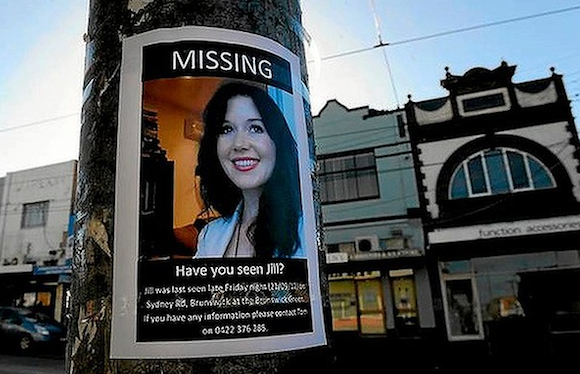
Sexual Assault, Moral Panic & Jill Meagher.

For the past two weeks it seems as if Jill Meagher has been exclusively in the media. Then, since her funeral last Friday, her name has all but dropped out of the headlines, if not from our collective consciousness.

Her tragic disappearance, rape and death sure played on my mind after some colleagues talked about it not-stop a few days after Jill went missing and transferred their obsession with the case onto me.

As I wrote last week, tragedies like this that are hyped up by the media rarely affect me. Obviously there is something about Jill that has permeated our abovementioned collective consciousness, if the outpouring of grief, support for her family, flowers out the front of the store where some of her last moments were captured on CCTV and the 20,000 Melbournians who turned out to march for peace two weekends ago are any indication.

Jill’s murder was no doubt horrific and it’s heart-warming to see so many everymen affected by a woman they never knew. But since her killer was charged and her body was found and laid to rest, I’ve started to get a bitter taste in my mouth about all the hoopla surrounding Jill’s disappearance and death: what’s so remarkable about this situation that has everyone calling for safety on the streets?

Don’t get me wrong: I’m all for safe streets, but I resent the fact that it’s women who are being cautioned not to walk alone at night, to get a taxi or a friend to accompany you home.

Some of this “concern” was directed my way last weekend at a friend’s birthday not far from where Jill lived, partied and was abducted. I was asked by a friend to please not walk alone at night and, as the non-owner of a car who is often without money for a taxi, I responded that I don’t have that luxury. It’s decadent to catch a cab two streets from the train station to my house, and unless that friend is going to offer to chauffeur me around the city, I think I’ll take my chances. It doesn’t come naturally for me to live my life in fear, not to mention the fact that the chances of experiencing a violent crime the likes of which Jill did are extremely rare. My friend is more likely to be involved in a car accident than I am to be attacked while walking home.

Upon further thought, my male housemate, who is out late many nights per week at work, rehearsals for a play, jogging and being social, was also there when my friend expressed her misguided anxiety about my after dark activities yet not a peep was directed his way. For those alarmists who think that any female on the street post-sunset is doomed to the same fate as Jill, please be mindful that according to the Australian Institute of Criminology, non-sexual assault is the most common form of violent crime, more likely to be committed against men than women. Why are women the only ones who are deemed less safe after Jill’s death? And why is it our responsibility not to get attacked? Maybe we should be focussing our concentration on teaching boys (and even then, it’s not just men who rape and women who are raped) not to rape and on a better screening process for criminals who are likely to reoffend, as Jill’s murderer, Adrian Bayley, did.

And another thing: abduction, rape and murder were just as scary and real before Jill made the news as after. In fact, because her killer is now in custody, the streets could actually be deemed safer (no thanks to the legal system who knew of Bayley as a repeat sex- and violent crime-offender but he’s only off the streets now that someone’s dead). That’s part of the reason why the moral outrage this incident has incited rubs me the wrong way: how many abductions, rapes and murders (not so much in Australia for the former and latter, but definitely so for the second crime) happen on a daily basis that we don’t hear a peep about? Or if we do, it’s only after it’s too late. All of the horrible things that happened to Jill were in existence before she experienced them. What’s so unique about her case?

I think it’s because she’s the “perfect victim”, if you will. Young; beautiful; white; middle-class; a migrant. If Jill had’ve turned up alive after her sexual assault, I think we would have heard the whispers of victim-blaming that circulated in the early days of her disappearance become a lot louder. She was drunk. She was out too late. Her shoes were too high. What was she wearing? Why did she talk to/go with her attacker? Don’t you think it’s weird her husband wasn’t with her? (This is a direct quote I heard from several people specualting about her disappearance.) Why didn’t she insist someone walk her to her apartment only a couple of blocks away along a route she took frequently? But because Jill did meet a fatal end, she’s become a martyr for making our streets a safer place as opposed to just another slut who was asking for it.

A blog post about Jill and the subsequent Sydney Road peace march and Reclaim the Night rally still to come talked about how SlutWalk is a radical feminist phenomenon that’s got its heart in the right place in theory, but that the Jill rallies are much more palatable. These sentiments are echoed in some of the comments on the post, that SlutWalk isn’t right for them but marching for Jill is. Everyone’s entitled to their own opinion (as is the catch cry of my concerned friend. Indeed, you are entitled to feel scared on the street at night if you so desire just as I am not to be.), but I don’t understand how taking a stand against victim-blaming, slut-shaming and rape culture isn’t “right for you”. But somehow a march to honour the memory of a woman we’ve only come to know in the tragic circumstances surrounding her death, without the clear objectives that SlutWalk, marriage equality marches and the banning of live exports rally over the weekend have. Did 20,000 people turn up to those?

In no way am I being a rape-apologist or trying to suggest that rape isn’t an increasing problem, both in practice and in our culture. I myself, friends, family, colleagues and people I’ve only read about have all experienced intimidation and harassment, if not something more sinister, on the streets and within circles we thought of as safe. But perhaps instead of using Jill Meagher as the scapegoat who warns women to keep themselves locked away in their homes after sundown or, at the very least, be clothed in shapeless, unrevealing garb with a chaperone present at all times, we should be focussing on the prevalence of sexual assault and harassment in society, perpetrated not only by strangers, but more likely by those close to us as well, and our reluctance to deal with its true cause and prevention unless it happens to the right kind of person woman and only after the fact.

Related: To Live & Die in Brunswick: Reflections on Jill Meagher.

Elsewhere: [Australian Institute of Criminology] Trends in Violent Crime.

[Dangers Untold & Hardships Unnumbered] Jill Meagher, SlutWalk & Reclaim the Night Sydney Road.

[unWinona] I Debated Whether Or Not to Share This Story.

Image via SBS.

On the (Rest of the) Net.

“What It’s Really Like to Wear a Hijab.” [Daily Life]

While the mainstream media is not always the most tasteful industry, its coverage of Jill Meagher’s disappearance was invaluable in helping catch her killer. [MamaMia]

And here’s an amusing take on the sexist comments thrown women’s way after the Jill Meagher tragedy. I’ve been experiencing some of these “restrictions” myself since then, preached to me by well-intentioned but misguided friends, which I’ll be writing more about next week. [Feminaust]

Why fur is back in fashion. [Jezebel]

Instead of petitioning the fashion magazines, should we be making love instead of porn? [TheVine]

The perils of getting a hair cut as a black woman. [Jezebel]

Two of my favourite writers and unofficial mentors, I guess you could say, are in the midst of writing books. Rachel Hills and Sarah Ayoub-Christie detail their struggles with the process. Keep ya heads up, girls! [Musings of an Inappropriate Woman, Chasing Aphrodite]

“Reverse Photoshopping” a “too thin” Karlie Kloss isn’t any better than Photoshopping away cellulite or blemishes. [Daily Life]

Famous writers throughout history reimagine Cosmo’s sex tips. [McSweeney’s]

Why are all the feminists these days funny? Um, because we wised up to the fact that our ideals are better digested by the mainstream through less-threatening humour than shoving it down unwilling throats. Though we still do a lot of that!

“[Sexism’s] existence at the moment requires a tougher, wilier, more knowing, and sophisticated stance.” [Slate]

Clementine Ford’s full Wheeler Centre Lunchbox/Soapbox address on the equality myth.

Incorporating part of her speech, Ford elaborates on Alan Jones’ misogynistic comments about the Prime Minister and women in general. [Daily Life]

On the male-male-female threesome. [XOJane]

Why isn’t Mitt Romney being questioned about the way Mormonism treats women? [Daily Beast]

TV: The Puberty Blues Give Way to Feminism.

There was an inkling that Ten’s standout show, Puberty Blues, would touch on ’70s-era second-wave feminism a few weeks ago when Sue tried to borrow her boyfriend’s surfboard. Then, last week, she expressed dissatisfaction with their sex life and her partner told her not to “get all femmo” on him. Throw in Sue and Debbie’s strong mothers, and Puberty Blues really taps into “the problem that has no name”—The Feminine Mystique—that both Gary and Debbie’s mums experience, as well.

The show deals tenderly but realistically with Debbie’s parents’ relationship breakdown and how a strong woman in the house both working and doing the domesticities can cause tension in the home. Debbie told her mum in last night’s final that she really admires her for working and having a family, and that makes her believe that she, too, can lead a “big life”.

After saving an old friend from repeated gang rape in the back of a panel van, Debbie and Sue feel empowered and emboldened to do something else with their newfound feminist leanings. So, with nothing to lose in the form of boyfriends and keeping up appearances in the “cool” clique, the young girls the show is centred around venture away from the towels on the beach that is the domain of the “molls” and try their hand in the surf. You go, girls!

Image via This Island Continent…

Movies: Ruby Sparks & the Manic Pixie Dream Girl*.

Below is the original post I had in mind when first going to see indie movie Ruby Sparks, written by and staring who I perceived to be the token Manic Pixie Dream Girl of the moment, Zoe Kazan.

Two screenings later and Ruby Sparks is anything but the cliché Garden State/Elizabethtown/(500) Days of Summer flick I thought it was going to be. In fact, I was so inspired by the movie that there will be several articles about it appearing on this here blog over the next week or two, dealing with its take on abusive relationships, the psychology of its protagonist, Calvin, and the inspiration the film draws from Catcher in the Rye. But first, let’s examine Ruby Sparks as the anti-MPDG.

*

I know this girl who wears quirky owl-print dresses and is into obscure strains of literature. She’s not a friend per se, and her tendency to cry at the drop of a hat rubs me the wrong way, but I don’t not like her. More to the point, her existence puzzles me.

I have a few male acquaintances who worship the ground she walks on, and who RSVP to her Facebook invites to attend human rights marches and to go bushwalking when they’ve never spent a day in nature or in non-white, non-straight male shoes in their lives. To them, I think she embodies their idea of the Manic Pixie Dream Girl, a feminist film phenomenon I’m sure they’ve never heard of but that has been dominating the indie movie scene (read: anything Zooey Deschanel’s been in) for the past few years.

I don’t know this girl too well, but I don’t think she herself is a MPDG. Her hard-for-other-women-to-get-to-know façade and seemingly archetypal attributes make her the perfect canvas for twenty-something men struggling to find themselves to project their hopes and desires onto (despite the small fact that she has a boyfriend!), much like Calvin does to the titular character in the movie Ruby Sparks. The difference is, though, that Calvin literally created Ruby to be his perfect girlfriend via his pretentious typewriter.

Ruby is one of those annoying, “quirky” (though don’t let writer-star Zoe Kazan hear you say that; she told The Huffington Post that she hates that word. “[Quirky] means nothing,” Kazan said.), sunshiney girls who floats around in an artistic (she’s an illustrator, of course, and “super good” at it), hipster-esque existence. She may be a “motherfucking product of my imagination”, marvels Calvin, but she’s from Dayton, Ohio, because the location “sounds romantic”. She got kicked out of school for sleeping with her “art or Spanish teacher”. Ruby doesn’t own a computer or drive, and she’s “complicated” because she “forgets to open bills”. She’s “such a mess”, but not to worry: Calvin loves her mess. Ever the voice of reason, Calvin’s brother, Harry deposes that “quirky messy women whose problems only make them more endearing are not real.” The MPDG fetishisation of incapability is something I’ll never understand: isn’t the hallmark of being a together, grown-up person and, indeed, partner, to be able to take care of yourself and, at the very least, pay your bills? Maybe I should ask my abovementioned man boy friends to enlighten me on the allure…

What Ruby isn’t in her original form is a whole person. She’s just an extension of Calvin’s indie man-child persona: the ultimate MPDG who breaks with tradition to make the observation that “we’re the same person”. Again, Harry enlightens Calvin with his words of wisdom: “You haven’t written a person; you’ve written a girl.”

As Calvin stops writing Ruby she evolves into an individual, with desires and feelings that don’t always conform to Calvin’s “platonic ideal of Your Girlfriend”. A film that from the Kaiser Chiefs-infused trailer could be presumed to be about the MPDG du jour evolves into somewhat of a critique of the restrictions of the Pygmalion myth, even though that might not be what Kazan set out to do. On the trope:

“I just think the [MPDG] term really means nothing; it’s just a way of reducing people’s individuality down to a type, and I think that’s always a bad thing. And I think that’s part of what the movie is about, how dangerous it is to reduce a person down to an idea of a person.”

In a signature Ruby Sparks meta moment of self-awareness, Calvin expresses to his therapist that girls only want to date the author of his one-hit-wonder novel they read in high school, not him. “They’re not interested in me. They’re interested in some idea of me.” Hmm, sounds familiar doesn’t it, Calvin?

Perhaps my mates who trail along after their dream girl like a puppy dog as she attends pottery class and dates with her boyfriend could take a page out of Kazan’s book as opposed to Calvin’s…

Elsewhere: [HuffPo] Zoe Kazan, Ruby Sparks Writer & Star: “Quirky” Means Nothing.

[Vulture] Zoe Kazan Does Not Write Manic Pixie Dream Girls.

*Blanket spoiler alert.

Image via Enthunder.

TV: Feminism, Barbeque & Good Christian Bitches.

For a show as fluffy as GCB, it sure does tackle some pertinent ethical issues.

Obviously, there’s the comedic take on religion that is the shows hallmark, but there’s also politics, money and, according to last night’s episode, “Adam & Eve’s Rib”, feminism.

Bad girl gone good Amanda Vaughn is always looking to set an example for her fatherless children after he cheated on Amanda with her bestie, died in a car accident and left them without a cent to their name. She doesn’t want her rich mother buying her kids designer threads and she doesn’t want them to be part of the popular crowd that she reigned supreme over at high school. (Well, this really only applies to Amanda’s daughter, Laura. I’m not really sure where the son’s at.)

When the annual Dallas Interfaith BBQ Invitational comes around and it emerges that only men are allowed to participate, Amanda throws her hat in the ring with her team consisting of only her daughter and, begrudgingly, her mother at that time. As each of the other female characters’ partners wrong them, they slowly join Amanda in her feminist crusade, helping to provide the meat, the secret sauce, and the wood that makes the smoke smell—and therefore the ribs taste—so good. It goes to show that if men from different religions can get along in the name of barbeque, then so can women who hate each other in the name of feminism.

Of course the show steers clear of invoking the “F” word too much, though there is a nod to Gloria Steinem (“Glory what?!” Laura exclaims. It might have been wise to teach your daughter about gender equality before you decided to adopt the movement, Amanda.) But we all know that the crafty incorporation of moral and ethical issues into pop culture is how we get the message across to the layman.

With all of GCB’s posturing on the oftentimes absurdity of religion, the hypocrisy of white, rich, straight (or presumed straight, in Blake’s case) male-dominated Dallas (and, indeed, Church) life, and the role of the female in these institutions, it’s a shame the show has been cancelled. Only one more episode to go on Australian shores…

Image via ABC.

To Live & Die in Brunswick: Reflections on Jill Meagher.

I’m not usually one to be so deeply affected by violent crimes resulting in the deaths of people I don’t even know, but there’s something different about Jill Meagher’s brutal abduction, rape and murder that has touched the hearts of many. Perhaps later this week or next I will attempt to unpack what Jill’s death and the litany of speculation surrounding it means to me, but first, I thought I’d ask a friend who lived in the suburb that Jill also lived and (presumably) died in for her experiences in Brunswick.

Laura Money is no stranger to guest posting on The Scarlett Woman, just as she’s no stranger to the pitfalls of living in Brunswick, a suburb that both I and she, and I’m sure many other women, have experienced street harassment in. Maybe it’s not just Brunswick, as Laura asserts below. Maybe it’s just a Melbourne thing. Or maybe it’s what comes with the territory of being female in public.

*

Hi, I’m Laura and I’m from Brunswick. Sounds like a confession. In the wake of the rape and murder of Jill Meagher the idea of living in Brunswick has become hollow. I lived in Brunswick from 2009 to January this year after moving to Melbourne from Perth. It’s a similar story to Jill’s: her family are in Perth as well.

When I first moved to Brunswick I was so excited. My street had beautiful old cottages and Victorian-era terraces. Old people peered over their white picket fences to chat to one another. They gave me lemons and sometimes herbs. (Always legitimate!) It was a beautiful place to live. My boyfriend and I secured a one-bedroom unit you couldn’t have swung a cat in but we loved it. One of the reasons was its location: we were only two streets away from Sydney Road, where Jill disappeared. Pubs, bars, late night restaurants and enough kebab shops to ensure that your night out ended well and not regretfully.

Sydney Road was also a place where I felt pretty safe. I must have walked alone to get home so many times I’ve lost count. Until moving to Melbourne, though, I’d never really experienced much street harassment. Sure, I had a guy show up at my work every day to propose until I had to hide in the back room while my colleagues told him I didn’t work there anymore. I also had one guy decide he liked me that much he brought his whole family to my work to meet me, even though all I’d said to him was “hi”. My mistake, obviously, victim-blamers would decry. There was a creepy guy who requested I grow my leg hair for him and a couple of other incidents. But being harassed on the street was new to me, until Brunswick.

I’m not going to document everything but I will give you my top three not-feeling-so-safe-now moments. Firstly, I was reading on the train. I do this a lot. I was getting so involved in my book that I missed my stop. I do this frequently too! I got off at the next stop and decided to walk; hey I could use the exercise. It was about 6pm and the street was deserted so I decided to be a little cocky and keep reading while walking along the pathway near the train tracks. Hey, it was a really good book! I hadn’t been walking long when I noticed a small group of young men up ahead. As I got closer the cat calling started. I ignored it. They followed me. I ignored them. They postulated how they wanted to “shove that book up me if kept ignoring them”. I put down the book, placed it under my arm and told them to get lost. I then half walked, half ran to a tram stop and caught the tram the rest of the way. Walk home ruined.

Secondly, I was waiting for the tram. My stop was the first one, and the tram came empty from the depot so I always got a seat. As I was waiting, I was reading and standing next to the giant picnic bag I had. An old man came over and asked me for the time, presumably so he could look at the timetable, though I could have told him that it had been vandalised ages ago and you had to text for the next tram time. I told him the time and he asked where I was going. “I’m going to the city. I’m having a picnic with some friends,” I replied. “Oh, are your friends men? Are you married?” “No, just a few girlfriends. I’m not married.”

At this point I put my book back up and hoped the tram would hurry up. The tram came and I hoisted my picnic bag up, found a seat and continued reading. The old man walked up and down the tram before sitting down next to me. Seriously, he had the whole tram. I tried to keep reading.

“You must like that book, is it good?”

“Yes.”

“What’s it about?”

(Why did I answer?) “Oh, it’s just a detective series I’ve been reading.”

“So, are your friends single?”

“Sorry?”

“The girls you’re meeting, are they single?”

“Yes, it’s just a picnic in the park. Good weather, isn’t it?” I tried to change the subject.

“I’m single. Keep looking for a nice girl. I can’t go out with women my age, they’re all too boring. I need someone young, like you.”

At this point I start to panic and smile sympathetically for lack of another option.

“You don’t have to go and meet your friends. I’ve got a high-rise apartment in the city. If you come with me, I can give you a present.”

This on-sided conversation occurred throughout the entire tram ride, he even followed me when I moved seats and spoke like that in front of other passengers. A few of them laughed. I kept my eye out at the tram stop for him for weeks.

Thirdly, I was stalked home. I wrote a post a about it. It was pretty scary.

I know this sounds like Brunswick-bashing but hear me out. Despite all of these things happening, I just thought it was Melbourne. To a certain extent it is. These things happen anywhere. I’m back in Perth now and have already had a few incidents occur. My dad didn’t want me to move to Melbourne; he said it was too dangerous. In the first two months of me moving there there was a shooting, two bashings, a building collapse and a warehouse fire all within a kilometre radius from my dream-unit.  This didn’t stop me from living my life, though. I was often out late, heading home to my boyfriend. My mum reads and watches a lot of true crime. Because of this, I would call her or my brother in Perth late at night—time differences are great, aren’t they?— and say “I’m calling you while I ‘m walking home so that if I get attacked or something they will know my last whereabouts!” It was always a bit of a joke but I used to think that it was unlikely that they would attack someone on the phone because they’d get caught. When I saw the footage of Jill Meagher calling her brother in Perth shortly after talking to the man in the hoodie, I knew what she was doing.

To reiterate, my name is Laura and I used to live in Brunswick. I now live in Perth again and the harassment has slowed down. Actually it’s pretty much just at my new place of employment—gotta love that! For those who think, “if you felt threatened, why not just take a taxi?” Firstly, it’s only two blocks: so not worth it! Secondly, I used to get taxis after work f I was working late and the company paid. I got hit on in those taxis on most nights. Sure, I like a chat. I even chatted to a taxi driver so much that he remembered us later on when my friend left her phone in the cab. He was able to identify us because I’d been taking to him. By the same token, often when I got in the taxis from work, the male drivers would stare at my skirt. One driver focused the rear-view mirror onto my cleavage and one dropped the receipt onto my lap and groped around to find it. Fun stuff.

—Laura Money.

Related: On Stalking.

The Taboos of Sexual Harassment.

The Harassed & the Harassed-Nots.

I Ain’t No Hollaback Girl: Street Harassment in CLEO.

Elsewhere: [Daily Life] Brunswick, Alone & After Dark.

[unWinona] I Debated Whether Or Not to Share This Story.

Image via Daily Life.

On the (Rest of the) Net.

In response to the body-snarking of Lady Gaga, she launches a social media campaign exposing her insecurities and encouraging her fans to overcome theirs. [Jezebel]

Until I read this profile by a reporter who spent a day with the Here Comes Honey Boo Boo clan, I thought the show was exploiting a low-socioeconomic family who didn’t know any better. Turns out they’re not as dumb nor famehungry as they are portrayed. [Gawker]

Why we love Law & Order: SVU. [Jezebel]

In defence of being ugly. [MamaMia]

Society’s paranoia about male intimacy. [Daily Life]

Yet another sermon on why hot women can’t be funny. [Jezebel]

Pussy Riot interviewed from jail. [GQ]

He who so sanctimoniously surmised that abortion is bad, even in the case of rape, which is unfortunate but, still, “everything happens for a reason”—Justin Bieber—is the subject of an article about how his mother was a drug-addicted teen who found herself pregnant but decided to have the kid who would turn out to be him and therefore grant a whole generation of tweens such important musical feats as “Baby” and “Eenie Meenie” instead of abort him. [Jezebel]

Kate Middleton’s boobs as public property. [The Guardian]

Uh-oh. Only four months after Vogue debuted its “health initiative” pledge to not “knowingly hire models under the age of 16”, the Chinese and Japanese editions will publish spreads featuring two well-known underage models. [Jezebel]

Why isn’t Mindy Kaling being as well received as her fellow women-in-comedy or male counterparts? [Racialicious, via Jezebel]

The End of Men versus the success of Girls. [The Atlantic]

Image via Jaykhsar.

Event: The Golden Age of Television.

I thought a panel about how great American television is was a bit of a misnomer for the Wheeler Centre’s “America” week. I mean, has anyone seen Here Comes Honey Boo Boo or any of the Real Housewives series?

But once the panel, consisting of pop culture expert Jess McGuire, television reviewer Debi Enker and producer Amanda Higgs and emceed by the director of the Wheeler Centre, Michael Williams, got started on their favourite American feats of TV, I warmed to the notion.

I mean, don’t get me wrong: American TV is the type I consume the most. I usually only watch Aussie shows in case I can get some blog or freelance fodder, and British television? Fugedaboutit! But the shows the panel named as their top idiot box must-sees are some real high-brow shit, most of which I’ve never seen an episode of in my life. Think Mad Men, The Soprano’s, The Wire, Six Feet Under. I like my TV a bit fluffier.

Having said that, though, the panellists got me thinking about my favourite shows. While they struggled to whittle down their favourite to just five, I realised I can only count two faultless series: Grey’s Anatomy and Law & Order: SVU. Most of the other shows I watch (Glee, for example) infuriate me to no end with their racist, sexist, classist, ableist and homophobic undertones. Grey’s and SVU don’t always have happy endings, at least, and aren’t afraid to push the boundaries, get rid of popular characters if it strengthens the story (or they cause trouble on set, like Isaiah Washington, or can’t settle their pay disputes, as with Chris Meloni’s departure), and portray really real characters.

I love the way Grey’s has unlikeable characters who still get as much screen time and storylines as the title character, and their personality quirks are those that people in real life actually have. For example, April’s uptight, shrill virgin character bordered on stereotype, but at the same time everyone else’s obsession with her sexless existence is what you would expect from unenlightened real people. Alternatively, you have Cristina, who always looks out for number one and refuses to discuss the possibility of having children with her husband. Ordinarily that would make for a hateful character, but Sandra Oh portrays the nuances of Cristina perfectly. The medical storylines always have a synergy with the doctors’ personal ones, and while it sometimes gets a bit after-school special-y when Miranda has to give a “long speech” or a patient makes a doctor realise something, I don’t think it never not works. Except for that whole Gizzie/Izzie sees dead people thing…

In terms of Special Victims Unit, though, you’d think watching a weekly police procedural about sexual assault for fourteen seasons would be morbid but, for me, I find it one of the most enjoyable shows to sit through. I love how the beginning of an episode is set up so that the audience thinks it’s going to be about one crime but, oftentimes, there can be two or three criminal storylines by the time the forty minutes is up. While it’s almost always about the crime first, character storylines second, you never lose sight of Munch’s conspiracy theorist paranoia, Elliot’s (when he was still in it. Sob!) fiery temper and Olivia’s feminist heroics. And they have some top notch guest stars portraying the lowest of the low and the creepiest of the creepy. Some memorable performances include Cynthia Nixon as a fake sufferer of multiple personality disorder, John Ritter as a distraught husband who attacks his pregnant wife when he finds out the baby might not be his, and Chloe Sevigny as a bored housewife who cries rape.

Both shows deal with things like disability, sexual politics and mental illness in a sensitive and true way which they have to be commended for.

In terms of what television does wrong, though, the discussion turned to Aussie networks. We seem to have a penchant for “flogging” successful shows to death, as both McGuire and Higgs noted. The success of Underbelly meant copious amount of spin-offs with links so tenuous to the original premise that they might as well be standalone shows. And using the success of an overseas import, like Modern Family, The Big Bang Theory, Two & a Half Men and, earlier, Friends, to flog the show to death in double-episode reruns is another hallmark of Aussie networks.

There was also talk of our modern viewing habits. While Vanity Fair may have declared movies usurped by television in a recent issue, which served as the jumping off point for the panel, not a lot of people sit down at the same time each week to watch their shows ritualistically. McGuire admitted to watching “box sets” illegal downloads and streams of her favourite shows, because Australia still has a ways to go when it comes to airing shows consistently and on par with American air dates. I liked it last year when Ten aired Glee the same week it premiered in the U.S., however with events like Thanksgiving, Christmas and the Superbowl interrupting the schedule north of the equator, this means that repeats and “returning in two weeks” promos take the place of consistency Down Under. And don’t even get me started on the treatment of SVU: new episode followed by repeat followed by months of nothing followed by new episode without promotion so most loyal viewers miss it. No wonder there’s an epidemic of illegal interwebs watching: the networks are just so unreliable.

So while it may be the “golden age” of television, it seems to be edging closer to a golden age of twenty-to-forty (or fifty for HBO productions) minute feats of film to be watched on the laptop or iPad, not so much the silver screen.

Related: Glee: The Right & Wrong of It.

What’s Eating April Kempner?

The Underlying Message in Grey’s Anatomy‘s “Superfreak” Episode. 

Cristina Yang as Feminist.

Grey’s Anatomy Final Asks “When Does Life Begin?”

On the (Rest of the) Net.

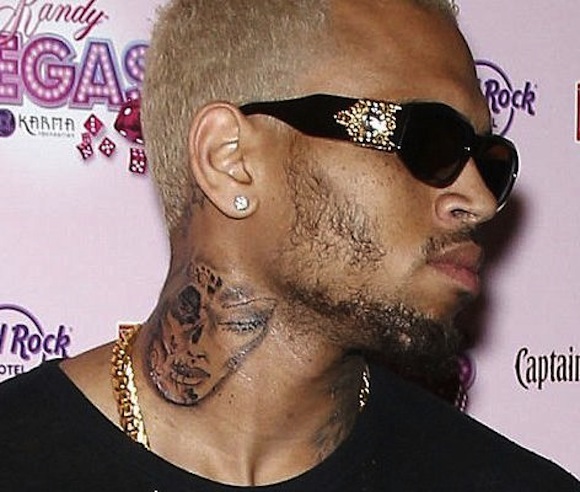
I’m not sure if it is an image of Rihanna’s post-domestic violence face, but here’s what Chris Brown’s neck tattoo says about intimate partner violence and sexual assault. [Pandagon]

The latest in a long line of unfavourable reviews of Naomi Wolf’s new “biography” – Vagina – Germaine Greer had her take on it published in The Age last weekend. I’m going to read Vagina: A New Biography regardless, but the high hopes I had for it have been dashed. [SMH]

In the lead up to the Presidential election, it’d do all Americans good to realise that reproductive health is an economic issue. [Jezebel]

The visceral fear this writer manages to evoke when she reveals her experience of being harassed on public transport is palpable. Hands up who’s ever experienced something similar whilst deigning to be female in public. [unWinona, via Jezebel]

The politics of Anna Wintour. [Daily Beast]

The gender imbalance in the opinion pages. [Daily Life]

Five police-sanctioned reasons why women “deserve” to be raped. Well, I’m guilty of all these things so apparently I “deserve” to be sexually assaulted, too! [Daily Life]

How to talk to kids about gay parents. [The Good Men Project]

This is why religious people shouldn’t work in medicine: one woman’s experience of being refused the morning after pill. [MamaMia]

Why is atheism so excluding of women? [Slate]

Image via Always A-List.

Movies: The Expendables 2 — Enough with the Old Men, Let’s Get Some Women Up in Here!

Sitting through The Expendables 2 last week, with plastic surgery-ravaged male faces, gory death scenes and laugh-out-loud (not in a good way), face-palming dialogue, it got me thinking about a recent rumour that there might be a female Expendables-esque movie coming to a screen near you.

While some of the names thrown around—Tia Carrere, Lucy Lawless—are a bit lacklustre, allow me to suggest a few actresses. And seeing as this is essentially a “fantasy football” Expenda-belles exercise, I’m going to be as bold as I can. Feel free to add yours in the comments.

  • Angelina Jolie.
  • The Charlie’s Angels girls: Drew Barrymore, Cameron Diaz and especially Lucy Lui.
  • Uma Thurman.
  • Sarah Michelle Gellar.
  • Pamela Anderson.
  • Kate Beckinsale.
  • Milla Jovovich.
  • Vivica A. Fox.
  • The ladies of Charmed, but Shannen Doherty and Rose McGowan in particular.
  • Michelle Rodriguez.
  • Neve Campbell.
  • Linda Hamilton.
  • And, of course, the Holy Grail of female action stars: Sigourney Weaver.

Now, some of these actresses have transcended being associated with a potential film franchise that originally started out as a vehicle for Sylvester Stallone, written by Sylvester Stallone (Angelina, anyone?). But having said that, I think a lot of them would be up for it. Linda Hamilton has guest starred on Chuck as the titular character’s mother, so she knows how to capitalise on her action heroine status, and Sigourney Weaver made what could be seen as the cameo of the year in Cabin in the Woods, so I wouldn’t rule her out, either. Then there are others—Doherty, McGowan, Anderson, Campbell—who don’t seem to have much else going on in their careers at the moment, so I think they’d be shoo-ins.

My housemate and I were talking about an Expenda-belles effort recently, and he brought up that there would have to be a villain to rival Jean Claude Van Damme’s in the most recent instalment, and a love interest. He came up with everybody’s favourite love-to-hate movie star, Sharon Stone, as the villain, and the non-threatening, token love interest in films such as Miss Congeniality, Benjamin Bratt. If you include Halle Berry, this film is pretty much turning into Catwoman! Well, at least it’ll be better than the original…

Related: The Expendables Review.

Cabin in the Woods Review.

Image via Expendables Premiere.