On the (Rest of the) Net.


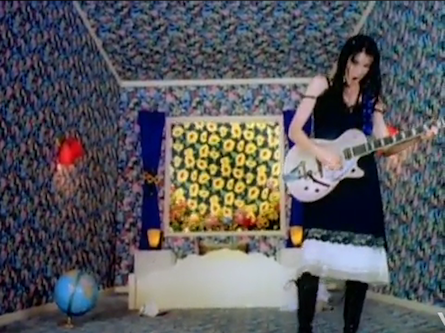
In praise of Meredith Brooks’ “Bitch” music video fashion. Takes me right back to grade six… [XOJane]

Rachel Hills laments the lustre of the It Girl. [Musings of an Inappropriate Woman]

Should recreational drugs be decriminalised? [MamaMia]

Consent, ignorance and “The Unintentional Rapist”. [Persephone Magazine]

Charlie Fine: boy wonder. I hope my future 11-year-old is a switched on as this kid. [MamaMia]

“Your pussy isn’t pretty enough” and other vulva-shaming myths. [Rachel Rabbit White]

The perils of being a black woman dating. [Jezebel]

Feminism is NOT a dirty word, Beyonce. [Jezebel]

The feminine girl geek mystique. [Persephone Magazine]

New show The Playboy Club as feminist text? [Jezebel, via NPR]

“When The Rapist is a She.” [Salon]

“Lest we forget” about asylum seekers? [MamaMia]

Muslim Americans: they’re just like other Americans! [Salon]

Mitt Romney’s abortion history. [Salon]

On Generation X nostalgia. [The New York Times]

Breastfeeding: a feminist issue. [Persephone Magazine]

In defence of Rihanna’s “Man Down” video. [Persephone Magazine]

“What Happened to Obama’s Passion?” [The New York Times]

Does “sport get way too much attention in Australia to the detriment of other national heroes?” [BBC News]

Clark Gable’s old Hollywood “Scandal that Wasn’t”:

“But the studio didn’t quite have a handle on his [Gable’s] image, casting him as an unrepentant villain and a laundryman. This was akin to casting Channing Tatum as a bad guy or smart person, when everyone knows he should only be taking off his shirt and/or doing dance moves, preferably while in the rain. Even cast in the wrong roles, Gable was remarkable. MGM’s head of publicity thus decided to further refine Gable’s image, capitalizing on his rural past and six-foot frame to create Clark Gable, The Lumberjack in Evening Clothes.” [The Hairpin]

How to be a dead body on TV. [The Wall Street Journal]

Fashion’s next big thing: a 10-year-old French girl. [Jezebel]

Image via XOJane.

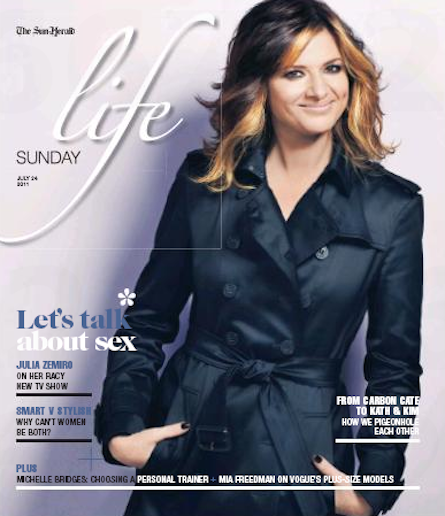
Magazine Review: Sunday Life, 24th July 2011.


You’d better duck into your nearest newsagent and hope they have a spare copy of The Sunday Age/Sydney Morning Herald, as its weekly insert, Sunday Life, is a must-read.

In addition to the usual fabulous columns by Mia Freedman and Sarah Wilson, who talk about the hullabaloo surrounding the recent plus-sized (and scantily clad) cover of Vogue Italia (p. 7), and being “deliberately” and uncomfortably vulnerable (p. 10), respectively, Rachel Hills writes on classism in Australia (p. 16–17) and deputy editor Natalie Reilly ponders the magazine’s recent Kate Ellis cover (p. 19).

What with the recent carbon tax being slammed for not being affordable for lower income earners and “Wayne Swan and Tony Abbott… falling over themselves to defend the livelihoods of ‘battlers’ earning more than $150,000 a year—an income more than double the median for Australian families,” class is more of an issue in Australia than ever before, but talking about it “just isn’t cool”.

It’s a very interesting issue, one that has somewhat reared its head in SBS’s Go Back to Where You Came From, the still-to-be aired Housos, a satirical take on life in a housing commission, and the backlash against Cate Blanchett backing the carbon tax.

I have written a little bit here and there about such things, but ultimately, it’s hard to take the “cashed-up bogan” seriously when they say they can’t afford to pay the carbon tax: if they just turned off their $2000 flat-screen TV that they bought with their baby bonus, we might not be in this mess. (Harsh, yes, but it is an anecdotal example!)

Hills quotes Housos, Pizza and Swift & Shift Couriers producer Paul Fenech, who likens the uproar over Housos as “a rich wanker test. The truth is, when we show this comedy to people who live it, they love it.” This could also be applied to the carbon tax and the public reception of shows like Angry Boys: you can always count on the conservative, upper-to-middle class right to become uproarious about such things. Could it be because “talking about class makes us nervous… because it suggests that we might not be as equal as we’d like to think we are—and that’s threatening”? I’d bet it is.

I saw this first hand when I brought up Go Back to Where You Came From with a right-leaning friend. Then I told him I was going to vote Greens next election. Then he called me a communist.

But what’s so wrong with believing everyone should receive the same civil rights? Abbott would argue, “why ‘screw over… people who want to get ahead’?” Indeed; but does it mean that we have to step on the little man to do so?

In “What’s Wrong With This Picture?”, Reilly addresses the age old conundrum of serious women not being able to be taken seriously if they’re dressed in anything remotely “sexy”.

Apparently, there was an outcry from Sunday Life readers regarding the June 26 issue, which featured Minister for the Status of Women, Kate Ellis, dressed in a pink high-necked blouse, red pencil skirt (above the knee, but I wouldn’t call it a mini) and killer turquoise heels. And therein lies the problem:

“When a female politician wears anything other than a sensible suit, outrage ensues.”

Yet, when Prime Minister Julia Gillard wears an unflattering get-up, she’s criticised for not being fashionable enough. Seems a girl just can’t win.

Related: My Response: Go Back to Where You Came From.

Does Pop Culture Glamourise Our Carbon Footprint?

Conservativism Reigns Supreme in The Sunday Age’s Opinion Section.

It’s Not Easy Being Green: The Latest Trend in Discrimination.

Elsewhere: [MamaMia] $150,000 Doesn’t Make You Rich. Discuss.

[MamaMia] The Four Reactions to This Magazine Cover.

[Sarah Wilson] How Do You Get “Deliberate” About Your Life?

[Girl with a Satchel] “Carbon Cate” for T Magazine & the Prius Effect.

[Sydney Morning Herald] Go Back to Where You Came From Strictly for the Gullible.

[Heathen Scripture] The Other Reason Why Raquel Was Wrong.

Image via Sydney Morning Herald.

It’s Not Easy Being Green: The Latest Trend in Discrimination.

With the announcement of Julia Gillard’s carbon tax, which has lead to an all-time Labour low for preferred Prime Minister, Leader of the Nationals and LNP Senator for Queensland, Barnaby Joyce, has said:

“This is some biodynamic sensitive new age policy written by a bunch of people who probably wear koala suits.”

I don’t know about the koala suit thing, but yes, yes it is. And since when was being biodynamic, sensitive and new age an insult?

Since Gillard’s blunderous (no, that’s not a word, but I think it’s pretty fitting, don’t you?) Prime Ministership, I’ve decided to vote Greens next election. They’re really the only party who reflect my personal values: equal rights for gays, environmental issues, and working towards a better outcome for asylum seekers in this country.

I’ve been called a commie by some of my right-wing friends for this revelation, whilst being applauding by my left-leaning ones around the recycling bin.

I’ve learned you can’t please everyone and not everyone will agree with your beliefs. But in an Australia led by the Greens, at least everyone will have the equal opportunity to have theirs heard, respected and honoured.

What do you think? Has the past year in politics made you change your political leanings like I have? Do you disagree with a more liberal (read: not the Liberal party) political party at the helm?

Related: Man Up.

“Who the Bloody Hell Are We?” The Sentimental Bloke at the Wheeler Centre.

Men on Chapel Street.


Event: The Blogging Economy.

Last Tuesday night I attended the Meanland event, The Blogging Economy, at the Wheeler Centre.

The panel was hosted by Zora Sanders, deputy editor of literary journal Meanjin, and consisted of ThreeThousand editor Penny Modra, journalist for New Matilda and Crikey, among others, Ben Eltham, and Jacinda Woodhead, associate editor of Overland, who is working on a PhD in the politics of abortion. Count me in for that one when/if it gets published!

I was expecting a bit more content on how to make money from your own blog, in terms of advertising, but I was pleasantly surprised with the advice and opinions Modra and Woodhead, especially, had to give on writing for other blogs for money.

Modra said she insists on paying for contributions to her Melbourne city guide website, even if it’s just a small amount (around $25 for a 100 word review/preview), as that’s all she has to work with as editor of ThreeThousand.

But such a small amount of money for such a small amount of words doesn’t mean you can slack off: Modra’s had freelancers submit previews for gigs, in which they didn’t even Google the address of the venue to make sure it was correct! She muses that “words should cost more” to counteract this but, by the same token, “everything you do has to be good… I just want the writing to be good!” How else do you expect to make it in the freelance/blogging economy?

Woodhead brought up The Huffington Post, soon to launch in Australia, which sold to AOL for $315 million, and who doesn’t pay their contributors. She urged Australian freelancers and bloggers not to write for them, because if they can afford to be sold for mega millions, they can afford to pay their contributors. Fair’s fair.

Some of her other points, though, I didn’t agree with. I’ve always been someone to follow my dreams and find a way to “make it work”, as Project Runway’s Tim Gunn would say. Woodhead believes, however, that “just because you want to do something, doesn’t mean there’s an economic system to support it.” This didn’t go down too well with the audience, and one woman asked Woodhead to clarify her statement in the Q&A portion of the event.

She also asserted that the blogosphere is “evolving” into a “discussion”; it’s not like traditional print in that you pay the writer to actively inject their views and opinions into the passive audiences’ brains (if you were going with the high school media studies model of the hypodermic needle theory of consumption). At the Overland blog, they don’t—because they can’t afford to—pay their bloggers, but Woodhead wonders, if you pay bloggers, should you pay commenters for their contribution?

My money’s on no. Most of the comments I get here on The Scarlett Woman do further the discussion, but this isn’t true of a lot of other blogs. Also, I think the more successful the blog/blogger, the more it/they attract the psychos! Especially when it comes to the more controversial topics.

Eltham spoke about a recent study that showed that artists in Australia—including writers—earned less than $10,000 for their work. It’s a bleak outlook, indeed, but I refuse to be disheartened! It just means you might have to supplement your artistic income with a less-artistic day job. Or marry a rich sugar daddy!

But, seriously, the unpaid blogosphere is about “citizens engaging in democratic discussion” that doesn’t always happen in paid writing. For every Gala Darling, there are 10,000 (probably more!) languishing bloggers going nowhere. And that’s fine; maybe that’s the way they want it. Hobby blogging!

We didn’t get into writing for the money. If that were true, we’d be in the business of hedge fund managing or some other über-rich-sounding Americanised profession. We got into it for the love of the craft; for getting our voice out there and, for some, making a difference.

I refuse to hop on Woodhead’s bleak bandwagon, and subscribe more to Modra’s sunny outlook: if your work is good, recognition for said work will come.

Related: The Evolution of the Bookshop at the Wheeler Centre.

“Who the Bloody Hell Are We? The Sentimental Bloke at the Wheeler Centre.

Is There Really a Beauty Myth?

Elsewhere: [Meanjin] Homepage.

[The Thousands] Melbourne.

[Overland] Homepage.

[Girl with a Satchel] An Unpopular Culture Niche (+ HuffPo of Oz).

Does Pop Culture Glamourise Our Carbon Footprint?

Carbon tax. It’s got everyone in a tizzy, and has given Julia Gillard the lowest approval rating of any Prime Minister since Paul Keating. Oh Julia, you had so much potential… but that’s another blog post for another day.

What I want to write about here is the factors that have caused us to need a carbon tax, the front runner being popular culture!

I know, it seems like an odd thing to deduce, but hear me out.

On the nights when I get home from work or being out with friends and my housemate is home before me, oftentimes I’ll walk into the apartment to be greeted by every light in the place blaring, the heater and TV on, and I wonder why my housemate feels the need to make our home look like it belongs in a decor magazine or, at the very least, a television show. But if you’re looking to television and movies to guide your lifestyle, no wonder Australia (not to mention America, the beacon of all things consumerist and anti-environmental) is up shit creek without a paddle.

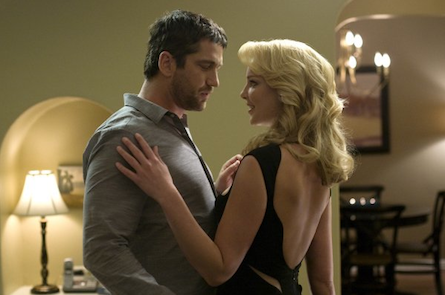
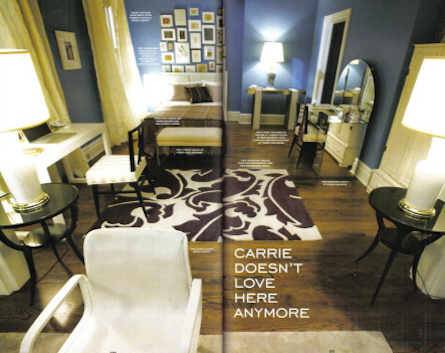
Look at any major mainstream TV show or movie staged in an affluent location: every single light is on, adding to the unrealistic “ambiance” of the place. Below are just a few screenshot examples:

Charmed.

The Ugly Truth.

Sex & the City.

Scream.

Also, inhabitants of houses/apartments/sheds/any building one can reside in onscreen have a penchant for leaving their blinds open. This is a pet hate of mine and one I’ll never understand. Not only does it practically invite psycho killers into your home (okay, I’ve been watching too much Scream), but in winter, it completely undoes all the good work of your trusty little heater. (I see this not only in movies and TV, but in real life, too. My friend Katrina recounted to me how she once saw her neighbour walking around topless in her bedroom without the blinds drawn!)

And hard-yakka Aussies wonder why they’re being asked to fork out for a carbon tax.

Girl with a Satchel Erica Bartle put it well when she wrote that we’re “not so hard up, are we?” when it came to light that “the average Aussie household now has multiple computers, wireless broadband internet, a Nintendo Wii or similar game console and a plasma TV”. Also, how much are the media contributing to our carbon footprint when they’re firing up the chopper to get aerial views of Cate Blanchett’s eco-mansion whilst condemining her for deigning to support the tax. (I read this on The Drum  or The Punch or one of those sites, but can’t seem to find the link, sorry.)

Can you think of any other TV shows and movies that perpetuate this lights on = glamour at the expense of practicality and our carbon footprint?

Elsewhere: [Girl with a Satchel] “Carbon Cate” for T Magazines & the Prius Effect.

Images via YouTube, IMDb, Film in America.

TV: Witch Trial—Burning at the Stake on Charmed.


2009: The year Michael Jackson died, 173 people perished on Black Saturday, and America’s first black president, Barack Obama, took office.

However, in Charmed’s imagining of a futuristic 2009, 1999’s flashforward episode “Morality Bites”, witches have been exposed and are now being burned at the stake.

Phoebe is set to burn for taking justice into her own hands and using her powers to avenge a friend’s death, “seeking to defy human nature with her way of life”.

Fastforward two years to 2011, and it’s not such a different place.

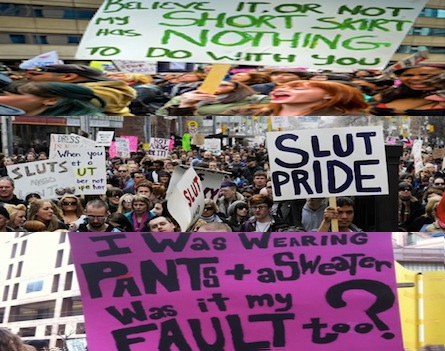
Uganda tried to push through the Kill the Gays bill, women still have to march in (Slut)walks to exert freedom of sexuality and reject blame for sexual assault, and Australia is still floundering over a carbon tax.

I’ve written on this here blog before that sometimes I get the feeling the world is regressing, especially in terms of the environment and reproductive rights.

We still vilify those who dare to lead a lifestyle outside the norm, whether it is viewed as a “choice” or not. In Charmed’s fictional world, witches could be seen as a metaphor for the “other”: people of colour, the gays, people with disabilities and, most pertinently in 2011, transpeople.

The episode could also be a metaphor for the death penalty.

When Phoebe kills baseballer Cal Greene for killing her friend, she takes the law into her own hands, and is therefore sentenced to death. An eye for an eye.

Before Phoebe accepts her fate and submits to burning alive, she tells her executioner, Nathaniel Pratt, that while she’s paying for her crime, there will come a day when he’ll have to pay for his, too. While the death penalty isn’t an issue in Australia (if it were I’d be—controversially, perhaps—for it. However, there seems to be something sickly satisfying for victims and their families to see a perpetrator rot in prison for life… Jaycee Duggard’s abductors, anyone?), the question of who decides if a person dies and who administers the lethal injection (or in this case, “gathers the kindling”) remains. And how can a person live with that on their conscience.

Charmed may be all fluff, unrealistic demon-fighting outfits and “nipple fats”, as my friend Eddie noted, but every now and then it does deal with the big issues, consciously or not.

Related: Ain’t Nothin’ Gonna Break My Slutty Stride.

Rihanna’s “Man Down”: Revenge is a Dish Best Served in Cold Blood.

Images via Wikia, Gamespot, PPP The Power of 3, Hopeless Obsession.

Magazines: You Say It Enough, It Loses Its Meaning.


“N*gger.” “Wog.” “Hitler?”

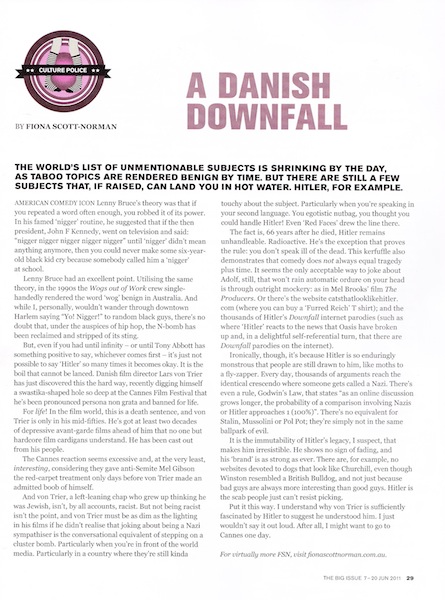
According to Fiona Scott-Norman in this fortnight’s Big Issue, Hitler is still a word thats “boil… cannot be lanced”.

N*gger has been reappropriated by African American’s in hip hop and rap music. Wog is a common utterance in Australian society that I don’t personally feel comfortable using, but just flick over to any Aussie comedy and you’ll hear it.

But the same doesn’t go for Hitler, whose reference at the Cannes Film Festival recently by avant-garde Danish film director, Lars von Trier, has seen him banned from the festival for life. “For life!” Scott-Norman reiterates.

von Trier was joking when he said he could relate to the “enduringly monstrous” Hitler. There’s no question it was in bad taste, but banning for life? Really? I’m sure they could focus on banning people like Roman Polanski, who’s a U.S. fugitive wanted for sexual assault, or Arnold Schwarzenegger, whose marital indiscretions have come to the forefront in recent weeks. But racism is viewed more harshly than sexism. On one hand, I think both should be treated equally. On the other, at least there is a no-tolerance policy on racism in France. John Galliano is testament to that. Mel Gibson’s—who’s been caught on tape espousing racist and sexist vitriol—inclusion on the red carpet at this year’s Cannes not so much.

Related: FuckWalk: The Floodgates Have Opened.

Ain’t Nothin’ Gonna Break My Slutty Stride.

Minus Two & a Half Men.

The Big Issue, 1–14 March 2011 Review.

Event: Ain’t Nothin’ Gonna Break My Slutty Stride.

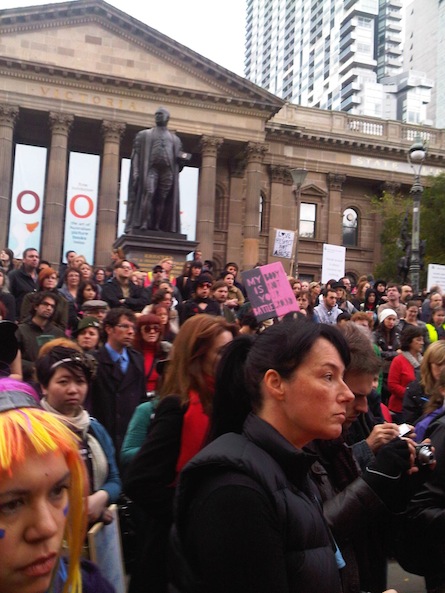
Ralliers outside the State Library on Swanston Street.

Best. Sign. Ever.

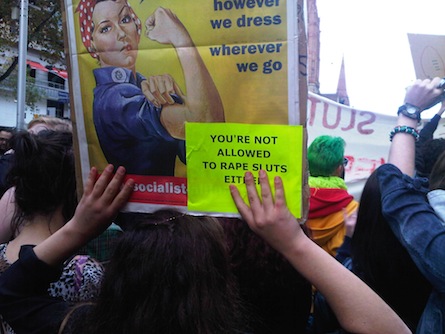
Last Saturday the highly anticipated SlutWalk occurred in several Australian cities, and I attended the Melbourne event with my fellow anti-slut-shamer friend Laura (both of us below).

We rocked up in our sluttiest outfits, which you can see above, complete with permanent marker declarations of our proud sluthood to boot. Some of the other outfits we noticed were short skirts with knee-high skull print socks and customised Doc Martins, worn by event organiser Clem Bastow (below), lace dresses and gym gear, the latter of which adorned a short-haired tattoo fan with a body Tracy Anderson would envy.

Clem Bastow.

Monica Dux.

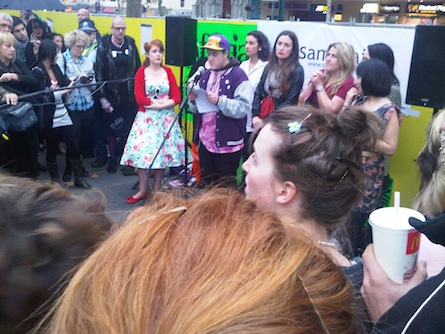
As Bastow commented when she gave one of the opening addresses, along with fellow event organisers Karen Pickering and Lauren Clair, and noted feminists Monica Dux (above) and Leslie Cannold, amongst others: “thank you, God, it looks like you’re going to rain on me”. But no one was gonna rain on our parade and, despite the chilly temperatures, we still walked tall and proud in whatever get-ups we chose to wear.

Dux said this is the beginning of a movement, which I have to disagree with. SlutWalk is not the beginning of a movement; it is part of the reignited battle to stop victim-blaming and slut-shaming based on one cop’s archaic musings on rape and how much a woman was “asking for it”. Here’s a fun fact: WE’RE NEVER ASKING FOR IT! (See Bastow’s sign, above). No matter how we are dressed, where we are, how much we’ve had to drink, or what we do for work.

Speaking of, I was really proud to see the representation of sex workers at the event, and president of the Australian Sex Workers’ Association, the Scarlet Alliance (represent!), Elena Jeffreys (above) spoke about her sexual assault and that even though she was paid for sex, she was not consenting to assault. Her opinions on the SlutWalk were really interesting and I hope they receive as much publicity as the negative perceptions of the rally have in the media.

In the days leading up to SlutWalk, I was embroiled in a heated debate on Facebook with a friend who disagrees with the SlutWalk. I think he confused—like a lot of people—the meaning of the SlutWalk with an excuse to get gussied up in a very risqué manner when, in fact, that was not at all what it was about. That didn’t stop protestors on the steps of Parliament House at the top of Bourke Street brandishing their “rape is horrifying, but so is immodesty” placards (above). Like one of the speakers (whose identity escapes me: should have used my BlackBerry voice recorder!) said: it’s not up to us to curb our behaviour (and that includes how we choose to dress) at the risk of potentially being sexually assaulted; it’s up to those who sexually assault to curb their behaviour!

I think most people against the SlutWalk had a problem with the use of the word slut. As Cannold said, “words matter…: … we won’t stand for one, the same one, being slung at us over and over again to demean and degrade us.” Lori Adelman, in a post on Feministing, said she didn’t agree with the term “slut” and that she “would much rather have attended a ‘Do Not Rape’ Walk”:

“I find that the term disproportionately impacts women of colour and poor women in order to reinforce their status as inherently dirty and second-class, and hence more rape-able.”

To me, “slut” is just a word. It meant as much to me to be called a slut when I was 12 as it does today; as they (and Rihanna) say, sticks and stones will break my bones but names can never hurt me. It’s not about the term “slut”, it’s about the backwards and extremely offensive views that go along with that word. As coordinator of the first SlutWalk in Toronto, Sonya Barnett, told Rachel Hills: “if he [the policeman] had said something else, we would have called it something else.”

The speaker who garnered the most attention, though, was transgendered man, Cody Smith (above), who had been raped both as a biological female, and as a trans man. There were tears a plenty during his speech!

It was nice to see such a welcoming, non-judgmental turnout of everyday men, women and children of all walks of life, wearing all sorts of garb, not just the fishnetted and cut-out body con dresses that certain attendees chose to wear (guilty as charged!). After all, rape is not about what you’re wearing, what you look like, what size you are, how old you are, what your sexual orientation or gender is, or any other denomination that you happen to belong to as a person. It is about the perpetrator, and nothing you can or cannot do will stop them from attempting to rape you.

As Smith said, it shouldn’t be the victims of sexual assaults’ responsibility to educate the general public on sexual assault and victim-blaming. And I thought the sexual revolution happened several decades ago: it shouldn’t be up to members of a fringe movement to educate the general public on the sexual rights of women to express themselves however they please without the threat of retaliation. In fact, feminism—which is what the SlutWalk was all about—shouldn’t be considered as on the fringe in 2011.

Related: SlutWalk.

So a Tattoo Makes Me Public Property, Huh?

Has Feminism Failed?

Rihanna’s “S&M”: Is it Really So Much Worse Than Her Other Stuff?

Elsewhere: [Feministing] SlutWalk: To March or Not to March.

[Musings of an Inappropriate Woman] Ask Rachel: What Are Your Thoughts on SlutWalk?

Black and white images via Ali Ryan Photography.

UPDATED: SlutWalk.

For those of you yet to be persuaded to join in the SlutWalk festivities this Saturday 28th May at the State Library, here are some excerpts from SlutWalker Jaclyn Friedman’s talk at the Boston, Massachusetts event, from Feministing:

“Is a slut a girl who has sex too young? With too many partners? With too little commitment? Who enjoys herself too much? Who ought to be more quiet about it, or more ashamed? Is a slut just a woman who dresses too blatantly to attract sexual attention? And what do any of these words even mean? What’s too young, too many partners, too little commitment, too much enjoyment, too blatant an outfit? For that matter, what’s a woman, and does a slut have to be one?

“… You can call us that name, but we will not shut up. You can call us that name but we will not cede our bodies or our lives. You can call us that name, but you can never again use it to excuse the violence that is done to us under that name every single fucking day.

“… We can be called sluts for nearly any reason at all. If we’re dancing. If we’re drinking. If we have ever in our lives enjoyed sex. If our clothes aren’t made of burlap. If we’re women of colour, we’re assumed to be sluts before we do a single thing because we’re ‘exotic.’ If we’re fat or disabled or otherwise considered undesirable, we’re assumed to be sluts who’ll fuck anyone who’ll deign to want us. If we’re queer boys or trans women, we’re called sluts in order to punish us for not fearing the feminine. If we’re queer women, especially femme ones, we’re called sluts because we’re obviously ‘up for anything,’ as opposed to actually attracted to actual women. If we’re poor, we’re gold diggers who’ll use sex to get ahead. And god forbid we accuse someone of raping us—that’s the fast track to sluthood for sure, because it’s much easier to tell us what we did wrong to make someone to commit a felony violent crime against us than it is to deal with the actual felon.

“You know what I expect will happen when I’m dressed like a slut? People will want to get with me. You know what I don’t mean when I dress like a slut? That anyone I encounter can literally do anything at all they want to me. I know. It’s shocking. Because clearly you thought me wearing my tits out like this gives every single one of you carte blanche to do anything whatsoever you might want to do with my body. I’m very sorry to disappoint.

“… I just want to point out how ridiculous it all sounds when you spell out the meaning of ‘she was asking for it.’ Because the rapists are not confused. Those tiny percentage of guys doing most of the raping? They’ve told researchers that they know full well they don’t have consent. It’s the rest of us that seem confused. We’re the ones that let them off with a little ‘boys will be boys’ shrug and focus our venom on ‘sluts’ instead, leaving those boys free to rape again and again.

“… There’s nothing wrong with being a slut. Not a thing. It’s OK to like sex. Sex can be awesome. It can be life-alteringly awesome, but even when it’s not, it can be a damn good time. Our sexual desire is part of our life force. And as long as you’re ensuring your partner’s enthusiastic consent, and acting on your own sexual desires, not just acting out what you think someone else expects of you? There’s not a damn thing wrong with it. Not if it’s a hookup, not if you’re queer, not if you like it kinky, not if your number’s too high. If you’re playing on your own terms and you’ve got an enthusiastic partner? Please, I beg of you, just have a fucking awesome time. Our lives are way too often full of struggle and pain. If you can do something with someone else that brings both of you pleasure and joy? You’re increasing the pleasure and joy in the world.

“There has been a lot of misunderstanding about the meaning of the SlutWalk, and none more egregious than those who claim our agenda is to encourage all women to be sluts. Whatever that means, our mission could not be further from that. Our mission here today is to create a world in which all of us are free to make whatever sexual and sartorial choices we want to without shame, blame or fear. If you dress and experience your sexuality in decidedly unslutty ways, and you know that there’s nothing we can do to make someone rape us, the SlutWalk is your walk, too…”

*

Never before (okay, this year) have I been so excited for something. That includes the multitude of costume parties I’ve been to this year.

About a month ago, I cottoned on to the buzz surrounding SlutWalk, an event spawned by Sonya Barnett and Heather Jarvis, after they heard a Toronto police officer telling a rape victim that she wouldn’t have been attacked had she been dressed less provocatively.

The first march was in early April, and was met with great success. Other events have been staged in Dallas, Texas and Boston, Massachusetts.

Next Saturday 28th May, SlutWalk comes to Melbourne, and I am beside myself with excitement. The only rally I’ve ever marched in was when I was 15, for (or rather, against) nuclear power with my mum, sister and bestie. I wasn’t really informed enough to have views on nuclear power back then, and I’m still undecided about it. Obviously the disaster in Japan highlights the question mark surrounding the idea of nuclear power in Australia.

However, I do have strong views about slut-shaming, rape, sex and reproductive rights, and I will be immensely proud to walk alongside my fellow sluts, as we reappropriate the word, much like the gays have reclaimed “fag”.

Obviously, rape is not about how a woman is dressed or how much lust she inspires in men, regardless of what she’s wearing. Women are raped when they’re on their morning jog, walking to and from work, out at night in their nicest outfit, or in their home by a friend or family member. I resent the comments that police officer made, and I will be wearing my “sluttiest” outfit in protest. But I’ll be wearing it with a prim and proper bun.

To join the SlutWalk, visit their Facebook page.

Related: Apocalypse Now: 2012 Come Early?

So a Tattoo Makes Me Public Property, Huh?

Elsewhere: [Feministing] “You Can Call Us That Name, But We Will Not Shut Up.”

[Facebook] SlutWalk.

Images via MamaMia.
ADFA Sex Scandal—Just a Few Bad Eggs?

Here are some particularly poignant quotes from Insight’s look at the sex scandal that rocked the Australian Defence Force Academy, and their treatment of women:

“… We are recruiting from a society that may put great emphasis on masculinity, blokey behaviour, these young men coming into ADFA, their heroes are  footballers who are getting slaps over the wrists for sexual misbehaviour and alcohol. You have to realise that we are bringing those sorts of people in…”

This is very true of Australian “blokey” culture, but is it similar inside the defence force?:

 “The cases that we have been looking at are very sad and certainly not accepted in defence but they are in a minority and it is disappointing that I think the culture is not the negative culture that we are trying to portray in some of these stories. As bad as they are it’s a strong culture based on values and values based leadership. Yes, there are some bad eggs out there and bad incidents. But that’s not the culture of defence. The defence culture is a positive one based on really strong values.”

Is it really about just a few “bad eggs” amongst a lot of standup officers (as the below anecdote will illustrate) that happen to get their stories of “misbehaviour” in the news? Is “defence culture” a reflection of Aussie society that, indeed, slaps footballers on the wrist for major indiscretions and blames the victim? Or are “these attitudes… coming from within defence”, and somehow perpetuating the above cultural perceptions? Really, how can we trust the ADFA to act within the best interests of Australia and to keep us safe when they can’t even act within the best interests of their female cadets; to keep them safe?

“I had a private soldier come to me who said, ‘Sir, I’m really upset. The sergeant has given me some papers and I’m to be discharged and I don’t know anything about this.’ I asked him to sit down and tell me his story. He was being discharged because his fitness had decreased and reason his fitness had decreased was because he was upset because he had just lost his twins, his twin babies. Both his twins had just died. Of course he was beside himself with grief and wasn’t exercising and wasn’t able to pass his fitness assessment.

“So I said to the sergeant, ‘Leave this with me.’ I went off home, the sergeant had gone into my office and taken the papers out, gone back to the private and told him he was being discharged and that this was what defence was doing with him because he couldn’t pass his fitness assessment. I took that sort of complaint to my Commanding Officer and I was referred for psychological assessment. When I complained about that I was charged with insubordination, when I complained about being charged with insubordination for following the redress of grievance system I was threatened with court martial, a full on court martial for writing letters to people complaining about their behaviour.”

Related: Why Are Famous Men Forgiven for Their Wrongdoings, While Women Are Vilified for Much Less?

Elsewhere: [SBS] Under Fire: SBS Insight Transcript.

Images via SBS, The Daily Telegraph.