On the (Rest of the) Net.


“The Case for Dry Humping: Why Being Prude is a Feminist Statement.” [HuffPo]

Alone time is my siren call. Here, Jezebel’s Social Minefield tells you how to get more “me time” without offended those who want to have “we time” with you.

One woman goes mirror-free for a year. [Jezebel]

Lady Gaga’s run out of people to plagiarise, so she’s turned to herself for inspiration in her latest video for “Yoü & I”. [Fashionista]

Nipple slips from Khloe Kardashian, Nicki Minaj and Kelly Rowland in quick succession: shock, horror! [The Washington Post] (SFW)

Camilla Peffer on Beyonce as the anti-feminist. [Girls Are Made From Pepsi]

The gender politics of Justin Bieber. [FBomb]

Is there a need for women to have their periods?:

“… I do want to raise the question that while we do the work of destigmatising menstruation and teach young girls to be proud and excited about their menarche don’t we also have a responsibility to question its necessity? We tell women they don’t have to have sex to have children, that breast cancer can be beaten, that they can have their tubes tied and then re-connected and their faces lifted and de-wrinkled. We live in a modern world with modern solutions, isn’t it time we started seriously thinking and talking about the need to bleed?” [Feminaust]

Porn star and new mum displays picture of her breastfeeding her newborn daughter in an exhibition challenging the Madonna/whore dichotomy of motherhood, controversy ensues:

“The idea that there is something inherently prurient about a porn star breast-feeding plays right into that classic either-or thinking: Her breasts are erotic in one venue, so they can’t be wholesome in another. It’s a wonder anyone lets her breast-feed at all! On the one hand, it’s surprising to see this attitude coming from a pornographer; on… [yet an]other hand, it’s perfectly appropriate given the way motherhood is fetishised in porn.

“…We don’t like to think of moms as sexual beings—except for in the taboo-busting world of porn (paging Dr. Freud). It’s fitting for a porn star mama, the rare industry ‘MILF’ who is actually a mom, to remind folks that, generally speaking, one has to have sex in order to become a mom.” [Salon]

Anne Hathaway’s new effort, One Day, has a “bleak worldview of co-dependence where men need women to improve them, and women need to improve themselves to deserve men’s notice and achieve their purpose,” with The Film Stage dubbing it “the most toxic romance of the year”.

Also at The Film Stage, a breakdown of Katherine Heigl’s stereotype-reinforcing rom-coms, from the career-making Knocked Up, which she subsequently dissed for being sexist, to the just-as-sexist Killers and Life as We Know It.

Here’s an extended version of Erica Bartle’s debut piece for Sunday Life. While I don’t necessarily agree with her sentiments on faith most of the time, this is a great read. Better than the published piece, dare I say? [Girl with a Satchel]

Taylor Swift VS. feminism. [Autostraddle]

Is it “time for an abortion pride movement”?:

“… Women should not merely have the right to end unwanted pregnancies, they should have the right to be proud of having done so. Surely, there is enough suffering in this world already without adding infants with Tay-Sachs disease and Lesch-Nyhan syndrome to the mix. Women who step up to the ethical plate and have the strength to say, ‘This is the wrong time,’ or ‘This is the wrong fetus,’ should hold their heads high in the streets.” [Opposing Views]

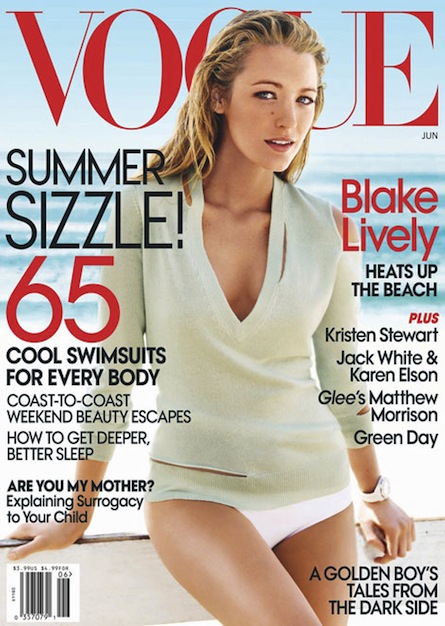
Oh, the hilarity of Photoshop on this Glee/Vogue/Fashion’s Night Out advertisement. [Styleite]

It’s not just women who get the short end of the stick when it comes to Disney films: “Sexism, Strength & Dominance—Masculinity in Disney Films.” [FBomb]

The awesomeness that is Adam Lambert. [Autostraddle]

One from the vault: Buffy’s Willow Rosenberg destroys the world when her lesbian love is killed, calling into question the show’s support of the LGBT community. [Salon]

A mother’s perspective on the dysfunctional Twilight-saga relationship between Edward and Bella. [Persephone Magazine]

The politics of the SlutWalk. [New York Times]

Five of The Simpsons’ best recipes, including 64 slices of American cheese and Vaseline toast! [Warming Glow]

Image via Chubby Wubby Girl, Styleite, Salon.

On the (Rest of the) Net.

Rachel Hills answers the age-old aspiring-freelance question: “When should I stop writing for free?” [Musings of an Inappropriate Woman]

Last week, I emailed Hills to get her thoughts on feminist author Erica Jong’s assertion that the “younger generation” (she references her daughter, who is in her thirties) isn’t interested in sex. [Musings of an Inappropriate Woman]

Also at Musings of an Inappropriate Woman, check out these reblogged images above.

Why is there such a big problem with porn? There’ll be more to come on this next week. [Jezebel, via The Scientific American]

Feminism, not enough sex, too much sex, and Muslims were the cause of the Norway terrorist, according to the Norway terrorist. [Jezebel]

Check me out: I’m Girls Are Made from Pepsi’s “Lady of the Week”!

Amy Winehouse VS. Norway: “On Caring About More Than One Thing at Once”:

“If the only world event worth commenting on is the most severe tragedy, then where does the pissing contest end? Yes, what happened in Norway was terrible, but what about what happened in Japan? What about what happened with the Asian tsunami? What about 9/11 here in the good ol’ US of A? (You said you’d never forget!) What about everything bad that has ever happened?” [Jezebel]

Girl with a Satchel’s Erica Bartle gets her faith on on MamaMia. You go, girl!

Also at MamaMia, Mia Freedman’s stirring the pot this week! She writes on Cadel Evans’ Tour de France win and if sportsmen should be considered heroes, the News of the World phone hacking scandal, and runs a guest post by Tony Abbott on why the carbon tax is a bad idea.

“What Your First Screen Crush Says About You.” [Jezebel]

Despite its misogyny, does hip hop actually promote lady love? [Jezebel, Autostraddle]

10 easy steps to radical self love. [Gala Darling]

Why rape cases don’t get prosecuted, parts one and two. [Jezebel]

“The 10 Coolest Witches in Pop Culture.” Where’s Teen Witch? And the Halliwell sisters? Disappointed. [Flavorwire]

“How Not to Propagate Bad News.” [Girl with a Satchel]

She’s out of your league. Kind of relates back to this article from a couple of weeks ago. [Jezebel]

I’ve just signed up to RSVP.com, so this article is kind of appropriate: “Questions We Wish Were Appropriate to Ask on a First Date.” [Jezebel]

Body image, burgers and the First Lady. [WSJ Speakeasy]

Four commentators, including a mum and a teen, weigh in on the Lady-Gaga-as-role-model debate. For more on this topic, check out this article. [Sydney Morning Herald, Girl with a Satchel]

Hugo Schwyzer in defence of talking to girls about beauty. [Healthy is the New Skinny]

“Does Free Birth Control Stand a Chance” in the USA? [Jezebel]

The problem with Black Swan. [Persephone Magazine]

What exactly is a “Mama Grizzly”? And no, I’m not talking about bears. [Newsweek]

“Born This Way” or choose to be gay? Does it really matter? [The Bilerico Project]

Do most men pay for sex in some way, whether it be porn or prostitutes? [Jezebel]

Images via Haley Tobey, Musings of an Inappropriate Woman.

On the (Rest of the) Net.

Race and online dating. [Jezebel]

Hermione the heroine. [HuffPo]

Jezebel also writes in praise of “The Women of the Harry Potter Universe.”

Tavi Gevinson on growing into her beauty:

“I could pretend to be an archetype of a feminist superhero and say I never want to be a conventionally attractive person. But, while I have so much respect for the people who can say that truthfully, I’m not there yet… I admit to the basic human desire to be attractive…

“Maybe I liked my face. Is that not okay?” [The Style Rookie]

If the DSK case has taught us anything, it’s that “any deviation of the victim’s life from the concept of the ‘perfect victim’ is exploited and becomes the focus of attention, as has happened to the DSK victim. Ever had a drink? Been to a party? Been a little bit late to a meeting? Lost your temper? Tried to fight back? Lied to your friends about what’s going on in a relationship? Forgiven someone? Posted a Facebook photo of you hugging someone? Well then clearly YOU ARE A DRUG-ADDLED VIOLENT SLUT BITCH and that necessitates a billion more hearings to talk about how VIOLENT and SLUTTY and DRUG-ADDLED and BITCHY you are.” [Think on This]

Still with Strauss-Kahn, Bob Ellis airs his always controversial, archaic and small-minded misogynist thoughts on the “honeytrapping” of “good men”. [ABC The Drum]

“When Rape Victims Lie.” [Sasha Said]

And this wraps up the DSK portion of the program:

“… I have no sympathy, empathy or even good thoughts for Dominique Strauss-Kahn. Not just because of the rape accusations but also because of his betrayal of the socialist ideals he was supposed to uphold as a prominent member of the French Socialist Party. His ideals that went through the drain when he accepted to become head of the IMF, one of the most subjugating, neo-imperialist institutions imposed on the Global South.

“And now, of course, there is no longer a case against him. However, and this is where I’d like us to focus, there is no longer a case because, it is claimed, the victim lied on issues unrelated to the rape allegations. Let that sink in for a second: a woman who is an asylum seeker/refugee, who hails from one of the poorest countries on earth (where the IMF played a big role in promoting the prevailing poverty and economic hardships that afflict her homeland) was found to have lied in order to get on with her life.” [Tiger Beatdown]

Jokes about Casey Anthony: too soon? [Splitsider]

“So you want to move to New York?” Here are the realities. Not as grim as you might think, yay! [Yikes Machine]

“The World Map of Useless Stereotypes.” If they’d reduced the space allocated for New York, they might have been able to include Australia. Oh yeah, maybe they were playing up the stereotype of us being the forgotten continent of sorts. [Jezebel]

The Lion King promotes homosexuality? And nine other “crazy things” that have come out of potential 2012 Republican presidential candidate Michele Bachmann’s mouth. [Think Progress]

Elitism in the public school system. [Persephone Magazine]

If global gender equality was represented by the FIFA Women’s Soccer World Cup, this is what it would look like. [Jezebel]

Ten life lessons, according to Ja Rule. Hilarious! [Thought Catalog]

“If I Were a Girl,” also on Thought Catalog, is equal parts poignant and insulting. Interesting to get a guy’s point of view on what it would be like to be a girl.

Read what happens when “a teen… calls the Westboro Baptist Church” to talk about feminism! [Jezebel]

Waking up to the Leiby Kletzky murder crime scene. [Jezebel]

Sleazy News of the World-esque journalism has a place somewhere, right? [Gawker]

“Penis shaming.” [Rachel Rabbit White]

On “Writing Race.” [Zero at the Bone]

More on the should-we-tell-little-girls-they’re-pretty debate. [The Beheld]

Part two of Camilla Peffer’s “In Defence of Women Behaving Badly.” [Girls Are Made from Pepsi]

Men in crisis: “Digging deeper into modern Masculinity.” [Rachel Rabbit White]

Images via The Style Rookie, Buzzfeed.

On the (Rest of the) Net.

If you didn’t get a chance to catch Go Back to Where You Came From on SBS last night, Wednesday or Tuesday night’s, check it out on the website. Do yourself a favour: it really is eye-opening stuff, whichever side of the asylum-seeking fence you sit on (and you’d better be on the right one, dammit!). And here’s MamaMia’s Rick Morton’s take on the show.

Also at MamaMia, “The Weiner Photos”.

Who is Coco?

“The ‘Scary Dad’ Phenomenon.”

It’s a year today since Julia Gillard took over as Prime Minister of Australia.

According to Dilbert creator Scott Adams, men are square pegs in round, vagina-shaped holes. Consent or no.

The Angelina–Louis Vuitton–Cambodia debacle.

Gala Darling on body image and beauty in style blogging:

“… Whoever these girls are that we choose to compare ourselves to, they’re just living their lives—and honestly, if that makes us feel bad about OURselves, it is OUR issue.”

Well said, girlfriend!

Forget Women in Refrigerators. “Dead Men Defrosting.”

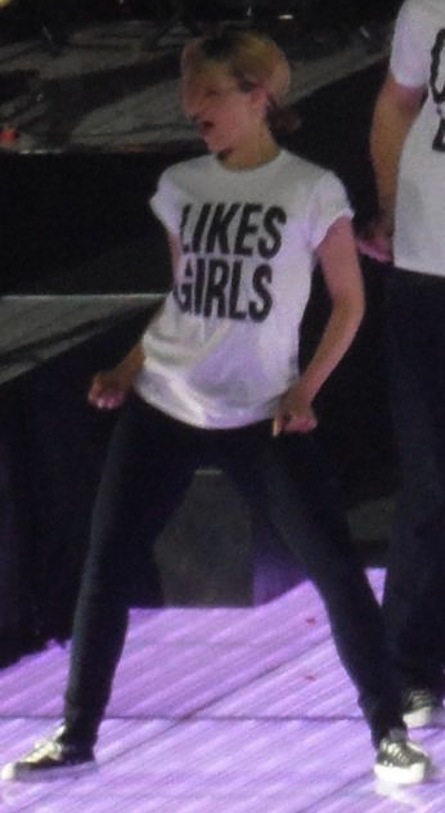
“Likes Girls”? Dianna Agron on equality.

Born this way, or pray the gay away? Jezebel, via Autostraddle.

“Liberals tend… to believe that the more socially liberal actions (deciding to make less money and help others) were when people were being true to themselves, and conservatives tend… to believe that socially conservative actions (renouncing homosexuality) were more authentic. So! That solves the case, no? Everyone thinks they’re right, in philosophy as everywhere else in the world.

“Maybe that’s true; maybe what matters are our opinions more than our choices or our biology.”

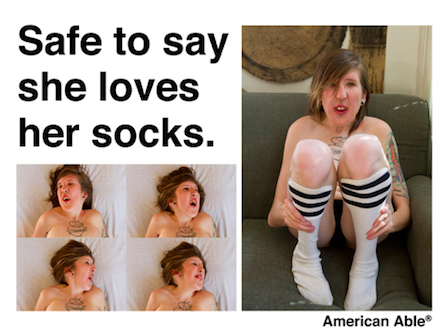
Freeman-Sheldon sufferer Jes Sachse and photographer Holly Norris challenge the hipster-sexy American Apparel ads with their own “American Able” series of images.

–Phobia and –Isms in Glee.

Now this is how you write an anti-SlutWalk article.

“Why I Walked the SlutWalk.”

Still with the SlutWalk, this time from a man’s perspective.

Girl with a Satchel on Bridesmaids, feminism, taste and “public v private appropriateness”.

Images via West Coast Show, Fell Down the Rabbit Hole, MamaMia.

On the (Rest of the) Net.


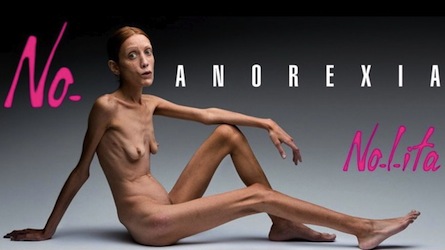
“The Fashion Industry’s Anorexia Problem.”

Gala Darling offers an interesting take on pageantry. It seems not all beauty queens are vapid glorified prom queens with “miles of hair extensions, industrial-sized cans of hairspray and gallons of butt glue”.

Do you have to be a mother to be empathetic?:

“The reason Queensland Premier Anna Bligh was able to handle the flood crisis with such competence [is because she is a mother], according to a fellow mum. How true, how true, clucked a host of TV talk show mums the next day, as the commentators all agree that Anna won the ‘image’ war over Julia in the aftermath. Then of course she would—only a mother can cry with conviction for lives lost.”

90210: “The Sexist Postcode”?:

“So 90210 was an important early building block of enlightened sexism because it insisted that the true, gratifying pleasures for girls, and their real source of power, came from consumerism, girliness, and the approval of guys…”

My friend Anthony and I were discussing the benefits of cheap Coles milk when we paused and though, what exactly does cheap milk mean for farmers and why all the fuss? Rick Morton of MamaMia is here to answer our questions.

Also at MamaMia, the defence force sex scandal.

Speaking of, MamaMia’s 3.0 launch is the only blog redesign I’ve liked in recent months (Jezebel, I’m looking at you).

“Wait? What? This is where it gets interesting for me as a sex positive parent. My son just went from wishing he was sexy to shaming a girl for being just that? I rolled up my sleeves and got ready to do some unpacking.” The unpacking the primary school backpack on “Slut-Shaming on the Playground”.

This is just plain wrong: “The 15 Most Inappropriate Baby Outfits”.

The cigarette packaging reform.

Michael Cole, WWE announcer, tweets a gay slur. GLAAD faux pas or staying in character?

Are disability jokes really that bad? Or are we all just going PC crazy? (Just ask Laura Money and Kieran Eaton at their Unfinished Business stand-up show for the Melbourne International Comedy Festival.)

The meaning of Sucker Punch according to io9:

“1. Insane people and sex workers are interchangeable.

“2. Women can only triumph over adversity in their dreams.

“3. Action movies spring from the imaginations of enslaved, mentally unstable prostitutes.”

“Do You Know What a Normal Female Body Looks Like Anymore?”

Francine Pascal as feminist literature pioneer?:

“In the beginning, that wasn’t enough for many booksellers, who deemed Sweet Valley too ‘commercial’ for their readers. The Times snubbed the series; librarians fought to keep their stacks free of the ‘skimpy-looking paperbacks,’ as one library journal put it. It was Pascal’s fans who defended her: buying a dizzying 250 million copies before the series published its 152nd and final title, in 2003. The series even became a case study in how to get young girls to read. ‘Sweet Valley changed the dynamics of the industry,’ says Barbara Marcus, who, as former president of Scholastic’s children’s business, published The Babysitter’s Club, Goosebumps, and Harry Potter. Sweet Valley spawned seven spinoff series, a TV show, a board game, and dolls. Not until Twilight came along have girl fans been so loyal.”

In this vintage post from the time of Jersey Shore’s debut, Irin Carmon discusses the cast’s views “On Beauty & Not Even Looking Italian”. Quite interesting, actually.

It’s time to go, Betty Draper.

Forget menopause; say hello to “manopause”.

First the video music world, now the movie world: Rebecca Black’s film debut in “Sunday Comes Afterwards”.

Porn WikiLeaks: damaging the reputation and safety of porn performers by publishing addresses, personal documents and hateful HIV diatribes (SFW).

The ugly step sister?

Images via Jezebel.

On the (Rest of the) Net.


How to be a Victoria’s Secret Angel:

“Holding tight to a mission statement that stands first and foremost to ‘empower women,’ and a slogan stating the brand is one to ‘Inspire, Empower and Indulge,’ the company ‘helps customers to feel sexy, bold and powerful.’

“Where once sexualized representations of women in the media presented them as passive, mute objects of an assumed male gaze, today women are presented as active, desiring sexual subjects who choose to present themselves in an objectified manner because it suits their ‘liberated’ interests to do so.

“Not only are women objectified as they have been, but through sexual subjectification, they must also now understand their own objectification as pleasurable and self-chosen.”

Why Britney Spears is the everywoman pop star of our generation.

Unfortunately for John Galliano, “Rehab Does Not Cure Anti-Semitism”.

Also, Gawker wonders “How the Hell is Anti-Semitism Having a ‘Moment’?”

Owen Wilson managed to escape the tabloid microscope of Hollywood after his 2007 suicide attempt, unlike so many other stars who’ve fallen of the mental health wagon (the aforementioned Britney, Lindsay Lohan and flavour of the moment, Charlie Sheen):

“…it is Wilson who seems to have gotten the hall pass. He has never explained what happened to him that anguished Sunday in August…

“It’s a fascinating instance of a celebrity hiding in plain sight—and getting away with it—that stands virtually alone in Hollywood’s PR playbook.

“What’s the statute of limitations on personal issues in Hollywood?”

Baby bullying in the Bonds Baby Search competition. Seriously?! Baby bullying?!

What would it be like to sleep with a women’s magazine?:

“Vogue: You’re really flattered. They’re probably the hottest person you’ve ever slept with. Neither of you gets off.”

US political commentator Rush Limbaugh feels that Michelle Obama doesn’t have the right body type to be an advocate for beating childhood obesity:

“I’m trying to say that our First Lady does not project the image of women that you might see on the cover of the Sports Illustrated Swimsuit Issue, or of a woman Alex Rodriguez might date every six months or what have you. I mean, women are under constant pressure to look lithe, and Michelle My Belle is out there saying if you eat the roots and tree bark and the berries and all this cardboard stuff you will live longer, be healthier and you won’t be obese. Okay, fine, show us.”

Racist, sexist and sizeist on so many levels.

On that, “Beauty is Not a Spectrum” at Eat The Damn Cake.

The secret lives of sex store workers.

“Charlie Sheen’s ‘Porn Family’, Explained.”

Images via Squa.re, Everyday Facts.


The Beauty Myth.

From “How Yoga Makes You Pretty—Part 1” by Melanie Klein at Elephant Journal:

“We’ve been told that ‘pretty’ is the magical elixir for everything that ails us. If we’re pretty we’re bound to be happier than people who aren’t pretty. If we’re pretty, we’ll never be lonely; we’ll have more Facebook friend requests; we’ll go on more dates; we’ll find true love (or just get laid more often); we’ll be popular. If we’re pretty, we’ll be successful; we’ll get a better job; we’ll get rewarded with countless promotions; our paychecks will be bigger.  In short, ‘pretty,’ something Naomi Wolf refers to as a form of cultural currency in the feminist classic The Beauty Myth, will buy us love, power and influence. And, in the end, ‘pretty’ will make us feel good.”

Related: Is There Really a Beauty Myth?

Elsewhere: [Elephant Journal] How Yoga Makes You Pretty—Part 1.

Men on Chapel Street.

Even though I live quite close to Chapel Street in Melbourne, I try to avoid going there as it is not my scene at all.

The other night I ventured as far down as I’ve been in years, to Lucky Coq, on High Street, for drinks with a friend.

The outing reminded me of the last time I’d been that far down, which was back in 2008 for a uni project. Odd, I know, but stay with me.

One of my final units was a media subject entitled Men & Masculinities. I was hesitant to take on the course, but it was my final year and I’d already done all the good ones. Aside from my inept teacher, the unit was really fun, and some of the topics I studied have influenced me to this day.

The reason my study group and I trekked to Chapel Street was to examine the different types of masculinities we observed there. With the National Institute of Circus Arts and the multitude of gyms and boutiques located there, I was expecting to see a lot of buff, fashionable men concerned with their appearance. In short, I expected to see the “metrosexual” in his natural habitat.

After a bit of rummaging through my hard drive, and a quick Google search, I managed to find the articlean interview with Professor of English, Sociology & Women’s Studies at the University of California, Toby Miller, by Jenny Burton and Jinna Tayby which I used to establish some theories about men on Chapel Street.

Keep in mind that these observations were collected two years ago, and I have tried to keep my notes as close to the originals as possible (present day annotations in italics). A lot of the subject matter discussed then has entered our current vernacular; or at least, the vernacular of this here blog, and the ones I frequently read.

Metrosexuality.

“… The phenomenon of the new man, which tends to annex beauty to the wider theoretical works of fashion, with grooming making fleeting, untheorised appearances.”

That’s not so true anymore, as fashion and grooming are becoming as equally important to men who want to look good and take pride in their appearance. Even something as simple as shaving is classed as grooming, and most men we observed on Chapel Street were clean shaven, or at least were doing something different with their facial hair (such as “designer stubble” and goatees instead of a full beard). [Had it been November when the study was done, perhaps I would have seen some mo’s out there?]

“Is the metrosexual a middle- rather than working-class phenomenon?”

I think typically the metrosexual is viewed as upper- to middle-class, and we certainly did see men of these demographics whom you could call metrosexual. However, the working class (tradies, construction workers) could also be seen as metrosexual, because even though they were engaged in manual labour and had “hard” bodies [muscly; evidence of working out], they were still well-groomed and took pride in their appearance.

“Taking pleasure in one’s body, nurturing it, caring for it, protecting it from the elements and so on kind of loosens those old bonds of conventional masculinity, which forbade these behaviours for men and made them taboo.”

The theory here is that men taking pleasure in their bodies and wanting to look physically attractive, for example by going to the gym, is taboo. Do the men we see going to the gym look ashamed of, thereby succumbing to the taboo, or proud of, their hard or soft bodies? (Hard bodies at the gym; soft bodies in certain subcultures like emo, punk, grunge etc.) I wasn’t expecting to see men ashamed of their bodies, especially in a trendy, affluent place like Chapel Street. However, older, out of shape men were a bit more self-conscious than their younger, better-looking counterparts because they tended to look at the ground when they were walking and didn’t make eye contact as much as the more confident men.

“Given all the effort women make to look okay, it seems only fair that men should have to go through something approximating to that level.”

As we expected, there weren’t really any significantly out of shape, badly-groomed or badly-dressed people on Chapel Street. The women took great pride in their appearance, both in their body shapes as well as how they dressed and groomed themselves. This was echoed in the male population, who all were well-dressed, mostly in shape, and well-groomed. In that respect, it could be seen that men are taking a leaf out of the females species’ book.

“… I think it’s [metro sexuality] pretty peculiar to Australia.”

The typical Australian man is seen as a “blokey bloke” in footy shorts and a bluey, doing manual labour and playing sport recreationally. The younger generation of Australian men are challenging this stereotype by being well-dressed, well-groomed and having more unconventional jobs (according to the stereotype) like consulting, fashion, etc. There wasn’t a typical “blokey bloke” that I saw on Chapel Street; even the construction workers, who have the most “Australian” occupation, weren’t physically reflective of the stereotype. In terms of metrosexuality being unique to Australia, it’s true in that a lot of younger men are taking care of themselves, but false in the way that Australia isn’t the only country that has metrosexuals: the US does with Queer Eye for the Straight Guy and the abundance of men in the media who take pride in their appearance and endorse beauty and fashion products, like George Clooney endorsing watches, and Matthew Fox from Lost is the face of a new L’Oreal beauty range for men. I’m not so sure about the UK, because on one hand you’ve got really metrosexual men like Hugh Grant and Jude Law, but on the other there are quite scruffy men like Rhys Ifans, who was engaged to Sienna Miller, and the downright disgusting, like Pete Doherty.

Queer Eye for the Straight Guy.

“… One way to analyse Queer Eye [for the Straight Guy] is as a professionalisation of queerness; a form of management consultancy for conventional masculinity.”

This can be seen in some of the shops on Chapel Street (and Church Street). We saw gyms and health food stores selling protein shakes, etc. in clusters, as well as a beauty salon specifically for men on Church Street.

“… Queer Eye for the Straight Guy is actually about re-asserting, re-solidifying very conventional masculinity.”

Because it separates the “queer” guys, who are fashionable, neat, well groomed, from the “straight” guys, who are messy, unkempt, in need of “styling” by the “queer” guys. Men on Chapel Street challenged this idea. You could speculate about which men were straight and which men were gay, but the stereotypically “straight” ones weren’t messy or “blokey”. There were a lot of business men who needed to look tidy and well-groomed for their jobs, but there were also construction workers whom you would think were typically very masculine and therefore untidy, but even they were taking pride in their appearance, both in terms of their physically hard bodies as well as their grooming.

Sport.

“… While it’s still about toughness, sport is equally about beauty, with the NFL now marketing its players as sex symbols.”

While there weren’t really any “sports” men on Chapel Street (apart from the circus/dance performers), the masculinities we observed were as much about being physically attractive to attract a mate as they were about looking tough and hard-bodied.

Eating Disorders.

“… Clearly there are big problems with eating disorders and performance enhancing drugs amongst men… These are partly narcissistic, psychological worries to do with an image to the outside world in general… Male beauty consciousness is primarily a marketing creation… Do men use toiletries and cosmetics because advertising tells them to?”

There were a lot of advertisements on Chapel Street that would support this notion, specifically the ad in the window of a gym/health food store that promotes an unachievable body type for most men. There weren’t as many hard bodies as we expected to see, however the ones that we did see in no way reflected the extreme ideal that that specific advertisement promoted. The men who worked in fashion stores on Chapel Street succumbed to the ideal that that specific store promoted.

“… Eating disorders, insecurity about looks and image, men now being oppressed by the ‘beauty trap’ and so on, but for me this doesn’t allow for the possibility that this may also be a good thing for individual men and conventional masculinity, allowing men to indulge in some self nurture.”

The men on Chapel Street who were well-groomed obviously took pride in their appearance, and weren’t ashamed of the fact that they looked after themselves. The majority of men looked healthy, which therefore supports the claim that male grooming and “metrosexuality” (men taking care of themselves) is a good thing.

Related: The Underlying Message in Glee’s “The Rocky Horror Glee Show” Episode.

Elsewhere: [Media Culture] Metrosexuality: What’s Happening to Masculinity?

[MamaMia] Male Models: Inside Their Straaaange World.
On the (Rest of the) Net: Jumbo Edition.

After last weeks flat effort, On the (Rest of the) Net is back in fine form, with a bumper edition.

“Reading About ‘It’ Girls Makes Me Feel Like a Shit Girl”: The title alone is worth the read, but Rachel Hills raises some interesting points, as always.

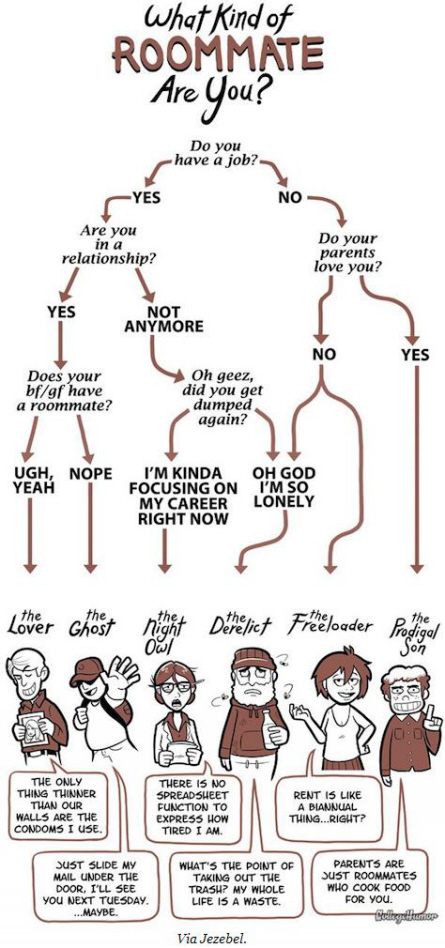
You can choose your friends, but you can’t choose your family. Luckily, my housemate is both a friend and relative and, while it’s still early days, thank God our relationship is a tad more functional than those expressed in this flow chart.

Frequent trips to the video store when I was younger means I’m privy to some of the best so-bad-they’re-good flicks of the late ’80s and early ’90s that not many others my age were. Teen Witch, Girls Just Want to Have Fun and Don’t Tell Mom the Babysitter’s Dead spring to mind, the latter of which has a “surprisingly serious” message behind it.

The Sunday Times Magazine ran with a story on “Lady Gaga & the Death of Sex”. Unfortunately, you have to pay to read the whole thing, but here’s a snippet. Hopefully an Australian mag picks up the story…

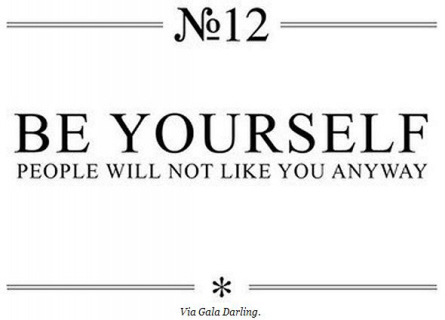
More Gala Darling wisdom. (Speaking of wisdom, I’m getting my wisdom teeth pulled today, so wish me luck!)

Jezebel asks (borrowing a direct headline from an Indian newspaper), “Should a Woman Marry Her Rapist?”

All the hullabaloo surrounding Christina Hendricks’ bangin’ body means she’s “gone from poster child for the supposed comeback of curves to practically a stock photo for any story about bodies.” Sure, “we can all agree that Hendricks is pretty fucking hot from head to toe,” but “Hendricks still fits the Hollywood ideal of beauty in most ways.”

I loved seeing all of Jenna Templeton’s pics from her recent trip to Melbourne on My Life as a Magazine. Love, love, love the store Harem on Brunswick Street, and so does she!

God help us! I didn’t think you could get any worse than Sarah Palin when it comes to female Republicans, but apparently you can. Jezebel runs a piece on “the new Republican candidate for Senate in Delaware”, Christine O’Donnell. A bit of background: “She is a devout Catholic, chaste, anti-masturbation, pro-abstinence-only sex ed, anti-condoms and anti-porn.” But what I find most conflicting about her stance is that “There’s only truth and not truth… You’re either very good or evil.” We’re all going to hell, then!

Tavi Gevinson gives her take on “Kinderwhore Britney” on the cover of Japanese magazine Pop: “These covers shock us because, even though this is how we’ve been used to seeing Britney Spears throughout her entire career, she’s finally the one to comment on our culture’s disturbing obsession with her.”

In a similar vein, Julian Abagond at Sociological Images wants to know “Why Do the Japanese Draw Themselves as White?” Well, “as it turns out, that is an American opinion, not a Japanese one. The Japanese see anime characters as being Japanese. It is Americans who think they are white. Why? Because to them white is the Default Human Being.”

Is RUSSH the New Vogue? A Comparative Analysis of Their September Issues.


I’m not much of a RUSSH fan; I find it a bit too pretentious for it’s own good. Vogue, however, can afford to be pretentious because it backs itself up with flawless fashion and high quality essays. However, I don’t usually find it to be so.

But this month I swallowed my pride and purchased RUSSH, primarily because of its review on Girl with a Satchel, but also because a small-time Australian magazine landed one of fashion’s (okay, lingerie modelling’s) hottest commodities, Alessandra Ambrosio, for its cover, and because of the “Come Back Kerouac” feature on books and reading.

While nothing beats Alice Cavanagh’s musings on the survival of novels “in the age of the small screen” (worth the $9.95 cover price if only for that), other Vogue-esque long-form essays include “Bohemian Like You” on the gypsy jet-setthe gypset; in an ode to “The Art Issue”, Danielle Top illustrates “The Artist’s Way”, “a practical guide to making your mark” which I don’t necessarily think works for me, but some acquaintances have had success with in the past; a profile on RUSSH’s favourite artists, including Anaïs Nin, Allen Ginsberg and Robert Mapplethorpe in “We Want You To Love Them Like We Do”, as well as “the most ground-breaking and… sought-after artist of our generation”, Ryan McGinley; and finally, in very Vogue-like fashion, Jess Blanch deals with burning the candle at both ends inwhat else?“Both Ends Burning”.

In terms of fashion, there is a small accessories feature in the front of the book, followed by Alessandra Ambrosio’s shoot, which merges “street chic with a ballet-esque fragility”, but it’s got nothing on Vogue in this respect. Cover star Catherine McNeil is rife throughout Vogue, channelling a ’50s sex kitten in Louis Vuitton, Prada and Dolce & Gabbana’s figure-hugging frocks in “A Fine Romance”, and a punk rockabilly meets West Side Story meets Grease charm in “Pretty Baby”.

And article-wise, Vogue takes the cake yet again, with “Is Fashion Art?” (an inadvertent dig at RUSSH, perhaps?), the pros and cons of having close male friends and if it can ever just be platonic, in “The Opposite of Sex” and, my favourite (as I always love a beauty debate), “The Beauty Bubble”, in which beautiful women like Nicole Trunfio and Noa Tishby discuss the perils of being beautiful. Seriously, though, it is a though-provoking essay, and Trunfio comes up with some surprisingly deep insights on being a model: “I do think models get away with a lot, but it’s not necessarily the important things in life… But not for long, because outer beauty does not last…”

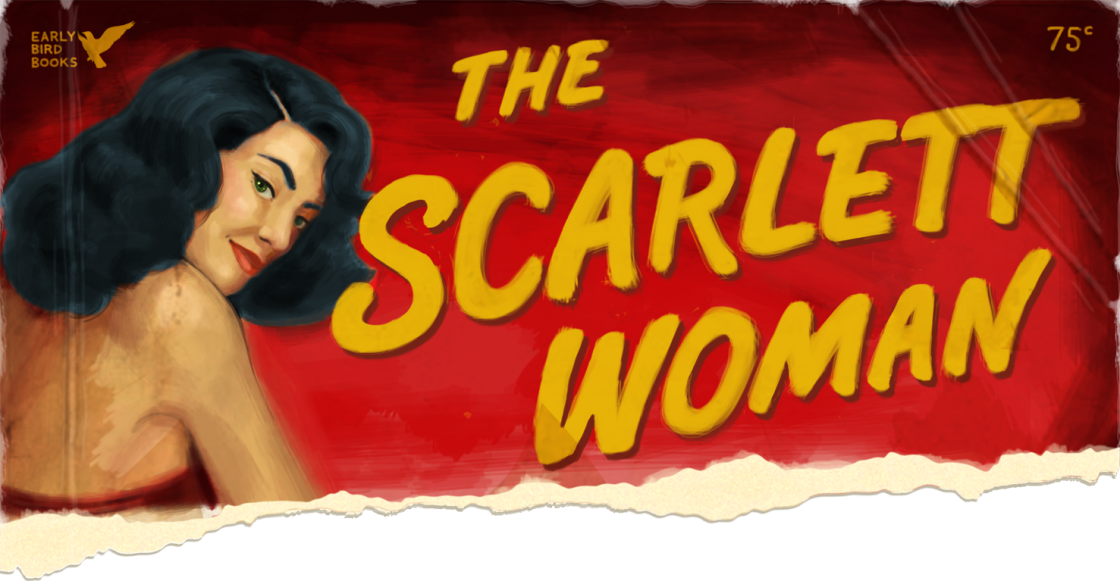
And how’s this for a coincidence? Both RUSSH and Vogue feature the same patterned green Louis Vuitton skirt this month. I have to say, I prefer RUSSH‘s take on the garment (left), but the Bible’s version is quintessentially quirky Vogue (right).

The overall winner is, hands down, Vogue, for its flawlessly executed fashion, impeccable features and it’s ability to “feed”, as Carrie Bradshaw would say, but I was surprisingly impressed by RUSSH’s take on art, fashion and knowledge.