On the (Rest of the) Net.


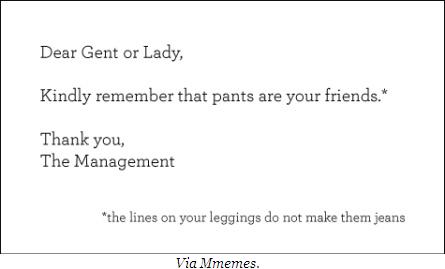
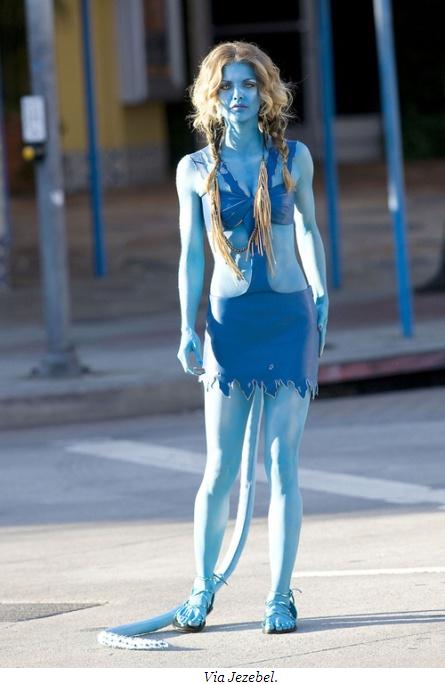
The perils of pants-less ladies.

Does Gossip Girl care about women in politics?

Bryce Corbett in defence of Nicole Kidman:

“… it seems to me that Nicole Kidman is engaged in what must be a most dissatisfying unrequited love affair with her homeland. She flies to Australia to pimp her country on Oprah. She makes a film with Baz Luhrmann which (whatever you may have thought of the final product) was a massive shot in the arm for the local film industry and a two-hour love-song to her country of birth. She fronts up to G’Day USA every year to flog the myriad wonders of Down Under. And following the Victorian bushfires, she donated half-a-million dollars of her own money to the Red Cross relief fund. What a cow.”

“Sexual Assault & the Super Bowl.”

Anna Chong, a designer from the London College of Fashion, has re-imagined Lady Gaga’s most popular get-ups into Barbie-sized outfits. But she’s not the first to do it

“Why is Captain America Ruling Our Screens & Not Wonder Woman?”

Seinfeld’s Elaine Benes as modern-day hipster fashion icon.

The New York Times profiles “nice-guy blogger” Jared Eng on his “cheery, quotidian, Britney-goes-to-Starbucks” blog, JustJared.com.

Also at The New York Times, The Catcher in the Rye’s Holden Caulfield is un-relatable.

Jacob Lambert on “The Paper-Reader’s Dilemma”:

“No longer are books being pitted against pixels; pointing out that paper isn’t reflective either seems very 2007.  The war is now between tablets, as if the book never existed at all.”

Yet more dispelling of the Nicole Kidman vitriol, this time in a vintage (2008) article on Girl with a Satchel.

In the same vein of “17 Arguments Against Gay Marriage & Why They’re Bollocks” and “10 Things You Need to Understand About Asylum Seekers”, comes John Birmingham’s defence of Sandra Reynolds, via MamaMia.

I’d been searching for this article for awhile to reference in a few Lady Gaga musings, and finally came across it again last week and re-read it in the bath. Bliss. A fine example of quality journalism.

Reblogged from Fuck Yeah, Gender Studies, Rachel Hills runs a post on the question of “Who Sexualises Children?”:

“God, it doesn’t even make sense—HOW can a child be sex vixen? When I look at a child, I see a child. Regardless of costume. Dressed like Mary Poppins or dressed like Britney Spears, a kid is a kid! If you see something sexual, the problem is with you.”

I haven’t been shy about my hatred of Charlie Sheen (I know hate is a strong word, but honestly, he is a despicable human being), especially when he gets a free pass because he happens to be the star of TV’s most successful show, while Lindsay Lohan’s career is in ruins. Jezebel reiterates this:

“In recent years no stars (with the possible exception of the oddly lovable Celebrity Rehab cast members) have had their problems with addiction more publicized than Charlie and Lindsay. However, the way these stars are treated by the media and the public is vastly different, mainly due to the double standard for female celebrities.

“The scorn for Lindsay is particularly strange because compared to Charlie, she’s only hurting herself. Let’s review some of Lindsay’s biggest tabloid scandals: Two DUI arrests, four stays in rehab, missing numerous court hearings, going to jail for failing a drug test, battling bulimia, battling her father, and breaking up with her girlfriend. As for Charlie, he’s been in and out of rehab for years, he “accidentally” shot fiancee Kelly Preston in the arm, he was named as a frequent visitor to brothels owned by Heidi Fleiss, he’s dated numerous porn stars, he ODed on cocaine, allegedly shoved Denise Richards and verbally abused her during their marriage, and was arrested for domestic violence against Brooke Mueller, but avoided jail time due to a plea deal. Lindsay has never been married and has no children. Charlie has been married three times and has five kids, four of whom are under the age of 10.”

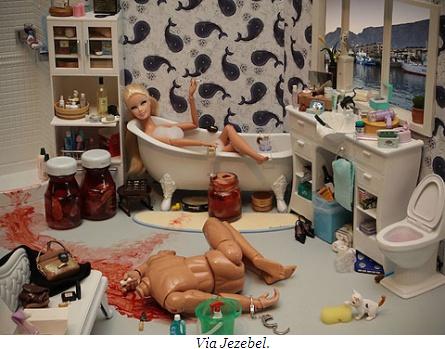
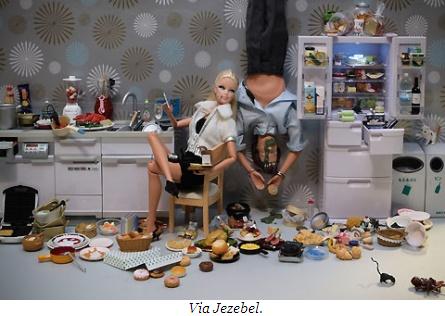
Forget Computer Engineer Barbie—Barbie as Sociopath.


“Behind the vacuous perpetual lipsticked-smile lurks the black heart of the true sociopath, just like in real life,” says artist Mariel Clayton of her “Bad Barbie” series, which sees the blonde beauty as sociopath. Very American Psycho

Related: American Psycho by Bret Easton Ellis Review.

Elsewhere: [Jezebel] “Bad Barbie” Stars in Bloody Photoshoot.

On the (Rest of the) Net.

Rachel Hills discusses Naomi Wolf’s response to WikiGate here, whilst also doing a fine job of unpacking the fun for twenty-somethings = lots of casual sex myth.

On that, “How to Be A 20-Something”:

“Be really attractive. Your acne is gone, your face has matured without having wrinkles and everything on your body is lifted naturally. Eat bagels seven days a week, binge-drink and do drugs: you’ll still look like a babe. When you turn thirty, it’ll become a different story but that’s, like, not for a really long time.

“Reestablish a relationship with your parents. You don’t live with them anymore (hopefully) so start to appreciate them as human beings with thoughts, flaws and feelings rather than soulless life ruiners who won’t let you borrow their car.”

What Would Phoebe Do? on the pretentiousness of Francophilia:

“Gratuitously adding French words to conversation is a time-honoured way of signalling pretentiousness.”

Next year’s Halloween costume sorted!

“How to Be A Complete Douche” has a certain Patrick Bateman feel to it.

Hugh Hefner defends his May-December engagement to Crystal Harris to The Daily Beast.

“How to Live in New York City”:

“Certain moments of living in the city will always stick out to you. Buying plums from a fruit vendor on 34th street and eating three of them on a long walk, the day you spent in bed with your best friend watching Tyra Banks, the amazing rooftop party you attended on a sweltering hot day in July. These memories might seem insignificant but they were all moments when you looked around the city and felt like you were a part of it all.”

Sarah at Feministe recalls “How I Learned to Stop Caring and Admit I Love Pop”.

Jezebel chronicles “The Evolution of Moms” from Soccer Mom (Mater Adidas) to a future robot-mom who encompasses all the admirable features of stage and helicopter mothers alike, with a special focus on the parent Sarah Palin made famous, the Mama Grizzly.

Memo to Lady Gaga: leggings are not pants. Nor, more to the point, are leotards.

On the (Rest of the) Net.


It’s a smorgasbord of Katy, Ke$ha, Britney and Gaga as Complex counts down “The 25 Greatest ‘Slutwave’ Songs of All Time”.

In other Katy and Ke$ha-related news, Feminist Music Geek critiques their acts.

Finally, closing off a Katy Perry heavy week, Jezebel ponders the similarities between “Firework” and Christina Aguilera’s “Beautiful”.

Sady Doyle on Charlie Chaplin’s paedophilia on film:

“I… kind of forgot, actually, that Charlie Chaplin was a pedophile?… Boy howdy, this movie sure didn’t!… It invites you to get off on this… We got a scene where the FBI tried to go after Chaplin for his dangerous left-wing activities, BY PERSUING STATUATORY RAPE CHARGES AGAINST HIM. “It’ll ruin him,” the evil right wing poo-hating US government cackles.”

Hmm… strangely echoes a certain left-winger accused of rape in the media at the moment…

Hermione Granger perfects her “judgemental badger” face.

“Empty Bellies Do Not Beget Genius”.

Now this is how “self-marriage” is done. Glee, take note.

Following on from last week, “Is Lara Bingle the new Paris Hilton?”

Is the antidote to “Taylor Swift’s Endless Reign” a Lindsay Lohan singing career revival?

Coco Rocha reveals “The One That Got Away”.

Gala Darling detoxes her closet.

MamaMia asks, “Do You Have Mother Issues?” Oh hell yes! And daddy ones, too!

More on why Gwyneth Paltrow is just that damn unlikeable.

JWoww’s heinous ex calls her pre-surgery body “deformed” by cellulite. Nice.

2010 was the year of the mistress.

In defence of May-December romances.

What does your ponytail say about you?

“She Just Wants Attention”.


I’ve written about this before, but thought I would elaborate some more on it. And by I, I mean Tavi in this Jezebel post, “Women Who Want Attention”:

“People really, really hate Megan Fox. If you have an Internet connection, you know this, but in case you’ve forgotten, here’s a hate-driven Tumblr, the description of which reads: ‘Fuck you, Megan Fox. No, really. Keep your trap shut.’

“Megan Fox is a pretty talkative person. Wait, no, she’s a pretty talkative woman. She’s a pretty talkative woman who makes a lot of dudes happy by playing the sexy chick. And on top of that, she’s talked about how her male boss, Michael Bay, can be kind of a jerk… [for making] her wash his Ferrari wearing a bikini in order to get a part in Transformers. Which she should apparently be really, really grateful for, since whenever people talk about her, they like to throw in the ‘don’t bite the hand that feeds you’ admonishment. To which I say, what if that hand is also trying to grab your ass?

“People seem to get pissed that their sex symbols have to come with opinions, and like, emotions, and things to say. Fox is dismissed by Bay and the media as an attention whore, an egotistical bitch who just wants to find something to complain about so people will look at her… Fox, you see, is similarly famous but also desired, so she should have nothing to be upset over. Surely a woman’s needs and problems can’t go deeper than that! She just wants attention.”

Related: The Beautiful, Bigmouthed Backlash Against Katherine Heigl & Megan Fox.

Elsewhere: [Jezebel] Women Who Want Attention.

[Fuck You Megan Fox!] Homepage.

Book Review: Countdown to Lockdown—A Hardcore Journal by Mick Foley.


Midway through Countdown to Lockdown, wrestler Mick Foley’s fourth memoir and ninth published work, the author says that “June 24, 2007, had been a disaster, probably one of the worst days of my year, possibly even my life” (p. 215). And that was before he’d heard the news that colleague Chris Benoit and his family had been murdered.

Of course, it was later revealed that Benoit had committed a double murder-suicide, murdering his wife and son in their home. Foley uses the tragedy as a cautionary tale to others in the business, warning of the affects of not only drugs, but the lonely business professional wrestling can be if you aren’t one of the lucky few to be on top of it.

Aside from the small portion of the book that deals with Benoit, death, drugs and Foley’s unhappiness with his final stint as an announcer in World Wrestling Entertainment in 2008 (which you can find some funny anecdotes about on pages 143–144), the rest is a riot.

Countdown to Lockdown is very much all about family, as are all of Foley’s books in some way or another. Another strong emblem of the memoir is Tori Amos. Odd, I know, but hear him out.

Foley was touched by “Winter” by Tori Amos, and it helped him get through one of his most brutal matches in Japan, in which he lost an ear via barbed wire hanging:

“And then there’s Mick Foley, who took the most beautiful song ever written and turned it into his own twisted ode to suffering and woe…” (p. 72).

Readers of Slate, Jezebel or this here blog from time to time will know that Mick Foley has been named man of the year by the Good Men Project, is a volunteer for Amos’ charity, RAINN and labels himself a feminist, amongst many other good deeds he’s used his wrestling career for.

I can’t recommend this—nor any of Foley’s books—enough. It’s got the perfect combination of violence and morbidity, family and fun, humour and intelligence, and empathy and charity.

Related: The Ten Books I Wanted to Read This Year But Didn’t.

In Appreciation of Mick Foley.

Another City, Not My Own by Dominick Dunne Review.

Elsewhere: [Slate] The Wrestler & the Cornflake Girl.

[Jezebel] Wrestling Star Mick Foley Blows Our Collective Mind.

[The Good Men Project] Top 10 Good Men of 2010: Mick Foley.


On the (Rest of the) Net.


Mia Freedman on Elle’s “weird, weird choice of cover model” in Miley Cyrus for their August 2009 issue:

“Who’s next? Bindi Irwin for Harper’s Bazaar? Stop it, someone is probably organising that right now as I type. Anyway, so while I was still tut-tutting over the fact that she was ON the magazine, I came to the story inside and nearly lost my lunch. Not only did I find the clothes grotesquely inappropriate (nanna-alert!), I was disturbed by the poses. In one shot, she’s got her vagina thrust up to the camera with her stomach exposed.

“In a couple of others, she’s lying back as if waiting for… well, you know what she’s waiting for.”

Girl with a Satchel on Lara Bingle, Kristy Fraser-Kirk and “sexism in the Australian Media”, while Nicole Richie’s Who wedding cover story (out today) is a “fairytale story” of “redemption”.

Why “we need more vampire slayersjust not more Buffy”:

Buffy made a bold statement in the context of 1990s pop culture: What if this tiny blonde girl, who looks like the victim in every horror movie ever, is actually the monster-killer? What if she’s badder and tougher than everyone else? What if she’s secretly grappling with the weight of the world because she’s the only one who can save us all?

“Whedon often talks about the idea for the original Buffy movie coming from the image of a girl running from a monster, like in every other horror film—but then it turns out she’s actually hunting the monster, and she catches it by surprise. Because she’s not just your typical sacrificial cheerleader.

“That was a radical idea in 1992, and even in 1997. I would be very sad to think it would still be radical in 2012, or whenever this film comes out.”

Questionable scenes in Disney films.

Let’s Drink Tea and Get Laid references last week’s skinny-shaming post in her thoughts on body image, “property” and ownership.

Rachel Hills has some insightful notes on introversion versus extroversion, stemming from The Atlantic’s “Caring for Your Introvert”, which was featured on last week’s “On The (Rest of the) Net”.

Tiger Beatdown on the gender double standards on Glee:

“… Being attacked for being an effeminate man is terrible, and we’ll talk about it and come to a resolution, but being a masculine woman means you should just get used to being everyone’s punching bag.”

Jezebel uncovers “The Surprising Facts About Who’s Hot”, according to scientific studies in David Perrett’s book, In Your Face. So it’s totes, like, factual and shit.

On the (Rest of the) Net.

“Christina Aguilera: Always the Second Fiddle.”

I don’t believe in New Years resolutions anymore, namely because I could never realise mine. But I like Rachel Hills’ idea of writing an obituary for the year passed. In this case, her 2008 in review.

HuffPo on the absence of modern technology in modern literature:

“The average fictional character is either so thoroughly disinterested in email, social media, and text messages he never thinks of it, or else hastily mentions electronic communications in the past tense. Sure, characters in fiction may own smart phones, but few have the urge to compulsively play with the device while waiting to meet a friend or catch a flight. This ever-present anachronism has made it so that almost all literary fiction is science fiction, a thought experiment as to what life might be like if we weren’t so absorbed in our iPhones but instead watched and listened to the world around us at a moment’s rest.”

Girl with a Satchel ponders the price of a pretty picture.

“Caring for Your Introvert” is one of the best articles I’ve read all year (and considering it was written in 2003, that’s saying something). Here, an excerpt:

“With their endless appetite for talk and attention, extroverts also dominate social life, so they tend to set expectations. In our extrovertist society, being outgoing is considered normal and therefore desirable, a mark of happiness, confidence, leadership. Extroverts are seen as bighearted, vibrant, warm, empathic. ‘People person’ is a compliment. Introverts are described with words like ‘guarded’, ‘loner’, ‘reserved’, ‘taciturn’, ‘self-contained’, ‘private’—narrow, ungenerous words, words that suggest emotional parsimony and smallness of personality. Female introverts, I suspect, must suffer especially. In certain circles, particularly in the Midwest, a man can still sometimes get away with being what they used to call a strong and silent type; introverted women, lacking that alternative, are even more likely than men to be perceived as timid, withdrawn, haughty.

“The worst of it is that extroverts have no idea of the torment they put us through. Sometimes, as we gasp for air amid the fog of their 98-percent-content-free talk, we wonder if extroverts even bother to listen to themselves. Still, we endure stoically, because the etiquette books—written, no doubt, by extroverts—regard declining to banter as rude and gaps in conversation as awkward. We can only dream that someday, when our condition is more widely understood, when perhaps an Introverts’ Rights movement has blossomed and borne fruit, it will not be impolite to say ‘I’m an introvert. You are a wonderful person and I like you. But now please shush.’”

Furthermore, The Los Angeles Times notes that despite the introverted minority, television doesn’t reflect their existence very well. (Does television reflect anything very well?):

“Watch Seinfeld or Friends or Sex & the City or Community or Men of a Certain Age—the list is endless—and you’ll see people who not only are never ever alone but people whose relationships are basically smooth, painless, uninhibited and deeply, deeply intimate—the kind of friendships we may have had in college but that most of us can only dream about now. How many adults do you know who manage to hang out with their friends every single day for hour after hour?”

On that, Gossip Girl is notorious for misrepresenting reality. While she knows I love her, GG often makes me feel guilty about the clothes I’m not wearing, the sex I’m not having, and the events I’m not going to. Apparently, it’s not true to the books, either.

Check out The Washington City Paper for their musings on masculinity over the past decade, with a special focus on boy bands, metrosexuals, hipsters and guidos, à la Jersey Shore.

Gwyneth Paltrow: You either love her or hate her. I hated her with a passion until I saw her on Glee, in which she came across as carefree, cool and sexy and made her a tiny bit more relatable to the general populus who don’t subscribe to her Goop musings. Mia Freedman writes hilariously on this conundrum, with a focus on a related article from Salon.

Also at MamaMia, “17 Arguments Against Gay MarriageAnd Why They’re Bullocks” is brilliant.

Tangled will be the last fairytale Disney releases in a while.

Can you still be a feminist and dress in a bra top? (Of course you can; stay tuned for more on this next week.) Or espouse archaic notions of heterosexual relations, for that matter?

“The Ongoing, Albeit Amusing, Battle to Save Bristol” on Dancing with the Stars:

“‘This seems like a case of the rich, popular cheerleaders looking like they’ve sucked on a lemon when they learn that the poor girl in school, the one in the home-made clothes and religious family, gets elected Prom Queen.’

“I’ve rarely seen such a clean-cut example of the conservative tendency to say up is down and black is white. Or, more precisely, to bemoan how oppressed white, rich, and highly privileged people are.

“… But Bristol Palin hasn’t really done squat. She is literally famous for having a baby at an inopportune time. And now she continues to get promoted over more talented people than her because she was born into the right family… Bristol Palin is a hero to wingnut America because she’s a great example of rewarding someone for being born into privilege instead of on their merits.

“… I just find it extremely funny that the wingnutteria is backing someone with no talent on a show with no real importance to stick it to liberals who by and large don’t really care, and they’re doing so because they’re intoxicated by privilege and kind of wish they had a monarchy, but they’re pretending that they’re doing it because they want to see the oppressed rise above. I suppose after Dancing with the Stars is done, they should start sticking it to the liberals by defending poor, oppressed Paris Hilton, who is definitely the weird girl with handmade clothes that is picked on by cheerleaders.”

Mel Gibson and the curse of the “Sexiest Man Alive” tag.

On Stieg Larsson and the “disturbing”, “torturous” patriarchy of his Millennium trilogy.

Women are funny, too.

On the (Rest of the) Net.

Just a short one this week, as I haven’t had a lot of time for reading. L

Rabbit White ponders the things she learnt about her own sexuality from the men at Mr. International Rubber:

“It is being put in a sexual situation when you are non-sexual. It’s being introduced to a new world all at once. But it’s not long before I feel comfortable here, basking in male sexuality that is totally not directed at me. I think I finally getting the draw to being a ‘fag hag’or ‘fairy princess’. I get to gawk and join in the lust without fear of being pulled in or anxiety of protecting myself. In the view from here, human sexuality is a celebration and male sexuality is valid and uniquely cool.

“I don’t know how many times I’ve read advice columns where girls write in, worried about their smell or unable to enjoy sex because they are self conscious. Perhaps it’s because girls are taught to please everyone else, putting themselves last, but there just seems to be something in female sexuality that is uncomfortable with receiving pleasure. Look at all the women’s mags, obsessed with ‘how to please a man’.

“But maybe the ‘pig’ concept could lessen fears around receiving pleasure. What if your partner liked you sweaty, smelly, just the way you are right now? And just wanted more and more and more of that.”

Sady Doyle, of Tiger Beatdown (lots of feminist goodness from them this week) discusses “The Fantasy of Girl World”:

“The fantasy of girl world often feels like the feminist imagination taken to its most self-indulgent, hypocritical extremes. We stand for tolerance and egalitarianism, whereas the people who disagree with us are IGNORANT WIFE-BEATING MONSTERS. Women, if left on their own, would eliminate war, poverty, heartbreak and pets that are not cats. But, here’s a question for you: Why shouldn’t it look like this? What’s wrong with a wish-fulfilment fantasy that tells women they could do well with power and without oppression? What’s wrong with girls geeking out over the idea that they’re special?”

Glee’s Rocky Horror episode failed to touch-a, touch-a, touch-a, touch Garland Grey at Tiger Beatdown:

“Early on in the episode Mike volunteers to play Dr. Frank-N-Furter, but a few scenes later he says his parents won’t allow him to play a ‘tranny’. Mercedes takes the role, delivering a show stopping version of ‘Sweet Transvestite’, but the word ‘transsexual’ is replaced by ‘sensational’. For Glee, transpeople are punch lines, not anyone the show needs to fucking think about. While doing Rocky Horror Picture Show, a musical whose entire message is about accepting people’s sexuality and gender.

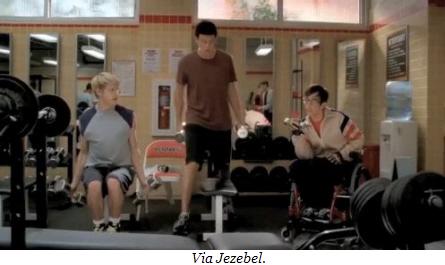
“Can we just cut out losses and rename this show Chord Overstreet in Tiny Gold Shorts? Clearly, he is fanservice and I don’t even care… However, as much as I appreciated seeing his abs, I didn’t care for the oddly-specific diet regimen he blurts out before showing them or the comically small weights Artie was holding. Artie’s a paraplegic, pushing himself everywhere in his wheelchair, lifting himself in and out of it dozens of times a day, and THAT is the biggest weight he’s lifting? That weight is a clear signal to the audience that Artie doesn’t belong in the locker room and is only there to provide comic relief…”

The four types of Facebook friends, according to Susan Orlean.

The Pervocracy on the “Slut, Deconstructed”:

“I’m 25. I lost my virginity at 15. So 26 partners is only two or three a year. It’s hardly going home with a new guy every night. To break it down further, 6 of those partners were serious romantic relationships, and you can’t call a girl slutty for sleeping with her own boyfriend, right? So now it’s 20 casual partners over 10 years—a raging, wild, man-eating two per year. I’m so cock-crazy I need it every six months, baby…

“Oh, and a woman in ‘my god, you can see her everything’ clothing dancing on tables and flirting with every guy in the bar might be a virgin for all you know about her.”

It’s the wrong time of year here, but there’s not many things I love more than trawling through the gossip magazines in summer, style-stalking the celebrities in Aspen and New York, longing for cool weather again to break out the beanies, woollen cardigans and shearling coats (okay, wrong continent for shearling!).

Men on Chapel Street.

Even though I live quite close to Chapel Street in Melbourne, I try to avoid going there as it is not my scene at all.

The other night I ventured as far down as I’ve been in years, to Lucky Coq, on High Street, for drinks with a friend.

The outing reminded me of the last time I’d been that far down, which was back in 2008 for a uni project. Odd, I know, but stay with me.

One of my final units was a media subject entitled Men & Masculinities. I was hesitant to take on the course, but it was my final year and I’d already done all the good ones. Aside from my inept teacher, the unit was really fun, and some of the topics I studied have influenced me to this day.

The reason my study group and I trekked to Chapel Street was to examine the different types of masculinities we observed there. With the National Institute of Circus Arts and the multitude of gyms and boutiques located there, I was expecting to see a lot of buff, fashionable men concerned with their appearance. In short, I expected to see the “metrosexual” in his natural habitat.

After a bit of rummaging through my hard drive, and a quick Google search, I managed to find the articlean interview with Professor of English, Sociology & Women’s Studies at the University of California, Toby Miller, by Jenny Burton and Jinna Tayby which I used to establish some theories about men on Chapel Street.

Keep in mind that these observations were collected two years ago, and I have tried to keep my notes as close to the originals as possible (present day annotations in italics). A lot of the subject matter discussed then has entered our current vernacular; or at least, the vernacular of this here blog, and the ones I frequently read.

Metrosexuality.

“… The phenomenon of the new man, which tends to annex beauty to the wider theoretical works of fashion, with grooming making fleeting, untheorised appearances.”

That’s not so true anymore, as fashion and grooming are becoming as equally important to men who want to look good and take pride in their appearance. Even something as simple as shaving is classed as grooming, and most men we observed on Chapel Street were clean shaven, or at least were doing something different with their facial hair (such as “designer stubble” and goatees instead of a full beard). [Had it been November when the study was done, perhaps I would have seen some mo’s out there?]

“Is the metrosexual a middle- rather than working-class phenomenon?”

I think typically the metrosexual is viewed as upper- to middle-class, and we certainly did see men of these demographics whom you could call metrosexual. However, the working class (tradies, construction workers) could also be seen as metrosexual, because even though they were engaged in manual labour and had “hard” bodies [muscly; evidence of working out], they were still well-groomed and took pride in their appearance.

“Taking pleasure in one’s body, nurturing it, caring for it, protecting it from the elements and so on kind of loosens those old bonds of conventional masculinity, which forbade these behaviours for men and made them taboo.”

The theory here is that men taking pleasure in their bodies and wanting to look physically attractive, for example by going to the gym, is taboo. Do the men we see going to the gym look ashamed of, thereby succumbing to the taboo, or proud of, their hard or soft bodies? (Hard bodies at the gym; soft bodies in certain subcultures like emo, punk, grunge etc.) I wasn’t expecting to see men ashamed of their bodies, especially in a trendy, affluent place like Chapel Street. However, older, out of shape men were a bit more self-conscious than their younger, better-looking counterparts because they tended to look at the ground when they were walking and didn’t make eye contact as much as the more confident men.

“Given all the effort women make to look okay, it seems only fair that men should have to go through something approximating to that level.”

As we expected, there weren’t really any significantly out of shape, badly-groomed or badly-dressed people on Chapel Street. The women took great pride in their appearance, both in their body shapes as well as how they dressed and groomed themselves. This was echoed in the male population, who all were well-dressed, mostly in shape, and well-groomed. In that respect, it could be seen that men are taking a leaf out of the females species’ book.

“… I think it’s [metro sexuality] pretty peculiar to Australia.”

The typical Australian man is seen as a “blokey bloke” in footy shorts and a bluey, doing manual labour and playing sport recreationally. The younger generation of Australian men are challenging this stereotype by being well-dressed, well-groomed and having more unconventional jobs (according to the stereotype) like consulting, fashion, etc. There wasn’t a typical “blokey bloke” that I saw on Chapel Street; even the construction workers, who have the most “Australian” occupation, weren’t physically reflective of the stereotype. In terms of metrosexuality being unique to Australia, it’s true in that a lot of younger men are taking care of themselves, but false in the way that Australia isn’t the only country that has metrosexuals: the US does with Queer Eye for the Straight Guy and the abundance of men in the media who take pride in their appearance and endorse beauty and fashion products, like George Clooney endorsing watches, and Matthew Fox from Lost is the face of a new L’Oreal beauty range for men. I’m not so sure about the UK, because on one hand you’ve got really metrosexual men like Hugh Grant and Jude Law, but on the other there are quite scruffy men like Rhys Ifans, who was engaged to Sienna Miller, and the downright disgusting, like Pete Doherty.

Queer Eye for the Straight Guy.

“… One way to analyse Queer Eye [for the Straight Guy] is as a professionalisation of queerness; a form of management consultancy for conventional masculinity.”

This can be seen in some of the shops on Chapel Street (and Church Street). We saw gyms and health food stores selling protein shakes, etc. in clusters, as well as a beauty salon specifically for men on Church Street.

“… Queer Eye for the Straight Guy is actually about re-asserting, re-solidifying very conventional masculinity.”

Because it separates the “queer” guys, who are fashionable, neat, well groomed, from the “straight” guys, who are messy, unkempt, in need of “styling” by the “queer” guys. Men on Chapel Street challenged this idea. You could speculate about which men were straight and which men were gay, but the stereotypically “straight” ones weren’t messy or “blokey”. There were a lot of business men who needed to look tidy and well-groomed for their jobs, but there were also construction workers whom you would think were typically very masculine and therefore untidy, but even they were taking pride in their appearance, both in terms of their physically hard bodies as well as their grooming.

Sport.

“… While it’s still about toughness, sport is equally about beauty, with the NFL now marketing its players as sex symbols.”

While there weren’t really any “sports” men on Chapel Street (apart from the circus/dance performers), the masculinities we observed were as much about being physically attractive to attract a mate as they were about looking tough and hard-bodied.

Eating Disorders.

“… Clearly there are big problems with eating disorders and performance enhancing drugs amongst men… These are partly narcissistic, psychological worries to do with an image to the outside world in general… Male beauty consciousness is primarily a marketing creation… Do men use toiletries and cosmetics because advertising tells them to?”

There were a lot of advertisements on Chapel Street that would support this notion, specifically the ad in the window of a gym/health food store that promotes an unachievable body type for most men. There weren’t as many hard bodies as we expected to see, however the ones that we did see in no way reflected the extreme ideal that that specific advertisement promoted. The men who worked in fashion stores on Chapel Street succumbed to the ideal that that specific store promoted.

“… Eating disorders, insecurity about looks and image, men now being oppressed by the ‘beauty trap’ and so on, but for me this doesn’t allow for the possibility that this may also be a good thing for individual men and conventional masculinity, allowing men to indulge in some self nurture.”

The men on Chapel Street who were well-groomed obviously took pride in their appearance, and weren’t ashamed of the fact that they looked after themselves. The majority of men looked healthy, which therefore supports the claim that male grooming and “metrosexuality” (men taking care of themselves) is a good thing.

Related: The Underlying Message in Glee’s “The Rocky Horror Glee Show” Episode.

Elsewhere: [Media Culture] Metrosexuality: What’s Happening to Masculinity?

[MamaMia] Male Models: Inside Their Straaaange World.