On the (Rest of the) Net.

victorian era breastfeeding

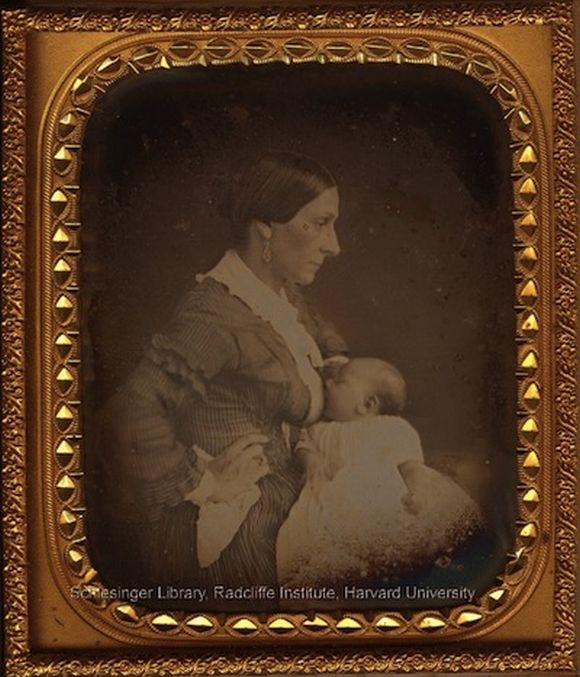
Victorians were more progressive about breastfeeding than we are! Although, it was linked to femininity, class and bonding with the child, stigmas that still exist around breastfeeding (or NOT breastfeeding) today. [Sociological Images]

Do ladymags publish serious journalism? Follow the #WomenAtLength hashtag on Twitter to find some examples of longer, “serious” pieces written by women. [Jezebel]

What Adrian Bayley’s crimes can teach us about prevention, rehabilitation and incarceration. [New Matilda]

Everyday Sexism has made a doco about shouting back at street and sexual harassment. The accompanying article by Clem Bastow is equally as hard hitting. Check them both out, because no one should be made to feel like they brought harassment on themselves, they’re overreacting, or dread at the prospect of leaving the house because they might experience it. [Daily Life]

The manic pixie dream girls of superhero movies. [Think Progress]

Someone actually wants my opinion on the week that was in sexism and misogyny particularly in politics, but across other spectrums as well. Kudos to Corey Hague on editing me to sound like I actually know what I’m talking about! [ABC Central Victoria]

Meanwhile, Mia Freedman thinks it was a good week for women: at least we’re talking about sexism and there have been consequences for it. [MamaMia]

Famous women writers before their suicides. What do you think: artistic or glorifying suicide and sexualising violence? I find some of them, like the Sylvia Plath and Virginia Woolf portraits, visually appealing because they’re inoffensive to the eye and create tension and anticipation, but I can’t stomach the Dorothy Parker nor Sanmao ones. Vice may be known for their provocativity (is that even a word?!), but I think this photoshoot is in the same vein as Terry Richardson and Dolce & Gabanna’s rapey aesthetics – which I quite like despite myself – where stopping the sexualisation of violence against women should trump artistic expression. [Jezebel, as the photoshoot on Vice’s website has been removed]

It was Father’s Day in the U.S. over the weekend, and to celebrate, The Hairpin has collated fiction’s worst fathers. As someone with a deadbeat dad myself, I can empathise.

Fashion, feminism and femininity: mutually exclusive? Hell no! The other day when discussing feminism with a mansplaining misogynist who told me I only make him more confused about feminism because of the way I look, a friend interjected that I might just be the most feminine person she knows. And the most feminist, might I add?! [Daily Life]

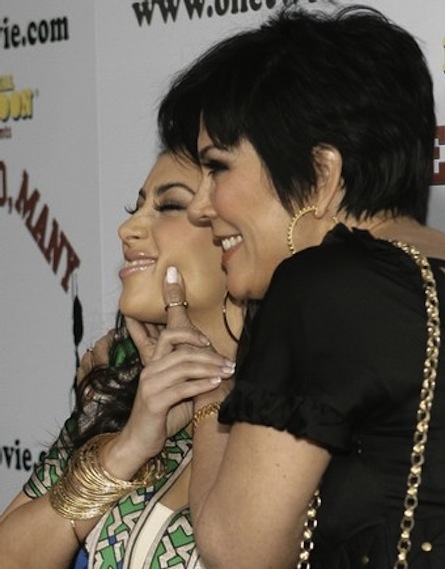
Kim Kardashian may be a fame-whore, but she’s a person, too, and she deserves some semblance of basic decency. [TheVine]

Is the only reason we watch True Blood anymore for the sex? [The Daily Beast]

If we can’t have the real deal, Feminist Taylor Swift is the next best thing. [Twitter]

Image via Sociological Images.

On the (Rest of the) Net.


Ashley Judd slaps down body- (and face-) shamers. [Daily Beast]

A fictional tale (though a very realistic one) of what it’s like to promise your purity to your dad. [Jezebel]

So Tony Abbott’s sister is gay. Now what? [MamaMia]

Kim Kardashian, Paris Hilton et al: don’t hate the player, hate the game. [Daily Life]

Republicans aren’t the only ones making jokes at the ladies’ expense. Obama does it too :( [Jezebel]

The Hunger Games killed it at the box office because Katniss Everdeen was portrayed as a subject as opposed to a “Fighting Fuck Toy”. [Ms. Magazine]

Following on from last week’s Rachel Hills asexuality article, Rachel Rabbit White on “graysexuality”:

“… ‘But sex itself is just a set of physical activities, it’s easy to imagine someone who’s not into them once you take all the symbolism away.’

“Sex positivity works to broaden our understanding of what sex is (e.g., not just penis in vagina, but body part + body part = pleasure). But what if we also set out to broaden our understanding of intimacy—intimacy is not just sex, but also…—perhaps a new picture would unfold. One where people realize they don’t need to have sex when what they want is intimacy. One where, maybe, there would be a little more gray in our sex-drives.” [Jezebel]

An interesting take on all the Snow White reboots. [io9]

What it’s like to be a guy who reads (or read) Judy Blume. [Jezebel]

Women don’t hate other women for being beautiful. They hate them for having delusions of grandeur, like Samantha Brick. [MamaMia]

Mia Freedman interviews Dr. Michael Carr-Gregg about Matthew Newton. Carr-Gregg seems to think we need to reexamine our views around mental illness and give Newton a fair go. Um, the kid’s been charged three times in the past year and beats up people on a regular basis. I’d say he’s been more than given a fair go. What do you think? [MamaMia]

Image via MSNBC.

12 Posts of Christmas: Paper Dwarves, Digital Giants.

In the spirit Christmas, I’ve decided to revisit some of my favourite posts of the year in the twelve days leading up to December 25th. 

This one was written after Paper Giants aired on ABC in April, comparing the heyday of magazines with the impact of the digital world. You can read the original post here.

A few weeks ago, in response to ABC’s Paper Giants: The Birth of CleoMia Freedman wrote on MamaMia about her thoughts on the state of the (mag) nation and if magazines are still relevant and the amount of influence they wield in 2011:

“… Not that much excitement goes on in magazines anymore… [It’s a struggle to] get them [those who work on a magazine] to try and think about something that hasn’t been done before, something that will start a conversation and boost sales.”

Freedman compares pay TV’s Park Street, a The Devil Wears Prada-esque reality show about ACP’s head offices, featuring the editors of DollyCleoCosmoMadison and Shop Til You Drop, which received dismal ratings and poor audience response, to the critical success and brilliant take on Cleo in her influential heyday of Paper Giants. She says, “Gemma Crisp [editor of Cleo] explained the editorial process that a story undergoes from conception to publication. It takes a minimum of three months… When was the last time you waited three months for something? Life doesn’t happen in increments of months anymore. It happens in moments, in text messages, in Tweets. It’s fast and it’s relentless and if it takes you three months (or even three weeks) to get from thought to print then that’s just too long to retain the attention of your audience.”

When she puts it like that, Freedman makes me long for a simpler time, when I hung on the every word magazines published, as opposed to reading hundreds of articles a week, mostly on blogs, but also in magazines, in an attempt to stay on top of my blogging game.

Erica Bartle, creator of Girl with a Satchel and a former mag girl herself, says Freedman’s “blog-cum-website” “deals in what everyone’s talking about TODAY. It feeds off the 24-hour news cycle. And Mia’s own profile. And her opinion… It’s like a current affairs program for women online.” And now with MamaMia launching on SkyNews, Freedman’s brand is literally a current affairs program.

Not all blogs can operate this way. MamaMia has a team of bloggers, editors and techs who keep the site running smoothly which thus, as Bartle said, allows it to operate on a 24-hour news cycle.

Personally, I have a part-time paid job I go to four times a week, this means I only get to blog two or three days a week, and with so much info to process and a maximum of 15 posts per week to churn out in a small amount of time, this means I can’t always post as early and as often as I’d like.

But even for those who blog fulltime, like Bartle, it’s not always about what’s happening right NOW as it is about maintaining the blog’s integrity.“I personally operate on a different plane, because my beliefs very much inform my work. For that, I’m willing to sacrifice certain economic constraints,” she says.

Still in the blogging world, you have someone like Gala Darling, who is very much a self-made businesswoman as a result of her über-successful blog of the same name. She’s gone from strength to strength over the past few years; something she could never have done had she been a magazine editor (bar the select few, like Anna Wintour, Anna Dello Russo and yes, Freedman).

But, essentially, MamaMia has the advantage of possessing “a figurehead with credibility whose background is in traditional media. She has the gut instinct of an editor. Online you need news nous as well as technological nous and business nous.”

Another editor who has these qualities in spades is former Cleo and Girlfriend editor, Sarah Oakes, whom Bartle worked under at Girlfriend. Bartle says she invoked an atmosphere of ghosts of magazines past, creating “camaraderie, creativity and positivity, which I think she achieved. She gave you more work if she thought you could be stretched; gave you a talking to if you had crossed a line; gave you a pat on the back for a job well done.” Very Ita-like, wouldn’t you say?

Oakes is now editor of The Age Sydney Morning Herald’s Sunday Life supplement, a title which has improved markedly since she took over. (I have also blogged here about how I think both Girlfriend and Cleo became better titles under her leadership.)

In fact, newspaper inserts are giving the glossies on the newsstand a run for their money, as they “are getting exclusives and have strong writing and design teams, as well as columnists and styling/shoots. These free weekly titles, because of the mastheads they reside within, have enviable readerships and access to celebrities. They are also respectable, well executed and FREE,” Bartle notes.

But at the end of the day, are magazines relevant?

Freedman writes:

“The internet has not only sucked up their readers, it has also gobbled up their purpose: to be a way women form tribes and communicate. Now there’s YouPorn and any other number of sites for titillation, Google for questions about sex, and any number of websites or free newspaper magazines if you’re looking for other types of content or a magazine-style experience. Women don’t want to be spoken TO anymore. They want to be part of the conversation, something which the internet allows, in fact depends on… the internet has taken the sting out of the raunch-factor for mags like Cosmo and Cleo.”

Yes, as Freedman says, there are much raunchier locales to get what would have been included in a sealed section only a few years ago. There’s also Perez Hilton, TMZ and even shows like Entertainment Tonight and E! News that monopolise celebrity content, while the fashion blogs are more of a go-to for what kids are wearing these days.

Sure, Vogue’s always going to be a premiere source for high fashion shoots from photographers the likes of Annie Leibovitz, Patrick Demarchelier and David LaChapelle, but magazines “seem to exist on a strangely distant planet where all the people look like plastic and the sole pursuit is ‘perfection’. Except that perfection doesn’t really exist,” says Freedman.

When sites like JezebelCover Girl Culture and, yes, MamaMia and Girl with a Satchel are debunking photoshop myths and striving for more realistic representations of women in the media, magazines are doing this movement any favours. (Except maybe Brigitte.)

And when you can get most of a magazine’s content online anyway (I passed on a near-$20 copy of US Harper’s Bazaar in favour of accessing interviews with Kim Kardashian and Hillary Clinton on their website), are they really worth it?

Bartle doesn’t think so. “No, but they need to be distinctive from what we can get online or elsewhere if we are going to part with $5-$10 to purchase one. Premium magazines, which I have no qualms spending extra on, include The Gentlewoman and O The Oprah Magazine, because they cater to my tastes, sensibility and need for a good read on a Saturday afternoon with a cup of tea.”

I agree with Bartle’s sentiments.

While online is great for content from individuals not curated and/or watered down by magazines editors to fit the mold of their magazine, holding a truly great glossy in your hands, like the appeal of a physical book, while at the hairdressers, a café or tucked up in bed, means magazines will always hold a place in our hearts.

Right next to the Kindle and Google Reader.

Related: Paper Dwarves, Digital Giants.

Paper Giants: The Birth of Cleo Review.

Everything They Touch Turns To Gold.

Evolution of the Bookshop at The Wheeler Centre.

Elsewhere: [MamaMia] Paper Giants VS. Park Street: Why Magazines Are Not What They Used to Be.

[MamaMia] MamaMia Gets a TV Show.

[Girl with a Satchel] Homepage.

[Girl with a Satchel] Mid-Week Media Musings.

[Gala Darling] Homepage.
The Kardashian Backlash—Overreaction?


I bet when Kim filed for divorce after 72 days of marriage to Kris Humphries, she didn’t expect a backlash this extreme. I mean, who expected a backlash at all? Celebs get married and divorced in a heartbeat all the time. And there hasn’t been a mass turning on reality TV’s favourite most famous family despite all the other desperate and fame-whorish things they’ve done/attached their name to (portapotties and a personalised credit card with exorbitant rates, anyone?), so why now?

Perhaps it’s because, firstly, rumours of Kim “recruiting” potential future husbands, the cliché proposal with rose petals and the $10 million made-for-TV wedding event did nothing to quell suspicion that not only was Kim and Kris’ whole relationship a sham, but that the Kardashian family in general aren’t real in the slightest.

And secondly, if conservatives are campaigning to never allow the gays access to marriage licenses at the risk of tarnishing the “sanctity of marriage”, what the hell does a 72-day charade union say about the sanctity of marriage? (Yes, I’m well aware this joke has been done to death in the media and on the comedian circuit.)

Yes, those reasons are certainly valid ones to perhaps stop watching the show and buying the gossip mags. But Kim Kardashian and her family have never been the best role models (hello, Khloe and your DUI arrest and lock-up!). This is hardly the worst crime against humanity celebrity they’ve committed, and it’s sure not to be the last.

But, by the same token, perhaps a family who’ve built their brand around being famous and making money by any means necessary deserves what they’ve got coming to them?

Personally, I was shocked at the divorce announcement and clicked on the links for the first couple of days, but now I’m—as I’m sure everyone else is—sick of it. To me, it’s just another chapter in the Keeping Up with the Kardashians soap opera. I’ve become desensitised to it all.

So what do you think? Is Kim’s divorce the final straw? Will you stop supporting her brand? Do you even care?

Related: The Kim Kardashian Backlash.

Is Kris Jenner a Bad Mother?

Reality TV & Porn Stars Go Together Like “Peas & Carrots”.

Elsewhere: [Jezebel] Kim Kardashian’s Divorce, By the (Incredibly Ridiculous) Numbers.

[The Pursuit of Harpyness] I Can’t Believe I’m Writing This, But…

Image via News.com.au.

TV: Is Kris Jenner a Bad Mother?


She’s constantly on Khloe for her weight, Kim to prioritise her money-making appearances with family and love, and Kourtney to get married before she has another child. Not to mention that she neglects, according to them, Kendall and Kylie in favour of her older daughters.

But is Kris Jenner a bad mother because of this?

One could argue that she spent her former days of motherhood raising her six kids (not to mention Bruce’s four other children from previous marriages), and is rewarded by earning 10% from their business endeavours.

But some of the things Kris says and does arguably aren’t in the best interests of the wellbeing of her children. Or is that just how they choose to portray her on the show?

In the first season of Khloe & Lamar, Kris berates Khloe for her size (in the same episode that Lamar calls her “not small” in Playboy magazine), saying it’s not cohesive with her other sisters’ frames, nor with QuickTrim, the diet supplement the Kardashian sisters promote. In other episodes of the Keeping Up with the Kardashians franchise, Kris is on Khloe’s back to have a baby. After all, she has been married for two years (who would have thought that would last?!) and is relatively young, so it shouldn’t be that hard, right?

Kris also doesn’t approve of Kourtney’s boyfriend and baby daddy Scott Disick, and in earlier seasons of the show, who could blame her? But even after Scott made a 180° turnaround in his behaviour after son Mason was born, Kris still can’t accept him.

Kim, the head moneymaker of the Kardashian cklan, can usually never put a foot wrong in her mother’s eyes, but every now and then Kris will get upset with her for being so uptight. So do her sisters, for that matter.

But, in the latest season of Keeping up with the Kardashians, Bruce surprises Kris and the family with a trip to Bora Bora to celebrate the couple’s twentieth anniversary. The tables are turned from Khloe’s weight woes to Kris’, as she worries about her body and even contemplates surgery before they go away.

Kris asks how she’s supposed to strut around poolside in a bikini, when all of her young, hot daughters are, too? When I heard this, I wanted to throw up in my mouth a little bit. If anyone had any doubts about Kris being a “stage mum” of sorts, I think the proof is in the pudding (pardon the pun) here, as she’s jealous of her children.

I’m not a mother, so I don’t know if this is a common occurrence, but mothers should be proud of their daughters, not envious. And it’s not healthy for mothers to talk down about their own weight and appearance at the risk of passing that attitude on to their children. At the end of the day, she helped make them the way they are, and she should be proud they’re so successful.

It’s a peek into the insecurities she perhaps projects onto Khloe. I know my mum and I have clashed because of our similar traits.

If you’ve ever watched an episode of the show, you’ll see each 20-minute installment is wrapped up nicely by the time it comes to an end. Like Beverly Hills, 90210, each episode has a message, and everyone learns their lesson and it’s all hunky-dory at its culmination. Khloe realises she has nothing wrong with her body, and she’ll become pregnant sooner or later. Kim realises she needs to loosen up and, incidentally, her new husband, Kris Humphries, helps her do that.

But does the neat little package the Kardashians’ antics are tied up into mean that Kris’s overbearing and insensitive nature is just for show, or edited from an even more tyrannical version of herself?

Elsewhere: [Jezebel] Is Kris Kardashian Just a Glorified Pimp?

[Jezebel] Kris Jenner, Momager Extraordinaire, Has Body Issues Too.

Image via Celebuzz.

Reality TV & Porn Stars Go Together Like “Peas & Carrots”.

From “The Reality TV/Porn Connection” by Tracie Egan Morrissey on Jezebel:

“By baring it all, be it emotionally or physically, both reality stars and porn stars have a certain vulnerability about them that’s relatively uncommon for Hollywood celebrities. Neither porn stars nor reality stars are removed; their brand of entertainment is the exact opposite. And this unabashed openness makes them more relatable than their mainstream counterparts; these stars are human. They’re sweaty. Their faces are animated. Their makeup gets smudged. Their hair gets fucked up. They’re not perfect, and they’re comfortable presenting that to the world.”

Elsewhere: [Jezebel] The Reality TV/Porn Connection.

Image via Celebabylon.

On the (Rest of the) Net.


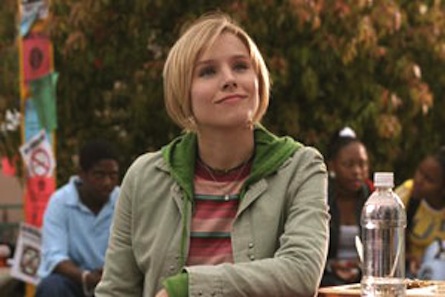
“The Class Boundaries of Veronica Mars.”

Why the Body Image Advisory Group’s voluntary code of conduct didn’t work.

Rachel Hills on the internet, artifice and being fake.

“The New Middleton Class”.

Speaking of the Middleton’s, Melinda Tankard Reist takes issue with the admiration of Pippa’s ass online:

“The FB site provides an opportunity for men everywhere to share their sexual fantasies for the young maid of honour. Knock her up, bash her in, cause her injury such that she would not be able to walk. Wrecking and shredding a woman’s anus is a popular porn script.

“And all this is supposed to be accepted as a compliment. Of course there are no ‘Pippa the Wonderfully Supportive Sister Appreciation Societies’ or other pages lauding her gifts and character and other non-body related attributes.”

Bret Easton Ellis on the spectacle that is Charlie Sheen.

“Filling the Gaps” in the online feminist community’s “call-out culture”.

In what was Elizabeth Taylor’s last interview, with Kim Kardashian for US Harper’s Bazaar, she divulges her thoughts on living like a queen, the Krupp diamond and Twitter. I was never a fan of Taylor, but this interview made me one.

What does it mean to be a feminist today?

Is the male body “Repulsive or Beautiful?”

Ever been hollered at in the street as you walk past a construction site? “Why Men Cat Call” sounds interesting, but is disappointingly dismal.

Amélie sex (noun): intercourse undertaken in the classic missionary position which, by itself, is not objectionable—during which the male is impervious to the female’s lack of enjoyment.”

The bromance VS. Bridesmaids“Homance”.

Don’t give up your day job: “Freelancing on the Side.”

Images via I Just Have So Many Feelings, Sydney Morning Herald.

Magazines: Paper Dwarves, Digital Giants?


A few weeks ago, in response to ABC’s Paper Giants: The Birth of Cleo, Mia Freedman wrote on MamaMia about her thoughts on the state of the (mag) nation and if magazines are still relevant and the amount of influence they wield in 2011:

“… Not that much excitement goes on in magazines anymore… [It’s a struggle to] get them [those who work on a magazine] to try and think about something that hasn’t been done before, something that will start a conversation and boost sales.”

Freedman compares pay TV’s Park Street, a The Devil Wears Prada-esque reality show about ACP’s head offices, featuring the editors of Dolly, Cleo, Cosmo, Madison and Shop Til You Drop, which received dismal ratings and poor audience response, to the critical success and brilliant take on Cleo in her influential heyday of Paper Giants. She says, “Gemma Crisp [editor of Cleo] explained the editorial process that a story undergoes from conception to publication. It takes a minimum of three months… When was the last time you waited three months for something? Life doesn’t happen in increments of months anymore. It happens in moments, in text messages, in Tweets. It’s fast and it’s relentless and if it takes you three months (or even three weeks) to get from thought to print then that’s just too long to retain the attention of your audience.”

When she puts it like that, Freedman makes me long for a simpler time, when I hung on the every word magazines published, as opposed to reading hundreds of articles a week, mostly on blogs, but also in magazines, in an attempt to stay on top of my blogging game.

Erica Bartle, creator of Girl with a Satchel and a former mag girl herself, says Freedman’s “blog-cum-website” “deals in what everyone’s talking about TODAY. It feeds off the 24-hour news cycle. And Mia’s own profile. And her opinion… It’s like a current affairs program for women online.” And now with MamaMia launching on SkyNews, Freedman’s brand is literally a current affairs program.

Not all blogs can operate this way. MamaMia has a team of bloggers, editors and techs who keep the site running smoothly which thus, as Bartle said, allows it to operate on a 24-hour news cycle.

Personally, I have a part-time paid job I go to four times a week, this means I only get to blog two or three days a week, and with so much info to process and a maximum of 15 posts per week to churn out in a small amount of time, this means I can’t always post as early and as often as I’d like.

But even for those who blog fulltime, like Bartle, it’s not always about what’s happening right NOW as it is about maintaining the blog’s integrity.“I personally operate on a different plane, because my beliefs very much inform my work. For that, I’m willing to sacrifice certain economic constraints,” she says.

Still in the blogging world, you have someone like Gala Darling, who is very much a self-made businesswoman as a result of her über-successful blog of the same name. She’s gone from strength to strength over the past few years; something she could never have done had she been a magazine editor (bar the select few, like Anna Wintour, Anna Dello Russo and yes, Freedman).

But, essentially, MamaMia has the advantage of possessing “a figurehead with credibility whose background is in traditional media. She has the gut instinct of an editor. Online you need news nous as well as technological nous and business nous.”

Another editor who has these qualities in spades is former Cleo and Girlfriend editor, Sarah Oakes, whom Bartle worked under at Girlfriend. Bartle says she invoked an atmosphere of ghosts of magazines past, creating “camaraderie, creativity and positivity, which I think she achieved. She gave you more work if she thought you could be stretched; gave you a talking to if you had crossed a line; gave you a pat on the back for a job well done.” Very Ita-like, wouldn’t you say?

Oakes is now editor of The Age & Sydney Morning Herald’s Sunday Life supplement, a title which has improved markedly since she took over. (I have also blogged here about how I think both Girlfriend and Cleo became better titles under her leadership.)

In fact, newspaper inserts are giving the glossies on the newsstand a run for their money, as they “are getting exclusives and have strong writing and design teams, as well as columnists and styling/shoots. These free weekly titles, because of the mastheads they reside within, have enviable readerships and access to celebrities. They are also respectable, well executed and FREE,” Bartle notes.

But at the end of the day, are magazines relevant?

Freedman writes:

“The internet has not only sucked up their readers, it has also gobbled up their purpose: to be a way women form tribes and communicate. Now there’s YouPorn and any other number of sites for titillation, Google for questions about sex, and any number of websites or free newspaper magazines if you’re looking for other types of content or a magazine-style experience. Women don’t want to be spoken TO anymore. They want to be part of the conversation, something which the internet allows, in fact depends on… the internet has taken the sting out of the raunch-factor for mags like Cosmo and Cleo.”

Yes, as Freedman says, there are much raunchier locales to get what would have been included in a sealed section only a few years ago. There’s also Perez Hilton, TMZ and even shows like Entertainment Tonight and E! News that monopolise celebrity content, while the fashion blogs are more of a go-to for what kids are wearing these days.

Sure, Vogue’s always going to be a premiere source for high fashion shoots from photographers the likes of Annie Leibovitz, Patrick Demarchelier and David LaChapelle, but magazines “seem to exist on a strangely distant planet where all the people look like plastic and the sole pursuit is ‘perfection’. Except that perfection doesn’t really exist,” says Freedman.

When sites like Jezebel, Cover Girl Culture and, yes, MamaMia and Girl with a Satchel are debunking photoshop myths and striving for more realistic representations of women in the media, magazines are doing this movement any favours. (Except maybe Brigitte.)

And when you can get most of a magazine’s content online anyway (I passed on a near-$20 copy of US Harper’s Bazaar in favour of accessing interviews with Kim Kardashian and Hillary Clinton on their website), are they really worth it?

Bartle doesn’t think so. “No, but they need to be distinctive from what we can get online or elsewhere if we are going to part with $5-$10 to purchase one. Premium magazines, which I have no qualms spending extra on, include The Gentlewoman and O The Oprah Magazine, because they cater to my tastes, sensibility and need for a good read on a Saturday afternoon with a cup of tea.”

I agree with Bartle’s sentiments.

While online is great for content from individuals not curated and/or watered down by magazines editors to fit the mold of their magazine, holding a truly great glossy in your hands, like the appeal of a physical book, while at the hairdressers, a café or tucked up in bed, means magazines will always hold a place in our hearts.

Right next to the Kindle and Google Reader.

Related: Paper Giants: The Birth of Cleo Review.

Everything They Touch Turns To Gold.

The Evolution of the Bookshop at The Wheeler Centre.

Elsewhere: [MamaMia] Paper Giants VS. Park Street: Why Magazines Are Not What They Used to Be.

[MamaMia] MamaMia Gets a TV Show.

[Girl with a Satchel] Homepage.

[Girl with a Satchel] Mid-Week Media Musings.

[Gala Darling] Homepage.
Images via ABC, MamaMia, Teacup.

Magazines: Who Condemns Baby-Body Bullying…


… But when the celebs in question aren’t actually pregnant, it raises the skinny- vs. fat-shaming debate, and whether people in the public eye’s bodies should be public property, too.

Kudos to Nicole Richie, who has come out with this statement:

“To publicly point out a change in anyone’s body is mean-spirited and cruel.”

God knows Richie’s had her fair share of body-bashing in the media. You go, girl!

Khloe Kardashian is another celeb who’s wrestled with both her weight (being perceived as the “fat”, “ugly” sister in comparison to siblings Kim and Kourtney probably doesn’t help) and her struggle to get pregnant:

“The media makes me feel like I’m barren and why can’t you get pregnant? I am 26 years old… When it happens, it’s going to happen.”

American Idol winner Carrie Underwood goes on to say that, “When I wear something a little baggier, I’m like, nope, people are going to think I’m hiding something.”

I’d better stop going out in public in baggy jumpers and layered shirts, then! But thankfully, I’m not a celebrity whose body, actions and shopping list is scrutinised by all manner of media.

Elsewhere: [Jezebel] Who Says There Has To Be An “Ugly Sister”?

On the (Rest of the) Net.


Rebecca Black is subversifying the pop world.

“Yet here the discerning viewer notes that something is wrong. Because it is a simply matter of fact that in this car all the good seats have already been taken. For Rebecca Black (her name here would seem to evoke Rosa Parks, a mirroring that will only gain in significance) there is no actual choice, only the illusion of choice.

“The viewer knows that she’ll take the only seat that’s offered to her…”

The Awl even goes so far as to say Black’s relationship with the rapper in her “Friday” clip might be Lolita-esque, and that the video is a commentary on “a crypto sex scene from which we return to the suburban house party”. Creepy.

What it feels like for a (tween star) girl.

I hate answering the phone. When I lived at home, I would never answer the landline when it rang. Now that I fend for myself and can only afford one phone, I only answer numbers I recognise. So does Pamela Paul, via MamaMia.

Extremely racist anti-abortion billboards aimed at African Americans.

Lucy Ormonde asks if it’s acceptable for women to make the first move. My answer: hell yes! Otherwise I would never get any action!

“Words That Are Transphobic & Why.”

The Sartorialist’s “sturdy” shitstorm.

It’s okay to be “fat”, just as long as it’s in the right places, ie. bum, hips and boobs, allowing for a small waist, à la Kim Kardashian and Christina Hendricks.

After reading this review, I can’t wait to see Sucker Punch: a “Burlesque meets Inception” amalgamation of “bustiers, fishnets and glitter instead of asylum uniforms” where Vanessa Hudgens, Abbie Cornish et al’s characters reside in the film. These are just some “of the many clues that we are not actually inside the mind of a young girl, but inside Zach Snyder’s spank bank!”

Perhaps it could have been titled something else, but “How to Be Skinny” has some good points.

Kate Walsh is not a loser!:

“She’s certainly not a loser, based on her many accomplishments. Having a baby doesn’t instantly turn you into a winner. If you feel like a loser for not having a baby, that is your personal truth, but it is not The Truth. And! The fact that so many media outlets picked up this one sentence segment—from a long cover story with quotes about divorce, high heels and Lady Gaga—shows that we, the public are the real losers, for placing so much importance on how a woman uses her uterus.”

“5 Seconds of Every #1 Song From 1993–2011.”

“What Celebrity Culture Means:” Asking completely unqualified famous teenage boys their opinions on abortion and rape:

“‘Thanks for joining us tonight Mr. Bieber. What are your views on climate change? How do you feel about Iraq? And what do you think of the criticism levied against the parents of the Columbine shooters?’”

Going Gaga for breast milk.

On catastrophes and guilt.

Is gay marriage really the hallmark of society’s downfall? Not according to this fab pie chart.

Charlie Sheen, Mel Gibson, John Galliano et al: our obsession with celebs behaving badly.

Sarah Ayoub-Christie likens the freelance market to war, via Lois Lane, on The New Adventures of Superman. I’m inclined to agree!

“Jackie O & the Twisted Politics of Being a Bad Mother” at MamaMia.

Jezebel has also picked up the story.

Where’s the (nerd) love?

Today’s celebrity perfumers could take a lesson from the late Liz Taylor in personal branding.

90% of Facebook users take note: “Ten Words You Need to Stop Misspelling.”

The fashion life cycle of the meat dress.

Images via Democratic Underground, Graph Jam, Feministing, The Awl.