On the (Rest of the) Net.

A new discovery of mine, Millennials Mag, publishes quirky, up-to-the-minute features on everything from Mad Men to youth crises to Lindsay Lohan. In fact, here’s one on Lindsay, as well as the hilarious “Bylines & Boyfriends” and “The Myth of the Plugged In Millennial”:

“Do you find that you have friends your age who still don’t understand blogs/blogging? And that it’s actual work/writing?… In a way it’s like, really dispiriting, because I have friends who still can’t understand why I’m a journalism major if I don’t want to work for The New York Times… Like I have a friend who wants to be a fashion blogger, but told me she would never get a Twitter account… Well they will clearly never be a blogger…”

Gah! I guess I’ll never be a blogger then, either. Oh wait, I am! Twitter Schmitter (Shitter?).

Rachel Hills discusses the (pop) cultural virtues of Sweet Valley High, and how Gossip Girl relates to real-life. I particularly like the latter, as it deals with the breakdown of friendships, which is something I’m dealing with at the moment. Hills says:

“… When I think about my own anger, about grudges I’ve been unable to let go of, often it has little to do with the original offence. Instead, it’s about a residual feeling I can’t get rid of, a new framework I’ve built up in my head…”

Halloween is just around the corner (more on that to come later today/next week), and Gala Darling ventured to the 20th Annual Tompkins Square Halloween Dog Parade. Check out the dressed-up dogs that were out in full force. And while you’re there, see her case for adopting rescue animals.

Britney Spears, now Miley Cyrus: Eat the Damn Cake writes about how growing up = “Girls, Take Off Most of Your Clothes”.

Betty Talk’s musings on “Western Feminism & Global Gender Justice” harkens back to the Feminism Has Failed debate I attended about a month ago, in that “Western feminists are characterised by being somewhat ethnocentric,” and trying to prevent genital mutilation in some lesser-developed parts of the world, for example, is a little bit ignorant when such societies have “practised these customs for centuries”.

Becky Sharper, on The Pursuit of Harpyness, discusses The Guardian journalist Sarah Churchwell’s rant on Bridget Jones and how the myth of the single girl stereotype affects actual single girls.

Published two years ago, Racialicious’s Latoya Peterson ponders “The Not Rape Epidemic” in the form of her own sexual assault when she was fourteen. Powerful stuff.

MamaMia defends Helen Mirren’s right to bare breasts. When you look that good at 64, all I have to say is: you go, girl!

Mad Men’s Betty Francis (nee Draper) exemplifies the cycle of abuse on Tiger Beatdown.

Is curvy Christina Hendricks getting the Kate Winslet treatment?

The male motivational power of the pinup.

In a similar vein, the consensus circulating around the blogosphere is that Hugh Hefner is to blame for all that is wrong in the world today, which is an issue I beg to differ on, however it’s not all Playmates and flamingos at the Playboy Mansion, either, according to The Washington Times.

Following on from Rachel Hills’ post on intersectionality, Hoyden About Town profiles the “squishy bits” of “Intersectionality and Privilege”.

It has never been a better time to be an out-and-proud gay man, in my opinion. This is evidenced by all my straight and single friends who are also desperate and dateless (myself included!), while my gay friends flourish in the dating world, with the added bonus of the iPhone app Grindr. If only the straight folk had an online dating service to present potential suitors to usoh wait, we do. It’s called online dating, which still has a stigma attached to it (if the disappearance and suspected murder of Zara Baker, whose stepmotherwhom her father met onlineis a suspect, is anything to go by), the likes of which Grindr has never seen.

Chase You Down Until You Love Me, Paparazzi…

The following is based on a 2006 uni essay I wrote about the camera as an intruder, so sorry for any overly academic phrasing. I have attempted to bring it into the modern day with less formal language after reading an article on Jezebel, “The Day I Trailed a Paparazzi” in which—what else?—one of the blog’s writers trailed a paparazzo for a day.

Is the camera an intruder? Some would say that, in this day and age, with advanced photographic technology and increased access by photojournalists to worldwide events, it is. However, others assert that because of this advanced photographic technology and increased access, paired with the public’s growing need, and right, to know and see, that the camera it is not.

In terms of the cult of celebrity and the growing phenomenon of the paparazzi, privacy is a major issue. Peter Howe, in his book Paparazzi, provides this definition of the occupation:

“It refers to those photographers who seek out and follow celebrities… in order to photograph them in their most unguarded moments. In short, it’s taking photographs you shouldn’t take in places you shouldn’t be”.

However, some might argue that in becoming a movie star or rock star, and thereby a celebrity, you give up your right to privacy. Privacy laws in the US, specifically in Los Angeles where most paparazzi dwell, state that “if the subject of the photograph can reasonably expect privacy in a specific situation, such as inside his home, photographs of such situations cannot be published without permission”. And, as is evident in any glossy tabloid, most paparazzi shots are taken in public places, such as shopping strips and restaurants. “The consensus of opinion among the paparazzi is that the celebrities get the privacy they deserve, and that if you really don’t want to be photographed, then you don’t go to eat at Mr. Chows or the Ivy, where there are always photographers,” says Howe.

French theorist Roland Barthes states that “people change when they’re aware they’re being photographed.” So “when long lenses can ‘trespass’”, “the traditional definitions of privacy may not apply”.

The paparazzi are viewed as the most morally and ethically irresponsible photographer in the business but, “if everyone hates their work, why are they the best-paid and busiest photojournalists in the world?” asks Howe.

Our obsession with celebrity has only grown since I originally wrote this article back in 2006, a time which was already seeing the tabloid market explode, causing “the number of paparazzi to quadruple”, explains co-owner of L.A. paparazzi firm Bauer and Griffin, Randy Bauer, in an article from Cosmopolitan that same year.

Increasingly, blogs have become the stratosphere through which paparazzi pics circulate, however magazines still pay the big bucks. The first pictures of Brad Pitt, Angelina Jolie and their adopted son Maddox on a beach in Africa sold for $100,000; a far cry from the $6.68 million People magazine paid for the exclusive photographs of Pitt, Jolie and their first biological child, Shiloh.

In the five years since Pitt & Jolie got together and were hunted by the paparazzi (Wagner, a paparazzo who participated in a story on Jezebel, asserts that family pics of the couple are still the highest fetching shots), reality TV has reached its pinnacle, with celebs like Kim Kardashian milking their celebrity for all its worth; sad sacks like Lindsay Lohan and Heidi Montag tipping off the paparazzi in order to sell shots of themselves and keep their names in the media; and those in a league of their own, like Lady Gaga, whose song “Paparazzi” and albums “The Fame” and “The Fame Monster” take the piss out of the very machine that made them and creating a new definition of the über-celebrity/icon.

As above, though, the paparazzi are predominantly viewed in a negative light, not only by serious art photographers and the general public but, obviously, the stars they photograph. Kristen Stewart, for example, is one star who has been vocal in her dislike for the paparazzi; those in opposition to her stance might use the argument above, that to have success in the acting world is to accept the constant presence of photographers. Especially when you’re one half of the most talked about couple since the Jolie-Pitts. Elsewhere, the Jezebel article, written by Dodai Stewart, has a focus on Michael Douglas, who is receiving treatment for throat cancer, and the unremitting swarm of photographers outside his house every day. Is hounding a sick man taking our obsession with celebrity too far? American author and journalist Nathaniel Parker Willis says that, “the idea [is] that to really know someone, we must know their private life”.

From the Cosmo article: “[the paparazzi] can make celebrities feel anxious, depressed, and even mildly agoraphobic” That explains the notorious picture of Cameron Diaz, with then-boyfriend Justin Timberlake, attacking a paparazzo, then!
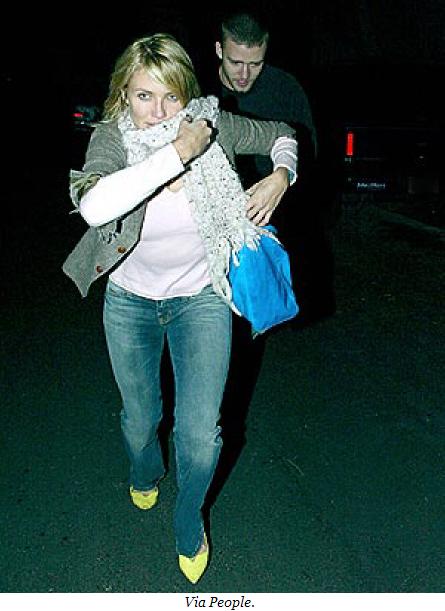
But, increasingly celebs are embracing the paparazzi, realising that if they work in cooperation with them, their public lives will be less tumultuous.

Stewart relays her story about Wagner trailing Liev Schreiber and his son with Naomi Watts, into the subway. After talking to the subject for several minutes, Wagner tells Schreiber that he’s “gotta get a picture of you”, and “Liev said sure, put the kid on his shoulders and let Wagner snap away… No other photographers were around, so it’s an exclusive shot.” Wagner gets paid, Schreiber comes across as a cool family man; it’s a win-win situation.

Celebs with kids can get a bit weird about them being photographed, understandably, and in the same article, when Wagner encounters Watts with the kids, she kindly asks him not to take pictures, and he obliged. See, Hollywood dwellers? There’s no need to get violent with the paps. (Granted, the pics of Schreiber and Watts were taken in New York City, where the paparazzi scene is less brutal than in Los Angeles, and there seems to be a certain air of respect between subject and object.)

Other NYC dwellers such the cunning Sarah Jessica Parker, have some up with ways of making themselves less desirable targets:

“‘[SJP] wears the same thing everyday,’” he [Wagner] says. ‘On purpose. Because you talk about this today, then she wears it tomorrow, then what do you have to say? Nothing.’”
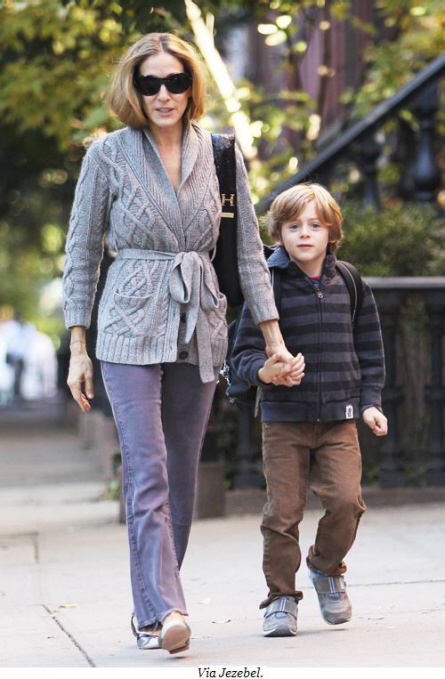
There is almost an element of protection there, too: provided both parties behave themselves and there exists a certain professional relationship, when your every move is recorded on camera, it’s got to be mighty hard to be mugged or attacked. Although, the victims of Alexis Neiers and her young-Hollywood burglary bling ring probably don’t subscribe to this school of thought.

Still, the opinion among the stars, the paps and the consumers who view their snaps on blogs and in magazines and newspapers, is that celebrities need the paparazzi to generate publicity around them, and the paps need to earn a buck. “An interdependency develops between them,” says Howe.

Stewart sums the cycle up nicely:

“We’re interested in celebrity minutiae. Despite ourselves. It is possible to be fascinated and repulsed at the same time. You can find celebrities appealing while finding the gossip culture appalling. We buy the magazines, hate them for lying to us, critique them, laugh at them, talk about them with our friends and buy the magazines again the next week. If you’ve ever read a gossip site or flipped through a celebrity weekly, you’re part of the system: the paparazzi take pictures for the mags and blogs, the mags and blogs exist because there is an audience.”

Related: Poor Little Rich Girl: Lindsay Lohan in Who.

Poor Little Rich Girl: Who Cover Girl Heidi Montag.

Elsewhere: [Jezebel] The Day I Trailed a Paparazzo.

[Vanity Fair]: The Suspects Wore Louboutins.

On the (Rest of the) Net.


After my Mick Foley rant last week, I’ve started reading his blog, Countdown to Lockdown, and I’m loving it. Here are some choice articles:

Remembering female pro-wrestling pioneer, Luna Vachon, who passed away on August 27 this year.

“That Time I Met… Tina Fey… and Alec Baldwin!”

“That Time I Met… President William Jefferson Clinton!” (I really love this one; some heart-warming stuff.)

“Mick’s Favourite Things: Top Ten Matches”, three of whichCactus Jack VS. Randy Orton at Backlash 2004 (above), Mankind VS. The Undertaker in Hell in a Cell in June, 1998, and Mick Foley VS. Edge in a Hardcore Match at WrestleMania XXII (that’s WrestleMania 22 in 2006 for you wrestling laymen)I 100% agree with.

In defence of Buffy’s whining.

“To the Teenage Boy in Your Life”:

“An important thing to remember is that girls are not from a different planet, nor are they even a different species. They’re just people, they’re just like boys, except with vulvas instead of penises.

“Mainly you need to remember this when you’re trying to figure out what a girl is thinking. See, if you didn’t know what a BOY was thinking, how would you go about finding out? You might ask him, right? The same goes for girls.”

I’m a bit behind the eight-ball on this one, as No Make-Up Week was a month ago, but Alle Malice’s guest post on Rabbit Write goes over the reasons “Why We Wear Make-Up”. I especially like this one:

“It makes me look good in photos. Almost everything we do now is documented by someone and posted in Facebook albums for the world to see, because if you aren’t having fun on Facebook, you aren’t really having fun. And if you aren’t pretty on the internet, you aren’t pretty in real life. Enter makeup.”

Nick Sylvester, on Riff City, discusses “How Kanye West’s Online Triumphs Have Eclipsed Kanye West”:

“Maybe there are people working with him… but I get the sense that Kanye is generating the [sic] lot of these ideas. I imagine he likes being in control of every aspect of the production, the medium being the message and so on. Online he is a wise fool, first playing into people’s perceptions of ‘Kanye West’, then off those very perceptions, sending himself up, pulling back his own veil… Despite many attempts, Kanye West is incapable of being parodied, largely because Kanye West has already figured out a way to be a parody of Kanye West.”

Much like Megan Fox in this New York Times Magazine article. Could I even go as far as to say that blonde bombshell Pamela Anderson has employed this strategy? I believe I could. And for that matter, Lindsay Lohan sending herself up on Funny or Die and promos for the MTV VMAs are along the same lines.

Sylvester goes on to say that “artists like Kanye West have to be ‘good at Twitter’ in order to put a dent in the zeitgeist.”

Furthermore,

“‘Nowadays rappers, they like bloggers,’ is what Swizz Beatz says… Slowly the work itself becomes secondary, less ambitious; slowly people becomes ‘really proud of their tweets’.”

Is it “The End of Men”?

Disney’s latest offering, Tangled, based on the story of Rapunzel, takes us back to a time when the Disney Princess reigned supreme, according to io9.

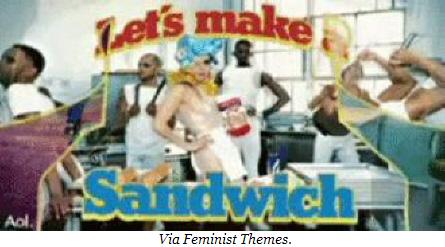
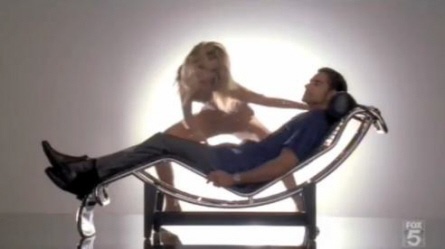
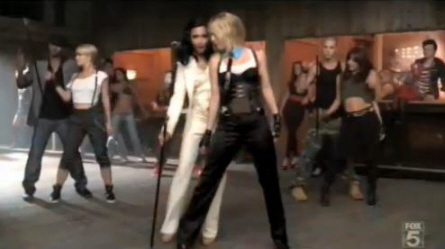
Feminist Themes examines Lady Gaga’s “Telephone” clip:

“… the objectification, glamorising of lesbian fetishism, and excessive girl-on-girl violence… [are aspects of the video that] feminist Gaga fans can try to justify… as another example of how she subversively turns what we usually find hot into something that leaves a nasty taste in our mouths and therefore makes a statement, but if any other artist (particularly any male artist) incorporated this much objectification and violence against women we would be outraged. Is it any different just because it’s a woman, or because it’s specifically Gaga?

“… What sets Gaga apart from other sexpot pop stars for me is that I just can’t imagine men being honestly turned on by hernot because she isn’t gorgeous (she is), but because she is so avant-garde, aggressive and self-driven which takes that arousal and turns it into something atypical, uncomfortable, and threatening.”

Also at Feminist Themes, the cause of the she-blogger in “Why I Blog”.

In other Gaga news, The Cavalier Daily reports that the University of Virginia is now running Lady Gaga classes! This sooo makes me want to re-enrol in university in a post-grad, transfer to UV, and take this kick-ass class!

The Daily Beast puts forth two differing opinions on Glee’s stereotypes: Andy Dehnart discusses the show’s “Harmful Simplicity”, while Thaddeus Russell applauds the walking stereotype that is Kurt Hummel, as “history tells us that those unafraid to be ‘too gay’ won far more freedomsfor all of usthan those who dressed the part of straights.”

Beautifully satiric The Frenemy reveals the recipe to “The Teen Romantic Comedy”, which “does not work for Mean Girls, 10 Things I Hate About You, or John Hughes films”, unfortunately. The truth about Disney Princes is also profiled, in which Eric from The Little Mermaid “wanted to kiss a girl who doesn’t speak words and doesn’t know how to use a fork. What the hell are you, caveman?”, while Mulan’s Captain Shang is in truth, a “gay liar” who made young, susceptible viewers the girls who have “crushes on a lot of her gay friends. [A] big Will & Grace fan.” Hey, that’s me!

Rachel Hills discusses intersectionality in feminism:

“For those of you who aren’t familiar with the term, ‘intersectionality’ is a way of talking about power and privilege that recognises that recognises that these things operate on multiple axes. People aren’t just female, or Black, or Asian, or straight, or working class, or trans, or a parent, or prone to depressioneveryone falls into a number of different categories that colours their experience of the world in specific ways. In the feminist context, it serves as a useful reminder that not all women have the same experiences, and calls into question the still dominant notion that the neutral ‘female’ experience is one that is white, heterosexual and middle-class.

“I’m also a fan because it just makes feminism a whole lot more interesting.”

Girl with a Satchel profiles Melissa Hoyer’s media career, which is a must-read for any budding wordsmith.

I am staunchly pro-choice when it comes to the abortion debate. In fact, I lean so far to the left that I’m borderline pro-abortion. (I’m sure that’ll ruffle some feathers!) But no matter what your feelings on the subject, MamaMia’s post, “The Couple Facing Jail Because They Tried To ‘Procure an Abortion’. Hello, Queensland? It’s 2010” is worth checking out.

Jezebel’s “5 Worst Mean (Little) Girls of All Time” includes Willy Wonka’s Veruca Salt and, from one of the most heart wrenching films of all time, A Little Princess, Lavinia, who looks a lot like modern-day mean girl, Angelina Pivarnick, from Jersey Shore.

“Why Strawberry Shortcake Was a Progressive Pioneer.”

Magazines: Twenty-five to Life—Elle’s Favourite 20-Somethings.

Needless to say, Lindsay Lohan won’t be making the list, but some others include Gabourey Sidibe (and the accompanying scandal), Lauren Conrad, Megan Fox, and Amanda Seyfried, who grace the cover of the mag in four separate newsstand editions, and then again inside. Here, take a look for yourself…

Related: Poor Little Rich Girl—Lindsay Lohan in Who.

Elsewhere: [Jezebel] Gabby Sidibe’s ELLE Cover is Another Reason Why Black Fashion Directors Are Necessary.

Magazines: Poor Little Rich Girl—Lindsay Lohan in Who.


Who’s feature on Lindsay Lohan’s fourth trip to jail (albeit for less than a day), and the accompanying four mug shots, paints a bleak picture.

While I think Lindsay is a great actress and has the promise to really shine onscreen, I do believe she has massive psychological issues stemming from her upbringing, the burden of a career as a child star and subsequent foray into the Hollywood drug and party scene.

She was obviously coddled by her parents and, later, her minders, managers and enablers so that, at age 24, “she can’t stand to be alone, ever” at a time in her life when she should be taking responsibility for her actions and turning into a true adult.

A recent article in The New York Times Magazine that deals with the Gen Y/“20-something” stigma, aptly titled “What is it About 20-Somethings?”, asserts that those “who don’t have an emerging adulthood” (from ages 18-25, which involves finishing school, moving out of home, becoming financially independent all of which Lohan has done and, traditionally, getting married and having children [factors which aren’t so paramount nowadays] but, especially, making mistakes and learning from them on your own), like Lohan, “might face developmental tasks identity exploration, self-focus, experimentation in love, work and worldview” may manifest themselves in later life, as a mid-life crisis, for example.

“Emerging adulthood must be both universal and essential,” because “if you don’t develop a skill at the right stage, you’ll be working the rest of your life to develop it when you should be moving on… The rest of your development will be unfavourable altered.”

Perhaps one of these skills is appreciating alone time, not only in superficial terms, like spending a day at home by yourself engrossed in a good book, a movie marathon, or spring cleaning, but in terms of reflecting on your experiences and, again, learning from them.

Clearly, Lohan has not learnt from her mistakes involving drugs and alcohol, with five stints in rehab in addition to her four in jail.

“What is it About 20-Somethings?” mentions the Yellowbrick residential program in Illinois, whose “philosophy is that young people must meet these challenges without coddling or rescue.”

While some rehab programs try to nip undesirable behaviour in the bud, Yellowbrick does the opposite: “We want the behaviour to unfold, and we want to be there in that critical moment, to work with that behaviour and help the emerging adult transition to great independence.”

A common belief in opposition to the “Lindsay Lohan needs help” mentality is that she’s still young, and for a lot of normal (re: out of the spotlight) young people, her behaviour is conventional. If so, this behaviour is unfolding naturally, and hopefully she will grow out of it. After all, she does have one more year left of “emerging adulthood”.

Elsewhere: [NYTimes] What is it About 20-Somethings?

[Jezebel] In Defence of Lindsay Lohan.

TV: The Underlying Messages of Glee’s “Britney/Brittany” Episode.


In what was one of the most anticipated episodes of Glee, alongside the Madonna and Lady Gaga episodes, Britney Spears made all of a minute’s appearance on the show last week.

I was expecting a lot more, but we all know acting is not one of Britney’s strong suits (Crossroads, anyone?). However, Brittany S. Pierce, played by Heather Morris, stole the show and cemented her reign as my favourite Glee character.

While Britney’s lacklustre performance was the drawcard for the episode, there were a few underlying messages about fame using Spears as the beacon for what can go wrong if young stars abuse their fame.

“The episode opens with Kurt informing Mr. Schue that there’s a five person Facebook group campaigning for New Directions to sing Britney Spears songs at the homecoming assembly. But Schue shoots down this movement (even [though] these kids have already performed “Push It” in front of the whole school, for the purposes of our story, Brit Brit is too trashy or something).” [Jezebel]

The kids fought for their right to perform Britney, as she’s an inspiration to all of them, and the reason they want to be stars. Perhaps this way of thinking was better suited to the Lady Gaga episode, as she truly is an inspiration. On the other hand, if Mr. Schue let them perform songs by Madonna, Lady Gaga and, as Jezebel mentioned, Salt N Pepa, Britney is probably the most tame and PG-rated of them all. But I could see Schue’s point: while Britney may be an inspiration, she’s also one of the least talented pop stars who permeated the late ’90s/early ’00s zeitgeist and “not suited” to New Directions.

But, when Brittany goes to see guidance counsellor Emma Pillsbury’s new boyfriend and the school dentist Carl, played by guest star John Stamos, and is put under anaesthesia, she has a Britney Spears fantasy, which makes her realise her true potential as a star, and she demands to have all the solos from now on.

Santana wants to have a Britney fantasy too, so they both go to see the dentist and demand to be put under. Santana uses her doctor father’s health insurance to bribe Carl into succumbing. This could be seen as a reference to the enablers in young stars’ lives (Lindsay Lohan comes to mind) and the drug use that many such stars (again, Lindsay) are rumoured to have engaged in.

In a scene from last week, Sue Sylvester kicks Santana off the Cheerios for defacing her young and still-growing body with breast implants. This seems to be a specific dig at Britney, and a prelude to this week’s episode. Santana is probably only 17 years old, perhaps even 16, which is the age Britney is rumoured to have gotten implants.

Finally, the episode culminates in most of the Glee club having had hallucinations and a “Britney Spears sex riot”, caused by Sue. Britney has been criticised her whole career for being too sexy, which is evident in the opening Britney/Brittany video mash-up of “Slave 4 U”, “Toxic” and “Oops… I Did It Again”, as well as Brittany and Santana channelling “Me Against the Music”, which would have had far more impact, I think, if Britney was used in the whole montage, instead of just at the very end for about .5 seconds.

Related: Poor Little Rich Girl—Lindsay Lohan in Who.

Elsewhere: [Jezebel] Glee: The Britney Spears Stuff You Want to See.

Ex-Factor: Matthew Newton.


Earlier in the year, I wrote about (male) celebrities like Matthew Newton and Matthew Johns becoming hosts of television shows, despite their questionable behaviour in their private lives, which became very public.

It is no secret that I feel very strongly about the issue of famous men being rewarded for their indiscretions because “he’s such a nice guy” or “he plays that sport we like”, despite the fact that they are a known wife-beater and drug-addict (Newton) or have been implicated in a group sex scandal with their team-mates, which the woman involved later alleged wasn’t consensual (Johns).

I expressed my disdain for the situation at my workplace yesterday: “what does this guy have that makes beautiful, talented, successful women go after him when he is a known abuser?” One colleague replied that it’s not Rachael Taylor (his most recent ex-girlfriend who filed the claims) nor Brooke Satchwell’s (the first ex to cry assault) faults, which she thought I was insinuating, but let me make myself very clear, if I haven’t already: UNDER NO CIRCUMSTANCES IS IT THE VICTIM’S FAULT. But seriously, I will ask the above question again: What does Newton have that makes beautiful, talented, successful women go after a known abuser? And what’s more, why would Seven hire him to host The X Factor, due to debut in less than a week, when he has expressed unreliability in the past.

I personally don’t think celebrities with addictions should be thrust back into work straight after attending rehab, or in the case of Lindsay Lohan, jail to boot. Addicts need time away from the stressors of everyday life and the entertainment industry, if that is their chosen field, in order to fully recuperate and overcome their demons.

Mia Freedman also commented on the incident, asking “what should Channel 7 do” with The X Factor’s already-filmed footage, which Newton is “all over”? “When will we stop enabling celebrities to behave in utterly unacceptableand possibly criminalways? And rewarding them if we think they’ll bring ratings?” Freedman asks.

But is The X Factor really aimed at a family audience? With Newton, who was given the hosting gig around the time he was admitted to rehab earlier this year, Kyle Sandilands, a shock-jock who is constantly in hot-water for putting his foot in his mouth, and Ronan Keating, who was recently embroiled in a cheating scandal, the show’s stars aren’t exactly family friendly.

Related: Bad Boys, Whatcha Gonna Do? Host a Seven Family Show.

Why Are Forgiven for Their Wrongdoings, While Women Are Vilified for Much Less?

Elsewhere: [Musings of an Inappropriate Woman] Reblogged: No Words For What Hurts.

[Tiger Beatdown] I HATE I Love the Way You Lie.

On the (Rest of the Net).

If you’re into music, especially the live Melbourne scene, make sure you check out my friend Linzie Meager’s newly launched blog, What Are You Listening To?

Lena Chen says “fuck feminism”. I have to say I agree with most of her statements, and sometimes I get sick of talking about gender politics. Her argument is that feminism doesn’t represent all females equally, especially women of colour and those who belong to the LGBT community.

If only we could all look this chic and quirky at the airport. Gala Darling pairs combat boots with an electric blue knit by Betsey Johnson “En Route to San Francisco”.

Who’s sick of Lady Gaga? Not me, but apparently Gawker is. I do agree that Gaga needs to lay off the reinvention shtick, however. The article also argues that she needs to churn out some new music ASAP.

Still with Gawker, they assert that “Starlets Need to Stop Dressing Up Like Other Starlets for Photo Shoots”, with an impressive roll call that includes Lindsay Lohan as everyone, everyone as Marilyn Monroe and Jennifer Aniston as Barbra Streisand on the most recent cover of US Harper’s Bazaar.

I think the burqa debate is an interesting one; one I don’t necessarily agree with. I don’t think that Islamic women should be forced to wear them, but it is certainly not the government of the Western world’s place to ban them. MamaMia brings light to the subject, asking if the “Burqa is as ‘Confronting’ as Leggings Worn as Pants”? Certainly not! Nor is it more confronting than (Prime Minister come tomorrow night?) Tony Abbott in budgie smugglers!

Meanjin’s blog Spike features a post “On Writing and Running”… or blogging and jogging, as I like to call it. Guess I’m on the right track, then. (Geddit?!)

“Like, OMG, you guys!” Anyone who knows me knows that I’m a product of my generation (or the generation below me, perhaps?). But Jezebel reasons that those who favour “like”, “you know” and “whatever” picked up such fetching colloquialisms from ’90s teen angst drama, My So-Called Life. If you haven’t heard of it, you should so, like, research it, you know? If not, whatever.

Here with more Daria goodness, The Paris Review asks “Are We Afraid of Daria?”

All the single ladies men, take note: there’s a difference between “nice guys” and “total creeps”. (Double standards?) For example, nice guys will pay you “a normal compliment” like, “You look great today”. Creeps will say “things like, ‘You look imaginary’… Did he mean to say something else? Does he know what ‘imaginary’ means?” Gold!

Continuing on from the Facebook versus women issue, Psychology Today ran a great article entitled “Cutting Off Your Vagina to Spite Your Face(book)”. Aside from the genius title, it deals with the deletion of a sexual education Facebook page about female genital mutilation.

On the (Rest of the) Net.

Frock & Roll has some poignant points on how to “network, promote and get your blog out there” aka “hustle”. I’ve only read part one of the series, but you can find part two here, with part three on its way.

Who do you write like? Apparently, from the sample I typed in to the analyzer, I write like David Foster Wallace, author of one of Time magazine’s All-Time Greatest Novels, Infinite Jest! Not too shabby!

It’s no secret Prince is one of my favourite musicians, but according to Fajr Muhammad of Stylish Thought, he’s also a style icon, assless pants and all!

Edward Cullen sparkles, but feminism certainly doesn’t. Amplify Your Voice discusses “What Twilight Teaches Young Girls”.

Author Marketing Experts suggest “Seven Powerful Ways to Find New Readers For Your Blog” (there’re actually eight!).

An oldie but a goody: Inappropriate Woman Rachel Hills muses on Gossip Girl, Serena & Effortless Perfection”.

In the vein of last week’s “In Defence of Taylor Momsen” comes the case for Lindsay Lohan as she is released from jail and shipped off to rehab for the umpteenth time.

On Tuesday night, “I Went to See Killers, and It’s All Your Fault”, Jezebel!

Girl with a Satchel has two (here and here) fab pictorials up of this year’s September issues. Here’s just a little taste…

Why Are Famous Men Forgiven for Their Wrongdoings, While Women Are Vilified for Much Less?

In Perez Hilton’s words, “2010 has really been the year of the cheater”. First we had Tiger Woods’ cheating scandal, which broke late last year but has continued to be a headline grabbing story, then Jesse James’ spiral of shame, and now David Boreanaz, who went public a few weeks ago with news that he cheated on his wife of almost nine years, Jaime Bergman.

And last year was the year of the sports scandal, you might say, with the Matthew Johns group sex story coming to light in May.

What do all these men, with, perhaps, the exception of James, have in common? Their shady pasts have virtually been forgotten in favour of their more positive talents. Boreanaz plays the lead in hit TV series Bones, Johns now hosts his own self-titled show, and Tiger is back on the Masters tour.

While the wrongdoings of the Australian underworld are being glorified on Underbelly no one bats an eyelid. To take it even further, O.J. Simpson, although acquitted of double murder, was held up as a hero amongst African Americans in Los Angeles following his trial, despite being thought of as guilty in the court of public opinion.

Perhaps this is just a sign of the times changing; that our society has become so desensitised to notions of war, violence, drugs and sexual depravity that they are not longer taboo. I would argue that this is true to some extent it is not reflected on the other end of the spectrum.

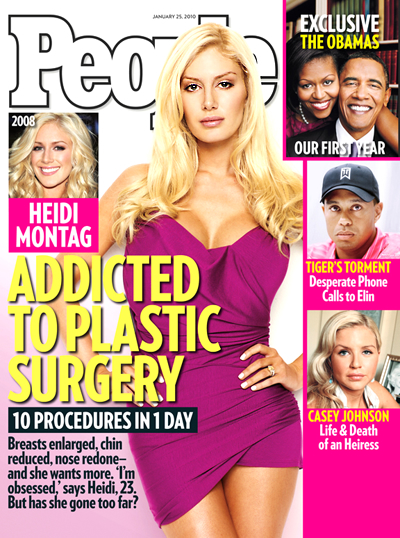
For example, a recently refurbished Heidi Montag admitted to undergoing 10 cosmetic surgical procedures in one day because she wasn’t happy with the way she looked. She obviously has deep-rooted body dysmorphic issues, however instead of helping and supporting her, the public has turned on her.

The same could be said of the Britney Spears’ and Lindsay Lohans’ of the world. A recent Jezebel article, “In Defence of Lindsay Lohan”, was in support of the former child star everyone loves to hate.

Sure, Lindsay has a father who “is a nightmare… and her mother is more of a friend than a parental figure. So perhaps she is lacking in guidance and role models. But who among us, in some way, is not? Her experience [of growing up in the spotlight]… is not one many people can relate to, anyway.”

The author surmises that the public’s fascination with Lindsay and their “build-you-up-to-take-you-down” mentality is much simpler: “She’s 23-years-old and being ripped to shreds in the press mostly because she goes out at night.”

Right. Someone like Colin Farrell has had a sex tape released, sexual misconduct allegations brought against him and has battled substance abuse problems, however he is still held up as a Golden Globe-winning actor. We all know Lindsay has the acting chops, it’s just a matter of her getting out of her own way. Double standard? In the words of Sarah Palin, you betcha!

The beautifully tragic Marilyn Monroe and Anna Nicole Smith were, and still are, vilified for being just that. Even in death, the girls can’t catch a break.

So that brings us back to the question, why do men get away with so much more than women can? Or, more to the point, why are men almost celebrated for their wrongdoings while women are banished into social oblivion?

I think, in a nation that celebrates sport as the highest level of achievement, especially, we want to give our sportsmen the benefit of the doubt. While I do think we focus too much on sport as the be all and end all of success in Australia, and the very nature of being “Australian”, it can be seen as admirable to offer someone a second chance. Johns, for example, could be seen as brave for coming forward and being the only one of his Cronulla Sharks teammates to own up to his mistake. But I do think it’s a bit soon to be running a television show off his back.

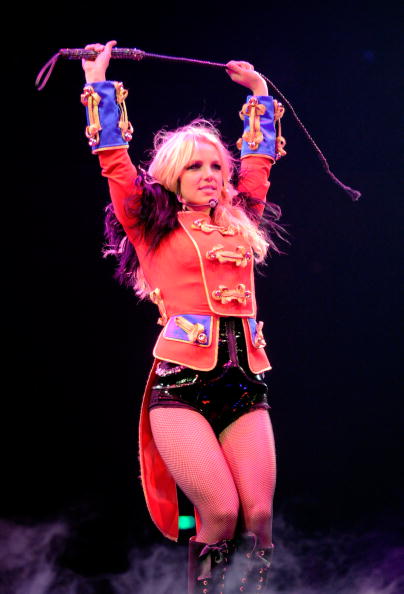
However, we also like to kick people when they’re down. Britney Spears, for example, was heralded as the princess of pop in her golden days, but when she started donning pink wigs, speaking to herself in a British accent in the gutter, and being carted off to the looney bin, we wanted nothing to do with her. Oh, I’m sorry, only to denigrate her on the cover of tabloid magazines.

Then last year she launched her comeback tour, and everyone was back on her side. That is, until, she lip synched (come on, it’s Britney! When has she ever not lip synched?) her way through Australia and out of our collective consciousness.

But how many second chances are we going to give these men, in particular? Charlie Sheen was embroiled in his latest domestic dispute over Christmas last year. But what of his past child pornography, prostitute and drug allegations? Not to mention the shooting of ex-girlfriend Kelly Preston in a domestic dispute. Do we just sweep them under the rug too so that Sheen can keep the $1.2 million per episode of Two & a Half Men coming?

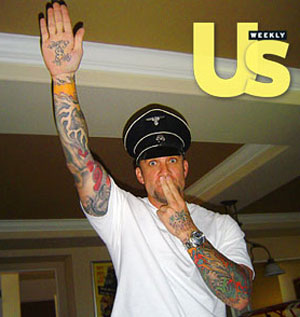
When these mistakes are hurting people other than themselves, maybe it’s time to take a step back and look at the bigger picture. Do we really care if Lindsay, Britney or Mischa are off to rehab again? And shouldn’t we be caring that Jesse James allegedly ran dog fights out of his West Coast Choppers headquarters and is apparently a white supremacist? Or that Sheen is essentially being rewarded by the cash cow that is Hollywood for his reprehensible behaviour? Or that Tiger sleptand somehow found time to golfhis way across the country in a narcissistic bubble of admiration from his countrymenand women?

Related: All Eyes on Marilyn.

Elsewhere: [Jezebel] In Defence of Lindsay Lohan.