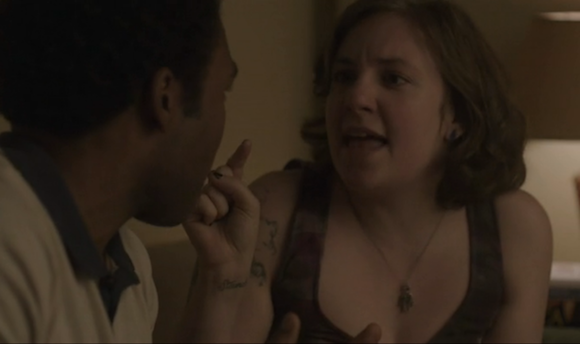
Is Girls‘ Hannah Horvath physically worthy of the sexual interest of a successful, hot, rich doctor? While detractors thought this week’s episode was the worst in the series, presumably because Lena Dunham’s “refreshing, yet displeasing to the eye” (to borrow a line from Elizabeth Banks in Pitch Perfect) naked body was front and centre perhaps more than any other episode, I actually thought it was the best of this season’s bunch, and I had no qualms buying Patrick Wilson’s character being so sexually into Hannah that he begs her to stay in his apartment for a 48-hour fuck- and naked ping-pong-fest. I will say that the gratuitous nudity and the continuous lack of people of colour is really getting my goat, though. [Jezebel]
After a recent spat with my housemate about the apparent modernity of Modern Family, in which he defended the show for its gay couple with an adopted Vietnamese baby and a strong Latino presence while I cried stereotyping, I decided I should actually watch an episode or two of it before I denounce Modern Family as an archetype perpetuating farce.
Now, with three and a half seasons and some informed opinions under my belt, I can wholeheartedly say I abhor the sexist tropes of the fiery Latina, Gloria, and the shrill, controlling housewife, Claire, and Modern Family’s blatant racism, homophobia and slut-shaming. Let me count the ways…
Right off the bat in the sixth episode of season one, “Run for Your Wife”, there were some troubling stereotypes about stay-at-home mums. When the Dunphy kids head off to their first day of school for the year, mum Claire looks forward to some downtime to get started on a new book. Phil, who’s supposed to be the breadwinner of the family, is also home and wants to hang out with his wife. After blowing off some open-houses he’s supposed to be putting on as part of, you know, his job as a real estate agent, Phil gets embroiled in a mid-afternoon jogging race with Claire.
As a child who grew up with a stay-at-home mum, I can tell you that I never once saw her sitting down to read a book in the middle of the day or challenge my dad to a childish competition. There was too much cooking, cleaning, washing, shopping and picking up to do. In fact, my dad was barely home and often working more than one job in order to put food on the table and keep us in a home one fifth of the size of the Dunphy’s, which is more than we can say for Phil who is rarely shown at work.
While the acting of Ty Burrell (Phil) and Julie Bowen (Claire) is something to write home (or at least the awards shows) about, their characters leave a lot to be desired. Phil is always dropping the ball (or getting it thrown into his face, as in “Door to Door” in season three) on being a functioning human being, let alone a good husband and father, and Claire often refers to him as her fourth child (she technically only has three: Haley, Alex and Luke). The trope of wife-as-replacement-mother is a tired one, but that doesn’t stop Modern Family for milking it for all it’s worth.
This brings us to Gloria, who is anything but. She’s young, sexy and, most notably, a loud, sassy Latin woman who’s always getting arked up about something. In season one’s “Up All Night”, Gloria’s son Manny’s dad comes to visit. While Gloria is now remarried to the older and dependable Jay, ex-husband Javier is a fellow fiery Latino who tries to make up for his absence by showering Manny with extravagant gifts. In the episode, Javier takes Jay and Manny to a baseball field in the middle of the night, and the next day comes bearing motorbikes. Gloria becomes audibly incensed that Jay’s falling for Javier’s tricks, like she used to, and storms off, yelling in Spanish. Every portrayal of a Hispanic woman in pop culture doesn’t have to be that of the “hot blooded” Latin mama; just look at the gay, Latina orthopedic surgeon Dr. Callie Torres in Grey’s Anatomy, a show that is far more modern than one with that word in its title,for example.
Speaking of the gays, what portrayal of contemporary American life would be complete without the requisite homosexual couple with an adopted Asian baby? Certainly not Modern Family, which turns the gay dial up to eleven with stay-at-home dad, former farm-dweller and part-time clown Cam, the uptight, dogmatic (unsurprisingly the brother of Claire) lawyer Mitchell and their über inappropriate ways. For example, in “Run for Your Wife”, Mitchell accidentally bumps baby Lily’s head against a door frame, and they take her to the doctor. The doctor happens to be Asian-American, so Cam embarks on a sermon about how he and Mitchell intend to raise Lily with influences from her Asian roots, completely disregarding the fact that the doctor was born and raised somewhere in middle America and identifies first and foremost as an American.
Later on, in season two’s “Unplugged”, Cam and Mitchell try to get Lily into a preschool. When they realise Lily’s going up against an adopted African-American boy with disabled-lesbian parents for the last spot at a prestigious private school, Cam flubs the interview by emphasising his 1/16th Cherokee heritage and speaking in pidgin English. As someone who is also 1/16th Cherokee, I’m sure you can imagine my offence at this.
Cam, as I’m sure you can imagine if you don’t already watch Modern Family, is the flamboyant half of the couple, and enjoys dressing Lily up as famous gay icons and encouraging her creative side. In the episode “Chirp”, in season two, Cam goes against Mitchell’s wishes and has Lily film a commercial for a furniture store. The ad is completely racist, using emphasised Asian accent voiceovers and Godzilla, and when Mitchell points this out, Cam uses the defence of hipsters the world over: “It’s ironic.” I suppose because they have an Asian kid, they’re allowed to be racist…?
While there are some redeeming qualities throughout the show’s run, such as the “Mother’s Day” (season two), “After the Fire” (season three), and “Schooled” (recently aired as part of season four) episodes which seek to unpack gay parenting and stereotypes of femininity, masculinity and homosexuality, it’s also rife with slut-shaming (Jägermeister is a magic potion that puts girls to sleep but instead of waking up “in a castle, you wake up in a frat house with a bad reputation” in “Moon Landing”, whilst Phil marvels in “Travels with Scout” that with his “emotionally distant father” it’s a miracle he didn’t end up as a stripper), homo- and transphobia (dad Jay insinuates that Mitchell is a cross-dresser because he’s also gay in “Starry Night”), and jokes about domestic violence (when Mitchell asks his dad to teach him how to fight in “Game Changer”, Jay asks if he’s having problems with Cam).
As I’m sure Glee can attest, an after school special-esque episode here and there doesn’t make up for Modern Family’s utter lack of modernity the majority of the time.
In last week’s season two premiere of Girls, I thought Hannah’s sex scene with her new black boyfriend (played by Community’s Donald Glover) within the first few minutes was a bit on the nose, but at least Lena Dunham and the other writers are making an effort to remedy the lack of people of colour that plagued the last season.
So while last night’s speech by Glover’s Sandy was equally as conspicuous, it was also a pertinent commentary on Girls, racism, hipsterism and progress:
“Oh, I’m a white girl and I moved to New York.. And oh, I got a fixed gear bike and I’m gonna date a black guy and we’re gonna go to a dangerous part of town…”
Hannah refutes by saying the fact that Sandy’s black has never occurred to her until he just brought it up:
“I don’t live in a world where there are divisions like that.”
Fair point, as that’s an ideology I try to adopt myself, and it’s also the reasoning Dunham supplied last season when the race issue was brought up constantly. Ultimately, it wasn’t Sandy’s race that created division in their relationship, it’s the fact that he’s a Republican. Hannah just couldn’t “be with someone who’s not an ally to gays and women”. Fair enough.
So misogyny may be running wild in the real world, but on TV, girls are calling the shots. We’ve had a bevvy of shows with “girl/s” both in the title and the storylines this year, with 2 Broke Girls and New Girl carrying their success over from 2011. While a lot of the subject matter is problematic, both shows have women carrying the comedy. Which brings us to just plain Girls, which is the brainchild of actor, writer and director Lena Dunham. Girls is not without its problems, either, but its portrayal of young urban women is almost faultless. Rounding out the representation of leading ladies in 2012 we have Don’t Trust the Bitch in Apartment 23, Homeland, Revenge, The Mindy Project, Are You There, Chelsea?, Smash, GCB (farewell!), Scandal, Nurse Jackie, Veep, Emily Owens, M.D., Whitney, The Good Wife and Hart of Dixie.
“Call Me Maybe”.
Until “Gangnam Style” came along, the YouTube Zeitgeist was dominated by one runaway success: Carly Rae Jepsen’s “Call Me Maybe”. Justin Bieber’s protégé came out of nowhere with the catchiest song of the year, which was subsequently covered by the guys from Harvard’s baseball team, Barack Obama and the Cookie Monster! Talk about diversity!
2012: Apocalypse Now.
2012 was the year of the apocalypse, with the 21st of December long determined by the Mayans (or Mayan conspiracy theorists) as the day the world ends. You know, until the 7th of December tried to steal its thunder as the apparent recalculated date. Apart from the natural disasters, warfare and massacres, the 21st passed without a nuclear bombing, ice age or attitudinal shift, putting rest to the apocalypse panic. Until the next rapture, anyway…
Shit ___ Say.
It started with a sexist albeit funny YouTube video of a guy in a wig quoting “Shit Girls [Apparently] Say”, which snowballed into “Shit White Girls Say to Black Girls”, “Shit New Yorkers Say”, “Shit Christians Say to Jews” and “Shit Nobody Says”. Cue offence.
Snow White.
Snow White was everywhere this year: Mirror Mirror, Snow White & the Hunstman, Once Upon a Time… Note: overexposure isn’t necessarily a good thing. In fact, I hated Mirror Mirror and Once Upon a Time, and Snow White & the Huntsman was such a snooze-fest I can barely remember what happened (not including Kristen Stewart’s affair with director Rupert Sanders).
50 Shades of Grey.
On the one hand, E.L. James’ 50 Shades of Grey has singlehandedly revived the flailing publishing industry, so that’s a good thing. But on the other, it has falsely lulled its legions of (mostly female) fans into a state of apparent sexual empowerment: it’s a book about sex targeted towards women, so that means we’re empowered and we don’t need feminism anymore, right?
The Macarena of the 21st century, Psy’s horse dance took the world by storm, being performed in conjunction with Mel B on The X Factor, with Hugh Jackman in his Wolverine gloves, on Glee and at many a wedding, 21st birthday and Christmas party.
Misogyny.
Misogyny has long been the focus of feminists, but the word and its meaning really reached fever pitch this year.
After Julia Gillard’s scathing Question Time takedown of Tony Abbott and his sexist ways, people everywhere were quick to voice their opinion on her courage and/or hypocrisy. At one end of the spectrum, it could be said that Gillard finally had enough of the insidious sexist bullshit so many women in the workforce face on a daily basis and decided to say something about it, while at the other, many argued that the Labor party were crying sexism in a bid to smooth over the Peter Slipper slip up.
“Her electric speech on misogyny in parliament went beyond the sordid political context to firmly press a button on the chest of any woman who has been patronised, sidelined, dismissed or abused. It crackled across oceans, and, astonishingly, her standing went up in the polls, defying political wisdom that no woman would benefit from publicly slamming sexism.”
The viral doco that had millions of people rushing to plaster their neighbourhood in “Kony 2012” posters on 20th of April to little effect (the campaign’s goal was to catch Joseph Kony by years end) illustrated our obsession with social media, armchair activism and supporting the “cool” charities, not the thousands of worthy charities out there who could actually use donations to help their cause, not to produce YouTube videos and work the press circuit.
I’m Not a Feminist, But…
While Tony Abbott is clamouring to call himself a feminist to gain electoral favour despite the abovementioned misogyny saga, it seems famous women can’t declare their anti-feminism fast enough.
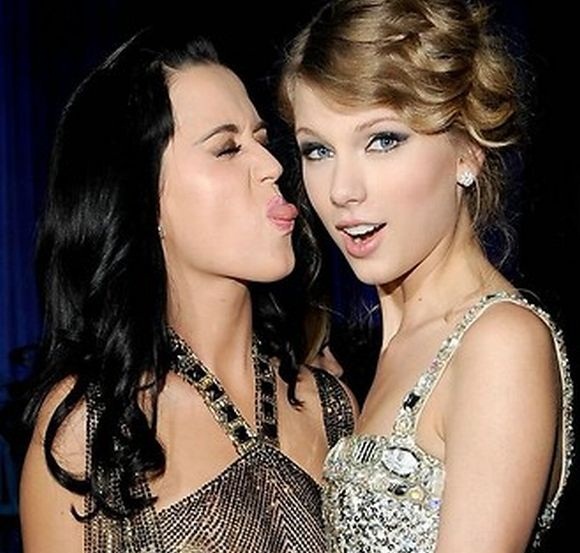
First we had new mother and Yahoo! CEO Marissa Mayer jumping at the chance to shun feminism despite the fact that without it she wouldn’t be where she is today. My favourite anti-feminist campaigner Taylor Swift said she doesn’t think of herself as a feminist because she “was raised by parents who brought me up to think if you work as hard as guys, you can go far in life.” Um, Tay? That’s what feminism is, love.
The cronies from Sutherland Shire were all over our boxes, primarily on Channel Ten, this year. There was the widely panned Being Lara Bingle, the even worse Shire, and the quintessential Aussie drama set in the ’70s, Puberty Blues.
While these shows assisted in shedding a different light on the suburb now synonymous with race riots, it’s not necessarily a positive one, with The Shire being cancelled and Being Lara Bingle hanging in the balance.
Maya Newell, the girl who asked what effect changing the marriage act would have on the children of same-sex partners on this year’s final episode of Q&A, talks about what it’s like growing up with two mums. [Daily Life]
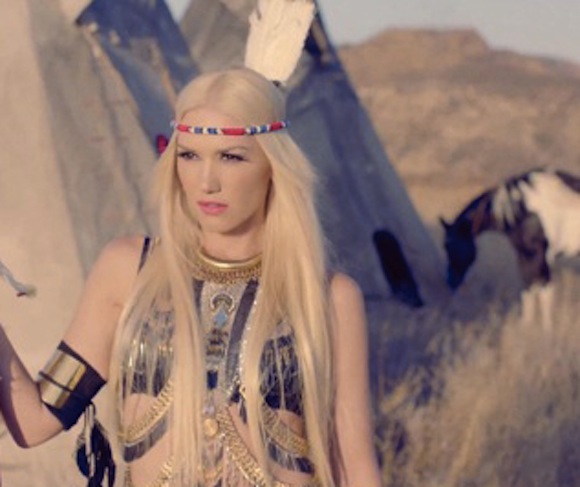
You might remember a month or so ago the brief debut of No Doubt’s Native American culturally appropriated video for their single, “Looking Hot”. Or, as it was aptly dubbed by one YouTube commenter, “Looking Racist”.
While the Native imagery is arguably stunning, it’s not No Doubt’s to share, and that’s what pissed most viewers of the clip off, Indigenous or not.
“As a multi-racial band our foundation is built upon both diversity and consideration for other cultures. Our intention with our new video was never to offend, hurt or trivialise Native American people, their culture or their history. Although we consulted with Native American friends and Native American studies experts at the University of California, we realise now that we have offended people. This is of great concern to us and we are removing the video immediately. The music that inspired us when we started the band, and the community of friends, family, and fans that surrounds us was built upon respect, unity and inclusiveness. We sincerely apologise to the Native American community and anyone else offended by this video. Being hurtful to anyone is simply not who we are.”
Looking back on No Doubt and, more pertinently, Gwen Stefani’s history of image changes, it’s not really surprising that they committed this most recent offence in a long line of racial faux pas.
Remember in the mid-to-late ’90s when Stefani got around in that bindi? Or, a lot more offensively, her harem of identically silent Harajuku girls that followed her every move whilst promoting her first solo album, Love. Angel. Music. Baby., and appearing lyrically and starring in the music videos of the singles from it. Eight years after its release, Stefani’s still making money off the appropriation of the Japanese culture in her line of L.A.M.B. fragrances, one of which I requested for my birthday this year. I guess we’re all a little bit guilty of buying into this reappropriation stuff (just look at the recent Navajo-inspired line from Urban Outfitters, and Victoria’s Secret’s penchant for fetishising Asian culture with their “Go East” line of lingerie).
As is pointed out in a roundtable about racism and cultural appropriation on Rookie, the fact that white little Gwen and hipsters alike are able to wear Native American headdresses, bindis and headscarves without a second thought is because they’re white; no matter how well meaning the appropriation might be, they’re not likely to be threatened with racist taunts, “considered weird, or [putting up] some kind of resistance to assimilating into [Western] society…” says Jenny Zhang, a writer and poet.
Fellow Rookie Marie Lodi takes issue more specifically with the Harajuku girls:
“[W]hen she had the four SILENT Harajuku Girls following her around everywhere it was strange. Like, OK, here’s four Japanese girls (I don’t even think they were all Japanese?!) following around this white woman and not saying a word. GWEN, DO YOU LET THEM SPEAK? And now I bet if you did some word-association about Harajuku with a random white American person they’d most likely respond, ‘Oh, you mean the line at Target?’ first and not the area in Tokyo…”
’Cause Asians are relegated to the cute, quiet best friend or background role, didn’t you know? But at least that’s something, according to legendary comedian Margaret Cho:
“Even though to me, a Japanese schoolgirl uniform is kind of like blackface, I am just in acceptance over it, because something is better than nothing.”
I guess black-, yellow- and red-face are the best we can hope for in this sad, sad reality.
So goes the reasoning of many regular people not so well versed in the politics of racism: when someone dresses up as a Mexican who’ll “mow lawns for weed and beer” or a Middle Eastern terrorist (you might think I’m referring only to Chris Brown, but someone I went to high school with actually came as one for an “Around the World” party, the pictures of which were posted on Facebook for the presumably more culturally sensitive world to see) for Halloween or, as with the most recent pop cultural exemplar, a sexy Native American as seen on Gossip Girl’s Thanksgiving episode, the collective opinion is often, “lighten up, it’s just for fun.”
“Recent acts of cultural appropriation do not occur in a vacuum and should not be viewed as isolated instances separate from their social and historic contexts. It is far more complex than hipsters in Navajo panties and pop stars in headdresses. These contemporary instances of cultural appropriation and stereotypes are really byproducts of ongoing colonialism, systemic racism, and the deliberately false narratives perpetuated about Native peoples by white society. Cultural commodification and dehumanised stereotypes extended far beyond any single corporation, retail franchise, or celebrity.
“We are not a relic of the past, a theme or a trend; we are not a style or costume; we are not mascots, noble savages or romantic fictional entities. We are human beings and, despite all odds, we have survived.”
Seeing as pretty much every other TV show, movie, brand and band are doing it, why are Gwen Stefani and No Dobut being singled out for their racism? We can’t expect better of them than we can Victoria’s Secret or scum of the earth Chris Brown because of their history of appropriation, but they’re the ones who said it: No Doubt is a multicultural band, so someone in it should have realised that maybe glamourising a game of cowboys and Indians that was a reality for so many Indigenous people for hundreds of years probably wasn’t the most PC direction they could take the clip in. Or maybe that’s just a hipster-racist excuse: I know black people so therefore I’m allowed to make racist jokes and assumptions about a culture that isn’t mine.
While people and corporations in the public eye who mass produce items for consumption (whether that be music, film or clothing) should be held to a higher standard than your average Joe, as they inevitably influence the Zeitgeist, they can’t be completely accountable for modern racism because it happens in a vicious cycle: we accept it because it’s perpetuated in the media, politics and everyday life, but when those sectors try to make positive changes they oftentimes fall on collectively deaf ears. That such a furor erupted over No Doubt’s latest gaffe is sign of hope, though… at least until next Halloween, Thanksgiving, Victoria’s Secret Fashion parade or No Doubt video.
“‘The relationship you have with your child is certainly impactful. It’s one of the most important relationships you’ll have in your life,’ Valenti says. ‘But a good relationship doesn’t necessitate you losing your identity. In fact, most people would call that a bad relationship. A good relationship is supposed to make you the best version of yourself, happier and more active. So that’s what I’m aiming for.’”
“I’m uncomfortable saying ‘you can do this if you are ethnically Indian’ (even if you are culturally something else, like American), because then it gets into the very kind of essentialism that racism is made of. Like, is it OK for me to wear native Iraqi Arab garb, even though I have never set foot in Iraq, because my parents are from there? I don’t think so, but a lot of the arguments about this subject reduce it to a matter of ‘you can wear things from your personal heritage but no one else’s,’ which, again, is essentialist… [a]nd bordering on dangerous? Because then you get into people deciding if someone LOOKS ‘ethnic’ enough to wear ‘ethnic’ signifiers and you start trying to read skin colour…
“… As long as there’s black-people stuff and white-people stuff and Indian-people stuff, can we really talk about being seen as just PEOPLE?”
And not only that, but the “black vote” kept that n-word in office. And some people have no shame in taking their racist views to Twitter to lament this supposed fact. [Jezebel]
In the spirit of Halloween just passed and, you know, the persecution of women and minorities since the dawn of time, take this quiz to find out whether you would have been accused of witchcraft in ye olden times. [BBC History Magazine]
Mia Freedman’s News Ltd. column has been axed amid many other newspaper axings. She should have stayed at Fairfax, where they actually appreciate good journalism and authentic voices. Oh well, this means more of her at her namesake site, MamaMia! Yay!










 The Scarlett Woman