On the (Rest of the) Net.

Should feminists support Julia Gillard just because she’s a female Prime Minister? [Daily Life]

Where does your slut-barometre sit? [TheVine]

The Triple J Hottest 100 countdown was a total sausagefest. [Karen Pickering] 

“Who exactly reads Playgirl, anyway?” (SFW) [The Atlantic] 

Is Paris Hilton relevant again? [The Daily Beast] 

Is Sheryl Sandberg’s Lean In a modern day Feminine Mystique? [Ms. Magazine] 

On the (Rest of the) Net.

the mindy project casey mindy

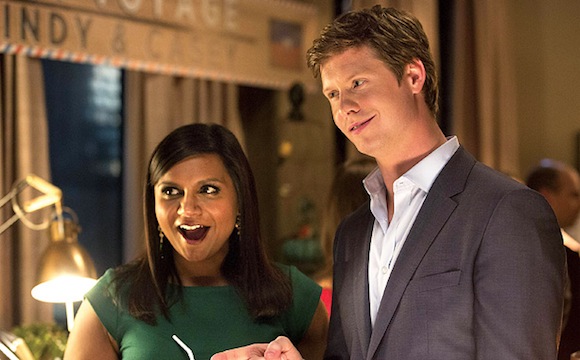
Why does Mindy only date white guys on The Mindy Project? [Jezebel]

The onscreen virginity trend. [Daily Life]

Fuck the friend zone; what about when guys you have a purely platonic interested in put you in the “girlfriend zone”? [Insert Literary Reference]

On masturbation and shame:

“In The Ethical Slut, perhaps the best-known ‘catechism’ of progressive sexual morality, Dossie Easton and Janet Hardy make the case that ‘the fundamental sexual unit is one person; adding more people to that unit may be intimate, fun, and companionable, but it does not complete anybody.’ Masturbation matters, they argue, not merely because it helps you learn what you want sexually from a partner, but because it helps bring ‘your locus of control into yourself.'” [The Atlantic]

Racism isn’t about being impolite. [New Matilda]

James Franco defends Baz Lurhmann’s adaptation of The Great Gatsby. [Vice]

The “skank flank”: what happens when you get a tattoo and are automatically deemed a slut. [Bust]

An ode to Barbara Walters. [The Cut]

Image via Entertainment Weekly.

Mother to Daughter: Second- VS. Fourth-Wave Feminism.

While I’ve only begun calling myself a feminist in the past few years, I think I’ve always had feminist tendencies: I’ve always believed in reproductive rights, I’ve tried never to judge a woman based on her choices and it’s been instilled in me that, as a woman, I can do and be anything I want to.

A lot of this is thanks to my mum, who is a ’70s bra-burning hippie feminist through and through.

Though recently, as I increasingly immerse myself in current readings of feminism, I see just how far we’ve come, baby, and how the second-wave feminism of my mother’s era is worlds apart from today’s discourse on gender equality.

There have been many debates between second-, third- and fourth-wavers about who did, and is doing, more for the movement.

At a 2011 Melbourne Writers Festival presentation on why we still need feminism, Sophie Cunningham asserted that feminists under 25 can’t really grasp the concept because they’re still young and beautiful and have men falling at their feet. She also observed “a sort of ‘bottleneck’ in modern feminism”, where white, Western feminists aren’t able to incorporate intersectionality into the fold, which was a criticism of SlutWalk, one of latter-day feminism’s most high-profile conquests. Pardon me, but wasn’t it foremother Betty Friedan who was accused of being racist and homophobic with The Feminine Mystique?

Perhaps the most contentious issue is the constant bickering amongst young feminists as to what, exactly, feminism is. You’ve got women undertaking such obviously feminist tasks as Marissa Mayer overseeing Yahoo! and Beyonce nearing total world domination, yet they’re reluctant to call a spade a spade. And the non-feminist media would have you believe there’s infighting going on about who is allowed to be a feminist (definitely not Taylor Swift!).

But, I think, the feminist movement of today would like to believe it’s accessible to all kinds of women (and men): straight, gay, bi, male, female, trans, black, white, mixed-race, rich, poor, able-bodied and non-able-bodied, sex workers, etc. Can second-wave feminism of yesteryear say that?

This divide is illustrated by Germaine Greer’s infamous comments about Julia Gillard’s clothing choices and how they accentuated her apparently undesirable body shape last year on Q&A and feminists everywhere taking to their respective platforms to mostly disagree with her. One such vocal detractor was Mia Freedman, who said Greer “broke my heart a little bit” when she took herself “down in a hail of self-inflicted friendly fire while the world watche[d] in embarrassment.” When the two women appeared together on a recent episode of Q&A, Freedman was asked to clarify her response: did it mean she wasn’t a fan of the “ground-breaking, arse-kicking lightening rod for social change who ignited a feminist movement from which every woman in the western world has benefited” anymore? Was this an example of the abovementioned feminist in-fighting?

Freedman responded that while she has nothing but respect for the woman in whose water she grew up and who influenced her mother’s feminist awakening, “feminism needs to have a lot of different voices… It should be really, really broad and inclusive.” Essentially, feminism should accommodate both the foremothers and their daughters.

Freedman went on in that same episode of Q&A to—what some would describe as—shame sex workers, or “prostitutes” as she archaically called them, which ignited a backlash of her own. So much for that broad inclusion she waxed lyrical about…

While liberating housewives of Germaine and Freedman’s mother’s era from “the problem with no name” and ushering in the birth control pill are milestones women of today must be thankful for, they’re very much narrow-minded accomplishments: The Feminine Mystique appealed to white middle-class women and many women can’t afford the birth control pill, a predicament that still exists today. And second-wave feminism was very much responsible for the sexual liberation of a generation of people, but I’m not so sure that transfers to the hook up, raunch and porn culture/s of today (as Freedman’s comments about sex workers above would indicate).

For example, when I was living at home and Girls of the Playboy Mansion came on the TV, my mum would make me turn it off (keep in mind I was 22 by the time I moved out and this was not long before that). When I brought this up recently as an example of her generation’s reluctance to embrace sex positivity, she launched into a tirade that ended with her calling into question the women who pose for Playboy’s sexual promiscuity.

We must acknowledge that media like Playboy is an inherently patriarchal construct, but I think making the assumption that any woman who uses her sexuality as a commodity is a slave to said patriarchy is buying into the notion that feminism works against: women have no autonomy. Much like the debate over women in Islam (and don’t even get me started on the fight I had with my mum about asylum seekers that, similar to the Playboy exchange, ended with her defensively inquiring about the legality of people seeking asylum via boat), certain kinds of feminism need to broaden their scope to take into account the lives of all women, whether we agree with their choices or not.

This close-mindedness comes from a lack of access to new information and technologies and willingness to learn from and hand the reigns over to the feminists of today, I think. While many feminists of all ages count the works of Greer, Friedan and Naomi Wolf amongst their collection of feminist tomes, how many second-wavers can say the same about the musings of Jessica Valenti, Clementine Ford, Rachel Hills and the myriad feminist bloggers? That face of feminism has certainly changed to make it much more accessible. What once was narrowly accessible at rallies, underground meetings and in academic journals is now available wherever you look: Gillard speaking up against sexism in parliament, movements like SlutWalk and Destroy the Joint and all across the interwebs.

So on this Mother’s Day eve, it’s important to acknowledge the gender equality path paved for me by my feminist foremothers, including my actual mother, but also to recognise that we have, indeed, come a long way, baby. Maybe that’s something that second-wavers need to consider, too.

Related: Why Young Feminists Still Have “A Long, Long Way to Go” In the Eyes of Second-Wave Feminists.

Taylor Swift: The Perfect Victim.

Elsewhere: [The Atlantic] 4 Big Problems with The Feminine Mystique. 

[The Guardian] The Tragic Irony of Feminists Trashing Each Other.

[MamaMia] Germaine Greer: You’ve Lost Me.

[MamaMia] No, I Won’t Apologise for My Sex Worker Comments.

[Daily Life] Stoned for Having Short Hair.

On the (Rest of the) Net.

tom cruise age difference leading women

The age disparities between leading men and their love interests. [Vulture]

I’m on Twitter! Follow me @ScarlettEHarris.

Nice Guys of OKCupid has paved the way for homosexual creeps with Douchebags of Grindr.

Why was Boston “terrorism” but not Sandy Hook, Aurora or Columbine, for example? [The Guardian]

Feminist awakenings. [Daily Life]

Sexism on MasterChef. [Daily Life]

A collection of essays on Spring Breakers. [The New Enquiry]

Shooting victim Gabrielle Giffords on the recent vetoing of background checks for gun buyers by the U.S. Congress. [NYTimes]

The Tribeca Film Festival is honouring one of its female filmmakers with the inaugural Nora Ephron Prize! [Tribeca Film Festival]

If we needed a reminder of the patriarchal corners of the world women have yet to be granted entry into, there’s now a Tumblr dedicated to just that! [Boys Clubs]

How to discuss Tyler Perry without sounding racist. [AV Club]

The symptoms of and treatment for feminist burnout. [Bitch Flicks]

James Deen on gender equality and slut-shaming (NSFW). [James Deen Blog]

Gun control does not mean penis control: guns and masculinity. [Women’s Media Centre]

How much murder and rape is there on TV? [Vulture] 

Image via Vulture.

TV: Modern Family is Anything But.

modern family mud portrait

After a recent spat with my housemate about the apparent modernity of Modern Family, in which he defended the show for its gay couple with an adopted Vietnamese baby and a strong Latino presence while I cried stereotyping, I decided I should actually watch an episode or two of it before I denounce Modern Family as an archetype perpetuating farce.

Now, with three and a half seasons and some informed opinions under my belt, I can wholeheartedly say I abhor the sexist tropes of the fiery Latina, Gloria, and the shrill, controlling housewife, Claire, and Modern Family’s blatant racism, homophobia and slut-shaming. Let me count the ways…

Right off the bat in the sixth episode of season one, “Run for Your Wife”, there were some troubling stereotypes about stay-at-home mums. When the Dunphy kids head off to their first day of school for the year, mum Claire looks forward to some downtime to get started on a new book. Phil, who’s supposed to be the breadwinner of the family, is also home and wants to hang out with his wife. After blowing off some open-houses he’s supposed to be putting on as part of, you know, his job as a real estate agent, Phil gets embroiled in a mid-afternoon jogging race with Claire.

As a child who grew up with a stay-at-home mum, I can tell you that I never once saw her sitting down to read a book in the middle of the day or challenge my dad to a childish competition. There was too much cooking, cleaning, washing, shopping and picking up to do. In fact, my dad was barely home and often working more than one job in order to put food on the table and keep us in a home one fifth of the size of the Dunphy’s, which is more than we can say for Phil who is rarely shown at work.

While the acting of Ty Burrell (Phil) and Julie Bowen (Claire) is something to write home (or at least the awards shows) about, their characters leave a lot to be desired. Phil is always dropping the ball (or getting it thrown into his face, as in “Door to Door” in season three) on being a functioning human being, let alone a good husband and father, and Claire often refers to him as her fourth child (she technically only has three: Haley, Alex and Luke). The trope of wife-as-replacement-mother is a tired one, but that doesn’t stop Modern Family for milking it for all it’s worth.

This brings us to Gloria, who is anything but. She’s young, sexy and, most notably, a loud, sassy Latin woman who’s always getting arked up about something. In season one’s “Up All Night”, Gloria’s son Manny’s dad comes to visit. While Gloria is now remarried to the older and dependable Jay, ex-husband Javier is a fellow fiery Latino who tries to make up for his absence by showering Manny with extravagant gifts. In the episode, Javier takes Jay and Manny to a baseball field in the middle of the night, and the next day comes bearing motorbikes. Gloria becomes audibly incensed that Jay’s falling for Javier’s tricks, like she used to, and storms off, yelling in Spanish. Every portrayal of a Hispanic woman in pop culture doesn’t have to be that of the “hot blooded” Latin mama; just look at the gay, Latina orthopedic surgeon Dr. Callie Torres in Grey’s Anatomy, a show that is far more modern than one with that word in its title, for example.

Speaking of the gays, what portrayal of contemporary American life would be complete without the requisite homosexual couple with an adopted Asian baby? Certainly not Modern Family, which turns the gay dial up to eleven with stay-at-home dad, former farm-dweller and part-time clown Cam, the uptight, dogmatic (unsurprisingly the brother of Claire) lawyer Mitchell and their über inappropriate ways. For example, in “Run for Your Wife”, Mitchell accidentally bumps baby Lily’s head against a door frame, and they take her to the doctor. The doctor happens to be Asian-American, so Cam embarks on a sermon about how he and Mitchell intend to raise Lily with influences from her Asian roots, completely disregarding the fact that the doctor was born and raised somewhere in middle America and identifies first and foremost as an American.

Later on, in season two’s “Unplugged”, Cam and Mitchell try to get Lily into a preschool. When they realise Lily’s going up against an adopted African-American boy with disabled-lesbian parents for the last spot at a prestigious private school, Cam flubs the interview by emphasising his 1/16th Cherokee heritage and speaking in pidgin English. As someone who is also 1/16th Cherokee, I’m sure you can imagine my offence at this.

Cam, as I’m sure you can imagine if you don’t already watch Modern Family, is the flamboyant half of the couple, and enjoys dressing Lily up as famous gay icons and encouraging her creative side. In the episode “Chirp”, in season two, Cam goes against Mitchell’s wishes and has Lily film a commercial for a furniture store. The ad is completely racist, using emphasised Asian accent voiceovers and Godzilla, and when Mitchell points this out, Cam uses the defence of hipsters the world over: “It’s ironic.” I suppose because they have an Asian kid, they’re allowed to be racist…?

While there are some redeeming qualities throughout the show’s run, such as the “Mother’s Day” (season two), “After the Fire” (season three), and “Schooled” (recently aired as part of season four) episodes which seek to unpack gay parenting and stereotypes of femininity, masculinity and homosexuality, it’s also rife with slut-shaming (Jägermeister is a magic potion that puts girls to sleep but instead of waking up “in a castle, you wake up in a frat house with a bad reputation” in “Moon Landing”, whilst Phil marvels in “Travels with Scout” that with his “emotionally distant father” it’s a miracle he didn’t end up as a stripper), homo- and transphobia (dad Jay insinuates that Mitchell is a cross-dresser because he’s also gay in “Starry Night”), and jokes about domestic violence (when Mitchell asks his dad to teach him how to fight in “Game Changer”, Jay asks if he’s having problems with Cam).

As I’m sure Glee can attest, an after school special-esque episode here and there doesn’t make up for Modern Family’s utter lack of modernity the majority of the time.

Related: The Underlying Message in Glee‘s “On My Way” Episode.

Elsewhere: [Chica & the City] Casting Call for “Hot Blooded” Latina Moms Makes My Blood Boil.

Image via BuddyTV.

So Anne Hathaway Didn’t Wear Underwear. Enough with the Slut-Shaming! (NSFW)

Last week, arriving at a premiere for Les Miserables, Anne Hathaway was snapped exiting a car sans-panties, exposing to the world a hint of trimmed pubic hair and not much else.

From the way the blogosphere blew up, particularly one shamed-tinged article on MamaMia, you’d think the end of the world had arrived early. A sample:

“Do people really do this these days, not wear underwear? Do regular people do it or just celebrities? Did nobody learn ANYTHING from Britney Spears?”

To answer your accusations, yes, regular people don’t always wear underwear. I know this because I’m a normal person and I don’t always wear underwear. I’m a shocker for putting off underwear shopping, therefore I have less than ten pairs of undies on rotation and sometimes there’s just not a clean pair in sight. I wear tight running pants under which I don’t like wearing full-cut briefs because of the VPL and I figure, why waste a perfectly clean pair of skimpy undies on a 30-minute workout when I can just chuck my running pants in the washing machine when I’m finished working out? Better waiting for one item of clothing to dry than two.

I also have a penchant for wearing body-con dresses and pleather leggings when I go out, so sometimes I won’t wear underwear with these lest I ruin the streamlined effect I’m going for. And when I wear tights I figure they practically double as underwear anyway, so why bother. But the most important reason I don’t always wear underwear is because I don’t always want to, and that’s my choice. You would think a mainstream women’s website that serves up a healthy helping of feminism would be all over that…

Note that while Hathaway seems mortified and uncomfortable talking about the incident, she doesn’t make any apologies for choosing to go without panties, and she shouldn’t have to. She said, “I was getting out of the car and my dress was so tight that I didn’t realise it until I saw all the photographers’ flashes… It was devastating. They saw everything. I might as well have lifted up my skirt for them.”

Sure, it’s probably not the greatest feeling to have all and sundry seeing your business without your consent (which raises a whole ’nother issue about whether the photographer should have deleted the shot instead of publishing it, which I’m not going to go into here), but if our society didn’t have such a problem with the female anatomy and the shame associated with it what its owner sees fit, would we be acting so outraged with the whole situation? The fact that all that’s visible is a bikini line and a landing strip makes it that much more petty: it’s just a bit of pubic hair, not a porno.

Elsewhere: As Anne Hathaway’s Vagina Goes Viral We Ask: Do Girls Not Wear Undies Anymore?

Image via Starcasm.

Happy Slut-O-Ween: The Hyper-Sexualisation & -Feminisation of Costumes for Women.

It’s that time of year again when U.S. residents in particular, but an increasing amount of Aussies, too, start gearing up for the last day of October when the jack-o’-lanterns are lit, trick or treating is had, and costumes are curated: Halloween.

The holiday that is believed to have pagan roots in preparing for the onset of winter in the northern hemisphere and warding off evil spirits when the barrier between the dead and the living is at its thinnest, but is more traditionally an excuse for kids to dress up and gorge themselves on lollies, has been appropriated by the mostly-Gen Y masses as an excuse to get your kit off.

Obviously not everyone celebrates Halloween by finding the shortest, tightest, most low-cut outfit available, but the perception of female sluttiness is, if not encouraged, then more acceptable on All Hallow’s Eve than on a regular night out. (Not to worry; garden-variety slut-shaming is sure to be had on October 31st as well.) As Nicole Elphick points out, slutty Halloween costumes are acceptable because we’re often portraying if not a different version of ourselves, then someone else completely: “Oh, it’s just a costume – it’s not me!”

Certainly there are less mainstream Halloween-centric events out there, where party-goers take pride in creating the most original, obscure and ugly costumes they can. But for the not-so-dedicated novice Halloween goers who don’t have the time or money to come up with a truly fancy or left-of-centre costume, there’s always the “one slut fits all” section of the costume store brimming with options.

You know the area of Lombards or any costume hire store that’s segregated from the “serious” party paraphernalia and stocks such run-of-the-mill outfits as the sexy maid, the sexy nurse and the mediocre “tuxedo bunny” that resembles the traditional Playboy bunny costumes not one iota. (This Halloween I’m dressing up as Gloria Steinem when she went undercover at The Playboy Club in the ’60s, so I can attest to the poor quality and unrealistic [oh, the irony!] Playboy costumes available for purchase, so much so that I had mine made.) Sure, these costumes are quick, cheap and come with most of the accessories needed to complete the look—in fact, some of them consist solely of the accessories and little else, fabric-wise—but they’re boring  and flash as much flesh as possible. Where are the options for those who don’t want to default to eye-candy or the “sexy nurse” or “sexy nun” instead of a legitimate doctor or person of the clergy?

Furthermore, the problem with the sexy person woman-in-uniform, sexy animal and sexy Scrabble costumes is not only the unoriginality of the former and the absurdity of the latter, but the blatant feminising of these costumes: apparently only women can be sexy fire-fighters, sexy Nemos and sexy showers, while men are just fire-fighters, Nemo and a shower. (The argument could be made that all men in uniform are inherently sexy, but their occupations definitely aren’t sexualised the way in which women in these professions—or even just in these costumes—are.) Elphick adds that, “You can think of almost any regular costume and odds are some costume manufacturer has already made a risqué version for full-grown women.”

Lisa Wade elaborates on the dearth of “sexy” male costumes in an article on Sociological Images. Not only that, but the “sexy” costumes that areavailable to men focus on sex as something to be laughed at or on a man’s status as a recipient of sex from women, not as sex objects themselves:

“When men go sexy, it means joking about how men should be sexually serviced, have access to one night stands, or being in charge of and profiting from women’s bodies. A different type of ‘sexy’ entirely.”

Maybe with the success of Magic Mike this year we’ll be seeing an influx of male stripper-inspired costumes… Something tells me this is doubtful.

*

I think this obsession with Halloween hyper-feminisation is just a magnified reflection of society’s need for women to be heteronormatively feminine: long hair augmented with extensions for the event, facial symmetry exaggerated with over-the-top makeup and false eyelashes, slender (I, personally, have upped my fitness regime over the past couple of months in preparation), wears dresses (have you noticed how even if the effigy’s garb resembles a dress in no way, the Halloween costume will inevitably appropriate it into a skirt or, less-often, short-shorts if it’s marketed towards women? The “sexy” Sesame Street costumes that have been in the news of recent come to mind).

Rachel Hills hit the nail on the head when, in a response to a similar post earlier this year, she pondered whether the gravitation towards hyper-feminine and-sexy get-ups either in daily life or for special events reflect a fear of not being seen as attractive enough.

Reflecting on my past costume party ensembles, which include Catwoman, sexy Rosie the Riveter and Eve bare as much flesh as possible, it would seem a fear of being perceived as unattractive, unfeminine and/or unsexy is inherent in them, too. As someone who is relatively content with her appearance and in touch with her feminist side (no matter how “slutty” my costumes appear to the naked eye, I always try to incorporate my feminism in there somewhere), this is not something that is front of mind when putting my outfits together, but I guess the evidence speaks for itself: the most conservative Halloween costume I’ve worn was a long, pink vintage dress that I accessorised with fishnets, a feather boa and a headband to portray a 1920s flapper. The only time I’ve ever incorporated pants into the mix was when they were skin-tight pleather leggings (Catwoman, a female wrestler, and one of Barbie’s Rockers), going back as far as my first outing as Catwoman at my tenth birthday party. Inappropriate? Perhaps. But I guess that also conveys a telling tale of our expectations of femininity and, increasingly, sexiness, when it comes to young girls, a topic which is probably best left unpacked til another time.

But maybe we’re reading too much into this? Just because a woman chooses to amp up her sexuality and flash some flesh on Halloween doesn’t necessarily mean that this desire is insidiously ingrained in her by the patriarchy. Feminist du jour Caitlin Moran insists that women are “not dressing up sexy: It’s a parody of sexuality. They’re being silly,” while sex and gender writer Hugo Schwyzer thinks that “the lack of options for any other kind of costume make sexiness the default position rather than the chosen one.” But I have plenty of friends—both female and male—who enjoy getting their sexy on as often as they cover up in the costume department.

When I asked a friend who is so dedicated to her more masculine costumes that I often don’t recognise her for all the faux facial hair, but who also tarts it up with the best of them, most recently in a “sexy” Little Bo Peep costume for her birthday, she said she honestly doesn’t give it much thought. “[Costumes] allow me to hide any insecurities I would usually have… I can hide who I really am for the time I’m in costume,” she said, which is not unlike Elphick’s above assertion that “Halloween is all about taking on an identity that is explicitly not yours.” None of said friends are particularly feminist in their thinking so, as “civilians”, it’s refreshing that they dress up this way without pushing an anti-gender stereotyping message; they haven’t given it a second thought and do it because they want to. Perhaps there is hope for us yet…

Schwyzer sums it up thusly:

“[The] mandatory sexualization of girls and women reflects a culture ill at ease with women’s power. Halloween is at least partly about how we manage fear—and one fear we seem to still have is of powerful women. Sexualising everyone from tween girls to grown mothers is actually a way of reinforcing traditional values. Underneath it all, the message is, all women are the same—they just want attention from men.”

Going back to the earlier point that the reason we see so much skin on Halloween is because of the utter lack of pre-packaged sartorial alternatives, you have to wonder about the costumes that mimic their real-life and/or fantasy life counterparts to a tee: is the reason Halloween has strayed so far from its pagan roots because of our increasingly sex-obsessed society and need for the genders to perform as they always have? For all the absurdly sexualised children’s characters, pets and household appliances, there are as many traditionally scantily attired female superheroes, pop stars and influential women in history to choose from.

As for the guys, Schwyzer thinks the popularity of Magic Mike might see the odd male dressed in short shorts, a bow tie and not much else, but for the most part, they’ll stick to the established costumed-gender norms of “endless capes and Harlequin masks”, just as most women will go for the shorter, tighter, sexier option.

Related: Slut-Shaming in Romantic Relationships—It’s Not On Unless It’s Not On.

‘Tis the Season…

Costumes & Gender.

Elsewhere: [Daily Life] Why Sexy Halloween Costumes Are Okay.

[Jezebel] A Musical Reminder That You Can Wear Clothes on Halloween & That’s Okay.

[Sociological Images] What Do Sexy Halloween Costumes for Men Look Like?

[io9] Slutty Sesame Street Halloween Costumes Prove (Again) That Nothing is Sacred, Culture is a Sham.

[Salon] Caitlin Moran: Women Have Won Nothing.

Image via Buzzfeed.
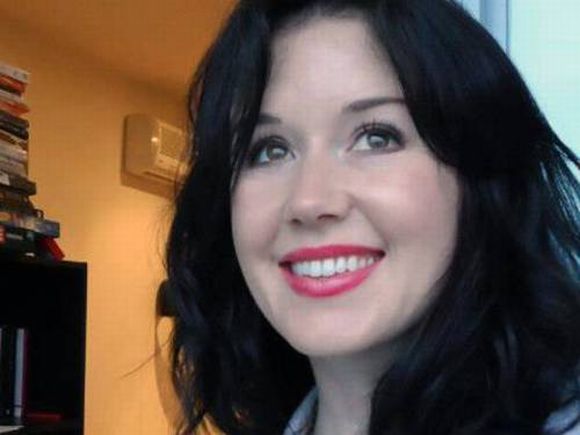
Sexual Assault, Moral Panic & Jill Meagher.

For the past two weeks it seems as if Jill Meagher has been exclusively in the media. Then, since her funeral last Friday, her name has all but dropped out of the headlines, if not from our collective consciousness.

Her tragic disappearance, rape and death sure played on my mind after some colleagues talked about it not-stop a few days after Jill went missing and transferred their obsession with the case onto me.

As I wrote last week, tragedies like this that are hyped up by the media rarely affect me. Obviously there is something about Jill that has permeated our abovementioned collective consciousness, if the outpouring of grief, support for her family, flowers out the front of the store where some of her last moments were captured on CCTV and the 20,000 Melbournians who turned out to march for peace two weekends ago are any indication.

Jill’s murder was no doubt horrific and it’s heart-warming to see so many everymen affected by a woman they never knew. But since her killer was charged and her body was found and laid to rest, I’ve started to get a bitter taste in my mouth about all the hoopla surrounding Jill’s disappearance and death: what’s so remarkable about this situation that has everyone calling for safety on the streets?

Don’t get me wrong: I’m all for safe streets, but I resent the fact that it’s women who are being cautioned not to walk alone at night, to get a taxi or a friend to accompany you home.

Some of this “concern” was directed my way last weekend at a friend’s birthday not far from where Jill lived, partied and was abducted. I was asked by a friend to please not walk alone at night and, as the non-owner of a car who is often without money for a taxi, I responded that I don’t have that luxury. It’s decadent to catch a cab two streets from the train station to my house, and unless that friend is going to offer to chauffeur me around the city, I think I’ll take my chances. It doesn’t come naturally for me to live my life in fear, not to mention the fact that the chances of experiencing a violent crime the likes of which Jill did are extremely rare. My friend is more likely to be involved in a car accident than I am to be attacked while walking home.

Upon further thought, my male housemate, who is out late many nights per week at work, rehearsals for a play, jogging and being social, was also there when my friend expressed her misguided anxiety about my after dark activities yet not a peep was directed his way. For those alarmists who think that any female on the street post-sunset is doomed to the same fate as Jill, please be mindful that according to the Australian Institute of Criminology, non-sexual assault is the most common form of violent crime, more likely to be committed against men than women. Why are women the only ones who are deemed less safe after Jill’s death? And why is it our responsibility not to get attacked? Maybe we should be focussing our concentration on teaching boys (and even then, it’s not just men who rape and women who are raped) not to rape and on a better screening process for criminals who are likely to reoffend, as Jill’s murderer, Adrian Bayley, did.

And another thing: abduction, rape and murder were just as scary and real before Jill made the news as after. In fact, because her killer is now in custody, the streets could actually be deemed safer (no thanks to the legal system who knew of Bayley as a repeat sex- and violent crime-offender but he’s only off the streets now that someone’s dead). That’s part of the reason why the moral outrage this incident has incited rubs me the wrong way: how many abductions, rapes and murders (not so much in Australia for the former and latter, but definitely so for the second crime) happen on a daily basis that we don’t hear a peep about? Or if we do, it’s only after it’s too late. All of the horrible things that happened to Jill were in existence before she experienced them. What’s so unique about her case?

I think it’s because she’s the “perfect victim”, if you will. Young; beautiful; white; middle-class; a migrant. If Jill had’ve turned up alive after her sexual assault, I think we would have heard the whispers of victim-blaming that circulated in the early days of her disappearance become a lot louder. She was drunk. She was out too late. Her shoes were too high. What was she wearing? Why did she talk to/go with her attacker? Don’t you think it’s weird her husband wasn’t with her? (This is a direct quote I heard from several people specualting about her disappearance.) Why didn’t she insist someone walk her to her apartment only a couple of blocks away along a route she took frequently? But because Jill did meet a fatal end, she’s become a martyr for making our streets a safer place as opposed to just another slut who was asking for it.

A blog post about Jill and the subsequent Sydney Road peace march and Reclaim the Night rally still to come talked about how SlutWalk is a radical feminist phenomenon that’s got its heart in the right place in theory, but that the Jill rallies are much more palatable. These sentiments are echoed in some of the comments on the post, that SlutWalk isn’t right for them but marching for Jill is. Everyone’s entitled to their own opinion (as is the catch cry of my concerned friend. Indeed, you are entitled to feel scared on the street at night if you so desire just as I am not to be.), but I don’t understand how taking a stand against victim-blaming, slut-shaming and rape culture isn’t “right for you”. But somehow a march to honour the memory of a woman we’ve only come to know in the tragic circumstances surrounding her death, without the clear objectives that SlutWalk, marriage equality marches and the banning of live exports rally over the weekend have. Did 20,000 people turn up to those?

In no way am I being a rape-apologist or trying to suggest that rape isn’t an increasing problem, both in practice and in our culture. I myself, friends, family, colleagues and people I’ve only read about have all experienced intimidation and harassment, if not something more sinister, on the streets and within circles we thought of as safe. But perhaps instead of using Jill Meagher as the scapegoat who warns women to keep themselves locked away in their homes after sundown or, at the very least, be clothed in shapeless, unrevealing garb with a chaperone present at all times, we should be focussing on the prevalence of sexual assault and harassment in society, perpetrated not only by strangers, but more likely by those close to us as well, and our reluctance to deal with its true cause and prevention unless it happens to the right kind of person woman and only after the fact.

Related: To Live & Die in Brunswick: Reflections on Jill Meagher.

Elsewhere: [Australian Institute of Criminology] Trends in Violent Crime.

[Dangers Untold & Hardships Unnumbered] Jill Meagher, SlutWalk & Reclaim the Night Sydney Road.

[unWinona] I Debated Whether Or Not to Share This Story.

Image via SBS.

On the (Rest of the) Net.

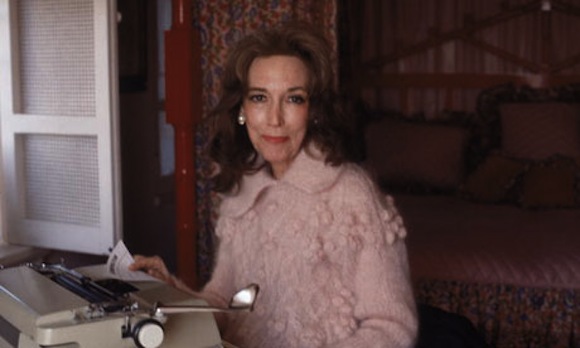
In the wake of her death, Tracie Egan Morrissey discusses Cosmopolitan founder Helen Gurley Brown’s feminism. [Jezebel]

Jodie Foster weighs in on the Kristen Stewart cheating scandal. [The Daily Beast]

Rachel Hills gets in touch with her vagina. [Daily Life]

When “Embarrassing Nightclub Photos” means “Embarrassing Slutty Nightclub Photos of Slutty Sluts”. [Jezebel]

In which a woman who was born from coercive sex and into the cycle of abuse and poverty contemplates being aborted objectively. Harrowing yet eye opening stuff. I wish we could all talk about abortion as openly as this. [MamaMia, via Role/Reboot]

Weird story of the week: the Vatican’s newspaper appeals to Mattel to sell the Bald Barbie in stores. You know the world is coming to an end when the Vatican is more progressive than Barbie! [The Guardian]

“The white male liberal gaze.” [Overland]

Yet another successful woman who conducts herself in a feminist manner we have to add to the list of successful women who don’t want to be thought of as conducting themselves in a feminist manner: Melissa Leo. [Jezebel]

Image via The Guardian.

On the (Rest of the) Net.


Check out my second article for TheVine, about the male body objectification trend. More to come here next week.

Still with the sexualisation of male bodies, who knew there was so much to unpack when it comes to Magic Mike? Can I get a redo on the above article? [The Atlantic Wire]

And lastly, nudity in rom-coms. [Daily Life]

Why is a reality TV star worth a reported $3.5 million seeking funding on Indiegogo to put on a fashion show at New York Fashion Week? On the one hand, use your own fucking money. On the other, it is “the first-ever fan-supported fashion show”. Social experiment or effortless money-grab? [Jezebel]

Mitt Romney is a mansplainer! A Mittsplainer, if you will. [GQ]

Why Fifty Shades of Grey is a badly-written, misogynistic piece of shit that encourages women to stay in an emotionally abusive relationship. [Good Reads]

Cosmo’s international editions: feminist or not? [NYTimes]

Channel 9 aired an expose on girls dressing skimpily for nights out on the town. Ita Buttrose said dressing this way makes people assume you’re a “tart”, and men don’t take tarts home to mummy. Charlotte Dawson said girls need to be careful about “the consequences of dressing up like this could be”. Shitstorm ensues. [MamaMia]

Why girls don’t need to develop their self-esteem, they need to recognise that beauty is a tool of the patriarchy to beat women into submission. [The Nation]

Image via IMDb.