Magazines: Paper Dwarves, Digital Giants?


A few weeks ago, in response to ABC’s Paper Giants: The Birth of Cleo, Mia Freedman wrote on MamaMia about her thoughts on the state of the (mag) nation and if magazines are still relevant and the amount of influence they wield in 2011:

“… Not that much excitement goes on in magazines anymore… [It’s a struggle to] get them [those who work on a magazine] to try and think about something that hasn’t been done before, something that will start a conversation and boost sales.”

Freedman compares pay TV’s Park Street, a The Devil Wears Prada-esque reality show about ACP’s head offices, featuring the editors of Dolly, Cleo, Cosmo, Madison and Shop Til You Drop, which received dismal ratings and poor audience response, to the critical success and brilliant take on Cleo in her influential heyday of Paper Giants. She says, “Gemma Crisp [editor of Cleo] explained the editorial process that a story undergoes from conception to publication. It takes a minimum of three months… When was the last time you waited three months for something? Life doesn’t happen in increments of months anymore. It happens in moments, in text messages, in Tweets. It’s fast and it’s relentless and if it takes you three months (or even three weeks) to get from thought to print then that’s just too long to retain the attention of your audience.”

When she puts it like that, Freedman makes me long for a simpler time, when I hung on the every word magazines published, as opposed to reading hundreds of articles a week, mostly on blogs, but also in magazines, in an attempt to stay on top of my blogging game.

Erica Bartle, creator of Girl with a Satchel and a former mag girl herself, says Freedman’s “blog-cum-website” “deals in what everyone’s talking about TODAY. It feeds off the 24-hour news cycle. And Mia’s own profile. And her opinion… It’s like a current affairs program for women online.” And now with MamaMia launching on SkyNews, Freedman’s brand is literally a current affairs program.

Not all blogs can operate this way. MamaMia has a team of bloggers, editors and techs who keep the site running smoothly which thus, as Bartle said, allows it to operate on a 24-hour news cycle.

Personally, I have a part-time paid job I go to four times a week, this means I only get to blog two or three days a week, and with so much info to process and a maximum of 15 posts per week to churn out in a small amount of time, this means I can’t always post as early and as often as I’d like.

But even for those who blog fulltime, like Bartle, it’s not always about what’s happening right NOW as it is about maintaining the blog’s integrity.“I personally operate on a different plane, because my beliefs very much inform my work. For that, I’m willing to sacrifice certain economic constraints,” she says.

Still in the blogging world, you have someone like Gala Darling, who is very much a self-made businesswoman as a result of her über-successful blog of the same name. She’s gone from strength to strength over the past few years; something she could never have done had she been a magazine editor (bar the select few, like Anna Wintour, Anna Dello Russo and yes, Freedman).

But, essentially, MamaMia has the advantage of possessing “a figurehead with credibility whose background is in traditional media. She has the gut instinct of an editor. Online you need news nous as well as technological nous and business nous.”

Another editor who has these qualities in spades is former Cleo and Girlfriend editor, Sarah Oakes, whom Bartle worked under at Girlfriend. Bartle says she invoked an atmosphere of ghosts of magazines past, creating “camaraderie, creativity and positivity, which I think she achieved. She gave you more work if she thought you could be stretched; gave you a talking to if you had crossed a line; gave you a pat on the back for a job well done.” Very Ita-like, wouldn’t you say?

Oakes is now editor of The Age & Sydney Morning Herald’s Sunday Life supplement, a title which has improved markedly since she took over. (I have also blogged here about how I think both Girlfriend and Cleo became better titles under her leadership.)

In fact, newspaper inserts are giving the glossies on the newsstand a run for their money, as they “are getting exclusives and have strong writing and design teams, as well as columnists and styling/shoots. These free weekly titles, because of the mastheads they reside within, have enviable readerships and access to celebrities. They are also respectable, well executed and FREE,” Bartle notes.

But at the end of the day, are magazines relevant?

Freedman writes:

“The internet has not only sucked up their readers, it has also gobbled up their purpose: to be a way women form tribes and communicate. Now there’s YouPorn and any other number of sites for titillation, Google for questions about sex, and any number of websites or free newspaper magazines if you’re looking for other types of content or a magazine-style experience. Women don’t want to be spoken TO anymore. They want to be part of the conversation, something which the internet allows, in fact depends on… the internet has taken the sting out of the raunch-factor for mags like Cosmo and Cleo.”

Yes, as Freedman says, there are much raunchier locales to get what would have been included in a sealed section only a few years ago. There’s also Perez Hilton, TMZ and even shows like Entertainment Tonight and E! News that monopolise celebrity content, while the fashion blogs are more of a go-to for what kids are wearing these days.

Sure, Vogue’s always going to be a premiere source for high fashion shoots from photographers the likes of Annie Leibovitz, Patrick Demarchelier and David LaChapelle, but magazines “seem to exist on a strangely distant planet where all the people look like plastic and the sole pursuit is ‘perfection’. Except that perfection doesn’t really exist,” says Freedman.

When sites like Jezebel, Cover Girl Culture and, yes, MamaMia and Girl with a Satchel are debunking photoshop myths and striving for more realistic representations of women in the media, magazines are doing this movement any favours. (Except maybe Brigitte.)

And when you can get most of a magazine’s content online anyway (I passed on a near-$20 copy of US Harper’s Bazaar in favour of accessing interviews with Kim Kardashian and Hillary Clinton on their website), are they really worth it?

Bartle doesn’t think so. “No, but they need to be distinctive from what we can get online or elsewhere if we are going to part with $5-$10 to purchase one. Premium magazines, which I have no qualms spending extra on, include The Gentlewoman and O The Oprah Magazine, because they cater to my tastes, sensibility and need for a good read on a Saturday afternoon with a cup of tea.”

I agree with Bartle’s sentiments.

While online is great for content from individuals not curated and/or watered down by magazines editors to fit the mold of their magazine, holding a truly great glossy in your hands, like the appeal of a physical book, while at the hairdressers, a café or tucked up in bed, means magazines will always hold a place in our hearts.

Right next to the Kindle and Google Reader.

Related: Paper Giants: The Birth of Cleo Review.

Everything They Touch Turns To Gold.

The Evolution of the Bookshop at The Wheeler Centre.

Elsewhere: [MamaMia] Paper Giants VS. Park Street: Why Magazines Are Not What They Used to Be.

[MamaMia] MamaMia Gets a TV Show.

[Girl with a Satchel] Homepage.

[Girl with a Satchel] Mid-Week Media Musings.

[Gala Darling] Homepage.

Images via ABC, MamaMia, Teacup.

Pretty Girl Bullshit.


White Girl Problems is the latest Twitter phenomenon to sweep the pop culture world, with such gems as “Fine, if that’s the way you’re going to act, then you’re uninvited to my Elizabeth Taylor memorial cocktails” and “I’m sorry you think I’m being a bitch”; the passive-aggressive “apology” heard in relationships the world over.

While the Twitter profile is poignantly taking the piss out of the problems of the privileged, there is the issue of race there, also.

Like, why is it called White Girl Problems? Why not Privileged Girl Problems? Or Rich Girl Problems? But even with that, it would be feeding into the classism debate. Whichever way you look at it, White Girl Problems is a double entrendre of racism and classism.

It also highlights the body image battle a lot of young girls face, be they white, black, rich, poor, or whatever. Here are a couple of examples:

While I’m not personally offended by the Twitter feed (I am a white girl with [first world] problems, after all), I can understand why some might be.

Racialicious, actually writing about the Alexandra Wallace/“Asians in the Library” scandal, says that it all comes down to “white female privilege”, meaning “you can say more outrageous shit because you’re a pretty white lady”.

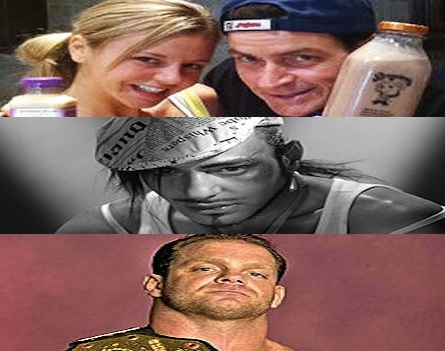
That may be so (I have been known to voice my opinion on all manner of topics that may be deemed controversial: the baptism of babies being bullshit, pretentious parenting, and abortion [more to come on that last one in coming weeks]), but how long have men—of all races but, yes, particularly Caucasian ones—been getting away with it? And still are. Charlie Sheen and Chris Brown are two names that spring to mind…

Related: First World Problems.

Rihanna’s “S&M”: Is It Really So Much Worse Than Her Other Stuff?

Guilty Until Proven Innocent: Charlie Sheen’s Witness.

Why Are Famous Men Forgiven for Their Wrongdoings, While Women Are Vilified for Much Less?

Elsewhere: [Twitter] White Girl Problems.

[Racialicious] Go After the Privilege, Not the Tits: Afterthoughts on Alexandra Wallace & White Female Privilege.

Images via TV.IGN, Anu News, Film Junk.

UPDATED: Apocalypse Now—2012 Come Early?


In light of my doomsday musings on 2012 being the end of the world, I came across this “Comment of the Day” on Jezebel, which lamented the supposed discovery of the lost city of Atlantis:

“Oh, fuck. All the loose plots are being resolved. I guess the world really is going to end next year.”

With all the natural disasters and political uprisings in the world at the moment, you’d be forgiven for thinking the end of the world—2012, according to the Mayan calendar—was happening as we speak I write.

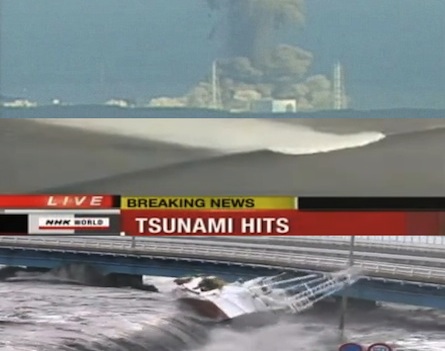
But with Japan’s earthquake, tsunami and nuclear crisis, New Zealand’s recent earthquake, Queensland and Victoria’s floods and Cyclone Yasi, the civil war in Libya and the Egyptian revolution, the end is nigh.

Now personally, I don’t actually believe the end of the world will occur on December 21, 2012, when the Mayan, or the Mesoamerican Long Count calendar, finishes. I think it will be more of an ideological shift caused by catastrophic events, like those happening in Japan, than Armageddon.

But let’s have a look at when the end of said calendar occurs and what it actually means.

In a (very sketchy) nutshell, December 20, 2012 marks the end of the 13th b’ak’tun, (equivalent to 144,000 days and 394.3 solar years), while December 21, 2012 will be the beginning of the 14th b’ak’tun.

There have been rumours that no prophetic predictions have been made after 2012 by Nostradamus et al., but Susan Milbrath, curator of Latin American Art and Archaeology at the Florida Museum of Natural History, says that reaching the end of a b’ak’tun cycle was cause for celebration and that the 2012 hullabaloo is “a complete fabrication and a chance for a lot of people to cash in.”

This lends evidence to my theory that with the world literally cracking up, it’s only a matter of time before we have to take heed of global warming warnings, which are manifesting themselves in natural disasters across the globe. Is it merely a coincidence that the first stage of the ratification of the Kyoto protocol finishes in December 2012?

Anyone who hasn’t been living under a rock (pardon the highly distasteful pun) in recent days would know that the Japanese quake was the seventh most powerful in history, and was actually so forceful, according to Italy’s National Institute of Geophysics and Volcanology, the University of Toronto, and NASA’s Jet Propulsion Laboratory that it actually “shifted the Earth’s axis by 25 centimeters (9.8 in). This deviation led to a number of small planetary changes, including the length of a day and the tilt of the Earth. The speed of the Earth’s rotation increased, shortening the day by 1.8 microseconds due to the redistribution of Earth’s mass.”

Not to mention its repercussions across the rest of the world, including Hawaii, the U.S. and Canada’s west coasts, Tonga, American Samoa, New Zealand, Russia, Mexico, Peru and Chile, and the holdup the nuclear disaster will cause for other countries interested in adopting nuclear power, including Australia.

Egypt’s uprising and Libya’s civil war seem like child’s play in comparison, but one humanitarian disaster after another seems to be the way of the future unless we get our act together and think of the bigger picture.

Twitter played a huge part in Egypt’s revolution (the Libyan people haven’t been so lucky, with internet access shut down by the government); mobile phones allowed Christchurch’s residents trapped in the rubble to contact family and emergency services with their whereabouts. With electricity, phone and internet connections down in Japan, it’s proving difficult to take the same road (again, pardon the pun; the tsunami washed out roads and train lines, leaving most Japanese residents in affected areas stranded). However, Google Person Finder, which was used in the Haitian, Chilean and New Zealand disasters, is coming in handy.

I’m not 100% sure what this all means, or even how it all relates to the supposed “end of the world”.

What I do know is that it seems increasingly likely that every time we turn on the news or open up our web browsers, we won’t see Charlie Sheen’s latest antics, but another disaster that is leading us to the end of the world if we don’t take a look at ourselves and make a change, as Michael Jackson so poignantly sung.

Elsewhere: [Jezebel] Comment of the Day: Earth Prepares for 2012 Series Finale.

[Wikipedia] Mesoamerican Long Count Calendar.

[Wikipedia] 2011 Japanese Earthquake and Tsunami.

[USA Today] Does Maya Calendar Predict 2012 Apocalypse?

[WebCite] Japan’s Quake Shifts Earth’s Axis by 25 Centimetres.

[CBS] Earth’s Day Length Shortened by Japan Earthquake.

Related: Apocalypse Now: 2012 Come Early?

The Big Issue Review, 1-14 March, 2011.

Minus Two & a Half Men.

Images via YouTube, Wish I Didn’t Know.


On the (Rest of the) Net.


The difference between truly Mean Girls and the just plain Clueless:

“In the end, Cher’s altruism may be what saves her reign, for unlike Regina, Cher tries to live up to her end of the social contract. If Regina can’t rule, she decides that no one can. She hurts her society by pulling a wiki-leaks and releasing the contents of the Burn Book, thereby causing complete anarchy…

“In essence, the reason Regina was overthrown is the same reason any dictator is eventually overthrown: the monarch breaks the social contract with his or her people and those people have been prepped by cultural illuminati with new ideas about government rule.”

“Fashion’s Fascists.”

And, in the same vein:

“Fashion people everywhere rushed to check their hair before joining the chorus of dismay, almost as if racism and sexism were not the stock-in-trade of their industry. In fact, it is an open secret in high fashion that black and minority ethnic faces… are not welcome.”

When having “a great personality” is code for “fat” and/or “ugly”.

It’s taken me a little while to get around to reading this, but check out Girl with a Satchel’s Erica Bartle in “JC & the Cool Gang”.

“How Rachel Zoe Became Hollywood’s Most Powerful Fashion Player.”

Glee’s Lauren Zizes: badass or fat bitch?

The myth of Bart Simpson’s birthday.

Jihad Cosmo:

“We had been thinking that what Cosmo was really missing was a healthy dose of religious fanaticism and a few passionate exhortations to violence, so we can’t wait to read the article ‘that urges readers to give their lives for the Islamist cause.’”

UK sculptor Jamie McCartney’s “Great Wall of Vagina” (semi-NSFW).

How to be a mermaid.

Elective C-section or vaginal birth?

How to move to New York City, according to Gala Darling.

Images via Overthinking It, The Hollywood Reporter, YouTube.

Apocalypse Now—2012 Come Early?


With all the natural disasters and political uprisings in the world at the moment, you’d be forgiven for thinking the end of the world—2012, according to the Mayan calendar—was happening as we speak I write.

But with Japan’s earthquake, tsunami and nuclear crisis, New Zealand’s recent earthquake, Queensland and Victoria’s floods and Cyclone Yasi, the civil war in Libya and the Egyptian revolution, the end is nigh.

Now personally, I don’t actually believe the end of the world will occur on December 21, 2012, when the Mayan, or the Mesoamerican Long Count calendar, finishes. I think it will be more of an ideological shift caused by catastrophic events, like those happening in Japan, than Armageddon.

But let’s have a look at when the end of said calendar occurs and what it actually means.

In a (very sketchy) nutshell, December 20, 2012 marks the end of the 13th b’ak’tun, (equivalent to 144,000 days and 394.3 solar years), while December 21, 2012 will be the beginning of the 14th b’ak’tun.

There have been rumours that no prophetic predictions have been made after 2012 by Nostradamus et al., but Susan Milbrath, curator of Latin American Art and Archaeology at the Florida Museum of Natural History, says that reaching the end of a b’ak’tun cycle was cause for celebration and that the 2012 hullabaloo is “a complete fabrication and a chance for a lot of people to cash in.”

This lends evidence to my theory that with the world literally cracking up, it’s only a matter of time before we have to take heed of global warming warnings, which are manifesting themselves in natural disasters across the globe. Is it merely a coincidence that the first stage of the ratification of the Kyoto protocol finishes in December 2012?

Anyone who hasn’t been living under a rock (pardon the highly distasteful pun) in recent days would know that the Japanese quake was the seventh most powerful in history, and was actually so forceful, according to Italy’s National Institute of Geophysics and Volcanology, the University of Toronto, and NASA’s Jet Propulsion Laboratory that it actually “shifted the Earth’s axis by 25 centimeters (9.8 in). This deviation led to a number of small planetary changes, including the length of a day and the tilt of the Earth. The speed of the Earth’s rotation increased, shortening the day by 1.8 microseconds due to the redistribution of Earth’s mass.”

Not to mention its repercussions across the rest of the world, including Hawaii, the U.S. and Canada’s west coasts, Tonga, American Samoa, New Zealand, Russia, Mexico, Peru and Chile, and the holdup the nuclear disaster will cause for other countries interested in adopting nuclear power, including Australia.

Egypt’s uprising and Libya’s civil war seem like child’s play in comparison, but one humanitarian disaster after another seems to be the way of the future unless we get our act together and think of the bigger picture.

Twitter played a huge part in Egypt’s revolution (the Libyan people haven’t been so lucky, with internet access shut down by the government); mobile phones allowed Christchurch’s residents trapped in the rubble to contact family and emergency services with their whereabouts. With electricity, phone and internet connections down in Japan, it’s proving difficult to take the same road (again, pardon the pun; the tsunami washed out roads and train lines, leaving most Japanese residents in affected areas stranded). However, Google Person Finder, which was used in the Haitian, Chilean and New Zealand disasters, is coming in handy.

I’m not 100% sure what this all means, or even how it all relates to the supposed “end of the world”.

What I do know is that it seems increasingly likely that every time we turn on the news or open up our web browsers, we won’t see Charlie Sheen’s latest antics, but another disaster that is leading us to the end of the world if we don’t take a look at ourselves and make a change, as Michael Jackson so poignantly sung.

Elsewhere: [Wikipedia] Mesoamerican Long Count Calendar.

[Wikipedia] 2011 Japanese Earthquake and Tsunami.

[USA Today] Does Maya Calendar Predict 2012 Apocalypse?

[WebCite] Japan’s Quake Shifts Earth’s Axis by 25 Centimetres.

[CBS] Earth’s Day Length Shortened by Japan Earthquake.

Related: The Big Issue Review, 1-14 March, 2011.

Minus Two & a Half Men.

Images via YouTube, Wish I Didn’t Know.

Minus Two & a Half Men.


Girl with a Satchel featured an excerpt from a Washington Post column about body snarking at the Oscars:

“I would like to note that more space was devoted to photographs of ladies wearing dresses… than for the last two weeks’ coverage of the events in Libya.”

This is also true of the news coverage in Vietnam, where a colleague of mine (whom I mentioned as the friendly workplace Big Issue provider earlier this week) is spending five weeks. In a recent email, he said that the hot topic on the news there is Charlie Sheen, not Libya, Egypt or Japan, which bore the brunt of a 7.3 magnitude earthquake yesterday afternoon.

A story on MamaMia written by publicist Steven Murphy echoes this:

“His weakness for drugs and alcohol is… well documented and he has been fodder for the tabloid press for years.

“But this latest incident is front-page news like no other. But why? Why is this incident haunting our news services day and night?”

The article somewhat-annoyingly glossed over the fact that his drug and alcohol problems are put at the forefront of his negative publicity, when his hatred of women and obvious mental illness are shoved to the back.

Jezebel hasn’t forgotten, however, with a no-bullshit article entitled “Charlie Sheen’s History of Violence Toward Women” published last week. The article also dealt with John Galliano’s disgraceful display of anti-Semitism, and what the news stories don’t tell you:

“Galliano allegedly grabbed gallery curator Geraldine Bloch by the hair and said, ‘Shut your mouth, dirty bitch, I can’t stand your dirty whore voice.’”

I, myself, didn’t even know that happened until I read the article, and I usually take a vested interest in these sorts of things.

On the plus side, Galliano has been fired as head designer of Christian Dior and—finally!—Sheen’s been fired as head douchebag on Two & a Half Men, to be replaced, allegedly, by reformed bad boy and fellow brat pack member, Rob Lowe.

While I couldn’t be happier about the latter (let’s shout it from the rooftops!), Galliano’s reign at Dior produced some of the finest garments the fashion world has seen, and it’s unfortunate it had to come to this.

But I applaud the fashion house for ousting the anti-Semite, and stars like Natalie Portman, who have publicly spoken out against him.

Both men’s firings show that there is a zero tolerance policy against these kinds of abhorrent behaviours, and hopefully other companies, in the entertainment industry and otherwise, will follow suit.

Although Michael Specter of The New Yorker doesn’t think so, writing that:

“the fashion world has a remarkable ability to shrug off the odd deeply flawed human being, as long as he or she can cut a dress like Galliano can or wear one like Kate Moss, who, despite behaviour that sets a disastrous example for millions of girls, including issues with drugs, is forgiven because, well, she is really very pretty.”

I haven’t always been innocent in providing double standards to those I like, think are talented, and should be forgiven for their indiscretions.

Just yesterday, some co-workers and I were talking about Catherine Deveny’s tweets at last year’s Logies. Personally, I didn’t find them to be offensive, and sorely miss her column on the back page of The Saturday Age’s Life & Style (formerly the A2). But, looking back on it, The Age did the right thing by sacking her. At the time, both Deveny and I used the excuse that she’s a comedienne; that’s her job. I guess it takes the disgraces of people you don’t like to understand the repercussions of (the disgraces of) those you do.

Once such repugnant crime committed by professional wrestler Chris Benoit in 2007, when he murdered his wife and son and killed himself, gave me lots to think (and write) about. On the one hand, I felt his legacy as one of the best professional wrestlers ever to grace the squared circle shouldn’t be forgotten, however, Benoit took three lives and sullied the reputation of professional wrestling (okay, there wasn’t much of a reputation left to sully!) and sparked a debate on steroids and drug testing that raged for years; the smoke of which still lingers today.

I’ve written several articles on that story and, with a new frame of mind to cast a different light on the story, I think I may just revisit said articles. (The anniversary of the double-murder suicide is June 24, so watch this space around that time.)

Benoit was obviously seriously mentally ill; the (not-so-) funny thing is, his friends, family and co-workers never picked up on it.

Charlie Sheen, however, has a long history of violence and drug use, and there’s no telling what he’s capable of.

Related: The Big Issue Review, 1-14 March 2011.

The Anatomy of a Douchebag.

Guilty Until Proven Innocent: Charlie Sheen’s Witness.

Why Are Famous Men Forgiven for Their Wrongdoings, While Women Are Vilified for Much Less?

Elsewhere: [MamaMia] Advice to Charlie Sheen from Australia’s Top Publicist.

[Jezebel] Charlie Sheen’s History of Violence Toward Women.

[The New Yorker] John Galliano’s Implosion.

[Girl with a Satchel] Body Snarking is So No Funny But Jacki Weaver is Fab.

Images via NY Daily News, The Gloss, Pop Culture Madness.

Magazine Review: The Big Issue, 1–14 March, 2011.

Did you know that there are approximately 7.5 readers for every copy of The Big Issue sold? Which is great for circulating The Big Issue’s content to different kinds of readers, it sucks for the people selling copies out the front of The Body Shop (where I was first exposed to the magazine in my hometown of Bendigo in country Victoria) or at Parliament train station, where I picked up this week’s copy.

But when I read those stats on Girl with a Satchel a couple of weeks ago, I wasn’t surprised. A colleague of mine usually brings in his copy to the staff lunchroom, which makes the rounds at work. He’s gone overseas for a few weeks, so I decided to be the one to provide the communal Big Issue during that time. I do hope that more people will fork out the fortnightly five bucks it costs to be exposed to some great Australian writing (“compared with $4.70 for your weekly copy of Who) but until then, I can take solace in the fact that I did my bit.

There’s still a week left to get your paws on a copy, and I suggest you do, as there are some great articles in there, a lot of them dealing with the social revolution tool that is Twitter, which features on the cover. And for you us pop-culture junkies, there’s Liz and Shane and their Twitter antics, too:

“Celebrities, meanwhile, have embraced Twitter as an opportunity to prove their Everyman concerns without having to directly engage with, well, every man or woman. Kourtney Kardashian, for example, recently tweeted her two-million followers: ‘Does anyone else get scared that being on their phones too much or sleeping with your phone near u is so bad? Or am I paranoid?’ I wonder how many fruitlessly replied, ‘Omg, I totes have a brain tumour! We should be BFFs!’ (Note to tweenie Tweeters: she couldn’t care less.)” (p. 15).

You’re such a visionary, Kourtney!

On a more serious note, editor Alan Attwood writes of the similarly prophetic Steven Johnson from Time magazine, who wrote ‘How Twitter Will Change the Way We Live’:

“He argued that all those tiny tweets add up ‘to something truly substantive, like a suspension bridge made of pebbles’. He concluded: ‘The weather reports keep announcing that the sky is falling, but here we are—millions of us—sitting around trying to invent new ways to talk to one another.’ And that, surely, can’t be a bad thing” (p. 4).

We’ve read all the articles about Twitter being a valuable tool for social change, particularly in Egypt, and there’s no shortage of that in the feature article, from which the above Kardashian quote is garnered. Worth the $5 cover price for this article alone.

Another article I loved this fortnight was Patrick Witton’s on “Sharing the Load” of the hellish daily commute.

I wrote last week about two friends of mine who spend at least two hours in their car getting to and from work each day, which sounds like my worst nightmare. Sure, I used to travel upwards of four hours to work from my aforementioned hometown, but that was on the train, where I could get valuable reading, sleeping and daydreaming done. Driving to work allows the driver to indulge in (hopefully) only one of those activities. Then again, I don’t have a license, so I have no idea how much daydreaming gridlock allows…

Witton profiles the car-pooling phenomenon in America, where there are designated pick-up and drop-off points, between which complete strangers ride in silence, and drivers take advantage of the express car-pool lanes. Like a bus, but without the mentally disturbed drunk espousing the apocalypse.

There’s also the teenagers in Jakarta, who make a living from hitchhiking along the highways, getting paid to be picked up so solitary drivers can hightail it to work in the express lane.

Fascinating stuff.

Elsewhere: [Girl with a Satchel] The Big Issue Blitzes Readership Survey (But are Aussies Being Tight?)

On the (Rest of the) Net.

In the wake of Angus and Robertson and Borders going into receivership, Satchel Girl Erica Bartle thinks “some things are prettier in print”.

“Letters to Fictional TV Characters”, such as Saved By the Bell’s Jessie Spano:

“You hair, your height, your convictions; everything about you terrified viewers! Maybe it’s because you bear a striking resemblance to the exotic dancer in Showgirls.”

Channing Tatum on the double standards for male and female strippers. (FYI, he used to be one.)

Jezebel asks “What Happened to Olivia Benson’s Sex Life?” by way of The New Gay.

Mia Freedman writes: “I want to be kept up to date about the news from Christchurch without feeling like I’m participating in some voyeuristic type of grief porn.”

Freedman also has a new book out, Mia Culpa: Confessions from the Watercooler of Life. Here she answers questions about it. Can’t wait to get my hands on it! Review pending!

There have been differing views of the St. Kilda Schoolgirl, and this journalist expresses yet another.

It pays to be a Kardashian. $65 million, to be exact.

Googled “murder” lately? Jezebel bets you weren’t expecting to find “abortion” as the second link…

Rape on TV.

Julia Baird on journalist Lara Logan’s sexual assault by 200 men during the  Egyptian revolution:

“The attacks on Logan spread to Twitter, with coded versions of the above sentiments, most implying that it was her fault because women should not go into war zones, and that this is what happens if you are young, hot and surrounded by Muslims*. It’s hard to know where to start—the sexism, racism and lack of simple compassion are all stunning” [bold text mine].

*It’s sickening that this is the viewpoint of so many.

Image via The Next Bar Stool.

On the (Rest of the) Net.

Millennials Magazine profiles the beauty of the to-do list, Daniel D’Addario gets nostalgic for Daria Morgendorffer, while Katie Baker wishes she was an orphan:

“Orphans are adored by their peers, but tormented by evil guardians, stay cool under pressure and abuse, and rarely fail to win true familial love and affection in the end.”

Also at Millennials Mag, the awesomeness of The O.C. was that “it was just fucking dramatic”:

“Kirsten’s an alcoholic. Marissa almost dies in an alley in Tijuana. Luke’s dad turns out to be gay. Luke and Julie Cooper hook up, grossly. Seth, who’s supposed to be this huge nerd, nabs the most popular girl in school. Summer gets into Brown, which is actually kind of realistic considering her money, but that’s another story. Obviously some lesbian stuff happens. Marissa shoots Trey. Marissa dies. Ryan and Taylor go into a parallel universe while in a coma. And yet everyone keeps on being rich and impossibly well dressed and extremely easy on the eyes.”

“The 9 Most Racist Disney Characters.”

Continuing with the “Why Don’t You Love Me?” theme, Tiger Beatdown discusses the cultural relevance of Beyonce’s anthem, in relation to buying access to a stripper’s body via a $10 lap dance:

“I was able to buy access to this woman’s body and (very convincing) pretend affections for less than I would spend picking up a couple of last-minute things at the grocery store. It was worth almost nothing. Less than an oil change. Less than someone cutting my hair. Less than getting a decent tailor to hem a pair of pants. Less than a bouquet of roses.

“And that’s the day that I realized we were all the victims of a sick joke. A despicable charade where so much is demanded of women, so much compliance and poking and prodding, so much effort to make ourselves beautiful and radiant and perfect, so much forcing of square pegs into round holes, just so we could meet it all, do it all, get close to the apex of perfection and still be worth nothing. We would be left with alienation from our own bodies, our bodies that we squeezed into stilettos and shaved and waxed and whittled into tiny silhouettes at the gym, always striving for more perfect, thinner, prettier, more alluring. Working so hard to satisfy the cultural imperative toward female perfection—how could we have time for our own desires except to be desired?

“Latoya Peterson writes about the video that ‘Once again, Beyoncé’s lyrics define her positive attributes in the context of why she should be desirable to some fool that doesn’t appreciate her. The video, however, is a lot more interesting since, with Beyoncé playing the role of “B.B. Homemaker”, it is openly mocking a lot of the ideals and tenets of womanhood’. I’d go much further than that. I’d say that the song and the video together form a radical critique of femininity, full stop. Because this is what femininity is about: making yourself appealing to men by adhering as closely possible to cultural ideals of perfect womanhood. Her lyric is not ‘when I am so damn easy to love’, but ‘when I make me so damn easy to love’. It’s effort, it’s a construct, it is something she does and not something that she is. It is performative.”

“Man up” seems to be a fairly frequently used phrase in my vernacular, and The New York Times ponders its true meaning:

“But man up isn’t just being used to package machismo as a commodity. Its spectrum of meanings runs from ‘Don’t be a sissy; toughen up’ all the way to ‘Do the right thing; be a mensch,’ to use the Yiddishism for an honourable or upright person. The Man Up Campaign, for instance, is a new global initiative that engages youth to stop gender-based violence: ‘Our call to action challenges each of us to “man up” and declare that violence against women and girls must end,’ its mission statement reads.”

Now that is something we can all certainly man up stand up for.

The top ten reasons why anyone follows anyone who’s anyone on Twitter.

Uplift Magazine on those Crystal Renn food photos.

In defence of books:

“Many books are screwy, a great many are dull, some are irredeemable, and there are way too many of them, probably, in the world. I hate all the fetishistic twaddle about books promoted by the chain stores and the book clubs, which make books seem as cozy and unthreatening as teacups, instead of the often disputatious and sometimes frightening things they are. I recognize that we now have many ways to convey, store, and reproduce the sorts of matter that formerly were monopolized by books. I like to think that I’m no bookworm, egghead, four-eyed paleface library rat. I often engage in activities that have no reference to the printed words. I realize that books are not the entire world, even if they sometimes seem to contain it. But I need the stupid things.”

The perils of HalloSlut-o-Ween, at Rabbit White.

Meet Me at Mike’s Pip Lincolne writes about what makes a successful blog.

More on the Glee/GQ photo shoot scandal, this time from NPR and the girls at Go Fug Yourself.

Magazines: Goodbye TV Hits, It Was Nice Knowing You.


The first magazine I ever bought was TV Hits.

I remember sticking posters of Jonathan Taylor Thomas, George Michael and Dean Cain of Lois & Clark fame on the wall of the room I shared with my sister.

I remember knowing the words to every Top 40 song that was released from about 1996 to 1999 (when I graduated from primary school and onto Dolly), thanks to the lyric card cut-outs each edition came complete with, which comes in handy for ’90s themed dance nights.

I remember hiding my latest copy under my desk at school and reading it cover to cover during class, then again when I got home.

I remember friends commenting that they were jealous of me for being a walking Wikipedia for all things celebrity.

TV Hits was where my love affair with pop culture began, and I was known to lose sleep waiting for the latest issue to come out the next day. My mind was a sponge back then, and after much sorting, I can usually recall some of that info.

But Girl with a Satchel reports that TV Hits is to fold, and while it has become a shadow of the magazine Mecca it once was, its nostalgic influence makes me sad to see it go.

But with blogs and mobile phones and Twitter and what not, the tween music mag has become obsolete. While back when I was its number one fan, the mag was much more of a TV Week meets the entertainment section of Famous or NW publication, it had devolved (evolved?) to strictly music, with a little bit of light TV and movies on the side.

The news comes at a time when fellow Australian mag Notebook: has released its final issue, highlighting the fact that unless a magazine is selling desirable numbers year on year, month on month, week on week, and if similar content is available elsewhere (online), there’s no place for it on the newsstand.

So, in honour of TV Hits, let’s break out the Spice Girls-style platform sneakers, spin some Best of 1998 albums and trek to the Reject Shop for some hair mascara and butterfly clips, and party like it’s 1999.

Elsewhere: [Girl with a Satchel] TV Hits R.I.P.

[Girl with a Satchel] A TV Hits Clarification.