Politicising Beyonce.


Sometimes I wish I was still at school. I had less responsibility, but a lot more was at stake. I had no life, what with classes, studying and work, but I got to learn new things. I’ve been running this blog for nearly two years now, and I’m always reading and clamouring for new things to blog about and voice my opinion on. Blogging is more fun than essay writing, so maybe I don’t wish I was still studying.

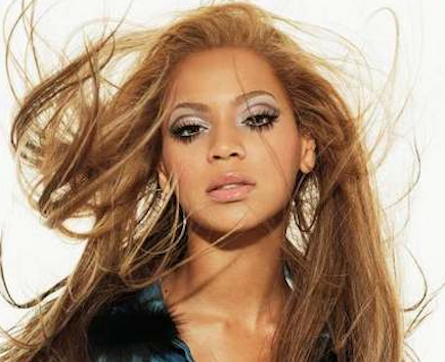
And then I read something like this: a PhD student at Rutgers university in the U.S. has devised a course called “Politicising Beyonce”.

From HuffPo:

“[Department of Women’s & Gendr Studies doctoral student and lecturer, Kevin] Allred was inspired to lecture the course following his four semesters as a Women’s Studies 101 instructor where he often found his class debating whether or not the [p]op star is a role model for today’s youth. According to the site, course topics include the extent of Beyonce’s control over her own aesthetic, whether her often half-naked body is empowered or stereotypical, and her more racy performances as her alter ego, ‘Sasha Fierce’.”

I would love to write essays on end on Beyonce’s political significance, but there’s enough on the interwebs to keep my thoughts provoked. So, because most of us won’t be able to be enrolled in “Politicising Beyonce”, here are some links to keep us entertained:

Related: Why is Feminism Still a Dirty Word?

Elsewhere: [Jezebel] Beyonce’s Pregnancy & the Debate Over Black Women “Doing it the Right Way”.

[Clutch] Beyonce, Baby Bumps & Ding it the Right Way.

[Madame Noir] How Beyonce’s Pregnancy is Being Used to Look Down Upon Single Mothers.

[Feministing] Behind Every Strong Man, There is an Even Stronger Beyonce.

[The Millions] All the Single Ladies: The Problem with Feminist Anthems.

[Jezebel] Is the Meaning Behind Beyonce’s Music Misunderstood?

[Tiger Beatdown] Why Don’t You Love Beyonce? An Inquiry.

[Jezebel] Retro Styles & Gender Play: Beyonce’s “Why Don’t You Love Me?”

[Racialicious] What Sarah Palin Taught Me About Beyonce.

[My Best Friend Gayle] Upgrade U: What We Can Learn from Beyonce.

[Jezebel] Let’s Invent a Catchy New Word for Feminism.

[Girls Are Made From Pepsi] The Post in Which I Talk About Beyonce, Feminism & Equality for All.

[HuffPo] Beyonce’s Rutgers Class: Singer’s Career the Focus of “Politicising Beyonce”.

Image via Shallow Nation.

12 Posts of Christmas: In Defence of Mia Freedman.

In the spirit Christmas, I’ve decided to revisit some of my favourite posts of the year in the twelve days leading up to December 25th. 

You might remember back in July when Cadel Evans won the Tour de France, Mia Freedman said on the Today show that sportspeople aren’t heroes, and a shitstorm ensued. You can read the original post here.

Mia Freedman’s copped it pretty hard in the media the last couple of weeks, ever since her comments about Cadel Evans and sports stars being held up as heroes.

It’s no secret that Freedman is my idol, so I will go to bat for her til the cows come home. She’s the reason I became a writer. She’s the reason I did work experience at Cosmo. I share a lot of her views. Whether it’s just a happy coincidence, or I’ve shaped my views around hers (I started reading Cosmo at 15, a very impressionable age, so it’s more than likely the latter), I don’t know.

I’ve written about my love for Freedman, followed closely by formerGirlfriend and Cleo editor, and current Sunday Life editor, Sarah Oakes, numerous times, and how the incestuous nature of the magazine world ensures a similar writing and editing style from those who work together. Take Freedman and Zoë Foster, for example. Or Oakes and Girl with a Satchel’s Erica Bartle and Musings of an Inappropriate Woman’s Rachel Hills.

Speaking of Sunday Life, Freedman’s column last weekend solidified why she’s a woman after my own heart.

She wrote about spending time with her family, and how planning big events are always a disaster and it’s the little, “mundane moments” that are memorable.

But back to the issue at hand: sportspeople as heroes.

I agree wholeheartedly that sportsmen and women aren’t heroes. (I threw up in my mouth a little bit when Karl Stefanovic and Lisa Wilkinson stood for the national anthem after Evans won the Tour de France.) Yay, they can “swim fast”, “kick a ball with accuracy”, “run quickly” and “jump over high things”. But how does this make them heroes? It makes them superficial “heroes” or emblems of sporting events in which they did good, but not actual heroes. We can leave that title to soldiers, doctors, activists, social workers, firefighters and others who face death and social injustice to save lives and make the world a better place.

As Freedman reiterates:

“I roll my eyes every time another Australian of the Year is named and it’s a sportsperson. I cringe at the CONSTANT sycophancy and praise heaped on sportspeople and the way they are forever lauded as heroes… How does being highly physically capable make you a hero?”

I read somewhere that it is highly likely Evans will be named 2011’s Australian of the Year, so start warming up those eye sockets, Mia!

I brought this notion up with a coworker last week, who said doctors aren’t heroes just because they’re saving lives. But what about Doctors Without Borders, or doctors and nurses with the armed forces? “Well, that’s different,” he said. Why? Because they’re facing their own death whilst trying to prevent someone else’s? But sportspeople aren’t facing death (okay, sometimes they are), and their payoff is purely selfish.

Said coworker mentioned some AFL “hero” who, back in the ’70s (I think; don’t quote me on this), finished the grand final with a torn ligament and brought the premiership home. Some might call it heroism; others stupidity.

And I think the sportsperson=hero dichotomy is abhorrent, considering the extracurricular allegations levelled at some of them. Is Nick D’Arcy a hero for punching some guy and leaving him with irreparable facial damage? Are the Collingwood FC guys heroes for winning last year’s premiership, with some of them subsequently going on to allegedly sexually assault one or some groupies? How about the world class douchebag Brendan Fevola? Or Tiger Woods? O.J. Simpson? Hardly heroes.

Perhaps we should be looking to sportspeople like Glenn McGrath, who works tirelessly for his late wife’s breast cancer foundation. Or the Essendon FC, who work with schools to improve literacy. While not exactly heroes per se, at least they’re doing something other than hitting and kicking balls.

Freedman writes in a related piece:

“Sporting stars may have great physical skills but that’s all. They’re no smarter or better or nicer or more well intentioned than the average Australian. In fact, I would argue that generally (and of course this is a generalisation), they are less informed, less aware and less street smart than the average bear.

“This is because to become a great athlete, you have to spend many years from the time you are very young, refining your skills. That’s years swimming up and down a pool. Years running around a track. Years kicking a ball or hitting it with a bat.

“Years…

“I’m happy for anyone who CHOOSES to spend years of their life dedicated to their sport. Go for it. But let’s not pretend it’s a selfless or noble pursuit.

“Professional athletes do it for many reasons. Sponsorship dollars. Personal satisfaction. A desire to represent their country or be the best at swimming or kicking or hitting or whatever it is they’re good at.”

Without humiliating anyone, I find the “less informed, less aware and less street smart” contention is particularly true of one of my physically gifted friends.

While he has a Masters and is one of the most book-smart people I know, he admitted to me that until he was in his late teens, he was completely sheltered by his parents. So much so that he didn’t buy his first CD until around this age. Up to that point, he listened to whatever his parents wanted to listen to, because it was pretty much school, practice, competitions, and the only musical exposure he got was in the car on the way to said school, practice, competitions.

Now the kind of sports he plays aren’t exactly your true blue AFL or cricket (in fact, they’re so obscure I won’t mention them here at the risk of giving him away!), so he’s in another boat altogether: his sports would be, and have been, ridiculed by both your Aussie bogan and your highbrow cultured Australian.

Now, from what I’ve read, Cadel Evans is involved in other noble pursuits, like charity. Unfortunately, I think Freedman’s point was sullied by using Evans to bring it up on national television. Perhaps if she were talking about Stephanie Rice or Ben Cousins her contention would have been more well received. But that’s the risk you run when you voice an opinion that’s not of the norm.

And that’s why I love her. Sure, she got crapped on by most of Australia for making a valid point. But she was able to return to voicing her opinion on Today the same time the following week, joking about going into witness protection, but getting a haircut instead. She was able to find the humour in the situation, and see where she might have been wrong.

For the record, I don’t think she was wrong.

Related: In Defence of Mia Freedman.

Everything They Touch Turns to Gold.

Mama Mia: A Memoir of Mistakes, Magazines & Motherhood By Mia Freedman Review.

Mia Culpa: Confessions from the Watercooler of Life by Mia Freedman Review.

Elsewhere: [MamaMia] Cadel Evans: Is He a Hero?

[MamaMia] Cadel: Here’s What I Learned.

[MamaMia] Is Being Australian Really So Much About Gold Medals?

[MamaMia] Stephanie Rice. Enough With the Hero Worship.

[MamaMia] When Family Time is a Nightmare.

Who is Stacy Keibler?

You might have seen the blonde Glamazon on the arm of notorious bachelor George Clooney at the premiere for his movie The Descendants a couple of weeks ago. They even spent Thanksgiving together.

But who exactly is this tall, blonde and beautiful woman?

Stacy Keibler has been in such TV shows as Punk’d, Chuck and US Dancing with the Stars, and in movies like Big Momma’s House 2. Before she got together with Clooney, Keibler was in a long-term relationship with Geoff Stults of 7th Heaven fame, who also caught the eye of Jennifer Aniston at one time.

But Keibler’s biggest claim to fame was as a WCW Nitro Girl and WWE Diva. For those not familiar with the acronyms WCW and WWE, they stand for (the now defunct) World Championship Wrestling and World Wrestling Entertainment, respectively. That’s right, Stacy Keibler was a wrestler…

Well, more of a piece of eye-candy than a wrestler, per se, who strutted around in short shorts and mini skirts, using her 42” legs to her advantage in Thanksgiving gravy bowl matches, lingerie matches and Santa’s Little Helper matches. Hey, no one ever said professional wrestling was feminist!

She spent seven years in the biz (as they call it in, erm, the biz!), at one point even studying full-time, appearing weekly across the country as a Nitro Girl and cheerleading for the Baltimore Ravens, all at the tender age of 20! Keibler acted as a valet for wrestling Superstars such as The Dudley Boyz, Test (the ring name of the late Andrew Martin), Scott Steiner, Randy Orton and Rosey & the Hurricane. Despite her athleticism, Keibler never won a major wrestling title.

And she’s not just all about the glitz and glamour; Keibler has been involved in charities as part of the WWE, including SmackDown! Your Vote, a campaign to mobilise unregistered voters in the U.S., Make-a-Wish Foundation, as well as UNICEF and the Celebrity Soccer Challenge outside of the ring.

Whilst she has now moved on to bigger and better things (you can’t get much bigger and better than George Clooney, amiright?), she will always be known as the “legs” of professional wrestling.

Images via The Hollywood Gossip, Inside SoCal, YouTube.

The Kardashian Backlash—Overreaction?


I bet when Kim filed for divorce after 72 days of marriage to Kris Humphries, she didn’t expect a backlash this extreme. I mean, who expected a backlash at all? Celebs get married and divorced in a heartbeat all the time. And there hasn’t been a mass turning on reality TV’s favourite most famous family despite all the other desperate and fame-whorish things they’ve done/attached their name to (portapotties and a personalised credit card with exorbitant rates, anyone?), so why now?

Perhaps it’s because, firstly, rumours of Kim “recruiting” potential future husbands, the cliché proposal with rose petals and the $10 million made-for-TV wedding event did nothing to quell suspicion that not only was Kim and Kris’ whole relationship a sham, but that the Kardashian family in general aren’t real in the slightest.

And secondly, if conservatives are campaigning to never allow the gays access to marriage licenses at the risk of tarnishing the “sanctity of marriage”, what the hell does a 72-day charade union say about the sanctity of marriage? (Yes, I’m well aware this joke has been done to death in the media and on the comedian circuit.)

Yes, those reasons are certainly valid ones to perhaps stop watching the show and buying the gossip mags. But Kim Kardashian and her family have never been the best role models (hello, Khloe and your DUI arrest and lock-up!). This is hardly the worst crime against humanity celebrity they’ve committed, and it’s sure not to be the last.

But, by the same token, perhaps a family who’ve built their brand around being famous and making money by any means necessary deserves what they’ve got coming to them?

Personally, I was shocked at the divorce announcement and clicked on the links for the first couple of days, but now I’m—as I’m sure everyone else is—sick of it. To me, it’s just another chapter in the Keeping Up with the Kardashians soap opera. I’ve become desensitised to it all.

So what do you think? Is Kim’s divorce the final straw? Will you stop supporting her brand? Do you even care?

Related: The Kim Kardashian Backlash.

Is Kris Jenner a Bad Mother?

Reality TV & Porn Stars Go Together Like “Peas & Carrots”.

Elsewhere: [Jezebel] Kim Kardashian’s Divorce, By the (Incredibly Ridiculous) Numbers.

[The Pursuit of Harpyness] I Can’t Believe I’m Writing This, But…

Image via News.com.au.

Beyonce—Countdown to Overexposure.

I love me a bit of Beyonce every now and then, but this has got to stop!

Ever since she announced her pregnancy at the MTV VMAs in August, there’s been talk of a black woman “doing it the right way”, being “sexy and pregnant” and, of course, whether Bey’s bump is even real!

Seriously, when the world starts speculating that the most anticipated celebrity offspring of the year isn’t being carried by the female half of said celebrity couple, I think it means they’ve officially reached overexposure status. This is even worse than the film clip that spawned a thousand spoofs (“Single Ladies [Put a Ring on It]”) and that whole Taylor Swift-Kanye West debacle.

However, when her latest video was released for “Countdown”, I have to say I did like it. I thought it harkened back to Beyonce’s video for “Why Don’t You Love Me?”, with some Audrey Hepburn, ’60s-esque looks thrown in there, too. But, just like the response to Bey’s performance of “Run the World (Girls)” at the Billboard Awards, the copycat allegations ran thick and fast. She’s like the new Lady Gaga!

What do you think of Beyonce? Still love her or couldn’t care less?

Related: Did Rosie the Riveter Wear Hotpants?

Elsewhere: [Jezebel] Beyonce’s Pregnancy & the Debate Over Black Women “Doing it the Right Way”.

[Jezebel] Pregnance Plots Maternity Clothing Line.

[Jezebel] The Bizarre & Burgeoning Fixation with Fake Baby Bumps.

[Jezebel] Beyonce Accused of Copycat Choreography (Again!).

[MTV] Beyonce’s “Countdown” Video: A Pop-Culture Cheat Sheet.

[Buzzfeed] Beyonce Ripped Off Her Amazing Billboard Music Awards Performance.

In Defence of Porn.

“Porn Wars” covered The Monthly in September. Melinda Tankard Reist and Abigail Bray just released Big Porn Inc., a compilation of anti-porn essays. Serendipitously, when I decided I would write this article over the weekend, controversial sex writer Bettina Arndt wrote about the porn debacle in The Sunday Age.

She said:

“The suggestion that porn changes men’s attitudes to sex is really questionable. While there’s a body of psychology research suggesting exposure to porn has that effect, Professor Catherine Lumby and colleagues in The Porn Report, published in 2008, found this laboratory-based research to be contradictory and unlikely to reflect real-life situations. ‘The entire tradition of social science research into pornography has started with the assumption that porn is a major cause of negative attitudes towards women and has set out to prove this,’ conclude these Australian academics.”

She goes on to write:

“… Arguably porn has nothing to do with the insensitivity causing men to behave in that way [with negative perceptions of women and sex], which stems from their cultural and social backgrounds.”

When society encourages the viewpoint of women as second-class citizens there for the appropriation of men’s desires and the male gaze, which—granted—porn does replicate in a lot of instances, I just don’t get what the big deal is surrounding it. While Tankard Reist and others go on about the “pornification of society”, shouldn’t we be looking at the society which spawned porn, not the other way around? Shouldn’t we be looking to, as Arndt suggests, porn consumers’ (of both sexes) backgrounds to determine their use and the effects of the medium?

Caitlin Moran says in her memoir, How to Be a Woman (which, keen-eyed readers, has been referenced here a hell of a lot in the past week or so!), that “the idea that pornography is intrinsically exploitative and sexist is bizarre; pornography is just ‘some fucking’, after all. The act of having sex isn’t sexist, so there’s no way pornography can be, in itself, inherently misogynist.”

She raises an interesting, left-of-centre notion that is not often discussed in (extremist?) feminist critique: if consensual sex isn’t sexist, how is consensual sex—that just happens to be filmed—in porn sexist?

I will argue that there are plenty of representations—in fact, most—in porn that are sexist. The lack of female orgasms, or the ejaculation of the male partner(s) into the face of his female partner(s), which seems to be how so many porn videos “finish” these days, come to mind. But, as Fine writes in The Monthly, “is degradation in the eye of the beholder, or is it just in the eye?”

As “facials” are really the only problem I have with heterosexual, seemingly consensual, two-(sometimes-three-)partner porn, I’d have to agree that “degradation is in the eye of the beholder.” In that case, you don’t have to watch it.

Not only that, but porn might be seen to have some positive effects.

Firstly, as have always argued, the existence of fetish porn is an outlet for those with said fetishes, who might otherwise have gone elsewhere to have their sexual desires fulfilled.

“… Some researchers suggest exposure to pornography might make some people less likely to commit sexual crimes,” writes Melinda Wenner Moyer in The Scientific American.

So long as we can educate young people—with an emphasis on young boys—about consent, the fantasy that porn survives and thrives on and expression of your own sexuality, whether it conforms to sexual stereotypes or no, porn is not harmful, in my opinion.

As a recent article on MamaMia opined: “We need better porn.” If we have access to porn in which everybody gets off, which is a major flaw in the current porn industry, what’s the problem?

As is a major focus of Arndt’s article, as well as The Sunny Side of Smut, men prefer to view women engaging in “enthusiastic consent” to sex, as opposed to the oft-mentioned concern that porn “incite[s] violence against women.” According to Wenner Moyer, the opposite is true, in fact:

“Perhaps the most serious accusation against pornography is that it incites sexual aggression. But not only do rape statistics suggest otherwise, some experts believe the consumption of pornography may actually reduce the desire to rape by offering a safe, private outlet for deviant sexual desires.”

In countries such as Japan, China and Denmark, and in certain states in America, which have increased access to online porn, rape statistics have receded significantly.

It’s not just porn that is changing attitudes (or our changing attitudes to porn) to sex, but prostitution, also.

In a Newsweek article a few months ago, Leslie Bennetts, profiled the idea of making soliciting prostitution illegal, instead of charging the women involved in prostitution. In countries that have started to bring in this legislation, such as Sweden, South Korea, Norway, Iceland, Israel and Mexico, sex trafficking has been “dramatically reduced”, whereas in countries where prostitution is legal, such as Australia, trafficking in other kinds of sex trade has increased. Are we cutting off our nose to spite our face?

There has been a lot of debate over the sex trade in Australia. I don’t pretend to know what I’m talking about when it comes to prostitution (for a more comprehensive look at this, see Feminaust), but I do know that it is still very much a grey area. Much greyer than porn, in my opinion. (Voice yours in the comments.)

And, back with porn, I do think it’s about education, in essence. Just as we educate young people about safe sex, we should be educating them about safe porn use, too. That the smorgasbord of sexual entrees (oral sex), main courses (vaginal intercourse) and just desserts (anal sex) on offer in porn can not always be expected of real life sexual relationships, and certainly not on the first date! (In porn, a first date amounts to come breast fondling and perhaps, in “feature” porn, a pizza delivery or plumbing [pardon the pun] fixed.)

Not to lessen the effect that porn can have on some users (again, harkening back to Arndt’s “cultural and social backgrounds” argument), but studies have shown that how a man responds to a woman in a porn clip is not how he’ll respond to her in a real-life sexual encounter. If anything, introducing porn into a sexual relationship can be the spice of life:

“… Variety in sexual experiences contributes to men’s sexual satisfaction—and other works support [Alan] McKee’s suggestion that pornography can help that along. But [Aleksandar] Stulhofer also found that intimacy is at least as, and probably more, important for sexual satisfaction and—contrary to stereotype—as much so for young men as women.” [The Monthly]

As is my understanding, if a porn consumer lets what they see on the computer screen (who uses DVDs these days? Although, I did hear a funny story from a friend about a porn DVD getting stuck in a DVD player. When I suggested throwing out the DVD player, the friend said it was part of the television. And that the DVD was borrowed from their partner’s Dad. A comedy of porn errors.) dictate their perception of sexual relationships, they’re probably not capable of real intimacy anyway.

So, what do you think? Is porn the hotbed of debauchery it’s made out to be? Or, like Moran suggests, is it “just some fucking”?

Related: How to Be a Woman by Caitlin Moran Review.

Elsewhere: [Melinda Tankard Reist] Big Porn Inc.: Exposing the Harms of the Global Pornography Industry.

[The Monthly] The Porn Ultimatum.

[Sydney Morning Herald] Porn is Not a Dirty Word.

[The Scientific American] The Sunny Side of Smut.

[MamaMia] Why We Need Better Porn.

[Newsweek] The Growing Demand for Prostitution.

TV: At Home With Julia—Funny or Disrespectful?


After watching last Wednesday night’s third episode with my hard-to-please comedy-wise housemate who hadn’t seen the previous installments, it certainly wasn’t funny.

I did enjoy the first two episodes though and, as Mia Freedman mentioned on MamaMia TV a couple of weeks ago, it did make the Prime Minister seem more “human” and relatable, if that’s even possible coming from a scripted, comedic version of Julia Gillard.

But why is a comedy show that mocks her living arrangements with her de facto partner Tim Mathieson, amongst other things, being made about a prime minister in office? Would this shit fly if John Howard—or even Kevin Rudd—had a show made about them whilst in office?

Sure, there were comics of Howard with his bushy eyebrows and his morning walk, and Rove had a weekly segment about K.Rudd and Wayne Swan’s prime ministerial faux pas, which came to be my favourite part of the show. But they dealt with their public lives, not their personal ones, which seems to be all the public can focus on since Gillard ousted Rudd.

Gillard has been disrespected in the past because of her gender. She is constantly referred to as “Julia” instead of the courteous “Prime Minister”, was berated by Alan Jones for being a few minutes late on his talkback radio program (which, incidentally, was the same day she was also called “Ju-liar” by the shock jock), and cops it in the press for the way her hair is styled and how she dresses.

On that, there is a heavy influence on At Home with Julia about Tim’s “house-husband” status and how he’s a sad hairdresser who just wants to marry the independent Julia. While I’m not sure the show seeks to contribute to the status quo, but rather critique it, I do have a problem with the fact that in this society, an unmarried couple is an unhappy one.

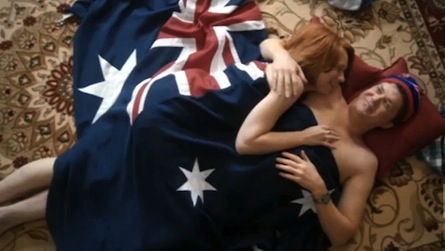
Despite my problem with the fact that there is a comedy show about a sitting prime minister, it is an accurate and (mostly) funny satire of Gillard’s time in office. I voted for her, and regret doing so because of the way she’s blundered the carbon tax and the asylum seeker issue. I hope At Home with Julia seeks to delve more into these issues, instead of portraying sex—an act the show asserted it would never do—under the Australian flag in the Prime Minister’s office. As Anthony Sharwood wrote on The Punch:

“Yet somehow, it was deemed OK to make sexual jokes about an incumbent prime minister in her late 40s, whose love life has never had the tabloid quality of, say, Bob Hawke’s. Even if you dislike Labor and Gillard, the nookie scenes were cringeworthy and savagely inappropriate.”

What do you think? Much ado about nothing, or wildly inappropriate and disrespectful?

Related: Not Quite Out of the Woods: The State of Australian Politics.

Elsewhere: [The Punch] Why is the ABC Screening This Crap?

[MamaMia] At Home with Julia: Love or Loathe?

Image via News.com.au.

The More Things Change, The More They Stay the Same.

From “The Last Refuge of the Un-Australian” by Tony Birch:

“Recently, when a Pakistani migrant who had been granted permanent Australian residency in 1996 set himself on fire outside the federal parliament, as a result of his unsuccessful application to the Immigration Department to have his wife and child join him here, the Immigration Minister, Phillip Ruddock stated ‘it’s [self-immolation] not something we are used to or experienced with… sadly he sought to do so.’

“This man had done something that was very ‘un-Australian’. He had publicly expressed his grief and anguish at his treatment at the hands of Australian government officials. He had raised an issue that might tap away at all of those clichés of national foundation and celebration. It is not only ‘un-Australian’ to be, through experience, a whistle-blower against nation-building mythology. Simply ‘to be’ one of those who have been abused by the Australian nation is to be ‘un-Australian’.

“It is also ‘un-Australian’ to intern people without trial for up to four years, to subject people to months of isolation in solitary confinement. It is ‘un-Australian’ to remove those people to remote parts of the country where they cannot be visited by family or friends, to where the activities of the multi-national company that profits from their incarceration cannot be scrutinised by the media or the imprisoned’s legal representatives. It would be ‘un-Australian’ in the extreme to use water cannon, tear gas and truncheons against people imprisoned without trial, who are rightfully protesting about the abuse of their human rights.

“I cannot, as a trained historian, state this with empirical certainty, but it is a mathematical probability that it is ‘un-Australian’ to disparage and devalue the worth and lives of refugees by claiming, without evidence, that many of them ‘may be’ associated with ‘terrorists’. Likewise, the propagandist need to focus more closely on the supposed threat that the approximately 8,000 ‘illegal’ arrivals in the last ten years post to ‘our way of life’ rather than overturn a policy that contributed to more than 350 people drowning trying to get here in just one year (1999), is somewhat ‘un-Australian’ I would think.

“But of course the representatives of the Australian people, the federal government, engage in such behaviour on a daily basis. To ensure that such practices are not perceived as ‘un-Australian’ we not only transfer refugees to remote areas of the country, we un-people those who arrive here by reconfiguring them as ‘the ungrateful’, ‘the terrorist’, ‘the queue-jumper’ and legally as ‘the non-person’. ‘We’ can then protect Australia and ‘our way of life’ against the alien invader as ‘we’ did against ‘the Aborigines’ in the past, because they failed to adhere to the doctrine of terra nullius by unpatriotically refusing to reclassify themselves as ‘non-people’, in claiming their rights and identity as indigenous people.

“The Department of Immigration lists 37 countries that it regards as a threat to Australia, in that visitors who arrive from these countries, by boat or otherwise, are regarded as the most ‘at risk for overstaying their visa’. The countries listed include Bangladesh, Chile, India, Poland, Samoa and Vietnam. Most are non-white and none are Anglo or English speaking (as a first language). And yet approximately 20 per cent of arrivals to Australia who overstay their visas are British. There is no mention of Britain in the blacklisted countries. Nor do we see the fair skin of the backpacker behind the barbed-wire of the detention camps…

“We have a situation in Australia today where we are witnessing the human rights abuses of many people. Aboriginal people continue to be abused as a result of the crimes committed by white Australia both in the past and contemporary society. The abusive treatment of refugees is similar to the treatment of Aboriginal people in the country in that they pose a threat which, more than being based on any material manifestation, either real or imagined, is a threat to a way of life erected on xenophobia, selfishness and a fear of difference.

“We must transform the culture of Australian life by screaming to our politicians that such an idea is genuinely un-Australian and that we will not tolerate it. And we must do this beyond the act of the political gesture. Activism can be a loaded word, but still, to be active in some way, to speak, to write, to march, to protest, to be angry and to put that anger into expression and action is a suitably un-Australian idea at this time.”

This was written… wait for it… in April 2001. More than ten years ago and, indeed, before the September 11 attacks, and nothing has changed. Being young and naïve, I didn’t realise there was as strong an anti-Muslim culture as there is today, just over ten years on. And it’s appalling to have it made aware that Birch’s words are just as poignant today as they were a decade ago.

Related: Melbourne Writers’ Festival: Beyond White Guilt.

My Response: Go Back to Where You Came From.

September 11, 10 Years On.

Cowboys VS. Aliens & Indians… Does it Really Matter? They’re All the Same Anyway, According to the New Movie.

Elsewhere: [New York Magazine] 9/11 Encyclopedia: Xenophobia.

September 11, 10 Years On.


It’s hard to believe it’s been 10 YEARS since two planes crashed into the World Trade Centre, the enduring image of the Twin Towers collapsing burned into our memories. Not to forget the additional two planes which crashed into the Pentagon and a field in Pennsylvania.

I was 13 at the time of the attacks. I’ve grown up in the “age of terror”, where conspiracy theories, airport security, racism and top-television-moments countdowns are influenced by the event.

At the time, I couldn’t really care less. I was a teenager, consumed with adolescent angst and lost interest about five minutes after I first saw the shocking footage on TV. A testament to the desensitivity and limited attention span of my generation, I suppose.

We weren’t allowed morning television in our house at the time, so I’m pretty sure my parents were none the wiser as to the attacks the following day. My mum was telling me something about some environmental issue in California (a Google search for news results around that time produced little enlightenment).

I got on the school bus and someone said, “Did you hear what happened in America?” I was like, “yeah, totes, something environmental in California”, or something to that effect (and yes, I know “totes” wasn’t a word then. Some would say it isn’t even a word now.). I was received by puzzled looks.

That’s really all I remember from that time. Oh, that and the thing that consumed my life at that time, World Wrestling Entertainment (then World Wrestling Federation), was the first live televised event after the attacks. WWE SmackDown! was originally scheduled to be taped the night of September 11, however was postponed til the 13th, and was seen as somewhat of a patriotic (ST)FU to the terrorists. Below is a tear jerking clip from the opening scene of the show.

The following year, however, I was fully immersed in my love for the USA, and considered donning full Uncle Sam garb to school that day! Since September 11, I’d been known to bust out an American flag item of clothing here and there, and even had one made for my birthday that year.

Again, it’s just so hard to believe it’s been 10 years since then. In some ways, we’ve come so far, but in others (the fact that 20% of Americans believe, wrongfully, that Barack Obama is a Muslim, the violent disapproval of a mosque being built near the Ground Zero monument, the niggling feeling we get when we see Muslims at airports)… not so much.

Where were you on September 11, 2001, and what do you think has changed since then?

Below, some links published in tribute to the almost 3,000 people who died on that fateful day 10 years ago.

Elsewhere: [Washington Post] Poll Shows More Americans Think Obama is a Muslim.

[New York Magazine] The Encyclopedia of 9/11.

[New York Magazine] Day’s End.

[Time Magazine] Timeline.

[The New Yorkers] Video: The Skyline Redrawn.

Image via Yahoo News.

Guest Post: London’s Burning—A Riot By Any Other Name?

Last month, London burned.

Rioters took to the streets and for five days, smashed, robbed and burned their way through a number of suburbs. News footage showed teenagers being robbed by groups of people pretending to assist them, restaurant goers being mugged over dinner by large mobs, vigilante groups taking to the streets for justice, and thieves trying on shoes before stealing them from looted shops.

Buildings which had stood for over 150 years were burned to the ground, and riot police were ignored or attacked by large mobs of young people who sacked the streets.

The riots, which caused over a billion dollars worth of damage, saw more than 1000 people arrested and left five people dead, have been blamed on criminal gangs, social networking sites and a lawless generation of young people who lack respect.

British Home Secretary, Theresa May, has denounced the riots as being acts of “sheer criminality.”

“The violence we’ve seen, the looting we’ve seen, the thuggery we’ve seen—this is sheer criminality,” she said, and by saying so she has, like so many others, simplified the issue to deal with it in the simplest terms possible. But these watery explanations about lawless youths do not fully address the issues of rioting and are rife with problematic reasoning and contradiction.

A perfect example of the problems with this type of reasoning can be found in an Australian publication which discussed the London riots. The Herald Sun’s Andrew Bolt took a similar approach to May, and attributed the violence that took place on the streets of London to a loss of family values in a contemporary world. (But let’s be honest here; what does Bolt not blame to a loss of family values?) Missing no opportunity to push his conservative agenda, Bolt claims that in the London riots, “What we saw was the kind of people hidden in the cavities of decaying society” and that these people, or at least what he refers to as its “underclasses”, are “lazy, resentful and greedy, being handed everything from the food on their plate to the plasma in the corner”.

He then gives a number of examples of the youths participating in the riots, documenting their crimes, and painting a picture of a generation of young people who are out of control. But herein lies the first contradiction; if young people are the main perpetrators of these types of crimes, as Bolt highlighted by giving examples of 11-year-old children participating in the riots, how can he object to them being given the food on their plate, or even a plasma television? (Not that I have ever heard of the poor being given free plasmas anywhere in the world, now that he has mentioned it). Since when do we not feed our children, or expect them to provide for themselves? And does it really seem logical to blame the riots on the poor for being spoiled with food? Doesn’t it seem more likely that there may be something more to this story? Rather than simplifying the issue by blaming riots on a loss of family values and a delinquent underclass, it would be better to engage with the complex history of rioting that exists across Europe and with the unique psychological effects of rioting, particularly on children and young people, who live in areas of diverse socio-economic backgrounds, and who experience high levels of feelings of relative depravation as a consequence.

Relative deprivation is basically where someone feels as though that have been deprived, not in worldly comparison, but in comparison to affluence or privilege that surrounds them on a daily basis, and which they are unable to access. It is becoming increasingly common across the Western world, and other places, as the global division between rich and poor becomes wider and as wealth becomes more visible through the media. Relative deprivation is an increasingly important phenomenon, which has been linked not only to rioting, but to other acts of violence and civil unrest, including terrorism. The psychological impacts of relative deprivation need to be further studied and better understood, particularly when “blaming-the-poor” narratives keep appearing in articles like Bolt’s, potentially adding more fuel to the civil unrest fire by ignoring the phenomenon.

Having noted the importance of feelings of relative deprivation, it is also quite plausible that the deprivation felt by these young rioters, may not only be relative. The social and political changes which have occurred in London over the past 12 months, and which have had negative consequences for many Londoners, are also likely to have had a significant impact on the rioters. One of the most notable in this case is police violence.

Riots are not typically the acts of criminals, although criminals have been known to capitalise on them; rioting has been used since before the seventeenth century by groups and individuals to express civil unrest and negative feelings toward authority figures. Although usually triggered by a particular event, riots occur after ongoing and sustained civil unrest.

The catalyst which triggered the London riots was the suspicious police shooting of Mark Duggan, an unarmed civilian, killed by police. One witness has alleged Duggan was shot at close range while pinned the ground by the police, and although this account is far from substantiated, it is known the Duggan was unarmed at the time of his death and that the bullets which the police claimed were fired at them, came from a police gun. The riots began as a peaceful vigil outside a police station, where friends and family of Duggan gathered to demand police adequately explain the circumstances of Duggan’s death. Other people, not involved in the vigil or immediately known to the Duggan family, triggered the riots by setting fire to a police car when police refused to acknowledge the vigil or address the mourning family. From then on, the riots rapidly escalated and spread throughout the city, far removed from their peaceful beginnings, and without being condoned at any point by Duggan’s family.

It is important to note that although Duggan’s shooting was the catalyst to the riots, it was not an isolated case. Police violence has become an increasingly troubling problem for the English over the last few years, particularly since the introduction of tasers in 2004, and in the last 12 months alone London Police have been widely criticised for a number of violent acts, including the brutalising of a non-violent student protester with cerebral palsy by fully-riot-gear-equipped police officers, who dragged him from his wheelchair (his only source of mobility) and then hauled him across the pavement. Similar acts of police aggression can be seen even after the riots, in the deaths of Dale Burns, 27, Jacob Michael, 25, and Philip Hulmes, 53, who all died within the last month, following incidents in which police used either tasers or pepper spray. In each case, there were at least eight officers arresting a single person, and in Michael’s case, there were 11 police present after Michael himself called them for help. During his arrest for an unknown crime, he was pepper sprayed, pinned to the floor, handcuffed and then beaten for up to 15 minutes by all 11 officers before being arrested. Two hours later, Michael died in police custody.

The purpose of presenting this evidence of police violence is not to vilify police and champion rioters, but rather to demonstrate that the issues which have contributed to the civil unrest that led to riots are complex and widespread. It also highlights that there are significant policing issues which need to be addressed in the UK and which are, by Scotland Yard’s own admission, causing a “growing anti-police sentiment” which is marked by “fury” and that during the riots “there was an atmosphere of absolute hatred towards the police and the establishment—the government—because they feel abandoned, the cuts in youth services, the cuts right across the board.” The increase in police violence is, in turn, leading to an increase in civil unrest. It is no coincidence that one day after the death of Hulmes, a marked police car was petrol bombed while patrolling in North London; just as it was no coincidence that riots ensued after the shooting of Duggan.  The same thing happened in Tottenham in 1985 with riots against racially motivated police violence and it will happen again, if these issues are not addressed.

Police violence was a trigger for the London riots, but not the only cause of civil unrest in London. Other recent and highly inflammatory occurrences include the rising unemployment rate (just under 8% of the population cannot find a job in England, a figure which continues to rise), an openly corrupt media blatantly flaunting basic human rights and the law (see billionaire Rupert Murdoch and his cronies escaping criminal charges after deleting vital evidence in the murder investigation of Milly Dowler, where phone messages were deleted by journalists in the first few days after Milly’s disappearance. As a result friends and relatives of Milly concluded wrongly that she might still be alive.), the rapidly increasing cost of living (the cost of a loaf of bread has tripled in the last five years), and the extremely fast-rising cost of education (the cost of a university degree has also nearly tripled in England in the last year). These are but a few of the troubles ailing England; it is not surprising that young people might feel helpless and angry, or that they might not care if their actions disrupt plans for the Olympic games, or upset local diners and traders.

Furthermore, that the riots spread so far so fast doesn’t mean London’s “underclasses” are felonious criminals. It is well known that once a riot begins, individuals begin to exhibit pack-like behaviours in the heightened excitement and highly charged atmosphere. Young people and children are particularly prone to this psychological influence, which makes it very easy for them to be caught up in the activities of the crowd, and similarly, it can be difficult for them to associate their actions with concepts of right and wrong.

Yet little of the reporting that has taken place about the London riots has yet to examine rioting in London, and indeed the wider context of Europe, and to examine the social, political and psychological aspects of rioting, not to mention the economic considerations, which most certainly would have played their part.

England has a close history with rioting, which spans over centuries, and it is not now, nor has it really ever been, merely the acts of criminal groups who opportunistically pray on an unsuspecting society. Instead, riots reflect a much deeper and wider frustration, which in 2011 was triggered by episodes of police violence. The areas which were most badly damaged in the riots are those which have high levels of poverty, and relative deprivation, where the rich and the poor share spaces as neighbours, living in deep contrast of one another. Blaming the poor for being spoiled is like saying “let them eat cake.” It didn’t work for the French all those centuries ago, and it won’t work now.

—Tessa Keane.

Related: Life Below the Poverty Line is a Horrible Place.

Elsewhere: [The Age] London Riots Spread as Police Lose Control.

[Herald Sun] Rioters Show a Nation Split & Family Values Gone Forever.

[CBC News] London Riots Erupt After Fatal Police Shooting.

[London Progressive Journal] Jody McIntyre: Victim of Police Brutality & Media Distortion.

[The Guardian] Man Does After Taser Arrest Near Bolton.

[The Guardian] Notting Hill Carnival: Tensions High After Recent Deaths, Say Police.

[The Observer] Notting Hill Carnival Curfew Plan is “Pie in the Sky”, Warn Police on Ground.

[The Guardian] Missing Milly Dowler’s Voicemail Was Hacked by News of the World.

[The Telegraph] London Living Costs on the Rise.