On the (Rest of the) Net.

Does having a feminist as a running mate during the election campaign make Julian Assange more palatable to voters concerned with the rape allegations against him? [Online Opinion]

A really thought-provoking piece about the evolution of cooking. Meal preparation is the bane of my existence; I’d rather clean than cook. I find it so boring and time-consuming that if I was to come into a large chunk of money, I would seriously consider hiring a personal chef. Recently, I even privately mused about just ordering takeaway every night, but that isn’t necessarily in line with my ethical philosophies, not to mention health. [Daily Life]

Hugo Schwyzer has quit feminism. While a lot of feminists will be rejoicing at this fact, I actually like Hugo and will be sad to see his brand of male feminism disappear from the feminist interwebs. At least for now… [The Cut]

Twitter misogynists are finally getting their comeuppance. [Daily Life]

Camilla Peffer writes about the inherent sexism of Australia’s Next Top Model. [TheVine]

An interesting response to “I want to date you because you’re awesome”: “I want you to date me because I’m awesome”. [Pandagon]

“The Rape Joke”: a poem about being raped. *trigger warning* [The Awl]

The difference between the Melbourne murders of Jill Meagher and Tracy Connelly? Meagher was “the perfect victim” worthy of mourning while Connelly was just a prostitute. [The King’s Tribune]

But Wendy Squires posits that Meagher and Connelly were more similar than we think: they were both victims of predators who want to hurt women, regardless of their occupation. [The Age]

And it turns out the anonymous sex worker in Squires’ piece, above, was Tracy Connelly. [MamaMia]

Sex & the City‘s Samantha vs. Cougartown. [New York Magazine] 

On the (Rest of the) Net.

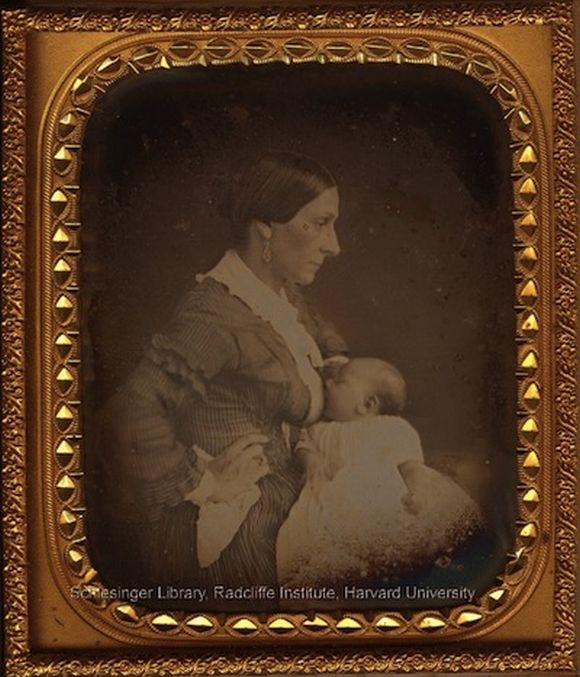
victorian era breastfeeding

Victorians were more progressive about breastfeeding than we are! Although, it was linked to femininity, class and bonding with the child, stigmas that still exist around breastfeeding (or NOT breastfeeding) today. [Sociological Images]

Do ladymags publish serious journalism? Follow the #WomenAtLength hashtag on Twitter to find some examples of longer, “serious” pieces written by women. [Jezebel]

What Adrian Bayley’s crimes can teach us about prevention, rehabilitation and incarceration. [New Matilda]

Everyday Sexism has made a doco about shouting back at street and sexual harassment. The accompanying article by Clem Bastow is equally as hard hitting. Check them both out, because no one should be made to feel like they brought harassment on themselves, they’re overreacting, or dread at the prospect of leaving the house because they might experience it. [Daily Life]

The manic pixie dream girls of superhero movies. [Think Progress]

Someone actually wants my opinion on the week that was in sexism and misogyny particularly in politics, but across other spectrums as well. Kudos to Corey Hague on editing me to sound like I actually know what I’m talking about! [ABC Central Victoria]

Meanwhile, Mia Freedman thinks it was a good week for women: at least we’re talking about sexism and there have been consequences for it. [MamaMia]

Famous women writers before their suicides. What do you think: artistic or glorifying suicide and sexualising violence? I find some of them, like the Sylvia Plath and Virginia Woolf portraits, visually appealing because they’re inoffensive to the eye and create tension and anticipation, but I can’t stomach the Dorothy Parker nor Sanmao ones. Vice may be known for their provocativity (is that even a word?!), but I think this photoshoot is in the same vein as Terry Richardson and Dolce & Gabanna’s rapey aesthetics – which I quite like despite myself – where stopping the sexualisation of violence against women should trump artistic expression. [Jezebel, as the photoshoot on Vice’s website has been removed]

It was Father’s Day in the U.S. over the weekend, and to celebrate, The Hairpin has collated fiction’s worst fathers. As someone with a deadbeat dad myself, I can empathise.

Fashion, feminism and femininity: mutually exclusive? Hell no! The other day when discussing feminism with a mansplaining misogynist who told me I only make him more confused about feminism because of the way I look, a friend interjected that I might just be the most feminine person she knows. And the most feminist, might I add?! [Daily Life]

Kim Kardashian may be a fame-whore, but she’s a person, too, and she deserves some semblance of basic decency. [TheVine]

Is the only reason we watch True Blood anymore for the sex? [The Daily Beast]

If we can’t have the real deal, Feminist Taylor Swift is the next best thing. [Twitter]

Image via Sociological Images.

Book Review: Night Games by Anna Krien.

anna krien night games

Everywhere you look lately, there seems to be a promo for Anna Krien’s latest investigative tome, Night Games, and rightly so: it’s a fantastic, impeccably researched and hard-hitting look at misogyny and power in football. I might be a little biased having a vested interested in the topic and, as I told Krien when I got my copy signed at the Readings Carlton book launch last week, the rape statistics she rattled off in an excerpt reading at the event, unfortunately they’re nothing I haven’t heard before.

Having said that, though, Night Games is an absorbing read for those well versed in the misogynistic nature of “jock culture” as well as for those new to the topic. Krien makes sure not to alienate sports fans who may be wary of picking up the book:

“This book is not anti-sport. ‘”Jock culture” is a distortion of sports,’ the American author and sports journalist Robert Lipsyte once noted, warning that America was in danger of finding its values in the locker room. It’s not the game, the pleasure of the play, that’s dangerous. It’s the piss stains in the grass, the markings of men who use sport as power and the people—teammates, fans, coaches, clubs, doctors, police, journalists, groupies—who let them do whatever they want.” [p. 266]

However, “football is an abnormal society” [p. 70], and nothing reflects that more than the bulk of the book, which deals with “regrettable sex” [p. 73] or rape accusations, depending on who you ask, against AFL and NRL players; “Camel Nights”, in which players bring two women they don’t care for so “everyone gets a hump” [p. 71]; and that infamous Cronulla Sharks group-sex scandal from 2002 that came to light in a 2009 Four Corners exposé, amongst many other examples.

Speaking of Matthew Johns and Cronulla, Krien quotes an anonymous player who laments the stigma of group sex bonding sessions:

“It’s like saying you can’t be homosexual, or you can’t have such-and-such sexual preferences. How can he tell us what to do in our private lives?… We already have so many rules; we can’t drink on these days, we can’t go to these places, now we can’t have group sex. About the only thing we can do these days is go to club functions and just hang around with other players. That’s just isolating us more from the rest of the world, and it could lead to even more violent acts.” [p. 46]

While it’s easy to scoff at these privileged footballer comments, he does make a valid point. It’s kind of like the argument against restricting dangerous dog breeds: the more you isolate a pit bull, for example, the more likely it is to be aggressive to other dogs and humans when it does come into contact with them.

Oftentimes, the difference between a rape allegation and the aforementioned “regrettable sex” is treating a woman well. You know, like a human being:

“‘It’s not during the act, it’s the way you treat them after it. Most of them could have been avoided if they’d have put them in a cab and said, you know, thanks for that, sort of thing, not just kicked her out, call her a dirty whatever, that sort of thing. It’s how you treat them afterwards that can cover a lot of that sort of stuff up.” [p. 183]

But what Krien makes the reader understand is that groupie sex with a footballer is not about the woman, it’s about them:

“A footballer does not look at another human when he fucks a groupie. He’s looking at his glorified reflection—and when he performs, he’s doing it for ‘the boys’, not her.” [p. 200]

And:

“[Sam Newman] said it [the hazing of sports writer Caroline Wilson on The Footy Show] was a compliment of sorts, a sign that the Footy Show culture ‘accepted’ her. In other words, it wasn’t really about Wilson, it was about them. About a subculture of men trying to find a place—albeit a very lowly place—in their world for a woman. Considering that it’s all about the boys, they prey doesn’t even need to be present.” P. 72.

Going back to the group sex-as-bonding scenario, it makes sense that the woman/women would be used as a vessel to bring the teammates closer together. And further to the absence of a woman, we can see this in the social media shaming of the Steubenville victim, for example. The whole team—and, by extension, the town—we’re brought closer together by reliving the girl’s assault on YouTube and Twitter.

Obviously this is one of the more extreme and brutal examples of sexual assault in sport, but Night Games also talks about the “gulf of uncertainty between consent and rape” [p. 73] and the many sexual experiences that occur therein. Krien also comes across as sympathetic to the “… ongoing education about how to negotiate sexual encounters in a way which ensures informed consent is always obtained” [p. 47] amongst the codes, but there’s still a long way to go, baby. This is exemplified by an educational male-on-male rape video that is shown during a training session. Many of the players are noticeably upset, with one lamenting that “You don’t really ask for trouble if you have too much to drink and get raped by a bloke. You don’t ask for that.” I’ll just let the double standards marinate for a bit after you consider that the video shown prior to this was one of mistaken identity male-on-female rape to which the players were less than sympathetic. [p. 188–189]

The abovementioned “grey zone” that exists between the sexes “to explain what was lost in translation” [p. 259] takes the form of the rape trial of Justin Dyer (name changed), an amateur footballer accused of raping Sarah Wesley (also not her real name) the night Collingwood won the 2010 grand final rematch. Many of the reviews of Night Games seem to focus heavily on this “he said, she said”, but Krien expressed relief when facilitator of the Readings event, Sophie Cunningham, skirted that issue. While the trial beautifully bookends all the points Krien makes about the treatment of women in male team sports, it’s not the be all and end all of Night Games. Similarly, though Sarah declined to be interviewed by Krien, thus leaving “all those little erased bits, I thought, hovering around like question marks” [p. 245], I don’t think it does the book detriment. In fact, I can’t envisage how Night Games could get any better.

Related: In Defence of Mia Freedman.

Elsewhere: [The Vine] All Dogs Go to Seven.

This review has been submitted to The Australian Women Writers Challenge as part of their 2013 Challenge.

Image via Kill Your Darlings.

On the (Rest of the) Net.

tom cruise age difference leading women

The age disparities between leading men and their love interests. [Vulture]

I’m on Twitter! Follow me @ScarlettEHarris.

Nice Guys of OKCupid has paved the way for homosexual creeps with Douchebags of Grindr.

Why was Boston “terrorism” but not Sandy Hook, Aurora or Columbine, for example? [The Guardian]

Feminist awakenings. [Daily Life]

Sexism on MasterChef. [Daily Life]

A collection of essays on Spring Breakers. [The New Enquiry]

Shooting victim Gabrielle Giffords on the recent vetoing of background checks for gun buyers by the U.S. Congress. [NYTimes]

The Tribeca Film Festival is honouring one of its female filmmakers with the inaugural Nora Ephron Prize! [Tribeca Film Festival]

If we needed a reminder of the patriarchal corners of the world women have yet to be granted entry into, there’s now a Tumblr dedicated to just that! [Boys Clubs]

How to discuss Tyler Perry without sounding racist. [AV Club]

The symptoms of and treatment for feminist burnout. [Bitch Flicks]

James Deen on gender equality and slut-shaming (NSFW). [James Deen Blog]

Gun control does not mean penis control: guns and masculinity. [Women’s Media Centre]

How much murder and rape is there on TV? [Vulture] 

Image via Vulture.

On the (Rest of the) Net.

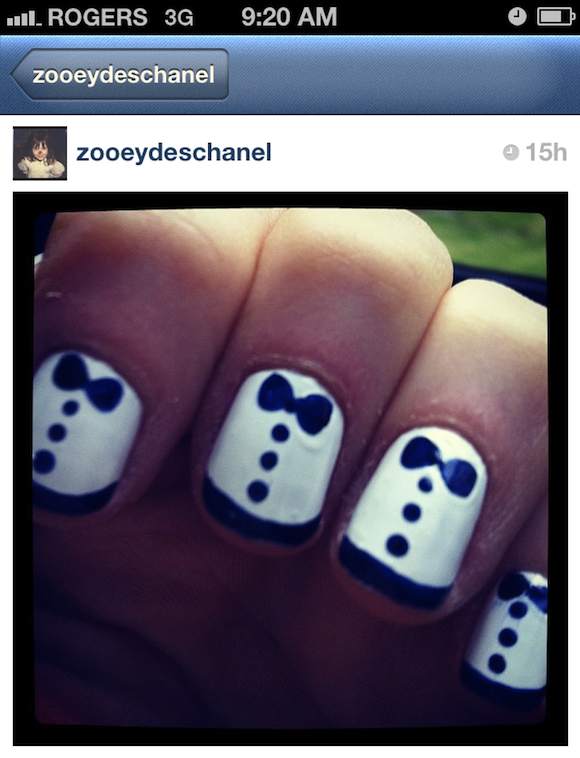
zooey deschanel tuxedo manicure

On the anti-women nail polish name trend. [xoVain]

In the vein of Chris Brown apologists, collectively known as #TeamBreezy, Oscar Pistorius now has his own legion of defenders, #Pistorians. [Vice]

Why do Teen Moms keep becoming Teen Moms? [Jezebel]

Being anti-sports in Australian culture. [Daily Life]

The problem with using the “What if it was your daughter/sister/wife” rape analogy:

“The Steubenville rape victim was certainly someone’s daughter. She may have been someone’s sister. Someday she might even be someone’s wife. But these are not the reasons why raping her was wrong. This rape, and any rape, was wrong because women are people. Women are people, rape is wrong, and no one should ever be raped. End of story.” [The Belle Jar]

Spoilers and pleasure, or rather, lack thereof. [The Atlantic]

Image via Beauty School Dropouts.

On the (Rest of the) Net.

Kelly Rowland’s latest single is about cunnilingus. Get it, girl!

The threat of James Deen. [Daily Life]

Now they’re gendering cordial! [Feminaust]

In defence of Hannah, Marnie, Jessa and Shoshanna in the aftermath of season two of Girls:

“Lena Dunham has perfected her ability to push her audience past their comfort zones by forcing them to relate to or identify with someone who they’d rather not relate to or identify with. When people react negatively to her work, I think that’s often what it is that they’re reacting against. Her artistic—yeah, I’m going to say it—genius is pushing the viewer from thinking Who would do that? to I’ve thought about that to I’ve done that.”

And I think that sums up the difference between season one of Girls, which was so unabashedly relatable, if not totally likeable, and season two, which stagnated more in the former realm of Dunham’s alleged “artistic genius”. [Jezebel]

Calling all Aussie (and NZ) Gala Darling fans: she’s bringing her Blogcademy brainchild down under. Wouldn’t you know it, the Melbourne workshop takes place when I just so happen to be in Gala’s hood: New York City!

Clementine Ford unpacks the verdicts handed down in the Steubenville, Ohio rape case and why sexual assault is not a “mistake” made by “promising young men” who deserve a “second chance”. [Daily Life] 

New girl crush: Facebook COO Sheryl Sandberg. That woman really knows what she’s talking about when it comes to feminism and women in the workplace. [Jezebel]

Girls, How I Met Your Mother and consent. [Think Progress] 

Porn consumption = more accepting of marriage equality? [MamaMia]

On Taylor Swift, Anne Hathaway and fake humility. [TheVine] 

Book Review: Vagina—A New Biography by Naomi Wolf.

an-Vagina-20a-20new-20biography-20by-20Naomi-20Wolf-20120914122340310908-300x0

The title of Naomi Wolf’s latest, Vagina: A New Biography, promised great things, to my mind. I envisioned the book taking aim at the stigma, use and abuse of the female sex organ throughout history, both physically and ideologically, and why we still think of it as ugly, dirty, alien and taboo.

Vagina certainly analyses this for the bulk of the middle part of the book, talking about the actual chastity belt (p. 143) and the “similarly constructed device” called a “scold’s bridle”, “made of iron and leather, locked around a talkative or argumentative woman’s head” to “gag her mouth” (p. 144). Here, we see that the vagina has been a metaphor for the female voice, insinuating that headstrong and opinionated women are also “loose” women. Wolf goes on to mention William Shakespeare’s Titus Andronicus and the heroine “Lavinia’s mouth and vagina are both assaulted in repeated acts of silencing and control” (p. 144). When it comes to sexual assault, it seems not much has changed, then.

Wolf also touches on hysteria, which literally derives its meaning from the Greek word for uterus, hystera, but for the most part, Vagina is an excruciatingly heternormative and cisgendered look at what it means to be a woman. Wolf may claim that erotic literature such as 50 Shades of Grey portrays women as having “no existence separate from her vagina” (p. 178), but Vagina essentially makes the same statement: if you’re not having vaginal orgasms (presumably via the penetrative properties of a real, live penis!) and your “Goddess Array” (the things a woman needs to experience her best lovemaking: foreplay, respect, help around the house, understanding. On a side note, the nod to the “Inner Goddess” really is just like 50 Shades!) stimulated, you’re just not a real woman.

For example,

“… [I]t comes as no surprise, then, to discover that many women find that vibrators alone or masturbation alone do not do exactly what lovemaking does for them emotionally” (p. 74)

and

 “This ideology [women don’t need men] does nothing to help women of any sexuality understand why, often, the vibrator and a pint of Häagen-Dazs are pleasurable but that other longings for connections can remain strong” (p. 75).

Ladies without access to a peen, you’re out of luck: vibrators, ice cream and a rom-com won’t cut it. ’Cause isn’t that what all miserable single women resort to in between boyfriends?

Going back to loud mouth=loose vagina, it would seem the reverse is also true, as an uptight vagina also begets an outspoken woman:

“Straight men would do well to ask themselves: ‘Do I want to be married to a Goddess—or a bitch?’ Unfortunately, there is not, physiologically, much middle ground available for women. Either they are extremely well treated sexually, or, if solo, treat themselves well sexually—or else they are at risk of becoming physically uncomfortable and emotionally irritable” (p. 301).

We just can’t win.

Wolf also talks about the sympathetic and automatic nervous system and how stress contributes to unsatisfactory sex lives:

“Marital counsellors tell women and men to talk through their problems; fertility doctors send men into rooms to masturbate and then they inject the semen themselves into the vaginas of women who are suffering from irregular periods or with low fertility levels. Again, if you understand the profound nature of the animality of women, you see that these practices are incomplete. Marital counsellors should start by telling men to hug women; to stroke if the women are open to that; to take women, if they are willing, ballroom dancing. Fertility specialists should make sure, before anything else, that women are getting well and regularly cuddled and brought to orgasm by their men” (p. 314).

Coming from someone who insinuated that the women who accused Julian Assange of rape were “honey trapping” him, this sounds awfully like a “legitimate rape” apology…

Because we’re such paranoid creatures obsessed with talking our feelings out, “[t]his, I believe, is why so many marital fights take place just when both members of the couple have entered the house after a day’s work—her brain is agitated and desperate to talk things through, which is how it calms down and feels better, while his is desperate to have some downtime doing nothing, or in front of the TV, which is how his brain calms down and feels better” (p. 319). I don’t know about the rest of you ladies, but my brain tends to work the opposite of how Wolf says it should: after a particularly mentally grueling day, I need to veg out in front of the TV and speak to no one. Kind of like Carrie feels when Aiden moves in with her in that episode of Sex & the City.

But maybe us modern, Western women are just living with too many distractions in our lives that prevent us from connecting with our partners, our “Goddess Arrays” and whatever else Wolf thinks we’re lacking. Maybe we’d be better off in the Third World?

“In virtually every culture outside the West, many women spend some time, usually on a daily basis, only with other women (and children)… While women in these societies face immense hurdles and inequities, they often seem to be much less irritated with the men they live with than women tend to be in the West. (I am not addressing here physical abuse.) The burden is not on the husband to somehow, heroically, alone, fill that deep neural need for talk, which his brain chemistry makes difficult to impossible” (p. 320).

Speaking of the Third World, women often give birth at home there (through lack of access to medical practitioners, not necessarily by choice), and hardly anything goes wrong *cue sarcasm*!

“A low-stress environment of soft lighting, soothing music, caring attendants, and the loving presence of family, all actually helped the female body birth a baby, and then feed a newborn, successfully, in clinically measurable ways. Many studies also confirm that stressful hospital birthing environments, in which women in labour are hooked up to intravenous devices, or to fetal monitors that consistently shows false-positive ‘fetal distress’, causes so much ‘bad stress’ in the mother that the stress itself biologically—not just psychologically—arrests labour contractions and inhibits lactation” (p. 34).

Not all Wolf’s points are ignorant ones: she does talk about porn use and modern relationships, scientific studies about the Pill and how it affects the way women physically respond to their significant others and, as I said above, the parts where Wolf discusses the vagina throughout history are quite informative.

However, I kind of wish she had’ve continued the vagina’s “biography” throughout the rest of the book, instead of harping on about her own experience with her retarded pelvic nerve, the luxury operation she underwent to correct it, and that a vagina that’s getting a lot of penetrative action resulting in vaginal orgasms makes for a more creatively fulfilled owner.

Related: 50 Shades of Grey by E.L. James Review.

Image via The Age.
On the (Rest of the) Net.

untitled

Think many rapes are reported falsely and the few actual rapists are punished for their crime? As this graph shows, you can think again. [Daily Life]

Interested in Melbourne’s gay culture and history? Go on this walking tour of Melbourne’s beats as part of Midsumma next weekend.

And while you’re at it, book tickets for Women Say Something‘s “Should We Destroy the Joint”, as Alan Jones so misogynistically termed women’s involvement in public life, panel featuring Gretel Killeen, Tara Moss and Catherine Deveny, on Saturday 19th January. [Midsumma]

Yay! Finally a famous female who identifies as a feminist. Although I wish it was someone I actually liked, beggars can’t be choosers… [Daily Life]

Where did all the African American rom-coms go? As a lover of black rom-coms like Two Can Play That Game and The Wood, I can certainly empathise with this author’s plight… [HuffPo]

Here’s a smorgasboard of articles attempting to unpack the now-defunct Nice Guys of OKCupid. [Jezebel, The Pursuit of Harpyness, The Atlantic, Daily Life]

What the modern incarnations of Sherlock Holmes get wrong about Irene Adler. [io9]

Abortion facts infographics. [Jezebel]

For those of you unfamiliar with the Steubenville High School Big Red football team rape and cover-up scandal, here’s a history of the town’s corrupt ways. [The Atlantic Wire]

Boycotting Chris Brown’s music is all well and good, but are we at a point where Rihanna’s blatant disregard for the impact her very public decision to get back with her abuser has on her impressionable fans and fellow battered partners alike means shunning her, too? Or is it just victim-blaming? Interesting piece. [The Peach]

Why does Tony Abbott keep ducking the “MamaMia crowd”? [MamaMia]

Is Gina Rinehart a feminist? [Daily Life]

A breakdown of exactly what you can afford when you live on $35 a week as a family of four on the Newstart Allowance, as Families Minister Jenny Macklin asserted last week. [MamaMia]

Is Les Mis anti-feminist? [Daily Life]

Image via Daily Life.

On the (Rest of the) Net.

katy perry be proud of who you are

Another week, another famous woman denouncing feminism: step right up, Billboard’s Woman of the Year, Katy Perry! [Jezebel]

And here are the top five reasons famous women don’t call themselves feminists. [Daily Life]

Comedian Jenny Johnson attempts to unpack her Chris Brown-Twitter fiasco. [GQ]

To abort or not to abort when you discover you’re carrying a child with Down’s Syndrome? [Jezebel]

What it’s like to be a female pick-up artist. [xoJane]

I don’t agree with the assertion that the White Ribbon campaign is perpetuating a patriarchal notion of women’s protection from violence, rather I think it’s good that men are standing up to condemn violence against women. However, this post does raise a good point about the sketchiness of the campaign’s ambassadors… Tony Abbott, anyone? [Settle Petal]

“Why don’t men wear black? Why don’t men cover their faces?” [Daily Life]

On The Walking Dead and attempted rape. [Jezebel]

Straight white male victimhood. [Jezebel]

Toy makeup and mirrors for babies. Facepalm. [Sociological Images]

Image via The Examiner.

On the (Rest of the) Net.

Channing Tatum is People magazine’s Sexiest (White) Man Alive. [Daily Beast]

What Tony Abbott could learn from Mitt Romney. [TheVine]

Rachel Hills on Jessica Valenti’s new book, Why Have Kids? and the “motherhood mystique”:

“‘The relationship you have with your child is certainly impactful. It’s one of the most important relationships you’ll have in your life,’ Valenti says. ‘But a good relationship doesn’t necessitate you losing your identity. In fact, most people would call that a bad relationship. A good relationship is supposed to make you the best version of yourself, happier and more active. So that’s what I’m aiming for.’”

Makes sense. [Daily Life]

Unpacking what it means to be a woman with tattoos. [MamaMia]

On the gym clothes as regular clothes phenomenon and why women are the only ones who can pull it off. [TheVine]

The allure of hate-watching, -reading, -listening, and just plain -ing. [Daily Life]

A junior feminist takes Hasbro to task for gender inequality in Guess Who? [Jezebel]

Which US TV shows have the most and least racial diversity? [TV Equals]

Cameron Diaz wants to be objectified. [Daily Life]

Maybe you should try being a woman on the internet before you proclaim the web has a certain “new niceness” about it. [Jezebel]

My old suburb Richmond makes the news on Jezebel for all the wrong reasons: playing host to a “comedy debate” about whether or not rape is funny. Facepalm.

Rookie talks cultural appropriation:

“I’m uncomfortable saying ‘you can do this if you are ethnically Indian’ (even if you are culturally something else, like American), because then it gets into the very kind of essentialism that racism is made of. Like, is it OK for me to wear native Iraqi Arab garb, even though I have never set foot in Iraq, because my parents are from there? I don’t think so, but a lot of the arguments about this subject reduce it to a matter of ‘you can wear things from your personal heritage but no one else’s,’ which, again, is essentialist… [a]nd bordering on dangerous? Because then you get into people deciding if someone LOOKS ‘ethnic’ enough to wear ‘ethnic’ signifiers and you start trying to read skin colour…

“… As long as there’s black-people stuff and white-people stuff and Indian-people stuff, can we really talk about being seen as just PEOPLE?”

“The cult of the selfie.” [Daily Life]

Feminism VS. Fashion. [Bullet]

Image via People.