On the (Rest of the) Net.

The iconic photograph of “The Kissing Sailor” may actually be an image of sexual assault. [Crates & Ribbons]

Let’s put more nudity on Page 3, not ban it:

“… I say the answer is more nudity in newspapers, not less. Put more boobs on Page 3, and add some cocks too. Show people of every size, shape, colour, gender and sexuality; let them speak in their own voice, and celebrate them all. That, rather than self-censorship of adult-oriented content, would be a progressive tabloid revolution worth fighting for.” [New Statesman]

While I don’t agree with most of her sentiments, Clem Bastow makes some interesting points about the inclusion of men in feminism. This was also a topic that came up during the abovementioned “who’s-a-feminist” debate with my friends. [Daily Life]

Let’s stop debating the “culture wars”: people deserve rights. The end. [Jezebel]

Julia Gillard’s Question Time smackdown against Tony Abbott and the liberal party’s sexism and misogyny primarily against her gets the New Yorker treatment. In a nutshell, maybe Obama could take a page out of her book?

Michelle Smith’s Wheeler Centre Lunchbox/Soapbox address on girls in culture, both now and in the Victorian era. Wait, they’re not the same thing?!

I’ve been embroiled in a “I-don’t-believe-in-feminism-I-believe-in-equality” debate this week but, as Ben Pobjie rightly points out, when it comes to Kate Ellis being talked over and shouted down on Q&A, it’s about human decency, not feminism. [MamaMia]

Jill Meagher and safety on the streets from a disability point of view. [ABC Ramp Up]

The case against condom use in porn. [Jezebel]

In defence of Mean Girls‘ Janis Ian. [Rookie]

Brave isn’t “Just Another Princess Movie”. [The New Inquiry]

Image via Tumblr.

On the (Rest of the) Net.

“What It’s Really Like to Wear a Hijab.” [Daily Life]

While the mainstream media is not always the most tasteful industry, its coverage of Jill Meagher’s disappearance was invaluable in helping catch her killer. [MamaMia]

And here’s an amusing take on the sexist comments thrown women’s way after the Jill Meagher tragedy. I’ve been experiencing some of these “restrictions” myself since then, preached to me by well-intentioned but misguided friends, which I’ll be writing more about next week. [Feminaust]

Why fur is back in fashion. [Jezebel]

Instead of petitioning the fashion magazines, should we be making love instead of porn? [TheVine]

The perils of getting a hair cut as a black woman. [Jezebel]

Two of my favourite writers and unofficial mentors, I guess you could say, are in the midst of writing books. Rachel Hills and Sarah Ayoub-Christie detail their struggles with the process. Keep ya heads up, girls! [Musings of an Inappropriate Woman, Chasing Aphrodite]

“Reverse Photoshopping” a “too thin” Karlie Kloss isn’t any better than Photoshopping away cellulite or blemishes. [Daily Life]

Famous writers throughout history reimagine Cosmo’s sex tips. [McSweeney’s]

Why are all the feminists these days funny? Um, because we wised up to the fact that our ideals are better digested by the mainstream through less-threatening humour than shoving it down unwilling throats. Though we still do a lot of that!

“[Sexism’s] existence at the moment requires a tougher, wilier, more knowing, and sophisticated stance.” [Slate]

Clementine Ford’s full Wheeler Centre Lunchbox/Soapbox address on the equality myth.

Incorporating part of her speech, Ford elaborates on Alan Jones’ misogynistic comments about the Prime Minister and women in general. [Daily Life]

On the male-male-female threesome. [XOJane]

Why isn’t Mitt Romney being questioned about the way Mormonism treats women? [Daily Beast]

On the (Rest of the) Net.

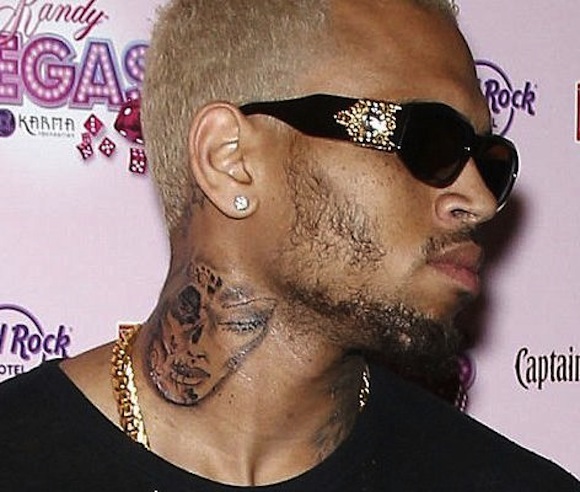
I’m not sure if it is an image of Rihanna’s post-domestic violence face, but here’s what Chris Brown’s neck tattoo says about intimate partner violence and sexual assault. [Pandagon]

The latest in a long line of unfavourable reviews of Naomi Wolf’s new “biography” – Vagina – Germaine Greer had her take on it published in The Age last weekend. I’m going to read Vagina: A New Biography regardless, but the high hopes I had for it have been dashed. [SMH]

In the lead up to the Presidential election, it’d do all Americans good to realise that reproductive health is an economic issue. [Jezebel]

The visceral fear this writer manages to evoke when she reveals her experience of being harassed on public transport is palpable. Hands up who’s ever experienced something similar whilst deigning to be female in public. [unWinona, via Jezebel]

The politics of Anna Wintour. [Daily Beast]

The gender imbalance in the opinion pages. [Daily Life]

Five police-sanctioned reasons why women “deserve” to be raped. Well, I’m guilty of all these things so apparently I “deserve” to be sexually assaulted, too! [Daily Life]

How to talk to kids about gay parents. [The Good Men Project]

This is why religious people shouldn’t work in medicine: one woman’s experience of being refused the morning after pill. [MamaMia]

Why is atheism so excluding of women? [Slate]

Image via Always A-List.

Event: Melbourne Writers Festival—Notes on Women in Culture.

The panel was chaired by the director of feminist publishing house, Spinifex Press, Susan Hawthorne, and the speakers were Tamil writer CS Lakshmi, and feminist fiction and non-fiction writers Emily Maguire and Sophie Cunningham.

I saw Cunningham speak at last year’s festival, and some of her comments on third and/or fourth wave feminism really rubbed me the wrong way. This year she spoke again about the discrepancies between the pay rates of men and women and where that money goes. While only $0.40 for every dollar earned of men’s income goes to the family, $0.90 of women’s money goes to the family. Therefore, “women need to work or our culture falls apart.”

Cunningham also spoke about her pet project, women in literature. As the chair of the Literature Board of the Australia Council and of the Stella Prize, she knows her stuff. Apparently when the representation of women in literature hits 30%, people think it’s about half. (I believe she mentioned it’s at about that percentage currently, in terms of how many books by women are reviewed and how many books are reviewed by women in major publications.) This reminds me of the 33%–66% division of labour rule in male–female households: that women will do up to 66% of housework before they start to think they’re doing too much, while men will do 33% before they start to think they’re doing too much.

I think both of the following quotes came from a piece Lakshmi read to the audience. They’re poignant no matter who wrote them and where they appeared:

“Women pretend to conform whilst they’re breaking the rules.”

“Sit still otherwise you’ll rock the boat.”

That last quote reminds me of 50 Shades of Grey, in which Christian makes Anastasia “sit still” and not move when he’s performing sexual acts on her. I don’t know many men who prefer a woman to be physically non-responsive to their touch, but there are a lot of things about the book I don’t understand.

Speaking of 50 Shades (at this point in time, when it’s the highest selling book ever, who isn’t?!), in another panel I attended on Saturday about writing about sex (featuring Susan Johnson, Chris Flynn and another appearance by Maguire) it was brought up. Nothing of note was added to the discussion really (sex and gender roles are conservative, defined; the sex is clinical, etc.), but Johnson did, it’s worth noting, spoil the ending for me! Not that I was planning on reading the next two installments (one’s enough!), but there were a few audible groans from the audience when she revealed that *spoiler alert* Christian married Anastasia in the end.

Johnson has a piece on the trend of the trilogy in this weekend’s Q Weekend magazine, for which she is the senior features writer. She mentioned how she finds the book like a sexed up version of Beauty & the Beast, which made my heart yearn for a simpler time, when feminism and Stockholm syndrome and abusive relationships were not at the forefront of my mind when examining my favourite Disney movie. Sigh… I’ll never be able to enjoy it like I once did thinking about the Beast forcing Belle to eat and suspending her from the ceiling of his Red Room of Pain if she doesn’t do as she’s told!

But back to the panel at hand.

The notion of positive female representation in science fiction and fantasy came up, an issue about which I’m quite passionate, but which I’d like to know more about, too. Maguire says it’s easier to write a “strong female character” in sci-fi because you “don’t have to have the rules of this world” posed onto the character. I think it was Cunningham who then mentioned that that’s why a lot of sci-fi is set in post-apocalyptic worlds where the restraints of our current notions of society and culture are abolished so writers can explore different aspects of the characters that they might not have should they exist in this world.

Author John Banville was brought up, who has said he’s “never understood women… Don’t want to… I’m in love with all of them, always have been fascinated by them… They always do the unexpected—at least I don’t expect what they do. They say: ‘We’re ordinary, we’re just like you.’ I say: ‘You’re not. You’re magical creatures.’”

While that’s a lovely gesture on the surface, do we really want to be seen as otherworldly? At the end of the day, everyone’s just a person. And, at the end of the panel, Lakshmi told a story with the theme that gender has “no specific qualities”. So how can one be “ordinary” and one be “magical”? Reverse sexism on Banville’s part, perhaps?!

Related: Melbourne Writers Festival 2011: A Long, Long Way to Go—Why We Still Need Feminism.

Bendigo Writers Festival.

Sexism in Fantasy.

Image via TheVine.

On the (Rest of the) Net.

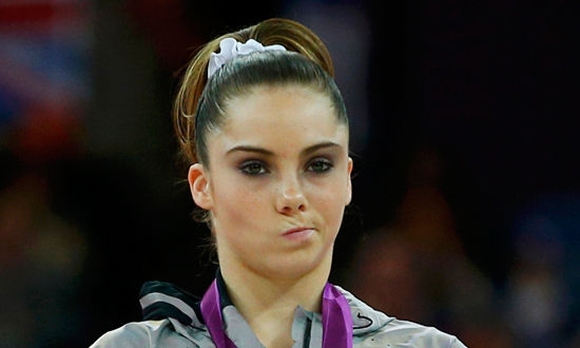
A diva is a female version of a gymnast, apparently. [Jezebel]

Is a man opening a door for a woman a sexist act? [MamaMia]

Gah! A young, attractive woman and her fanatical pro-life agenda. [Jezebel]

How to be an Olympic White Female. [Jezebel, via Feministing]

Do the Olympics offer an alternative to the female body we see regularly in the media, or is it just another opportunity to body-snark? [Time]

Rejoice! Jennifer Aniston isn’t a pathetic single woman anymore! [The Guardian]

Ricki-Lee is the latest “B-grade artist” to fetishise mental illness. [The Punch]

Stella Young writes about Peter Singers’ views on the killing—not aborting—of disabled babies—not foetuses. While he does raise some interesting points, I’ve written before that this kind of thinking trivialises abortion and the access to it we should have in this day and age. If a woman finds out she’s pregnant with a disabled foetus, she should have the support and means necessary to terminate if she feels that’s what she wants to do. I don’t think Singer would have these views if more women had access to safe, legal and unstigmatised abortion. Furthermore, I don’t think he’d have them if the lives of the disabled were valued more by society and they had more support. To say that parents have the right to kill their own disabled children after a set amount of time of attempting to care for them is to trivialise life itself: I’m all for a humane death over a painful life, but Young raises the point that babies don’t have the autonomy to make that choice. [ABC Ramp Up]

What the Spice Girls’ Olympic reunion means for girl power. [The Vine]

Image via The Daily.

On the (Rest of the) Net.


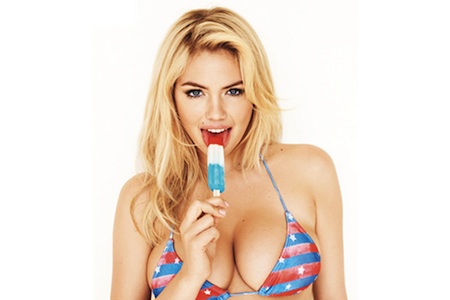
Kate Upton is fat, apparently. Well, she does like phallic-shaped sugary treats… [SkinnyGossip Warning: This is a pro-ana website and may be triggering for some people]

I write about Channel 7’s bad boys at TheVine.

Sexist video gamers prove just how sexist they really are in response to a critique of sexism in video games. [Jezebel]

Menstruation and MasterChef. [The Conversation]

What an abortion at six weeks really looks like. Completely safe for work and not graphic at all. [This is My Abortion]

Stella Young on how disabled people doing normal things being touted as “inspirational” is a crock. [ABC Ramp Up]

Who knew morning sickness was so fascinating?! [Jezebel]

In the wake of another 13-year-old winning the Dolly Model Comp, Mia Freedman tells why she axed it when she was editor-in-chief. [MamaMia]

I went to the Jersey Shore and all I got was this t-shirt… [Jezebel]

Boys will now receive the HPV vaccine, Gardasil. Yay! [The Conversation]

The Katie Holmes obsession has begun: here, a countdown of her top ten Dawson’s Creek quotes that could double as life lessons for her marriage to Tom Cruise. [Refinery29]

Taiwanese photographer, Tou Chih-Kang, captures dogs in their final moments before euthanasia. Be warned: you will shed tears. [HuffPo]

Images via Por Homme, MamaMia.

TV: The (Belated) Underlying Message in Glee’s “Choke” Episode.


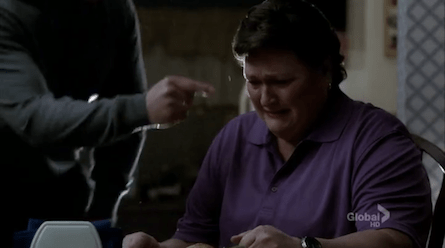
As someone who has witnessed her mother being choked by her father, using that action as a metaphor for intimate partner violence on Glee is sick.

Not only that, but in desperately trying and dismally failing to, for some reason, raise awareness of domestic violence (actually, I’ve decided I hate that phrase, so I’m taking to using the more all-encompassing “intimate partner violence”), Glee has gone back to its old ways by being especially misogynistic and racist.

The intimate partner violence storyline opens with Santana observing Coach Beiste’s black eye and remarking that “it looks like Mr. Beiste went all Chris Brown on Mrs. Beiste… [Did] Cooter put the smackdown on [her] ’cause [she] wouldn’t let him be on top?” Troublingly, women of colour Mercedes and Tina, and LGBTQ woman Brittany, all snicker. I wonder if the writers were aware (oh wait, this is Glee: of course they weren’t!) that African American women are 35% more likely to experience intimate partner violence than white women, 60% of Korean women have been beaten by their partners, and violence in same-sex relationships is gravely underreported and misunderstood.

Enter Cheerios co-coach and “black Sue”, Roz Washington, who overhears Santana’s bad taste musings. She tells the girls that “violence against women” and “men hitting women” is never okay, buying into the perception that women are the only victims in intimate partner violence. Granted, women are the overwhelming victims, but that’s not giving equal opportunity to non-heterosexual relationships (for shame, considering the abundance of LGBTQ characters on the show) and the fact that a woman can hit a man. Instead of insinuating that it’s intimate partner violence only that we should be concerned about, how about violence against women in general? Including rape.

Anyway, I’m sure the writers wanted Roz to mean well, but her racial and sexist slurs directed at Mercedes (“Lil Oprah”), Tina (“Asian Horror Story”), Sugar (“Rojo Caliente”) and Santana (“Salsa Caliente”) undermine this.

In a following scene, Sue coins the aforementioned nickname, “Black Sue”, for Roz, telling her that “ivory poachers could make a fortune selling your enormous white teeth on the black market”, and refers to Coach Beiste as John Goodman, perhaps insinuating that Beiste’s masculinity should have prevented her from being a victim. This way of thinking seems to be adopted by Santana, too, when she says she doesn’t think Coach Beiste actually got hit because she’s “a wall”. What if the roles were reversed and Beiste had hit Cooter, who is considerably smaller than Shannon?

The racial stereotyping continues when Roz admonishes the girls for their joke. As Autostraddle points out, Glee gave the “‘my aunt got beat up by her man’” monologue to the one black woman on the show,” claiming it took her five years to escape the relationship. It took my mum nigh on thirty to get out.

Shannon initially denies her husband hit her, but uses her experience to inspire the girls, who—up until this point— have never really had anything to do with the Coach, to sing a song about empowering women to leave abusive relationships. According to Sue,

“The American songbook is chock full of songs making light about men hitting women.”

Chris Brown, anyone?

Beiste is so moved by the girls’—who, again, she’s had nothing to do with up to now—apathetic show of indifference to intimate partner violence, that she confesses to them—jeopardising her reputation at the school (remember what happened the last time she got too close to McKinley students?)—that she was actually the victim of intimate partner violence, and that they effectively “saved her life”, because she forgot to do the dishes all weekend. Yes, perpetrators of intimate partner violence can be set off by the slightest thing, and we all know that beating the person you love isn’t the means of someone who’s mentally balanced, but dishes?! Glee, really?! If you’re going to make one of your characters, perhaps the most underutilised, exploited and maligned of them all, the victim of a serious issue like intimate partner violence that will never be addressed again, can you at least make it for a reason less trivial than dishes?!

Two realistic things to come out of the storyline, though: that Shannon stays with Cooter and gives him a second chance, and lies about it to Sue and the girls. And finally, that Beiste fears that if she leaves him, “no one else will ever love me”. Painfully sad, true to actual victims of intimate partner violence who are made to feel worthless and unlovable by their abuser, and ties in with a past storyline on the show!

Related: The Underlying Message in Glee’s “Never Been Kissed” Episode.

My Thoughts on Chris Brown.

Elsewhere: [Women of Colour Network] Domestic Violence Facts & Stats Collection.

[Autostraddle] Glee Recap: Choke-a-Joke.

Image via Putlocker.
TV: The Underlying Message in Glee’s “The Spanish Teacher” Episode.


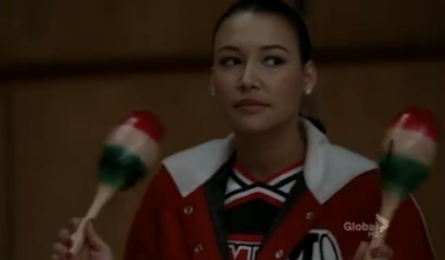
Finally! Glee acknowledges the racist stereotypes it’s perpetuating, and Santana had the guts to stand up and say it:

“You went from ‘La Cucaracha’ to a bullfighting mariachi. Why don’t you just dress up as the Taco Bell chihuahua and bark the theme song to Dora the Explora? You don’t even know enough [about Latin culture] to be embarrassed about these stereotypes you’re perpetuating.”

Well, kind of.

But let’s backtrack.

When Mr. Shue realises he doesn’t actually know enough about the Spanish language and culture to confidently call himself a Spanish teacher, he enrolls in Spanish night class, run by guest star Ricky Martin as David Martinez. “How did I become so out of touch?” Will wonders.

Firstly, become out of touch? Despite the New Directions kids’ undying devotion for him, Mr. Shue has been out of touch from day one. Not to mention his inappropriate relationships with his students.

And secondly, there’s a lot more to Latin culture than dressing up as a matador and singing “La Cucaracha”, as Santana and Mr. Martinez soon school him in.

But it wasn’t just the South American racial stereotypes who got their fair share of airtime last night. The black prejudice was out in full force, although not acknowledged by Glee. Cutting off their Latin nose to spite their black face?

Synchronised swim coach Roz Washington is one of the most racist characters on the show, in my opinion. She speaks in African American colloquialisms such as “bajonkajonk”. When she challenges Sue Sylvester for leadership of the Cheerios, she tells Sue her “stale white bread moves” aren’t working for the team anymore, insinuating that black girls dance better than white girls and buying into the stereotype that they do.

Also, Miss Pillsbury is on a mission to have her pamphlets infiltrate McKinley High and hands out some to Mercedes and Sam when they come to her about their relationship problems. The pamphlet that Mercedes receives is entitled, “So You’re a Two-Timin’ Ho?” whilst Sam’s reads, “So You’re Dating a Two-Timin’ Ho?” Do you think the show would have given such a racist and sexist title to a pamphlet received by Quinn, for example? They might as well have made the girl on the cover of the pamphlet black because that’s pretty much what they were insinuating: that Merecedes is the sassy, fat, angry, sex-crazed woman of colour.

It remains to be seen whether Glee will actually make an effort in the future to abolish the stereotypes it so readily holds up to its viewers…

Related: The Underlying Message in Glee’s “Yes/No” Episode.

Glee: The Right & Wrong of It.

Elsewhere: [TV Tropes] Sassy Black Woman.

[Jezebel] Why Latina’s Aren’t Allowed to Get Angry.

Image via Channel 131.

TV: The Underlying Message in Glee’s “Yes/No” Episode.


Wow, where do I start? Last night’s episode of Glee focusing on Becky’s newfound interest in Artie and Mr. Shue asking Emma to marry him was one of the most offensive yet.

Let’s begin with Becky: I found it weird that Becky’s internal monologue was spoken in a British accent (Helen Mirren’s to be exact). She claims that it’s her head and she can sound however she wants, but how many “abled” characters have a different voice in their heads and make that justification for it? I though it was singling Becky out because of her disability.

She and Artie go on a date and, at first, Artie feels uncomfortable with it, but begins to get to know and like Becky. It came across as platonic on Artie’s end, but his fellow glee clubbers gave him the third degree about what kind of message he was giving Becky.

They urged him not to lead Becky on or give her the wrong idea, and Artie called them out on their hypocritical ways: “You guys talk a good game” about acceptance, but at the end of the day, they’re just as narrow minded as the rest of McKinley High, which pretty much sums up Glee. They think just because they’ve got black and Asian characters and characters in wheelchairs and with Down’s syndrome and characters who are gay they’re being “inclusive”, but really, they show is just using them as token gestures.

Take Kurt, for example: he hasn’t been the focus of many storylines of late, and the writers seem to just slot him in to the background. In the opening scene, Mercedes and Sam channel Sandy and Danny of Grease, while the rest of the glee club stand around imploring them to “tell me more, tell me more”. Kurt belongs to the girls’ group in this instance while his equally gay boyfriend, Blaine, is hanging with the boys on the bleachers. Furthermore, when Puck, Finn and Blaine act as backup singers to Artie, Will and Mike in their rendition of “Moves Like Jagger”, mashed up with “Jumpin’ Jack Flash”, Kurt is nowhere to be seen. Is it because he’s not sexy or masculine enough? Let’s remember that this isn’t the first time Glee has ostracised Kurt from the gender group he belongs to because of his sexuality. Didn’t Glee get the memo: gender and sexuality are not the same thing.

But back to Becky: when Artie takes into consideration what the rest of New Directions are trying to tell him, he asks Coach Sue, of all people, for advice.

It is revealed that Becky sent Artie a sexy photo and he feels weird about it. Sue asks if he felt the same when Brittany, no doubt, sent him similar pictures of herself. Artie replies no, but those were different circumstances. So even Artie, a man with disabilities himself, thinks someone with Down’s can’t be sexy. Hypocritical, much?

The other storyline driving this episode is Will and Emma’s relationship being taken to the next level in the form of marriage. Emma is so desperate for Will to propose that she fantasises about doing it herself. Funnily enough, Coach Beiste and Sue become her bridesmaids in the dream sequence, wearing Princess Eugenie and Beatrice’s royal wedding hats, respectively. They called Kate Middleton “Waity Katie” and I think that’s what the writers were playing into with Emma’s patient wait for Will to propose.

Will finally decides to propose and asks Finn to be his best man as apparently he has no grown up friends and because he thinks Finn has showed him what it means to be a good man. Pah!

Finn is the whiniest, most cowardly and simpering character on the show! He feels sorry for himself, has an unrealistic idea of what Rachel and women in general should be, is (or has been) embarrassed by Kurt’s sexuality and only stands up for those he loves after the fact. He also thinks that joining the army will fill the void that college football has left and make him more of a man.

To further illustrate Finn’s insecurity, he decides to ask Rachel to marry him because he’s got nothing else going for him!

I was also a bit disturbed by Sam’s inclusion in the synchronised swimming team, called the “Guppies” and lead by bronze Olympic medalist, Roz Washington, who is of African American descent. She also comments that Sam’s “trouty mouth” is one she’s never seen on a white kid. This, in addition to Becky’s dig at the possibility of dating Mike Chang (“I’m no rice queen”), makes “Yes/No” one of the worst episodes of Glee yet.

Related: Glee’s “Sexy” Review.

The Underlying Message in Glee’s “Duets” Episode.

The Underlying Message in Glee’s “The Rocky Horror Glee Show” Episode.

The Underlying Message in Glee’s “Furt” Episode.

Image via The Dam Nation.

Sexism in Fantasy.

From “Young Females as Superheroes: Superheroines in the World of Sailor Moon” from FemSpec journal:

“Further illustrating the negotiation of femininity and empowerment, girl power characters are often represented in a fantasy setting. This is a particularly significant factor when interpreting these characters in terms of their fighting abilities. The heroes generally face fantastic villains that are often unmistakably evil and are represented as protectors of innocence and humanity. This reinforces the idea that girl power heroes should have a nurturing, protective nature: both one of the conflicting femininities described by Douglas and an aspect of femininity reclaimed within third wave feminism.

“… Fantasy helps to alleviate the threat of castration because these characters are not meant to represent reality. Thus, the threat itself is marked ‘not real’.”

I think this was what Sady Doyle was trying to get at in her scathing critique of George R.R. Martin’s A Song of Ice & Fire series which, while valid, didn’t win her many fans in the fantasy community.

In a nutshell, I think she was trying to say that women experience sexism, rape, sexual harassment and value based only on their looks in everyday real life; we don’t need to be represented that way in fantasy too, where the author has the opportunity to create an alternate reality for women.

In FemSpec (an article which I originally accessed online but has since been taken down), the author studies Sailor Moon and how the heroines in that were created as a response to third wave feminism, but as a large portion of the show and manga’s audience is male, they’re typically feminised in order to eliminate threat to the status quo.

I’m not a fantasy fan, but I think we can all agree on less sexism in fantasy (nay, all fiction. Or, here’s a radical idea, in real life!) and more accurate portrayals of what it’s like to be a woman that doesn’t centre around sexuality.

Elsewhere: [Tiger Beatdown] Enter Ye Myne Mystic World of Gayng-Raype: What the “R” Stands for in “George R.R. Martin”.

[Tiger Beatdown] Chronicles of Mansplaining: Professor Feminism & the Deleted Comments of Doom.