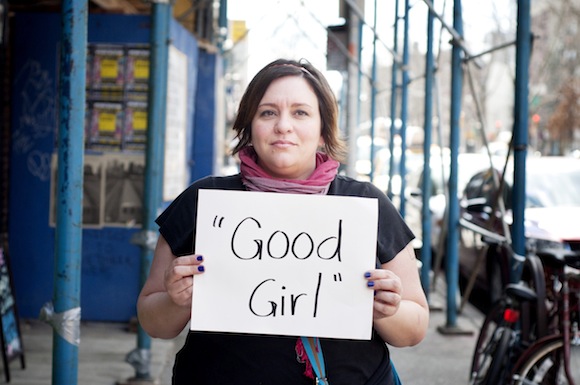
Is Cosmo feminist? [Bust]
Robin Thicke’s “Blurred Lines” lyrics, as said by rapists. [Sociological Images]
The pleasure of reading print books. [Daily Life]
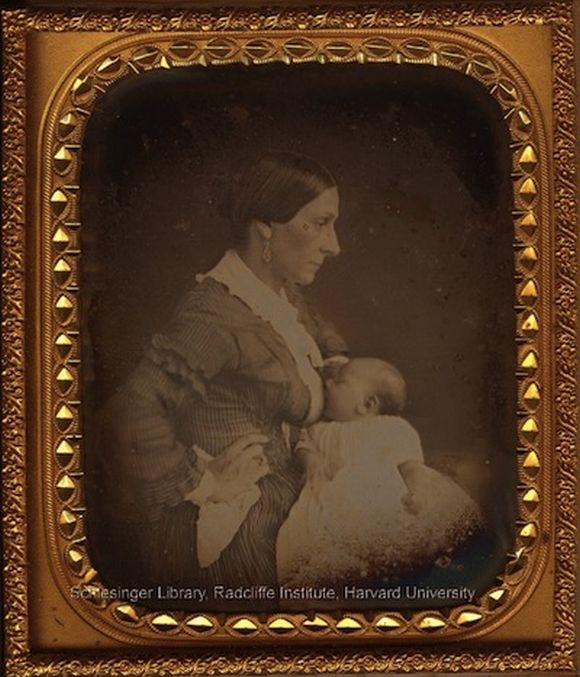
Victorians were more progressive about breastfeeding than we are! Although, it was linked to femininity, class and bonding with the child, stigmas that still exist around breastfeeding (or NOT breastfeeding) today. [Sociological Images]
Do ladymags publish serious journalism? Follow the #WomenAtLength hashtag on Twitter to find some examples of longer, “serious” pieces written by women. [Jezebel]
What Adrian Bayley’s crimes can teach us about prevention, rehabilitation and incarceration. [New Matilda]
Everyday Sexism has made a doco about shouting back at street and sexual harassment. The accompanying article by Clem Bastow is equally as hard hitting. Check them both out, because no one should be made to feel like they brought harassment on themselves, they’re overreacting, or dread at the prospect of leaving the house because they might experience it. [Daily Life]
The manic pixie dream girls of superhero movies. [Think Progress]
Someone actually wants my opinion on the week that was in sexism and misogyny particularly in politics, but across other spectrums as well. Kudos to Corey Hague on editing me to sound like I actually know what I’m talking about! [ABC Central Victoria]
Meanwhile, Mia Freedman thinks it was a good week for women: at least we’re talking about sexism and there have been consequences for it. [MamaMia]
Famous women writers before their suicides. What do you think: artistic or glorifying suicide and sexualising violence? I find some of them, like the Sylvia Plath and Virginia Woolf portraits, visually appealing because they’re inoffensive to the eye and create tension and anticipation, but I can’t stomach the Dorothy Parker nor Sanmao ones. Vice may be known for their provocativity (is that even a word?!), but I think this photoshoot is in the same vein as Terry Richardson and Dolce & Gabanna’s rapey aesthetics – which I quite like despite myself – where stopping the sexualisation of violence against women should trump artistic expression. [Jezebel, as the photoshoot on Vice’s website has been removed]
It was Father’s Day in the U.S. over the weekend, and to celebrate, The Hairpin has collated fiction’s worst fathers. As someone with a deadbeat dad myself, I can empathise.
Fashion, feminism and femininity: mutually exclusive? Hell no! The other day when discussing feminism with a mansplaining misogynist who told me I only make him more confused about feminism because of the way I look, a friend interjected that I might just be the most feminine person she knows. And the most feminist, might I add?! [Daily Life]
Kim Kardashian may be a fame-whore, but she’s a person, too, and she deserves some semblance of basic decency. [TheVine]
Is the only reason we watch True Blood anymore for the sex? [The Daily Beast]
If we can’t have the real deal, Feminist Taylor Swift is the next best thing. [Twitter]
Image via Sociological Images.

Another week, another famous woman denouncing feminism: step right up, Billboard’s Woman of the Year, Katy Perry! [Jezebel]
And here are the top five reasons famous women don’t call themselves feminists. [Daily Life]
Comedian Jenny Johnson attempts to unpack her Chris Brown-Twitter fiasco. [GQ]
To abort or not to abort when you discover you’re carrying a child with Down’s Syndrome? [Jezebel]
What it’s like to be a female pick-up artist. [xoJane]
I don’t agree with the assertion that the White Ribbon campaign is perpetuating a patriarchal notion of women’s protection from violence, rather I think it’s good that men are standing up to condemn violence against women. However, this post does raise a good point about the sketchiness of the campaign’s ambassadors… Tony Abbott, anyone? [Settle Petal]
“Why don’t men wear black? Why don’t men cover their faces?” [Daily Life]
On The Walking Dead and attempted rape. [Jezebel]
Straight white male victimhood. [Jezebel]
Toy makeup and mirrors for babies. Facepalm. [Sociological Images]
Image via The Examiner.

It’s that time of year again when U.S. residents in particular, but an increasing amount of Aussies, too, start gearing up for the last day of October when the jack-o’-lanterns are lit, trick or treating is had, and costumes are curated: Halloween.
The holiday that is believed to have pagan roots in preparing for the onset of winter in the northern hemisphere and warding off evil spirits when the barrier between the dead and the living is at its thinnest, but is more traditionally an excuse for kids to dress up and gorge themselves on lollies, has been appropriated by the mostly-Gen Y masses as an excuse to get your kit off.
Obviously not everyone celebrates Halloween by finding the shortest, tightest, most low-cut outfit available, but the perception of female sluttiness is, if not encouraged, then more acceptable on All Hallow’s Eve than on a regular night out. (Not to worry; garden-variety slut-shaming is sure to be had on October 31st as well.) As Nicole Elphick points out, slutty Halloween costumes are acceptable because we’re often portraying if not a different version of ourselves, then someone else completely: “Oh, it’s just a costume – it’s not me!”
Certainly there are less mainstream Halloween-centric events out there, where party-goers take pride in creating the most original, obscure and ugly costumes they can. But for the not-so-dedicated novice Halloween goers who don’t have the time or money to come up with a truly fancy or left-of-centre costume, there’s always the “one slut fits all” section of the costume store brimming with options.
You know the area of Lombards or any costume hire store that’s segregated from the “serious” party paraphernalia and stocks such run-of-the-mill outfits as the sexy maid, the sexy nurse and the mediocre “tuxedo bunny” that resembles the traditional Playboy bunny costumes not one iota. (This Halloween I’m dressing up as Gloria Steinem when she went undercover at The Playboy Club in the ’60s, so I can attest to the poor quality and unrealistic [oh, the irony!] Playboy costumes available for purchase, so much so that I had mine made.) Sure, these costumes are quick, cheap and come with most of the accessories needed to complete the look—in fact, some of them consist solely of the accessories and little else, fabric-wise—but they’re boring and flash as much flesh as possible. Where are the options for those who don’t want to default to eye-candy or the “sexy nurse” or “sexy nun” instead of a legitimate doctor or person of the clergy?
Furthermore, the problem with the sexy person woman-in-uniform, sexy animal and sexy Scrabble costumes is not only the unoriginality of the former and the absurdity of the latter, but the blatant feminising of these costumes: apparently only women can be sexy fire-fighters, sexy Nemos and sexy showers, while men are just fire-fighters, Nemo and a shower. (The argument could be made that all men in uniform are inherently sexy, but their occupations definitely aren’t sexualised the way in which women in these professions—or even just in these costumes—are.) Elphick adds that, “You can think of almost any regular costume and odds are some costume manufacturer has already made a risqué version for full-grown women.”
Lisa Wade elaborates on the dearth of “sexy” male costumes in an article on Sociological Images. Not only that, but the “sexy” costumes that areavailable to men focus on sex as something to be laughed at or on a man’s status as a recipient of sex from women, not as sex objects themselves:
“When men go sexy, it means joking about how men should be sexually serviced, have access to one night stands, or being in charge of and profiting from women’s bodies. A different type of ‘sexy’ entirely.”
Maybe with the success of Magic Mike this year we’ll be seeing an influx of male stripper-inspired costumes… Something tells me this is doubtful.
*
I think this obsession with Halloween hyper-feminisation is just a magnified reflection of society’s need for women to be heteronormatively feminine: long hair augmented with extensions for the event, facial symmetry exaggerated with over-the-top makeup and false eyelashes, slender (I, personally, have upped my fitness regime over the past couple of months in preparation), wears dresses (have you noticed how even if the effigy’s garb resembles a dress in no way, the Halloween costume will inevitably appropriate it into a skirt or, less-often, short-shorts if it’s marketed towards women? The “sexy” Sesame Street costumes that have been in the news of recent come to mind).
Rachel Hills hit the nail on the head when, in a response to a similar post earlier this year, she pondered whether the gravitation towards hyper-feminine and-sexy get-ups either in daily life or for special events reflect a fear of not being seen as attractive enough.
Reflecting on my past costume party ensembles, which include Catwoman, sexy Rosie the Riveter and Eve bare as much flesh as possible, it would seem a fear of being perceived as unattractive, unfeminine and/or unsexy is inherent in them, too. As someone who is relatively content with her appearance and in touch with her feminist side (no matter how “slutty” my costumes appear to the naked eye, I always try to incorporate my feminism in there somewhere), this is not something that is front of mind when putting my outfits together, but I guess the evidence speaks for itself: the most conservative Halloween costume I’ve worn was a long, pink vintage dress that I accessorised with fishnets, a feather boa and a headband to portray a 1920s flapper. The only time I’ve ever incorporated pants into the mix was when they were skin-tight pleather leggings (Catwoman, a female wrestler, and one of Barbie’s Rockers), going back as far as my first outing as Catwoman at my tenth birthday party. Inappropriate? Perhaps. But I guess that also conveys a telling tale of our expectations of femininity and, increasingly, sexiness, when it comes to young girls, a topic which is probably best left unpacked til another time.
But maybe we’re reading too much into this? Just because a woman chooses to amp up her sexuality and flash some flesh on Halloween doesn’t necessarily mean that this desire is insidiously ingrained in her by the patriarchy. Feminist du jour Caitlin Moran insists that women are “not dressing up sexy: It’s a parody of sexuality. They’re being silly,” while sex and gender writer Hugo Schwyzer thinks that “the lack of options for any other kind of costume make sexiness the default position rather than the chosen one.” But I have plenty of friends—both female and male—who enjoy getting their sexy on as often as they cover up in the costume department.
When I asked a friend who is so dedicated to her more masculine costumes that I often don’t recognise her for all the faux facial hair, but who also tarts it up with the best of them, most recently in a “sexy” Little Bo Peep costume for her birthday, she said she honestly doesn’t give it much thought. “[Costumes] allow me to hide any insecurities I would usually have… I can hide who I really am for the time I’m in costume,” she said, which is not unlike Elphick’s above assertion that “Halloween is all about taking on an identity that is explicitly not yours.” None of said friends are particularly feminist in their thinking so, as “civilians”, it’s refreshing that they dress up this way without pushing an anti-gender stereotyping message; they haven’t given it a second thought and do it because they want to. Perhaps there is hope for us yet…
Schwyzer sums it up thusly:
“[The] mandatory sexualization of girls and women reflects a culture ill at ease with women’s power. Halloween is at least partly about how we manage fear—and one fear we seem to still have is of powerful women. Sexualising everyone from tween girls to grown mothers is actually a way of reinforcing traditional values. Underneath it all, the message is, all women are the same—they just want attention from men.”
Going back to the earlier point that the reason we see so much skin on Halloween is because of the utter lack of pre-packaged sartorial alternatives, you have to wonder about the costumes that mimic their real-life and/or fantasy life counterparts to a tee: is the reason Halloween has strayed so far from its pagan roots because of our increasingly sex-obsessed society and need for the genders to perform as they always have? For all the absurdly sexualised children’s characters, pets and household appliances, there are as many traditionally scantily attired female superheroes, pop stars and influential women in history to choose from.
As for the guys, Schwyzer thinks the popularity of Magic Mike might see the odd male dressed in short shorts, a bow tie and not much else, but for the most part, they’ll stick to the established costumed-gender norms of “endless capes and Harlequin masks”, just as most women will go for the shorter, tighter, sexier option.
Related: Slut-Shaming in Romantic Relationships—It’s Not On Unless It’s Not On.
Elsewhere: [Daily Life] Why Sexy Halloween Costumes Are Okay.
[Jezebel] A Musical Reminder That You Can Wear Clothes on Halloween & That’s Okay.
[Sociological Images] What Do Sexy Halloween Costumes for Men Look Like?
[Salon] Caitlin Moran: Women Have Won Nothing.
Image via Buzzfeed.
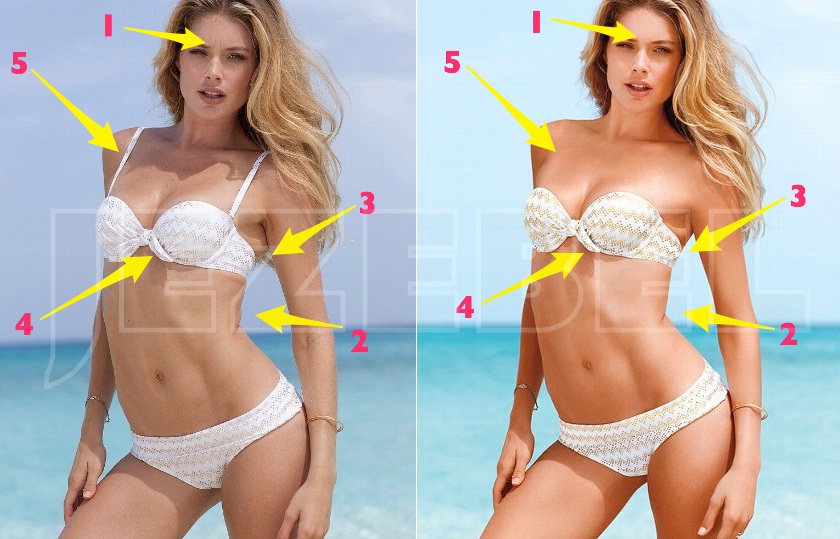
Victoria’s Secret and Photoshop: first you see it, then you don’t. [Jezebel]
If you’re an anti-feminist woman maybe you should be evicted from the house that feminism built. [Dammit Janet]
The case against freedom of opinion. [The Conversation]
Why Beyonce is a phony. [TheVine]
“Top 10 Most Obvious Halloween Costumes”, with a special mention to option number two, which inevitably has an outing every year. But here’s an idea: how about combining Presidential politics and dogs in costumes to create Mitt Romney strapped into a cage on top of your canine? Already been done by the marvelous minds that enter the annual Tomkins Square Park Halloween dog parade, but nevermind: I’m still dressing my dog up as this! [TheVine, HuffPo]
Why is the “colour” of Rihanna’s fragrance—called Nude—so white? [Sociological Images]
Surprise, surprise, Taylor Swift is not a feminist:
“I don’t really think about things as guys versus girls. I never have. I was raised by parents who brought me up to think if you work as hard as guys, you can go far in life.”
As the article points out, not only does she not know what feminism is, but her music is purely about guys versus girls and how poor little innocent Taylor had her heart broken by a big bad boy. You know, when she’s not slut-shaming and perpetuating a heteronormative Romeo-chases-Juliet-in-a-castle ideal of relationships. [Jezebel]
Clem Bastow unpacks Caitlin Moran’s Twitter gaff about the racial diversity of Girls. [Daily Life]
Who knew Eva Longoria is more than just a “boring pretty person with bouncy hair”? In fact, she’s chair of the committee to re-elect Barack Obama and retweeted a controversial statement related to voting for Mitt Romney. You go, girl! [Jezebel]
Image via Jezebel.
A version of this article originally appeared at TheVine.
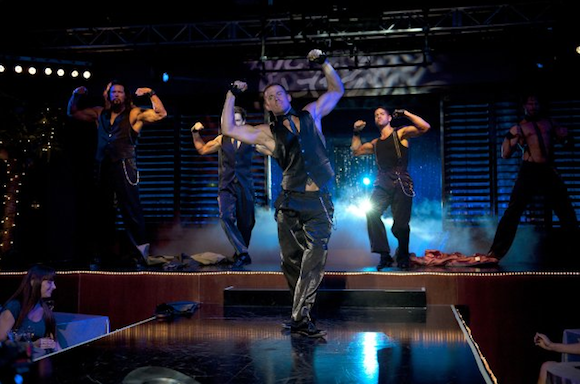
“You know the apocalypse is nigh when men want to see a movie about a talking teddy bear and women want to see a movie about male strippers,” read a friends’ recent Facebook status.
While the world may be ending in December, and the integrity of Ted is questionable at best, I think it’s high time hetero women (and gay men to a lesser extent) turn subjugation on its head and become the voyeurs, and they’re using Magic Mike as a tool to do so.
Never before in mainstream Hollywood film can I recall a movie that so blatantly puts the male body on show for the unashamed consumption by straight women, primarily. Tom Cruise may have been shirtless for the majority of Rock of Ages, and True Blood has as much male eye candy as it does female, but Magic Mike is the first of its kind to feature conventionally attractive and perennially half-naked male actors as strippers: Hollywood’s last taboo, perhaps.
The male form has been sexualised for the last few decades, notably in underwear commercials. Remember Mark Wahlberg’s Calvin Klein’s and David Beckham’s distracting Armani ads? Or how about a shirtless Ryan Gosling in Crazy, Stupid Love, which arguably spawned the current obsession with him that has reached fever pitch? Porn star James Deen is experiencing a cavalcade of female appreciation not normally seen with adult actors. Even pay TV channel LifeStyle You is cashing in on the male body objectification trend, using in their advertisements shirtless men carrying out everyday household duties like ironing to reel the women in. (Because women are who we talk about when we talk about “lifestyle”.)
In the male stripper movie vein, there was that late ’90s UK effort, The Full Monty, which featured a bunch of average Joes getting their kit off at the encouragement of women, demonstrating that men don’t have to look like Channing Tatum, Joe Manganiello or Matthew McConaughey for women to find them sexy and to want to see them naked. But there is a certain allure to rippling abs, strong thighs and loaded guns that the comedic stripteases of unemployed steel workers just doesn’t have…
Dodai Stewart writes for Jezebel of the hollering and hooting in the cinema when she went to get her Channing fix, while I noticed more of a silent sexual tension in the air. There was nary a squeal of approval throughout, which lent a certain palpability that watching a sex scene with your parents or a potential love interest might elicit. Tatum’s dance moves succeeded in getting me and—if all the mute leg-crossing, uncrossing and squirming in seats was any indication—all the other red-blooded, presumably straight women in the audience hot under the collar. As Stewart continues, “Could it be that women are so used to seeing the female body sexualised on screen—from the point of view of the male gaze—that we don’t even know how to react to the sexualised male body?”
It seems that the characters who are virgins to the Tampa male stripping scene don’t know how to react either, with Alex Pettyfer’s portrayal of Adam consisting of equal parts disgust at Mike’s occupation and awe at the perks of his lifestyle. Adam’s sister, Brooke (played by Cody Horn), is closed in on by the camera when she first sees Mike dance and a range of emotions cross her face: judgement, arousal, amazement, discomfort at the role reversal male strippers provide. Discomfort and concern are also expressed by the bank clerk when Mike attempts to get a loan, showing up with a down payment in wads of ones and fives. Presumably the teller recognises Mike from the male revue, and offers to sign him up to a program for “distressed” clients, inferring that because he gets his kit off for money, he must be either strapped for cash or lacking self-esteem. Hmm, where have we heard this before? Usually directed at women who trade on their looks and are deemed “at risk”, “battered” and, yes, “distressed” as a result. Mike even has to resort to the ol’ spectacles trope to be taken seriously as he enters the bank, an action most often utilised by hot chicks who want to appear smarter. Speaking of hot chicks, in another play on man as sexual object, Mike’s lover, Joanna (Olivia Munn), tells him she doesn’t want to talk about his feelings: “just look pretty”.
With all the double standards that come with being a male stripper in Magic Mike—female adoration, money, drugs—Caroline Heldman at Sociological Images wonders why this kind of “stripping as fantasy life” attitude would never be seen in media about female stripping: because Magic Mike still panders greatly to male sexuality.
“Make no bones about it, this movie is all about reinforcing the notion that men are in control and men’s sexuality matters more…” Heldman writes. “… [M]any (but not all) of the simulated sex acts the dancers perform in their interactions with female audience members service the male stripper’s pleasure, not hers. Dancers shove women’s faces into their crotch to simulate fellatio, hump women’s faces, perform faux sex from behind without a nod to clitoral stimulation, etc. As a culture, we have deprioritised female sexual pleasure…”
Indeed, there is no full frontal male nudity in the film (does a stunt penis in an enlarging device count?!), however Munn and the actress who plays stripper Ken’s (Matt Bomer) wife have their breasts on show, as well as several other female nude scenes. When it comes to the penis, it would seem that it is the last taboo, not male stripping.
That Tatum’s penis ever so briefly flashed onscreen during a bedroom scene means there’s hope for a full-frontal peen shot yet, with Magic Mike 2 on the horizon. You’ll notice that most of the male stars of the films’ careers have thrived on the comidification of their bodies. McConaughey is more recognisable with his shirt off than on and Manganiello has been quoted as saying he “could care less” about being typecast as a beefcake. I find it kind of refreshing that men are wanting to show off their bodies in a way that has been traditionally reserved for women.
For those who cry “hypocrite” at the women who’re now wolf whistling at the screen, as if all women find the sexualisation of their bodies oppressive, I direct you to one of the core tenents of feminism: choice. If women are deemed autonomous enough to make their own decisions about their bodies and whether they want to use them as a commodity, it stands to reason that men are, too. It might be a hard concept to grasp, but after centuries of the ingrained objectification of women, perhaps men want to try their hand at being desired as opposed to desiring.
While the mainstream media still has a ways to go towards female sexual liberation and the refocusing of the gaze onto men and away from women in a way that benefits all parties and exploits none, Magic Mike is a step in the right direction.
Elsewhere: [TheVine] The Rise of the Hunk.
[Musings of an Inappropriate Woman] On #DailyWife & Writing for the “Women’s Pages”.
[Jezebel] Magic Mike, Junk in the Face & the Female Gaze.
[Sociological Images] Magic Mike: Old Sexism in a New Package.
[The Frisky] 12 Famous Women Who’ve Used Their Sexuality (to Get Ahead).
[Salon] Male Strippers: Please, Just Leave it On.
Image via IMDb.
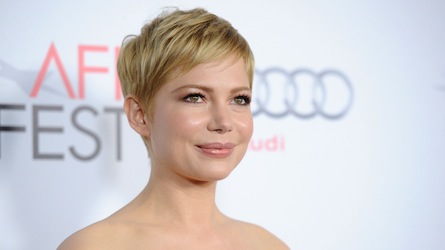
“In Defence of the Short-Haired Woman”:
“I think… that a lot of men believe they prefer long hair—and wrong in that when it comes down to it, they don’t actually care all that much.
“I’m sure there are plenty of straight men who truly, inherently prefer long hair on women. But in my experience, the bulk of straight men who default to liking long hair on women just like women.” [Jezebel, via The Beheld]
Beauty truly comes from within. [MamaMia]
How guys really feel about going down on us. One question: where can I find this guy?!
“What I think is ‘holy shit is this hot!’ I notice the varieties in taste during certain parts of a girl’s cycle. It tastes sort of tart right after her period ends, gets musky around ovulation and then has full blown feminine sex scent right before her period. I loved doing it from the first time I tried it. In fact, I came without touching myself the first time I went down on a girl. There is no learning to like it. Heck, it puts me even closer to pussy than fucking does. How could a guy who likes girls possibly not like it. Overall it’s my favorite sexual experience. You don’t have the pressure of ‘fuck if I get too into this I’m going to cum too soon and disappoint her but if I hold off and take forever to cum I’m going to end up boring her/making her sore/making her think I’m not that into it’ that you get from intercourse. You just to get to dive into the best smell and taste in the world and be there until you see, feel, hear and taste her having an orgasm. It’s a powerful feeling. I think oral sex is awesome and the best form of contraception mankind has ever come up with. Same great orgasms, no risk of changing diapers down the line.” [Jezebel]
Harrowing TV birth scenes as contraceptives. [NYTimes]

It’s not just the Disney princesses we need to worry about. It’s the princes, too. [Sociological Images]
Why are the new Snow White movies so… white?
“The filmmakers missed a chance to bring a truly new perspective to the story by integrating it. Snow White is a made-up story, taking place in a made-up land. Why can’t the handsome prince be black? Why can’t the queen be black? There seems to be an Asian dwarf in the Mirror Mirror project, but none of the major characters in either film are of colour.” [Jezebel]

The woman used as a reason to commit adultery by cheating website Ashley Madison speaks out:
“There is an enormous problem in this world in regards to female body shaming, and not solely in regard to fat women, but all women. A size 2 woman who sees this ad sees the message: ‘If I don’t stay small, he will cheat’. A size 12 woman might see this ad and think “if I don’t lose 30lbs, he will cheat”. A size 32 woman could see this ad, and feel ‘I will never find love’. It’s horrific. Not all women are necessarily insecure, but it’s no secret that body insecurity is endemic, regardless of size. This kind of message is extremely damaging to self worth. Eating disorders may have lost their place in the media spotlight, but continue to effect people of all ages, especially teens. This sort of behavior can easily be triggered from the careless cruelty of advertisements like the one in question.” [Jezebel]
10 other things that should be worthy of “Personhood”. [Jezebel]
The history of Ms. magazine. [New York Magazine]
Eve Ensler is over rape jokes and Facebook pages. [HuffPo]
Images via Jezebel, Sociological Images.

These iconic images, taken by photographer Lennart Nilsson for Life magazine in 1965, and later used for pro-life propaganda materials, have actually been taken of aborted embryos, not living fetuses in the womb:
“Although claiming to show the living fetus, Nilsson actually photographed abortus material obtained from women who terminated their pregnancies under the liberal Swedish law. Working with dead embryos allowed Nilsson to experiment with lighting, background and positions, such as placing the thumb into the fetus’ mouth.”
“Does Carrying Condoms Make You Easy?” Will.I.Am seems to think so.
Erica Bartle on maintaining the balance between “frothy and bubbly and frivolous” and her passion for writing about her faith and God on Girl with a Satchel, which she understands can sometimes be “like receiving a knock on the door from a Jehovah’s Witness (or a pamphlet in the postbox)” for some. (Okay, I’ll admit it: I’m one of them.) Food for “critical thought”.
Girl crush porn in Mia Freedman’s new weekly post, “A Week in the Life” on MamaMia.
The importance of “good, old-fashioned” sub-editing.
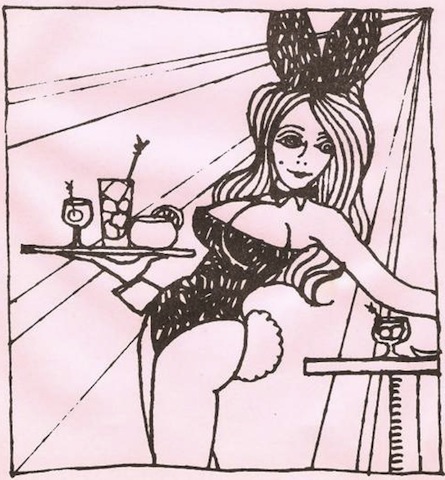
How to be a Playboy Club Bunny, circa 1968.
Love, domestic violence and Gossip Girl.
On Hillary Clinton being photoshopped out of the situation room photo in Hasidic newspaper Der Tzitung:
“The religious paper never publishes pictures of women, as they could be considered ‘sexually suggestive.’ Apparently the presence of a woman, any woman, being all womanly and sexy all over the United States’ counterterrorism efforts was too much for the editors of Der Tzitung to handle…
“Der Tzitung edited Hillary Clinton out of the photo, thereby changing history. To my mind, this act of censorship is actually a violation of the Jewish legal principle of g’neivat da’at (deceit).”
Would you rather be blind or obese? According to an Arizona State University study, 1 in 6 women would choose the former…
Images via The Hairpin, Sociological Images.
After last weeks flat effort, On the (Rest of the) Net is back in fine form, with a bumper edition.
“Reading About ‘It’ Girls Makes Me Feel Like a Shit Girl”: The title alone is worth the read, but Rachel Hills raises some interesting points, as always.
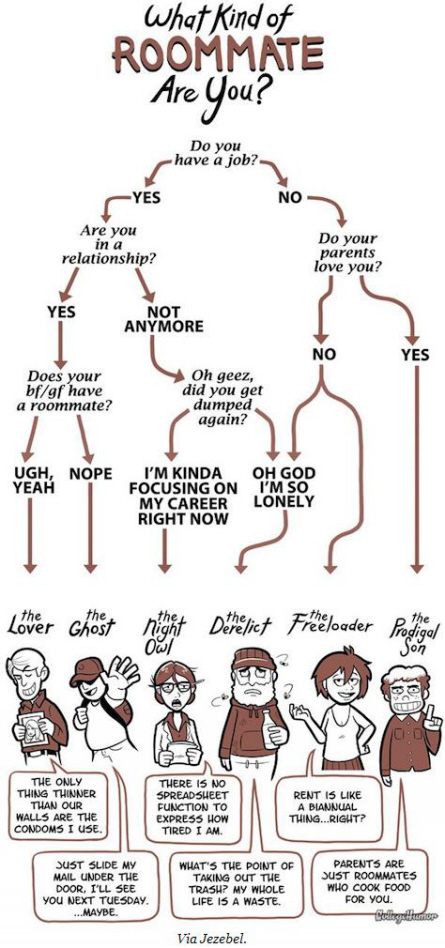
You can choose your friends, but you can’t choose your family. Luckily, my housemate is both a friend and relative and, while it’s still early days, thank God our relationship is a tad more functional than those expressed in this flow chart.
Frequent trips to the video store when I was younger means I’m privy to some of the best so-bad-they’re-good flicks of the late ’80s and early ’90s that not many others my age were. Teen Witch, Girls Just Want to Have Fun and Don’t Tell Mom the Babysitter’s Dead spring to mind, the latter of which has a “surprisingly serious” message behind it.
The Sunday Times Magazine ran with a story on “Lady Gaga & the Death of Sex”. Unfortunately, you have to pay to read the whole thing, but here’s a snippet. Hopefully an Australian mag picks up the story…
More Gala Darling wisdom. (Speaking of wisdom, I’m getting my wisdom teeth pulled today, so wish me luck!)
Jezebel asks (borrowing a direct headline from an Indian newspaper), “Should a Woman Marry Her Rapist?”
All the hullabaloo surrounding Christina Hendricks’ bangin’ body means she’s “gone from poster child for the supposed comeback of curves to practically a stock photo for any story about bodies.” Sure, “we can all agree that Hendricks is pretty fucking hot from head to toe,” but “Hendricks still fits the Hollywood ideal of beauty in most ways.”

I loved seeing all of Jenna Templeton’s pics from her recent trip to Melbourne on My Life as a Magazine. Love, love, love the store Harem on Brunswick Street, and so does she!
God help us! I didn’t think you could get any worse than Sarah Palin when it comes to female Republicans, but apparently you can. Jezebel runs a piece on “the new Republican candidate for Senate in Delaware”, Christine O’Donnell. A bit of background: “She is a devout Catholic, chaste, anti-masturbation, pro-abstinence-only sex ed, anti-condoms and anti-porn.” But what I find most conflicting about her stance is that “There’s only truth and not truth… You’re either very good or evil.” We’re all going to hell, then!

Tavi Gevinson gives her take on “Kinderwhore Britney” on the cover of Japanese magazine Pop: “These covers shock us because, even though this is how we’ve been used to seeing Britney Spears throughout her entire career, she’s finally the one to comment on our culture’s disturbing obsession with her.”
In a similar vein, Julian Abagond at Sociological Images wants to know “Why Do the Japanese Draw Themselves as White?” Well, “as it turns out, that is an American opinion, not a Japanese one. The Japanese see anime characters as being Japanese. It is Americans who think they are white. Why? Because to them white is the Default Human Being.”
 The Scarlett Woman