Are Divas Finally Being Given a Chance?

charlotte flair rainmaker inc

This article originally appeared in The Tag Rope Issue 6. Republished with permission.

Women’s wrestling has experienced a resurgence of sorts over the past couple of years, arguably initially spearheaded by the popularity of Total Divas. The E! reality show, which aims at giving fans a better look at the lives of eight World Wrestling Entertainment Divas—along with the increasingly positive portrayal of and dedication shown to Divas-in-training in WWE’s developmental brand, NXT—perhaps contributed to the trending of #GiveDivasaChance on social media earlier in the year. The hashtag, along with #WomensWrestling and #DivasRevolution, continues to urge WWE management to give their cohort of women’s wrestlers more than five minutes of match time per three-hour episode of Raw, and furthers the apparent change in the characterisation of Divas as “former fitness models and Playboy Playmates”, as Grantland writer David Shoemaker put it, to the talent athletes they are.

*

But what exactly is a Diva?

The term surfaced around the late nineties and was officially uttered for the first time in 1999 by Sable, however fan favourite Sunny later claimed that her revolution of the role of women in wrestling meant that she was “The Original Diva”. (Sunny has since defamed the current crop of Divas on social media, saying she’s “never been a fan of womens [sic] wrestling”.) While the word is often used to describe difficult women (read: assertive women who know what they want and refuse to be treated like crap), in this context it is simply WWE’s adjective for their female wrestlers (sorry, “sports entertainers”).

Some of the best-known former Divas, Trish Stratus and Lita, have said multiple times that they don’t identify with the moniker “Diva”, though. Lita told WWE Superstar Chris Jericho on his podcast, Talk is Jericho, that she feels it’s another term for “window dressing” and that—“not to be sexist”—she was always “thinking like a guy” in the ring as opposed to worrying about how hot she looked. Stratus reiterated this notion of a Diva as a “sideshow” term when she spoke to wrestling announcer, Jim Ross, on The Ross Report:

“We get it: you’re beautiful and you’re a woman. Great, now let’s get in the ring. Let’s be athletes.”

Lita and Stratus were instrumental in changing the notion of what it means to be a women’s wrestler. Both wrestled in the first ever one-on-one women’s main event to close Raw in 2004 (not including Lita VS. Stephanie McMahon for the WWE Women’s Championship in 2000 in which, as Lita puts it, they had male “props” including The Rock as special guest referee and McMahon’s on-screen and real-life husband, Triple H, at ringside). Lita also wrestled in WWE’s first ever women’s cage match and was part of the highest rated Raw segment in the show’s then thirteen-year history in 2006. (Let it be known that this segment was marketed as a “live sex celebration” in which Lita was topless but her breasts concealed from view so it probably isn’t an exemplar of gender barriers being broken.)

Come 2004, the WWE Diva Search—a reality competition that took place during Raw and in which wrestling fans could vote and which is apparently returning to WWE programming later this year—was introduced and many of the Divas began posing nude for Playboy in a period that became known more for promoting the Divas’ looks over their in-ring abilities. Former WWE Diva and two-time Playboy cover girl Torrie Wilson made reference to the ubiquity of bikini contests and bra and panties matches she was required to perform in on The Ross Report during this time.

These days, in the “PG-era”, Divas Brie and Nikki Bella, Nattie, Eva Marie, Paige, Trinity and Alicia Fox have their own hour-long reality show, Total Divas. Seeking to capitalise on the 35% female viewership of WWE’s traditional wrestling shows including Raw, SmackDown!, and the myriad of other weekly shows on the WWE’s online, on-demand network, it’s no surprise that Total Divas airs on E!, a channel whose primary audience is 65% female.

Traditional reality TV tropes have been at play on Total Divas, which at times only marginally passes the Bechdel test (at least two named women who speak to each other about something other than men) and casts “bad girl” Eva Marie in the role of the temptress bitch who comes between the other Divas; the other Divas and their men; and the other Divas and their aspirations to climb the wrestling ladder. This season though, the show has increasingly highlighted its stars’ careers amidst the #GiveDivasaChance movement that has evolved into a #DivasRevolution. Eva Marie finally put in the work in the ring; Nattie updated her gimmick from wholesome sweetheart to black-clad dominatrix; and Nikki Bella decided to stay with WWE and “continue to help women conquer this industry”. Total Divas is still reality TV after all, so rote catfights still take pride of place, but at least the women are fighting about their careers and livelihoods and not men as in seasons past.

Maybe because it doesn’t deviate too far from E!’s formula, the mainstream has responded well to Total Divas: its first season averaged 1.3 million viewers in the all-important 18-34 demographic with the highest season premiere of 2013. Due in part to its success, along with the WWE audience’s agitation on social media, the #DivasRevolution is taking steps to elevate women wrestlers from the way they’ve been portrayed for much of the past decade.

In 2013, for example, the Divas tag team match at WrestleMania got cut due to time restraints; the 2014 event’s obligatory women’s match was an invitational battle royal featuring fourteen Divas vying for the sparkly pink butterfly-shaped Diva’s Championship; and this year’s WrestleMania 31 tag team Divas match only went for 6:40 minutes on a four-hour show. As Lita told Stone Cold Steve Austin on his podcast, “It seems like you don’t see a lot of them until it’s a big free for all and you don’t even know what’s going on.” It would stand to reason that if WWE is promoting the Divas to a mainstream audience, they would want to showcase them as much as possible in order to lure those E! viewers over to the larger WWE product.

It seems the company finally cottoned on to that notion with the #DivasRevolution taking place on the July 13th Raw that saw NXT trail blazers Charlotte, Becky Lynch and then-NXT Women’s Champion Sasha Banks dominate the other Divas with their submission moves as the live audience hollered “this is awesome!”, a chant usually reserved for high risk stunts in men’s matches. Since then, WWE has at least paid lip service to the apparent “revolution”, with subsequent Raw and SmackDown!’s featuring multiple Divas matches often spanning numerous segments, a marked improvement on the 30 second Raw tag team fare (is 30 seconds even long enough to get a tag in?!) that sparked #GiveDivasaChance in February. A champion vs. champion match between Nikki Bella and Sasha Banks even technically main evented the final Raw before SummerSlam. (This is not to mention its spot on the card right before Brock Lesnar’s homecoming in Minneapolis and the lack of relevant hype surrounding the match.)

Perhaps the most obvious disconnect between the revolution in theory and in practice can be seen in Sasha Banks and Bayley’s meeting at NXT Takeover: Brooklyn for the brand’s women’s championship in what was the match of the night and maybe even 2015. Stephanie McMahon (whose character thinks of herself as the arbiter of the revolution) made sure to announce that it was the semi-main event while smarks scoffed at WWE’s hypocrisy.

In Lita and Stratus’ heyday women arguably played a more integral role in the product, such as in intergender matches in which women wrestle men. “Intergender matches were some of my favourite matches to be a part of. There’s [sic] just so many elements: sexual elements, comedy elements and you can also be a real badass interacting with the dudes [on a level which] you don’t normally get to interact,” Lita told Ross.

The argument could be made that men wrestling women normalises violence against them. On the other hand, feminism works to promote the idea that all genders are equal so therefore, if a woman can physically match a man (*cough* Charlotte *cough*), then it makes sense that they would compete. The tag team of Joey Ryan and Candice LeRae are an example on this on the indies. In wider society, the abolishment of gender restrictions in combat roles in the military reflects this notion (the actual uptake of women in these roles leaves much to be desired, though).

One of women’s wrestling most influential pioneers is Joanie Laurer, better known as Chyna. She was the first woman to compete in the all-men Royal Rumble match, the first woman to hold a men’s championship and the woman who made it widely acceptable for women to wrestle men. Following her WWE departure in 2001, Laurer’s tumultuous personal life—including a high profile stint in (Celebrity) rehab, an abusive relationship and a sex tape that she parlayed into a porn career—has prevented her from getting the professional recognition she deserves. In an upcoming documentary funded through Kickstarter entitled The Reconstruction of Chyna, Laurer will attempt to tell her side of the story. She’s also undertaking a social media campaign to get inducted into the WWE Hall of Fame.

Total Divas’ reality TV predecessors, such as The Hills, Keeping Up with the Kardashians and The Real Housewives, predictably portray women as dramatic layabouts who are famous for being famous. Though you wouldn’t think it from Total Divas’ past focus on the personal dramas of its cast, female wrestlers are the antithesis of this, putting their bodies on the line whenever they’re given the opportunity to do so. Matches such as Sasha and Bayley’s Takeover clinic prove this. If WWE and Total Divas can look beyond characterising women as eye candy without any discernible motivations and instead focus on healthy competition between women who respect each other but also strive to beat each other (again, as with Takeover’s four horsewomen curtain call), only then can Divas truly be given a chance.

Related: World Wrestling Entertainment Will Never #GiveDivasaChance as Long as It Prioritises Bad Men.

Elsewhere: [Grantland] What We Learned From WrestleMania 31: Notes on an Event That Could Be Remembered as One of the Best in WWE History.

[Wrestling Inc] Sunny: “I’ve Never Been a Huge Fan of Women’s Wrestling”.

[WWE] Corporate Overview.

[National TV Spots] Homepage.

[Junkee] How Caitlyn Jenner, The Kardashians & Total Divas Are Making Reality TV Relevant Again.

[TV By the Numbers] E! Delivers 20% Year on Year Growth in Primetime Among Adults 18-49 in Primetime During Fourth Quarter.

[Wikipedia] Women in the Military.

[Kickstarter] The Reconstruction of Chyna.

Artwork by Rainmaker Inc.

On the (Rest of the) Net.

I’m getting straight back into it in the New Year, with pieces about abuse in Jessica Jones, what World Wrestling Entertainment can learn from Jem & the Holograms‘ flop and why its spate of injuries might be a good thing for other wrestlers. [Bitch Flicks, The Spectacle of Excess, Cageside Seats]

On selfies. [Matter]

Forget the manbun. The latest in men’s hair styling are manbraids. And they’re cultural appropriation. [Ms. Magazine]

Why is there a statute of limitations for rape and sexual assault? [NYTimes]

Erin Riley kicking goals (mixing metaphors, I know) with her piece on the Chris Gayle incident being a symptom of a much larger problem with sexism in sport. [Daily Life]

Mens mental health is important but not at the expense of the women and children they abuse and kill. [Daily Life]

There’s been plenty of coverage of Cole Miller’s death by one punch, but what about Indigenous man Trevor Duroux’s death of the same? [New Matilda]

The history of glitter. [Broadly]

The history of toplessness. [Broadly]

And the history of the crystal ball. [Broadly]

2015 was the year of interracial relationships on TV. [Fusion]

Has Clive Palmer had a feminist awakening? [Junkee]

Even teaching a course on Beyonce doesn’t guarantee job security. [WaPo]

Why we need to talk about the sexual assaults in Germany over New Years—and the race of the attackers. [New Statesman]

Should wives be held accountable for their husband’s bad behaviour? [The Cut]

And what about Bill Clinton’s alleged sexual assault of a woman in 1978? [Jezebel]

It’s great that you want to read books by more diverse authors, but do you have to tell the whole world about it? Just do it. [Jezebel]

Queer New Day.

new day elow mojo

This article originally appeared in Calling Spots Issue 18. Republished with permission.

For my latest contribution to Calling Spots, check out Issue 19 featuring my cover story on Sasha Banks, “BOSS: The Beginning & the End of an Era”.

Like many of us, I’ve been a wrestling fan since the age of thirteen. So when a family friend revealed he was starting a wrestling company that would begin with a mockumentary about wrestlers I grew up watching on tour in Australia, I jumped at the opportunity to be involved. While I’ve met wrestlers before, this was the first time I got to interact with them for more than 30 seconds in an autograph line and as fellow human beings instead of as demigods.

As a feminist who unpacks gender roles and expectations for a (freelance, part-time, side-job) living, my presence was somewhat of a novelty to the cohort, but hanging out with sports stars working in one of the most masculinity-obsessed forms of entertainment not only appealed to my inner mark but it also served as an anthropological study breaking down just how covertly feminine wrestling actually is. You know, in case the blatant homoeroticism of near-naked muscular, oiled up men grappling with each other’s flesh wasn’t clear.

For example, something you wouldn’t necessarily notice when watching the high definition WWE Network is that wrestlers are covered in stretchmarks. Upon consideration, it isn’t an unlikely phenomenon considering many wrestlers push their bodies past their natural limits, and people who’ve both lost a lot of weight and put weight on receive purple, and then faded white, squiggly lines of war paint for their efforts. With stretchmarks on my lady lumps and humps myself, I previously only associated them with being a woman: we are socialised through magazines, the media and the mirror to believe that stretchmarks are a solely female marker.

Another attribute traditionally seen as feminine but a must amongst men in wrestling is grooming. Over the years, I’ve been witness to an amount of leg shaving, hair straightening, baby lotioning, spray-tanning and eyebrow-threading to rival my own as a fairly high maintenance woman. I’m just a normal person whose looks don’t (or, in a perfect world, shouldn’t) determine my livelihood but pro wrestlers rely on their appearance probably more so than their physical abilities.

After all, the way wrestlers look indicate their success to a certain extent. In a way, professional wrestling is like the gendered polar opposite but looks-based counterpart of the women’s modelling industry. While success in one profession is dependent upon how thin you can get and how prominent your cheekbones are, emerging victorious in the other relies heavily on becoming Bigger, Stronger, Faster (the title of a 2008 documentary about steroid use in sport and American culture as a whole). Different from legitimate sports, though, where athletic ability is the determining factor to success, in wrestling if the powers that be (*cough* Vince McMahon *cough*) don’t feel you can be marketed as a character, it’s the end of the road. As long as you’re marketable, can work the mic and look good (read: big, and that’s where steroids, though technically illegal in WWE as per their Wellness Policy, and prescription drug dependency play a part), you’re in with a chance. As one wrestler told me once upon a time, “we don’t actually have to be strong; we just have to look it.”

Despite this, there are some wrestlers who don’t fit that mould who’ve managed to get themselves over; Daniel Bryan being the biggest underdog success story in recent memory. Dolph Ziggler, Damien Sandow and New Day also come to mind as fan favourites who deviate to varying degrees from the widely accepted archetype of a hypermasculine wrestler.

The team of Kofi Kingston, Big E (formerly Big E Langston) and Xavier Woods, collectively known as New Day, are the ones particularly challenging what it is to be a black tag team today.

Listening to the trio speak on Chris Jericho’s podcast, Talk is Jericho, New Day was its members’ own brainchild, however McMahon was the one who pitched the gimmick of gospel preachers who jovially extol “the power of positivity” because apart from savages, rappers and criminals, what other roles are there for black wrestlers, right?

Originally debuting as babyfaces, which can often be the death knell of many a career trajectory, the decision was made after some months to turn the group heel, and since then E, Kingston and Woods have been responsible for some of the most entertaining and subversive promos, backstage segments and after-match celebrations in WWE in a long time. This is not to mention their in-ring work which has successfully amalgamated the power of Langston, the agility of Kingston and the intellect of Woods to become two-time tag team champions in the less than twelve months since their debut.

Examples include Woods employing the use of a trombone during their entrances and at ringside, the booty shaking that occurs after a win and their appropriation of campy Sinatra classic “New York State of Mind” during SummerSlam weekend. Their acceptance of the #JustKeepDancing social media challenge to raise funds for pediatric cancer saw New Day singing and dancing to “Kiss from a Rose” by Seal, replete with a cameo from Sasha Banks.

Woods is perhaps the most insurgent of the trio, cosplaying at Dragon Con as a gender- (and race-)swapped Jem from Jem and the Holograms, debuting unique and feminine hairstyles such as relaxed locks and a Rufio from Hook-inspired ’do, and calling former WWE Superstar Virgil out for allegedly telling Woods he’d never make it as a wrestler because of his race. (Having played the Million Dollar Man Ted DiBiase’s manservant and, in essence, his slave, is it any wonder Virgil’s internalised this racism?) He’s also a Brony (a male fan of My Little Pony) and will be the first professional wrestler to get his PhD, a role model for the increasing rates of black men obtaining university degrees.

That New Day can still be over with performances so overtly challenging yet simultaneously so covertly queering the the dominant paradigm in wrestling is a testament not so much to the higher ups willing to push them but to an increasingly diverse legion of fans (the same fans that brought about the #GiveDivasaChance and #DivasRevolution campaigns, no matter what Paige or Stephanie McMahon tell us) willing to cheer them. And not only are they subverting the traditionally masculine archetype of a wrestler, they’re toppling the savage, out of control machismo of the archetype of black men and black wrestlers.

https://twitter.com/jetta_rae/status/640300280341393409

When I asked feminist wrestling critic Jetta Rae to elaborate on recent tweet of hers asserting that New Day “is the answer to wrestling’s toxic masculinity”, she had this to say:

It’s important to note that racism is integral to toxic masculinity. Toxic masculinity is the assignment of roles based on race: white is purity, black is raw, Asian is effeminate, Hispanic is overly romantic, etc. By challenging the confines of race, you challenge masculinity.”

This is not to discount the fact that New Day still very much subscribes to a fit, strong, straight and cisgender (as far as we know) image of manhood. Kingston has a running gag with Dad of the Year Titus O’Neill as to who’s a better father (which in itself disputes the stereotype of black men as deadbeat baby daddies) while Langston was featured on an episode of Total Divas as a potential paramour for Nattie’s sister Jenny.   

At its core, professional wrestling is a spectacle. Match outcomes are predetermined (going back to the importance of character and appearance as opposed to physical power), and foreign objects such as chairs, tables and barbed wire in the more brutal instances are often employed to further the storyline and, thus, the accentuation of masculinity: those who are able to withstand the most violence win.

https://twitter.com/jetta_rae/status/644598650707046400

That’s why New Day’s #SaveTheTables promos leading into their Night of Champions clash with the Dudley Boyz were so revolutionary. Not only were they expressing disdain for a less PG era in which the Dudleyz revelled in putting their opponents and the odd woman through a table, but they’ve equated WWE’s props with the first Thanksgiving table and the table the Declaration of Independence was written on, making a larger argument about traditional white American masculinity taking precedence over those of other cultures at a time when #BlackLivesMatter has emerged in response to police brutality and racial profiling. (Yes, one half of the Dudleyz is a black man, but D-Von’s position as the getter of tables could be seen as a modern day equivalent of Virgil.) Woods utilised that all important social media to further New Day’s agenda between Raw and SmackDown!, retweeting fans who (presumably) jokingly opined that because of the Dudleyz penchant for breaking tables, they no longer have a dinner table to eat at, further drawing attention to high rates of poverty among black families. As Rae observed, “… New Day’s #SaveTheTables could also be seen as a rejection of a prior model of ultraviole[n]t masculinity.”

While I don’t necessarily believe that violence in the media has a detrimental effect on young minds, there definitely needs to be some education and debunking of masculinity myths to go along with the watching of wrestling, the playing of video games, the consumption of porn, etc. Male viewers need to be made aware that violence and the acquisition of the biggest, most ripped bodies aren’t the be all and end all of modern masculinity, just as young women are becoming accustomed to body image clinics put on by schools, community groups and, increasingly, fashion magazines, the very commodities that are seen to negatively affect self-esteem.

New Day are part of a new wave of wrestlers working within the sport(s entertainment) to challenge these notions. Guys like Joey Ryan, who wrestles in intergender matches on the indies as one half of The World’s Cutest Tag Team with Candice LeRae, parodies the hypermasculine sleaze archetype so successfully that it almost results in a high-camp, feminised version of it, while Max Landis’ Wrestling Isn’t Wrestling YouTube short turned the hypermasculinity of wrestling on its head by genderswapping iconic masculine roles such as John Cena, Stone Cold Steve Austin and Triple H.

New Day is special not only because they dispute toxic masculinity and racism in wrestling but because they’re redefining what it means to be wrestlers.

Related: My Weekend with Wrestlers.

Elsewhere: [Calling Spots] Issue 18 Preview.

[Calling Spots] Issue 19 Pre-Order.

[YouTube] Wrestling Isn’t Wrestling.

Artwork by Elow Mojo.

On the (Rest of the) Net.


tumblr_nvw2k9aWLN1sj4xr4o3_500

Is there too much crying in women’s wrestling? The very fact of this question being asked about women’s wrestling (never mind the fact that Ric Flair, widely considered to be one of the best wrestlers ever, cries at the drop of a hat) is inherently sexist. If anything, crying further inures fans to the emotion of the match and the storyline, helping to solidify current women’s wrestling, particularly in NXT, WWE’s developmental brand, as some of the best ever. [Forbes]

I asked whether World Wrestling Entertainment can rise above pinkvertising in their effort to Rise Above Cancer. [Cageside Seats]

What to say when someone inevitably dresses in a racist costume this Halloween. A few years ago I dressed as Tiger Lily for a pirate-themed Christmas party (as part of a larger, Peter Pan group costume). At the time, I believed I was within my rights to dress up as a Native American as I have Native American heritage. Now, however, as someone who identifies primarily as and benefits from being white, I don’t think I’d appropriate that culture in the way I did. Sure, my Native heritage is an interesting part of my history, but I’m not part of that culture and haven’t taken the initiative to learn more about it so I shouldn’t benefit from it for the sake of a costume. [Native Appropriations]

Still on that topic, an interview with the CEO of silly, sexy Halloween costumes company, Yandy. [Maxim]

Two years ago, I had “A Very Manhattan Halloween”. I plan on doing the same next year.

tumblr_mcfaok1hv01qcb58yo1_500

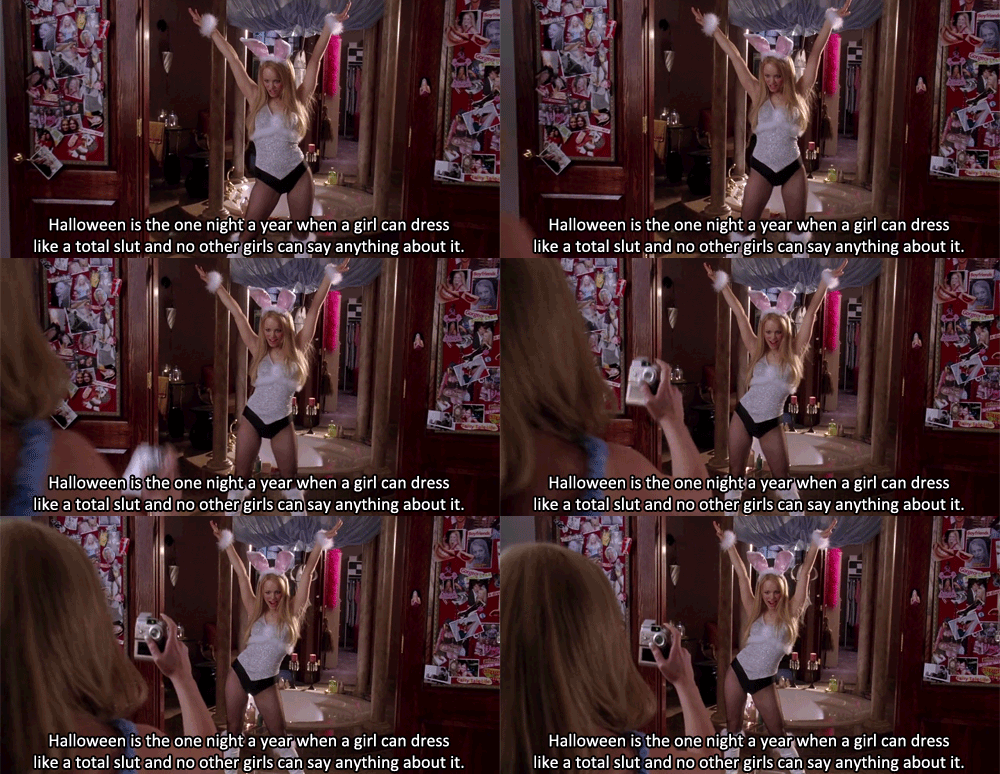
“Halloween is the one night of the year when a girl can dress like a total slut and no other girls can say anything about it”: the hyper-sexualisation and -feminisation of Halloween costumes.

Scream QueensAmerican Horror Story: HotelAmerican Crime Story: Ryan Murphy must be stopped! [Salon]

A year of Beyonce’s silence. [The Fader]

Zoo Weekly has published its final issue. [Mumbrella]

Adam Goodes spoke to Honi Soit in his first interview since retiring from AFL about racism, his future and Indigenous inclusion in the Australian constitution.

Images via Sasha Banks, Total Sorority Move.

On the (Rest of the) Net.

california love video

I wrote about misogynoir in Tupac Shakur’s music and Straight Outta Compton, and whether we can reconcile that with their contributions to culture. [Spook Magazine]

I’m also over at Cageside Seats asking which World Wrestling Entertainment Superstars would do better on the indies.

Porn’s inherent racism. [Vocativ]

Australia needs revenge porn laws. [Daily Life]

We need to stop talking about sportswomen in relation to their male partners. (This article focuses on WWE Divas, but extends to women in sport in general.) [Diva Dirt]

There is such a thing as racial sexual preferences, but let’s not use it as an excuse to be racist. [Daily Life]

Image source unknown.

On the (Rest of the) Net.

9781742536026

Rachel Hill’s book The Sex Myth, released on Wednesday, is excerpted here. [Sydney Morning Herald]

And I interviewed Rachel on the book. (An extended version to come.) [Junkee]

I also wrote about how I Am Cait might be the turning point in reality TV. [Spook Magazine]

35 of the 46 women who have accused Bill Cosby of drugging and/or sexually assaulting them have been photographed for and told their stories to New York magazine. [The Cut]

How that story came about and how they recovered from the DDoS hack. [Mashable]

What happens to mass murderer groupies when their subjects are convicted? [Slate]

In the wake of last week’s Twitter hubbub, Taylor “Swift isn’t here to help women—she’s here to make bank.” [Gawker]

Is there room for the Legends Football League in the recent revolution of women’s sports? [Grantland]

A history of World Wrestling Entertainment’s racism. [The Atlantic]

Orange is the New Black fails its Asian characters. [Hyphen Magazine]

On the “racebending” of Hermione Granger. [HuffPo, Buzzfeed]

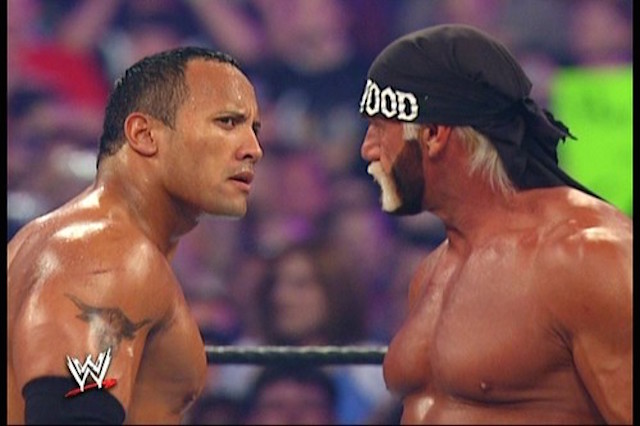
ICYMI: My thoughts on Hulk Hogan and racism in wrestling.

Image via Musings of an Inappropriate Woman.

Hulk Hogan & Racism in Wrestling.

hulk hogan racist

Over the weekend an eight-year-old recording of your childhood hero Hulk Hogan using racist epithets directed towards a black man his daughter was allegedly dating at the time surfaced. World Wrestling Entertainment was quick to sever ties with Hogan, terminating his contract (yes, he still worked there!) and deleting his presence from their website.

While this by no means rids WWE, and the wrestling world at large, of their inherent racism, they should be commended for taking such drastic measures against arguably their most famous star at a time when famous men are still protected despite their wrongdoings.

A few years ago, I wrote about the challenge of rectifying my feminism with my wrestling fandom:

“[W]restling is one of the most obviously racist modes of mainstream entertainment. Let me count just some of the racial stereotypes throughout wrestling history that come to mind: The Iron Sheik was pitted against such all-American opponents as Hulk Hogan and Sgt. Slaughter during the height of the Iranian hostage crisis and the Gulf War; the Mexicools’ ring entrance comprised the use of a ride-on lawnmower, insinuating that people of Mexican descent make excellent yard workers; African American wrestler Charles Wright went from one black trope—a witch doctor named Papa Shango—to another—The Godfather, a pimp who came to the ring followed by his ‘Ho Train’; the Boogeyman was another witch-doctor-esque character played by another African American wrestler, Marty Wright (of no relation to Charles Wright); Native American wrestler Tatanka got around in traditional Native garb, such as headdresses and warpaint and carried a tomahawk; Kofi Kingston is from the Republic of Ghana, but somehow a Jamaican gimmick for his character made more sense; we all know people of African American descent are probably criminals, so why not bring two black wrestlers together in a tag team and call them Cryme Tyme?; Jim Harris played the wild ‘Ugandan giant’ Kamala, while the late Edie Fatu had a similar, albeit Samoan, gimmick as Umaga; and Mohamad Ali Vaez, of Iranian heritage, plays up the Islamaphobia angle for his character.

documentary called Wrestling for Rotary chronicles an independent wrestling gig for charity in country Victoria in 2011, where Vaez talks about the internal struggle he faces in ‘perpetrating stereotypes that my family suffers because of [racism].’

But, at the end of the day,’I’ve suffered inherent racism in the United States, so you know what? I’m gonna make money off of it.'”

I think my sentiments still stand.

Related: World Wrestling Entertainment Will Never #GiveDivasaChance As Long As It Prioritises Bad Men.

Why Are Famous Men Forgiven for Their Wrongdoings, While Women Are Vilified for Much Less?

Elsewhere: [TheVine] Can a Feminist Love Pro Wrestling?

[Radar Online] Hulk’s N Word Racist Racist Rants Caught on Tape—Foul, Disgusting Tirade Leaks.

[The Guardian] Hulk Hogan Fired by WWE After Racist Recordings Emerge.

[Grantland] A (Very) Concise History of Racism in Wrestling, 1980–Present.

Image via Lipstick Alley.

On the (Rest of the) Net.

tumblr_mqpicreI5x1qagxv6o1_500

I wrote about how writing about Taylor Swift ruined my friendship. [Writer’s Bloc]

I also recapped Outback Championship Wrestling’s latest show.

And I hosted their podcast, chatting to Ricardo Rodriguez.

While we’re shamelessly self-promoting, I’m also at Bitch Flicks writing about Shondaland’s bad mothers. More bad mother content to come in next week’s collection.

How to talk to random women on the street: don’t. [The Nib]

The history of masculinity in fraternities. [The New Criterion]

The problem with #StellasChallenge. [Daily Life]

The Good Wife‘s Alicia Florrick’s wardrobe changes as her character does. I’ve just started watching this series so it’s interesting to see the looks I’m familiar with and how Alicia changes over the subsequent four seasons I’m yet to watch. [The Hairpin]

These lyric intelligence ratings from pop songs from the past ten years made my blood boil. More to come next week. [Seat Smart]

“Follow that”: a #WomensWrestling roundtable. [World Wrestling Entertainment]

More HIV-positive characters on TV will lead to an increase in awareness about the disease. [HIV Plus Magazine]

ICYMI: The death of McDreamy will allow Grey’s Anatomy‘s other characters to grow and change.

Image via One Week One Band.

On the (Rest of the) Net.

laverne-cox-nude

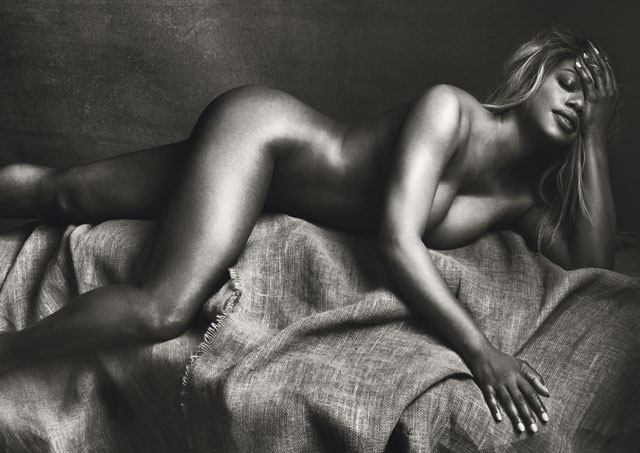
Playboy has a surprisingly positive take on Laverne Cox’s nude photoshoot for Allure (SFW).

Meanwhile, a conservatively idiotic “feminist” lambasts the shoot because it promotes an unrealistic, sexualised and “fake” version of womanhood. (I’m not linking to the website because I don’t want to give them traffic.)

For a nuanced look at reconciling black and trans femininity from the woman herself, check out Laverne’s conversation with bell hooks, below.

Mel Campbell on Anzac Day hysteria and the fallout from Scott McIntyre’s tweets and subsequent firing from SBS. [Spook Magazine]

The rise of emotional male musicians. [Pitchfork]

The face of World Wrestling Entertainment, a company that participates in anti-bullying campaigns, John Cena, who is held up as a role model to children, implicated that a woman prostituted herself because her “pimp” physically abused her. And this is the “PG-era”. [Cageside Seats]

Australia’s outrage over Andrew Chan and Myuran Sukumaran’s executions illustrates this country’s hypocrisy. [The Drum]

I recapped Outback Championship Wrestling’s Anzac Day show with Tyrus.

I’m also speaking to the OCW Heavyweight Champion, Drew Galloway, on the second edition of their podcast.

Image via Allure.

On the (Rest of the) Net.

greys anatomy you are the sun

Following on from last season’s “lean in” motif, this season on Grey’s Anatomy it’s all about its women taking time for themselves, whether that’s personal or professional. [Bitch Flicks]

Personal space is a feminist issue. [Sociological Images]

Loving football (and, indeed, wrestling) doesn’t make you a bad feminist. [Kill Your Darlings]

How will you know when you’ve made it? For me I think it will be when I’ve been published a) on Daily Life and b) in the American market; headhunted for something; verified on Twitter; and when those I admire in the same industry see me as a peer. How will you know? [The Hairpin]

And Rachel Hills ponders what it means to have made it, and ways to pass the time while you’re waiting to. [Musings of an Inappropriate Woman]

Young, single and successful women are increasingly living alone in affluent cities. [Daily Life]

In defence of Amber Rose:

“Amber Rose is hot. Amber Rose is also a mom. Amber Rose was also a wife. And if T.I. can be a convicted felon who’s rapped about sex, guns, and drugs and still be ‘father knows best’ on The Family Hustle once a week, why is a sexy woman suddenly an unfit mother just because she posts photos in her lingerie? If you don’t like what you think she represents, make sure you’re just as vocal about these less-than-angelic men raising children while bragging about one-night stands and trappin’. If they’re just entertaining and expressing themselves, then so is she. If they’re just living up to an image and a brand, then so is she.” [The Daily Beast]

And while we’re at it, in defence of Rihanna. [Buzzfeed]

Can World Wrestling Entertainment #GiveDivasaChance to be in the main event of WrestleMania 32? [Between the Ropes]

It wasn’t Jackie’s responsibility to get the details of her rape correct; it was Rolling Stone‘s. [The Guardian]

Stop calling women crazy. [Birdee]

ICYMI: the ties that bind us in menstruation and do you ever feel like you’re trapped behind a screen?

If these links haven’t sated your appetite for feminist goodness, the 83rd Down Under Feminists Carnival has arrived featuring much more from Australia and New Zealand. [Opinions @ BlueBec]

Image via Tumblr.