On the (Rest of the) Net.

I’m getting straight back into it in the New Year, with pieces about abuse in Jessica Jones, what World Wrestling Entertainment can learn from Jem & the Holograms‘ flop and why its spate of injuries might be a good thing for other wrestlers. [Bitch Flicks, The Spectacle of Excess, Cageside Seats]

On selfies. [Matter]

Forget the manbun. The latest in men’s hair styling are manbraids. And they’re cultural appropriation. [Ms. Magazine]

Why is there a statute of limitations for rape and sexual assault? [NYTimes]

Erin Riley kicking goals (mixing metaphors, I know) with her piece on the Chris Gayle incident being a symptom of a much larger problem with sexism in sport. [Daily Life]

Mens mental health is important but not at the expense of the women and children they abuse and kill. [Daily Life]

There’s been plenty of coverage of Cole Miller’s death by one punch, but what about Indigenous man Trevor Duroux’s death of the same? [New Matilda]

The history of glitter. [Broadly]

The history of toplessness. [Broadly]

And the history of the crystal ball. [Broadly]

2015 was the year of interracial relationships on TV. [Fusion]

Has Clive Palmer had a feminist awakening? [Junkee]

Even teaching a course on Beyonce doesn’t guarantee job security. [WaPo]

Why we need to talk about the sexual assaults in Germany over New Years—and the race of the attackers. [New Statesman]

Should wives be held accountable for their husband’s bad behaviour? [The Cut]

And what about Bill Clinton’s alleged sexual assault of a woman in 1978? [Jezebel]

It’s great that you want to read books by more diverse authors, but do you have to tell the whole world about it? Just do it. [Jezebel]

On the (Rest of the) Net.

squad-768x512

I wrote about Taylor Swift, mean girls and #squadgoals. [Junkee]

The rise of feminist outrage journalism. [Jezebel]

Justin Bieber’s musical reinvention is the epitome of #sorrynotsorry. [Brooklyn Magazine]

2015 was a shitty year for women in some respects, but it was also one in which our creative and cultural efforts began to be recognised. [Matter]

It was also the year in which we finally started to believe women. [Vulture]

And, with Bill Cosby’s arrest this week on sexual assault charges against Andrea Constand in 2004, this article I wrote in September is never more relevant.

“Forget Ryan Murphy, Making a Murderer is an actual American horror story.” [Observer]

Hey, Netflix, where’s all your African American-produced content? [Madame Noire]

On white debt and white guilt. [NYTimes]

Image via Junkee.

On the (Rest of the) Net.

scandal olivia pop abortion

The disparities between TV and real life abortions. [WaPo]

Pushing back against manspreading. [Medium]

Did Frida Kahlo identify as a disabled artist? [Disability Horizons]

Portraying black gay men on TV. [Fusion]

Actually, bed rest isn’t good for you… so why are pregnant women still prescribed it? [Harper’s]

Hillary Clinton is the best candidate for the job of president:

“If you want to blame her for all of Bill Clinton’s bad decisions, which many Sanders partisans do, then you can’t do that without admitting that she did in fact play a major role in policy; if you want to trivialise her as ‘just a First Lady,’ then you can’t use any part of Bill’s administration against her. Pick your poison, but they’re mutually exclusive options. ” [Sady Doyle]

heathers17

Deconstructing Heathers‘ fashion. [Fusion]

The NFL responds more harshly to dog fighting than it does to violence against women. [Broadly]

Can concussions cause rape? [Broadly]

So, wrestling for sex is a thing. [Vocativ]

The prats and pitfalls of the fanboy celebrity profile. [Jezebel]

Boy bands are one of the only safe spaces in which girls can explore their sexualities. [Dame Magazine]

ICYMI: I republished my Calling Spots story on race and gender in wrestling.

Images via Complex, Chat Cheri.

On the (Rest of the) Net.

supergirl jessica jones

We need both Jessica Jones and Supergirl. [Comics Alliance]

When diversity in media means white people freak out over not seeing themselves reflected back:

“We need to make more white people uncomfortable. We need to make white people uncomfortable more of the time. We need to decentre whiteness so living in a diverse world does not equal discomfort for anyone. It takes white people literally one second of not seeing themselves reflected for them to mount a campaign against the world claiming they have been victimised. Yet, white people have been demanding people of colour identify through whiteness for centuries.” [Kevin Allred]

This artist is turning period stains into fine jewellery, is awesome. [Broadly]

You don’t have to be a monster to hate women. [HuffPo Women]

Caitlyn Jenner proves that being trans and being transphobic aren’t mutually exclusive. [Cosmopolitan]

ICYMI: I assert that TERFS and SWERFS aren’t radical feminists.

Image via Comics Alliance.

On the (Rest of the) Net.

https://twitter.com/stoya/status/670685987601825792?ref_src=twsrc%5Etfw

https://twitter.com/stoya/status/670689154498449413?ref_src=twsrc%5Etfw

In the wake of allegations made against porn star James Deen by his ex-partner and fellow porn performer Stoya, as well as several other performers, both Ann Friedman and Amanda Hess attempt to unpack what it means when women hold men who express feminist sentiments up as feminist heroes. [The Cut, Slate]

And while Deen may have been put on a pedestal, he and other violent men illustrate the low standards we actually hold them to. [Junkee]

Stoya’s business partner Kayden Kross explains why they chose to keep scenes featuring Deen on their website, TrenchcoatX (NSFW). [UnKrossed]

I wrote about Meredith Grey, of Grey’s Anatomy, and her woman problem. [Bitch Flicks]

“The Myth of the Tight Pussy.” [Medium]

The real cost of unpaid emotional labour. [Harlot]

“Why Do Teen Girls Like Gay Porn?” [Broadly]

Three ways to make pop culture more diverse. [This Ain’t Livin’]

Another thinkpiece on Drake’s obsession with “good girls”. [The Establishment]

Unpacking Showgirls‘ infamous pool sex scene (NSFW). [The Frisky]

On the (Rest of the) Net.

Clueless

The politics of Clueless‘ fashions still endure 20 years later. [Fusion]

Transphobia is not about free speech. [Vice]

It’s possible to be outraged by more than one thing at a time. [LA Times]

The case for trigger warnings in Jessica Jones. [Medium]

Nick Jonas’ flirtation with the gay gaze. [Fusion]

ICYMI: Struggling with feelings that because Charlie Sheen is a bad person he deserves HIV.

Image via Rolling Stone.

On the (Rest of the) Net.

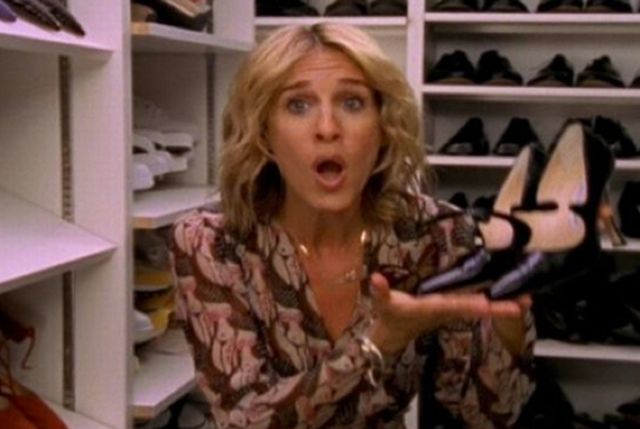
manolo blahnik mary jane sex and the city

High heels help to differentiate women from the relative equality they’ve achieved with men. [Attn:]

Gay male misogyny: “To assert you love dick doesn’t mean you have to feign disgust at women and their bodies.” [Broadly]

“Why Writers Run.” [The Atlantic]

America is fascinated by the amateur but hate their jobs. [NYTimes]

Women reject men’s unwanted advances with the boyfriend excuse because men’s property is more respected than women’s wishes. [Daily Life]

Tweeting about TV during #ParisAttacks. [Fusion]

NBC’s interview with Charlie Sheen about his HIV-positive status was unethical. [ABC The Drum]

And before you go blaming his frequent sex with porn stars for his status, adult performers are one of the most tested populations on the planet and can’t perform if they have a positive test. [Vocativ]

In entertainment, the American dream is Latino. [Vulture]

Rebecca Shaw—aka Brocklesnitchis Woman Against Feminism. [Ravishly]

Image via Vulture.

On the (Rest of the) Net.

losing-ones-diamond-earring

It’s a film and TV theory kind of week!

I wrote about how Keeping Up with the KardashiansI Am Cait and Total Divas are changing the face of reality TV. [Junkee]

Unrequited female desire shouldn’t be portrayed as a mental illness, as it is on My Crazy Ex Girlfriend. [Bitch Flicks]

Reading The Little Mermaid—the newest adaptation of which has just cast Chloe Grace Moretz in the title role—from a trans perspective. [Feministing]

Black representation on Daria. [Vulture]

Queering Freaky Friday. [Feminartsy]

With SupergirlJessica Jones and Daredevil, has TV finally solved its superhero problem? [Studio 360]

Emotional labour as women’s work. [The Guardian]

When all your friends are having children but you’re not sure if you want them. [The Interrobang]

“You will look at me when I’m sexting you, do you understand me?” [The Cut]

Lest We Forget: the service animals of war. [The Big Issue]

“Grey Hair on the Kids.” [Mediander]

Instagram as the newest blogging platform. [NYMag]

CTjVRvMW4AIle_j

I have a story on how the tag team New Day are challenging gender and racial stereotypes in professional wrestling in Calling Spots magazine.

I moved all my articles from TheVine over to this here blog so check them out:

Channel 7’s bad boys.

“The rise of the hunk” in Magic Mike.

“Wonder Why They Call U Bitch.” And while you’re at it, I wrote about similar themes in Straight Outta Compton and Tupac Shakur’s lyrics here.

How to reconcile feminism and progressive values with wrestling fandom.

Masters of Sex may be titled after a man, but it’s all about the women on the show.

What happens when your heroes let you down?

“Why Do We Insist On Calling Women Girls?”

How to create a cruelty-free beauty cabinet.

Image via Junkee, Elow Mojo.

How to Make Sure Your Health & Beauty Products Are Cruelty Free.

This article was originally published on TheVine on 9th March, 2015.

As someone who strives to consume as many vegan and cruelty free products as humanly possible (though as a meat eater, this can only take me so far), it can often be a struggle to trust that what you’re putting in and on your body hasn’t also been put in and on Thumper and Mickey. You may think your Body Shop Cocoa Butter is ethical or that the cheap, gift-with-purchase nail polish is harmless, but the reality is that most brands test on animals. This extends well past beauty, too: your household cleaning products and even toothpaste from leading companies are all tested on animals before they make it to your local Coles or Woolies.

The testing of such products on animals usually involves the dropping/rubbing of some combination of ingredients into the eyes/skin of the rabbits, rats and other rodents used in such experiments. The Vegetarian Site lists the following as just some of the brands that buy into this mode of testing:

Avon

Clinique

Estee Lauder

Proctor & Gamble (including Cover Girl, Herbal Essences, Pantene, Olay, Venus, Gillette and Vicks)

Post-It

Mars

MAC

L’Oreal (including The Body Shop, Garnier, Maybelline, essie, Lancome and Kiehl’s)

Johnson & Johnson (including Neutrogena, Clean & Clear, Listerine, Reach, Stayfree, Carefree and Bandaid)

Revlon

Sally Hansen

Tresemme

Unilever (including Vaseline, Sunsilk, Dove, Rexona, Impulse, Lynx, Simple and Flora margarine spread)

Playtex

Trojan

A sure-fire way to find out which products are tested before you purchase them is to check for the Leaping Bunny logo on the item or download their app, while PETA has comprehensive lists of brands that do and do not test on animals. Another hack is to Google whether the product is sold in China; as that country requires all beauty products to be tested on animals prior to human consumption, it’s a safe bet that it’s not cruelty free.

So say goodbye to your Juicy Tubes, condoms (eek!) and the stationery that Romy and Michele made famous and hello to some viable alternatives that won’t cost you the earth and that are surprisingly easy to source.

Below you’ll find six categories of beauty products and some animal-friendly suggestions to make stocking your new cruelty free beauty cabinet a breeze.

Face

Do you really want to be smothering your face in gunk that’s been smothering the faces of lab animals?

Cruelty Free Alternatives: There are plenty of brands you can find at your local Priceline that won’t make you lose sleep at night. Witch witch hazel products offer both skincare and makeup for oily and/or younger skin, and I especially like their makeup wipes and blemish stick, while Natio also has an impressive range. Their mineral powder foundation (be warned: light is not that light) is the best I’ve found so far, plus their sunscreen is ace. And have you been wanting to try Yes To or Aesop? Now you can, guilt-free.

A new skincare brand I’ve started using is Indeed Laboratories—a high-tech innovative brand—specifically Pepta-Bright skin tone enhancer and Hydraluron moisture serum. The small tubes will set you back about $35 each but I’ve been using mine for about six weeks now and there’s still plenty left.

Lips

It’s easy to grab a tub of Vaseline, a Maybelline Baby Lips or a cheap but effective Rimmel lippie but there are plenty of non-tested products to paint your pout with…

Cruelty Free Alternatives: … Such as playground staple of a bygone era, Lip Smackers, of all things! Since I found out that Bonne Bell (although that company has gone into liquidation and has been bought out by Markwins, who were certified cruelty free as of 2012) is cruelty free, I’ve been stocking up on all my favourite childhood flavours.

If you’re after a heavier pop of colour, Adorn and Ere Perez are your go-to brands.

Body

We hardly want to be forking out for shallow and expensive body washes and lotions when a jumbo tub of supermarket moisturiser will do the trick, but there are plenty of products under $20 that will last you months.

Cruelty Free Alternatives: I highly recommend any body wash or scrub from Lush, while for moisturising, I like Natio’s Wellness Body Butter. It is quite heavy, though, and leaves white marks on black clothes not unlike deodorant so maybe go with something lighter, like Dream Cream from Lush, for daytime.

Speaking of deodorant, most of your store bought roll ons and aerosols are tested on our furry friends, so I like U.S. brand Crystal. You can buy a three-pack on Amazon for about $US10. (When I’m doing an Amazon haul, I chuck in about three of those and it lasts me all year.)

Eyes

It can be difficult to find quality mascara and bright eyeshadows that last the distance and aren’t going to irritate your eyes the way they would a lab bunny, but they are out there.

Cruelty Free Alternatives: For example, Australis and Face of Australia offer a wide range of bright hues for all your party makeup needs. I use Natio mascara and Australis also does a mad brow gel.

Hair

I searched for months for cruelty-free shampoo that cleansed my scalp and conditioner that actually conditioned.

Cruelty Free Alternatives: And I found them both at the Cruelty Free Shop, specifically the brand Giovanni Eco Chic Hair Care. It’s a Beverly Hills brand, but support your local Cruelty Free Shop, why don’t you, and pick up some vegan dog treats, chocolate and candles while you’re there. In addition to their 50:50 Balanced Hydrating-Clarifying Shampoo and Smooth as Silk Deeper Moisture Conditioner, I also use Giovanni’s L.A. Hold spritz. As my hair is balayaged, instead of argan or Moroccan oil, I just use Bio Oil which is cheap and multipurpose.

Scent

Again, most of your celebrity scents and even more exclusive designer perfumes are tested on animals. Marc Jacobs Daisy and Britney Spears’ latest don’t look so appealing now, do they?

Cruelty Free Alternatives: The main criticism of Lush I hear is that the scents of their products overpower. This may be the case when wafting together in the store, but individually Lush has quite a smorgasbord of fragrances to choose from. I especially like Breath of God, which is a fresh, masculine aroma, while if you fancy a heavier, more romantic scent Imogen Rose is the one for you.

If your perfume tastes are on the more luxurious side or you find yourself in New York City with cash to splash, you can’t go past Bond. No 9. My favourite EDP’s are High Line (named after the Chelsea park), Scent of Peace, New York Amber and the simply titled Manhattan, which will all set you back at least $US280 for a 100ml bottle, but you can sometimes find them cheaper on eBay.

Nails

Forget Sally Hansen and—tragically—say goodbye to essie.

Cruelty Free Alternatives: She’s not easy to find in Australia, but Deborah Lippman has a crazy amount of colours that are worth the trouble available at Sephora, which ships to Australia. Closer to home, Kester Black is an Aussie-made, vegan and cruelty free company.

When I first decided to phase out my lab rat-tested beauty products and make the switch to a cruelty free lifestyle, it seemed like an insurmountable task. Through trial and error I managed to find the variety of trusty, easy to find and reasonably priced brands and products listed above. If you’ve wanted to ditch your nasty products of old I hope this list of alternatives makes you see that it’s not so hard to do so. So make the trip to your local Priceline or Cruelty Free Shop, like, yesterday.
Why Do We Insist on Calling Women Girls?

This article was originally published on TheVine on 24th February, 2015.

Pop culture would dictate that women are girls until they’re too old to warrant being a part of public life: so, like, 50. I probably internalised this as it’s only in recent years that I’ve felt a) old enough and b) confident enough to call myself a woman. Up until then I was, to borrow a line from Britney Spears, “Not a Girl, Not Yet a Woman”. Now that I identify as a woman, I find it all the more noticeable when other people refer to women as girls.

As one of the strongest influences in many people’s lives, how certain cultures and minorities are represented in pop culture informs how we feel about them in wider society. Just listing the shows and pop groups with the word “girl” in the title already says a lot.

There’s Gilmore Girls, about a young woman and her mother; Gossip Girl, which follows the trajectory of high schoolers to just-as-immature adults; Girls, the brainchild of one of the most influential women in pop culture currently, Lena Dunham; and Gone Girl, about a very-much-adult woman who disappears. The Spice Girls are now grown women who still trade on that moniker. Even Sex & the City, which follows the lives of four 30-somethings, and later 40-(and 50!-)somethings in the ill-fated movies, insists on referring to Carrie, Samantha, Charlotte and Miranda as “girls”. “I couldn’t help but wonder about brunch with the girls”, Carrie would muse from her laptop.

In actuality, all but a few of these pop cultural representations could more accurately be described—and titled—with the word “women” in mind. Calling the career women of Sex & the City or The Spice Girls… erm… “girls” undermines the positions they are in their careers and personal lives.You would hardly call a Samantha Jones-type an “It girl” in her field if you met her in real life. Anne Helen Peterson continues to unpack the notion as it pertains to “It Girls” in a recent article for Buzzfeed.

Further to this, in a 2008 piece on Jezebel, Dodai Stewart writes, “A girl is insecure, incomplete; a woman is confident, competent.” With this in mind, calling the women of Girls girls might not seem as out of place as using it to refer to, say, Beyoncé, who sings about being a ‘Grown Woman’ on her self-titled album. (I am well aware that she also has a contradictory song called ‘Run the World [Girls]’).

Madonna addressed the stigmatisation and violence that trans women and girls face in ‘What It Feels Like for A Girl’ in 2000. Her voiceover states that boys who want to look like girls are “degrading, ’cause you think that being a girl is degrading.” Certainly, in some communities there is no distinction between women and girls: they both wield a dismal amount of power. The transmisogyny that Madonna sings about surrounds Bruce Jenner’s rumoured impending transition and shows that we might not be as progressive about gender relations as we fancy.

It’s not always necessarily about explicitly saying “girl” but the sexist connotations applied to the word. This is perhaps none more evident than in sport, as we’ve seen at the Australian Open. World number seven Eugenie Bouchard was doubly infantalised by the male interviewer who called her and her fellow female tennis players “you girls” and asked her to twirl in her pretty tennis duds.

The distinction comes down to the sexist ideal of girls being perceived as fun and fancy-free and women as hard-to-please shrews. Women have agency and aren’t afraid to ask for what they want; girls are agreeable to anything.

Law professor Kate Galloway writes further about this relationship between language and treatment at law blog Amicae Curiae, specifically referencing how the “girls” of our Olympic basketball team travelled to the London Games in 2012 in premium economy while the male team flew business class.

This, along with the lack of mainstream support and coverage, would seem to indicate an obvious disregard for women’s sports. “Throw like a girl” being used as an insult solidifies it. The term was, however, used positively in the recent Superbowl commercial for feminine hygiene brand, Always, and was the title of the Spike Lee-directed doco about baseball player and Associated Press’ Female Athlete of 2014, Mo’ne Davis.

In daily usage, we may not be actively diminishing the independence of our women friends when we “catch up with the girls” but it’s amazing how prevalent the term is. I’m just as guilty of it. I’ll sometimes refer to the saleswoman who presents as younger than me as “the girl who served me” or I’ll comment on something on social media with the cliché, “You go, girl!” Sure, “girl” can be used as a term of endearment between equals, just the way “queer” has been reclaimed by the gay community.

But as Galloway says, “I acknowledge that sometimes it might be [okay] to be ‘one of the girls’… I use the term to refer to my women teammates or close women friends. For former women team members now commentating on their sport at the Olympics, it may likewise be acceptable during an interview to refer to ‘the girls’. It should not however be presumed that any woman athlete can acceptably be referred to as a girl.”

When being a girl—indeed, being a woman—is still seen as less than, whether blatantly or more insidiously, I’m making a conscious effort to instead interact with and encourage my fellow women without pigeonholing them as “girls”. Women are capable of so much more than the gossiping, brunching and winging our pop cultural compatriots would reduce us to when they call us that.

Elsewhere: [Buzzfeed] The Trouble with “It Girls”.

[Jezebel] Ladies, Let’s Be Honest: Are We Girls? Or Are We Women?

[Daily Life] Eugenie Bouchard Asked to “Twirl” By On-Court Presenter Following Australian Open Match.

[Amicae Curiae] Don’t Call Me Girl. I’m a Woman.

[Daily Life] Eugenie Bouchard Deserves Better Than Sexist “Twirl” Request.

[Bitch] Is “Girl-Power” Advertising Doing Any Good?