TV: The Underlying Message in Glee’s “The Spanish Teacher” Episode.


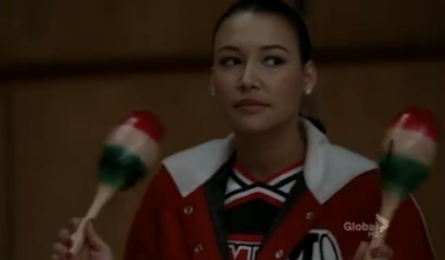
Finally! Glee acknowledges the racist stereotypes it’s perpetuating, and Santana had the guts to stand up and say it:

“You went from ‘La Cucaracha’ to a bullfighting mariachi. Why don’t you just dress up as the Taco Bell chihuahua and bark the theme song to Dora the Explora? You don’t even know enough [about Latin culture] to be embarrassed about these stereotypes you’re perpetuating.”

Well, kind of.

But let’s backtrack.

When Mr. Shue realises he doesn’t actually know enough about the Spanish language and culture to confidently call himself a Spanish teacher, he enrolls in Spanish night class, run by guest star Ricky Martin as David Martinez. “How did I become so out of touch?” Will wonders.

Firstly, become out of touch? Despite the New Directions kids’ undying devotion for him, Mr. Shue has been out of touch from day one. Not to mention his inappropriate relationships with his students.

And secondly, there’s a lot more to Latin culture than dressing up as a matador and singing “La Cucaracha”, as Santana and Mr. Martinez soon school him in.

But it wasn’t just the South American racial stereotypes who got their fair share of airtime last night. The black prejudice was out in full force, although not acknowledged by Glee. Cutting off their Latin nose to spite their black face?

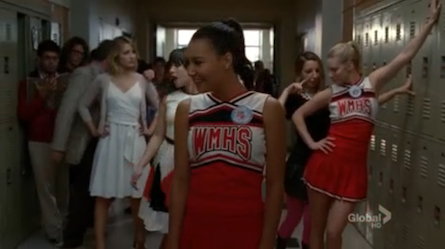
Synchronised swim coach Roz Washington is one of the most racist characters on the show, in my opinion. She speaks in African American colloquialisms such as “bajonkajonk”. When she challenges Sue Sylvester for leadership of the Cheerios, she tells Sue her “stale white bread moves” aren’t working for the team anymore, insinuating that black girls dance better than white girls and buying into the stereotype that they do.

Also, Miss Pillsbury is on a mission to have her pamphlets infiltrate McKinley High and hands out some to Mercedes and Sam when they come to her about their relationship problems. The pamphlet that Mercedes receives is entitled, “So You’re a Two-Timin’ Ho?” whilst Sam’s reads, “So You’re Dating a Two-Timin’ Ho?” Do you think the show would have given such a racist and sexist title to a pamphlet received by Quinn, for example? They might as well have made the girl on the cover of the pamphlet black because that’s pretty much what they were insinuating: that Merecedes is the sassy, fat, angry, sex-crazed woman of colour.

It remains to be seen whether Glee will actually make an effort in the future to abolish the stereotypes it so readily holds up to its viewers…

Related: The Underlying Message in Glee’s “Yes/No” Episode.

Glee: The Right & Wrong of It.

Elsewhere: [TV Tropes] Sassy Black Woman.

[Jezebel] Why Latina’s Aren’t Allowed to Get Angry.

Image via Channel 131.

TV: Glee “Michael” Review—Oh My God Can’t Believe What I Saw As I Turned On the TV This Evening.


We’ve come to learn that when Glee devotes a whole episode to a star (Madonna, Britney Spears)—bar the second Lady Gaga episode—they pretty much go the Rock of Ages route: pack as many songs into the episode as they can without giving much thought to the dismal story lines developed in previous episodes.

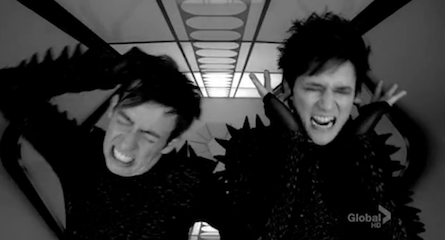
I thought, in their “Michael” episode, they went the other way: using whichever Michael Jackson songs they had access to that resembled the character’s plotlines to insert into the show. Unfortunately, this meant such dull MJ songs as “I Just Can’t Stop Loving You” and “Ben.”


Rachel Berry is included in both of these renditions, and she admits at the beginning of the episode that she’s never really “gotten” what Michael Jackson is all about like the other New Directions’ have.

It seems the Glee writers don’t really “get” him, either (although, do they really “get” anything?), because they would have used songs like “I Want You Back”, when Sam serenades Mercedes, instead of “Human Nature” (which is a stunning song and perhaps the only example of where the writers chose melody over meaning); and when Artie gets all riled up over Blaine’s rock-salt-infused slushie attack at the hands of the Warblers, “They Don’t Really Care About Us” might have been more appropriate than Michael’s duet with sister Janet, “Scream”:

“What do you expect from us; we’re people. I know the rest of the world may not see us like that but when they tease us and throw stuff at us and toss us in dumpsters and tell us that we’re nothing but losers with stupid dreams it freaking hurts. And we’re supposed to turn the other cheek and be the bigger man by telling ourselves that those dreams and how hard we work make us better than them? But it gets pretty damn hard to feel that way when they always get to win.”


By far the best performance was the Warblers’ Sebastian and Santana’s Michael-off of “Smooth Criminal”, featuring 2 Cellos, who played at Elton John’s gig and did the same version of the song!

And, for old time’s Michael’s sake, here are the other songs from the episode:


Related: The Underlying Message in Glee’s “Britney/Brittany” Episode.

The Underlying Message in Glee’s “Born This Way” Episode.

Rock of Ages Review.

Images via Put Locker.

TV: Gossip Girl—Blair Channels the Tragic Life of Princess Di & Gossip Culture is to Blame.


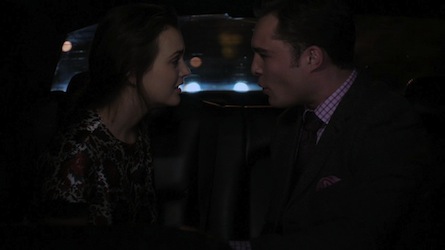
Tortured lovers Blair and Chuck decided to run away together despite Blair’s betrothal to Louis and her pregnancy. Chuck tells Blair he’ll love her and her and Louis’ baby, just as the paparazzi chasing the car they’re traveling in forces it off the road. If this isn’t a statement about Princess Diana’s fatal car accident, allegedly at the hands of the paparazzi, I don’t know what is. Hint: expect this to be the catalyst for Serena et al. to try to finally take down Gossip Girl

Also, it’s incredibly convenient that Blair’s involved in a car accident whilst pregnant. I can just see it now: Blair will come out of the accident unscathed, however her inconvenient bun in the oven won’t, allowing her to cut all ties with Louis and run back into the arms of Chuck. Providing he survives, that is…

Related: Life Begins at Love on Gossip Girl.

Image via FanPop.

TV: New Girl Should Attend a SlutWalk Sometime…


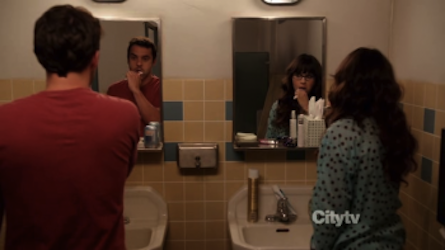
On last night’s New Girl the inevitable pairing of Jess and Nick began, with Jess’s model friend CeCe crashing the loft and watching the sparks fly between them.

Jess is oblivious to Nick’s interest, and tells CeCe that not everyone wants to have sex with everyone else, like CeCe thinks they do. CeCe begs to differ, and Jess asks, in horror, if her clothes are too revealing or if she should wear thicker pyjamas. Really?!

If SlutWalk has taught us anything it’s that the amount or type of clothing a woman is wearing has nothing to do with the interest she ignites in a man, whether that man is a potential rapist or harasser, or just a regular Joe with a crush on his housemate. We’re at episode four now, so Nick has gotten to know Jess and all her (at times insanely annoying) quirks. God knows if he’s expressing interest it’s in spite of the abovementioned quirks and not because of how she looks or what she’s wearing. (Although last week’s nudie run could throw a spanner in this theory!)

Related: Ain’t Nothin’ Gonna Break My Slutty Stride.

Body Acceptance on New Girl.

Image via HelloGiggles.

TV: The Underlying Message in Glee’s “Yes/No” Episode.


Wow, where do I start? Last night’s episode of Glee focusing on Becky’s newfound interest in Artie and Mr. Shue asking Emma to marry him was one of the most offensive yet.

Let’s begin with Becky: I found it weird that Becky’s internal monologue was spoken in a British accent (Helen Mirren’s to be exact). She claims that it’s her head and she can sound however she wants, but how many “abled” characters have a different voice in their heads and make that justification for it? I though it was singling Becky out because of her disability.

She and Artie go on a date and, at first, Artie feels uncomfortable with it, but begins to get to know and like Becky. It came across as platonic on Artie’s end, but his fellow glee clubbers gave him the third degree about what kind of message he was giving Becky.

They urged him not to lead Becky on or give her the wrong idea, and Artie called them out on their hypocritical ways: “You guys talk a good game” about acceptance, but at the end of the day, they’re just as narrow minded as the rest of McKinley High, which pretty much sums up Glee. They think just because they’ve got black and Asian characters and characters in wheelchairs and with Down’s syndrome and characters who are gay they’re being “inclusive”, but really, they show is just using them as token gestures.

Take Kurt, for example: he hasn’t been the focus of many storylines of late, and the writers seem to just slot him in to the background. In the opening scene, Mercedes and Sam channel Sandy and Danny of Grease, while the rest of the glee club stand around imploring them to “tell me more, tell me more”. Kurt belongs to the girls’ group in this instance while his equally gay boyfriend, Blaine, is hanging with the boys on the bleachers. Furthermore, when Puck, Finn and Blaine act as backup singers to Artie, Will and Mike in their rendition of “Moves Like Jagger”, mashed up with “Jumpin’ Jack Flash”, Kurt is nowhere to be seen. Is it because he’s not sexy or masculine enough? Let’s remember that this isn’t the first time Glee has ostracised Kurt from the gender group he belongs to because of his sexuality. Didn’t Glee get the memo: gender and sexuality are not the same thing.

But back to Becky: when Artie takes into consideration what the rest of New Directions are trying to tell him, he asks Coach Sue, of all people, for advice.

It is revealed that Becky sent Artie a sexy photo and he feels weird about it. Sue asks if he felt the same when Brittany, no doubt, sent him similar pictures of herself. Artie replies no, but those were different circumstances. So even Artie, a man with disabilities himself, thinks someone with Down’s can’t be sexy. Hypocritical, much?

The other storyline driving this episode is Will and Emma’s relationship being taken to the next level in the form of marriage. Emma is so desperate for Will to propose that she fantasises about doing it herself. Funnily enough, Coach Beiste and Sue become her bridesmaids in the dream sequence, wearing Princess Eugenie and Beatrice’s royal wedding hats, respectively. They called Kate Middleton “Waity Katie” and I think that’s what the writers were playing into with Emma’s patient wait for Will to propose.

Will finally decides to propose and asks Finn to be his best man as apparently he has no grown up friends and because he thinks Finn has showed him what it means to be a good man. Pah!

Finn is the whiniest, most cowardly and simpering character on the show! He feels sorry for himself, has an unrealistic idea of what Rachel and women in general should be, is (or has been) embarrassed by Kurt’s sexuality and only stands up for those he loves after the fact. He also thinks that joining the army will fill the void that college football has left and make him more of a man.

To further illustrate Finn’s insecurity, he decides to ask Rachel to marry him because he’s got nothing else going for him!

I was also a bit disturbed by Sam’s inclusion in the synchronised swimming team, called the “Guppies” and lead by bronze Olympic medalist, Roz Washington, who is of African American descent. She also comments that Sam’s “trouty mouth” is one she’s never seen on a white kid. This, in addition to Becky’s dig at the possibility of dating Mike Chang (“I’m no rice queen”), makes “Yes/No” one of the worst episodes of Glee yet.

Related: Glee’s “Sexy” Review.

The Underlying Message in Glee’s “Duets” Episode.

The Underlying Message in Glee’s “The Rocky Horror Glee Show” Episode.

The Underlying Message in Glee’s “Furt” Episode.

Image via The Dam Nation.

TV: Body Acceptance on The New Girl.


My dad called my mum fat when they first started dating, which caused her to become embattled in a lifelong struggle with her weight. There are countless other stories where someone makes a comment about someone else’s body that does irreparable damage, consciously or not.

Last night’s episode of the New Girl showed that it’s not just women who experience body insecurity. When Jess walks in on Nick dancing naked in his room before a date, she laughs. Later, on said date, Nick can’t perform and refuses to take off his shirt. It’s like the male television equivalent of having sex with your bra on.

Women have a myriad of outlets to talk about their body image (funnily enough, many of those outlets also perpetuate this phenomenon. Women’s magazines, anyone?). Guys, not so much. So when Nick confesses to Jess how her laughing at him made him feel, I was proud of the show for addressing this. But when Jess couldn’t even say penis (then ends the episode by calling her vagina by a pet name), Nick hit the nail on the head when he told her he can’t have a serious conversation with her about such issues when she can’t call reproductive organs by their names. Pet names for body parts are for three year olds and baby talkers. And, apparently, New Girls.

Related: Who’s That Girl? It’s the New Girl.

Image via Put Locker.

Sexism in Fantasy.

From “Young Females as Superheroes: Superheroines in the World of Sailor Moon” from FemSpec journal:

“Further illustrating the negotiation of femininity and empowerment, girl power characters are often represented in a fantasy setting. This is a particularly significant factor when interpreting these characters in terms of their fighting abilities. The heroes generally face fantastic villains that are often unmistakably evil and are represented as protectors of innocence and humanity. This reinforces the idea that girl power heroes should have a nurturing, protective nature: both one of the conflicting femininities described by Douglas and an aspect of femininity reclaimed within third wave feminism.

“… Fantasy helps to alleviate the threat of castration because these characters are not meant to represent reality. Thus, the threat itself is marked ‘not real’.”

I think this was what Sady Doyle was trying to get at in her scathing critique of George R.R. Martin’s A Song of Ice & Fire series which, while valid, didn’t win her many fans in the fantasy community.

In a nutshell, I think she was trying to say that women experience sexism, rape, sexual harassment and value based only on their looks in everyday real life; we don’t need to be represented that way in fantasy too, where the author has the opportunity to create an alternate reality for women.

In FemSpec (an article which I originally accessed online but has since been taken down), the author studies Sailor Moon and how the heroines in that were created as a response to third wave feminism, but as a large portion of the show and manga’s audience is male, they’re typically feminised in order to eliminate threat to the status quo.

I’m not a fantasy fan, but I think we can all agree on less sexism in fantasy (nay, all fiction. Or, here’s a radical idea, in real life!) and more accurate portrayals of what it’s like to be a woman that doesn’t centre around sexuality.

Elsewhere: [Tiger Beatdown] Enter Ye Myne Mystic World of Gayng-Raype: What the “R” Stands for in “George R.R. Martin”.

[Tiger Beatdown] Chronicles of Mansplaining: Professor Feminism & the Deleted Comments of Doom.

TV: Who’s That Girl? It’s the New Girl.


I’m not the biggest Zooey Deschanel fan. I’ve only really seen her in Failure to Launch (she was the saving grace in that unintentional horror movie) and some of Tin Man, which I wanted to like but couldn’t bring myself to get through.

But, after reading a few different takes on Deschanel’s television leading lady debut in New Girl (especially this New York magazine cover profile), I decided to give the show a shot.

I was expecting manic pixie dream girlishness galore, which there is a lot of, but I think the three guys, a girl and a pizza place apartment format makes it a bit more palatable for the mainstream sitcom crowd.

In a bid to better understand the Deschanel obsession, I borrowed (500) Days of Summer off a friend and watched it yesterday afternoon. I have to say, I quite enjoyed it; whether that was down to Deschanel’s acting or simply the storyline and filmmaking, I can’t say.

While I feel like Dechanel’s character, the titular Summer, was portrayed as the “saviour” to Joseph Gordon Levitt’s Tom, New Girl Jess is the one that needs to be saved from her social awkwardness, bad relationship and fashion faux pas. In real life I don’t see why people would need saving from these situations, but that’s the way the plot crumbles.

So, three episodes in, I’m still not really sure what I think about New Girl, or Deschanel herself. I’ll probably stick the season out (at only 12 half-hour episodes, it’s a small commitment to make) as I have a hard time not finishing things, no matter how tedious or non-enjoyable they are.

If Jess is able to break out of the mold of quirky girly girl who shows emotion and sings publicly at inopportune times, and Deschanel is able to prove her worth as a top notch TV actress who appeals to the mainstream instead of being seen as the manic pixie dream girl du jour, the New Girl might just be one I can come to know and love.

What do you think of New Girl so far?

Related: Manic Pixie Dream Girl Bitch.

Elsewhere: [New York Magazine] The Pinup of Williamsburg.

[HuffPo] Women in Hollywood: Is “Girliness” the Real Problem?

[Jezebel] New Girl is Likeable, Though Strangely Familiar.

[Musings of an Inappropriate Woman] Elizabethtown, Garden State & the Alternative Flat Fantasy Female.

Image via New Girl Things.

TV: The Underlying Message in Glee’s “I Kissed a Girl” Episode.


“You know, with all the horrible crap I’ve been through in my life, now I get to add that,” Santana responds to Finn’s efforts to show her New Directions and the Troubletones are there for her by staging a week of lady-on-lady music.

Watching Santana be forced out of the closet was pretty uncomfortable for all those involved on either side of the screen, no matter how many Katy Perry songs were there to ease the pain.

Naya Rivera portrayed Santana’s grief, sadness and discomfort perfectly, as both glee clubs essentially patronised her into coming out. Sure, as Finn points out, she’s going to be outed by Sue’s Congressional opponent’s campaign video anyway, but watching someone be coerced into doing something they really don’t want and aren’t ready to do was painful to watch.

But, in the spirit of the episode’s title, midway through the episode Santana and her glee club comrades told a douchey rugby captain who claimed he could “straighten her out” where to go. The rushed exchange between Josh Coleman and glee girls really summed up the issues surrounding being gay in America:

“Easy girls, I’m just trying to make her normal.”

“She is normal.”

“It’s not a choice, idiot, but even if it were you’d be our last choice.”

“Oh, I get it. You’re all a bunch of lesbos.”

“So what if we are? You don’t stand a chance either way.”

Also interestingly, when the girls sing “I Kissed a Girl”, they engage in the very girl-on-girl-for-guys performance that genuinely non-straight women are trying to tackle. Whilst I did enjoy the rendition, it reminded me of the high-school experimentation my peer group engaged in at the appeal of and for the opposite sex. Sure, there’s nothing inherently wrong with that, I guess, but it undoes all the work of gay and bisexual women to be seen as having legitimate sexual orientations that don’t revolve around how the patriarchy wants them to perform their sexuality.

Indeed, it undid all the work Glee was trying to do in this episode.

Related: Glee: Santana is Forced Out of the Closet.

The Underlying Message in Glee’s “The First Time” Episode.

Glee: T.G.Inappropriate.F.

The Underlying Message in Glee’s “Asian F” Episode.

The Underlying Message in Glee’s “I Am Unicorn” Episode.

Glee Back in Full Force.

Image via VideoBB.

TV: Is Charmed Pushing a Conservative Agenda?


For all its feminist butt kicking, I have noticed a pattern as I’ve rewatched Charmed over the last few months: its seemingly conservative agenda.

Sure, there are monstrous demons from throughout the ages; single, sexy, confident females kicking ass and taking names (mostly braless, might I add?!); and an on-the-surface progressive feel to the show, but there might be more at work on Charmed.

Take, for example, in season two when Phoebe tries to help Eric and his father, who have transcribed the ancient Akashic records, and are threatened with brain death by the Collectors, who want the information stored in their minds. While Eric manages to escape the Collectors with the help of the Charmed ones, his father remains in a coma in hospital. When the sisters urge Eric to leave his father to save himself, he refuses, saying his dad is still alive. If we’ve learnt anything from Grey’s Anatomy and all the other doctor dramas, it’s that people rarely recover from brain injury and, in my opinion, the humane thing to do is turn off the life support system.

Also in season two, when Prue is cursed by a Darklighter for trying to save a Whitelighter-to-be (played by Amy Adams, if you’re interested in a bit of trivia), Leo says that suicide prevents someone earmarked to become a future Whitelighter from doing so. Kind of like suicide can prevent a person from going to heaven…?

On the topic of religion, in one episode (for the life of me I can’t recall which one, I just wrote down the quote. Don’t take my word on this, but I think it may have been “Apocalypse, Not”, in season two.) Leo mentions that good and evil have been embroiled in “6,000 years of conflict”. What else allegedly began 6,000 years ago? The creation of the world. A not-very-subtle nod to the creationism theory.

Perhaps there was an especially conservative writer or producer working on season two only, as all these examples stem from that season. A quick IMDb and Wikipedia search yielded not many results supporting this theory.

What are your thoughts on the conservative nature of the series?

Related: Making a Protest Statement… with Cleavage!

Image via CharmedWiki.