Guest Post: The Cost of Ignorance—How to Shop Ethically.

I personally have been making the change over the past couple of months, after ruminating on it for a year or so, to minimising waste and making sure the products I do use are ethical and animal cruelty-free (pro human rights merchandise is next on my agenda). I’m gradually ditching all my health and beauty products in favour of those from Lush, Natio, The Body Shop and (would you believe it?!) Bonne Belle. I’ve stopped using the household cleaning products of yore and switched to local ethical meat instead of the crap you get at the supermarket from who knows where. (I like meat too much to become vegetarian.) I think of myself as an ecotarian, but granted, it is hard to come to the realisation that pretty much everything you use or own has an unethical footprint. It’s also hard sharing a house with someone who doesn’t necessarily care about minimising waste or supporting ethical brands: cheap is best.

So when my friend Tess asked if she could publish something along these things on my blog, I jumped at the chance to have someone who certainly knows a lot more about being an ethical consumer than I do espouse her tips on how to become more aware of exactly what we’re buying.

I was borne of the consumer age and while my somewhat unconventional upbringing shielded me for a time from the alluring pull of capitalism, eventually and inevitably, as a person living in the western world, I am no longer immune. Modernity has yielded a bountiful array of things to consume, and even the strictest and most disciplined ideologist would struggle in this world to avoid all of the negative consequences of this reality.

Most of us feel the pressure of consumerism in one way or another: when we find out our new smart phone is no longer new, but is now an out dated model. Or when we realise our favourite sensible shoes are daggy and don’t go with any of the newest fashions. Or when we notice that people have the seen the same dress at many parties and always with the same boots. The pressure of consumerism comes in many shades: sometimes shame, or guilt, insecurity, embarrassment and sometimes depression, anxiety or even boredom. It can also be fun; most of us love a good shop. Like finding a dress that fits perfectly and looks fantastic, the satisfying weight of shopping bags when you’ve found not one, but two, or three brand new outfits to add to the wardrobe. Or a new book from a favourite author, a new CD, a new TV; the list goes on and on.

Unfortunately, we also know that these things have a price; I am not just talking about the cost of purchase, of which the modern consumer is all too aware. I am talking about the ethical price. The social cost, the environmental damage. These things that loom about in our subconscious and not so sub-self-consciousness, the guilt we usually hide from, reject or ignore, the cost we do not know how to escape.

In first world societies, we can no longer truly separate want from need. If the world as we know it were to end tomorrow, I think most of us are smart enough to realise that what we really can’t live without are things like clean water, shelter, food, medicine and security. Of course, intellectually we realise that we do not need cosmetics, new clothes, or an iPad to survive. But try existing in the modern western world without these things. Without performing some sort of Into the Wild nomadic withdrawal and going to live in a tree house in the forest somewhere it is virtually impossible to escape modernity and therefore consumerism. You can take a stand, and try to avoid all things that are unethical or unnecessary. You can shop in op shops, recycle, dumpster-dive, buy soy candles and refuse to participate in the consumerism “machine”. But once you start looking for unethical things to avoid, you begin to realise the true depth of the problem. Food, shampoo, deodorant, clothes, cars, trains, books, electronics, ceramics, magazines, cosmetics, musical instruments, CDs, beds, linens, water bottles, plastic bags… Almost anything that you can buy, unless you are purchasing it from a 100% handcrafted local store where you can see every step of the production, is likely to be infected with something unethical. Something that you could not stand to watch happen, let alone fund with your own money if you had known, or had a choice, has occurred at some stage of the production process of almost everything that we own or buy. Even if you miraculously never ever buy another product again and make all of you own food, clothes and medicine from home grown produce, if you wish to have a job, or go to school, or visit any building, anywhere, you are going to be participating in an institution that purchases or produces things that are tainted with unethical practice. Slavery, animal cruelty, environmental massacres, toxic waste, child labour and pollution are commonplace in the consumerist world. As a general rule, the bigger the company, the more likely they have survived and succeeded by participating in these types of practices, and many more things that thankfully elude my imagination.

Thinking of the cost, the real unseen but heavily weighted price of many things that we who were born into and borne of the consumer age, simply cannot avoid, it is so easy and so natural to want to turn a blind eye, to turn away from the depressing and unappealing truth of consumption. Ignorance is blissful. But it is not helpful.

If you want to be helpful, modernity thankfully has produced some pretty amazing things as well. There are many small, simple things, that you can do locally which can have amazingly huge impacts globally. Things that take very little time, very little effort, and very little sacrifice on your behalf.

1. Download & Install the Ethical Shoppers Guide.

It cost $4.99 and your money gets you a cool little app and endorses a great non for profit cause, helping them widen their impact and lobby companies to improve their ethical practice.

When we spend money we don’t just purchase a product, we endorse the company that produces the item and we encourage their behaviour. When you hit the supermarket (hopefully remembering to bring your reusable green bags—I like the ones that fold down and fit into my every day bag so I don’t forget them) take your phone, and for the first few shops allow about half an hour extra time to look up all of the products you are buying.

The products on the app are rated with a green tick/red cross coded system. There are levels of ethical endorsement and there are also products which do not have much information. To begin with, aim for no red products and definitely no boycotted products. You can click on the information icon to find out what practices have earned the product its rating (i.e. animal testing, human rights abuses/environmental abuses). This means you can also choose to stop endorsing issues that matter to you personally.

At first it will be a little bit tricky. For example, you will find that some things like baked beans or tinned fruit do not have an ethical alternative. I suggest that where an ethical choice exists choose that option. Be brave and try new products, and don’t be a fussy first world whiner. Your tinned soup may taste a little different from your favourite brand at first, but you will adjust. And if you really miss the old product, then write to the company that produces them and ask them to change their policies. The app has simple steps to help with this. (There are so many tasty dips and cheeses that I am currently abstaining from and waiting to savour when the manufacturer gets with the program. I can comfort myself that should the company get on board, their products will taste that much better after not having them for so long.) Also, you will probably find yourself buying more fresh produce, which is better for you. However, it is a lot like dieting, If you become a strict crazy sergeant who deprives themselves with unflinching discipline to achieve a short term goal, you will probably get bored or fed up, and quit. This is not a sprint, it’s a marathon; “a lifestyle change”, to borrow from the dieters phrase book. So start small and swap and substitute products to something with a higher ethical rating. As you get used to the changes you can work toward buying more green ticked products and avoid more crossed red products.

Be advised that some ethical products are cheaper and some are more expensive; some are better quality and some are lower quality. You will have to experiment with what works for you and this will take time and patience at first. However, when you think how easy it is to spend a whole day shopping for a pair of jeans or shoes, it’s not hard to justify spending an extra 30 minutes in the supermarket to avoid slavery and animal cruelty. Besides, once you find new favourite brands, it becomes quicker and easier to shop.

2. Live By Example & Spread the Word.

Recommend new ethical products to your friends, show them the app and how to use it, use social media or word of mouth to promote good ethical products, and encourage and reward companies for good behaviour. You can also challenge your friends to try to find the best ethical product for the more tricky items like shampoos or fragrances, to see who can find the best, most cost effective or hair-friendly product! Look around your workplace, too, as change can be employed in simple things like investigating stapleless staplers, or swapping the type of milk gets put in the communal fridge.

3. Keep Calm & Carry On Motivated & Do Your Research.

If you start feeling like being an ethically-minded shopper is too difficult remind yourself why you are committing to the change. You may feel deprived because you have to give up some things that you like and have become used to. But try to put this feeling of relative deprivation into perspective; ask yourself, are you really going without? Again, I will advise you to exercise caution here: it is very easy to get drawn into the I’m-not–doing-enough mentality or the why-should-I-sacrifice-my-things way of thinking. One will make you feel horribly and unnecessarily depressed and the other will make you—put it bluntly—selfish. If you have taken the first step and have made a commitment to utilise this tool or others to try and make better ethical choices, even if you are not always perfect or not 100% sure that you’re making the best choice, give yourself credit where it’s due. It is a good thing to be aware and mindful of how you are spending your money and what you are endorsing; most people don’t and won’t. If you support better practice you are creating a world where better practice is profitable and that will affect real, positive global change. And if you are thinking it is not your responsibility, well, it is, and you’re a douche. If you think your choices don’t have any real impact, I would encourage you to do a little research and become better informed about the power of consumers. Some good ways to do this are to look at the impact not changing will have and some of the more positive things you can do to keep up momentum. At the end of the post are a few great places to start your research.

Finally, have fun! Don’t make every shopping experience about doom and gloom. You can still enjoy almost everything you are already enjoying. I am encouraging mindfulness and awareness, not abstinence and guilt. So challenge yourself to become a better shopper.

Product Recommendation of the Month (originally recommended by the Ethical Shoppers Guide).

Great Ocean Road Dairy: Yummo! I forgot that this is what milk is actually supposed to taste like, having purchased watered down, chemically altered products for so long. It tasted like a memory from my childhood. And I feel good every time I use it, knowing that it is better for me, locally produced, and ethically endorsed. And it’s cheaper than most other brands. Winner!

—Tess Keane.

Elsewhere: [Shop Ethical]

[Great Ocean Road Dairy]

[My Slavery Footprint]

[Carbon Footprint Calculator]

[Global Citizen]

On the (Rest of the) Net.

Does having a feminist as a running mate during the election campaign make Julian Assange more palatable to voters concerned with the rape allegations against him? [Online Opinion]

A really thought-provoking piece about the evolution of cooking. Meal preparation is the bane of my existence; I’d rather clean than cook. I find it so boring and time-consuming that if I was to come into a large chunk of money, I would seriously consider hiring a personal chef. Recently, I even privately mused about just ordering takeaway every night, but that isn’t necessarily in line with my ethical philosophies, not to mention health. [Daily Life]

Hugo Schwyzer has quit feminism. While a lot of feminists will be rejoicing at this fact, I actually like Hugo and will be sad to see his brand of male feminism disappear from the feminist interwebs. At least for now… [The Cut]

Twitter misogynists are finally getting their comeuppance. [Daily Life]

Camilla Peffer writes about the inherent sexism of Australia’s Next Top Model. [TheVine]

An interesting response to “I want to date you because you’re awesome”: “I want you to date me because I’m awesome”. [Pandagon]

“The Rape Joke”: a poem about being raped. *trigger warning* [The Awl]

The difference between the Melbourne murders of Jill Meagher and Tracy Connelly? Meagher was “the perfect victim” worthy of mourning while Connelly was just a prostitute. [The King’s Tribune]

But Wendy Squires posits that Meagher and Connelly were more similar than we think: they were both victims of predators who want to hurt women, regardless of their occupation. [The Age]

And it turns out the anonymous sex worker in Squires’ piece, above, was Tracy Connelly. [MamaMia]

Sex & the City‘s Samantha vs. Cougartown. [New York Magazine] 

On the (Rest of the) Net.

mary-kate & ashley new york minute

Is there such a thing as a bad Olsen twin movie? [Rookie]

Chris Brown, R. Kelly, Surfer Blood… What are we willing to overlook in order to enjoy pop culture? [Grantland]

How many times will you see your parents before they die? [See Your Folks]

“Bindi Irwin: Feminist Warrior?” [MamaMia] 

In defence of Sex & the City. [The New Yorker]

And, furthermore, in defence of Miranda Hobbes. [Women & Hollywood]

Why women in sport matter. [Lip Mag]

How to ask about someone’s ethnicity the right way. [Jezebel]

Image via Ask Your Feet.

On the (Rest of the) Net.

Where does Glee go next after the tragic death of Cory Monteith over the weekend? [Vulture]

Furthermore, Monteith as Finn Hudson embodied the fear of failure and being stuck in a small town with little to no prospects. Drawing on his real-life experiences, perhaps? [The Atlantic]

Got daddy issues? The ultimate TV father/lovers. [Daily Life]

I went to a Lady Gaga variety fundraising night and wrote about it for TheatrePress.

Is news bad for us? It is if it comes from The Daily Mail. [Daily Life]

Homosexuality in hip hop. [The Guardian]

An advertising agency liaising with the Prime Minister’s Office and hip, young media brands, such as TheVine, offered an interview with the PM in exchange for free pro-Labor advertising. [SMH]

Pacific Rim—the latest in a depressingly long line of films—fails the Bechdel test, hard. [Vulture]

The Pixar Theory: why Brave, Toy Story, Monsters Inc. et al are all linked together as part of the same story as opposed to different ones. The mind boggles. [Jon Negroni]

The underlying religious messages in Man of Steel. [EW Pop Watch]

Oh, goody! I’ve always wanted a system to chart how slutty I am. Gives a whole new meaning to the “slut barometre” Alyx Gorman discussed on TheVine a few weeks ago. [Slut Formula]

Why paedophiles Peter Truong and Mark Newton give same-sex parents a bad name. [ABC The Drum]

On the (Rest of the) Net.

“Single Ladies”, “Blurred Lines”, “Tunnel Vision”… The evolution of the threefold female body in modern pop videos. [TheVine]

Why are there no Asian rom-com leads? [Daily Life]

In case you missed it, my Paper Giants 2: Magazine Wars review is featured in the 62nd Down Under Feminists Carnival. [Hoyden About Town]

Sex and gender in horror movies. [Bitch]

My sister was always the O.C.-obsessed one, so the show was always on on Tuesday nights in our house, but I could never really get into it. (In fact, the only season I really liked was the final one, after the death of the bland Marissa Cooper.) But here are ten little-known facts about one of my generation’s most-loved shows. [TheVine]

The Canyons director Paul Schrader compares Lindsay Lohan to Marilyn Monroe. [Film Comment]

On the (Rest of the) Net.

americas next top model caridee smart

Approaching America’s Next Top Model from an academic perspective. [The Atlantic]

The enduring relevance of Freaks & Geeks. [TheVine]

Gay men need consent to touch a woman, too. [Role/Reboot]

Why do humans have sex at night? (SFW) [io9]

In defence of “Blurred Lines”. Could it in fact be about sexual liberation instead of sexual assault? [Slate]

Image via Wet Paint.

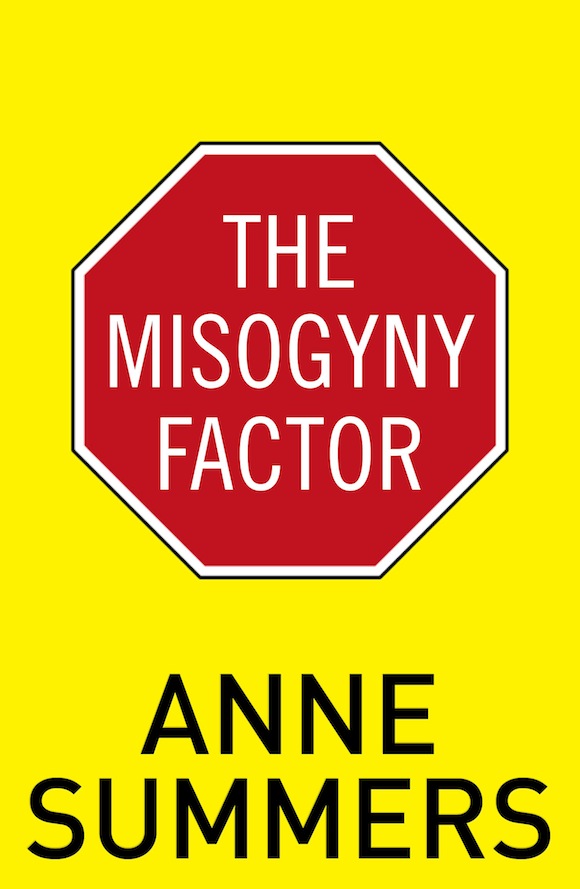
Book Review: The Misogyny Factor by Anne Summers.

anne summers misogyny factor

“Misogyny” seems to be the word on everyone’s lips after newly ousted former PM Julia Gillard’s famous parliamentary lambasting of Tony Abbott last October. It was certainly on Anne Summers’ when she spoke at the University of Newcastle in August last year about the then-Prime Minister’s rights at work and how, “… if she were an ordinary worker, she would have a case for sex discrimination and sexual harassment.”

That quote appears on page five of Summers’ recently released The Misogyny Factor, born out of the above two speeches.

Gillard was quick to be criticised for intimating that Abbott is a misogynist; after all, how can you be a misogynist if you’re happily married and have three daughters? (That line of thinking was employed in a recent Facebook debate I had with a friend over Robin Thicke’s hit, “Blurred Lines”.) While the dictionary definition of misogyny is hatred of women, Summers explains the reasoning behind calling her book The Misogyny Factor:

“… [T]he misogyny factor is that set of attitudes and entrenched practices that are embedded in most of our major institutions (business, politics, the military, the media, the church, academia) that stand in the way of women being included, treated equally and accorded respect… I am not sidetracked by strict dictionary definitions of ‘misogyny’. Sure, it can mean, ‘hatred of women’ and we still see far too many instances of that. But it is more complicated and far more widespread than the prejudices of individuals, which is why I use the term ‘the misogyny factor’… I am talking about systemic beliefs and behaviour, which are predicated on the view that women do not have the fundamental right to be part of society beyond the home… Such views can be, and are, held by women as well as men… Why they defend misogyny is mystifying, yet plenty of women do.” [p. 7–8]

Essentially, “sexism goes hand in hand with misogyny. Sexism provides the rationale for misogyny.” [p. 8]

There is sexism and misogyny to be found almost everywhere you look, but The Misogyny Factor primarily focuses on the realms of politics and the economy. For example, we’re all (well, those who have a vested interest in the pay gap and who don’t buy into the misguided notion that we now have gender equality. If anything, we’ve regressed, and Summers addresses this specifically in the book, too.) familiar with the fact that a post-graduate degree-holding woman entering the workforce today will earn $2.49 million over her working lifetime, while her male counterpart earns $3.78 million [p 53–54]. For being a “young woman in Australia today,” “there is at least a million dollar penalty.” [p. 54]

And for those women who do manage to crack the glass ceiling and rise to the upper echelons of the corporate world, they mustn’t show an ounce of femininity lest they be deemed “too emotional” for the job:

“If women brought onto boards are expected to behave like men, what is the benefit of their presence? It is the worst of all possible worlds: the company is denied the different perspective women directors might bring to its governance…” (emphasis mine) [p. 89]

I’m glad Summers was sure to include “might”, as without it she might as well be buying into the very idea she’s trying to debunk: the belief that women are so inherently different from men that they can’t possibly execute jobs traditionally held by the opposite sex, or if they are granted employment in them, they’ll do a vastly different performance than the menz. They’ll “destroy the joint”, if you will.

Speaking of Destroy the Joint, the feminist social media movement, and now a book, born out of Alan Jones’s comments that female politicians and business leaders were “destroying the joint”, Summers explains:

“[Alan] Jones’s intended insult, that women were ‘destroying the joint’, was turned on its head. It wasn’t the first time that women had transformed what was intended to be a belittling comment into a triumphant battle cry. In 1905 the Daily Mail newspaper in Britain ridiculed the suffragists— those, mostly women, who were fighting to get the vote for women, by calling them ‘suffragettes’. The more radical of the suffragists embraced the term. They started using it with pride to describe themselves, and to differentiate themselves as radicals from those who used more moderate tactics. They created a publication, The Suffragette. More than a century later in another country, Australian women also took the disparagement and created the modern-day equivalent of a campaign newspaper, the Facebook page and the Twitter handle @JointDestroyer. Yes, that’s right, women responded. We are going to destroy the joint. We utterly reject a joint whose sexism and misogyny is so ingrained that far too many people see it as perfectly normal behaviour. We will no longer tolerate a joint that systematically excludes women from its ranks, that insults us as a matter of course when we stand up for ourselves, a joint that sees something wrong with spending money to stop violence against women. If that’s what the joint is, we don’t want it.” [p. 139]

The modern-day equivalent of the suffragettes? SlutWalkers and Joint Destroyers.

Some feminists have expressed concern that these movements are too radical and scare off more moderate feminists from the cause. When you look at the fact that “… In 2012… 21 per cent of people in Australia has been sexually harassed since the age of 15, a slight increase the previous report in 2008 (20%) and that a majority (68%) of those people were harassed in the workplace… [and] most of these were women.” [p. 97], it becomes pretty clear why we need such “radical” movements. Personally, I’ve been sexually harassed too many times to count, and a handful or two in the workplace. I need SlutWalk and Destroy the Joint.

Many of these grassroots campaigns occur online, to match the spate of online abuse women on the internet receive. I just received my first rape/death threat for views expressed (about To Kill a Mockingbird, no less!) on this blog: I can now officially call myself a feminist blogger. But when Kickstarter sees nary a problem with raising funds for a sexual assault manual, Twitter is used as a forum to berate women who don’t fit the mould, and Facebook bans breastfeeding photos but keeps rape memes and pages, misogyny is plain for all to see online. For example, former political cartoonist for The Australian, Larry Pickering, who most recently depicted Julia Gillard with a big black dildo, a strap on slung over her shoulder (“It seems that Pickering cannot envisage a Prime Minister without a penis—so he has to five Gillard a strap-on” [p. 125], Summers notes) and animations of the former PM topless, had the latter deleted by Facebook but the strap-on images were allowed to stay. Seems like Facebook has a women (or just female breast-) problem…

It’s not just online, as the sound bites from fellow politicians and menus from Liberal fundraisers will attest, that Gillard experiences sexual harassment. “It says something about our country and about us that we could subject our leader to such vile abuse” [p. 130], Summers writes. Look at the U.S.: while they arguably have more problems with misogyny than we do, at least the Office of the President is viewed with respect, regardless of the figurehead who occupies it.

Still with Gillard, “Can it really be the case that a tax—a carbon tax—could really spur so many people to such levels of hatred? I find that impossible to believe, so I have had to conclude that the persecution of Julia Gillard has to be about something else. Is it just the simple fact that she is a woman?” (p. 130-131)

In the fallout from Gillard’s ousting, and the subsequent gendered abuse I heard and saw thrown her way in the media and on Facebook and Twitter (which lead me to unfriend certain long-time-coming people), unfortunately I think Summers is right. The misogyny factor is alive and well in Australia.

If you’re after some similar content from Summers, check out her recent Emily’s List oration and this Meanjin piece.

Related: Ain’t Nothin’ Gonna Break My Slutty Stride.

Event: Midsumma Festival & Women Say Something’s Should We Destroy the Joint?

Elsewhere: [Do Something] CEO of Kickstarter: Refuse to Fund How-To Guide on Sexual Assault.

[Jezebel] If Comedy Has No Lady Problem, Why Am I Getting So Many Rape Threats?

[HuffPo] Breastfeeding Photos on Facebook Removed From “Respect the Breast” Page.

[Gawker] Facebook Removes Pro-Rape Pages, Kicking & Screaming.

[Anne Summers] Emily’s List Oration 2013.

[Meanjin] The Sexual Politics of Power.

Image via New South Books.

On the (Rest of the) Net.

Robin Thicke’s “Blurred Lines”: “ironic objectification” or just plain degradation? Apparently, because Thicke and collaborator Pharrell Williams are “happily married”, it makes it okay for them to derive pleasure from degrading women (Thicke’s words). While there are certainly much worse images and acts of misogyny out there, “Blurred Lines” is lyrically and visually blatantly upholding rape culture: “I know you want it, but you’re a good girl…” Does the fact that it was directed by a woman who instructed the basically—and uncomfortably—naked models and the fully clothed male artists in the clip supposedly love women make it a tongue in cheek exercise in pushing boundaries or raise some more problematic issues considering it’s this country’s number one song? What’s the point in even making such a NSFW video if it can’t even be shown on MTV and YouTube (semi-SFW video above)? [Jezebel]

Dear Julia Gillard,
Thank you for being the first female Prime Minister,
Sincerely,
Mia Freedman. [MamaMia]

The rise and rise of feminist parodies. [Daily Life] 

What are the differences between women who receive abortions and those who are denied them and proceed with unwanted pregnancies? [NYTimes]

Screw the “armchair commentators”; you know what your feminism is. [The Guardian]

Julia Gillard urges us to vote for Julia Gillard in spite of the sexist attacks against her (obviously written prior to Wednesday’s ousting). Kind of like that comment about her jackets, Germaine…? [The Hoopla]

Is Miley Cyrus’ latest black culture-inspired gimmick akin to a minstrel show? [Jezebel]

This week in inappropriate fashion spreads: hoarder chic. [Jezebel]

Ranking Stephen King’s 62 books. [Vulture]

On the (Rest of the) Net.

victorian era breastfeeding

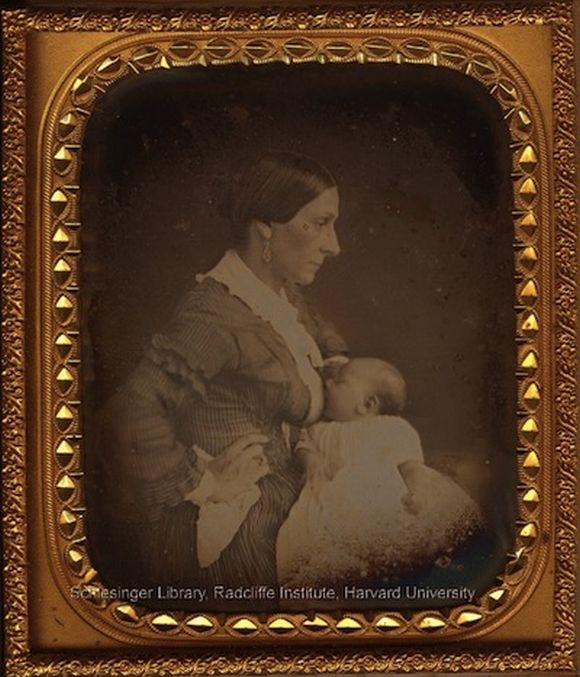
Victorians were more progressive about breastfeeding than we are! Although, it was linked to femininity, class and bonding with the child, stigmas that still exist around breastfeeding (or NOT breastfeeding) today. [Sociological Images]

Do ladymags publish serious journalism? Follow the #WomenAtLength hashtag on Twitter to find some examples of longer, “serious” pieces written by women. [Jezebel]

What Adrian Bayley’s crimes can teach us about prevention, rehabilitation and incarceration. [New Matilda]

Everyday Sexism has made a doco about shouting back at street and sexual harassment. The accompanying article by Clem Bastow is equally as hard hitting. Check them both out, because no one should be made to feel like they brought harassment on themselves, they’re overreacting, or dread at the prospect of leaving the house because they might experience it. [Daily Life]

The manic pixie dream girls of superhero movies. [Think Progress]

Someone actually wants my opinion on the week that was in sexism and misogyny particularly in politics, but across other spectrums as well. Kudos to Corey Hague on editing me to sound like I actually know what I’m talking about! [ABC Central Victoria]

Meanwhile, Mia Freedman thinks it was a good week for women: at least we’re talking about sexism and there have been consequences for it. [MamaMia]

Famous women writers before their suicides. What do you think: artistic or glorifying suicide and sexualising violence? I find some of them, like the Sylvia Plath and Virginia Woolf portraits, visually appealing because they’re inoffensive to the eye and create tension and anticipation, but I can’t stomach the Dorothy Parker nor Sanmao ones. Vice may be known for their provocativity (is that even a word?!), but I think this photoshoot is in the same vein as Terry Richardson and Dolce & Gabanna’s rapey aesthetics – which I quite like despite myself – where stopping the sexualisation of violence against women should trump artistic expression. [Jezebel, as the photoshoot on Vice’s website has been removed]

It was Father’s Day in the U.S. over the weekend, and to celebrate, The Hairpin has collated fiction’s worst fathers. As someone with a deadbeat dad myself, I can empathise.

Fashion, feminism and femininity: mutually exclusive? Hell no! The other day when discussing feminism with a mansplaining misogynist who told me I only make him more confused about feminism because of the way I look, a friend interjected that I might just be the most feminine person she knows. And the most feminist, might I add?! [Daily Life]

Kim Kardashian may be a fame-whore, but she’s a person, too, and she deserves some semblance of basic decency. [TheVine]

Is the only reason we watch True Blood anymore for the sex? [The Daily Beast]

If we can’t have the real deal, Feminist Taylor Swift is the next best thing. [Twitter]

Image via Sociological Images.

On the (Rest of the) Net.

Should feminists support Julia Gillard just because she’s a female Prime Minister? [Daily Life]

Where does your slut-barometre sit? [TheVine]

The Triple J Hottest 100 countdown was a total sausagefest. [Karen Pickering] 

“Who exactly reads Playgirl, anyway?” (SFW) [The Atlantic] 

Is Paris Hilton relevant again? [The Daily Beast] 

Is Sheryl Sandberg’s Lean In a modern day Feminine Mystique? [Ms. Magazine]