Is Girls‘ Hannah Horvath physically worthy of the sexual interest of a successful, hot, rich doctor? While detractors thought this week’s episode was the worst in the series, presumably because Lena Dunham’s “refreshing, yet displeasing to the eye” (to borrow a line from Elizabeth Banks in Pitch Perfect) naked body was front and centre perhaps more than any other episode, I actually thought it was the best of this season’s bunch, and I had no qualms buying Patrick Wilson’s character being so sexually into Hannah that he begs her to stay in his apartment for a 48-hour fuck- and naked ping-pong-fest. I will say that the gratuitous nudity and the continuous lack of people of colour is really getting my goat, though. [Jezebel]
Apparently young Australians just aren’t into protesting the injustices we face today. Um, hello? Reclaim the Night, the Occupy movement, SlutWalk, the Arab Spring… all activist events started by Gen Y on social media which encouraged Time magazine to name the Protestor as its 2011 Person of the Year. Writer Alecia Simmonds does make a fair point that Aussies are particularly apathetic towards causes, but her assertion that online petitioning, blogging and social media doesn’t compare to on-the-ground activism kind of undercuts fellow Daily Life columnist Kasey Edwards’ argument last week that “Big social changes don’t just happen… Social and cultural change evolves out of a meandering path of small victories. Seeds need to be planted and ground needs to be fertilised.”
And, in an attempt to counteract the alarming trend of wanting your vulva to look like a plastic doll’s, check out this (NSFW) Tumblr, Show Your Vagina.
Is freedom of speech overrated? Personally, I think so, as it allows those with abhorrently narrow-minded views to spill hate speech. This article makes the observation that free speech only seems to be defended when people like Alan Jones and Andrew Bolt put their foot in their mouth. [Daily Life]
And while you’re at it, book tickets for Women Say Something‘s “Should We Destroy the Joint”, as Alan Jones so misogynistically termed women’s involvement in public life, panel featuring Gretel Killeen, Tara Moss and Catherine Deveny, on Saturday 19th January. [Midsumma]
For those of you unfamiliar with the Steubenville High School Big Red football team rape and cover-up scandal, here’s a history of the town’s corrupt ways. [The Atlantic Wire]
Boycotting Chris Brown’s music is all well and good, but are we at a point where Rihanna’s blatant disregard for the impact her very public decision to get back with her abuser has on her impressionable fans and fellow battered partners alike means shunning her, too? Or is it just victim-blaming? Interesting piece. [The Peach]
So misogyny may be running wild in the real world, but on TV, girls are calling the shots. We’ve had a bevvy of shows with “girl/s” both in the title and the storylines this year, with 2 Broke Girls and New Girl carrying their success over from 2011. While a lot of the subject matter is problematic, both shows have women carrying the comedy. Which brings us to just plain Girls, which is the brainchild of actor, writer and director Lena Dunham. Girls is not without its problems, either, but its portrayal of young urban women is almost faultless. Rounding out the representation of leading ladies in 2012 we have Don’t Trust the Bitch in Apartment 23, Homeland, Revenge, The Mindy Project, Are You There, Chelsea?, Smash, GCB (farewell!), Scandal, Nurse Jackie, Veep, Emily Owens, M.D., Whitney, The Good Wife and Hart of Dixie.
“Call Me Maybe”.
Until “Gangnam Style” came along, the YouTube Zeitgeist was dominated by one runaway success: Carly Rae Jepsen’s “Call Me Maybe”. Justin Bieber’s protégé came out of nowhere with the catchiest song of the year, which was subsequently covered by the guys from Harvard’s baseball team, Barack Obama and the Cookie Monster! Talk about diversity!
2012: Apocalypse Now.
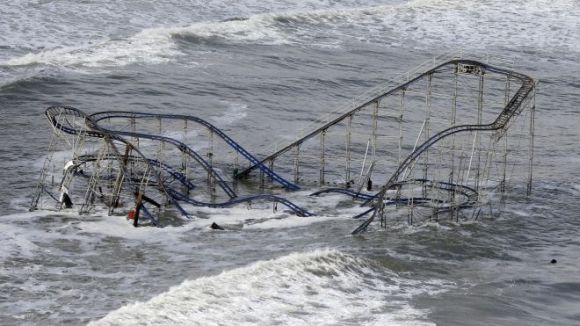
2012 was the year of the apocalypse, with the 21st of December long determined by the Mayans (or Mayan conspiracy theorists) as the day the world ends. You know, until the 7th of December tried to steal its thunder as the apparent recalculated date. Apart from the natural disasters, warfare and massacres, the 21st passed without a nuclear bombing, ice age or attitudinal shift, putting rest to the apocalypse panic. Until the next rapture, anyway…
Shit ___ Say.
It started with a sexist albeit funny YouTube video of a guy in a wig quoting “Shit Girls [Apparently] Say”, which snowballed into “Shit White Girls Say to Black Girls”, “Shit New Yorkers Say”, “Shit Christians Say to Jews” and “Shit Nobody Says”. Cue offence.
Snow White.
Snow White was everywhere this year: Mirror Mirror, Snow White & the Hunstman, Once Upon a Time… Note: overexposure isn’t necessarily a good thing. In fact, I hated Mirror Mirror and Once Upon a Time, and Snow White & the Huntsman was such a snooze-fest I can barely remember what happened (not including Kristen Stewart’s affair with director Rupert Sanders).
50 Shades of Grey.
On the one hand, E.L. James’ 50 Shades of Grey has singlehandedly revived the flailing publishing industry, so that’s a good thing. But on the other, it has falsely lulled its legions of (mostly female) fans into a state of apparent sexual empowerment: it’s a book about sex targeted towards women, so that means we’re empowered and we don’t need feminism anymore, right?
The Macarena of the 21st century, Psy’s horse dance took the world by storm, being performed in conjunction with Mel B on The X Factor, with Hugh Jackman in his Wolverine gloves, on Glee and at many a wedding, 21st birthday and Christmas party.
Misogyny.
Misogyny has long been the focus of feminists, but the word and its meaning really reached fever pitch this year.
After Julia Gillard’s scathing Question Time takedown of Tony Abbott and his sexist ways, people everywhere were quick to voice their opinion on her courage and/or hypocrisy. At one end of the spectrum, it could be said that Gillard finally had enough of the insidious sexist bullshit so many women in the workforce face on a daily basis and decided to say something about it, while at the other, many argued that the Labor party were crying sexism in a bid to smooth over the Peter Slipper slip up.
“Her electric speech on misogyny in parliament went beyond the sordid political context to firmly press a button on the chest of any woman who has been patronised, sidelined, dismissed or abused. It crackled across oceans, and, astonishingly, her standing went up in the polls, defying political wisdom that no woman would benefit from publicly slamming sexism.”
The viral doco that had millions of people rushing to plaster their neighbourhood in “Kony 2012” posters on 20th of April to little effect (the campaign’s goal was to catch Joseph Kony by years end) illustrated our obsession with social media, armchair activism and supporting the “cool” charities, not the thousands of worthy charities out there who could actually use donations to help their cause, not to produce YouTube videos and work the press circuit.
I’m Not a Feminist, But…
While Tony Abbott is clamouring to call himself a feminist to gain electoral favour despite the abovementioned misogyny saga, it seems famous women can’t declare their anti-feminism fast enough.
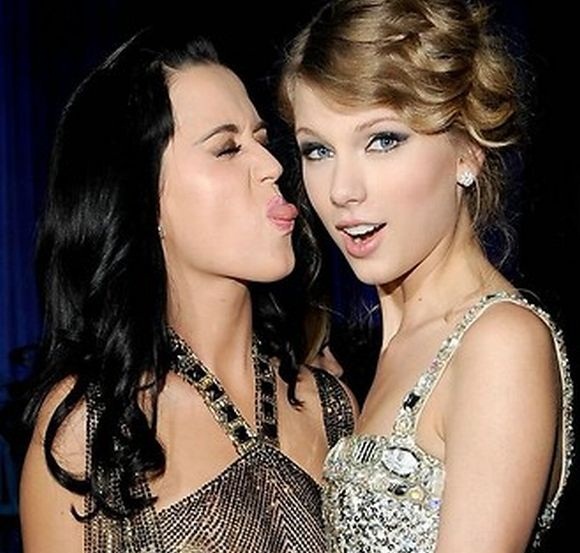
First we had new mother and Yahoo! CEO Marissa Mayer jumping at the chance to shun feminism despite the fact that without it she wouldn’t be where she is today. My favourite anti-feminist campaigner Taylor Swift said she doesn’t think of herself as a feminist because she “was raised by parents who brought me up to think if you work as hard as guys, you can go far in life.” Um, Tay? That’s what feminism is, love.
The cronies from Sutherland Shire were all over our boxes, primarily on Channel Ten, this year. There was the widely panned Being Lara Bingle, the even worse Shire, and the quintessential Aussie drama set in the ’70s, Puberty Blues.
While these shows assisted in shedding a different light on the suburb now synonymous with race riots, it’s not necessarily a positive one, with The Shire being cancelled and Being Lara Bingle hanging in the balance.
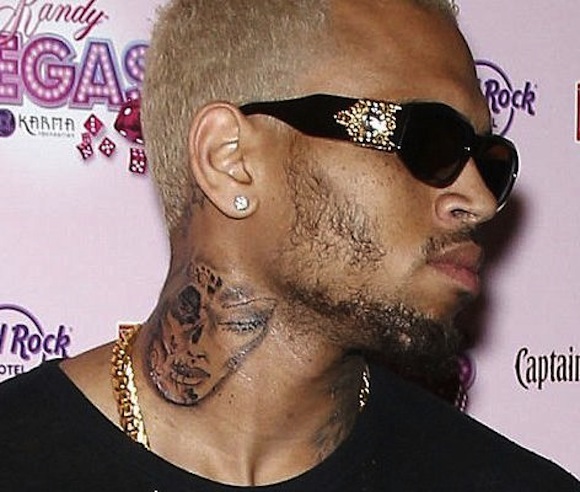
I’m not sure if it is an image of Rihanna’s post-domestic violence face, but here’s what Chris Brown’s neck tattoo says about intimate partner violence and sexual assault. [Pandagon]
The latest in a long line of unfavourable reviews of Naomi Wolf’s new “biography” – Vagina – Germaine Greer had her take on it published in The Age last weekend. I’m going to read Vagina: A New Biography regardless, but the high hopes I had for it have been dashed. [SMH]
Despite Everybody Dance Now being axed and the dismal ratings of Being Lara Bingle, The Shire and the relaunched Can of Worms, at least Channel Ten’s taking risks. [MamaMia]
Following on from 60 Minutes’ story on selective reduction of foetuses conceived via IVF, Kass Hall examines the issue. I don’t agree with IVF personally (not because I don’t think it shouldn’t be available because it messes with “God’s intentions” or some anti-science crap, but because I think there are other—or should be more readily available—ways to have a child, and that not being able to or not wanting a child shouldn’t be stigmatised) and I’m pro-choice all the way. Awkward situation all ’round, I think. [MamaMia]
So Rihanna had a relationship with Chris Brown and is rumoured to have slept with Ashton Kutcher and Drake. That means she’s a slut, right? Two greatpieces deal with the one-sided hypocrisy that is slut-shaming in the R’n’B and hip hop community, not to mention patriarchal culture as a whole, in addition to this equally awesome shoutout from Russell Simmons to Brown, Drake et al., telling them to “Get Off Rihanna’s Dick!”
I just don’t get this “she’s a slut” mentality if a woman expresses her sexuality in the same or similar way to any number of men. A woman’s a slut if she sleeps with someone outside of a committed relationship (or even if she only has sex with someone inside a relationship; if she has sex with a woman; gives the perception that she wants sex and then reneges; is deemed “too sexy”; is raped… Nay, a woman’s a slut no matter what.), but a man is a player, a stud, a lothario.
Here’s something to ponder: if women weren’t “sluts”, men wouldn’t have anything to put their dicks into apart from other men or fleshlights. (Well, there are other things, but we won’t go there!) [Jezebel, Ebony, Global Grind]
Andrew Clifton writes beautifully about Joe Hockey’s anti-same sex marriage stance, and that progressive types should refrain from vitriol-spewing when a social conservative has an opinion we don’t agree with:
“We (accurately) believe ourselves to be on a higher moral ground for knowing exactly why legislating in favour of same-sex marriage is important, but we should not judge those who disagree with us, we should only try to help them understand as well.” [MamaMia]
Remember in health class when you were given chickens or robotic babies to look after for a few days? Well, now you can have your very own chicken-cross-Tamagotchi in the form of the “Pregnancy Text” campaign, which is aimed at teenagers in an attempt to show them a fraction of what it’s like to raise a baby. Me want one. [Jezebel]
Shonda Rimes’ latest female-based creation, Scandal, also has a black female lead. The best thing about the character is that her race is a non-issue. The same can’t be said for her non-relatability as a person, though. [New Yorker]
As someone who has witnessed her mother being choked by her father, using that action as a metaphor for intimate partner violence on Glee is sick.
Not only that, but in desperately trying and dismally failing to, for some reason, raise awareness of domestic violence (actually, I’ve decided I hate that phrase, so I’m taking to using the more all-encompassing “intimate partner violence”), Glee has gone back to its old ways by being especially misogynistic and racist.
The intimate partner violence storyline opens with Santana observing Coach Beiste’s black eye and remarking that “it looks like Mr. Beiste went all Chris Brown on Mrs. Beiste… [Did] Cooter put the smackdown on [her] ’cause [she] wouldn’t let him be on top?” Troublingly, women of colour Mercedes and Tina, and LGBTQ woman Brittany, all snicker. I wonder if the writers were aware (oh wait, this is Glee: of course they weren’t!) that African American women are 35% more likely to experience intimate partner violence than white women, 60% of Korean women have been beaten by their partners, and violence in same-sex relationships is gravely underreported and misunderstood.
Enter Cheerios co-coach and “black Sue”, Roz Washington, who overhears Santana’s bad taste musings. She tells the girls that “violence against women” and “men hitting women” is never okay, buying into the perception that women are the only victims in intimate partner violence. Granted, women are the overwhelming victims, but that’s not giving equal opportunity to non-heterosexual relationships (for shame, considering the abundance of LGBTQ characters on the show) and the fact that a woman can hit a man. Instead of insinuating that it’s intimate partner violence only that we should be concerned about, how about violence against women in general? Including rape.
Anyway, I’m sure the writers wanted Roz to mean well, but her racial and sexist slurs directed at Mercedes (“Lil Oprah”), Tina (“Asian Horror Story”), Sugar (“Rojo Caliente”) and Santana (“Salsa Caliente”) undermine this.
In a following scene, Sue coins the aforementioned nickname, “Black Sue”, for Roz, telling her that “ivory poachers could make a fortune selling your enormous white teeth on the black market”, and refers to Coach Beiste as John Goodman, perhaps insinuating that Beiste’s masculinity should have prevented her from being a victim. This way of thinking seems to be adopted by Santana, too, when she says she doesn’t think Coach Beiste actually got hit because she’s “a wall”. What if the roles were reversed and Beiste had hit Cooter, who is considerably smaller than Shannon?
The racial stereotyping continues when Roz admonishes the girls for their joke. As Autostraddle points out, Glee gave the “‘my aunt got beat up by her man’” monologue to the one black woman on the show,” claiming it took her five years to escape the relationship. It took my mum nigh on thirty to get out.
Shannon initially denies her husband hit her, but uses her experience to inspire the girls, who—up until this point— have never really had anything to do with the Coach, to sing a song about empowering women to leave abusive relationships. According to Sue,
“The American songbook is chock full of songs making light about men hitting women.”
Beiste is so moved by the girls’—who, again, she’s had nothing to do with up to now—apathetic show of indifference to intimate partner violence, that she confesses to them—jeopardising her reputation at the school (remember what happened the last time she got too close to McKinley students?)—that she was actually the victim of intimate partner violence, and that they effectively “saved her life”, because she forgot to do the dishes all weekend. Yes, perpetrators of intimate partner violence can be set off by the slightest thing, and we all know that beating the person you love isn’t the means of someone who’s mentally balanced, but dishes?! Glee, really?! If you’re going to make one of your characters, perhaps the most underutilised, exploited and maligned of them all, the victim of a serious issue like intimate partner violence that will never be addressed again, can you at least make it for a reason less trivial than dishes?!
Two realistic things to come out of the storyline, though: that Shannon stays with Cooter and gives him a second chance, and lies about it to Sue and the girls. And finally, that Beiste fears that if she leaves him, “no one else will ever love me”. Painfully sad, true to actual victims of intimate partner violence who are made to feel worthless and unlovable by their abuser, and ties in with a past storyline on the show!
When I first heard Rihanna made Time’s annual list of 100 most influential people, I wondered why. Maybe when she was a Good Girl Gone Bad and “Umbrella” and her short-back-and-sides haircut were sweeping the globe. Or even last year, with “S&M”, “Only Girl in the World” and her plagiarism lawsuits making headlines. But what has she done recently? (Okay, recently, she either snorted cocaine or rolled a joint off a bald man’s head and tweeted that she couldn’t give a shit, but I’m guessing Time’s list was finalised much earlier than those Coachella shenanigans.)
Whether I would have put her on the list or not is irrelevant: to many people she is extremely influential. And that’s a problem because of her public refusal to condemn Chris Brown for what he did to her. Not only that, but that she is actively collaborating with him on music. God only knows what they’re collaborating on in their personal lives.
Stella McCartney writes the blurb for Rihanna’s entry on the list (huh? Has Rihanna even worn a McCartney design recently?), saying she “goes out of her way to support the people she believes in… She’ll give a real part of herself…” I’m sure Brown would agree. McCartney goes on to write that “[s]he’s one of the coolest… most liked, most listened to, most followed… artists at work today… She gives to her fans, friends and foundation not just herself by her energy and spirit.” Indeed.
Rihanna’s always maintained that she’s not a role model and she’s not willing to be the spokesperson against domestic violence. That’s not something we, the public, should force on her, but working together on two tracks, calling Brown “the hottest R&B artist out right now”, and mouthing off to fans about how she doesn’t give a fuck about what they think of her is the polar opposite. Whether she likes it or not, people are looking to her to see what’s in and how to act.
Add to that the blatant drug use that she’s been flaunting all over Instagram and it’s very troublesome that Rihanna is so influential.








 The Scarlett Woman