Rape as a plot device. I’m reading Stephen King’s Under the Dome at the moment, in preparation to delve into the series which Clementine Ford cites in her article, and let me tell you, it is rife with unnecessary and gratuitous rape and violence against women. Even the characters’ inner monologues reek of misogyny. It should be interesting to see if the TV show is as heavily drenched in it as the print version. Judging by Ford’s article, it is. [Daily Life]
Melissa Fabello makes some good points in her video about not wasting time on in-fighting about who’s a good feminist and who’s not, but you know me; I really think more people should proud to call themselves feminists and that not all supposedly feminist acts are created equal.
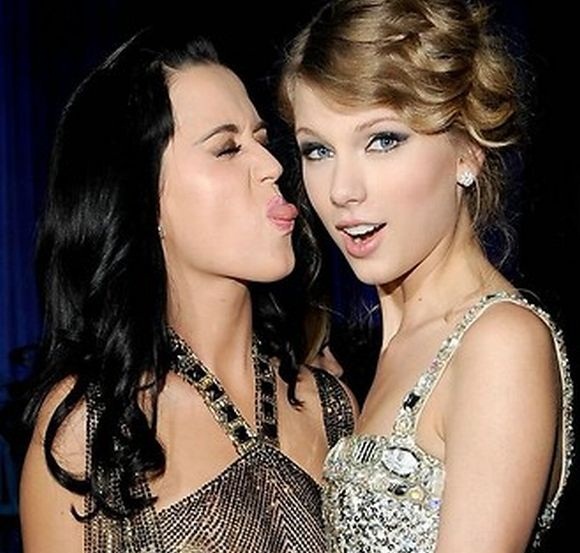
Speaking of, it’s no secret I’m Taylor Swift’s number one hater but over at One Week One Band the dissection of all things Swift is truly eye-opening if a bit fawning. I still think she’s a dolt with some seriously detrimental views about gender and sex, but it’s nice to look at her music from a different point of view for a change.
Anthony Weiner’s mistress, Sydney Leathers (what a name!) gives her top sexting advice. And it’s mind-numbingly mundane. [xoJane]
A really thought-provoking piece about the evolution of cooking. Meal preparation is the bane of my existence; I’d rather clean than cook. I find it so boring and time-consuming that if I was to come into a large chunk of money, I would seriously consider hiring a personal chef. Recently, I even privately mused about just ordering takeaway every night, but that isn’t necessarily in line with my ethical philosophies, not to mention health. [Daily Life]
Hugo Schwyzer has quit feminism. While a lot of feminists will be rejoicing at this fact, I actually like Hugo and will be sad to see his brand of male feminism disappear from the feminist interwebs. At least for now… [The Cut]
“Misogyny” seems to be the word on everyone’s lips after newly ousted former PM Julia Gillard’s famous parliamentary lambasting of Tony Abbott last October. It was certainly on Anne Summers’ when she spoke at the University of Newcastle in August last year about the then-Prime Minister’s rights at work and how, “… if she were an ordinary worker, she would have a case for sex discrimination and sexual harassment.”
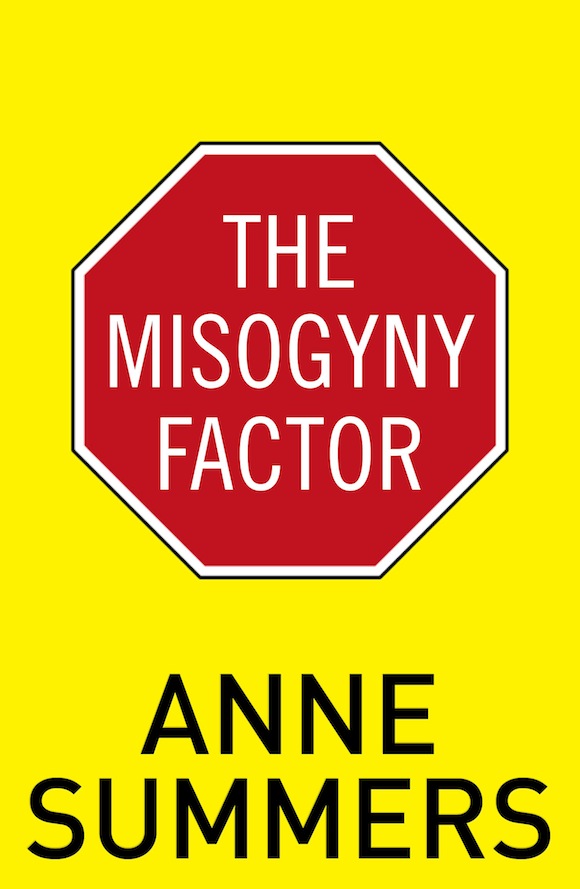
That quote appears on page five of Summers’ recently released The Misogyny Factor, born out of the above two speeches.
Gillard was quick to be criticised for intimating that Abbott is a misogynist; after all, how can you be a misogynist if you’re happily married and have three daughters? (That line of thinking was employed in a recent Facebook debate I had with a friend over Robin Thicke’s hit, “Blurred Lines”.) While the dictionary definition of misogyny is hatred of women, Summers explains the reasoning behind calling her book The Misogyny Factor:
“… [T]he misogyny factor is that set of attitudes and entrenched practices that are embedded in most of our major institutions (business, politics, the military, the media, the church, academia) that stand in the way of women being included, treated equally and accorded respect… I am not sidetracked by strict dictionary definitions of ‘misogyny’. Sure, it can mean, ‘hatred of women’ and we still see far too many instances of that. But it is more complicated and far more widespread than the prejudices of individuals, which is why I use the term ‘the misogyny factor’… I am talking about systemic beliefs and behaviour, which are predicated on the view that women do not have the fundamental right to be part of society beyond the home… Such views can be, and are, held by women as well as men… Why they defend misogyny is mystifying, yet plenty of women do.” [p. 7–8]
Essentially, “sexism goes hand in hand with misogyny. Sexism provides the rationale for misogyny.” [p. 8]
There is sexism and misogyny to be found almost everywhere you look, but The Misogyny Factor primarily focuses on the realms of politics and the economy. For example, we’re all (well, those who have a vested interest in the pay gap and who don’t buy into the misguided notion that we now have gender equality. If anything, we’ve regressed, and Summers addresses this specifically in the book, too.) familiar with the fact that a post-graduate degree-holding woman entering the workforce today will earn $2.49 million over her working lifetime, while her male counterpart earns $3.78 million [p 53–54]. For being a “young woman in Australia today,” “there is at least a million dollar penalty.” [p. 54]
And for those women who do manage to crack the glass ceiling and rise to the upper echelons of the corporate world, they mustn’t show an ounce of femininity lest they be deemed “too emotional” for the job:
“If women brought onto boards are expected to behave like men, what is the benefit of their presence? It is the worst of all possible worlds: the company is denied the different perspective women directors might bring to its governance…” (emphasis mine) [p. 89]
I’m glad Summers was sure to include “might”, as without it she might as well be buying into the very idea she’s trying to debunk: the belief that women are so inherently different from men that they can’t possibly execute jobs traditionally held by the opposite sex, or if they are granted employment in them, they’ll do a vastly different performance than the menz. They’ll “destroy the joint”, if you will.
Speaking of Destroy the Joint, the feminist social media movement, and now a book, born out of Alan Jones’s comments that female politicians and business leaders were “destroying the joint”, Summers explains:
“[Alan] Jones’s intended insult, that women were ‘destroying the joint’, was turned on its head. It wasn’t the first time that women had transformed what was intended to be a belittling comment into a triumphant battle cry. In 1905 the Daily Mail newspaper in Britain ridiculed the suffragists— those, mostly women, who were fighting to get the vote for women, by calling them ‘suffragettes’. The more radical of the suffragists embraced the term. They started using it with pride to describe themselves, and to differentiate themselves as radicals from those who used more moderate tactics. They created a publication, The Suffragette. More than a century later in another country, Australian women also took the disparagement and created the modern-day equivalent of a campaign newspaper, the Facebook page and the Twitter handle @JointDestroyer. Yes, that’s right, women responded. We are going to destroy the joint. We utterly reject a joint whose sexism and misogyny is so ingrained that far too many people see it as perfectly normal behaviour. We will no longer tolerate a joint that systematically excludes women from its ranks, that insults us as a matter of course when we stand up for ourselves, a joint that sees something wrong with spending money to stop violence against women. If that’s what the joint is, we don’t want it.” [p. 139]
The modern-day equivalent of the suffragettes? SlutWalkers and Joint Destroyers.
Some feminists have expressed concern that these movements are too radical and scare off more moderate feminists from the cause. When you look at the fact that “… In 2012… 21 per cent of people in Australia has been sexually harassed since the age of 15, a slight increase the previous report in 2008 (20%) and that a majority (68%) of those people were harassed in the workplace… [and] most of these were women.” [p. 97], it becomes pretty clear why we need such “radical” movements. Personally, I’ve been sexually harassed too many times to count, and a handful or two in the workplace. I need SlutWalk and Destroy the Joint.
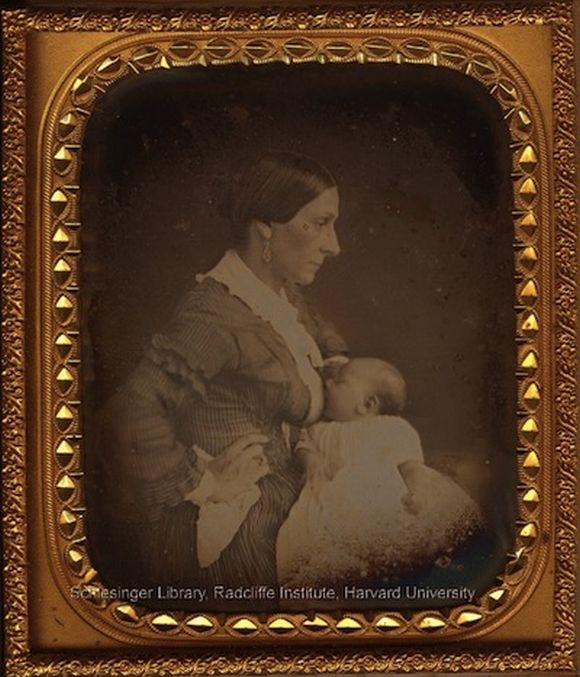
Many of these grassroots campaigns occur online, to match the spate of online abuse women on the internet receive. I just received my first rape/death threat for views expressed (about To Kill a Mockingbird, no less!) on this blog: I can now officially call myself a feminist blogger. But when Kickstarter sees nary a problem with raising funds for a sexual assault manual, Twitter is used as a forum to berate women who don’t fit the mould, and Facebook bans breastfeeding photos but keeps rape memes and pages, misogyny is plain for all to see online. For example, former political cartoonist for The Australian, Larry Pickering, who most recently depicted Julia Gillard with a big black dildo, a strap on slung over her shoulder (“It seems that Pickering cannot envisage a Prime Minister without a penis—so he has to five Gillard a strap-on” [p. 125], Summers notes) and animations of the former PM topless, had the latter deleted by Facebook but the strap-on images were allowed to stay. Seems like Facebook has a women (or just female breast-) problem…
It’s not just online, as the sound bites from fellow politicians and menus from Liberal fundraisers will attest, that Gillard experiences sexual harassment. “It says something about our country and about us that we could subject our leader to such vile abuse” [p. 130], Summers writes. Look at the U.S.: while they arguably have more problems with misogyny than we do, at least the Office of the President is viewed with respect, regardless of the figurehead who occupies it.
Still with Gillard, “Can it really be the case that a tax—a carbon tax—could really spur so many people to such levels of hatred? I find that impossible to believe, so I have had to conclude that the persecution of Julia Gillard has to be about something else. Is it just the simple fact that she is a woman?” (p. 130-131)
In the fallout from Gillard’s ousting, and the subsequent gendered abuse I heard and saw thrown her way in the media and on Facebook and Twitter (which lead me to unfriend certain long-time-coming people), unfortunately I think Summers is right. The misogyny factor is alive and well in Australia.
If you’re after some similar content from Summers, check out her recent Emily’s List oration and thisMeanjin piece.
Robin Thicke’s “Blurred Lines”: “ironic objectification” or just plain degradation? Apparently, because Thicke and collaborator Pharrell Williams are “happily married”, it makes it okay for them to derive pleasure from degrading women (Thicke’s words). While there are certainly much worse images and acts of misogyny out there, “Blurred Lines” is lyrically and visually blatantly upholding rape culture: “I know you want it, but you’re a good girl…” Does the fact that it was directed by a woman who instructed the basically—and uncomfortably—naked models and the fully clothed male artists in the clip supposedly love women make it a tongue in cheek exercise in pushing boundaries or raise some more problematic issues considering it’s this country’s number one song? What’s the point in even making such a NSFW video if it can’t even be shown on MTV and YouTube (semi-SFW video above)? [Jezebel]
Everyday Sexism has made a doco about shouting back at street and sexual harassment. The accompanying article by Clem Bastow is equally as hard hitting. Check them both out, because no one should be made to feel like they brought harassment on themselves, they’re overreacting, or dread at the prospect of leaving the house because they might experience it. [Daily Life]
Famous women writers before their suicides. What do you think: artistic or glorifying suicide and sexualising violence? I find some of them, like the Sylvia Plath and Virginia Woolf portraits, visually appealing because they’re inoffensive to the eye and create tension and anticipation, but I can’t stomach the Dorothy Parker nor Sanmao ones. Vice may be known for their provocativity (is that even a word?!), but I think this photoshoot is in the same vein as Terry Richardson and Dolce & Gabanna’s rapey aesthetics – which I quite like despite myself – where stopping the sexualisation of violence against women should trump artistic expression. [Jezebel, as the photoshoot on Vice’s website has been removed]
It was Father’s Day in the U.S. over the weekend, and to celebrate, The Hairpin has collated fiction’s worst fathers. As someone with a deadbeat dad myself, I can empathise.
Fashion, feminism and femininity: mutually exclusive? Hell no! The other day when discussing feminism with a mansplaining misogynist who told me I only make him more confused about feminism because of the way I look, a friend interjected that I might just be the most feminine person she knows. And the most feminist, might I add?! [Daily Life]
Everywhere you look lately, there seems to be a promo for Anna Krien’s latest investigative tome, Night Games, and rightly so: it’s a fantastic, impeccably researched and hard-hitting look at misogyny and power in football. I might be a little biased having a vested interested in the topic and, as I told Krien when I got my copy signed at the Readings Carlton book launch last week, the rape statistics she rattled off in an excerpt reading at the event, unfortunately they’re nothing I haven’t heard before.
Having said that, though, Night Games is an absorbing read for those well versed in the misogynistic nature of “jock culture” as well as for those new to the topic. Krien makes sure not to alienate sports fans who may be wary of picking up the book:
“This book is not anti-sport. ‘”Jock culture” is a distortion of sports,’ the American author and sports journalist Robert Lipsyte once noted, warning that America was in danger of finding its values in the locker room. It’s not the game, the pleasure of the play, that’s dangerous. It’s the piss stains in the grass, the markings of men who use sport as power and the people—teammates, fans, coaches, clubs, doctors, police, journalists, groupies—who let them do whatever they want.” [p. 266]
However, “football is an abnormal society” [p. 70], and nothing reflects that more than the bulk of the book, which deals with “regrettable sex” [p. 73] or rape accusations, depending on who you ask, against AFL and NRL players; “Camel Nights”, in which players bring two women they don’t care for so “everyone gets a hump” [p. 71]; and that infamous Cronulla Sharks group-sex scandal from 2002 that came to light in a 2009 Four Corners exposé, amongst many other examples.
Speaking of Matthew Johns and Cronulla, Krien quotes an anonymous player who laments the stigma of group sex bonding sessions:
“It’s like saying you can’t be homosexual, or you can’t have such-and-such sexual preferences. How can he tell us what to do in our private lives?… We already have so many rules; we can’t drink on these days, we can’t go to these places, now we can’t have group sex. About the only thing we can do these days is go to club functions and just hang around with other players. That’s just isolating us more from the rest of the world, and it could lead to even more violent acts.” [p. 46]
While it’s easy to scoff at these privileged footballer comments, he does make a valid point. It’s kind of like the argument against restricting dangerous dog breeds: the more you isolate a pit bull, for example, the more likely it is to be aggressive to other dogs and humans when it does come into contact with them.
Oftentimes, the difference between a rape allegation and the aforementioned “regrettable sex” is treating a woman well. You know, like a human being:
“‘It’s not during the act, it’s the way you treat them after it. Most of them could have been avoided if they’d have put them in a cab and said, you know, thanks for that, sort of thing, not just kicked her out, call her a dirty whatever, that sort of thing. It’s how you treat them afterwards that can cover a lot of that sort of stuff up.” [p. 183]
But what Krien makes the reader understand is that groupie sex with a footballer is not about the woman, it’s about them:
“A footballer does not look at another human when he fucks a groupie. He’s looking at his glorified reflection—and when he performs, he’s doing it for ‘the boys’, not her.” [p. 200]
And:
“[Sam Newman] said it [the hazing of sports writer Caroline Wilson on The Footy Show] was a compliment of sorts, a sign that the Footy Show culture ‘accepted’ her. In other words, it wasn’t really about Wilson, it was about them. About a subculture of men trying to find a place—albeit a very lowly place—in their world for a woman. Considering that it’s all about the boys, they prey doesn’t even need to be present.” P. 72.
Going back to the group sex-as-bonding scenario, it makes sense that the woman/women would be used as a vessel to bring the teammates closer together. And further to the absence of a woman, we can see this in the social media shaming of the Steubenville victim, for example. The whole team—and, by extension, the town—we’re brought closer together by reliving the girl’s assault on YouTube and Twitter.
Obviously this is one of the more extreme and brutal examples of sexual assault in sport, but Night Games also talks about the “gulf of uncertainty between consent and rape” [p. 73] and the many sexual experiences that occur therein. Krien also comes across as sympathetic to the “… ongoing education about how to negotiate sexual encounters in a way which ensures informed consent is always obtained” [p. 47] amongst the codes, but there’s still a long way to go, baby. This is exemplified by an educational male-on-male rape video that is shown during a training session. Many of the players are noticeably upset, with one lamenting that “You don’t really ask for trouble if you have too much to drink and get raped by a bloke. You don’t ask for that.” I’ll just let the double standards marinate for a bit after you consider that the video shown prior to this was one of mistaken identity male-on-female rape to which the players were less than sympathetic. [p. 188–189]
The abovementioned “grey zone” that exists between the sexes “to explain what was lost in translation” [p. 259] takes the form of the rape trial of Justin Dyer (name changed), an amateur footballer accused of raping Sarah Wesley (also not her real name) the night Collingwood won the 2010 grand final rematch. Many of the reviews of Night Games seem to focus heavily on this “he said, she said”, but Krien expressed relief when facilitator of the Readings event, Sophie Cunningham, skirted that issue. While the trial beautifully bookends all the points Krien makes about the treatment of women in male team sports, it’s not the be all and end all of Night Games. Similarly, though Sarah declined to be interviewed by Krien, thus leaving “all those little erased bits, I thought, hovering around like question marks” [p. 245], I don’t think it does the book detriment. In fact, I can’t envisage how Night Games could get any better.
Hilary Mantel’s “Kate Middleton’s-a-machine-made-baby-making-mannequin” speech published on the London Review of Books’ website is so much more, in which Mantel uses famous royal women such as Anne Boleyn, Marie Antoinette and Princess Diana to illustrate a larger public obsession with royal women and their bodies:
“… [A] royal lady is a royal vagina. Along with the reverence and awe accorded to royal persons goes the conviction that the body of the monarch is public property. We are ready at any moment to rip away the veil of respect, and treat royal persons in an inhuman way, making them not more than us but less than us, not really human at all.”
How to get dating results. This sounds like a really good idea. I think I’m going to adopt it myself and I encourage all other singletons to, too. I know from experience, the confidence boost you get from interacting with one potential suitor pays dividends when it comes to dipping your toes in the rest of the dating pool after a long, dry spell… [Jezebel]
So misogyny may be running wild in the real world, but on TV, girls are calling the shots. We’ve had a bevvy of shows with “girl/s” both in the title and the storylines this year, with 2 Broke Girls and New Girl carrying their success over from 2011. While a lot of the subject matter is problematic, both shows have women carrying the comedy. Which brings us to just plain Girls, which is the brainchild of actor, writer and director Lena Dunham. Girls is not without its problems, either, but its portrayal of young urban women is almost faultless. Rounding out the representation of leading ladies in 2012 we have Don’t Trust the Bitch in Apartment 23, Homeland, Revenge, The Mindy Project, Are You There, Chelsea?, Smash, GCB (farewell!), Scandal, Nurse Jackie, Veep, Emily Owens, M.D., Whitney, The Good Wife and Hart of Dixie.
“Call Me Maybe”.
Until “Gangnam Style” came along, the YouTube Zeitgeist was dominated by one runaway success: Carly Rae Jepsen’s “Call Me Maybe”. Justin Bieber’s protégé came out of nowhere with the catchiest song of the year, which was subsequently covered by the guys from Harvard’s baseball team, Barack Obama and the Cookie Monster! Talk about diversity!
2012: Apocalypse Now.
2012 was the year of the apocalypse, with the 21st of December long determined by the Mayans (or Mayan conspiracy theorists) as the day the world ends. You know, until the 7th of December tried to steal its thunder as the apparent recalculated date. Apart from the natural disasters, warfare and massacres, the 21st passed without a nuclear bombing, ice age or attitudinal shift, putting rest to the apocalypse panic. Until the next rapture, anyway…
Shit ___ Say.
It started with a sexist albeit funny YouTube video of a guy in a wig quoting “Shit Girls [Apparently] Say”, which snowballed into “Shit White Girls Say to Black Girls”, “Shit New Yorkers Say”, “Shit Christians Say to Jews” and “Shit Nobody Says”. Cue offence.
Snow White.
Snow White was everywhere this year: Mirror Mirror, Snow White & the Hunstman, Once Upon a Time… Note: overexposure isn’t necessarily a good thing. In fact, I hated Mirror Mirror and Once Upon a Time, and Snow White & the Huntsman was such a snooze-fest I can barely remember what happened (not including Kristen Stewart’s affair with director Rupert Sanders).
50 Shades of Grey.
On the one hand, E.L. James’ 50 Shades of Grey has singlehandedly revived the flailing publishing industry, so that’s a good thing. But on the other, it has falsely lulled its legions of (mostly female) fans into a state of apparent sexual empowerment: it’s a book about sex targeted towards women, so that means we’re empowered and we don’t need feminism anymore, right?
The Macarena of the 21st century, Psy’s horse dance took the world by storm, being performed in conjunction with Mel B on The X Factor, with Hugh Jackman in his Wolverine gloves, on Glee and at many a wedding, 21st birthday and Christmas party.
Misogyny.
Misogyny has long been the focus of feminists, but the word and its meaning really reached fever pitch this year.
After Julia Gillard’s scathing Question Time takedown of Tony Abbott and his sexist ways, people everywhere were quick to voice their opinion on her courage and/or hypocrisy. At one end of the spectrum, it could be said that Gillard finally had enough of the insidious sexist bullshit so many women in the workforce face on a daily basis and decided to say something about it, while at the other, many argued that the Labor party were crying sexism in a bid to smooth over the Peter Slipper slip up.
“Her electric speech on misogyny in parliament went beyond the sordid political context to firmly press a button on the chest of any woman who has been patronised, sidelined, dismissed or abused. It crackled across oceans, and, astonishingly, her standing went up in the polls, defying political wisdom that no woman would benefit from publicly slamming sexism.”
The viral doco that had millions of people rushing to plaster their neighbourhood in “Kony 2012” posters on 20th of April to little effect (the campaign’s goal was to catch Joseph Kony by years end) illustrated our obsession with social media, armchair activism and supporting the “cool” charities, not the thousands of worthy charities out there who could actually use donations to help their cause, not to produce YouTube videos and work the press circuit.
I’m Not a Feminist, But…
While Tony Abbott is clamouring to call himself a feminist to gain electoral favour despite the abovementioned misogyny saga, it seems famous women can’t declare their anti-feminism fast enough.
First we had new mother and Yahoo! CEO Marissa Mayer jumping at the chance to shun feminism despite the fact that without it she wouldn’t be where she is today. My favourite anti-feminist campaigner Taylor Swift said she doesn’t think of herself as a feminist because she “was raised by parents who brought me up to think if you work as hard as guys, you can go far in life.” Um, Tay? That’s what feminism is, love.
The cronies from Sutherland Shire were all over our boxes, primarily on Channel Ten, this year. There was the widely panned Being Lara Bingle, the even worse Shire, and the quintessential Aussie drama set in the ’70s, Puberty Blues.
While these shows assisted in shedding a different light on the suburb now synonymous with race riots, it’s not necessarily a positive one, with The Shire being cancelled and Being Lara Bingle hanging in the balance.
“… I say the answer is more nudity in newspapers, not less. Put more boobs on Page 3, and add some cocks too. Show people of every size, shape, colour, gender and sexuality; let them speak in their own voice, and celebrate them all. That, rather than self-censorship of adult-oriented content, would be a progressive tabloid revolution worth fighting for.” [New Statesman]
While I don’t agree with most of her sentiments, Clem Bastow makes some interesting points about the inclusion of men in feminism. This was also a topic that came up during the abovementioned “who’s-a-feminist” debate with my friends. [Daily Life]







 The Scarlett Woman