On the (Rest of the) Net.

a-mom-for-christmas

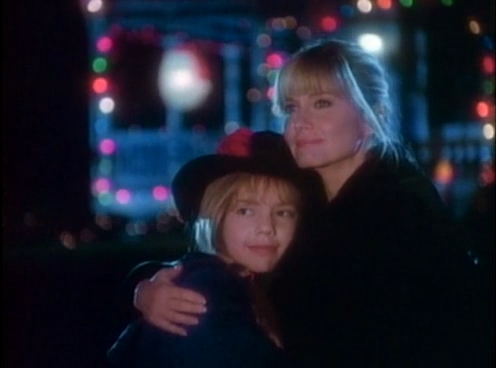
Anne Helen Peterson dissects the ultimate family Christmas movie, The Family Stone. What’s your ultimate Christmas movie? Mine have always been the Home Alones (I’m partial to the second one, Lost in New York) (whose haven’t?), the Miracle on 34th Street remake with Mara Wilson and the trashy ridiculousness that is Olivia Newton John in A Mom for Christmas. The plot, for those of you unlucky enough to have never heard of it, is this: Jessica is a motherless girl who wants a mum for Christmas. She makes a wish on a department store wishing well for, you guessed it, a mum for Christmas. Next thing Jessica knows, Amy (Newton John) shows up for the holiday season to act as a housekeeper and babysitter for Jessica and her dad. Plot twist: Amy is a department store mannequin come to life. Hijinks ensue. [LA Review of Books]

ICYMI: I wrote about my unmet expectations of The Blogcademy and where I see my career going in 2015.

The dawn of female pleasure-centric sex scenes on TV is upon us. [Vulture]

The Manic Pixie Dream Guys, Dudezels in Distress and Men in Refrigerators of Disney movies. [Bitch Flicks]

This journalist should have written that the Montreal massacre of 25 years ago was an explicit attack on feminists rather than sanitising the crime to make it more palatable to readers. [Ottawa Citizen]

Mindy Lahiri was the most revolutionary character on TV this year and, finally, the female answer to the legendary antihero. [The Guardian]

Getting it right when talking and writing about gender and sexuality diversity. [Junkee]

As tensions between police and unarmed people of colour continue in the U.S., here are the 76 unarmed people of colour who’ve been murdered by police in the past 15 years. [Gawker]

US Cosmopolitan‘s seemingly new found feminist awakening. [Jezebel]

Feminist writers of the Aussie and NZ persuasion, including yours truly, are featured as part of the 79th Down Under Feminists Carnival. [Hoyden About Town]

I went as Beyoncé standing in front of the feminist sign at the MTV VMAs to my work Christmas party. Head on over to my Twitter page to check out photos from the night.

My friend, colleague and important disability advocacy worker Stella Young died on the weekend. Below are some of her pieces I have linked to in the past.

“Destroying the Joint? at Melbourne Writers Festival.”

And in her piece from Destroy the Joint, Stella insists she’d like to just be allowed in the joint! [ABC Ramp Up]

How to speak to and about people with disabilities. [ABC The Drum]

“The Case Against Peter Singer.” [ABC The Drum]

People with disabilities are not here for your inspiration. [ABC Ramp Up]

Peter Dinklage shouldn’t be fetishised at an “unlikely crush”. [ABC Ramp Up]

MamaMia spoke to Stella about the National Disability Insurance Scheme, and she also wrote there about the disability pension myth.

Image via Christmas TV, Eh!

Hustle, Loyalty & Respect: Where I’m Taking My Career in 2015.

hustle business

When I told a friend I’d given myself two years from the beginning of 2011 to break into the freelance market, he wondered what that meant for me as a writer if I didn’t meet that deadline. (I had my first paid, freelance piece published on TheVine in mid-2012, just under the wire.) “Would I just give up” if I wasn’t published by that arbitrary date?

I’m not a quitter and I have been known to stick things out well past their used by date due to loyalty and the notion that they might get better. My freelance career has left much to be desired since that first piece, and I still haven’t given up on it, so no, I don’t think I would have chucked it in. Luckily, I don’t have to worry about that.

As I wrote earlier this week,

“This year has been one of professional development. I’ve completed two unpaid internships at Meanjin and The Lifted Brow, I’m working for Outback Championship Wrestling as their TV show’s host (which I have no idea how to do!) and I’ve spent my fair share of dosh on both in-person and online workshops…”

But I feel like I’m as professionally developed as I can get. While I’m glad I attended those workshops, on the whole, I didn’t get a lot out of them. All the suggestions and guidelines provided to further my career I’m already doing. No one can accuse me of not working hard or hustling to get my shit seen by the right people.

I guess, at this point, it comes down to luck and my writing being in the right inbox at the time they have some gaps in their editorial calendar. I think I may also need to branch out and find some other “right people”. But it can be quite disillusioning when you feel that you have a readable idea or a damn near perfect piece for the platform you’re pitching but they don’t want it. I don’t want to just post a piece I’ve spent weeks or months working on on my blog (not the best attitude for someone who just spent $800 on the Blogcademy workshop to have!).

Maybe I need to change my attitude and a) not spend so much time and energy on pieces that aren’t sure things, b) not be so attached to said pieces and be willing to put them out into the world in whatever capacity just so they’re c) able to be read by people regardless of whether I’m getting paid for them. Because they are pieces that I would love to read if I wasn’t the one writing them.

Whatever the case, my “New Years resolution” of sorts (which I don’t really believe in, but I digress) is to hustle hard. Pitch relentlessly. Not take no for an answer. Seek out alternative publications I may not have thought of. Do whatever it takes. Lay out my intentions and strive to deliver on them. Kind of what I’m doing here, I guess.

Related: The Blogcademy Melbourne.

Elsewhere: [The Vine] All Dogs Go to Seven.

Image via Pinterest.

Stella Young: 1982–2014.

I didn’t know Stella Young too well. We worked together for a few years but it wasn’t until she started getting heavily involved in—or I just started noticing on social media—feminism, disability advocacy and social justice in general that we realised we had more in common than we thought. She even commented on this when I bumped into her at a party.

I enjoyed getting a chance to catch up with her at events such as SlutWalk and the Melbourne Writers Festival, otherwise I kept up to date with the goings on in her world on social media.

I was quite shocked to get the news of her passing yesterday morning, as it seemed like only a few days before she was live tweeting Four Corners and posting pictures of lunch with friends.

As others, most notably Stella’s good friend, Clementine Ford, have written, Stella wasn’t interested in being your inspiration. (Though when discussing her death at work yesterday, that word was thrown around a bit.)

In addition to me checking the language I use to speak to and about people with disabilities, though, Stella did teach me a few things, whether directly or through her important work. They are:

Make noise about inaccessibility. It’s shocking to come to the realisation that not only are the majority of places and services inaccessible but that most people don’t even think twice about it. For example, Stella spoke at a Melbourne Writers Festival event in 2013 about the book Destroying the Joint. Stella managed to get in the joint but the event started late because it didn’t occur to the organisers that she couldn’t get onto the stage. She told a story of some of the hired help offering to lift her and her chair onto the stage, but she’d long since stopped accepting such assistance. Why should she be made to feel infantilised when the embarrassment should fall to the event organisers?

A few months ago Stella traveled to the U.S. in pursuit of her work (what exactly I wasn’t privy to). I remember seeing something on her Facebook or Twitter about how proactive the U.S. is about accessibility and that returning home to Melbourne made her realise how far behind the eight ball we actually are. I was shocked at this revelation as, looking back on my trip to the U.S. last year, I don’t remember accessibility standing out to me. This proves my above point that so many people for whom accessibility is not an issue are oblivious to it, even those who claim to be allies.

One of the more popular rants Stella went on on social media was about an accessible toilet at a Melbourne bar being used as a storage area. The pressure she and her followers put on the bar (whose name escapes me) saw them making changes almost immediately.

And just a couple of weeks ago, when Stella was live tweeting Four Corners, she influenced the language I use to describe support workers. In my job, I have to interact with support workers quite regularly, whom I’d always referred to as carers. From the point of seeing her tweet onwards, I now call them support workers.

Stella left us with an impressive body of work including comedy stylings and written words in addition to her advocacy. Perhaps most touchingly, her final piece was published recently as part of the book Between Us: Women of Letters. It was a letter to her 80-year-old self.

Related: Destroying the Joint? at Melbourne Writers Festival.

Ain’t Nothin’ Gonna Break My Slutty Stride.

Elsewhere: [ABC The Drum] Stella Young: Farewell from a Heartbroken Friend.

[ABC The Drum] Stella Young: A Letter to Her 80-Year-Old Self.

Event: The Blogcademy Melbourne.

10846693_10204713841198856_790662815_n

10850517_10204713841318859_1258542099_n

This year has been one of professional development. I’ve completed two unpaid internships at Meanjin and The Lifted Brow, I’m working for Outback Championship Wrestling as their TV show’s host (which I have no idea how to do!) and I’ve spent my fair share of dosh on both in-person and online workshops, the most expensive of which was the Blogcademy, at upwards of $AU800.

That event took place last week at the Establishment Studios on Grattan Street in Prahan and was hosted by darlings of the blogging world Gala Darling, Shauna Haider and Kat Williams. I’d secured my place earlier in the year before I’d done many of the other workshops I mentioned above so by the time last week rolled around I was feeling about as professionally developed as I’m going to get so I wasn’t as excited as some of the other Blogcadettes seemed to be. Another factor that contributed to my stillness was that I’ve long stopped trying to monetise my blog, and instead I’m focusing on my freelance career (more to come on that soon).

Having said that, though, what I was most looking forward to was being around successful businesswomen who I hoped would inspire me going into the New Year.

While I certainly felt galvanised by Gala, Shauna and Kat and their stories, I felt that the workshop was a bit “Blogging 101” and that anyone who already had a blog, as was the case with all but one or two of the attendees, would already be familiar with much of the content.

I told some of the Blogcadettes at lunch on the first day what I was hoping to get out of the class, and that watching the Headmistresses divide the modules that make up the Blogcademy amongst themselves based on who was best equipped to teach them impressed me. As someone who really values their time and will not work for free anymore, I really respect the three women’s routine and that they were also able to work on their own businesses and blogs in the downtime between teaching modules. (What impressed me less was that the handful of volunteers assisting over the course of the two days were unpaid.)

10836606_10204713841558865_1107872796_n

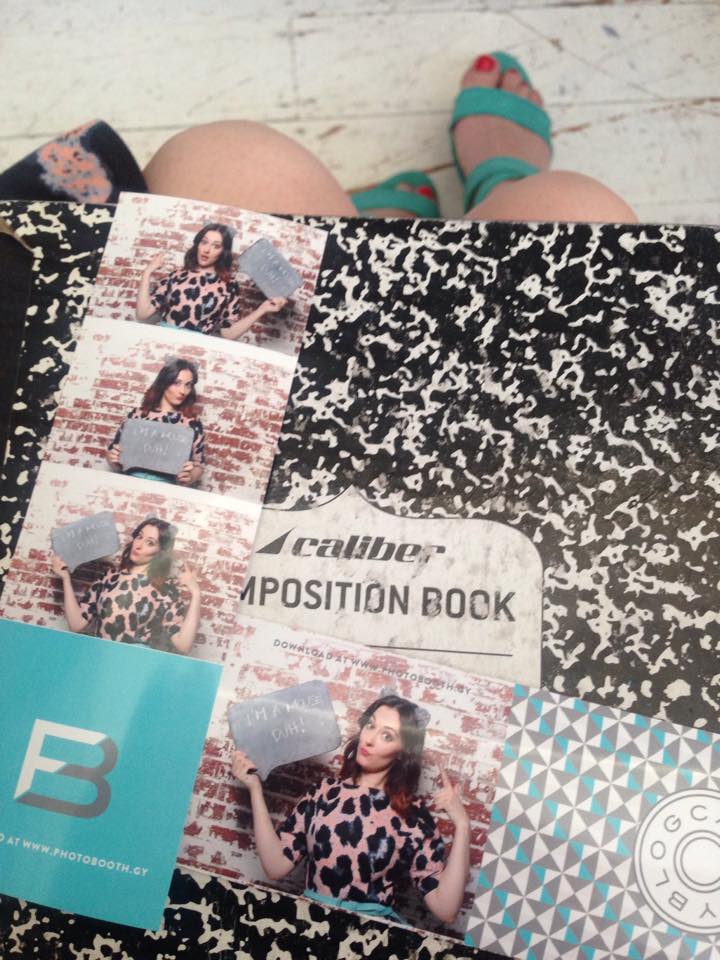
Putting to use my newfound Instagram skills after abusing the photobooth.

As the second day wore on, it became clear to many of the Blogcadettes that we perhaps weren’t going to get our $800 worth of blogging wisdom. The first half of the day consisted of taking the perfect Instagram picture, which is all well and good for those who rely heavily on that mode of social media such as Gala, Shauna and Kat, but I really hoped to get something more out of the social media component than how to take the perfect selfie. We then proceeded on to a one hour and fifty minute lunch before starting back on how to monetise your blog. By that point all the attendees had had a chat about the Blogcademy not living up to our expectations and that disillusionment could be felt in the Establishment Studios.

I’d told one of the other Blogcadettes my admiration for Gala, Shauna and Kat’s time management skills and she agreed but added that it could be construed as boredom, disinterest and concern with what was happening on their Twitter and Instagram than being engaged with us. It really hammered home that they’re businesswomen looking to make money from us; they’re not our friends as much as they may make us feel that way when reading their blogs (which could perhaps be the benchmark for successful blogging).

A couple of other people said that the bulk of the notes they made whilst in the workshop were of how they would better facilitate it, which is a pretty damning testament. Many others were disappointed at the lack of engagement and one-on-one time; “was anyone addressed by name over the two days?” someone wondered. (The consensus was mixed on the use of nametags, which I think could have been helpful.)

I’m making the Blogcademy sound like a painful, not al all valuable chore of a workshop and it was anything but. I got some good feedback on my blog, and somewhat of the kick up the ass I needed to implement changes to it. I probably wouldn’t recommend it, and I would encourage anyone looking to help out the next time the Blogcademy rolls into town to ask for payment; with 150 attendees in 2014, there should surely be some funds left over to support other budding businesswomen. (What’s that they say about women who don’t support other women…?) But the most invaluable aspect of the workshop was meeting the awesome women in the blogging community that travelled from interstate and overseas to attend, which I really respect and admire. Those who live in Melbourne are some kick-ass ladies I’m really looking forward to meeting up with again.

Failing that, at least I’ll be able to claim the Blogcademy back on tax!

On the (Rest of the) Net.

kendall-jenner-model

An open letter to Kendall Jenner from a struggling model who doesn’t think she should be handed instant high-fashion fame because “doesn’t she get enough cash from that show that all of ignorant America glamorises?” And, “didn’t her sister have sex with someone on camera and profit from the video sales to get their family its new line of limelight?” I didn’t see the same rhetoric when Georgia May Jagger or Daisy Lowe started modelling and they both come from famous families. But it’s right there in the letter: Kim Kardashian’s family should be punished for the fame they garnered from her sex tape (not to mention the rampant slut-shaming). Aah, just like beauty, the slut-shaming of Kim Kardashian knows no bounds. [The Blot]

What it’s like to work as a violent men’s behavioural counsellor. [Daily Life]

I profiled Outback Championship Wrestling Heavyweight Champion Andy Phoenix and the shades of grey that have been his controversial championship reign. I’ll be writing a bi-weekly column over the summer break, so make sure you check it out.

The tragedy that is redneck reality TV. [Buzzfeed]

Where are the representations of chronic illness in pop culture? Certainly not in scripted television, so reality is a genre that actually prevails in this instance in that it actually portrays a wider cross-section of everyday people. [This Ain’t Livin’]

Caro Cooper on envy, a phenomenon I’ve certainly been dealing with in recent months. Who knows, maybe I’ll end up writing about it, too. [The Lifted Brow]

Janay Rice, in her own words. It’s nice to hear the wife of former NFL Baltimore Ravens player Ray Rice detail the night her then-fiance knocked her unconscious in an elevator instead of having football brass speak for her. It doesn’t make her story any less harrowing, though. [ABC]

What happens to women when they fight back against street harassment? Ridicule, more harassment and murder. [Daily Life]

30 Rock made a Bill Cosby rape joke before anyone else gave a damn. To be clear, this wasn’t a rape joke that made fun of the victim, like most rape jokes do. This skit positioned Cosby as being in the wrong and shed light on his purportedly predatory past before the recent spate of rape allegations came to light. [Crushable, Jezebel]

Rachel Hills has a release date for her book, The Sex Myth! Words cannot describe how excited I am for this book to come out. I’ve been following Rachel’s work for about five years now and she has become a mentor of sorts for me. I can’t wait to see what revolutionary ideas about sex and relationships she packs into this book. I’m currently reading Female Chauvinist Pigs by Ariel Levy and I’m not super-impressed by her narrow-minded and dated assertions. I dare say Hill’s ideas will be much more progressive. [Musings of an Inappropriate Woman]

Image source unavailable.

On the (Rest of the) Net.

The star of that Hollaback! New York City catcalling video, Shoshanna Roberts, speaks. [NYTimes]

What if there was a Bechdel test for movies featuring Native American people? [Mic]

How TV is getting smarter about sex. [WaPo]

A harrowing report on rape in college fraternity houses prompts the question: should frats be banned? [Rolling Stone, Gawker]

FCKH8 is back with their “potty mouthed princesses”, this time proselyting on domestic violence. [Junkee]

Is Mockingjay‘s message getting muddled by the (real and fictional) media? After all,

“We like Katniss, so we want to believe she’s important. But she isn’t a politician. She’s not a military strategist. She’s not a revolutionary thinker. She’s a survivor, and can handle a weapon, but that’s true of most soldiers. The only real value Katniss Everdeen has to the revolution is the fact that people like seeing her on television. She’s a weapon of mass sympathy; if she believes in this war, people at home will join it. And then they will die.”

And in wider, actual society:

“Taylor Swift… recently opined that ‘so many girls out there say “I’m not a feminist” because they think it means something angry or disgruntled or complaining. They picture like rioting and picketing, it is not that at all.’ Actually, it is that—rioting, picketing, and complaining, the synonym for all of these being ‘protesting,’ are pretty darn essential—but hey, who am I to stand in the way of mass appeal?” [In These Times]

Does rap have an immaturity problem? If so, Eminem’s its poster boy. [Grantland]

On the (Rest of the) Net.

The systemic secrecies of intimate partner violence. [Right Now]

A tale of two satires: “Literally I Can’t” VS. “Blank Space”. [The Guardian]

Beyoncé, Kim Kardashian and the politics of celebrity labour. [The Baffler]

Separating the man from the art: Bill Cosby edition. [The Toast]

Further to that, this is one of the most level headed takes on the Cosby rape allegations and wonders why people are so quick to believe 16 women have banded together to frame one man over the idea that one man could be guilty of serial rape. [The Atlantic]

New Girl and The Mindy Project’s second wind. [Grantland]

On the (Rest of the) Net.

paper-magazine-kim-kardashian

The racial history behind Kim Kardashian’s latest viral photo shoot. [Jezebel]

Does Australia hate thinkers? [Womankind Magazine]

The cultural appropriation of the spirit animal. [The Atlantic]

I profiled the name on every Outback Championship Wrestling fans’ lips after his brutal ladder match two weeks ago, Adam “Brooksy” Brooks. [OCW]

The feminist tide is turning: could the Australian public be starting to give a shit about women? [Daily Life]

A post on a small Aussie music blog about the atrocity that is “Literally I Can’t” has gone viral thanks to Redfoo’s lawyers kicking up a stink. [Artshub]

We need to start calling female action stars… well, female action stars. [The Daily Dot]

Image via Go Fug Yourself.


On the (Rest of the) Net.

taylor swift karlie kloss instagram

Taylor Swift’s performative friendships. [Vulture]

Are you a “man’s woman” or a “woman’s woman”? And what even are they anyway? [The New Inquiry]

Rosemary’s Baby isn’t just about demonic possession: it’s about societal possession of women’s bodies. [Bitch Flicks]

I recapped Outback Championship Wrestling’s final show for the year, Hardcore Halloween featuring international guest Tommy Dreamer.

I also wrote about the importance of female friendships in Wicked’s world of Oz. [Junkee]

And finally, my take on the Cool Girls and Nice Guys of Gone Girl.

Image via Instagram.

Movie Review: Gone Girls & Nice Guys*.

Gone Girl Nick Dunne smile

The movie version of Gone Girl, starring Ben Affleck as Nick Dunne and Rosamund Pike in the title role and based on the 2012 book of the same name by Gillian Flynn, was released in theatres in October. While Flynn’s manuscript gives equal time to its disturbed married main characters in the form of Amy Dunne’s (Pike) dairy entries and alternating chapters from Nick’s point of view, the film adaptation made it clear that Gone Girl isn’t about the gone girl in question at all, but about her NiceGuy™ husband, who is sick and tired of all the “crazy bitch whores” in his life “picking [him] apart”, and how he deals with his wife’s sudden disappearance. Sounds like a real nice guy to me!

Affleck’s early roles in Kevin Smith’s late ’90s odes to man-children, Mallrats and Chasing Amy, are apt precursors to the film directed by David Fincher and adapted for the screen by Flynn herself. Nick spent the majority of the 2 ½ hour-plus movie chasing another Amy when it emerges that his wife’s apparent kidnapping—or, god forbid, murder—was an elaborate, sociopathic ruse to frame the inattentive and at times abusive Nick. Through Amy’s diary entries we see that the oft-mused about “Cool Girl” she’s led her husband, the audience and, indeed, herself to believe she embodies is nothing more than a narcissistic reverse Pygmalion creation. To refresh, Cool Girls are, “Hot and understanding. Cool Girls never get angry; they only smile in a chagrined loving manner and let their men do whatever they want. Go ahead, shit on me. I don’t mind. I’m the Cool Girl.

“Men actually think this girl exists. Maybe they’re fooled because so many women are willing to pretend to be this girl.”

Let us study the ways in which Amy and Nick Dunne play right into these fictions.

Much has been made of the abovementioned Cool Girl, and while Amy is by no means an innocent victim in the cat-and-mouse game her marriage devolves into, Flynn—both on paper and screen—also crafted an interesting commentary on Nice Guys and their entitlement to women.

Flynn writes in the book that Nick would “literally lie, cheat, and steal—hell, kill—to convince people you are a good guy” and not the “daddy’s boy” who abuses women. Pages later: “Women are fucking crazy. No qualifier: Not some women, not many women. Women are crazy.”

At the risk of sounding like a misandrist victim-blamer, in a way Nick almost deserves what Amy does to him, not only for shoving her into a wall and calling her and other women “fucking cunts”, but also for his utter unwillingness to take responsibility for his part in his toxic marriage. He even needs to be prompted by the lead detective on Amy’s case, Rhonda Boney (played by Kim Dickens on screen), to notify his missing wife’s parents of her disappearance. Flynn writes that Nick let himself “drift on in the miserable situation, assuming that at some point Amy would take charge. Amy would demand a divorce, and then I would get to be the good guy… This desire—to escape the situation without blame—was despicable.” In his effort to come across as the consummate Nice Guy, Nick becomes a doormat for Amy’s wicked ways. After all, Nick “couldn’t bear to have everyone in this family-values town believe he’s the kind of guy who’d abandon his wife and child. He’d rather stay and suffer with me. Suffer and resent and rage.” And suffer and resent and rage he does.

Using perceived niceness as a scapegoat is also a tactic Amy employs when she frames a second man in her quest for revenge. Desi Collings, played eerily in the film by Neil Patrick Harris, was an obsessive high school boyfriend of Amy’s with whom she’d kept in touch in the two decades since because “it’s good to have at least one man you can use for anything”. When Amy’s initial plan to live off the grid while she sent Nick “to the woodshed” goes awry, she uses the reliable, but equally-as-controlling-as-Nick Desi to shelter her from the storm while she contemplates her next move (hint: it involves a lot of blood). In the aftermath of Amy’s return, she maintains that she just “tried to be nice to [Desi]”. Here Amy plays into the excuse used by victim-blamers far and wide: you were too nice to him, that’s why he followed you home/raped you/murdered you.

The “Blurred Lines” of consent that Gone Girl alludes to here can be seen in the 2013 song of the same name by Robin Thicke. In a meta move on the part of the movie’s casting director, model Emily Ratajkowski, who appears topless and performing suggestive acts with animals and balloons in the “Blurred Lines” video, can also be seen in her first major feature film role as Nick’s college-aged mistress. Long after Thicke ceased to be pop culturally relevant his “rape anthem” is still inspiring sociopaths the world over.

Speaking of, Nick’s lawyer in the film, “defender of white killers everywhere” Tanner Bolt (Tyler Perry) conjures images of the Isla Vista shooting rampage committed by college student Elliot Rodger in May this year. Rodger’s 140-page manifesto and video messages vilifying “blonde sluts” who “starved me of sex” gave motive to his attacks on both men and women. In an effort to debunk that #NotAllMen are misogynist time bombs just waiting to rape and murder women—#YesAllWomen—and prove that patriarchy hurts all genders the respective hashtags and a social media debate was spawned. The theatrical release of Gone Girl poses more questions as to whether social media campaigns like this are successful: were general audiences unfamiliar with the scathing commentary on gender Flynn crafts on the page savvy enough to pick up on it in the theatre?

Like Rodgers’ misogynistic missive that led to the deaths of six people, Amy constructs a manifesto of her own. Upon the first encounter of Gone Girl, you’d be confused as to whether the internalised misogyny that Amy spews in her fake dairy entries is what Flynn truly believes or a dissection of it. Does Gone Girl perpetuate the all-to-common attitudes that women are lying, manipulative bitches and their male partners “dancing monkeys”?

On the whole, the Gone Girl narrative as told on film is essentially about the Nice Guy who’s judged in the court of public opinion to have murdered and disposed of his wife. At Amy’s candlelight vigil, Nick takes the time to defend himself against the media’s accusations that he’s creepy (“but hot”, as some “groupie whores” deem him to be), socially inept and an obviously guilty spouse instead of, you know, pleading for information that might help lead to finding the “gone girl” in question.

As Amy writes in an attempt to justify her scheme, “everyone loves the Dead Girl”. This may be so, but we have a deeper desire to get to know the white men who abuse the “unwanted, inconvenient,” formerly Cool Girls than the Dead Girls themselves. And unfortunately, Gone Girl doesn’t suggest otherwise.

Elsewhere: [Buzzfeed] Jennifer Lawrence & the History of Cool Girls.

*Blanket spoiler alert.

Image via Fat Movie Guy.