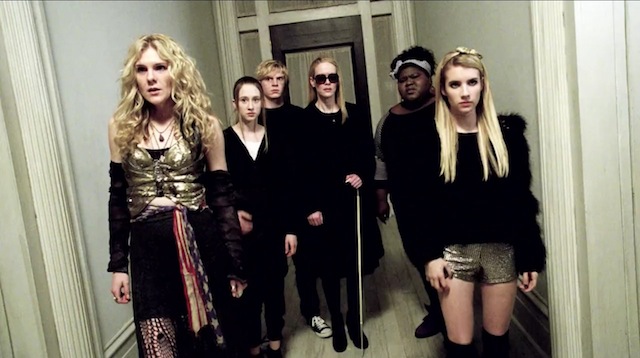
One could rightly argue that the witch renaissance began in 2013, with American Horror Story: Coven and The Witches of East End debuting last year.
But that revival has certainly carried on into the year of our Lord 2014, with both seasons (and series, in East End’s case) culminating at some stage this year. The ultimate witch movie, The Craft, came of age in May while The Blair Witch Project turned 15, and The New Inquiry, The Lifted Brow and even Teen Vogue all published stories about our fascination with magic and the women who perform it.
In the screen world, The Worst Witch is returning to TV; Sleepy Hollow continued its second season featuring the witch Katrina; WGN America broadcast the god awful Salem, their interpretation of the 1692 witch trials starring Shane West and Ashley Madekwe of Revenge fame; Frozen and Maleficent dominated the box office and Into the Woods, featuring Meryl Streep as The Witch, opens in the U.S. on Christmas Day (with a January 2015 premiere in Australia to follow).
And, of course, every year around Halloween time we get nostalgic for all things witchy. I continued this nostalgia by musing about Wicked for Junkee and writing a couple of things about Charmed for Bitch Flicks, and they also championed Practical Magic in a piece that made me giddy for the summer between primary and secondary school when I first saw it.
This is not to trivialise the still very real belief in witches in some developing countries. Recently, a woman was burned at the stake in Paraguay after being accused of witchcraft and this article about prevalence of the belief of witchcraft in Papua New Guinea published last year will stay with me for quite a while. In the first world, Wiccans took to social media to voice their outrage at their portrayal in a recent Time magazine article.
While witches hold a certain otherworldly charm (so to speak) from another time, the reality is that women are called witches (and many other choice descriptors) for deigning to exist outside of the narrowly and socially prescribed notions of how they should. The Salem witch trials began when young girls in the town began acting strangely in quick succession (also known as puberty), and we can hear echoes of a similar panic when modern girls and women act out of turn (see: the Slenderman attempted murder and Lena Dunham). While there’s still more room for movement for women than there ever was in Salem and medieval Europe, an appreciation of witches is one way in which we’re furthering the varied representations of women.
What other representations of witches come to mind this year? Sound off in the comments.
On relatability (“To appreciate [art] only to the extent that the work functions as one’s mirror would make for a hopelessly reductive experience.”) VS. likeability (“If you’re reading to find friends, you’re in deep trouble.”) [The New Yorker, Buzzfeed]
Wendy Squires wrote on the weekend that Eddie McGuire is leading the charge of male feminists because he built a change room for women runners to have a safe space after exercising at the Royal Botanic Gardens in Melbourne. That’s great, but here are four reasons why McGuire isn’t the feminist Squires thinks he is. They highlight why language is just as important as action. [The Age, Daily Life]
“… Zellweger’s picture personality has been about the striving performance of femininity—and a striving performance that’s rooted, always, in the appearance of twenty- and thirtysomething youth. To see her at the age of 44, amid a long period without acting work, with plastic surgery seems yet the latest attempt, and failure, to conform to the ideals of femininity, the sad second act in the latest Bridget Jones. Only this time, as the book tells us, Mr. Darcy is dead, which means there’s no man to validate her and thus save her from self-punishment.” [Buzzfeed]
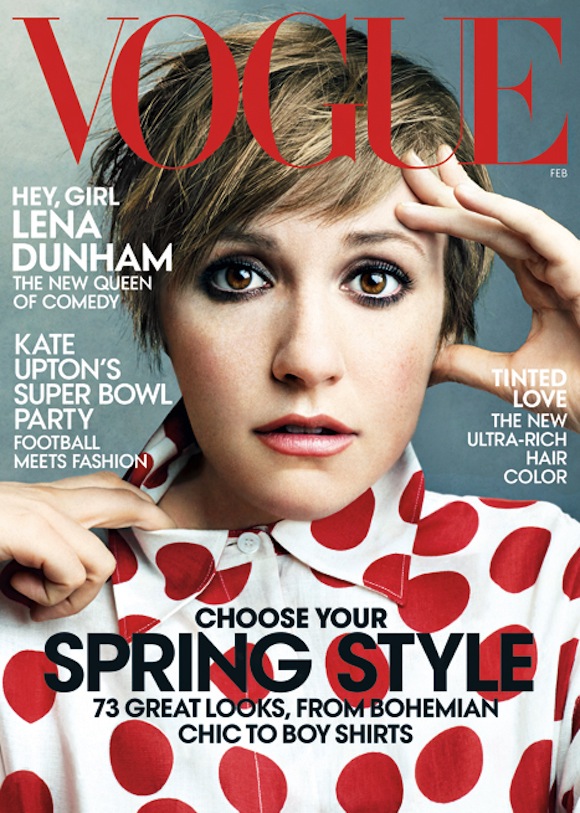
I kind of get where they’re coming from in that Vogue has a sordid history of Photoshopping its subjects to within an inch of their lives, but it’s puzzling as to why Jezebel’s targeting Dunham’s outing in the mag.
Within a couple of hours of putting a $10,000 bounty on the original images from Dunham’s Annie Leibovitz-shot pictorial, Jezebel had acquired them. A quick glance reveals there was not a whole lot of image-altering to be had, and Dunham looks great in both the before and afters, as Jezebel asserted.
Dunham came to Vogue’s defence in a statement to Slate, saying that Vogue is a fantasy and anyone who wants to see what Dunham actually looks like can tune into Girls. Jezebel’s campaign does come across as body-shaming of Dunham, who has surely experienced enough of that since she first got naked when Girls debuted in 2012. Why not offer as much money for the unretouched originals of someone who has clearly been made to look worlds away from their actual selves? (Jezebel has taken Vogue, Vanity Fairand Victoria’s Secret catalogues to task in the past for their extreme airbrushing in a series called “Photoshop of Horrors”.)
As someone in the comment thread of one of the many posts Jezebel has published in defence of their stance insinuated, it’s time to step away from the computer and let sleeping dogs lie. Funnily enough, it was a cat meme that was used to illustrate this point…
How did Girls go from one of the best shows on television, so perfectly rendering the lives of twenty-something women in its first season (if a little narrow minded on the racial diversity front) to the disjointed, experimental mess of season two, the finale of which aired last night?
Lena Dunham was obviously under a lot of pressure to perform to the standards she set last year and she buckled under it, mirroring Hannah’s signing on to write an ebook in a month and getting shafted with a mental illness for her efforts. While pretty well every episode of season one lent themselves both to plot and character development, it seemed like the ten episodes of this season each existed in a vacuum; separate from each other and only slightly showing us both new and familiar aspects of the characters.
For example, I know Jemima Kirke just had a baby, but where the hell was Jessa? Sure, we met her dysfunctional dad, which gave us a glimpse into her carefree and flakey motivations, but she was barely around for us to see just how the unraveling of her marriage to Thomas-John affected her.
And Shoshanna was one of the best things to come out of Girls, and still is, arguably, but I hate that her character has succumbed to the virgin-turned-whore trope in that she’s gotten a taste for sex and now she can’t help herself. I expected more from Dunham.
Marnie’s remained just as unlikeable, though less relatable, as she was in the first season while Hannah’s—and, by extension, Dunham?—personality fluctuates from episode to episode, perhaps to foreshadow her eventual OCD relapse.
… to this?
It seems as though Dunham used the early episodes of season two to respond to her detractors (no racial diversity? Hannah dates a black guy. Dunham’s obsessed with being naked? Get naked some more.), and force feed characters of colour (okay, one character of colour) and gratuitous nudity down our throats. I found the balance of “awkward sex”, the embracing of different types of naked bodies and everyday activities that didn’t involve these things in season one refreshing, but by season two it was just too much. Did Hannah really need to wear a mesh singlet with nothing underneath while on a cocaine bender for a whole episode? Did we really need to see Hannah drop trou to pee next to a train station in the middle of nowhere? While I think body diversity is great, and Dunham is largely responsible for the current discourse about it, I think she’s going the wrong way about advocating for it.
The lackluster sophomore season of Girls has left me wondering what happened to a show that could have been “the voice of my generation… Or at least a voice… of a generation.”
Is Girls‘ Hannah Horvath physically worthy of the sexual interest of a successful, hot, rich doctor? While detractors thought this week’s episode was the worst in the series, presumably because Lena Dunham’s “refreshing, yet displeasing to the eye” (to borrow a line from Elizabeth Banks in Pitch Perfect) naked body was front and centre perhaps more than any other episode, I actually thought it was the best of this season’s bunch, and I had no qualms buying Patrick Wilson’s character being so sexually into Hannah that he begs her to stay in his apartment for a 48-hour fuck- and naked ping-pong-fest. I will say that the gratuitous nudity and the continuous lack of people of colour is really getting my goat, though. [Jezebel]
Apparently young Australians just aren’t into protesting the injustices we face today. Um, hello? Reclaim the Night, the Occupy movement, SlutWalk, the Arab Spring… all activist events started by Gen Y on social media which encouraged Time magazine to name the Protestor as its 2011 Person of the Year. Writer Alecia Simmonds does make a fair point that Aussies are particularly apathetic towards causes, but her assertion that online petitioning, blogging and social media doesn’t compare to on-the-ground activism kind of undercuts fellow Daily Life columnist Kasey Edwards’ argument last week that “Big social changes don’t just happen… Social and cultural change evolves out of a meandering path of small victories. Seeds need to be planted and ground needs to be fertilised.”
And, in an attempt to counteract the alarming trend of wanting your vulva to look like a plastic doll’s, check out this (NSFW) Tumblr, Show Your Vagina.
Is freedom of speech overrated? Personally, I think so, as it allows those with abhorrently narrow-minded views to spill hate speech. This article makes the observation that free speech only seems to be defended when people like Alan Jones and Andrew Bolt put their foot in their mouth. [Daily Life]
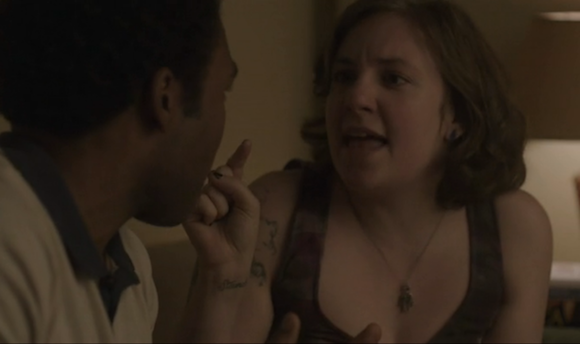
In last week’s season two premiere of Girls, I thought Hannah’s sex scene with her new black boyfriend (played by Community’s Donald Glover) within the first few minutes was a bit on the nose, but at least Lena Dunham and the other writers are making an effort to remedy the lack of people of colour that plagued the last season.
So while last night’s speech by Glover’s Sandy was equally as conspicuous, it was also a pertinent commentary on Girls, racism, hipsterism and progress:
“Oh, I’m a white girl and I moved to New York.. And oh, I got a fixed gear bike and I’m gonna date a black guy and we’re gonna go to a dangerous part of town…”
Hannah refutes by saying the fact that Sandy’s black has never occurred to her until he just brought it up:
“I don’t live in a world where there are divisions like that.”
Fair point, as that’s an ideology I try to adopt myself, and it’s also the reasoning Dunham supplied last season when the race issue was brought up constantly. Ultimately, it wasn’t Sandy’s race that created division in their relationship, it’s the fact that he’s a Republican. Hannah just couldn’t “be with someone who’s not an ally to gays and women”. Fair enough.
So misogyny may be running wild in the real world, but on TV, girls are calling the shots. We’ve had a bevvy of shows with “girl/s” both in the title and the storylines this year, with 2 Broke Girls and New Girl carrying their success over from 2011. While a lot of the subject matter is problematic, both shows have women carrying the comedy. Which brings us to just plain Girls, which is the brainchild of actor, writer and director Lena Dunham. Girls is not without its problems, either, but its portrayal of young urban women is almost faultless. Rounding out the representation of leading ladies in 2012 we have Don’t Trust the Bitch in Apartment 23, Homeland, Revenge, The Mindy Project, Are You There, Chelsea?, Smash, GCB (farewell!), Scandal, Nurse Jackie, Veep, Emily Owens, M.D., Whitney, The Good Wife and Hart of Dixie.
“Call Me Maybe”.
Until “Gangnam Style” came along, the YouTube Zeitgeist was dominated by one runaway success: Carly Rae Jepsen’s “Call Me Maybe”. Justin Bieber’s protégé came out of nowhere with the catchiest song of the year, which was subsequently covered by the guys from Harvard’s baseball team, Barack Obama and the Cookie Monster! Talk about diversity!
2012: Apocalypse Now.
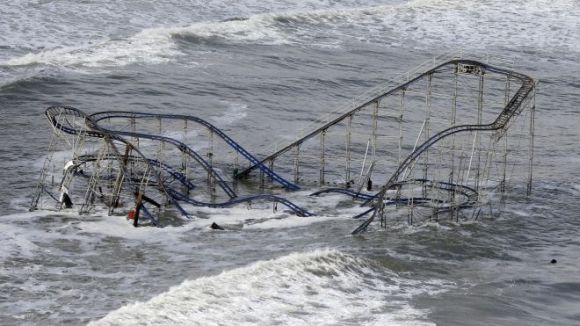
2012 was the year of the apocalypse, with the 21st of December long determined by the Mayans (or Mayan conspiracy theorists) as the day the world ends. You know, until the 7th of December tried to steal its thunder as the apparent recalculated date. Apart from the natural disasters, warfare and massacres, the 21st passed without a nuclear bombing, ice age or attitudinal shift, putting rest to the apocalypse panic. Until the next rapture, anyway…
Shit ___ Say.
It started with a sexist albeit funny YouTube video of a guy in a wig quoting “Shit Girls [Apparently] Say”, which snowballed into “Shit White Girls Say to Black Girls”, “Shit New Yorkers Say”, “Shit Christians Say to Jews” and “Shit Nobody Says”. Cue offence.
Snow White.
Snow White was everywhere this year: Mirror Mirror, Snow White & the Hunstman, Once Upon a Time… Note: overexposure isn’t necessarily a good thing. In fact, I hated Mirror Mirror and Once Upon a Time, and Snow White & the Huntsman was such a snooze-fest I can barely remember what happened (not including Kristen Stewart’s affair with director Rupert Sanders).
50 Shades of Grey.
On the one hand, E.L. James’ 50 Shades of Grey has singlehandedly revived the flailing publishing industry, so that’s a good thing. But on the other, it has falsely lulled its legions of (mostly female) fans into a state of apparent sexual empowerment: it’s a book about sex targeted towards women, so that means we’re empowered and we don’t need feminism anymore, right?
The Macarena of the 21st century, Psy’s horse dance took the world by storm, being performed in conjunction with Mel B on The X Factor, with Hugh Jackman in his Wolverine gloves, on Glee and at many a wedding, 21st birthday and Christmas party.
Misogyny.
Misogyny has long been the focus of feminists, but the word and its meaning really reached fever pitch this year.
After Julia Gillard’s scathing Question Time takedown of Tony Abbott and his sexist ways, people everywhere were quick to voice their opinion on her courage and/or hypocrisy. At one end of the spectrum, it could be said that Gillard finally had enough of the insidious sexist bullshit so many women in the workforce face on a daily basis and decided to say something about it, while at the other, many argued that the Labor party were crying sexism in a bid to smooth over the Peter Slipper slip up.
“Her electric speech on misogyny in parliament went beyond the sordid political context to firmly press a button on the chest of any woman who has been patronised, sidelined, dismissed or abused. It crackled across oceans, and, astonishingly, her standing went up in the polls, defying political wisdom that no woman would benefit from publicly slamming sexism.”
The viral doco that had millions of people rushing to plaster their neighbourhood in “Kony 2012” posters on 20th of April to little effect (the campaign’s goal was to catch Joseph Kony by years end) illustrated our obsession with social media, armchair activism and supporting the “cool” charities, not the thousands of worthy charities out there who could actually use donations to help their cause, not to produce YouTube videos and work the press circuit.
I’m Not a Feminist, But…
While Tony Abbott is clamouring to call himself a feminist to gain electoral favour despite the abovementioned misogyny saga, it seems famous women can’t declare their anti-feminism fast enough.
First we had new mother and Yahoo! CEO Marissa Mayer jumping at the chance to shun feminism despite the fact that without it she wouldn’t be where she is today. My favourite anti-feminist campaigner Taylor Swift said she doesn’t think of herself as a feminist because she “was raised by parents who brought me up to think if you work as hard as guys, you can go far in life.” Um, Tay? That’s what feminism is, love.
The cronies from Sutherland Shire were all over our boxes, primarily on Channel Ten, this year. There was the widely panned Being Lara Bingle, the even worse Shire, and the quintessential Aussie drama set in the ’70s, Puberty Blues.
While these shows assisted in shedding a different light on the suburb now synonymous with race riots, it’s not necessarily a positive one, with The Shire being cancelled and Being Lara Bingle hanging in the balance.








 The Scarlett Woman