12 Posts of Christmas: In Defence of Mia Freedman.

In the spirit Christmas, I’ve decided to revisit some of my favourite posts of the year in the twelve days leading up to December 25th. 

You might remember back in July when Cadel Evans won the Tour de France, Mia Freedman said on the Today show that sportspeople aren’t heroes, and a shitstorm ensued. You can read the original post here.

Mia Freedman’s copped it pretty hard in the media the last couple of weeks, ever since her comments about Cadel Evans and sports stars being held up as heroes.

It’s no secret that Freedman is my idol, so I will go to bat for her til the cows come home. She’s the reason I became a writer. She’s the reason I did work experience at Cosmo. I share a lot of her views. Whether it’s just a happy coincidence, or I’ve shaped my views around hers (I started reading Cosmo at 15, a very impressionable age, so it’s more than likely the latter), I don’t know.

I’ve written about my love for Freedman, followed closely by formerGirlfriend and Cleo editor, and current Sunday Life editor, Sarah Oakes, numerous times, and how the incestuous nature of the magazine world ensures a similar writing and editing style from those who work together. Take Freedman and Zoë Foster, for example. Or Oakes and Girl with a Satchel’s Erica Bartle and Musings of an Inappropriate Woman’s Rachel Hills.

Speaking of Sunday Life, Freedman’s column last weekend solidified why she’s a woman after my own heart.

She wrote about spending time with her family, and how planning big events are always a disaster and it’s the little, “mundane moments” that are memorable.

But back to the issue at hand: sportspeople as heroes.

I agree wholeheartedly that sportsmen and women aren’t heroes. (I threw up in my mouth a little bit when Karl Stefanovic and Lisa Wilkinson stood for the national anthem after Evans won the Tour de France.) Yay, they can “swim fast”, “kick a ball with accuracy”, “run quickly” and “jump over high things”. But how does this make them heroes? It makes them superficial “heroes” or emblems of sporting events in which they did good, but not actual heroes. We can leave that title to soldiers, doctors, activists, social workers, firefighters and others who face death and social injustice to save lives and make the world a better place.

As Freedman reiterates:

“I roll my eyes every time another Australian of the Year is named and it’s a sportsperson. I cringe at the CONSTANT sycophancy and praise heaped on sportspeople and the way they are forever lauded as heroes… How does being highly physically capable make you a hero?”

I read somewhere that it is highly likely Evans will be named 2011’s Australian of the Year, so start warming up those eye sockets, Mia!

I brought this notion up with a coworker last week, who said doctors aren’t heroes just because they’re saving lives. But what about Doctors Without Borders, or doctors and nurses with the armed forces? “Well, that’s different,” he said. Why? Because they’re facing their own death whilst trying to prevent someone else’s? But sportspeople aren’t facing death (okay, sometimes they are), and their payoff is purely selfish.

Said coworker mentioned some AFL “hero” who, back in the ’70s (I think; don’t quote me on this), finished the grand final with a torn ligament and brought the premiership home. Some might call it heroism; others stupidity.

And I think the sportsperson=hero dichotomy is abhorrent, considering the extracurricular allegations levelled at some of them. Is Nick D’Arcy a hero for punching some guy and leaving him with irreparable facial damage? Are the Collingwood FC guys heroes for winning last year’s premiership, with some of them subsequently going on to allegedly sexually assault one or some groupies? How about the world class douchebag Brendan Fevola? Or Tiger Woods? O.J. Simpson? Hardly heroes.

Perhaps we should be looking to sportspeople like Glenn McGrath, who works tirelessly for his late wife’s breast cancer foundation. Or the Essendon FC, who work with schools to improve literacy. While not exactly heroes per se, at least they’re doing something other than hitting and kicking balls.

Freedman writes in a related piece:

“Sporting stars may have great physical skills but that’s all. They’re no smarter or better or nicer or more well intentioned than the average Australian. In fact, I would argue that generally (and of course this is a generalisation), they are less informed, less aware and less street smart than the average bear.

“This is because to become a great athlete, you have to spend many years from the time you are very young, refining your skills. That’s years swimming up and down a pool. Years running around a track. Years kicking a ball or hitting it with a bat.

“Years…

“I’m happy for anyone who CHOOSES to spend years of their life dedicated to their sport. Go for it. But let’s not pretend it’s a selfless or noble pursuit.

“Professional athletes do it for many reasons. Sponsorship dollars. Personal satisfaction. A desire to represent their country or be the best at swimming or kicking or hitting or whatever it is they’re good at.”

Without humiliating anyone, I find the “less informed, less aware and less street smart” contention is particularly true of one of my physically gifted friends.

While he has a Masters and is one of the most book-smart people I know, he admitted to me that until he was in his late teens, he was completely sheltered by his parents. So much so that he didn’t buy his first CD until around this age. Up to that point, he listened to whatever his parents wanted to listen to, because it was pretty much school, practice, competitions, and the only musical exposure he got was in the car on the way to said school, practice, competitions.

Now the kind of sports he plays aren’t exactly your true blue AFL or cricket (in fact, they’re so obscure I won’t mention them here at the risk of giving him away!), so he’s in another boat altogether: his sports would be, and have been, ridiculed by both your Aussie bogan and your highbrow cultured Australian.

Now, from what I’ve read, Cadel Evans is involved in other noble pursuits, like charity. Unfortunately, I think Freedman’s point was sullied by using Evans to bring it up on national television. Perhaps if she were talking about Stephanie Rice or Ben Cousins her contention would have been more well received. But that’s the risk you run when you voice an opinion that’s not of the norm.

And that’s why I love her. Sure, she got crapped on by most of Australia for making a valid point. But she was able to return to voicing her opinion on Today the same time the following week, joking about going into witness protection, but getting a haircut instead. She was able to find the humour in the situation, and see where she might have been wrong.

For the record, I don’t think she was wrong.

Related: In Defence of Mia Freedman.

Everything They Touch Turns to Gold.

Mama Mia: A Memoir of Mistakes, Magazines & Motherhood By Mia Freedman Review.

Mia Culpa: Confessions from the Watercooler of Life by Mia Freedman Review.

Elsewhere: [MamaMia] Cadel Evans: Is He a Hero?

[MamaMia] Cadel: Here’s What I Learned.

[MamaMia] Is Being Australian Really So Much About Gold Medals?

[MamaMia] Stephanie Rice. Enough With the Hero Worship.

[MamaMia] When Family Time is a Nightmare.

12 Posts of Christmas: I Scream, You Scream, We All Scream for Feminism.

In the spirit Christmas, I’ve decided to revisit some of my favourite posts of the year in the twelve days leading up to December 25th. 

When Scream 4 came out earlier this year, it immediately solidified its spot in my heart as one of my favourite movies and franchises, and not just because of its feminist nature, discussed below, and in the original post.

Scream 4 marked the most recent installment of the horror franchise, which ended in much the same similar way as the past three chapters.

The killer comes back from the dead, gun-wielding Gale Weathers fires a bullet and central scream queen Sidney Prescott gets the last laugh, with fellow original Woodsboro survivor Dewey fumbling around on the sidelines.

Fifteen years after the original, it is still unbelievable as to how Dewey is on the police force, Gale is still a ball-busting rogue sleuth, albeit with a lot more Botox than the last time we saw her, and Sidney has finally wiped that weepy-eyed look off her face and is kicking ass and taking names.

In the first instalment, Sidney is an ineffectual twit who berates horror movie starlets for “running up the stairs when they should be going out the front door” when, only moments later, she does exactly the same thing!

But as I watched each movie, I slowly started to root for Sid. Not only was she dealing with the fallout of her mother’s death and the wrongful allegation against Cotton Weary for the crime in the first film, but she was also dealing with a rat of a boyfriend, Billy, friends, high school and trying not to crumble under the pressure of it all. So I’ll cut her a break.

In the second film, Sidney undergoes remarkable growth due, in part, to going off to college, but the audience can see in the way Sidney carries herself that she believes the murders are over. Oh, how wrong she was! I especially love the final scene in Scream 2, with Sidney outsmarting (one of) the killer(s), Mrs. Loomis, with the help of Cotton. Gale’s there, too, holding on til the bitter end.

The Scream franchise, after all, is about the women. It could be argued that most horror movies are about the women; female victims make for easy targets and garner more of a reaction from the audience. But Scream was one of the first mainstream horrors to advocate for equal-opportunity killing: where the men are as fair game as the girls, and two out of the seven killers have been women. More than that, they’ve been the masterminds of the whole operation; using the clueless and fame-hungry men as pawns in their bloody chess game.

Traditional horror operates on the premise that “she alone looks death in the face”. Not Scream, though.

Ashley Smith in “Final Girl(s) Power: Scream, writes of not only Sidney, but Gale and Dewey, staring death in the face:

“The success of the narrative is predicated now on not an individual woman, extraordinary and significantly boyish, but on the cooperation of two women who together stab, shoot and electrocute the two killers into oblivion. This moment is also notable because it is one of the many instances in Scream that utilises very self-referential language, not only does it rework the figure of the Final Girl, it talks about itself reworking the figure of the Final Girl. This moment is an example of how the film explicitly works on behalf of the female spectator. Sydney/Campbell is speaking for and speaking as one of the girls in the horror audience who want to see active female characters fighting for each other, and significantly not even bound by a sentimentalised friendship.”

Sidney and Gale start out as sworn enemies (as murdered bestie Tatum Riley says after Sidney punches Gale: “‘I’ll send you a copy.’ Bam! Bitch went down! Sid: super bitch! You’re so cool!”), but I suppose bonding over the murders of pretty much everyone you know will solidify your connection, whether or not it’s one of mutual affection for each other, or mutual hatred for the killer(s).

And then there’s Dewey. He’s a funny character and David Arquette plays him to perfection, but the sum of his survival involves him always arriving to the party 10 seconds late and missing all the action. Sure, he’s been stabbed a few times, but he’s more of the token surviving male than a fully well-rounded character. As Smith writes, “the text allows for powerful and active female figures [that] it compensates [for] with weak, ineffective male ones”.

Before Scream, to survive as a “final girl” you had to be a virgin. This works well for high school victims, as a lot of high school students are virgins. And hey, this is the movies, so so what if it doesn’t reflect real life?

The first Scream begins with Sidney as a virgin, but in the height of the killings, she throws caution her virginity to the wind and has sex with Billy. In any other horror film, this would mean she dies. (Casey Becker, Drew Barrymore’s character, and her boyfriend, Steve, die in the opening scene, as does Tatum, girlfriend of Stu, later on in the movie in the doggy-door scene. You might imagine these kids to be non-virgins, as they’re in seemingly committed, loving relationships, but this is never directly addressed.) But Scream, being the “meta-text” that it is, takes a page out of Buffy’s book, and the non-virgin fights to live another day.

But the exemplar of a strong female character in Scream is Gale. She’s not only a ball-busting, high-powered tabloid journalist who fights to see an innocent man go free but, as I mentioned above, she’s always the last one standing, alongside reluctant partner-in-crime Sidney.

In Scream 4, she’s a struggling stay-at-home novelist with writer’s block, so when Sidney—and the subsequent murders—return to Woodsboro, she jumps at the chance to help with the investigations. Dewey, and his lovesick underling Deputy Judy, don’t want her interfering with the case, so Gale goes rogue.

It is Gale who uncovers most of the developments in the case, including who the killer is. And, according to Melissa Lafsky at The Awl, she’s breaking a lot of other ground, too :

“She [Courteney Cox] slashes her way out of the 40-something female stereotype, and takes over this movie with a flick of her scorn-ready… brow. Let’s face it: Few film archetypes are more brutal than the ‘older woman in a horror movie’—either you’re the psycho nutcase… or you’re the pathetic victim… And no matter what, you’re ALWAYS an obsessive mother.

“Cox pulls off a pretty impressive coup, upstaging not only the cute flouncing teens, but also her 15-years-younger self. Her character—now successful, childless(!), and utterly bored with the ‘middle-aged wife’ role—shrugs off all orders to ‘stay out of it’ and leaps back into the murderous fray, husbands, younger blondes and kitchen knives be damned. She takes nothing for granted, and thinks not a second about sneaking into dark corners to catch homicidal fruitcakes (and bitch is 47!!!). While Arquette and Campbell slide into their ’90s cliché groove, Cox reinvents and one-ups, kicking this meta-fest to life and providing the only sexy thing onscreen, gelatinous lips and all. Gale Weathers is shrewd, aggressive, cunning, but never heartless; despite it all, she still loves that stupefied ass clown Dewey. And she does it all while sporting a better ass than the 20-somethings. And… she doesn’t even have to die for it!”

You go, Gale!

Related: I Scream, You Scream, We All Scream for Feminism.

Scream 4 Review.

Elsewhere: [Girl Power: Feminism, Girlculture & The Popular Media] Final Girl(s) Power: Scream.

[Wikipedia] Scream Queen.

[Wikipedia] Final Girl.

[The Awl] Scream 4: The First Mainstream Feminist Horror Film.

12 Posts of Christmas: Paper Dwarves, Digital Giants.

In the spirit Christmas, I’ve decided to revisit some of my favourite posts of the year in the twelve days leading up to December 25th. 

This one was written after Paper Giants aired on ABC in April, comparing the heyday of magazines with the impact of the digital world. You can read the original post here.

A few weeks ago, in response to ABC’s Paper Giants: The Birth of CleoMia Freedman wrote on MamaMia about her thoughts on the state of the (mag) nation and if magazines are still relevant and the amount of influence they wield in 2011:

“… Not that much excitement goes on in magazines anymore… [It’s a struggle to] get them [those who work on a magazine] to try and think about something that hasn’t been done before, something that will start a conversation and boost sales.”

Freedman compares pay TV’s Park Street, a The Devil Wears Prada-esque reality show about ACP’s head offices, featuring the editors of DollyCleoCosmoMadison and Shop Til You Drop, which received dismal ratings and poor audience response, to the critical success and brilliant take on Cleo in her influential heyday of Paper Giants. She says, “Gemma Crisp [editor of Cleo] explained the editorial process that a story undergoes from conception to publication. It takes a minimum of three months… When was the last time you waited three months for something? Life doesn’t happen in increments of months anymore. It happens in moments, in text messages, in Tweets. It’s fast and it’s relentless and if it takes you three months (or even three weeks) to get from thought to print then that’s just too long to retain the attention of your audience.”

When she puts it like that, Freedman makes me long for a simpler time, when I hung on the every word magazines published, as opposed to reading hundreds of articles a week, mostly on blogs, but also in magazines, in an attempt to stay on top of my blogging game.

Erica Bartle, creator of Girl with a Satchel and a former mag girl herself, says Freedman’s “blog-cum-website” “deals in what everyone’s talking about TODAY. It feeds off the 24-hour news cycle. And Mia’s own profile. And her opinion… It’s like a current affairs program for women online.” And now with MamaMia launching on SkyNews, Freedman’s brand is literally a current affairs program.

Not all blogs can operate this way. MamaMia has a team of bloggers, editors and techs who keep the site running smoothly which thus, as Bartle said, allows it to operate on a 24-hour news cycle.

Personally, I have a part-time paid job I go to four times a week, this means I only get to blog two or three days a week, and with so much info to process and a maximum of 15 posts per week to churn out in a small amount of time, this means I can’t always post as early and as often as I’d like.

But even for those who blog fulltime, like Bartle, it’s not always about what’s happening right NOW as it is about maintaining the blog’s integrity.“I personally operate on a different plane, because my beliefs very much inform my work. For that, I’m willing to sacrifice certain economic constraints,” she says.

Still in the blogging world, you have someone like Gala Darling, who is very much a self-made businesswoman as a result of her über-successful blog of the same name. She’s gone from strength to strength over the past few years; something she could never have done had she been a magazine editor (bar the select few, like Anna Wintour, Anna Dello Russo and yes, Freedman).

But, essentially, MamaMia has the advantage of possessing “a figurehead with credibility whose background is in traditional media. She has the gut instinct of an editor. Online you need news nous as well as technological nous and business nous.”

Another editor who has these qualities in spades is former Cleo and Girlfriend editor, Sarah Oakes, whom Bartle worked under at Girlfriend. Bartle says she invoked an atmosphere of ghosts of magazines past, creating “camaraderie, creativity and positivity, which I think she achieved. She gave you more work if she thought you could be stretched; gave you a talking to if you had crossed a line; gave you a pat on the back for a job well done.” Very Ita-like, wouldn’t you say?

Oakes is now editor of The Age Sydney Morning Herald’s Sunday Life supplement, a title which has improved markedly since she took over. (I have also blogged here about how I think both Girlfriend and Cleo became better titles under her leadership.)

In fact, newspaper inserts are giving the glossies on the newsstand a run for their money, as they “are getting exclusives and have strong writing and design teams, as well as columnists and styling/shoots. These free weekly titles, because of the mastheads they reside within, have enviable readerships and access to celebrities. They are also respectable, well executed and FREE,” Bartle notes.

But at the end of the day, are magazines relevant?

Freedman writes:

“The internet has not only sucked up their readers, it has also gobbled up their purpose: to be a way women form tribes and communicate. Now there’s YouPorn and any other number of sites for titillation, Google for questions about sex, and any number of websites or free newspaper magazines if you’re looking for other types of content or a magazine-style experience. Women don’t want to be spoken TO anymore. They want to be part of the conversation, something which the internet allows, in fact depends on… the internet has taken the sting out of the raunch-factor for mags like Cosmo and Cleo.”

Yes, as Freedman says, there are much raunchier locales to get what would have been included in a sealed section only a few years ago. There’s also Perez Hilton, TMZ and even shows like Entertainment Tonight and E! News that monopolise celebrity content, while the fashion blogs are more of a go-to for what kids are wearing these days.

Sure, Vogue’s always going to be a premiere source for high fashion shoots from photographers the likes of Annie Leibovitz, Patrick Demarchelier and David LaChapelle, but magazines “seem to exist on a strangely distant planet where all the people look like plastic and the sole pursuit is ‘perfection’. Except that perfection doesn’t really exist,” says Freedman.

When sites like JezebelCover Girl Culture and, yes, MamaMia and Girl with a Satchel are debunking photoshop myths and striving for more realistic representations of women in the media, magazines are doing this movement any favours. (Except maybe Brigitte.)

And when you can get most of a magazine’s content online anyway (I passed on a near-$20 copy of US Harper’s Bazaar in favour of accessing interviews with Kim Kardashian and Hillary Clinton on their website), are they really worth it?

Bartle doesn’t think so. “No, but they need to be distinctive from what we can get online or elsewhere if we are going to part with $5-$10 to purchase one. Premium magazines, which I have no qualms spending extra on, include The Gentlewoman and O The Oprah Magazine, because they cater to my tastes, sensibility and need for a good read on a Saturday afternoon with a cup of tea.”

I agree with Bartle’s sentiments.

While online is great for content from individuals not curated and/or watered down by magazines editors to fit the mold of their magazine, holding a truly great glossy in your hands, like the appeal of a physical book, while at the hairdressers, a café or tucked up in bed, means magazines will always hold a place in our hearts.

Right next to the Kindle and Google Reader.

Related: Paper Dwarves, Digital Giants.

Paper Giants: The Birth of Cleo Review.

Everything They Touch Turns To Gold.

Evolution of the Bookshop at The Wheeler Centre.

Elsewhere: [MamaMia] Paper Giants VS. Park Street: Why Magazines Are Not What They Used to Be.

[MamaMia] MamaMia Gets a TV Show.

[Girl with a Satchel] Homepage.

[Girl with a Satchel] Mid-Week Media Musings.

[Gala Darling] Homepage.

On the (Rest of the) Net.


Post of the week: Catherine Deveny on body love. [MamaMia]

On sexual harassment and “nightclub feminist success”. [Musings of an Inappropriate Woman]

Atheists are just as bad as rapists… and feminists. [Jezebel]

Lingerie football. What do you think? Personally, I’m not a huge fan of playing sports in underwear, but I don’t have much of a problem with it. [MamaMia]

“The Problem with My Week with Marilyn.” [Jezebel]

All long-term monogamous relationships are a transaction, says Ms. Elouise, so what’s the big problem with “paying your wife for sex”? [Feminaust]

Facebook, girl-hate and “I’m a better feminist than you” tête-à-têtes. [Howling Clementine]

XOJane on the message Breaking Dawn sends to virgins.

The Manic Pixie Dream Girl trope extends to indie films, too. [The Atlantic]

iPhone 4S’ Siri is pro-life, apparently. [Gizmodo]

When hemlines rise, so does bitchiness. [Jezebel]

Stella Young on the disability pension myth. [MamaMia]

Former Wordsmith Laner Sarah Ayoub-Christie tries to reconcile her modern marriage with her traditional Lebanese upbringing. [MamaMia]

“Teaching Good Sex” in school. What a novel idea! [New York Times]

Men in porn:

“The straight male performer must be attractive enough to serve as a prop, but not so attractive that he becomes the object of desire. As [porn publicist, Adella] Curry puts it, ‘No one wants to alienate the male audience’.” [Good]

Image via MamaMia.

When Girl-Hate Turns Into Obsession.

I think a little bit of competition between women is healthy. My default emotion when I meet new people is wariness. I gradually begin to like people as I get to know them.

The same is true of the first impression I make. I’m kinda shy, which comes off as cold and bitchy, and I’m very territorial. No after work drinks with my friendship group til I learn whether you can be trusted. I’m not a likeable person to begin with and, some would argue, at all.

It is those that I’d like to focus on here.

A few weeks ago I had to take one of my co-workers to Human Resources for harassment and bullying. I haven’t gotten along with this person from day one, when she returned from some leave, during which time I’d become employed at our workplace. Never before had my department had such a youthful, outgoing and eclectic bunch of new recruits, so when she returned, I think it was quite a culture shock. She was the alpha female when she left and, not to toot my own horn (but toot toot!), when she came back I was the alpha female.

Within a week she’d been complicit in a major fight between myself and a fellow co-worker/friend, whom I now don’t speak to. Granted, it was no big loss, but I realise now that I should have reported her then and there for bullying.

Two years have passed and it’s been an awkward working environment to say the least, but we’ve both/all (I’m not the only one she’s had a run-in with) managed to deal with it.

After another leave of absence, this person came back to work with what seemed like a vendetta against me. Prior to the few weeks she was away, our working relationship had become somewhat pleasant, surprisingly.

As soon as she saw me, she made some jibe about a co-worker’s party I went to that weekend, followed by some comments to a friend of mine about said co-worker and our (purely platonic, though I do think he’s cute!) relationship.

This was followed by some more bitchy comments to other co-workers about my birthday celebrations, about the way I dress, and about my reputation in the workplace, amongst other things. She even swerved towards me in the carpark!

At this point I took her to H.R., and was told there was nothing they could do because it was all “hearsay”. Correct me if I’m wrong, but I’d say the threat of grievous bodily harm with a vehicle is a little more than hearsay!

She’s backed way off since then, but when one drama ends, another begins.

I’ve been struggling with just about everything lately. Work, love life, money, family, friends. You name it. So the last thing I need is people talking shit about me. But hey, I’m Scarlett, and people love to hate me! More on why I think this is a bit later.

My work Christmas party is coming up in less than a week, and if you were a reader of this blog a year ago, you will know that the event is an absolute extravaganza! The theme is heroes and villains and I’m going as Eve, with the aforementioned object of the rumour mill as Adam. (Yeah, I’m probably asking for it with that one, aren’t I?!) Upon hearing about this on the grapevine (some people are more guilty of tending to the vine than others), a female colleague who now works in a different department called me attention seeking.

I’ll pay that: I will be the first to admit that I am an attention seeker. I’m a writer with a blog; attention seeking goes with the territory. And when it comes to costumes, I’ll go all out in an effort to have the baddest ass costume in the joint.

My problem is with the blatant jealousy in these comments.

If you think I’m attention seeking and you want to realign the spotlight back on you, strive for an even more out there costume than mine.

If you think I dress like a slut, how is that any concern of yours? So what if I do? If you wanna dress like a slut, too, go right ahead. I don’t have the monopoly on sluttiness.

If you think I’m “all over” someone, try to peel me away and you yourself can be all over them if that’s what you really want. If it’s not, then why worry?

Honestly, I actually feel sorry for these women who have nothing better to do than bitch about me. Worry about your own lives and less about mine. You must really not have much going on (one of these women is a mother, for crying out loud! You’d think she would have better things to do.) if I’m all you’ve got to talk about. Get a life!

But I believe the reason people, nay women, have such a problem with me is because, as the divine miss Catherine Deveny puts it, “I don’t lay down in the chalk outline drawn for me.” Sure, she was talking about body image, but I think as a woman who refuses to comply with outdated “socially acceptable” norms, it is particularly fitting.

Perhaps people would like me better if I were more agreeable, demure and didn’t voice my opinions. If I strived less for achievement in the areas that are important to me, and more in the areas others’ think are important. If I was less threatening by being more concerned with what people think of me. But then I wouldn’t be me. Oh, sorry, that’s what they want!

Related: Breaking Up is Hard to Do.

Slut-Shaming as a Defence Mechanism.

Elsewhere: [MamaMia] I Love My Body. Catherine Deveny: I’m 80kg & Still Happy.

Is Robert Pattinson the Male Version of Megan Fox?


From “The Edward Cullen Underpants Conundrum” by Sady Doyle on Tiger Beatdown:

“Robert Pattinson talks shit about the projects he is in. Robert Pattinson is honest about the fact that he is not the best actor. And Robert Pattinson’s main source of employment is facilitating his own objectification, which he does, but also complains about all the time. Robert Pattinson is… Megan Fox, basically!

“But the issue of Our Cultural Discomfort With Objectifying Robert Pattinson… is perhaps best illuminated by how different it is from our generalised Cultural Discomfort with MF. Because we have no problem with objectifying Megan Fox, really! We just have a problem with everything she says, and specifically the things she says wherein she takes issue with being objectified. We just hate her. Whereas people don’t hate Robert Pattinson, really.

“Because those women [young, female Twi-Hards] are acting in a way that is typically reserved for men. And they’re treating Pattinson like a girl.

“… We are used to seeing straight men’s goofy, unrealistic sexual fantasies. They are everywhere, all the time. Beer commercials, magazines, Michael Bay movies, porn obviously. We’re used to having female characters flattened out, falsified, emptied out and filled up again with a boundless desire to satisfy men’s needs for no apparent reason. We’re used to the fact that straight male sexual fantasy scenarios (or, at least, sexual fantasies marketed to straight men: and, hey, a lot of dudes are buying them) are cartoonish, in poor taste, unsophisticated, weird.

“… It’s part of the accepted context of straight male desire—it’s tacky as all hell, aesthetically, and that’s just how they do—and so criticising it, in an aesthetic way, seems pointless… But when girls do the exact same thing—when they prove themselves capable of the exact same sort of objectification, and the exact same goofiness or tackiness or unrealistic fantasy in the name of getting off—well, it freaks people out. It’s weird. Why are they acting like this? Don’t they know that Robert Pattinson is a person? Why are they treating him like a big chunk of meat? Why doesn’t Edward Cullen act like a real guy would?

“Because Edward Cullen is porn.

“… He is an object designed for the gratification of female desire. He’s the most ridiculous person who’s so amazing at everything, and he’s so beautiful you creamed yourself. And that’s it. And we’re used to dudes writing ladies this way, we’re even used to dudes writing ladies this way and passing it off as ‘literature,’ but the idea of a female author writing a male character in this way, for the pleasure of other ladies, is profoundly disconcerting.

“… We just happen to live in a world where straight men are expected to objectify, and given lots of opportunities to do it… but the fact is that sexual fantasy… looks goofy and weird and dehumanising for a lot of people, women and men both. And probably we all need to grow up, and deal with the fact that everyone we meet in the world is a person with a complex inner life, and also be open to the fact that people are pretty in different ways and our entertainment only portrays one very limited slice of the vast spectrum that is human prettiness.”

Related: Megan Fox Transforms from “Android Ice Queen” to Relatable Person.

Megan Fox Too “Spicy” for Transformers?

“She Just Wants Attention”.

The Beautiful, Bigmouthed Backlash Against Katherine Heigl & Megan Fox.

Elsewhere: [Tiger Beatdown] The Edward Cullen Underpants Conundrum.

Image via OMG Celebrity News.

TV: Gossip Girl—Life Begins at Love?


So Blair’s pregnant and she doesn’t know who the father is. Oi vey, as her Jewish stepfather Cyrus would say.

Naturally, even though she’s only 20, is still in college as her mother points out, and doesn’t know if her fiancé Louis or past love Chuck impregnated her, she’s keeping the baby. Of course!

Dan tells her  “has options” and Blair replies that she’s considered them all but, ultimately, the foetus was conceived out of love. I’m sure a lot of foetuses were conceived out of love, but that doesn’t mean it’s in the best interest of both the embryo and the parents to keep it.

Interestingly, while searching for some online articles on Gossip Girl being pro-life (there aren’t any that I could find), I came across a web entry for the actress who plays Eleanor Waldorf-Rose, Margaret Colin, who is a noted pro-life activist and has even been involved in (I won’t say propaganda) a pro-life made-for-TV movie. I wonder if her stance, which is well-publicised, had anything to do with the character of Blair deciding to carry the pregnancy to term…?

Related: Gossip Girl Season 4 Final.

Breaking Dawn: Sex is Bad, Okay? And You Will Be Punished for Having It With a Life-Sucking Vampire Feotus. Sorry, Life-Sucking Vampire BABY!

Is Jersey Shore Anti-Abortion?

Private Practice: Pro-Choice?

Grey’s Anatomy Final Asks “When Does Life Begin?”

Image via MegaVideo.

Hollywood Pregnancies—There’s Something in the Water.


You might remember a few years ago, in 2007, when it seemed like every celebrity was pregnant, and some surprisingly so. Nicole Richie with Harlow, Christina Aguilera with Max, Nicole Kidman with Sunday, Gwen Stefani with Zuma, Angelina with the twins, Jessica Alba with Honor, Jennifer Lopez with her twins… it was just never ending!

I was surprised back then to never read an article on the phenomenon. (Then again, I wasn’t as immersed in the fledgling blogosphere at that time and kept my celebrity trend reading to the weeklies and monthlies.) Now I finally get to write about it.

Opening up this week’s Who (and Famous, which came out today, asserting that Blake Lively’s pregnant. She probably just ate too much Thanksgiving turkey. Leave her alone!), a spate of celeb mums-to-be greeted me from its pages. Kourtney Kardashian, Jessica Simpson, Beyonce, Hilary Duff, Jennifer Garner, perhaps Kate Middleton. Now this is a high-profile list! Babies by Jessica, Beyonce and Kate have been long awaited, so expect to see a lot more of their bumps in the media. That’s not to mention how often we’ll see their offspring in the pages of the glossies after the births!

I love few things more than bump-watches and babies, so I’ll be keeping a keen eye on the growing stomachs of these celebs. Especially Beyonce, who, after appearing on Sunday Night a couple of months ago, sparked a faux-bump furor over her creased belly. Do we have another Katie Holmes-Suri saga on our hands?

Related: Beyonce: Countdown to Overexposure.

Images via Who, The Hollywood Gossip.

Who is Stacy Keibler?

You might have seen the blonde Glamazon on the arm of notorious bachelor George Clooney at the premiere for his movie The Descendants a couple of weeks ago. They even spent Thanksgiving together.

But who exactly is this tall, blonde and beautiful woman?

Stacy Keibler has been in such TV shows as Punk’d, Chuck and US Dancing with the Stars, and in movies like Big Momma’s House 2. Before she got together with Clooney, Keibler was in a long-term relationship with Geoff Stults of 7th Heaven fame, who also caught the eye of Jennifer Aniston at one time.

But Keibler’s biggest claim to fame was as a WCW Nitro Girl and WWE Diva. For those not familiar with the acronyms WCW and WWE, they stand for (the now defunct) World Championship Wrestling and World Wrestling Entertainment, respectively. That’s right, Stacy Keibler was a wrestler…

Well, more of a piece of eye-candy than a wrestler, per se, who strutted around in short shorts and mini skirts, using her 42” legs to her advantage in Thanksgiving gravy bowl matches, lingerie matches and Santa’s Little Helper matches. Hey, no one ever said professional wrestling was feminist!

She spent seven years in the biz (as they call it in, erm, the biz!), at one point even studying full-time, appearing weekly across the country as a Nitro Girl and cheerleading for the Baltimore Ravens, all at the tender age of 20! Keibler acted as a valet for wrestling Superstars such as The Dudley Boyz, Test (the ring name of the late Andrew Martin), Scott Steiner, Randy Orton and Rosey & the Hurricane. Despite her athleticism, Keibler never won a major wrestling title.

And she’s not just all about the glitz and glamour; Keibler has been involved in charities as part of the WWE, including SmackDown! Your Vote, a campaign to mobilise unregistered voters in the U.S., Make-a-Wish Foundation, as well as UNICEF and the Celebrity Soccer Challenge outside of the ring.

Whilst she has now moved on to bigger and better things (you can’t get much bigger and better than George Clooney, amiright?), she will always be known as the “legs” of professional wrestling.

Images via The Hollywood Gossip, Inside SoCal, YouTube.

On the (Rest of the) Net.

Julia Gillard is anti-marriage, period:

“After reading all of Gillard’s statements on this issue and after speaking to those who have talked to her about it, I am convinced she doesn’t believe in marriage at all, for anyone.” [ABC Unleashed]

The “Born This Way” versus choice debate continues:

“But I think the most serious problem with this argument is that it reinforces the idea that we need an excuse to be queer. As a result, using this line subtly supports the idea that being queer requires excusing in some way. Don’t use it. Don’t allow straight people to generate an understanding of queer sexuality that sounds like: ‘Well, of course Bob wouldn’t wish to be queer, but he was born this way. I guess we better give him equal rights—poor Bob, he just can’t help it. We shouldn’t punish him for something he didn’t choose!’

“Meanwhile the real reason that you shouldn’t punish Bob for queerness is because there’s nothing wrong with it!” [Social Justice League]

If you’re unfamiliar with the personhood debate, or just unclear on what it all means, this article by Jill Filipovic is a must-read. [Guardian]

Here’s another great article on Personhood and what it means for abortion laws:

“… As the Personhood message penetrates, then society will understand why women need to be punished just as surely as they understand why there can be no exceptions for rape/incest [bolded text mine].” [Salon]

Why Kyle Sandilands is a dickhead. [The Punch]

“Rethinking the Strong Female Character.” [Canonball]

Kelly Osbourne repents for her past “tranny” wrongs. [HuffPo]

And Warren Beatty and Annette Benning’s transgender son thinks Chaz Bono is a misogynist. [Super-Mattachine]

“27 & Unmarried? In China, You’re One of the ‘Leftover Women’.” Gah, only three years left for me! [Jezebel, Ms. Magazine]

What White Ribbon Day means for men. [MamaMia]

The double standards of talking about what goes on down there. [Owning Pink]

Knowing all the evils facing women in our society, would you want to bring a baby girl into the world? [Jezebel]

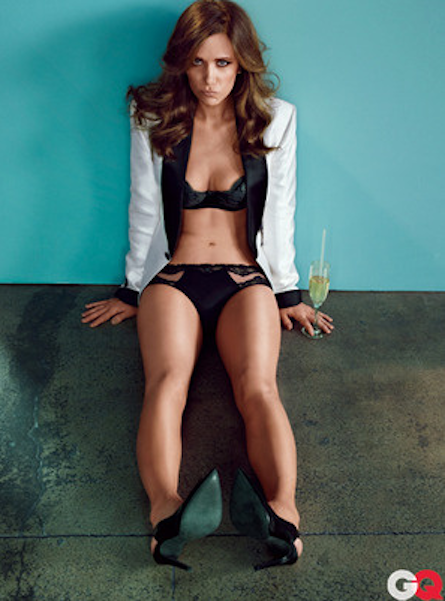
My, what lovely lady lumps Kristen Wiig has. All the better to be named GQ’s “Bro of the Year” with, my dear. [Jezebel]

“Eve as Literary Hero”. [Imagine Today]

Ms. Piggy as feminist and Kermit as douchefrog. [Jezebel]

Meshel Laurie on the Matthew Newton saga. [MamaMia]

On being single. [Girls Are Made from Pepsi]

Gah! “Pro-Life Feminism is the Future”. [Washington Post]

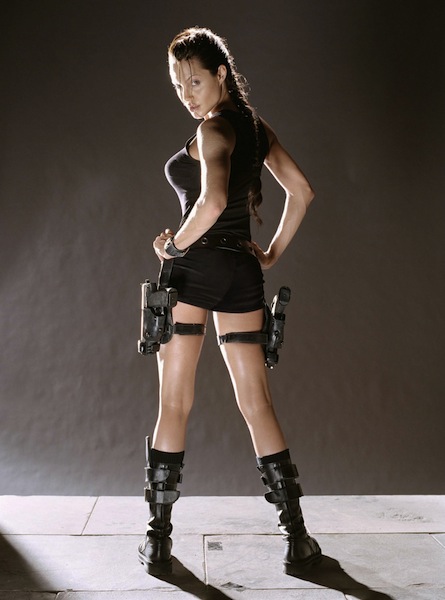
Images via Jezebel, Lara Croft Tomb Raider Costume Resource.