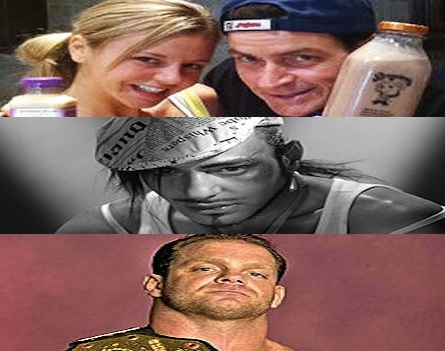
Magazines: Everyone’s a Little Bit Racist.


frankie’s latest edition is somewhat underwhelming, but there was one diamond in the rough: Justin Heazlewood’s “honest look at his relationship with Indigenous Australia” in “Black or White”.

I will admit that up until about two years ago when I started working in the cultural/tourism sector and really immersed myself in the Melbournian way of life, I was “a little bit racist”, as the Avenue Q song goes.

Now, I’m taken aback when friends, family members and, yes, even colleagues, express their racist views. Dare I say I’m offended on behalf of the racial minorities who are victims of racism on a daily basis. (I am primarily a white Australian, but I do have Native American heritage, and I have been the victim of latent racism on several occasions throughout my life). And there’ll be more to come on that later in the week.

Heazlewood references the homeless Aboriginals out the front of Woolworths on Smith Street in Fitzroy, who often get the short end of the stick when it comes to preconceived notions, but I was hanging out in Fitzroy last week and saw just as many drunk and intimidating bums who happened to be non-Indigenous.

But, as I discussed with a workmate over the weekend, city people are far more tolerant than country folk when it comes to race relations. I grew up in a small country town which claims to be the epicenter of Chinese immigration during the gold rush, and it certainly is. But I can only remember one indigenous kid and one Chinese kid at school… and I attended six different institutions!

It’s an interesting take on the cultural/racial gap in Australia, and probably the only reason to pick up a copy of the mag this (bi)month.

Related: VCE Top Designs: frankie Editor Jo Walker Talks to Media Students.

frankie Review: January/February 2011.

On the (Rest of the) Net.


“The Evolution of April O’Neil.”

Both MamaMia & Melinda Tankard-Reist have run stories on footballers behaving badly, after the  New Zealand Warriors rugby team drafted Shaun Metcalf, who spent 18 months in jail for rallying a couple of his teammates to help him kick his pregnant teen girlfriend to cause her to miscarriage. Tankard-Reist writes:

“One of Metcalf’s key defenders and outspoken advocates is Celia Lashlie… [says]:

‘We can all get caught up in the emotional image of young men booting a young woman in the stomach to cause her to abort her baby, but these were two young people … she got pregnant, he was way out of his depth, and he did a really cruel and dumb thing.

‘He was caught in the moment, and what he did was the equivalent of a young man putting a noose around his neck because his girlfriend tossed him out. He has to be allowed to move forward and put his life together, and I think the ability of the NRL and the Warriors to take this young man in and help him do that is role modelling and something they should get credit for’…

“Oh no, we wouldn’t want to get caught up in an image of young footballers playing football with the pregnant womb of a 15-year old girl now would we?

“‘The equivalent of putting the noose around his neck’? No, it was the equivalent of putting a noose around her neck—and the neck of her child. Laslie paints the act as some kind of self-punishment. But he wasn’t assaulted. He wasn’t trying to protect the child he was carrying. It wasn’t he who might lose his life.”

“Glorified pimp” Kris Jenner VS. the “strong of character” Khloe Kardashian on her new reality show, Khloe & Lamar.

Katy Perry and Britney Spears celebrate a pop apocalypse in their new singles on Girl with a Satchel.

Also at GWAS, Erica Bartle writes in response to Mia Freedman’s take on the relevance and influence of magazines, and what that means for women.

This makes me even more upset that my body corporate won’t allow Foxtel installation: MamaMia has their own TV show on SkyNews, Tuesday nights at 8pm. Congrats to the MamaMia team; they really are showing that the blogosphere is the new media frontier.

How to make the real-life Barbie doll.

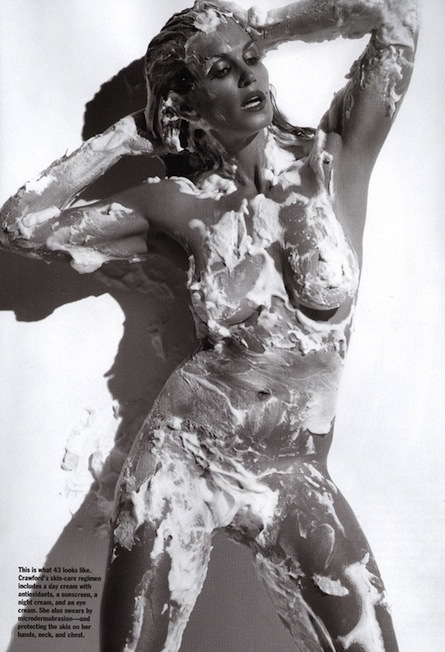
Is this what 43 looks like?

Rebecca Black’s “Friday” is more popular on—wait for it…—Fridays! Who knew?!

Hugo Schwyzer on perfection, “good guys” and respect in relationships:

“… Many young women conclude that happiness is something that you only get when you get to your goal weight. And even more troublingly, when it comes to relationships, lots of straight girls think that if their own bodies aren’t perfect, they have no right to expect too much from guys.”

Apparently, leading a sedentary, office-bound life can lead to heart disease and other health problems. Not good news for bloggers…!

Do Spanx make the world a better place?:

“… My world is a better place when I can fucking breathe. My world is a better place when someone is not trying to convince me that making myself into a human sausage will make the world a better place.”

Vintage STD-warning posters. Oh, the misogyny!

“The Public Health Problem No One Wants to Talk About”: Stillbirth.

“Stop Being ‘Shocked’ by ‘Isms’” of the rac- and sex- persuasions. And trans- and homophobia while we’re at it.

Sexualised violence is the new black.

The real-life The Wrestler: the tragic life-story of Chris Kanyon.

The perils of the unfinished book.

How to raise boys well.

Images via Jezebel, MamaMia.

Pretty Girl Bullshit.


White Girl Problems is the latest Twitter phenomenon to sweep the pop culture world, with such gems as “Fine, if that’s the way you’re going to act, then you’re uninvited to my Elizabeth Taylor memorial cocktails” and “I’m sorry you think I’m being a bitch”; the passive-aggressive “apology” heard in relationships the world over.

While the Twitter profile is poignantly taking the piss out of the problems of the privileged, there is the issue of race there, also.

Like, why is it called White Girl Problems? Why not Privileged Girl Problems? Or Rich Girl Problems? But even with that, it would be feeding into the classism debate. Whichever way you look at it, White Girl Problems is a double entrendre of racism and classism.

It also highlights the body image battle a lot of young girls face, be they white, black, rich, poor, or whatever. Here are a couple of examples:

While I’m not personally offended by the Twitter feed (I am a white girl with [first world] problems, after all), I can understand why some might be.

Racialicious, actually writing about the Alexandra Wallace/“Asians in the Library” scandal, says that it all comes down to “white female privilege”, meaning “you can say more outrageous shit because you’re a pretty white lady”.

That may be so (I have been known to voice my opinion on all manner of topics that may be deemed controversial: the baptism of babies being bullshit, pretentious parenting, and abortion [more to come on that last one in coming weeks]), but how long have men—of all races but, yes, particularly Caucasian ones—been getting away with it? And still are. Charlie Sheen and Chris Brown are two names that spring to mind…

Related: First World Problems.

Rihanna’s “S&M”: Is It Really So Much Worse Than Her Other Stuff?

Guilty Until Proven Innocent: Charlie Sheen’s Witness.

Why Are Famous Men Forgiven for Their Wrongdoings, While Women Are Vilified for Much Less?

Elsewhere: [Twitter] White Girl Problems.

[Racialicious] Go After the Privilege, Not the Tits: Afterthoughts on Alexandra Wallace & White Female Privilege.

Images via TV.IGN, Anu News, Film Junk.

On the (Rest of the) Net.


Rebecca Black is subversifying the pop world.

“Yet here the discerning viewer notes that something is wrong. Because it is a simply matter of fact that in this car all the good seats have already been taken. For Rebecca Black (her name here would seem to evoke Rosa Parks, a mirroring that will only gain in significance) there is no actual choice, only the illusion of choice.

“The viewer knows that she’ll take the only seat that’s offered to her…”

The Awl even goes so far as to say Black’s relationship with the rapper in her “Friday” clip might be Lolita-esque, and that the video is a commentary on “a crypto sex scene from which we return to the suburban house party”. Creepy.

What it feels like for a (tween star) girl.

I hate answering the phone. When I lived at home, I would never answer the landline when it rang. Now that I fend for myself and can only afford one phone, I only answer numbers I recognise. So does Pamela Paul, via MamaMia.

Extremely racist anti-abortion billboards aimed at African Americans.

Lucy Ormonde asks if it’s acceptable for women to make the first move. My answer: hell yes! Otherwise I would never get any action!

“Words That Are Transphobic & Why.”

The Sartorialist’s “sturdy” shitstorm.

It’s okay to be “fat”, just as long as it’s in the right places, ie. bum, hips and boobs, allowing for a small waist, à la Kim Kardashian and Christina Hendricks.

After reading this review, I can’t wait to see Sucker Punch: a “Burlesque meets Inception” amalgamation of “bustiers, fishnets and glitter instead of asylum uniforms” where Vanessa Hudgens, Abbie Cornish et al’s characters reside in the film. These are just some “of the many clues that we are not actually inside the mind of a young girl, but inside Zach Snyder’s spank bank!”

Perhaps it could have been titled something else, but “How to Be Skinny” has some good points.

Kate Walsh is not a loser!:

“She’s certainly not a loser, based on her many accomplishments. Having a baby doesn’t instantly turn you into a winner. If you feel like a loser for not having a baby, that is your personal truth, but it is not The Truth. And! The fact that so many media outlets picked up this one sentence segment—from a long cover story with quotes about divorce, high heels and Lady Gaga—shows that we, the public are the real losers, for placing so much importance on how a woman uses her uterus.”

“5 Seconds of Every #1 Song From 1993–2011.”

“What Celebrity Culture Means:” Asking completely unqualified famous teenage boys their opinions on abortion and rape:

“‘Thanks for joining us tonight Mr. Bieber. What are your views on climate change? How do you feel about Iraq? And what do you think of the criticism levied against the parents of the Columbine shooters?’”

Going Gaga for breast milk.

On catastrophes and guilt.

Is gay marriage really the hallmark of society’s downfall? Not according to this fab pie chart.

Charlie Sheen, Mel Gibson, John Galliano et al: our obsession with celebs behaving badly.

Sarah Ayoub-Christie likens the freelance market to war, via Lois Lane, on The New Adventures of Superman. I’m inclined to agree!

“Jackie O & the Twisted Politics of Being a Bad Mother” at MamaMia.

Jezebel has also picked up the story.

Where’s the (nerd) love?

Today’s celebrity perfumers could take a lesson from the late Liz Taylor in personal branding.

90% of Facebook users take note: “Ten Words You Need to Stop Misspelling.”

The fashion life cycle of the meat dress.

Images via Democratic Underground, Graph Jam, Feministing, The Awl.

On the (Rest of the) Net.


The difference between truly Mean Girls and the just plain Clueless:

“In the end, Cher’s altruism may be what saves her reign, for unlike Regina, Cher tries to live up to her end of the social contract. If Regina can’t rule, she decides that no one can. She hurts her society by pulling a wiki-leaks and releasing the contents of the Burn Book, thereby causing complete anarchy…

“In essence, the reason Regina was overthrown is the same reason any dictator is eventually overthrown: the monarch breaks the social contract with his or her people and those people have been prepped by cultural illuminati with new ideas about government rule.”

“Fashion’s Fascists.”

And, in the same vein:

“Fashion people everywhere rushed to check their hair before joining the chorus of dismay, almost as if racism and sexism were not the stock-in-trade of their industry. In fact, it is an open secret in high fashion that black and minority ethnic faces… are not welcome.”

When having “a great personality” is code for “fat” and/or “ugly”.

It’s taken me a little while to get around to reading this, but check out Girl with a Satchel’s Erica Bartle in “JC & the Cool Gang”.

“How Rachel Zoe Became Hollywood’s Most Powerful Fashion Player.”

Glee’s Lauren Zizes: badass or fat bitch?

The myth of Bart Simpson’s birthday.

Jihad Cosmo:

“We had been thinking that what Cosmo was really missing was a healthy dose of religious fanaticism and a few passionate exhortations to violence, so we can’t wait to read the article ‘that urges readers to give their lives for the Islamist cause.’”

UK sculptor Jamie McCartney’s “Great Wall of Vagina” (semi-NSFW).

How to be a mermaid.

Elective C-section or vaginal birth?

How to move to New York City, according to Gala Darling.

Images via Overthinking It, The Hollywood Reporter, YouTube.

On the (Rest of the) Net.


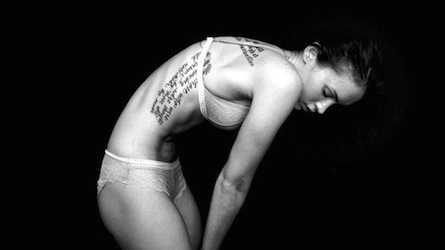
Megan Fox’s body politics:

“… You have a picture of said body—made even thinner through creative posing—that’s used to sell underwear. In other words, she is paid to be thin. Period. All the talk about her abs and her weight-training regimen don’t have anything to do with the reality: Her body is her business. Literally. It’s her business, not ours, whether she’s healthy—that’s between Ms. Fox and her doctor. And it’s her business—an integral part of her financial strategy—to be thin.”

This is a superb, graphic and thought-provoking piece of writing on waxing, vaginoplasty and the ubiquity of female lady-parts. Semi-NSFW, but I recommend reading it at any cost:

“… while we can look over with horror at a tribe of women who claim that if their five-year-old happened to bleed excessively after having her clitoris cut off, that she must have been a witch, here in our own backyard, we give it some fancy name like vaginoplasty and somehow it’s less archaic? Goodness, we’re so civilized.”

Bern Morley on song lyrics and what we let our children listen to. Good stuff.

The double standards of cheating. FYI, I don’t agree with them.

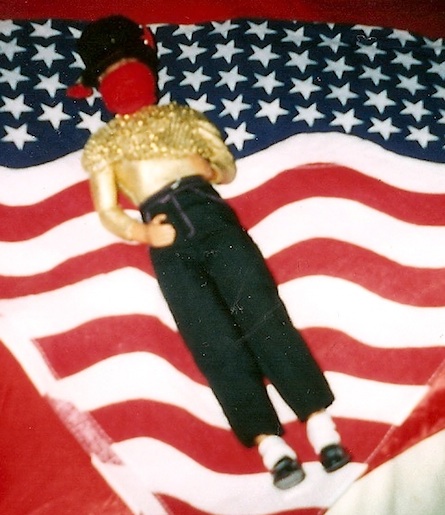
Sachar Mathias divulges her favourite black dolls. Does this make-shift Michael Jackson Ken count? It is circa late ’90s/early ’00s—his face mask, baby-dangling period—so maybe not…

Anti-Semitism in the fashion house of Christian Dior goes further back than just John Galliano’s comments.

James Franco was a jerk to Kristina Wong. I think he’s a jerk in general.

CNN recently published an article asking if “whites are racially oppressed?” That’s like saying there needs to be an international men’s day if there’s a women’s one. Seriously, someone tried to argue that to me last week!

Charlie Sheen and “The Disposable Woman”.

Thanks for the shoutout, Beauty Redefined.

Celebrities behaving badly: who’s responsible?:

“But is it the responsibility of the media to be the moral gatekeepers of what we should and shouldn’t know about? Is it their responsibility to diagnose supposed ‘mental illness’ and on that basis, stop reporting on certain stories?

“… If drug addled celebrities on the front pages didn’t sell, they wouldn’t be there. So is the problem us? Just who is egging on who[m] here?”

Alissa Warren is a bit unsure if Waity Kaity is the royal for her.

Rick Morton on Pauline Hanson’s political return.

Images via Jezebel, Carlen Altman.

On the (Rest of the) Net.


How to be a Victoria’s Secret Angel:

“Holding tight to a mission statement that stands first and foremost to ‘empower women,’ and a slogan stating the brand is one to ‘Inspire, Empower and Indulge,’ the company ‘helps customers to feel sexy, bold and powerful.’

“Where once sexualized representations of women in the media presented them as passive, mute objects of an assumed male gaze, today women are presented as active, desiring sexual subjects who choose to present themselves in an objectified manner because it suits their ‘liberated’ interests to do so.

“Not only are women objectified as they have been, but through sexual subjectification, they must also now understand their own objectification as pleasurable and self-chosen.”

Why Britney Spears is the everywoman pop star of our generation.

Unfortunately for John Galliano, “Rehab Does Not Cure Anti-Semitism”.

Also, Gawker wonders “How the Hell is Anti-Semitism Having a ‘Moment’?”

Owen Wilson managed to escape the tabloid microscope of Hollywood after his 2007 suicide attempt, unlike so many other stars who’ve fallen of the mental health wagon (the aforementioned Britney, Lindsay Lohan and flavour of the moment, Charlie Sheen):

“…it is Wilson who seems to have gotten the hall pass. He has never explained what happened to him that anguished Sunday in August…

“It’s a fascinating instance of a celebrity hiding in plain sight—and getting away with it—that stands virtually alone in Hollywood’s PR playbook.

“What’s the statute of limitations on personal issues in Hollywood?”

Baby bullying in the Bonds Baby Search competition. Seriously?! Baby bullying?!

What would it be like to sleep with a women’s magazine?:

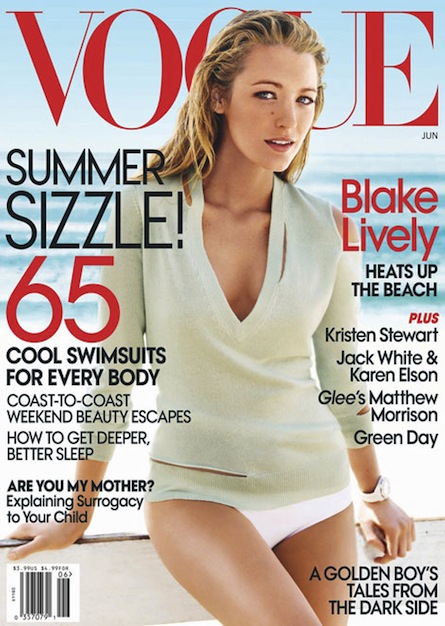
“Vogue: You’re really flattered. They’re probably the hottest person you’ve ever slept with. Neither of you gets off.”

US political commentator Rush Limbaugh feels that Michelle Obama doesn’t have the right body type to be an advocate for beating childhood obesity:

“I’m trying to say that our First Lady does not project the image of women that you might see on the cover of the Sports Illustrated Swimsuit Issue, or of a woman Alex Rodriguez might date every six months or what have you. I mean, women are under constant pressure to look lithe, and Michelle My Belle is out there saying if you eat the roots and tree bark and the berries and all this cardboard stuff you will live longer, be healthier and you won’t be obese. Okay, fine, show us.”

Racist, sexist and sizeist on so many levels.

On that, “Beauty is Not a Spectrum” at Eat The Damn Cake.

The secret lives of sex store workers.

“Charlie Sheen’s ‘Porn Family’, Explained.”

Images via Squa.re, Everyday Facts.


Minus Two & a Half Men.


Girl with a Satchel featured an excerpt from a Washington Post column about body snarking at the Oscars:

“I would like to note that more space was devoted to photographs of ladies wearing dresses… than for the last two weeks’ coverage of the events in Libya.”

This is also true of the news coverage in Vietnam, where a colleague of mine (whom I mentioned as the friendly workplace Big Issue provider earlier this week) is spending five weeks. In a recent email, he said that the hot topic on the news there is Charlie Sheen, not Libya, Egypt or Japan, which bore the brunt of a 7.3 magnitude earthquake yesterday afternoon.

A story on MamaMia written by publicist Steven Murphy echoes this:

“His weakness for drugs and alcohol is… well documented and he has been fodder for the tabloid press for years.

“But this latest incident is front-page news like no other. But why? Why is this incident haunting our news services day and night?”

The article somewhat-annoyingly glossed over the fact that his drug and alcohol problems are put at the forefront of his negative publicity, when his hatred of women and obvious mental illness are shoved to the back.

Jezebel hasn’t forgotten, however, with a no-bullshit article entitled “Charlie Sheen’s History of Violence Toward Women” published last week. The article also dealt with John Galliano’s disgraceful display of anti-Semitism, and what the news stories don’t tell you:

“Galliano allegedly grabbed gallery curator Geraldine Bloch by the hair and said, ‘Shut your mouth, dirty bitch, I can’t stand your dirty whore voice.’”

I, myself, didn’t even know that happened until I read the article, and I usually take a vested interest in these sorts of things.

On the plus side, Galliano has been fired as head designer of Christian Dior and—finally!—Sheen’s been fired as head douchebag on Two & a Half Men, to be replaced, allegedly, by reformed bad boy and fellow brat pack member, Rob Lowe.

While I couldn’t be happier about the latter (let’s shout it from the rooftops!), Galliano’s reign at Dior produced some of the finest garments the fashion world has seen, and it’s unfortunate it had to come to this.

But I applaud the fashion house for ousting the anti-Semite, and stars like Natalie Portman, who have publicly spoken out against him.

Both men’s firings show that there is a zero tolerance policy against these kinds of abhorrent behaviours, and hopefully other companies, in the entertainment industry and otherwise, will follow suit.

Although Michael Specter of The New Yorker doesn’t think so, writing that:

“the fashion world has a remarkable ability to shrug off the odd deeply flawed human being, as long as he or she can cut a dress like Galliano can or wear one like Kate Moss, who, despite behaviour that sets a disastrous example for millions of girls, including issues with drugs, is forgiven because, well, she is really very pretty.”

I haven’t always been innocent in providing double standards to those I like, think are talented, and should be forgiven for their indiscretions.

Just yesterday, some co-workers and I were talking about Catherine Deveny’s tweets at last year’s Logies. Personally, I didn’t find them to be offensive, and sorely miss her column on the back page of The Saturday Age’s Life & Style (formerly the A2). But, looking back on it, The Age did the right thing by sacking her. At the time, both Deveny and I used the excuse that she’s a comedienne; that’s her job. I guess it takes the disgraces of people you don’t like to understand the repercussions of (the disgraces of) those you do.

Once such repugnant crime committed by professional wrestler Chris Benoit in 2007, when he murdered his wife and son and killed himself, gave me lots to think (and write) about. On the one hand, I felt his legacy as one of the best professional wrestlers ever to grace the squared circle shouldn’t be forgotten, however, Benoit took three lives and sullied the reputation of professional wrestling (okay, there wasn’t much of a reputation left to sully!) and sparked a debate on steroids and drug testing that raged for years; the smoke of which still lingers today.

I’ve written several articles on that story and, with a new frame of mind to cast a different light on the story, I think I may just revisit said articles. (The anniversary of the double-murder suicide is June 24, so watch this space around that time.)

Benoit was obviously seriously mentally ill; the (not-so-) funny thing is, his friends, family and co-workers never picked up on it.

Charlie Sheen, however, has a long history of violence and drug use, and there’s no telling what he’s capable of.

Related: The Big Issue Review, 1-14 March 2011.

The Anatomy of a Douchebag.

Guilty Until Proven Innocent: Charlie Sheen’s Witness.

Why Are Famous Men Forgiven for Their Wrongdoings, While Women Are Vilified for Much Less?

Elsewhere: [MamaMia] Advice to Charlie Sheen from Australia’s Top Publicist.

[Jezebel] Charlie Sheen’s History of Violence Toward Women.

[The New Yorker] John Galliano’s Implosion.

[Girl with a Satchel] Body Snarking is So No Funny But Jacki Weaver is Fab.

Images via NY Daily News, The Gloss, Pop Culture Madness.
The Underlying Message in Madonna’s “Like a Prayer” Video.

About a month ago, I posted a quick revision of a presentation I did at uni on Madonna’s most controversial videos. In it, I wished to go into further detail on “Madonna’s influence on the music video and religion in pop culture”. Here I attempt to do so.

Another pop culture icon who’s had a big influence on modern religion is Oprah, who pushes her brand of “pick and mix religion” to her millions of followers. Funnily enough, Shmoop comes to a similar conclusion about the “Like a Prayer” video:

“The blending of Italian American and African American traditions and cultures should also be considered a postmodern choice. It resists interpretation. Where a critic might try to understand the video as an endorsement of Catholicism, the blending of Catholicism with the African Methodist Episcopal choir Madonna meets in her dream prevents such a simple interpretation. The video is neither here nor there on particular religions, only communicating the power of some force of faith to empower her.”

But when the video was released in 1989, that was the least of its critics’ problems. Perhaps it was the rape scene at the beginning, the depicition of a “black Christ”, who was in actuality the black Saint Martin de Porres, to critique racism, or—my pick—the burning crosses in the field behind Madonna, who prances around in black negligee. It could have been any combination of these factors that made Pepsi back out of its $5 million deal with the star in the aftermath of the video’s release.

Granted, the film clip was made more than twenty years ago, and it was groundbreaking for its time. However, fast-forward to 2011, and what we’ve seen since then makes “Like a Prayer” seem positively tame.

Madonna herself has been responsible for some of these, like her clip the following year for “Justify My Love”, her Sex book or, on the tamer side of things, kissing Britney Spears and Christina Aguilera onstage at the MTV Video Music Awards in 2003, which seems to be an enduring image of ranch culture in this day and age.

But you don’t go about these things without thinking of them seriously, and that’s why Madonna’s legacy has persisted all these years. She knew exactly what she was doing in that clip, and all other clips that followed. The fact that at the end of the song the events of the clip are revealed to be a performance indicates that “we all play a part in this little scenario”. What part, exactly?

While religious groups trying to get the video banned could be interpreted as the Church being unwilling to accept square pegs that don’t fit into round holes, Pepsi backing out of their deal with the star is an example of big conglomerates being scared to buck the system and take a risk less they lose customers.

Someone who isn’t afraid to buck the system and is accepting of all walks of life (except, perhaps, those whose body parts were used in the assembling of her meat dress) is Lady Gaga, who is a huge Madonna fan, if some of her recent videos are anything to go by. Last year I blogged about Gaga’s film clip for “Alejandro” and how it emulated “Like a Prayer” and other Madonna videos almost to a tee.

While we would like to think that we have grown as a society and have become more accepting of different people in the twenty years since “Like a Prayer” was banned, “Alejandro”’s critical reception from religious and parenting groups may indicate otherwise…

Related: More Madonna.

Katy P. VS. Lady G.

Madonna (and Her Brand of “Feminism”) On the Rocks.

Elsewhere: [Shmoop] Like a Prayer Meaning.

Images via YouTube.

Sookie as Feminist? Hear Her Roar.

Ever since I started watching True Blood, I’ve had a hard time believing Sookie Stackhouse as a feminist icon. Sure, she kicks a lot of butt, sometimes seeking danger out herself (taking down the Rattrays when they milk blood from Bill in the car park of Merlottes), is in charge of her sexuality, if that means staying a virgin until the right man comes along, and doesn’t take shit from anybody. But… she’s just so damn annoying!

So is Glee’s Rachel Berry and most of the Gossip Girl cast, and they could be seen as icons of feminism for the texting set. However, instead of whining to her teacher, withholding sex from her boyfriend or plotting revenge against her nemeses, Sookie is just the opposite. She may be blonde, virginal and innocent in every sense, but she is also very much like Buffy Summers, who was created with bucking the horror movie victim stereotype in mind.

As one commenter on True Blood’s Nest points out, “Sookie is brave to the point of being stupid at times…”. While this can be an admirable quality sometimes, it does contribute to her annoyingness.

Speaking of characters who act before they speak, Tara Thornton comes to mind.

True Blood is all about juxtaposing discrimination against the blacks and the gays against the discrimination of vampires. The book True Blood & Philosophy, which I reviewed last week, mentions that Sookie and Tara were both raised—for the most part—by Sookie’s grandmother, yet Sookie is “admired, protected and coeveted by every heterosexual male main character and loved by a sweet, nurturing grandmother” while “Tara is blunt, sarcastic, morose, love-starved and goes home each night to an alcoholic mother” and gets caught up in Maryann’s spiral of lies and magic. Racist stereotypes or social criticism?

And while we’re on Maryann, she seems to embody “certain stereotypes of late-1970s feminism”, both in the clothes she wears (floaty, feminine and ethereal maxi dresses) and the hedonistic, maenadic lifestyle she espouses. Given her obsession with taking down Sam, using Eggs as her partner in crime and erecting the meat-statue in Sookie’s yard (not to mention her “hunter’s soufflé”!), she really embodies the “feminist as man-eater” ideal.

While these are good examples of other, non-blonde/innocent/virginal heroines in True Blood (and while we’re at it, let’s not forget Pam, Lorena and Sophie-Ann), I would also like to examine Sookie in relation to the men of Bon Tempts. Let’s look at True Blood’s Nest again:

“… Bill and various other hot men are always rescuing Sookie from certain death, or so it seems. But remember y’all, it was her that tried to find the town serial killer, not the useless cops. It was her that killed Rene the Killer with a shovel to the neck while the menfolk bumbled around the graveyard uselessly. It was her that decided to go to Dallas in order to get Lafayette out of Eric’s icky dungeon, AND she wanted money and a driveway as part of the deal. Once again the menfolk spluttered and marvelled at her bravery and sauciness, and lusted after her even more for it. She is the mistress of her own kick ass destiny while Bill, Sam and even Eric can only follow in her wake, hoping to be of some use.”

The original title for this post was “What is it With Sookie”, and seriously, what is it with Sookie?! By the end of season three, we have found out that Sookie’s appeal to the “menfolk” may be because of her fairy heritage, not because of her physical attributes or personality traits.

This is unfortunate for Bill, because it is plain to see that he does love Sookie for who she is, not what she can do for him. But I will say that the fairy blood storyline is an intriguing one; did Sookie’s blood allow Bill to crawl, albeit with his flesh charring with each movement he made, to her rescue in the graveyard at the end of season one? Is that also why Eric wants her?

But when you take away their supernatural abilities, Bill and Sookie’s relationship is one with issues that I’m sure a lot of modern day couples face: Bill has old-fashioned sensibilities in wanting to protect his lover, while Sookie struggles with the concept of maintaining “independence in sexual relationships”, which second- and third-wave feminism have told us we must do. Nothing illustrates this conflict (and metaphorical backlash?) than the second episode of season two, when Sookie storms out of Bill’s car after a fight about said independence and protection only to be attacked by a mythical creature for her efforts!

Elsewhere: [True Blood’s Nest] Fangirls Speak Out: Sookie—Feminist Icon?

[Racialicious] True Blood. Tired Stereotypes.

[Feminist Frequency] Beyond True Blood’s Sensationalism.

Related: True Blood & Philosophy by George A. Dunn & Rebecca Housel Review.

Has Feminism Failed?

Top 10 TV Moments of the Year.

Gossip Girl Proves There’s No Such Thing as Wonder Woman.

Surfing the Third Wave: Second Wave VS. Third Wave Feminism on Gossip Girl.